

Developing Story Note: This report covers new developments in Wisconsin’s 2026 measles cases, including spread beyond the original southwest outbreak counties. Information may change as health officials release new data. Figures are from the Wisconsin Department of Health Services (DHS) update of September 25, 2026.
Wisconsin has confirmed 192 measles cases so far in 2026, and the virus is no longer confined to the southwest corner of the state. DHS reported 21 new cases on Friday, September 25, up from 171 as of September 22. Marathon County, home to Wausau, now has three confirmed cases, and Chippewa County has one. DHS says all four are linked to out-of-state travel.
The southwest outbreak has also grown. According to the DHS outbreaks and investigations page, it now includes 180 confirmed and six probable cases across Grant, Iowa, Lafayette, and Vernon counties. “The ongoing investigation indicates that measles is spreading locally,” the department said of that cluster.
For families in central and northern Wisconsin, measles is no longer a distant concern. With confirmed cases in their own counties, it is a good time for parents to check their children’s vaccine records.
Travel-Linked Cases Reach Central and Northern Wisconsin
DHS classifies the Marathon and Chippewa cases as related to out-of-state travel and not connected to the southwest outbreak. In plain terms, investigators believe these patients were most likely exposed outside Wisconsin rather than infected by someone in the southwest cluster.
That label describes where an infection began, not whether it can spread. A person who catches measles while traveling can still expose relatives, coworkers, or classmates after returning home, which is why health departments trace the contacts of every case.
Marathon County’s first case was announced on September 15. DHS said the resident was infected during out-of-state travel and that the case was not related to the southwest outbreak. The Marathon County Health Department announced two more cases on September 23, bringing the county’s total to three, and said no public exposures had been identified, according to Wausau Pilot and Review. County officials also said recent cases in other Wisconsin counties suggest measles exposure is happening within the state, and that more cases likely exist because not everyone who gets sick seeks medical care. Chippewa County’s case was announced on September 22.
New Counties and New Wastewater Detections
MedicalDaily previously reported that Wisconsin’s total had reached 163, with measles found in wastewater from all three outbreak counties. Since then, the statewide count has risen by 29, Vernon County has joined the outbreak after two cases were confirmed there on September 16, and travel-linked cases have appeared outside the southwest.
Wastewater results have shifted too. DHS now lists a measles detection in a Green County sample collected on September 16, a county outside the four outbreak counties. Grant County recorded additional detections in samples from September 2 and September 7. A detection means at least one infected person was likely in the area served by that treatment plant around the time of sampling, which can include visitors, commuters, and people traveling in for medical care.
Wisconsin’s wastewater network includes 44 permanent monitoring sites that have tested for measles since June 2025, plus four temporary sites in Grant, Iowa, and Lafayette counties. Detections from facilities serving 3,000 or more people are shared on the CDC’s national wastewater dashboard.
Counts vary slightly by outlet. WBAY reported 184 cases in three counties, while the DHS page lists 180 confirmed and six probable outbreak cases across Grant, Iowa, Lafayette, and Vernon counties. The DHS page is the official source.
DHS also cautions against reading too much into short-term trends. “A decrease in reported cases does not necessarily mean that measles spread has slowed or stopped at this time,” the department said, explaining that after the early phase of an outbreak, cases are mainly found when sick people seek medical care.
Who Is Most at Risk and How to Stay Protected
WBAY reported that most people infected in Wisconsin this year were unvaccinated. DHS says unvaccinated young children and other adults who are not immune face the highest risk of serious illness. The CDC estimates that about 1 in 5 unvaccinated people in the U.S. who get measles is hospitalized.
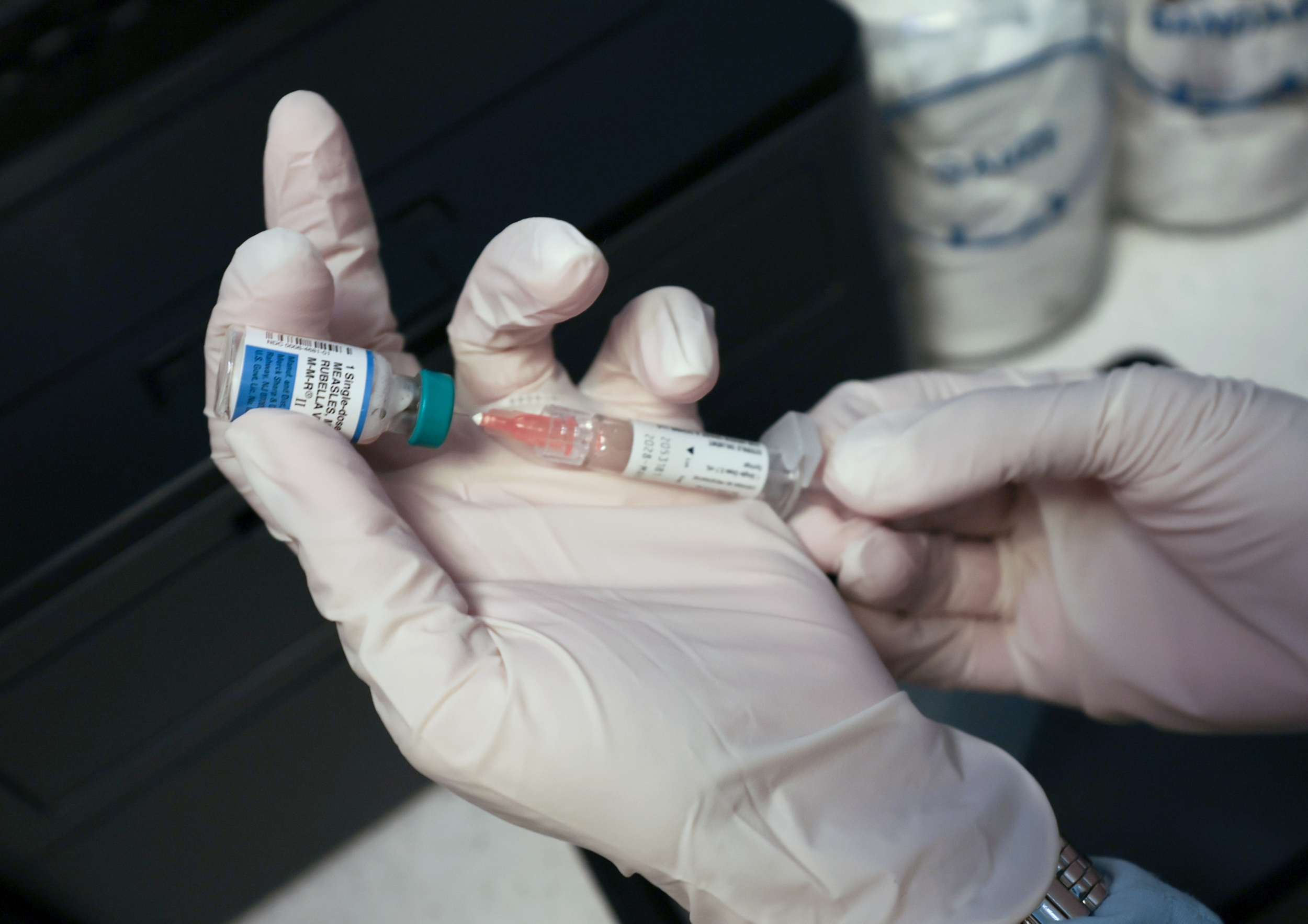
Two doses of the measles, mumps, and rubella (MMR) vaccine are about 97% effective at preventing measles, and one dose is about 93% effective. People born before 1957 are generally considered immune. DHS says other adults without laboratory evidence of immunity should have at least one dose, and children should have two.
Symptoms usually start 10 to 21 days after exposure and include a high fever that may top 104 degrees Fahrenheit, cough, runny nose, and red, watery eyes. A rash of flat red spots follows three to five days after symptoms begin, starting at the hairline and spreading down to the neck, trunk, arms, and legs. Anyone with symptoms should stay home and call a doctor’s office or clinic before visiting so staff can protect other patients.
Residents can find vaccine records through the Wisconsin Immunization Registry. The Wisconsin Vaccines for Children program covers vaccine costs for eligible children, and local health departments may be able to provide MMR vaccine to uninsured adults through the Vaccines for Adults program. Marathon County runs a measles resource line at 715-261-1999.
The travel-linked cases also carry a lesson for fall and holiday trips. The CDC advises that international travelers get two MMR doses before departure, at least two weeks before leaving, and that infants 6 to 11 months old get an early dose before traveling abroad. Adults who are unsure whether they were fully vaccinated can ask a pharmacist or clinician; the CDC says there is no harm in getting another dose if a person may already be immune.
What happens next depends on contact tracing in Marathon and Chippewa counties and on whether new cases appear in areas like Green County, where the virus has shown up in wastewater. DHS will alert the public if cases rise significantly or spread to more counties, WBAY reported.
Developing Story Timeline
September 25, 2026: DHS reported 192 confirmed cases statewide in 2026. The Grant, Iowa, Lafayette, and Vernon county outbreak stood at 180 confirmed and six probable cases, with three travel-related cases in Marathon County and one in Chippewa County.
September 23, 2026: Marathon County announced two more cases, bringing its total to three.
September 22, 2026: A measles case was confirmed in a Chippewa County resident, and the statewide total reached 171.
September 16, 2026: DHS announced two confirmed cases in Vernon County, and a Green County wastewater sample collected that day later tested positive for measles.
September 15, 2026: DHS confirmed Marathon County’s first case, linked to out-of-state travel.
September 14, 2026: MedicalDaily reported 163 cases and wastewater detections in all three original outbreak counties.
Key Questions Answered
How many measles cases does Wisconsin have? DHS reported 192 cases in 2026 as of September 25, including 21 added in that update.
Which counties are affected? Grant, Iowa, Lafayette, and Vernon counties make up the southwest outbreak. Marathon County has three travel-related cases, and Chippewa County has one.
What does travel-related mean? Investigators believe the person was most likely exposed outside Wisconsin. It does not mean the person cannot spread measles to others locally.
Are there public exposure sites in Marathon County? The county health department said no public exposures had been identified as of September 23.
Who is most at risk? People who are unvaccinated or unsure of their status, especially young children and adults who are not immune.
How can families check vaccine records? Through the Wisconsin Immunization Registry, a doctor’s office, or a local health department.
What should someone do if symptoms appear? Stay home and call a doctor’s office or clinic before visiting so staff can prevent exposures in waiting rooms.
Published by Medicaldaily.com


