

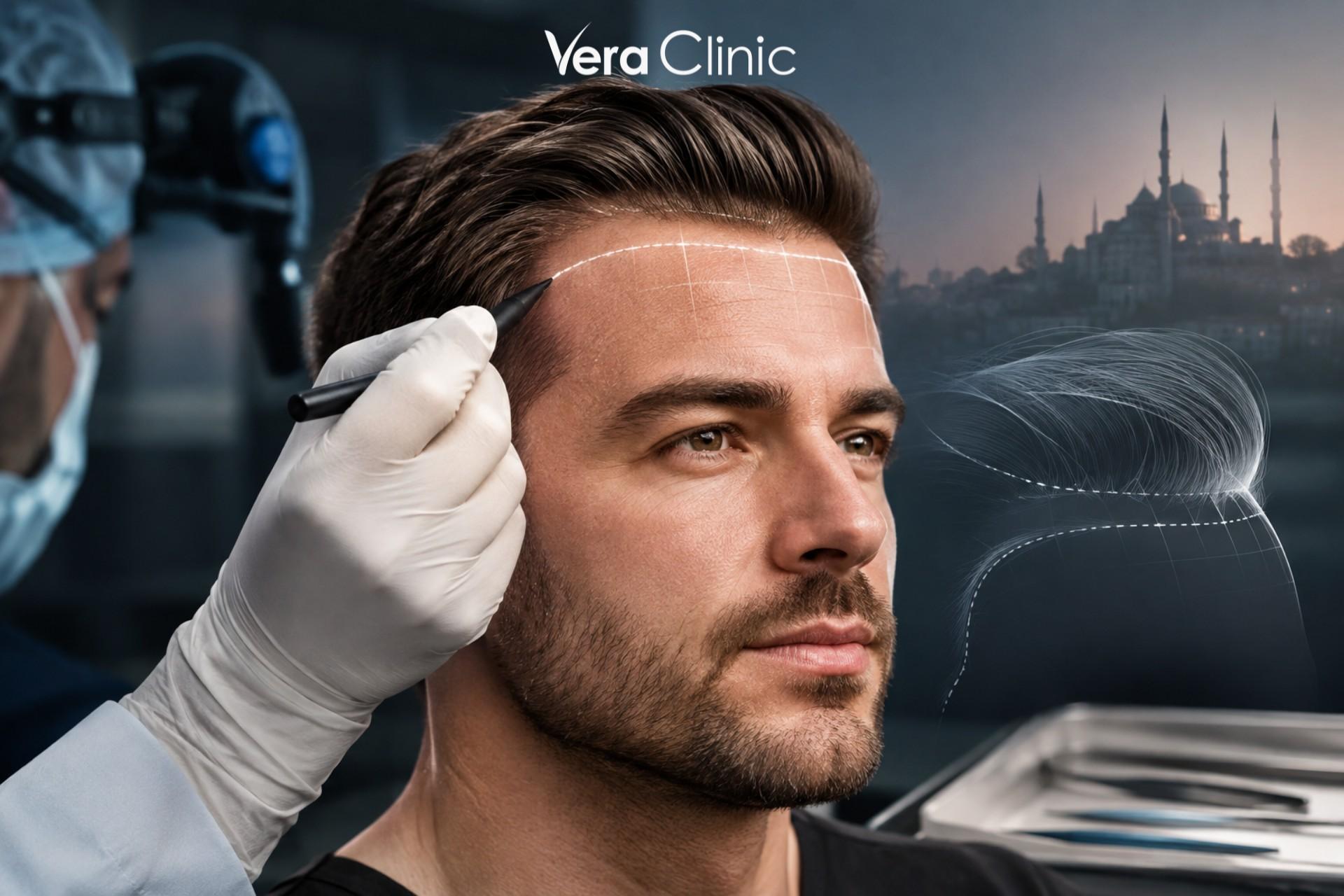
For decades, hair transplantation was discussed almost exclusively in clinical terms: graft counts, survival rates, donor density, recovery timelines. And rightly so. At its core, it is a surgical procedure, one that demands precision, sterile technique, and a deep understanding of scalp anatomy. But somewhere between the operating table and the mirror a patient looks into six months later, something else is happening, something medicine alone doesn’t fully explain. It has less to do with technique than with the eye: a hairline isn’t just restored; it’s designed. Research conducted by Vera Clinic Academy on hair transplant outcomes has described hairline design as “the single most consequential determinant” of whether a result reads as natural, ahead of graft count or overall density. That distinction is quietly reshaping how the procedure itself is approached, and what counts as a successful outcome.
Modern hair transplant addresses hair loss by relocating individual follicular units from a donor area, typically the back and sides of the scalp where hair is genetically resistant to balding, into areas of thinning or loss. Techniques have advanced considerably over the past decade: tools like sapphire blades allow for smaller, more precise incisions that reduce trauma to surrounding tissue and support denser, more natural-looking placement. This groundwork requires surgical training, an understanding of how tissue heals, and the judgment to manage complications when they arise.
But graft survival alone doesn’t determine whether a result looks like it belongs to the person wearing it. The determinant is design, and design isn’t a scalpel’s job.
Designing the Hairline
This is the point where a good specialist stops working like someone checking boxes on a surgical chart and starts working like an artist who happens to hold a scalpel. Before a single incision is made, the hairline has to be conceived, and that means reading the whole face, not just the scalp, which means the specialist isn’t just designing for anatomy, but for an audience’s trained eye.
That reading isn’t purely anatomical, though. Some of this owes more to Hollywood than to hard science. Decades of close-ups, red carpets, and lighting built to flatter a jawline have quietly trained audiences to recognize a “good” hairline on sight, often without knowing why. The golden ratio gets invoked a lot in this space, sometimes fairly, sometimes as a marketing shortcut, but the underlying instinct is real: certain proportions between forehead, temple, and hairline simply read as balanced, and others don’t. Specialists don’t design with a formula and a calculator. They work the way an artist does, drawing on instinct trained by thousands of faces: proportion, symmetry, and just enough asymmetry to keep a result from looking painted on.
That’s why the most experienced specialists build in small irregularities on purpose, like slightly uneven, feathered temple points, because too much regularity is what reads as “done” rather than “natural.” Making something look untouched is, in practice, one of the hardest things a specialist can sculpt. Balancing what a patient wants with what will actually suit their face, and sometimes gently steering them away from a request that won’t age well, is as much a design skill as a medical one.
Where Design Meets Practice
Waleed Taleb, Co-Founder and CMO of Vera Clinic, has spoken directly to the weight behind this work: healthcare marketing, in his words, is different from almost any other field because “you’re asking someone to trust you with their face, their confidence, sometimes their life.”
That logic shapes how Vera Clinic, recognized by European Awards in Medicine as one of the best hair transplant clinics in Turkey, runs its process. Consultations map facial geometry and hair characteristics before any surgical plan is drawn up, with hairline design treated as its own step rather than a decision made in the final minutes before surgery. It’s the same instinct that led the clinic to pioneer Sapphire FUE, trading steel blades for sharpened sapphire tips to get finer control over exactly the kind of natural, irregular placement good hairline design depends on, and more recently to develop Vector-10, a CVD lab-grown diamond blade built with the same goal of finer, less traumatic incisions. The clinic’s patient outcome statistics back this up, tracking hairline aesthetics and overall satisfaction separately from graft survival, at 12 to 18 months post-procedure. The artistry doesn’t end once the last graft is placed, either: a hairline takes months to settle into its final shape, and the clinic stays involved through that window, checking in as density fills out, direction sets, and the small irregularities that make it look natural start to hold.
The most common way patients describe a good result isn’t dramatic. It’s something closer to relief, the quiet realization that no one can tell.
Design Decides
Surgery can move hair from one part of the scalp to another. It can’t tell you where a hairline belongs on a particular face, at a particular angle, shaped so it looks like it was never touched at all. That call gets made long before anyone picks up a blade, and it’s the one that actually decides whether a result belongs to the person wearing it or just sits on top of them.
That’s why the best specialists talk less like surgeons and more like people who’ve spent years studying faces: proportion, restraint, the discipline to stop before something starts looking deliberate. Graft survival keeps the hair alive. Design is what makes it theirs.


