

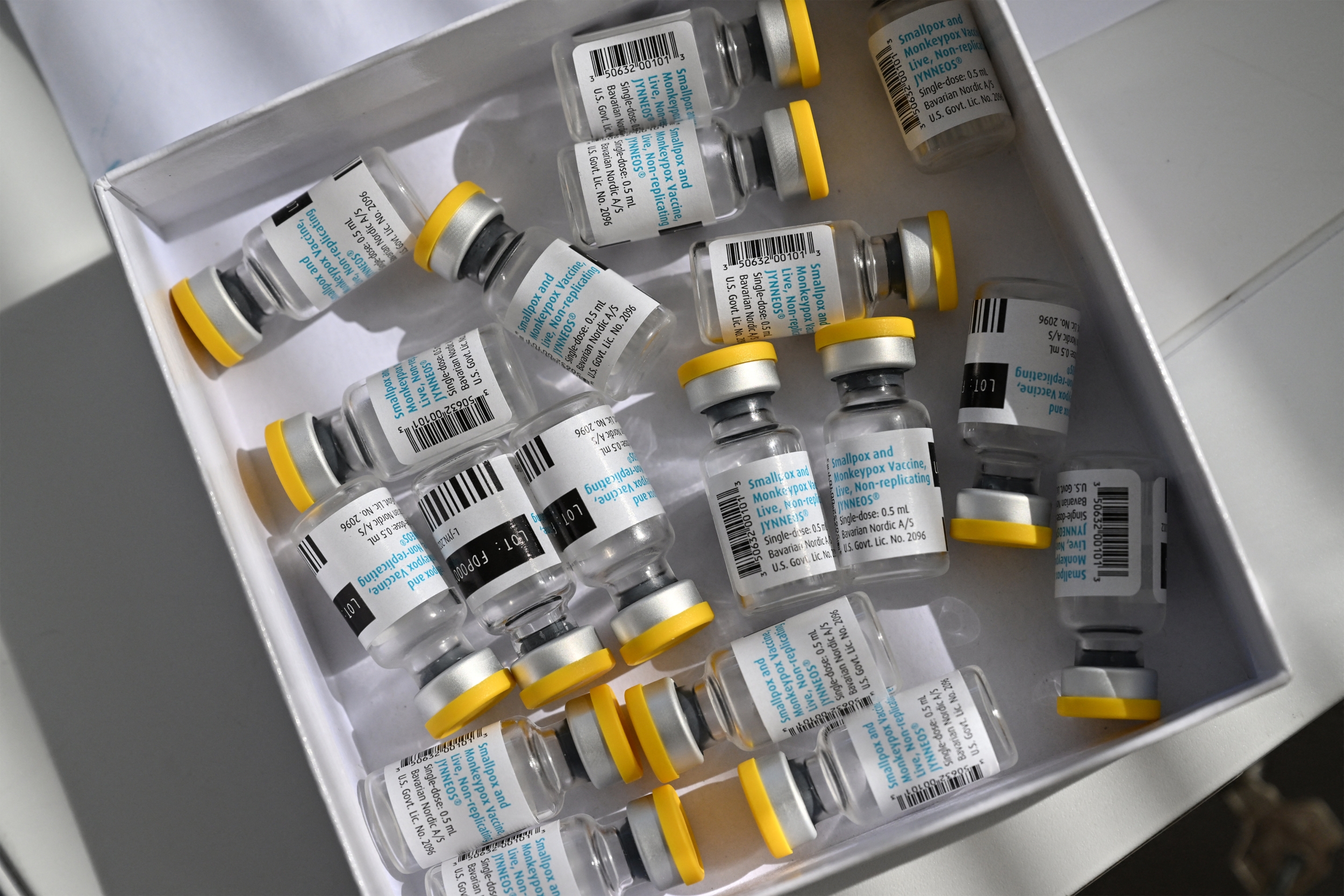
Two National Institutes of Health virologists have pleaded not guilty to charges of conspiring to smuggle mpox samples into the United States, in a case that a dozen scientists interviewed by KFF Health News say has less to do with public danger than with the paperwork that governs how American laboratories study overseas outbreaks.
The samples were inactivated. The FBI’s own testing confirmed it, and one of the charged researchers helped develop the inactivation technique. That detail sits at the center of why the prosecution has unsettled the infectious disease research community.
The practical stakes for households are indirect but real. The pipeline that produces diagnostic tests for emerging viruses runs through exactly this kind of specimen transfer, and researchers say the case is already changing how willing they are to participate.
The Case as Charged
Vincent Munster, chief of the virus ecology section at NIH’s Rocky Mountain Laboratories in Hamilton, Montana, and Claude Kwe, a research fellow working under him, were stopped at Detroit Metropolitan Airport on January 25, arriving on a flight from Paris after nine days in the Republic of the Congo.
They were arrested on June 2, when a criminal complaint was unsealed in federal court in Detroit charging conspiracy to smuggle mpox into the United States and lying to border agents. According to the complaint, the two told customs officials that the tubes in their luggage held diagnostic reagents. Each faces a maximum of five years.
The Justice Department’s announcement said FBI testing had confirmed the viruses were inactivated but that the scientists jeopardized Americans’ safety. Jerome Gorgon, U.S. attorney for the Eastern District of Michigan, said the researchers had smuggled viral pathogens on a packed commercial airplane from an outbreak.
Federal code requires researchers to register and certify inactivated viruses. The complaint states the pair lacked appropriate documents. Both scientists have been suspended and barred from the laboratory campus during an internal investigation, as MedicalDaily reported. Kwe’s federal community defender has said only that his client is presumed innocent and that comment should await further proceedings.
The Reason Laboratories Bring Samples Home
Studying an outbreak from a distance has limits. Developing a diagnostic test that reliably detects a circulating strain requires working with material from that strain, and validating a laboratory method requires the same.
Several scientists told KFF Health News that the specimens Munster and Kwe carried were most likely intended for exactly the diagnostic development purpose stated to customs officers. Tracking viral evolution, evaluating whether existing tests still detect new variants, and assessing whether vaccines and treatments remain effective all depend on access to current specimens from where transmission is occurring.
This work is regulated rather than freewheeling. Import permits, select agent rules, inactivation certification, institutional biosafety review and hazardous materials shipping requirements all apply, and researchers typically coordinate them weeks in advance with an institution’s biosafety office. The allegation here is a failure to satisfy those requirements, not an allegation that the material itself was dangerous.
A Pattern Researchers Say They Recognize
The case follows a series of prosecutions involving biological material carried or shipped by scientists, several brought by the same US attorney’s office in the Eastern District of Michigan. Earlier cases involved Chinese nationals at a University of Michigan laboratory and a Russian-born Harvard researcher stopped with frog embryos.
Reporting by KFF Health News, published through CNN, found that a dozen scientists interviewed characterized the arrests as part of a broader campaign, arguing that any errors involved were procedural and posed no threat to the public.
The reaction inside the field is about credibility as much as law. Kim Hasenkrug, an NIH scientist emeritus who worked at Rocky Mountain Laboratories for 31 years, said the episode gives ammunition to people trying to stop this valuable research and sows distrust even among people who had trusted the laboratory in the past.
NIH has said it activated established notification procedures and is cooperating with law enforcement, while declining further comment.
The Downstream Effect on Detection Speed
The concern researchers raise is not about this case’s outcome. It is about what other scientists conclude from watching it.
If participating in an international outbreak response carries perceived legal exposure, fewer researchers volunteer, fewer specimens move, and the interval between a new pathogen appearing somewhere and a validated test existing everywhere gets longer. That interval is what determines how early an outbreak is caught in a US emergency department.
Funding is compounding the problem. Scientists told KFF Health News that cuts to US foreign aid and research funding have left tens of millions of dollars in gaps in the response to spreading Ebola and mpox outbreaks.
None of this is measurable yet, and it would be overstating the evidence to claim detection has already slowed. What can be said is that the researchers doing this work say the deterrent is real, and that no formal change to import rules or NIH collaboration policy has been announced.
For readers, mpox risk in the United States remains concentrated in specific exposure contexts rather than general community spread, and CDC guidance on vaccination for people at higher risk has not changed as a result of this case. The next developments to watch are further court proceedings, reported from Detroit, and any policy guidance from NIH or HHS on international specimen transport.
Frequently Asked Questions
Were the samples dangerous? FBI testing confirmed the mpox virus in the vials was inactivated. One of the charged researchers helped develop the inactivation method.
What are the charges? Conspiracy to smuggle and lying to federal agents. Each carries a maximum of five years. Both defendants pleaded not guilty.
Why do researchers import virus samples? To develop and validate diagnostic tests, track viral evolution and assess whether existing vaccines and treatments remain effective against circulating strains.
Is that legal? Yes, with permits, inactivation certification, and proper declaration. The allegation is that those requirements were not met.
Does this affect my mpox risk? No. The case does not change transmission risk or CDC vaccination guidance for people at higher exposure risk.
Has anything about research rules changed? No formal change to import requirements or NIH collaboration policy has been announced. Both scientists are suspended pending an internal investigation.
What happens next? The case proceeds through federal court in the Eastern District of Michigan.


