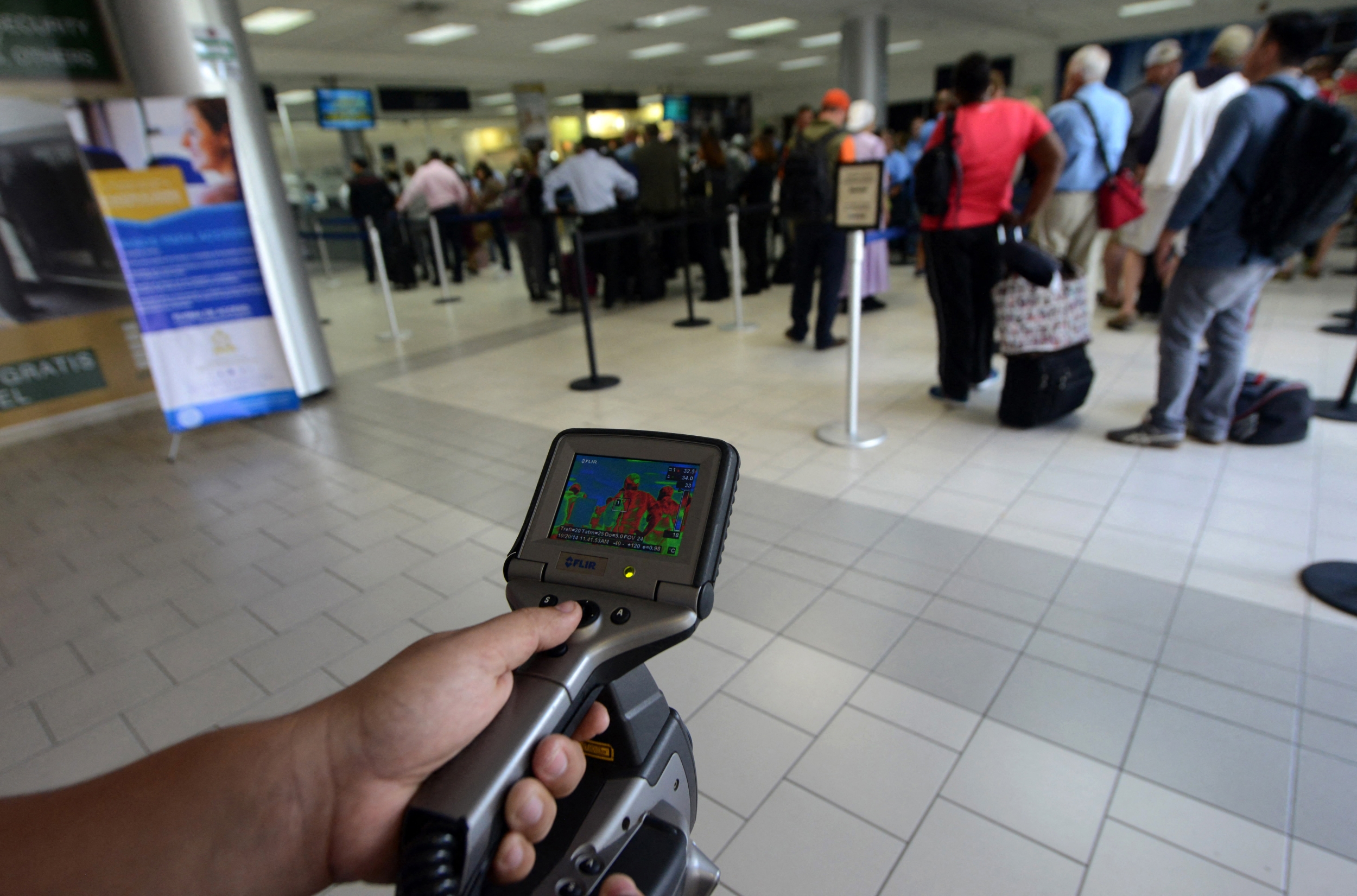
Enhanced Ebola screening is currently active at three major U.S. international airports, and entry restrictions for travelers from the Democratic Republic of the Congo, Uganda, and South Sudan remain in effect through approximately July 21, 2026. The measures were put in place in response to a growing outbreak of Bundibugyo virus disease — a rare and potentially fatal strain of Ebola for which no approved vaccine or specific treatment exists.
Travelers who have recently returned from those regions, or who plan to travel there, need to understand what these measures require and what symptoms demand immediate medical attention.
Why This Matters
The Bundibugyo strain of Ebola is not the same as the Zaire strain responsible for West Africa’s 2014–2016 epidemic. The FDA-approved Ebola vaccine that provided protection in those prior outbreaks is not considered effective against the Bundibugyo virus. There are no approved countermeasures specific to this strain, which means containment relies on surveillance, contact tracing, isolation, and border screening.
Case fatality rates for Bundibugyo virus disease in prior outbreaks have ranged from approximately 25% to 50%, according to the CDC — lower than Zaire Ebola but still highly serious. Patients experience fever, vomiting, severe weakness, and in some cases bleeding. Without a vaccine or treatment option, early identification of cases among arriving travelers is critical to preventing domestic spread.
The World Health Organization has declared this outbreak a Public Health Emergency of International Concern — its highest alert designation.
What We Know So Far
The DRC’s Ministry of Health confirmed the Bundibugyo outbreak on May 15, 2026, after laboratory analysis identified Bundibugyo virus in samples from clusters of severe illness and deaths in Ituri Province. The affected health zones — Mongbwalu and Rwampara — are in northeastern DRC near the Ugandan border.
By mid-June 2026, the DRC had reported 837 confirmed cases and 196 confirmed deaths. Uganda confirmed cases linked to travelers from DRC. South Sudan, which borders both countries, has not confirmed any cases but is included in U.S. entry restrictions due to the geographic risk.
The U.S. response has been layered:
As of the most recent CDC update, one American citizen who worked in DRC tested positive for Ebola but has since fully recovered and was released from care. High-risk contacts completed 21-day monitoring without developing symptoms. The CDC assesses the risk to the general U.S. public as low. No cases have been acquired domestically.
Which Airports Are Conducting Screening
The CDC and U.S. Customs and Border Protection (CBP) are conducting enhanced Ebola screening at three designated airports for travelers arriving from DRC, Uganda, or South Sudan:
- Washington Dulles International Airport (IAD) — for flights departing affected countries after May 21, 2026
- Hartsfield-Jackson Atlanta International Airport (ATL) — for flights after May 22, 2026
- George Bush Intercontinental Airport, Houston (IAH) — for flights after May 26, 2026
U.S. citizens and nationals who have been in the affected countries are permitted to return but must enter through one of these designated airports and undergo enhanced public health screening, which may include a health interview, temperature check, and review of symptoms. Travelers without symptoms will receive monitoring instructions and may continue to their final destination.
According to the U.S. Embassy in DRC, travelers should be prepared for possible flight changes or cancellations when routing through these airports.
Where the Risk Is Highest
The active outbreak is concentrated in Ituri Province in northeastern DRC, particularly the Mongbwalu and Rwampara health zones. The CDC notes that the affected areas experience insecurity, population displacement, mining-related movement, and frequent cross-border traffic — all factors that increase transmission risk and complicate outbreak containment.
In the United States, travelers and healthcare workers who have recently returned from DRC, Uganda, or South Sudan face the primary risk. International humanitarian workers, aid and medical personnel, journalists, researchers, and missionaries are the groups with the highest likelihood of having been in outbreak zones.
Healthcare facilities in Atlanta, Houston, and the Washington D.C. metropolitan area should maintain heightened awareness given their proximity to the designated screening airports. Emergency departments and infectious disease units in these cities are most likely to encounter a returning traveler who develops symptoms during the 21-day monitoring period.
What Doctors and Experts Say
The CDC’s Health Alert Network advisory (HAN 00530) issued May 19, 2026, emphasized that “the risk of spread to the United States is considered low at this time” but called on clinicians to remain vigilant. The agency stated it is working through its country offices and international partners to support disease tracking, contact tracing, laboratory testing, and border health screening.
The CDC noted a specific challenge with this outbreak: the FDA-approved vaccine (Ervebo) is effective against Zaire ebolavirus — the species responsible for major past outbreaks — but is not considered effective against Bundibugyo virus. The absence of an approved countermeasure for this strain makes infection control and early case detection especially critical.
WHO Director-General Tedros Adhanom Ghebreyesus, in public statements cited across multiple outlets covering the outbreak’s early weeks, acknowledged that the delay in detecting the initial cluster meant response teams were “playing catch-up with a very fast-moving epidemic.” Contact tracing, treatment center establishment, and infection control measures have been scaled up since.
For healthcare providers seeing patients who have returned from affected regions, the CDC recommends immediately placing potentially symptomatic patients under appropriate infection control precautions and contacting local or state public health departments for guidance on testing and isolation.
What the Evidence Shows and What It Does Not
The Bundibugyo virus has caused only two prior recorded outbreaks — Uganda in 2007 and DRC in 2012 — making it less well-studied than Zaire ebolavirus. Prior outbreaks had case fatality rates of approximately 25% to 50%, but that range reflects small sample sizes and variable outbreak conditions.
Airport screening can identify travelers who are symptomatic at the time of arrival but cannot detect those who are infected but not yet showing symptoms. As the CDC states: “Public health entry screening cannot identify travelers who are infected but not yet showing symptoms.” The incubation period for Ebola is 2 to 21 days. Screening is therefore one component of a multilayered public health response, not a complete safeguard.
The 21-day post-departure monitoring requirement for returning travelers exists precisely because of this gap.
Who Faces the Greatest Risk?
Based on current epidemiological data and CDC guidance, the highest-risk individuals in the United States are:
- People who have traveled to or from Ituri Province, DRC, within the past 21 days
- Humanitarian aid workers, healthcare volunteers, and missionary workers returning from DRC or Uganda
- People who had direct contact with the blood or bodily fluids of a person confirmed or suspected to have Bundibugyo virus disease
- Healthcare workers who treated or evaluated patients with suspected BVD without full personal protective equipment
- Individuals who attended funerals or burial ceremonies in affected areas, where transmission risk is historically elevated
The CDC’s Level 2 Travel Health Notice recommends avoiding nonessential travel to the specific affected provinces in DRC (Ituri, Nord-Kivu, and Sud-Kivu).
Symptoms and Warning Signs to Watch For
Anyone who has been in DRC, Uganda, or South Sudan within the past 21 days should monitor themselves carefully for the following symptoms, which may appear between 2 and 21 days after exposure:
- Sudden onset of fever (often above 101.5°F / 38.6°C)
- Severe headache
- Muscle pain and weakness
- Fatigue
- Vomiting and diarrhea
- Stomach pain
- Unexplained bleeding or bruising (typically a later sign)
The development of any of these symptoms in a person who has recently returned from an affected region requires immediate action. Do not travel to a hospital or clinic without calling first. Contact your local health department or call 911 and tell the dispatcher about your recent travel and symptoms so that appropriate isolation procedures can be prepared before you arrive.
What You Can Do Now
- If you recently returned from DRC, Uganda, or South Sudan, follow your state or local health department’s monitoring instructions for 21 days after your departure date from those countries.
- Monitor your temperature daily and record any symptoms during the 21-day window.
- Avoid international and domestic travel during your monitoring period, per CDC recommendations.
- If you develop any symptoms, do not go directly to a hospital. Call your local health department and inform them of your travel history before seeking care.
- Register with the Smart Traveler Enrollment Program (STEP) if you are a U.S. citizen in DRC, Uganda, or South Sudan, so the nearest embassy can provide updates and assistance.
- Healthcare providers who evaluate a returning traveler with fever or other compatible symptoms should immediately implement infection control measures and notify their state health department and the CDC Emergency Operations Center at 770-488-7100.
Cost and Access: What Patients Should Know
If a returning traveler is identified as a potential Ebola case, isolation and evaluation will be coordinated by public health authorities. The CDC maintains a network of federal medical stations and Regional Ebola and Special Pathogen Treatment Centers (RESPTCs) capable of safely managing patients with highly infectious diseases.
For general travelers concerned about health coverage abroad, the U.S. Department of State recommends purchasing travel insurance that includes medical evacuation coverage before traveling to high-risk regions.
What Happens Next
The current U.S. entry restriction order expires around July 21, 2026, but may be extended if the outbreak continues to grow. The CDC will assess the epidemiological situation and issue updates as warranted.
WHO and international partners are working to scale up outbreak response in DRC and Uganda, including contact tracing, treatment access, and community engagement in affected areas. Given that no approved vaccine or specific treatment exists for Bundibugyo virus, containment measures remain the primary line of defense.
MedicalDaily will follow CDC updates and the WHO outbreak situation report as they are published.
The Bottom Line
Ebola airport screening is active at Dulles, Atlanta, and Houston through at least July 21, 2026. The Bundibugyo strain currently affecting DRC and Uganda has no approved vaccine or treatment, and the outbreak has now surpassed 800 confirmed cases with nearly 200 deaths. The CDC assesses the risk to the general U.S. public as low.
But low risk does not mean no risk. Travelers who have been in affected regions must monitor themselves for symptoms for 21 full days after departure and must contact health authorities — not walk into an emergency room — if symptoms develop. Following official CDC and state health department guidance is the single most important step returning travelers can take.
Leave a Reply