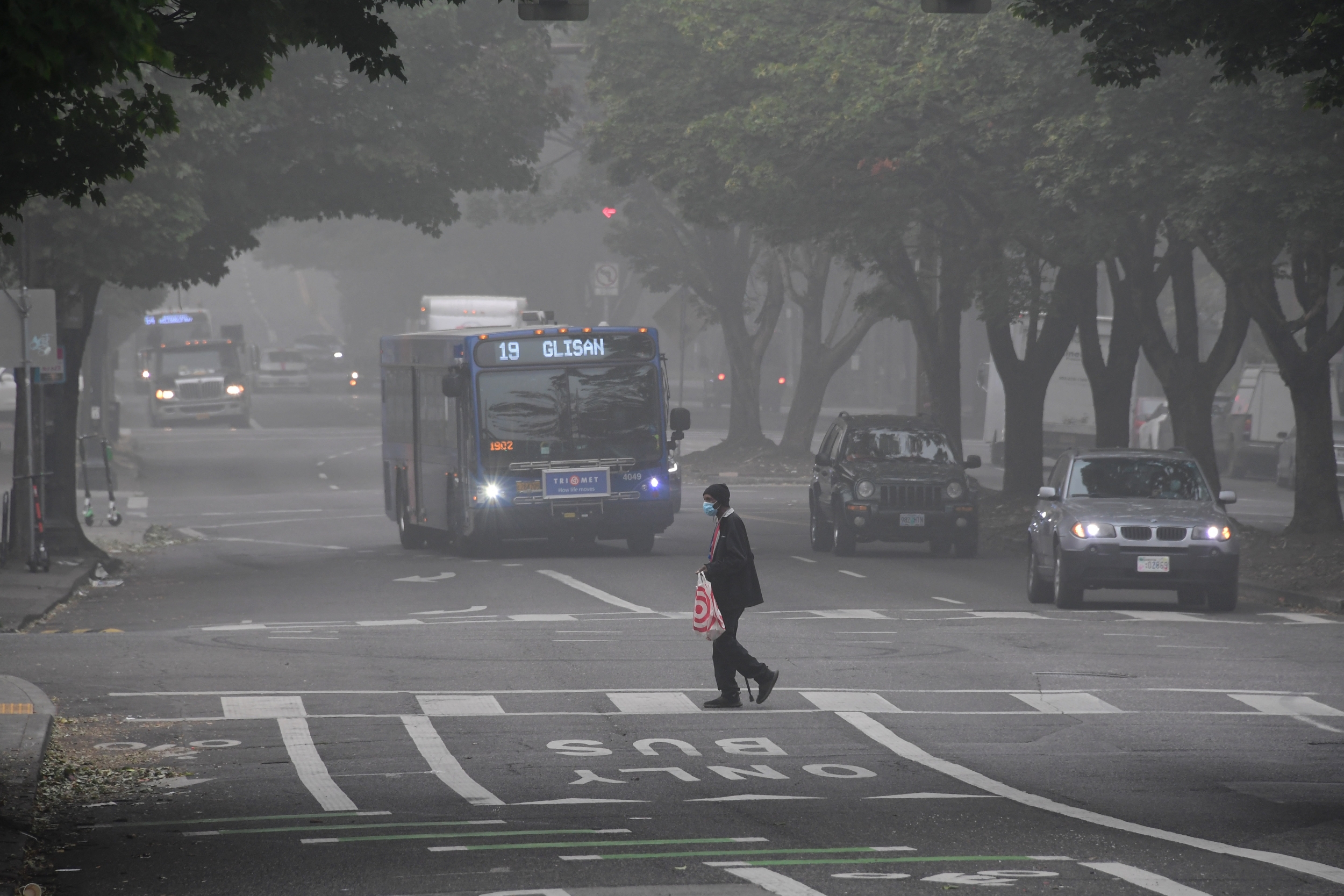
The Oregon Department of Environmental Quality extended its air quality advisory on Wednesday, July 22, 2026, for a broad stretch of eastern and central Oregon, keeping health warnings active through at least Friday afternoon, July 24 — today. The advisory, which has now been extended three times since its original Monday end date, covers Baker, Crook, Deschutes, northern Harney, Grant, Jefferson, northern Malheur, Morrow, Union, southern Umatilla, and Wheeler counties due to smoke from multiple wildfires burning across southern, central, and eastern Oregon.
The DEQ also identified intermittent smoke conditions in adjacent areas including Clackamas, eastern Douglas, northern Jackson, Klamath, Lake, and Wallowa counties through Friday afternoon. Separately, the DEQ issued an ozone smog advisory earlier this week for the Portland metro area, Salem, Hermiston, and Ontario, running through Wednesday evening.
Why This Matters
Wildfire smoke is not the same as the kind of air pollution most people think of from traffic or industry. Its most dangerous component is fine particulate matter, known as PM2.5 — particles less than 2.5 microns in diameter, small enough to bypass the body’s upper respiratory defenses and penetrate deeply into the lungs. Once inhaled, PM2.5 can enter the bloodstream and reach the heart, brain, and other organs.
For people with asthma, chronic obstructive pulmonary disease, heart disease, or other cardiovascular or respiratory conditions, even moderate smoke exposure can trigger exacerbations that require emergency care. Children and pregnant people face distinct risks: children’s lungs are still developing, and PM2.5 exposure in pregnancy has been associated with preterm birth and low birth weight in multiple studies. Older adults face heightened cardiovascular risk from PM2.5 exposure even without pre-existing lung disease.
As the DEQ’s advisory states, air quality may reach unhealthy levels in affected areas, with conditions capable of changing rapidly depending on wind and fire behavior.
What We Know So Far
Air quality was measured as “unhealthy” in Prineville, Pendleton, La Grande, and Baker City as of the afternoon of July 20, 2026, according to Central Oregon Daily. Under DEQ’s six-tier classification system, “unhealthy” means the general public may begin to experience health effects, while sensitive groups face serious health risks.
The advisory was first issued for a subset of counties and was originally scheduled to end Monday, July 20. It was extended to Wednesday, then to at least Friday afternoon, July 24, reflecting the persistence of the wildfire smoke and the failure of weather conditions to clear affected areas.
The smoke sources are multiple wildfires across southern, central, and eastern Oregon. Earlier in July, the East Evans Creek Fire in southern Oregon contributed to initial advisories before the smoke pattern expanded. The current advisory reflects a broader regional fire environment rather than a single named fire.
Where the Risk Is Highest
The counties under the active advisory — Baker, Crook, Deschutes, northern Harney, Grant, Jefferson, northern Malheur, Morrow, Union, southern Umatilla, and Wheeler — cover a wide stretch of eastern and central Oregon, including Bend (Deschutes County), La Grande (Union County), Pendleton (Umatilla County), and John Day (Grant County).
Residents in these communities who live or work outdoors, those who depend on cooling by opening windows, and those with limited access to air conditioning or air filtration face the highest cumulative exposure. Agricultural workers, construction workers, and others in outdoor occupations in affected counties face occupational exposure that cannot be avoided by staying indoors.
The DEQ and partner agencies are continuing to monitor smoke conditions, and the advisory may be extended or expanded further depending on fire behavior and wind patterns.
What Doctors and Experts Say
DEQ spokesperson Jennifer Horton told KATU that residents most at risk should stay indoors during the hottest parts of the day when pollutant levels are typically highest. “If you’re able to stay indoors during the hottest parts of the day when ozone levels are going to be the highest, that will help alleviate some of those health conditions,” Horton said.
For people with heart or lung conditions, the DEQ recommends consulting a health-care provider before wearing a respirator, as the exertion required to breathe through a properly sealed N95 can itself place demands on the cardiovascular system. People who use inhalers, bronchodilators, or other respiratory medications should ensure they have an adequate supply and access to those medications during extended smoke events.
What the Evidence Shows — and What It Does Not
PM2.5 from wildfire smoke is a well-established health hazard supported by decades of peer-reviewed research. Short-term spikes in PM2.5 are consistently associated with increases in emergency department visits for asthma, respiratory distress, and cardiac events. The health consequences scale with concentration and duration of exposure, meaning a multi-day advisory affecting a broad area carries more cumulative health risk than a brief spike.
What is harder to quantify in real time is the specific PM2.5 concentration in any individual location, since wildfire smoke levels can change within hours depending on fire behavior, terrain, and wind. The DEQ’s official AQI data provides the most reliable real-time measurement available.
Cloth masks, surgical masks, and dust masks do not protect against PM2.5. Only properly fitted NIOSH-approved N95 or P100 respirators can reduce inhalation of fine smoke particles, according to DEQ’s advisory guidance. Standard respirators do not come in sizes appropriate for children, meaning young children cannot be effectively protected by masking outdoors.
Who Faces the Greatest Risk?
People with asthma, COPD, emphysema, or other chronic obstructive or restrictive lung disease face the highest respiratory risk from wildfire PM2.5 exposure. People with heart disease or prior heart attack face elevated cardiovascular risk from smoke, including increased risk of arrhythmia and acute coronary events during high-exposure periods.
Pregnant people face a distinct concern: PM2.5 exposure during pregnancy has been associated in published research with preterm birth, low birth weight, and adverse fetal lung development. Pregnant residents in affected counties should treat the advisory as applying to them even if they feel well.
Children under the age of 14 and adults over 65 are classified as sensitive groups by the EPA, meaning they may experience effects at lower concentrations than healthy adults. Infants and toddlers face the highest vulnerability because their lung development is most active and they spend the most time in care settings that may rely on natural ventilation.
Outdoor workers in affected counties face occupational exposure that indoor workers do not. Construction crews, farm workers, utility workers, and others who cannot work indoors should follow employer guidance on break frequency, access to clean air spaces, and symptom monitoring.
Symptoms and Warning Signs to Watch For
Wildfire smoke exposure can cause burning or irritated eyes, runny nose, sore throat, coughing, and shortness of breath in otherwise healthy people. These symptoms are generally mild and resolve when a person moves to cleaner air.
For people with asthma or COPD, smoke can trigger wheezing, chest tightness, increased breathlessness, and reduced peak flow that may require additional use of rescue inhalers or other medications. Symptoms that do not respond to usual rescue medications, worsening shortness of breath at rest, chest pain, rapid heart rate, confusion, or loss of consciousness warrant urgent or emergency evaluation.
People who experience new or worsening chest pain, pressure, or tightness during a smoke event — even without prior heart disease — should seek emergency care. Wildfire smoke has been associated in research with triggering acute cardiac events in people who did not know they had underlying heart disease.
What You Can Do Now
The most effective action for residents in affected counties is to stay indoors with windows and doors closed as much as possible. If your home has a central air system, set it to recirculate indoor air rather than drawing in outside air. A portable HEPA air purifier run in the room where you spend the most time can significantly reduce indoor PM2.5 concentrations.
If you must go outdoors for essential activities, a properly fitted NIOSH-approved N95 respirator provides meaningful protection. Select a respirator with an N, R, or P designation alongside the number 95, 99, or 100. Surgical and cloth masks do not provide effective filtration for wildfire PM2.5. Respirators must form a tight seal against the face to work, which means they do not fit children.
Check current air quality conditions before going outdoors at Oregon DEQ’s Air Quality Index, the Oregon Smoke Information Blog, or by downloading the free OregonAIR app. AQI updates are in near real-time and are the most reliable tool for assessing current local conditions.
If you are experiencing worsening symptoms and do not have access to cleaner air at home, 211info.org maintains a directory of clean air shelter locations in Oregon. Search for “Wildfire Related Clean Air Shelters” or call 211 during business hours, 8 a.m. to 6 p.m.
People with asthma or COPD should ensure their rescue inhaler and any controller medications are filled and accessible before an extended smoke event. If you have a written asthma or COPD action plan, review it with your health-care provider at your next appointment to include guidance on smoke days.
Cost and Access: What Patients Should Know
N95 respirators are available at most hardware stores, home improvement retailers, and online retailers at a cost of roughly $1 to $4 per mask when purchased in multipacks. For residents who cannot access or afford respirators, free clean air shelter locations are available through 211info.org. OHA-certified community health workers in some counties can also connect residents to local resources during declared air quality events.
People who use prescription inhalers or respiratory medications and are running low should contact their pharmacy or prescriber as early as possible, as demand for rescue medications typically increases during extended smoke events. Many pharmacies can provide emergency supplies of maintenance inhalers for patients with active prescriptions.
What Happens Next
The DEQ advisory is scheduled through at least Friday afternoon, July 24, 2026 — today — but may be extended further depending on wildfire activity and weather patterns. DEQ and partner agencies are monitoring conditions continuously.
Residents in affected counties should check oregonsmoke.org and the DEQ AQI tool periodically throughout the day, as smoke levels can shift within hours. MedicalDaily will note any further advisory extensions if conditions worsen or additional counties are added.
The Bottom Line
Oregon’s air quality advisory for wildfire smoke is active today and covers more than a dozen counties across eastern, central, and parts of western Oregon. For healthy adults, staying indoors with windows closed is the most effective response. For people with asthma, COPD, heart disease, children, pregnant people, and older adults, this advisory should be treated as a direct health warning: limit outdoor time, use HEPA filtration indoors, wear a properly fitted N95 if outdoor activity cannot be avoided, and monitor symptoms closely. Emergency care should be sought if respiratory or cardiovascular symptoms worsen despite precautions.