Tag: Focus

  • Mindfulness and the Rise of Analog Living

    Mindfulness and the Rise of Analog Living

    I recently walked into an abstract art class for the first time. I’m not a painter. I had no idea what I was doing. I stood in front of a blank canvas with a brush in my hand and a small, anxious voice in my head asking, What now?

    With encouragement from the passionate teacher, I dipped the brush in the paint, touched it to the canvas, and watched a streak of colour appear. The voice in my head got a little softer. The studio smelled of turpentine and quiet joy. I could hear the bristles dragging across the surface. There was no algorithm telling me what to do next. No notification. No metric of success for once. Just the paint, the canvas and whatever was about to happen.

    I left that first painting class feeling something I hadn’t felt in a while: fully engaged. Not because I’d done nothing, but because, for three whole hours, there had been nowhere else to be.

    I left that first class feeling something I hadn’t felt in a while: fully engaged. Not because I’d done nothing, but because, for three whole hours, there had been nowhere else to be.

    It turns out I’m not the only one feeling this. Quietly, all around us, something is shifting.

    Revisiting analog living: a cultural turn

    People are buying film cameras again—not because they can’t afford digital, but because they actually want the grain. They want the uncertainty of not knowing how the photo turns out. They’re filling their bags with paper journals and puzzle books and leaving their phones in their pockets. Searches for analog hobbies have surged. Sales of film photography equipment have more than doubled since 2020. Craft kits are flying off the shelves. There’s even a viral trend called the Analog Bag—a curated little collection of essentials (a journal, a puzzle book, a film camera, a magazine) so that when your hand reaches for something to occupy itself, it finds something other than your phone.

    Forbes has called this the year of Analog Living. Design platforms are calling it the year of imperfect visuals: grain, hand-drawn lines, messy textures. Interior designers have moved from sterile minimalism to what they call dopamine decor: bold colours, personal heirlooms, physical collections that make a room feel something rather than merely photograph well.

    A phrase that caught my attention recently is brain wealth. This is the idea that mental longevity comes from slow, attentive activities: long-form reading, writing by hand, making something with your hands. One survey found that around a quarter of Brits are actively looking for creative, non-digital hobbies specifically to help them switch off after work.

    That’s a quarter of a country quietly raising its hand and saying, Something isn’t quite right with the way I’m living.

    Why a brush in your hand changes things

    Here’s what struck me in the abstract art class. The information available to me was, in one sense, far less than what’s available on my phone. There’s no infinite scroll. I won’t find tutorials autoplaying. There’s an obvious absence of comments and likes. And yet I felt more, not less. More awake. More here.

    Every piece of digital technology we use has been brilliantly, expertly designed to remove friction. To make things faster, smoother, more seamless. You don’t have to wait or be patient. You don’t have to sit with uncertainty. On the surface, that sounds wonderful.

    But here’s the thing: some friction is the point.

    Why does holding a physical book feel different from reading the same words on a screen? Why does a handwritten letter land differently than an email of identical content? Why does a grainy, slightly imperfect photograph feel more alive than a flawless high-resolution image?

    I think one answer is friction.

    Every piece of digital technology we use has been brilliantly, expertly designed to remove friction. To make things faster, smoother, more seamless. You don’t have to wait or be patient. You don’t have to sit with uncertainty. On the surface, that sounds wonderful.

    But here’s the thing: some friction is the point.

    When you wind a film camera, you only have thirty-six photos. That constraint forces you to actually look before you press the shutter. When you write by hand, you can’t type as fast as you can think—so you slow down, choose your words, dwell in a thought rather than blasting through it. When you stand in front of a canvas with a brush in your hand, the paint doesn’t care that you’re running late or that your inbox is full. It simply is what it is, and it asks for your full attention.

    In mindfulness, we sometimes call this beginner’s mind. The quality of meeting something freshly, without the overlay of habit or expectation. Analog activities seem to invite beginner’s mind almost by default. There’s no algorithm predicting what comes next. There is only this moment, and what you do with it.

    The deeper question to hold in our awareness

    Now, I could stop here and tell you to go and buy a film camera or sign up for a pottery class. And that wouldn’t be bad advice! But I want to go a layer deeper, because I think this cultural shift is pointing at something that no number of analog hobbies can fully resolve on its own.

    Here’s the question I keep returning to:

    Who is the one who wants to switch off?

    We talk about digital overwhelm as if it’s a problem out there—the apps, the notifications, the powerful and persuasive algorithms. And those things are real. But the deeper discomfort, the thing that makes someone reach for the puzzle book or the film camera, isn’t really coming from the phone. It’s coming from inside.

    It’s restlessness. A constant low-level mental buzz. A sense that you’re never quite here, because some part of your mind is always somewhere else—planning, comparing, scrolling, performing.

    The phone made the restlessness visible. It gave the restless mind somewhere to go, constantly, without relief.

    The phone made the restlessness visible. It gave the restless mind somewhere to go, constantly, without relief.

    So when people say they want to switch off, what they’re really saying, I think, is: I want a break from being so relentlessly me. From the constant commentary. The self-monitoring. The performing. The quiet undercurrent of not-good-enough.

    That’s the beginning of an inquiry that meditators and contemplatives have been pointing at not just for decades, but for centuries. No phones around then!

    The self is exhausting. And somewhere, on a level we don’t usually put into words, we know it.

    Why craft is therapeutic—and where it leads

    When your hands are full, literally full of clay, or yarn, or paint, the chattering mind gets a little quieter. Its attention has been absorbed somewhere more immediate.

    These activities work with the mind’s natural tendency to rest in sensory experience. They give the thinking mind something to do that doesn’t feed the anxiety loop.

    This is why craft is therapeutic. Why gardening is meditative. Why cooking from scratch feels centring in a way ordering delivery never does. These activities work with the mind’s natural tendency to rest in sensory experience. They give the thinking mind something to do that doesn’t feed the anxiety loop.

    In my abstract art class, I notice this every time. There’s a moment, usually about twenty minutes in, when something settles. I’m no longer thinking about whether the painting is good. I’m just there, with the colour, with the canvas, with whatever wants to emerge. It’s not unlike the moment in meditation when the breath stops being an object you’re observing and just becomes something happening, here, now.

    But—and this is the gentle but—analog hobbies are the doorway, not necessarily the destination. Because after the painting class, the restlessness comes back. After the lovely walk without headphones, you get home and the self returns. The deeper practice that mindfulness points towards isn’t to keep busy enough that the restlessness can’t find you. It’s to learn to meet it. To get curious about it. To eventually ask, gently, without demanding an answer: Who is this restless one?

    That inquiry is where analog living and deep mindfulness practice can become something far more profound than a passing trend.

    How to connect to this analog living moment more mindfully

    If any of this lands with you, here are a few suggestions.

    Choose friction on purpose. Pick one activity each week where you deliberately use the slower version. Write a card by hand instead of sending a message. Read a chapter of a physical book instead of an article on your phone. Cook something from scratch that you’d normally order in. The point isn’t efficiency. The point is the friction itself.

    Let the activity be the meditation. When you do your analog thing, resist the urge to put a podcast on in the background. Let it be the only thing happening. Notice the sensations:  the weight of the pen, the smell of the paint, the sound of the page turning. This is mindfulness in plain clothes.

    Don’t pick the impressive one. People often assume the analog hobby has to be photogenic like pottery, calligraphy, vinyl records. It doesn’t. Making a slow cup of tea counts. Folding laundry without a screen counts. Walking somewhere without headphones counts. The hobby is not the point. Presence is the point.

    Pick the activity your hands already want. Notice what your hands do when you’re idle. Some people, like me, doodle. Some people fiddle with objects. Some people are always tidying. Some people are drawn to texture—fabric, wood, soil. Your hands have already been telling you, for years, what kind of analog activity would suit you. Listen to them.

    Pick what your inner critic dismisses. I almost didn’t go to the abstract art class because a voice in my head said, But you’re not an artist. That voice is often a useful clue. The thing it tries to talk you out of That’s silly, that’s frivolous, that’s not productive—is frequently the thing your nervous system most needs.

    Pair the activity with one quiet question. While you’re doing your analog thing, gently hold one question in the back of your mind: Who is the one noticing this? You don’t need to answer it. In fact, the not-answering is the whole point. Just hold it lightly. That question, if you let it, is a thread that leads somewhere extraordinary.

    Let it be imperfect. The grain on the photograph. The wobble in the handwriting. The stripe of colour you didn’t plan in the painting. These are not flaws to be edited out. They are the signature of something real having actually happened. A life that has been touched leaves marks. Let it.

    Walking through the door

    The analog movement is giving millions of people a small, daily taste of presence. A moment of real, embodied, here-ness. That taste is the beginning. That’s the door.

    Mindfulness is what teaches you to walk through it.

    So this week, pick one analog thing. Make it small. Make it ordinary. And while you’re doing it, instead of just doing it, get a little curious. Notice the quality of attention that arises. Notice the way the mind settles. And then, very gently, notice the one who is noticing.

    That noticing—that quiet, unhurried looking—is where this all leads. Not back to a romanticised past, but forward, into a life that is actually being lived.

    May you find at least one moment this week that is beautifully, imperfectly analog.


    Join Us: The Seven Strengths Global Event

    Looking for more ways to slow down and anchor in an interior calm—even (or maybe especially) when the world feels so frantic and uncertain?

    From May 13–19, 2026, I’ll be joining some of the most respected teachers alive – including Sharon Salzberg, Rick Hanson, Kristen Neff, Tami Simon, Mamphela Ramphele, and Melli O’Brien – for a free, seven-day online global event called The Seven Strengths.

    The event is hosted by Mindfulness.com in collaboration with Sounds True and DailyOM, and all proceeds support the Global Compassion Coalition’s work to build a more compassionate, resilient world. That means joining is both an act of personal growth and an act of collective generosity.

    Part of this resurgence in interest in analog living is that we are all intuiting something vital: the world doesn’t need more anxious, exhausted people trying to hold everything together. It needs calmer, wiser, more compassionate human beings choosing to show up, day after day, from a place of genuine inner strength.


    Source link

  • Infinite Mind – Focus & Concentration Audio for Kids

    Infinite Mind – Focus & Concentration Audio for Kids

    Product Name: Infinite Mind – Focus & Concentration Audio for Kids

    Click here to get Infinite Mind – Focus & Concentration Audio for Kids at discounted price while it’s still available…

    All orders are protected by SSL encryption – the highest industry standard for online security from trusted vendors.

    Infinite Mind – Focus & Concentration Audio for Kids is backed with a 60 Day No Questions Asked Money Back Guarantee. If within the first 60 days of receipt you are not satisfied with Wake Up Lean™, you can request a refund by sending an email to the address given inside the product and we will immediately refund your entire purchase price, with no questions asked.

    (more…)

  • How Sleep Memory Science Powers Better Focus and Stronger Memory

    How Sleep Memory Science Powers Better Focus and Stronger Memory

    Sleep is not just downtime for the body; it is active maintenance time for the brain. The relationship between sleep and brain health shapes how well a person can think, focus, manage emotions, and remember important information.

    Research in sleep memory science shows that during sleep, the brain replays, organizes, and stores experiences from the day, turning short-term impressions into more stable memories. Understanding how sleep and brain health interact explains why good rest is essential for learning, performance, and long-term cognitive wellbeing.

    The Science of Sleep and Brain Health

    Sleep and brain health are tightly linked through the different stages of sleep that repeat in cycles through the night.

    During non-rapid eye movement (NREM) sleep, especially deep slow‑wave sleep, brain activity slows, energy is restored, and waste products are cleared. In rapid eye movement (REM) sleep, brain activity becomes more dynamic, supporting emotional processing and creativity.

    Sleep memory science suggests these stages work together to protect neurons, balance brain chemicals, and maintain healthy brain networks.

    While a person sleeps, the brain trims weaker connections, strengthens important ones, and supports the structure needed for clear thinking and a stable mood. When sleep is too short or fragmented, this nightly “maintenance” is less effective.

    Sleep Stages, Memory, and Brain Health

    The link between sleep and brain health is especially clear in memory formation. Deep NREM sleep helps consolidate factual information, such as what someone studies, reads, or practices during the day. The brain replays recent experiences and begins transferring them from short-term storage toward longer-term networks.

    REM sleep is closely tied to emotional memories, creative insight, and problem-solving. In this stage, the brain combines new information with older memories, helping people make sense of experiences and form new ideas. Cycling through all sleep stages several times each night allows memory systems to work smoothly.

    Types of Memory in Sleep Memory Science

    Sleep memory science often focuses on three main types of memory:

    • Declarative memory: facts, concepts, and information (such as vocabulary, dates, or formulas).
    • Procedural memory: skills and habits (such as playing an instrument or refining a sport technique).
    • Emotional memory: how events feel and how the brain tags certain experiences as important or threatening.

    All three rely on healthy sleep and brain health. Deep sleep tends to support declarative and skill memories, while REM sleep helps process emotional and creative content. When sleep is shortened or low quality, people may forget details more easily, perform learned tasks less smoothly, and feel more emotionally reactive.

    Benefits of Healthy Sleep for Brain Health

    Good sleep supports sharper focus, better concentration, and more reliable attention. A well‑rested brain absorbs new information more easily and stays organized under pressure. Decisions tend to be clearer, reaction times quicker, and mental flexibility stronger when sleep patterns are consistent.

    Sleep and brain health also shape mood and emotional resilience. With enough sleep, the brain is better able to regulate stress and prevent minor frustrations from feeling overwhelming.

    Over time, healthy sleep habits are linked with a lower risk of cognitive decline and some neurodegenerative conditions, making sleep a key pillar of long‑term brain protection.

    Short‑Term Effects on Thinking and Memory

    Even a single night of poor sleep can change how the brain functions the next day. Many people notice brain fog, slower thinking, difficulty concentrating, and reduced accuracy. Tasks that require sustained attention, such as driving, studying, or detailed work, become harder.

    Sleep memory science shows that restricted sleep makes it more difficult to move information from short‑term to long‑term storage. New material feels harder to remember, and previously learned facts may be harder to recall. This is why staying up late to cram often results in feeling unprepared and forgetful.

    Long‑Term Effects on Sleep and Brain Health

    Chronic sleep loss can gradually disrupt sleep and brain health in more serious ways. Long‑term insufficient sleep is linked to a higher risk of anxiety, depression, and burnout, as the brain struggles to balance stress and mood.

    Over time, ongoing poor sleep may affect brain structure and connectivity, which in turn influences memory and thinking.

    Research in sleep memory science also points to an association between long‑term poor sleep and increased risk of cognitive decline. When the brain does not get enough deep sleep, it may clear waste products less efficiently and struggle to maintain healthy cells, which can affect how the brain ages.

    Sleep Memory Science in Everyday Life

    The role of sleep and brain health appears clearly in everyday situations. Students who study and then sleep typically recall more than those who stay up late revising the same material.

    Athletes often perform better and learn new techniques more quickly when adequate sleep is part of training, because the brain refines motor patterns during the night.

    Professionals who prioritize sleep frequently find they think more clearly, solve problems faster, and generate better ideas. Sleep memory science also supports the idea of “sleeping on it” before making big decisions. By processing information overnight, the brain often produces clearer insight by morning.

    Habits That Support Sleep and Brain Health

    Certain daily habits can significantly support sleep and brain health. Keeping a consistent sleep and wake time, even on weekends, helps stabilize the body’s internal clock. A sleep‑friendly environment, cool, dark, and quiet, encourages deeper, more restorative rest.

    Limiting screens, caffeine, nicotine, and heavy meals in the hours before bed reduces stimulation that interferes with falling asleep.

    Calm routines such as light reading, gentle stretching, or relaxation breathing can signal to the brain that it is time to wind down. Over time, these practices strengthen healthy sleep patterns, improving thinking, mood, and memory.

    When to Seek Help for Sleep Problems

    Sometimes, ongoing sleep difficulties reflect an underlying sleep disorder that affects sleep and brain health.

    Signs that it may be time to seek help include regularly taking a long time to fall asleep, waking often during the night, loud snoring with gasping or pauses, or feeling very tired despite spending enough hours in bed. These may point to conditions such as insomnia, sleep apnea, or restless legs syndrome.

    Speaking with a healthcare provider or sleep specialist can lead to proper evaluation and treatment. Addressing sleep problems early supports sleep memory science in action and protects long‑term brain function.

    Prioritizing Sleep and Brain Health for Stronger Memory

    Treating sleep as a core part of health gives the brain what it needs to function at its best. Solid evidence from sleep memory science shows that sleep strengthens learning, stabilizes mood, and protects cognitive abilities over time.

    For anyone noticing ongoing issues with focus, mood, or memory, examining sleep habits is a powerful starting point. By prioritizing sleep and brain health, people build a stronger foundation for clearer thinking, more reliable memory, and healthier aging.

    Frequently Asked Questions

    1. Can improving sleep help with learning a new language?

    Yes. Deeper, more consistent sleep helps the brain consolidate vocabulary, grammar, and pronunciation, making new language skills stick more effectively.

    2. Is it better to sleep right after studying or take a break first?

    Short breaks are helpful, but sleeping within a few hours of studying usually gives the strongest boost to memory consolidation.

    3. Do early birds and night owls benefit differently from sleep for memory?

    Both do. The key is getting enough high‑quality sleep in line with their natural rhythm, not the exact clock time they sleep.

    4. Can changing my bedtime by an hour really affect memory?

    Yes. Even small, consistent shifts that reduce total sleep time can gradually weaken focus, learning efficiency, and memory performance.


    Originally published on Science Times

    Source link

  • Attention! How Mindfulness Training Is Helping People Reclaim Their Ability to Focus

    Attention! How Mindfulness Training Is Helping People Reclaim Their Ability to Focus

    It seems that distraction is the oxygen we breathe nowadays, with infinite bits of information at our restless fingertips. Each time I open my Edge browser, captivating news headlines and flashy images assault me. Half the time, I forget where I was headed!

    Is the effort to maintain control of our attention a fool’s errand? Nicholas Carr, in his best-seller, The Shallows: What the Internet Is Doing to Our Brains, notes that more than a few top journalists have stopped reading books because 1) they can easily find the information they need at Wikipedia and other online sources, and 2) their attention spans have withered.

    Mindfulness meditation nudges us in the opposite direction. Rather than surround ourselves with endless options, we simplify. The practice has us paying attention to this present moment, with curiosity, kindness, and nonjudgment. In place of multitasking and busyness, we discover present-moment attentiveness free from the relentless push to look for more. Mindfulness serves as a counterbalance—a grounding influence that keeps us very much here, on the spot.

    Mindfulness serves as a counterbalance—a grounding influence that keeps us very much here, on the spot.

    What Attention Training for ADHD Can Teach Neurotypical Practitioners

    For people living with attention deficit hyperactivity disorder (ADHD), the need for attention training might be more pointed. In the winter and spring of 2025, two groups completed my six-week “Mindfulness for ADHD” workshop series, with the option to extend to nine weeks. 

    I wanted to track if and how these techniques were making a difference for workshop attendees. Participants completed a 19-question evaluation at the beginning and end of the program, and data was analyzed for those who completed both: 5 participants from the 6-week program, and 3 from the 9-week program.

    One evaluation statement read, “I get distracted easily, and have a hard time refocusing on a task.” With these negatively worded statements, greater disagreement shows improvement. The totals for both groups were pre: 14 and post: 20—a 43% increase.

    Henry, one of the participants, offered this reflection: “I realize the benefits from feeling more grounded and able to recognize when distractions are impacting me and how to handle them in order to get on with things that are most important.”

    One common misunderstanding of mindfulness is that we are cultivating a particular state of mind, like calm or bliss, and anything that interrupts this process (“monkey mind”) is a detriment. People who subscribe to this perfectionist view tend to become discouraged when their ideal doesn’t materialize. They often quit, concluding that mindfulness is not for them. 

    One common misunderstanding of mindfulness is that we are cultivating a particular state of mind, like calm or bliss, and anything that interrupts this process (“monkey mind”) is a detriment.

    The effort in mindfulness practice is not to exert oneself to keep the mind focused on a particular object, such as the breath. Rather, the aim is to recognize the wandering mind and return our attention to a stable anchor of awareness—such as our breath, or feet on the floor. This exercise develops attention, and builds resiliency. You might as well be falling down and getting back up again, over and over. 

    Starting With Simple Intentions

    In one of the weekly sessions, participants were asked to set their intention in the beginning of the day, on arising. They identify a priority, such as cleaning the living room, and then keep reminding themselves of this during the day when they get involved in other activities—an active application of the meditation technique.

    “I saw how often my mind drifted from the intention,” wrote Casey, a longtime mindfulness practitioner. “By the end of the series, I had a good grip on it and was able to take on the task of painting my bathroom using this approach, and now it’s finished. I was so used to not getting things done in the past!”

    The Multitasking Myth

    Our modern culture is wedded to multitasking: the belief that we need to be dextrous at paying attention to a bunch of things at the same time. Research, however, has dismantled this myth, as neuroscientists have shown that the human brain is best suited to paying attention to one task at a time. Any more than this creates stress, increases errors, and begins to erode productivity.

    The main dealbreaker is that when we shift our attention, say, from reading an article to looking up a website, our brain has to reorient to the new context, and then when we go back to the article, we have to reorient again. This chews up precious cognitive resources, a process that researchers refer to as “switch costs.”

    Replacing multitasking with mindfulness resonated with a third group of four “Mindfulness for ADHD” participants when they responded to the statement, “Multitasking is a great way to get a lot done.” 40% of them agreed starting out, and at the end of the program, 75% disagreed/strongly disagreed.

    The people living with ADHD in these three groups were relieved to hear that simplifying to one thing at a time conserves cognitive resources and reduces stress, while preserving attention. And this message strikes a chord with the general population as well. In a 10-week Workplace Mindfulness training conducted with 10 police officers, their response to: “Multitasking enables me to accomplish more” showed a major change of mind (significant disagreement) in the post evaluation.

    The “Mindfulness for ADHD” program included a pausing practice that we call “head and shoulders.” It’s a way to take an immediate break from a challenging situation—overwhelm, frustration, stress—connect with the big picture (open space), and then revisit the challenge with a spacious frame of mind. “Learning to pause before reacting and to stay present with one task at a time,” says Gloria, “has been especially helpful.” The group with four participants showed strong improvement  with regard to the evaluation statement, “I tend to be impulsive, taking action, and then regretting it later,” progressing from 75% agree/strongly agree (pre) to 50% disagree (post).

    Anxiety and stress are common in connection with attention difficulties. The evaluation statement that showed the greatest improvement with the first two ADHD groups was:

    “I get stuck with the storylines that can make me feel anxious or stressed, and I don’t know how to pause or interrupt this pattern.” 

    In the first two groups, disagreement increased by 70% (Total scores: pre: 17; post: 29). The third group progressed from 75% strongly agree/agree (pre) to 50% disagree (post).

    Mindfulness isn’t like a vending machine where you simply put in a coin and out pops a bag of chips. There isn’t a one-to-one relationship between the practice and outcomes, which derives from the non-goal orientation of the practice. Of course, we’d like to get something out of it, but at the same time we are encouraged to check our ambition at the door. That way, we can be present with the actual practice, following the instructions as best we can, without hankering for something outside this moment.

    When we’re stuck on storylines, it’s like our thoughts are amplified by loudspeakers, glued to our ears. Mindfulness practice has us noticing when this is happening, acknowledging that these are thoughts which come and go.  We don’t have to “fix” anything. We just return our attention to this world here. Some mindfulness folks see this back and forth activity as exercising a mental muscle. We learn that, through awareness, we can radically change how we relate to our thoughts, ranging from being mesmerized and trapped, to objective discernment.

    Noticing Thoughts Without Judging Them

    Relating to our thoughts without judgment is key. 

    Getting stuck understandably makes people feel anxious or stressed. When we’re trapped in a whirlwind of thoughts, stress and anxiety are not far behind. Their impact on the brain affects working memory, which is closely related to attention.

    “Research has shown that rapidly changing circumstances, worry, and anxiety can all have a significant impact on your ability to focus,” writes Kate Morgan in the BBC’s “How Anxiety Affects Your Focus.” It stands to reason that learning how mindfulness tools can help deal with anxiety can assist us in regaining attention capacity.

    Mindfulness is not about getting rid of stress and anxiety, but relating to them with openness and curiosity—seeing them as they are, without the varnish of habitual patterns, bias, and aversion.

    People’s sense of powerlessness often arises from the fact that they don’t know how to pause or interrupt this looping cycle of distraction, anxiety, compromised focus, and judgmental thoughts. That momentary pause to be with our self-critical thoughts in a new way seems like it might not do much, but it’s actually doing a lot of work. Since it’s so easy to habitually get drawn in, putting a pin in it and taking a mental step back, even just for a breath, becomes a game-changer.

    Attention Training Matters In a Distracted World

    The mindfulness elements of grounding, present-moment orientation, kindness towards oneself, and developing awareness, attention, and nonjudgment are of course not restricted to people with ADHD. In fact, a key reason for the growing widespread interest in mindfulness is the crying need for balance and well-being in the midst of our techno-addled consumerist-driven world. 

    These skills take time to develop, and the process isn’t linear. But a growing body of research is showing that these mindfulness practices work to strengthen our attentional capacity, reduce the attendant stress of constant distractability, and enhance our sense of personal agency in a noisy world that’s relentlessly trying to pull us out of the present moment.


    Source link

  • Guided Meditation: Use Distraction to Hone Your Focus

    Guided Meditation: Use Distraction to Hone Your Focus

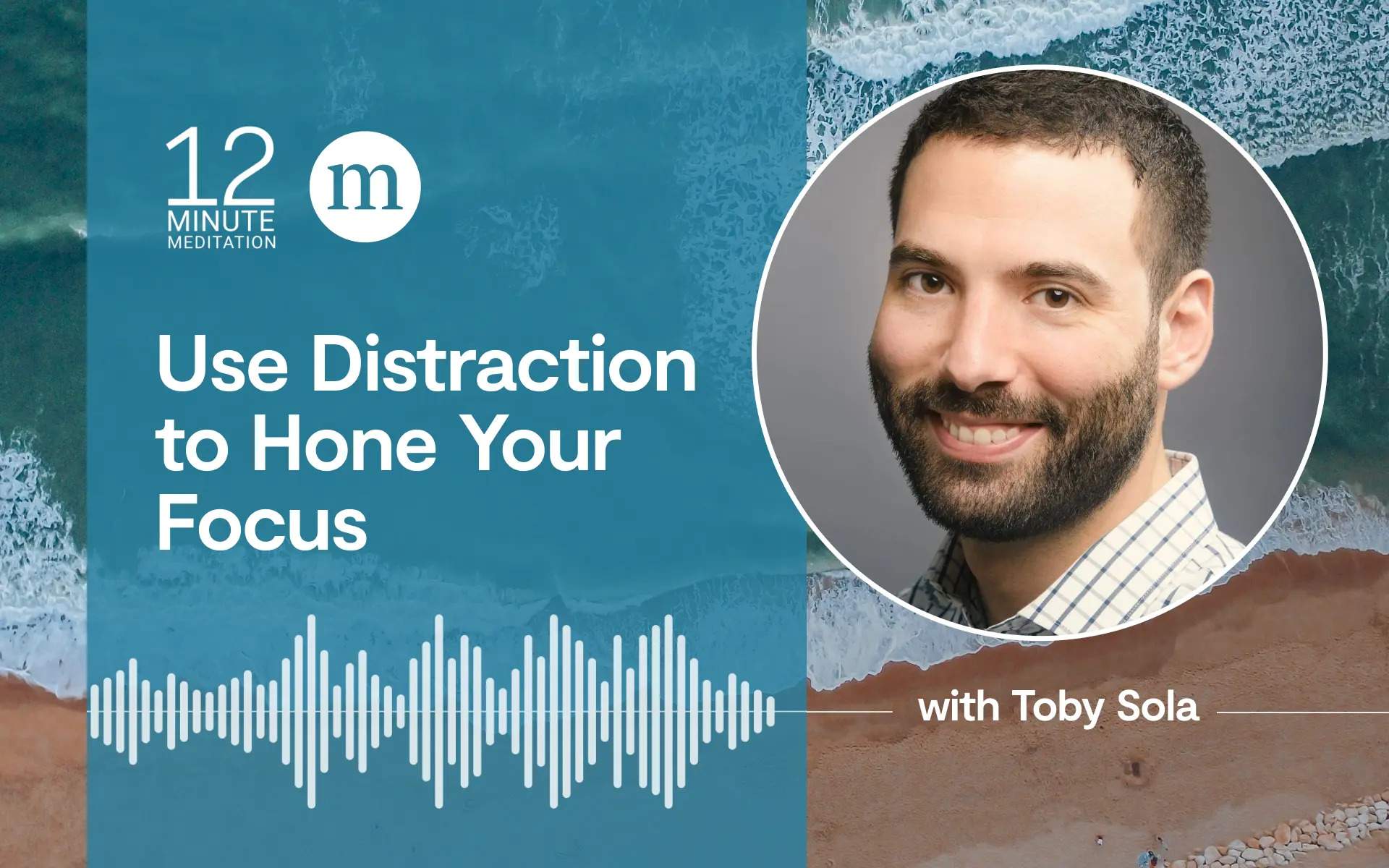
    In this week’s guided meditation, mindfulness teacher and designer Toby Sola shows us how we can use what distracts us to strengthen and sharpen our attention.

    It might seem counter-intuitive, but intentionally tuning in to what’s distracting you can actually help strengthen your ability to focus.

    In today’s guided practice, meditation teacher Toby Sola introduces what he calls a “concentration algorithm.” This practice will help you identify which type of sensory experience you are naturally drawn to, and then give you a structure for how to focus on it, so that you can quickly attain deep concentration.

    Note that this meditation includes long pauses of complete silence as part of the practice. If you want more time, feel free to pause the recording as you go. 

    Use Distraction to Hone Your Focus

    Read and practice the guided meditation script below, pausing after each paragraph. Or listen to the audio practice.

    1. In this meditation, we’ll explore what I like to call the “concentration algorithm.” Take a moment to stretch up and settle in. You can practice today’s meditation with your eyes open or closed. Bring your attention to the breath. No need to breathe in a specific way, just breathe at a natural pace. Notice air coming in and out of your nose. Notice your chest and belly expanding and contracting. If your attention wanders to thoughts, sounds, or other experiences, that’s fine. Allow the distractions to come and go in the background of your awareness. Then, gently bring your attention back to the breath. 
    2. Now take a moment to check in. What have you been most distracted by? Was your neighbor mowing the lawn, and you were distracted by the sound of the mower? Or were you distracted by thoughts? This doesn’t have to be exact, just take a guess.
    3. Which of the following categories best describes what was distracting you the most? If you had to guess, what were you most distracted by? What category does that fall into? The options are: sight, sound, physical body sensation other than the breath, mental image, mental talk, and emotional body sensation.
    4. Now let’s switch techniques. For the next little bit, focus on whatever was distracting you the most. For example, if you were distracted by sounds in your environment, focus on the sounds. Or if you’re distracted by bursts of mental talk, listen to those carefully. 
    5. Sometimes, an experience might end when we go to focus on it. For example, you focus on the sound of your neighbor mowing their lawn, but then they turn off the mower. This is very common with mental images and mental talk, as well. We may notice bursts of mental talk or flashes of mental images, but when we try to focus on them, they scurry away, like mice when a cat enters the room.
    6. Here is a tried and true trick of the meditation trade: If an experience ends when you go to focus on it, that’s fine. Just focus on the corresponding restful state. For example, if a sound disappears, focus on silence. If mental talk disappears, just focus on mental quiet. If mental images disappear, focus on a blank mental screen. If you remember that you can always focus on the corresponding restful state, then you’ll always have something to hone your focus on. Keep this in mind as you continue to focus on whatever was distracting you from the breath.
    7. Let’s check in once more. Since switching techniques, what have you been most distracted by? Remember, you can choose from sound, physical body sensation, mental talk, mental image, or emotional body sensation.
    8. Let’s switch techniques one last time. Focus on whatever was distracting you the most. And if it stops, just focus on the corresponding restful state. For example, focus on emotions in the body, unless they stop, in which case you’d focus on emotional peace. Or focus on your mental talk, unless it stops, in which case, you focus on the mental quiet.
    9. Before we wrap up, take a moment to reflect. We focused on a few things today. What was the easiest to focus on? There’s no right or wrong answer, we’re just exploring and getting to know our minds. Whatever was the easiest to focus on, remember that, and hone your focus on that next time you meditate.
    10. This is how the concentration algorithm works. It helps us discover which type of sensory experience we are naturally drawn toward, and then gives us a structure for how to focus on it, so that we can quickly attain deep concentration. 


    Source link

  • Focus on Energy and Well-Being

    Focus on Energy and Well-Being

    Hitting your 40s can feel like stepping into a new, perhaps more grounded, phase of life. You might feel more confident and have a clearer sense of who you are. Yet, it’s also a time when you might start noticing subtle shifts in your body—perhaps you don’t have quite the same boundless energy you did in your younger years, or maybe recovery after a busy week takes a little longer. These changes are a natural part of getting older, and they shine a spotlight on just how crucial it is to pay close attention to your health habits during this season of life. The foundation you build with your daily choices now can significantly impact your energy levels, overall vitality, and how well you navigate the years ahead. After 40, your healthy habits aren’t just about maintenance; they actively contribute to how vibrantly you live each day.

    The Body’s Changing Landscape in Your 40s and Beyond

    As women move into their 40s, they often begin the transition known as perimenopause. This is the period leading up to menopause, the point when the ovaries stop releasing eggs and menstrual periods permanently cease. Menopause is typically confirmed after 12 consecutive months without a period, most often around age 51. Perimenopause can last anywhere from a few months to several years, and during this time, the production of key hormones, especially estrogen and progesterone, begins to fluctuate and eventually decline.

    These hormonal shifts are the root cause of many common menopausal symptoms. While hot flashes and night sweats are widely recognized, the impact on energy and overall well-being is profound for many women. Symptoms often include:

    • Persistent fatigue or low energy levels.
    • Disrupted sleep patterns, such as difficulty falling or staying asleep.
    • Changes in mood, including increased irritability or anxiety.
    • Difficulty concentrating or feelings of “brain fog.”
    • Joint stiffness or discomfort.
    • Changes in metabolism and body composition.

    These symptoms, particularly sleep disturbances and fatigue, can make daily life feel more challenging, affecting your ability to work, socialize, and enjoy activities you love. Feeling constantly tired can significantly diminish your sense of vitality. This is why understanding these changes and having strategies to address them is so important for maintaining your energy and well-being after 40.

    Considering Hormone Replacement Therapy (HRT)

    For some women, the impact of declining hormone levels on symptoms like hot flashes, night sweats, and the resulting fatigue can be significant and disruptive, even with consistent healthy habits. In such cases, Hormone Replacement Therapy (HRT) is a medical option that can be explored with a healthcare provider. HRT involves using medication to supplement the estrogen and sometimes progesterone that your body is producing less of after menopause. The main goal is to alleviate bothersome symptoms and improve a woman’s quality of life during this transition.

    HRT can be very effective in reducing or eliminating hot flashes and night sweats, which in turn can dramatically improve sleep quality. Better sleep naturally leads to increased daytime energy and improved mood, and concentration. HRT can also help prevent bone loss and address vaginal dryness.

    HRT isn’t a single treatment; it comes in various forms, allowing healthcare providers to tailor treatment plans to individual needs and symptoms. The most common forms include estrogen-only therapy (usually for women who have had a hysterectomy) and combination therapy (estrogen and progesterone) for women who still have their uterus.

    Understanding the different ways HRT can be delivered is helpful when discussing options with your doctor:

    HRT Delivery Method How It’s Administered Primary Benefits and Considerations
    Oral Pills Swallowed daily. Systemic relief (affects the whole body); easy to take.
    Transdermal Patches Applied to the skin, changed every few days. Systemic relief; bypasses initial processing by the liver, which may have a different risk profile.
    Transdermal Gels/Sprays Applied to the skin daily. Systemic relief; allows for dosage flexibility; also bypasses initial liver processing.
    Vaginal Estrogen Cream, tablet, or ring inserted into the vagina. Primarily for local relief of vaginal dryness and discomfort; minimal absorption into the bloodstream.
    Injections or Pellets Injected into muscle or implanted under the skin. Longer-lasting systemic relief; less frequent administration.

    Deciding whether HRT is appropriate is a personal medical decision made after a thorough discussion with a qualified healthcare professional. They will review your personal and family medical history, your specific symptoms, and discuss the potential benefits and risks based on your individual health profile. For women seeking accessible medical guidance and potential treatment for menopausal symptoms, resources like Winona offer online consultations with healthcare providers who can assess your needs and, if appropriate, prescribe personalized HRT treatments delivered discreetly. This can simplify the process of getting medical support for managing menopausal symptoms affecting energy and well-being.

    Building Blocks of Energy and Vitality After 40

    Whether or not you choose to explore HRT, focusing on fundamental healthy habits remains essential for maintaining energy and vitality after 40. These practices support your body’s natural functions and help counteract the effects of aging and hormonal changes.

    Fueling Your Body for Sustained Energy

    The food you eat is your primary source of energy. After 40, paying close attention to your diet becomes even more important to support your changing body and metabolism. Focus on a diet rich in whole, unprocessed foods:

    • Fill your plate with a variety of colorful fruits and vegetables. They provide essential vitamins, minerals, fiber, and antioxidants crucial for cellular health and energy production.
    • Include lean proteins like chicken, fish, beans, and lentils in your meals. Protein helps maintain muscle mass, supports a healthy metabolism, and provides steady energy.
    • Don’t shy away from healthy fats from sources like avocados, nuts, seeds, and olive oil. These are vital for hormone balance and provide concentrated energy.
    • Choose complex carbohydrates like whole grains (oats, brown rice) over refined ones for sustained energy release.

    Staying well-hydrated is also vital. Even mild dehydration can lead to fatigue and reduced mental clarity. Make drinking water a consistent habit throughout the day.

    Moving Your Body for Physical and Mental Energy

    Regular physical activity is a potent energy booster and helps manage many age-related changes and menopausal symptoms. Exercise improves circulation, strengthens muscles and bones, and significantly benefits mental health, all contributing to increased vitality.

    • Aim for a mix of cardiovascular exercise (like brisk walking, swimming, or cycling) and strength training (using weights or resistance bands). Cardio boosts your heart health and stamina, while strength training maintains muscle mass, which is key for metabolism and preventing age-related decline.
    • Include flexibility and balance exercises like yoga or stretching to improve mobility and prevent injuries.

    Even moderate activity done consistently can have a significant impact on your energy levels, mood, and sleep quality.

    Prioritizing Restful Sleep

    Quality sleep is non-negotiable for energy and overall health. However, menopausal symptoms like hot flashes and anxiety can severely disrupt sleep. Aim for 7–9 hours per night. Creating a sleep-supportive environment and routine is crucial:

    • Maintain a consistent sleep schedule, going to bed and waking up around the same time daily, even on weekends.
    • Create a calming bedtime routine to signal to your body it’s time to rest.
    • Ensure your bedroom is cool, dark, and quiet.

    Improving sleep quality is one of the most effective ways to boost daytime energy.

    Effectively Managing Stress

    Chronic stress is a major energy drain and can worsen many menopausal symptoms. Finding healthy ways to manage stress protects your physical and mental energy reserves.

    Some effective stress management techniques include:

    • Mindfulness or meditation
    • Deep breathing exercises
    • Spending time in nature
    • Engaging in hobbies
    • Connecting with a supportive community
    • Setting healthy boundaries

    Finding what works for you and incorporating stress management into your routine is vital for maintaining your well-being and energy.

    Taking Charge of Your Vitality

    Entering your 40s and navigating perimenopause and menopause is a period of natural transformation. While these years bring changes, they also offer a powerful opportunity to invest in your health. By understanding the impact of hormonal shifts, exploring medical options like HRT if needed in consultation with your doctor, and consistently practicing foundational healthy habits related to diet, exercise, sleep, and stress management, you build resilience and maintain your vitality. You have the ability to influence how you feel as you age significantly. By making your healthy habits a priority now, you are setting the stage for a future where you can continue to live life actively and with abundant energy.

    Source link

  • The Pomodoro Technique: How to Use Breaks to Boost Focus and Productivity

    The Pomodoro Technique: How to Use Breaks to Boost Focus and Productivity

    Introduction to the Pomodoro Technique

    The Pomodoro Technique is a time management method developed by Francesco Cirillo in the late 1980s. The technique is named after a kitchen timer in the shape of a tomato (Pomodoro in Italian) that Cirillo used to help him stay focused and on track. The method has since become a popular productivity tool used by individuals around the world to boost their focus, concentration, and overall productivity. In this article, we will explore the ins and outs of the Pomodoro Technique, including its benefits, how to use it, and tips for getting the most out of it.

    What is the Pomodoro Technique?

    The Pomodoro Technique is a simple yet effective time management method that involves working in focused, 25-minute increments, called "Pomodoros," separated by 5-minute breaks. After four Pomodoros, you take a longer break of 15-30 minutes. This technique is based on the idea that frequent breaks can help you stay focused and avoid burnout. By working in focused intervals, you can eliminate distractions, stay motivated, and maintain a sustainable work pace.

    Benefits of the Pomodoro Technique

    The Pomodoro Technique offers numerous benefits, including:

    • Improved focus: By dedicating a set amount of time to a task, you can eliminate distractions and stay focused on what needs to be done.
    • Increased productivity: The technique helps you stay on track and avoid procrastination, leading to increased productivity and efficiency.
    • Better time estimation: The Pomodoro Technique helps you estimate the time required for tasks more accurately, allowing you to plan your day more effectively.
    • Enhanced creativity: The regular breaks can help stimulate your creativity and problem-solving skills.
    • Reduced burnout: The frequent breaks help prevent burnout and reduce stress, leading to a healthier work-life balance.

    How to Use the Pomodoro Technique

    Using the Pomodoro Technique is straightforward:

    1. Choose a task: Select a task you want to work on, and make sure it’s a specific, tangible goal.
    2. Set the timer: Set a timer for 25 minutes (or another length of time that works for you).
    3. Work on the task: Focus exclusively on the task at hand, without any interruptions or distractions.
    4. Take a break: When the timer goes off, take a 5-minute break to stretch, move around, or relax.
    5. Repeat the cycle: After four Pomodoros, take a longer break of 15-30 minutes.
    6. Review and adjust: After a set of Pomodoros, review your progress, and adjust your schedule as needed.

    Tips for Using the Pomodoro Technique Effectively

    To get the most out of the Pomodoro Technique, consider the following tips:

    • Start small: Begin with shorter Pomodoros (e.g., 10-15 minutes) and gradually increase the duration as you build your focus and endurance.
    • Eliminate distractions: Turn off notifications, log out of social media, and find a quiet workspace to minimize distractions.
    • Use a timer: A traditional kitchen timer or a mobile app can help you stay on track and maintain the Pomodoro rhythm.
    • Take breaks seriously: Use your breaks to recharge, stretch, or meditate, and avoid checking work-related messages or emails.
    • Be flexible: Adjust the technique to fit your needs and work style, and don’t be too hard on yourself if you get interrupted or lose focus.

    Common Challenges and Solutions

    While the Pomodoro Technique is simple, you may encounter some challenges when using it:

    • Difficulty staying focused: Try breaking down large tasks into smaller, more manageable chunks, or using a "Pomodoro warm-up" to get started.
    • Interruptions: Communicate your work schedule and boundaries with colleagues, family, or friends, and use a "do not disturb" sign or message to minimize interruptions.
    • Burnout: Make sure to take longer breaks and practice self-care activities, such as exercise, meditation, or spending time with loved ones.

    Customizing the Pomodoro Technique for Your Needs

    The Pomodoro Technique is a flexible framework that can be adapted to suit your work style, personality, and goals. Consider the following variations:

    • Adjusting the Pomodoro length: Experiment with different Pomodoro lengths, such as 20, 25, or 30 minutes, to find what works best for you.
    • Using different break lengths: Vary the length of your breaks to match your energy levels and focus, or try using a "break timer" to keep yourself on track.
    • Incorporating physical activity: Use your breaks to stretch, do some yoga, or take a short walk to improve your physical and mental well-being.
    • Combining with other productivity techniques: Experiment with combining the Pomodoro Technique with other methods, such as the Getting Things Done (GTD) system or the Eisenhower Matrix, to create a personalized productivity workflow.

    Real-World Applications of the Pomodoro Technique

    The Pomodoro Technique has been successfully applied in various contexts, including:

    • Education: Students use the technique to stay focused during study sessions and exams.
    • Work: Employees and managers use the technique to boost productivity, reduce distractions, and improve work-life balance.
    • Personal projects: Individuals use the technique to stay motivated and make progress on creative projects, such as writing, art, or coding.

    Conclusion

    The Pomodoro Technique is a simple yet powerful tool for boosting focus, productivity, and overall well-being. By working in focused intervals, eliminating distractions, and taking regular breaks, you can achieve more in less time, reduce stress, and enjoy a better work-life balance. Whether you’re a student, employee, or entrepreneur, the Pomodoro Technique can help you stay on track, overcome procrastination, and reach your goals.

    FAQs

    Q: What is the ideal length of a Pomodoro?
    A: The traditional length of a Pomodoro is 25 minutes, but you can experiment with different lengths to find what works best for you.
    Q: Can I use the Pomodoro Technique for any type of task?
    A: Yes, the Pomodoro Technique can be applied to most tasks, but it’s particularly effective for tasks that require focus, concentration, and creativity.
    Q: How do I handle interruptions during a Pomodoro?
    A: Try to minimize interruptions by communicating your work schedule and boundaries with others, and use a "do not disturb" sign or message to reduce distractions.
    Q: Can I use the Pomodoro Technique with other productivity methods?
    A: Yes, the Pomodoro Technique can be combined with other methods, such as the Getting Things Done (GTD) system or the Eisenhower Matrix, to create a personalized productivity workflow.
    Q: How do I stay motivated and avoid burnout when using the Pomodoro Technique?
    A: Make sure to take regular breaks, practice self-care activities, and review your progress regularly to stay motivated and avoid burnout.

  • Food Allergy Week:​ FPIES in focus​

    Food Allergy Week:​ FPIES in focus​


    Navigating Food Protein-Induced Enterocolitis Syndrome (FPIES) can be complex, but dietitians have a crucial role in supporting families with clarity and care. In this episode, we’re joined by Ingrid Roche, APD and co-director of Advanced Dietitians Group, to explore the foundations of FPIES — from diagnosis to multidisciplinary care. Ingrid shares practical strategies for maintaining nutritional adequacy, managing feeding challenges, guiding safe food reintroductions, and supporting parents through the emotional journey. Whether you’re new to paediatric allergy or looking to deepen your expertise, this conversation is filled with evidence-based insights and practical takeaways to strengthen your practice.

    Hosted by Rebecca Sparrowhawk

    Biography

    Ingrid Roche is an Accredited Practising Dietitian with many years’ experience in paediatric food allergy including a long stint at the Perth Children’s Hospital. She is co-director of Advanced Dietitians Group, a private dietetic practice in Perth, Western Australia, specialising in paediatrics and allergy. Ingrid also works for the National Allergy Council, leading the food service project, continuing her passion for training and education others in food allergy.

    In this episode, we discuss:

    • What FPIES is and how it differs from other food allergies
    • Recognise the dietitian’s role in diagnosis, nutrition support and care planning
    • Explore approaches to feeding challenges and supporting parent confidence
    • Gain practical guidance for safe and structured food reintroduction


    Additional resources

    • Click here to find out more about Farmers Union Gut Good
    • Click here to learn more about ASCIA Food Allergy and Adverse Food Reactions Course for Dietitians
    • Click here to listen to our episode ‘Living with FPIES: From dietitian to allergy parent’ with Kristin Houts
    • Connect with Ingrid Roche on LinkedIn


    The content, products and/or services referred to in this podcast are intended for Health Care Professionals only and are not, and are not intended to be, medical advice, which should be tailored to your individual circumstances. The content is for your information only, and we advise that you exercise your own judgement before deciding to use the information provided. Professional medical advice should be obtained before taking action. The reference to particular products and/or services in this episode does not constitute any form of endorsement. Please see  here  for terms and conditions.


    Source link
  • Dual Anchor: A Neurodiversity-Informed Meditation for Wandering Attention

    Dual Anchor: A Neurodiversity-Informed Meditation for Wandering Attention

    In this guided practice, Sue Hutton offers an approach to meditation that marshalls sensory awareness as a way to sharpen focus.

    Traditional meditation practices can sometimes be frustrating and alienating for those who are neurodivergent. Bodily discomfort or intense mental restlessness can make even the most mindfulness-curious person feel like classic meditation techniques might not be for them.

    Sue Hutton believes that mindfulness can be for anyone, and she’s dedicated her work to making mindfulness practices like meditation accessible for neurodiverse communities. In this practice, she guides us through what she calls “Dual Anchor,” a kind of meditation that engages the senses to help gently steer attention. 

    Dual Anchor: A Neurodiversity-Informed Meditation for Wandering Attention

    1. This is a neurodiversity informed, guided meditation called Dual Anchor. It can be really useful to help bring a mind that wanders excessively and struggles to pay attention, to concentrate on two anchors at the same time with our senses. This practice utilizes our vision and our breath together at the same time. 
    2. Many of us carry a lot of overwhelm inside the body, so we don’t want to exacerbate that when we do our meditation practice. We come to this path seeking to cultivate calm stillness inside. I encourage you to bring a spirit of compassion to everything that you do in your meditation path, along with a sense of gentle curiosity. Try the practice best you can, but don’t push herself if anything is overwhelming or bringing up any kind of sensory overwhelm. 
    3. Let’s start off with concentrating using your vision on an object in front of you. A candle can be a very useful object to focus on the tip of the flame. But any object will do, allowing your posture to be upright and observing something in front of you with all of your attention visually. 
    4. Feel yourself concentrating on the center of that object. Notice the body softening as you concentrate on vision. The same way a film director zooms in, focus very clearly on an object. Allow your mind to sharpen, letting everything else fall to the background, holding full command of your gaze on this object. 
    5. Soften the brow, soften the jaw. Allow the body to be soft as you engage in observing this object very, very closely. Can you get a sense of the color, the texture, the shape? Just observe. Your vision is very focused. 
    6. Now let’s include awareness of the breath. Begin with closing your eyes just for a moment while you tune into the breath. As you close the eyes, just allow them to soften as though the eyelids just rest on the eyeballs, like gentle blankets, giving you a calm, quiet space inside. 
    7. Now, feel the breath in the way that works for you. You can observe the breath through sound, breathing in so loud that you can hear the sound of your breath like an ocean tide flowing in and out, observing the sound of the breathing, with full awareness of the sound on the inhale and exhale. You can also try experiencing the breath by just observing the gentle flow in and out of the body in a way that works for you. You can have your hand resting on the belly and the chest and just feel the sensations wherever it’s comfortable, either on this surface, feeling the hand’s rising and falling with the breath, or from inside the body. If it’s comfortable for you, you can try to feel where inside the body you notice that mechanism of breathing in and breathing out. 
    8. All the while, we’re bringing a sense of deep compassion and love for ourselves as we do this. You may even feel some warmth of compassion flowing into your body through your hands. So there’s a loving touch, compassion for ourselves as we breathe in and out. Remember, every outbreath is an opportunity to give yourself permission to relax and soften. This is a space for you to cultivate and calm within. 
    9. Now open your eyes once again and focus on that object, and let’s combine vision and breath. Focus deeply, all your concentration visually on this object: sharp concentration, unwavering, steady focus. Soften the brow and jaw. 
    10. Now, combine the rhythm of the breath in the way that works for you. Allow yourself to feel yourself right at the center of this deep concentration, sharp, focused vision and unwavering connection with the experience of the breath, vision and breath. Allow there to be a soft calm inside the body. 
    11. As you experience this compassionate rhythm of the breath, using this focused alertness with your vision. And allow the next exhalation to be one that lets go even more. What else can you relax and release on the next breath? 
    12. There is a clarity as we concentrate on these two objects at the same time. See for the next few moments if you can go even a little bit more committed to being in the center, staying focused on the breath and your vision, full concentration, and allow there to be even more softening and letting go of the whole body from the top of the head all the way down to the toes, releasing and relaxing, sharpening that concentration, vision, and breath. 
    13. You can now allow the eyes to close as you stay connected with the breath. Again, just resting like soft blankets over the eyes. Feel that letting go and softening of the whole face. You may observe it’s not pitch black under the closed eyelids, but there may be some shape, some light, amorphous, moving, perhaps softening you even more and observing what you can witness underneath these closed eyelids in this calm, relaxed space, feeling that compassionate rhythm of the breath. 
    14. If it’s comfortable, allow your eyes to gently open. Let the eyes just look around the room at different objects, observing how you can engage in vision as a grounding tool. Look at another random object and focus on that, observing the texture, the quality, the color. You can name the object, too—just one word, not description. 
    15. This is our dual anchor meditation practice for today using vision and breath. You can use that practice any time of the day. There are more practices like this on my website at SueHuttonMindfulness.com. Please come and visit. Explore other ways of engaging in neurodiversity and mindfulness. May you continue to find incredible ways of bringing mindfulness to your life in the unique ways that you can benefit from the most. Thank you for meditating with me.


    Source link

  • Shift Your Focus: How Gratitude Can Help You Navigate Life’s Challenges

    Shift Your Focus: How Gratitude Can Help You Navigate Life’s Challenges

    Shift Your Focus: How Gratitude Can Help You Navigate Life’s Challenges

    Life can be unpredictable, and challenges are an inevitable part of our journey. We all face setbacks, disappointments, and even trauma at some point in our lives. However, it’s how we respond to these challenges that can make all the difference. One powerful tool for navigating life’s challenges is gratitude. Gratitude is more than just saying "thank you" for what we have – it’s a mindset that can shift our focus, change our perspective, and ultimately lead to greater happiness and well-being.

    The Power of Gratitude

    Gratitude is often overlooked as a strategy for coping with life’s challenges, but it’s a powerful tool that can have a profound impact on our lives. When we focus on what we’re grateful for, it can help us:

    • Reframe challenges: Instead of seeing challenges as threats or obstacles, we can reframe them as opportunities for growth and learning.
    • Shift our focus: Gratitude can shift our attention away from what’s lacking or what’s gone wrong and towards what’s still present and positive in our lives.
    • Cultivate resilience: Practicing gratitude can help us build resilience and bounce back more quickly from setbacks.
    • Improve relationships: Expressing gratitude towards others can strengthen relationships and foster deeper connections.

    How to Practice Gratitude

    Practicing gratitude is simple, but it requires intentional effort. Here are a few ways to incorporate gratitude into your daily life:

    • Keep a gratitude journal: Take a few minutes each day to write down three things you’re grateful for. Reflect on why they’re important to you and how they’ve made a positive impact in your life.
    • Share your gratitude: Express your gratitude towards others by writing a thank-you note, making a phone call, or sending a text message.
    • Take time to reflect: Set aside time each day to reflect on your gratitude. This can be as simple as taking a few deep breaths, looking out the window, or practicing a mindful moment.

    Overcoming Obstacles to Gratitude

    It’s not always easy to practice gratitude, especially when we’re facing difficult circumstances. Here are a few obstacles to overcome:

    • Feeling stuck: When we’re feeling stuck or stuck in a rut, it can be hard to see the positive. Remember that progress is not a straight line – it’s okay to take a step back or move forward slowly.
    • Focusing on what’s lacking: It’s easy to get caught up in what’s missing or what’s not working. Try to rebalance your focus by acknowledging what is working and what you’re grateful for.
    • Comparing yourself to others: Comparing yourself to others can lead to feelings of inadequacy and decreased gratitude. Focus on your own journey and what you’re grateful for, rather than comparing yourself to others.

    Conclusion

    Gratitude is a powerful tool for navigating life’s challenges. By shifting our focus away from what’s lacking and towards what’s still present and positive in our lives, we can cultivate resilience, build stronger relationships, and find greater happiness and well-being. Practicing gratitude is simple, but it requires intentional effort. By keeping a gratitude journal, sharing our gratitude with others, and taking time to reflect, we can cultivate a more grateful heart and a more fulfilling life.

    FAQs

    Q: How often should I practice gratitude?
    A: Aim to practice gratitude daily, but even weekly or monthly can be beneficial.

    Q: Is gratitude only for happy, easy times or can it be applied to difficult times as well?
    A: Absolutely! Gratitude can be applied to any situation, including difficult times. It can help shift our focus and reframe challenges.

    Q: Can anyone practice gratitude, or is it just for people with a certain mindset or personality?
    A: Anyone can practice gratitude, regardless of their mindset or personality. It’s a skill that can be developed and strengthened with intentional effort.

    Q: How do I know if I’m doing gratitude "right"?
    A: There’s no "right" way to practice gratitude – it’s a personal and flexible approach. What matters most is that you’re making an effort to focus on what you’re grateful for and that it’s bringing you joy and fulfillment.