Tag: Death

  • HEALTH ALERT: Phoenix Confirms First Heat Death of 2026 as Extreme Heat Warning Tops 108°F — Maricopa County on Track for Another Lethal Summer

    HEALTH ALERT: Phoenix Confirms First Heat Death of 2026 as Extreme Heat Warning Tops 108°F — Maricopa County on Track for Another Lethal Summer

    PHOENIX — Maricopa County health officials have confirmed the first heat-related death of 2026, an older adult male whose passing serves as a grim annual marker that the desert Southwest’s deadliest season has officially begun. The announcement came in April, following a historic March heatwave that sent multiple days above 100°F — a jarring early signal in a region where triple-digit temperatures typically don’t arrive until late May or June.

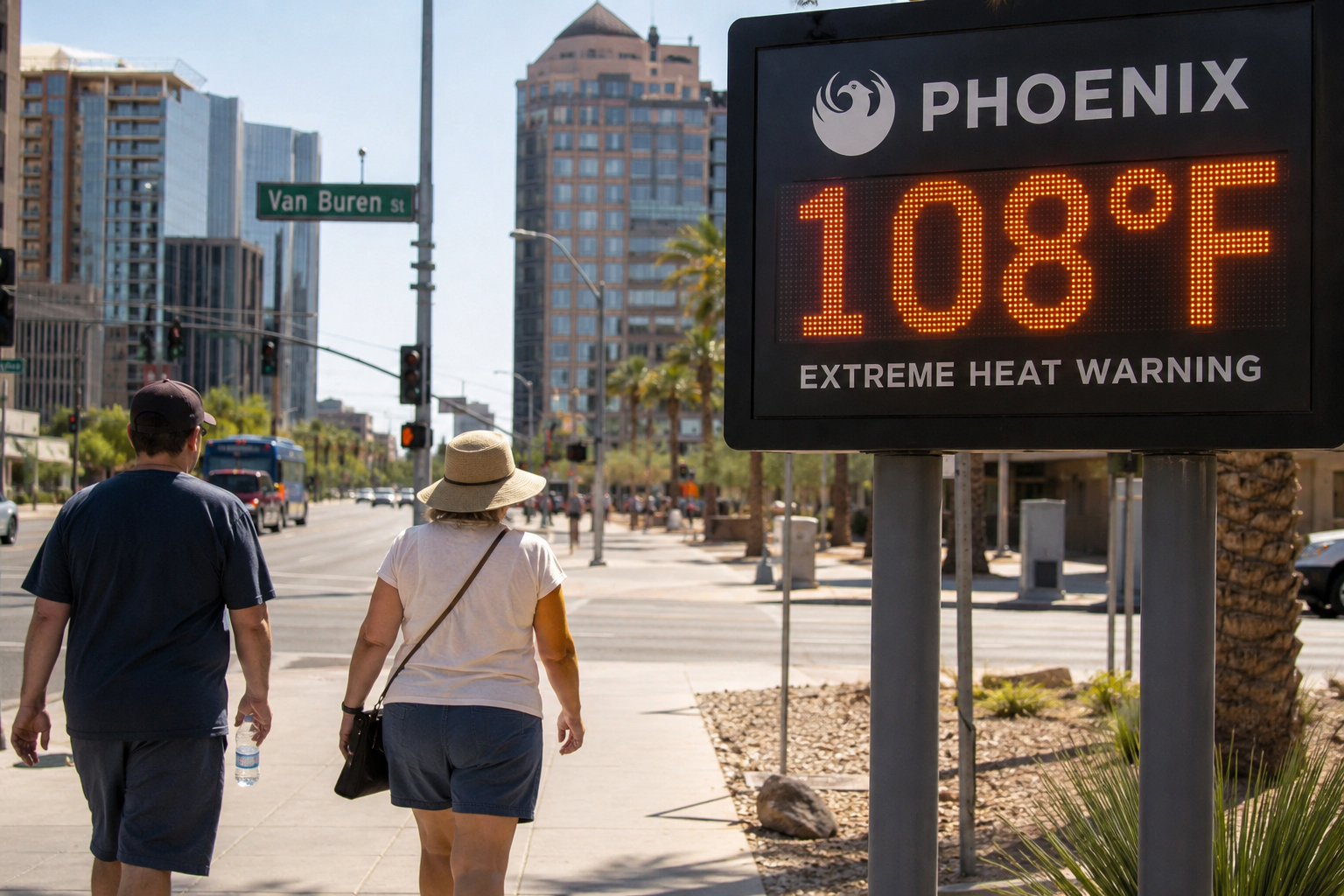
    Then, in the second week of May, the National Weather Service issued a formal Extreme Heat Warning for the entire Phoenix metro area, with forecasted highs of 104°F on Saturday, 106°F on Sunday, and 108°F on Monday, May 11–13, 2026. That event affected more than 2 million people and triggered immediate activation of emergency protocols: trail closures at Camelback Mountain and Piestewa Peak between 8 a.m. and 5 p.m., expanded cooling center hours across Phoenix, Glendale, Chandler, Mesa, and Tempe, and emergency public health messaging urging residents to hydrate constantly and seek air-conditioned shelter.

    The Death Toll in Context: A City That Has Been Here Before

    Maricopa County recorded 427 heat-related deaths in 2025, down from 608 in 2024 and 645 in 2023. That downward trend is real and reflects genuine effort: the city of Phoenix invested nearly $185 million over five years in capital projects and homeless service operations, created a dedicated Office of Heat Response and Mitigation, and added more than 1,880 temporary and permanent shelter beds since 2022. The county’s Maricopa Heat Relief Network, which launched May 1, 2026, coordinates cooling centers and water distribution points across the county.

    But even 427 deaths — the “improved” figure from 2025 — represents a staggering toll. Since 2013, more than 4,320 people have died from heat exposure in Arizona. The annual heat death toll in Maricopa County has risen approximately threefold since 2019. These are not natural disasters in the traditional sense. As public health experts consistently emphasize, heat deaths are preventable — each one represents a failure of the systems designed to protect the most vulnerable.

    The county tracks heat-related deaths and illness in near real-time through the Maricopa County Heat-Related Illness and Death Dashboard, which updates weekly and is publicly accessible. The dashboard draws on data from the county medical examiner, local hospitals, and the National Weather Service — providing a granular, transparent picture of the crisis that few other counties in the nation match.

    Who Is Dying and Where

    The demographics of Phoenix’s heat deaths tell a story about housing policy and social safety nets as much as they tell a story about weather. In 2023’s deadliest year on record, at least 45% of those who died were unhoused — sleeping behind dumpsters, in parking lots, or on sidewalks baking at temperatures above 150°F at ground level, on days when ambient air temperatures reached 115°F or higher. Senior citizens accounted for roughly one in three deaths.

    Geographic analysis of the data shows a stark pattern: neighborhoods with lower tree canopy coverage, more asphalt and concrete, and fewer green spaces — characteristics strongly correlated with lower household income — consistently record higher heat intensity than wealthier, leafier parts of the city. The urban heat island effect in Phoenix is not distributed equally.

    Outdoor workers — construction laborers, landscapers, agricultural workers, delivery drivers — represent a third major at-risk group. Arizona has no state-level outdoor heat standard for workers with the force of law; federal OSHA’s heat standard, still relatively new and being phased in, provides national-level protections that are subject to enforcement resources and political will.

    The Cooling Infrastructure Gap: What Still Isn’t Working

    Despite genuine progress, Phoenix’s heat response infrastructure has documented gaps. Not all cooling centers are accessible 24 hours — a critical problem because nighttime temperatures in Phoenix rarely drop below 90°F during peak summer, meaning overnight heat exposure is itself lethal, particularly for those sleeping outside. Transportation access to cooling centers remains a significant barrier for elderly residents, people with disabilities, and those without vehicles.

    The concern that federal pandemic-era funding supporting the heat relief network would expire in 2026 — as noted by the county’s own medical director — has materialized. The loss of that funding creates pressure on a system that, by every data point, still needs expansion, not contraction. The city of Phoenix simultaneously faces a $130 million reduction in tax revenue due to a change in Arizona state law, creating a fiscal environment hostile to scaling up heat response services.

    How to Protect Yourself During Extreme Heat Warnings in Phoenix

    • Check the Maricopa County Heat Relief Network for cooling center locations: maricopa.gov/heat.

    • Never leave children, elderly people, or pets in a parked vehicle. Car interiors can exceed 150°F within minutes.

    • Drink water before you feel thirsty — by the time thirst registers, dehydration is already underway.

    • If you see someone showing signs of heat stroke (hot, red, dry skin; confusion; loss of consciousness), call 911 immediately and move them to shade while waiting.

    • If your home lacks air conditioning and you cannot reach a cooling center, call 211 (Arizona’s social services helpline) for assistance.

    Current heat advisories and warnings for the Phoenix metro area can be accessed at weather.gov/phoenix.

    Conclusion: Phoenix Cannot Afford a “Good Enough” Heat Strategy

    Phoenix sits at the intersection of multiple accelerating crises: a warming climate, an unhoused population that grew during the pandemic and has not fully recovered, aging housing stock without central air conditioning, and now a tightening municipal budget. The tools to prevent heat deaths exist — cooling centers, early warning systems, targeted outreach to the elderly and unhoused — but they require sustained political will and adequate funding to deploy at the scale the problem demands.

    The first confirmed heat death of 2026 arrived in April. Summer doesn’t officially begin until June 21. If the pattern of recent years holds, thousands more emergency calls, hundreds more hospitalizations, and an unknown number of additional deaths lie ahead before the season ends. Maricopa County’s data-driven approach is a model worth emulating nationally — but even the best surveillance system is useless if the resources to act on what it finds are not there.

    RELATED ON MEDICALDAILY.COM

    Houston’s Deadly Heat Season Is About to Begin — and the City’s ERs Are Already Behind

    Extreme Heat and the Unhoused: America’s Most Preventable Crisis

    Urban Heat Islands: Why Some Neighborhoods Are Dramatically Hotter Than Others

    Heat Stroke vs Heat Exhaustion: Know the Difference Before It’s Too Late

    Source link

  • Families Struggling With Sudden Infant Death Syndrome Receive Assistance From Local Support Groups

    Families Struggling With Sudden Infant Death Syndrome Receive Assistance From Local Support Groups

    Local support groups are assisting families who are struggling with sudden infant death syndrome (SIDS) due to the unique challenges that they are facing.

    In a statement, Texas Tech physician Dr. Ana Montanez said that one child lost for any reason is still “one too many.” The medical professional said that SIDS can be difficult for them to work through with families.

    Sudden Infant Death Syndrome

    Montanez added that historically, SIDS has been recognized as a syndrome that is associated with children dying unexpectedly in their sleep or unknowingly without symptoms, simply dying while sleeping. This has been expanded to include infants under the age of one who have died unexpectedly for reasons that could not be medically explained.

    The physician said that there was no exact way to prevent SIDS, but noted that there are steps that can be taken to lower the risk. It was noted that one of the most important factors to consider is a child’s sleep positioning, according to KCBD.

    Montanez said that the first thing parents or caretakers should do is put infants to sleep on their backs. She added that when they are awake, infants can be placed on their tummies without any adverse effects on their health.

    Another important factor to consider is that children need a safe sleep environment. Montanez noted that from a newborn baby’s perspective, the entire world is new, and everything they go through is a new sensory experience. It is important to keep the environment dark and quiet, and for the temperature to be appropriate when they go to sleep.

    Other factors that should be taken into consideration include smoking, which should be avoided around newborns. Another is letting kids sleep on their own and ensuring that there is no chance they could suffocate while sleeping, Fox34 reported.

    Providing Needed Support

    The medical professional noted that because it is impossible to reduce the risks of SIDS to zero, everyone should try to support each other as best they can. This is where local support groups come in, including Isabel Espinosa, the chapter leader of The Compassionate Friends in Lubbock.

    Espinosa’s daughter died in a car crash, an incident that changed how she viewed the world. She said that when the tragedy happened, she sank, noting she needed to find a chapter or a grief support group that was more specialized towards her loss.

    The situation comes after Mississippi health officials in August this year declared a public health emergency as the rate of mortality among young infants hit a decade-long high. State Health Officer Dr. Dan Edney said at the time that too many families were losing their babies before their first birthday, as per People.


    Originally published on parentherald.com

    © {{Year}} ParentHerald.com All rights reserved. Do not reproduce without permission.

    Source link

  • KISS Star Ace Frehley’s Death Under Investigation After Toxicology Report Ordered

    KISS Star Ace Frehley’s Death Under Investigation After Toxicology Report Ordered

    Investigators​‍​‌‍​‍‌​‍​‌‍​‍‌ are trying to figure out what happened in the case of the death of Ace Frehley. The iconic KISS guitarist died at 74 years old on October 16.

    According to TMZ, the examination of the body will include a toxicology ​‍​‌‍​‍‌​‍​‌‍​‍‌report.

    The brain bleeding resulted from a fall in a recording studio and Frehley was put on life support. immediately After a couple of weeks of treatment, the family decided to take him off the ventilator.

    A spokesperson for the Morris County Medical Examiner’s Office said that an autopsy was not performed.

    The investigation is limited to an external examination of the body and a complete toxicology panel. The final cause of death will be decided in the next few ​‍​‌‍​‍‌​‍​‌‍​‍‌weeks.

    Frehley​‍​‌‍​‍‌​‍​‌‍​‍‌ was, with Gene Simmons, Paul Stanley, and Peter Criss, one of the founding members of KISS and he was through the 70s not only a major contributor to the band’s sound but also to their visual image which was their climb to success. The band, which later became famous for songs such as “I Was Made for Lovin’ You” and “Rock and Roll All Nite,”, eventually turned into a global icon of glam ​‍​‌‍​‍‌​‍​‌‍​‍‌rock.

    He parted ways with KISS in 1982 due to disagreements within the band and his own addiction problems. Frehley came back for a 1996 reunion tour but was only there until 2002 when he decided to go solo ​‍​‌‍​‍‌​‍​‌‍​‍‌again.

    Before his death, Frehley’s team had assured fans he was recovering.

    On September 25, a post on his official Instagram stated, “He is fine, but against his wishes, his doctor insists that he refrain from travel at this time.”

    Days later, another message announced that he had “made the difficult decision to cancel the remainder of his 2025 dates” due to ongoing medical issues.


    Family and Bandmates Mourn

    In a statement shared after his death, Frehley’s family said they were “devastated and heartbroken.”

    They wrote, “In his last moments, we were fortunate enough to have been able to surround him with loving, caring, peaceful words, thoughts, prayers and intentions as he left this earth.” The family added that his “memory will continue to live on forever.”

    Gene Simmons and Paul Stanley also expressed their grief in a statement to The Hollywood Reporter. “I am devastated by the passing of Ace Frehley,” Simmons said. “He was an essential and irreplaceable rock soldier during some of the most formative foundational chapters of the band and its history. He is and will always be a part of KISS’s legacy.”

    Originally published on Music Times

    © {{Year}} MusicTimes.com All rights reserved. Do not reproduce without permission.


    Source link

  • Popular Dinner Staple May Increase Risk Of Death From Cancer

    Popular Dinner Staple May Increase Risk Of Death From Cancer

    A dinner without chicken feels incomplete for many. Known for its protein-packed benefits, especially for muscle building and energy, chicken has long been a staple for many, particularly those hitting the gym. However, new research cautions that regularly eating chicken may put you at an increased risk of dying from gastrointestinal cancers.

    The findings of the latest study, published in the journal Nutrients, offer a surprising twist since poultry, long considered a “noble food” due to its high protein and low-fat content compared to red meat, may not be as harmless as once thought.

    The Dietary Guidelines for Americans recommend 100 grams as a standard serving of poultry, suggesting it be consumed one to three times a week. However, the latest study raises concerns that exceeding 300 grams weekly could increase the risk of death from gastrointestinal cancers.

    The study, which analyzed the health data and meat consumption habits of 4,869 adults in Italy, revealed that individuals who ate more than 300 grams of poultry per week had a significantly higher incidence of gastrointestinal cancers and a greater risk of early death from these cancers. Those consuming over 300 grams of poultry weekly had a 27% higher likelihood of dying from gastrointestinal cancer compared to those who kept their intake to 100 grams or less each week.

    Another interesting reveal was that men were more at risk of death from gastrointestinal cancers compared to women, even with the same amount of poultry consumption.

    The impact of poultry consumption on the risk of dying from gastrointestinal cancer increased with age. For those around 60, there was no significant difference between eating less than 100 grams or more than 300 grams of poultry a week. However, by 83, the risk of death was twice as high for those eating more poultry. This effect was more noticeable in men, who showed a higher risk even before age 60.

    “We believe it is beneficial to moderate poultry consumption, alternating it with other equally valuable protein sources, such as fish. We also believe it is essential to focus more on cooking methods, avoiding high temperatures and prolonged cooking times,” the researchers conclude.

    However, an important limitation of the study is that it did not consider whether the chicken consumed was processed or how it was cooked. The researchers also did not account for the participants’ levels of physical activity, which could have influenced the results.

    Source link

  • Weight Gain Risky For Obese, But Losing Over 10kg Raises Death Risk By 50%

    Weight Gain Risky For Obese, But Losing Over 10kg Raises Death Risk By 50%

    Can weight loss be always the answer to obesity? While it’s well-known that gaining weight increases the risk of heart disease and death, scientists have now found that losing a significant amount of weight can also carry its own set of dangers.

    In a recent study, researchers from the Anglia Ruskin University (ARU) in the U.K. found that for individuals with obesity, “maintaining a stable weight, even within the obese range,” can help reduce the risk of death, particularly for those with heart disease risk factors.

    “It was perhaps unsurprising that significant weight gain was associated with higher mortality, but interesting that a similar association was found among those who lost a lot of weight,” said researcher Dr. Jufen Zhang in a news release.

    The study analyzed data from over 8,000 obese participants from the UK Biobank study, all of whom had been diagnosed with cardiovascular diseases. These individuals were tracked over nearly 14 years, with researchers closely monitoring changes in their weight throughout the period.

    The findings revealed that participants who gained more than 10 kg during the study had a threefold increase in the risk of cardiovascular death and nearly double the risk of dying from any cause, compared to those who maintained a stable weight.

    However, the study uncovered an even more striking finding: those who lost more than 10 kg faced a 54% higher risk of all-cause mortality. This suggests that, while weight loss is often encouraged for obese individuals, significant weight loss may have adverse effects, particularly in those already at risk for cardiovascular issues.

    “This study is the first of its kind to examine the link between weight change and all-cause mortality in obese individuals with cardiovascular disease,” Dr. Zhang.

    While more research is needed to fully understand the underlying mechanisms behind the link between both weight loss and weight gain and increased death risk, Dr. Zhang advises that “clinicians should be cautious, especially with new drugs on the market that are promoted for rapid weight loss.”

    “While weight loss is generally recommended for obese adults, those in at-risk groups, like these individuals, should only pursue weight loss under the close guidance of their doctor,” Dr. Zhang added.

    Source link

  • Can Time Of Week Affect Your Risk Of Death From Surgery? Here’s Worst Day For Operation

    Can Time Of Week Affect Your Risk Of Death From Surgery? Here’s Worst Day For Operation

    If you’re scheduled for surgery, here’s an interesting study you should know about: Researchers have found that the risk of death from surgery can depend on the time of week it’s scheduled, identifying the worst day for an operation.

    The study published in JAMA Network highlights an important trend known as the “weekend effect,” in relation to surgeries. Researchers found that patients undergoing planned surgeries on Friday, just before the weekend, face a significantly higher risk of death, complications, and readmission compared to those scheduled after the weekend.

    “Hospitals and health care systems have variations in operational structure and organization during the transition from weekdays to weekends. The weekend effect refers to the potential for worse patient outcomes during the weekends, compared with weekdays. In surgery, this concept may also apply to those undergoing surgery immediately before the weekend, who receive postoperative care during the weekend,” the researchers wrote.

    The findings were based on an analysis of large-scale data from 429,691 adult patients in Ontario, Canada, who underwent one of 25 common surgical procedures between 2007 and 2019, with a one-year follow-up.

    Of the 429,691 patients studied, nearly 46.5% had surgery before the weekend and researchers noted that they were more likely to experience negative outcomes, including complications, readmissions, and death compared to the pre-weekend group.

    The risk of mortality increased by 9% at 30 days, 10% at 90 days, and a striking 12% at one year for patients who underwent surgery just before the weekend.

    The study suggests that negative outcomes may be linked to differences in hospital staffing and fewer specialists available on weekends, which could impact post-surgery care. To improve outcomes, researchers recommend future studies focusing on ensuring high-quality care for all patients, regardless of when their surgery is scheduled.

    However, interestingly, the researchers noted a contrasting trend regarding unplanned, urgent surgeries. While scheduled or elective procedures performed before the weekend were linked to worse postoperative outcomes, urgent, unplanned surgeries tended to show slightly better outcomes when performed before the weekend.

    “Our findings underscore the need for a critical examination of current surgical scheduling practices and resource allocation. One approach for consideration is the optimization of perioperative care pathways to mitigate adverse outcomes,” the researchers noted.

    Source link

  • Study Finds Two Common Gynecological Disorders Linked To Increased Risk Of Early Death

    Study Finds Two Common Gynecological Disorders Linked To Increased Risk Of Early Death

    History of two common gynecological disorders, endometriosis and uterine fibroids, is linked to an increased risk of early death, a recent study revealed.

    Endometriosis is a chronic reproductive disorder that affects about 10% of women of reproductive age. It occurs when tissue similar to the uterine lining grows outside the uterus, causing symptoms such as severe period pain, chronic pelvic pain, bloating, nausea, fatigue, and infertility. There is no permanent cure for the condition, so treatment involves managing symptoms.

    Fibroids are noncancerous growths on uterine walls that can cause symptoms such as heavy menstrual bleeding, back pain, and frequent urination. Around 40% to 80% of women have uterine fibroids.

    In a large-scale study, researchers analyzed 110,091 women from the Nurses’ Health Study II, aged 25-42 in 1989. The participants had no prior hysterectomy, cardiovascular diseases, or cancer. Diagnoses of endometriosis (via laparoscopy) and fibroids (via ultrasound or hysterectomy) were self-reported every two years from 1993.

    Over 30 years, there were 4,356 premature deaths, including 1,459 from cancer and 304 from cardiovascular diseases.

    The all-cause premature death rate for women with confirmed endometriosis was 2 per 1,000 person-years, compared to 1.4 per 1,000 for those without. After accounting for factors such as age, weight, diet quality, physical activity, and smoking status, individuals with endometriosis were 31% more likely to die prematurely (before age 70) compared to those without these disorders. The majority of these deaths were attributed to gynecological cancers.

    Although uterine fibroids were not linked to all-cause premature death, the condition elevated the risk of death due to gynecological cancers.

    “Women with a history of endometriosis and uterine fibroids might have an increased long-term risk of premature mortality extending beyond their reproductive lifespan,” the researchers concluded.

    “These conditions were also associated with an increased risk of death due to gynecological cancers. Endometriosis was associated with a greater risk of non-cancer mortality. These findings highlight the importance for primary care providers to consider these gynecological disorders in their assessment of women’s health,” they wrote in the study published in the journal BMJ.

    The researchers caution that since it is an observational study relying on self-reported data, it can be prone to errors. Also, as the participants were predominantly white healthcare workers, the findings may not be generalizable to other populations.

    Source link

  • Diabetes Onset Before 40 Raises Risk Of Death To Four Times: Study

    Diabetes Onset Before 40 Raises Risk Of Death To Four Times: Study

    Diabetes is not just about having high blood sugar levels; it is a chronic condition that could potentially lead to several health issues, such as heart attack and stroke. But does the timing of diabetes onset affect the risk of complications and mortality? A recent study revealed that developing diabetes before age 40 is linked to a significantly higher risk of early death.

    While diagnosing diabetes before 40 quadrupled the risk of early death, later onset was linked to a one-and-a-half times higher risk of death compared with the general population without the condition, according to the study published in the Lancet Diabetes & Endocrinology. The findings underscore the importance of delaying the onset of diabetes to reduce complications and risk of premature death.

    To understand the impact of diabetes on overall health, researchers followed up 4,550 individuals newly diagnosed with diabetes for over 30 years. The participants were between the ages of 25 and 65.

    The analysis revealed that diabetic diagnosis at an earlier stage was linked to a higher rate of related complications, particularly microvascular diseases such as eye damage and kidney failure, and a higher risk of death. Diabetes onset at a younger age also was linked to poorer blood sugar control.

    “Over the past 30 years, the number of young adults diagnosed with type 2 diabetes has increased markedly worldwide. Evidence to date suggests that younger-onset type 2 diabetes, characterized by earlier and longer exposure to high levels of blood glucose, maybe more aggressive than later onset disease. This might include a faster deterioration in β-cell function—the cells in the pancreas that produce and release insulin- and a greater risk of complications such as cardiovascular and kidney disease,” said Amanda Adler, co-author of the study in a news release.

    According to the lead author of the study, Dr. Beryl Lin, more clinical trials should focus on tailored treatments for delaying diabetic complications in young people.

    “We particularly need to understand why young adults with type 2 diabetes suffer greater risks of complications, and how we can identify and help this vulnerable group of people who have to live with diabetes for the rest of their lives,” Dr. Lin said.

    Source link

  • New Life, Who’s This? Rediscovering Who You Are When Everything Has Changed

    New Life, Who’s This? Rediscovering Who You Are When Everything Has Changed

    Soon after my husband died, I invited my parents for lunch, and said that my brother couldn’t make it so there would only be the four of us. My mother asked who else would be joining us—who was the fourth person? In two heartbeats I did the math, and realized that there would not be four of us. No, there would only be three. I was no longer Mike-and-Elaine. I was just Elaine. My math had changed. And that was going to take some getting used to.

    Death, and endings of all sorts, can shock you in so many ways. One of the most slyly discombobulating is the change of identity that can slam into you at the same time that everything else is also falling apart. Maybe, like me, you’ve been part of a couple and now you’re a singleton. Or maybe you gave up a cherished role or identity to take care of someone, and now that you are no longer needed as a caretaker, you might feel like you’re hanging out in limbo.

    Even something we dread can sneakily become part of our identity. Whether you love or loathe your life and responsibilities, you may not have noticed how much of your identity comes from being a spouse, a lawyer, a sibling, or even an independent. Then one not-so-fine day you lose a job, a limb, or a loved one, and grief throws you into confusion as you look around at your strange new life and try to figure out who you are now.

    It makes perfect sense that being hurled into the unknown can feel distressing. Mindfulness supports your resilience by helping you recognize that whether you want it or not, something new is beginning and maybe that’s not all bad news.

    When you are grieving, it can feel so hard to look up, or look around—and as you try to navigate this unfamiliar landscape, you might experience pain and want to retreat. But if you can take a breath, and employ openness and curiosity, you might discover new possibilities hidden in plain sight.

    It can feel scary to lose your familiar identity—but as long as you’re alive, there are still more yous waiting to be discovered.

    It can feel scary to lose your familiar identity—but as long as you’re alive, there are still more yous waiting to be discovered.

    Who Am I Now? A Practice for Exploring Identity

    Use this four-step practice to find your footing again after an identity-shifting loss.

    Step 1: Investigate. What identity do you want to inhabit? As sad as you may feel about what has ended, what possibilities might there be that weren’t previously available? 

    Step 2: Explore. What do you need to help you accept your changing identity? If you are not sure, take as much time as you want to ask yourself: could you use a coach or a mentor? A new relationship? A support group? Retraining, or a geographical move? You’re in new territory. This is a great moment to be open and curious. 

    Keep a list of whatever you stumble across that just might be a piece in the puzzle of your ever-changing identity. What might you want to try, even just for a little while? Your life may be different, but you are still here living it. Dare to dream big. The biggest adventures are all made up of a zillion small, rich, and important steps. Take the adventure to be the fullest version of whoever you are. 

    The biggest adventures are all made up of a zillion small, rich, and important steps. Take the adventure to be the fullest version of whoever you are.

    Step 3: Stabilize. Grief can shake up your thinking, your digestion, and how you react to situations. One way to stabilize is to notice when you feel that you are under stress. Instead of ignoring it, immediately use this as a call to arms—a call to loving arms, that is, as you physically or metaphorically wrap your loving arms around yourself and find a path to calm and grounding. 

    If you feel trapped by distressing thoughts about the past or the future, you may be able to see that if you could stay in the present, those thoughts would be easier to manage. So what might help you stay in the present? It can include something as simple as counting your breaths, silently or out loud, to give your attention somewhere to land other than in the painful memories of the past, and fearful thoughts about the future. This won’t get rid of anything, but it can help reduce stress by giving you a breather from all the intensity.

    You could also explore moving your attention to your feet. Do you notice any sensations of tingling or numbness or contact or heat or itchiness? Do you notice that you have less attention available to be sucked into the land of difficult thoughts when you are trying to pay attention to subtle sensations in the feet?

    If focusing on your feet isn’t your bag, you might try something very ordinary, like placing a comforting hand on your stomach, cheek, or chest, or anywhere on your body that makes you feel cared for and supported. Always make the choice to be your own best friend!

    Step 4: Welcome the new. It’s not your imagination; your life isn’t what it was, and like it or not, whatever was will never be again—at least, not quite like that. 

    Feel free to take time to grieve, then recognize that this is a time for boldness. The unknown is what is here. What you get to choose is the way forward. So come on, step out into that awaiting unknown and welcome the identity that offers you the greatest opportunity to explore the constantly renewing present moment. 


    Source link

  • Tumor suppressor protein Par-4 triggers unique cell death pathway in cancerous cells

    Tumor suppressor protein Par-4 triggers unique cell death pathway in cancerous cells

    A team of researchers at NYU Abu Dhabi, led by Professor Sehamuddin Galadari, has discovered that the tumor suppressor protein Prostate apoptosis response-4 (Par-4) can cause a unique type of cell death called ferroptosis in human glioblastoma — the most common and aggressive type of brain tumor — while sparing healthy cells. This new understanding has the potential to inform the development of novel treatments for various hard-to-treat cancers and neurodegenerative diseases.

    Ferroptosis is triggered by the iron-mediated production of reactive oxygen species (ROS) and subsequent lipid peroxidation, which plays a crucial role in shrinking cancerous tumors. This is the first time that Par-4, already known for killing cancer cells through apoptosis — a form of programmed cell death — has been shown to promote ferroptosis in glioblastoma cells.

    The tumor suppressor protein Par-4 is widely expressed across species, but is often reduced, mutated, or inactivated in the presence of various cancers. In the study “Tumor suppressor Par-4 activates autophagy-dependent ferroptosis,” recently published in the journal Communications Biology, the researchers identified that Par-4 plays an unanticipated role in promoting ferroptosis-mediated cancer regression. They demonstrated that Par-4 triggers the activation of ferritinophagy (autophagic degradation of ferritin) through the nuclear receptor co-activator 4 (NCOA4). This activation is necessary for the accumulation of the labile iron pool, the production of ROS, and the subsequent lipid peroxidation, all of which lead to ferroptosis.

    Ferroptosis plays a key role in various health issues, such as cancer, heart disease, brain damage, kidney failure, lung injury, and diseases like Parkinson’s, Huntington’s, and Alzheimer’s. The identification of Par-4 as a key player in ferroptosis is essential, as it is involved in the main processes and signals that make this alternative cell death pathway, ferroptosis, occur. Many types of cancer cells don’t respond to today’s treatments or have developed resistance to existing drugs therapies.

    This research was a collaborative effort between Associate Professor Mazin Magzoub’s lab at NYU Abu Dhabi and Professor Vivek M. Rangnekar from the University of Kentucky, who discovered Par-4 in 1993.

    “Our team’s discovery that Par-4 triggers ferroptosis is a breakthrough in the field of cancer treatment development,” said Galadari, who is the Senior Vice Provost for Research and Managing Director of the Research Institute at NYU Abu Dhabi. “Developing methods to activate alternative cell death pathways presents new opportunities for the creation of more potent and effective therapies for glioblastoma and other deadly and debilitating diseases.”

    “Investing in research at institutions such as NYUAD is instrumental in transforming the UAE into a knowledge-based economy that attracts local, regional, and global talent — a symbiotic relationship that creates opportunities, knowledge, and wealth,” Galadari added.

    Source link