

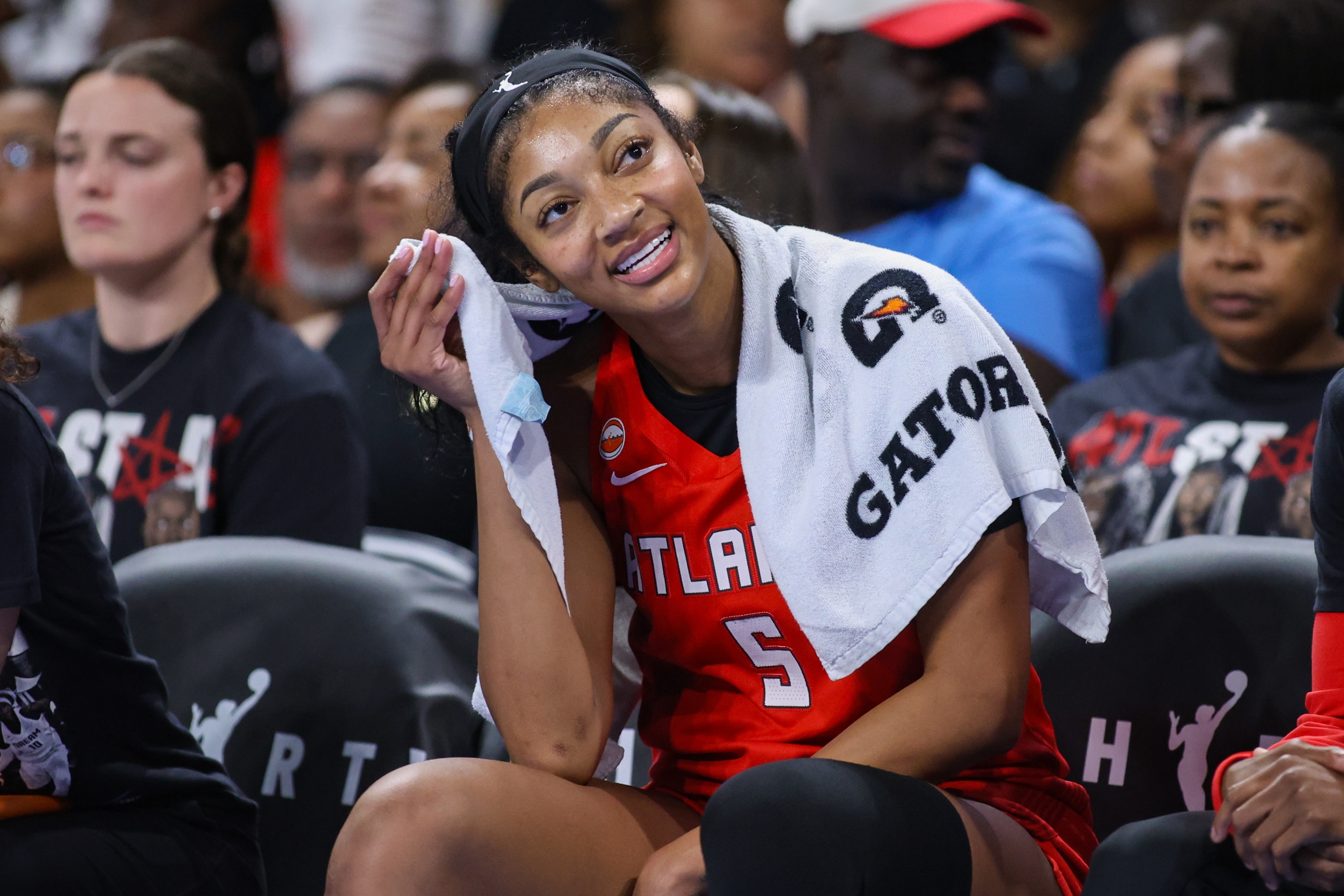
Atlanta Dream forward, Angel Reese, left Sunday’s WNBA game against the Chicago Sky after suffering a left leg injury during the fourth quarter, casting uncertainty over her availability as the league approaches All-Star festivities. Reese appeared to injure her knee after an awkward play near the basket, immediately grabbing at her left leg before needing assistance off the court.
While initial updates suggested she was in good spirits following the game, her status remains dependent on further medical evaluation, underscoring why athletes should never rush back onto the court before receiving proper medical clearance.
The Aftermath of the Injury from Awkward Footing
The injury came at an unfortunate time for both Reese and the Atlanta Dream, as the rookie has become one of the team’s most influential players on both ends of the floor. Her absence not only affected the outcome of the contest but also raised questions about her availability for upcoming games and league events.
As of now, there is no announced definitive diagnosis, but sports medicine experts generally emphasize that knee injuries require careful assessment before athletes resume basketball activities. Returning too early can increase the likelihood of worsening the original injury or developing additional damage to the ligaments, cartilage, or surrounding muscles.
Understanding Knee Injuries in Basketball and Sports
According to the Mayo Clinic Sports Medicine, the knee is one of the most commonly injured joints in athletes because it absorbs significant force during running, jumping, pivoting and sudden changes in direction. Basketball players are particularly vulnerable because of the sport’s frequent cutting movements, rapid acceleration and repeated landings.
Common Causes
Sports-related knee injuries may result from:
- Sudden twisting or pivoting movements
- Landing awkwardly after a jump
- Direct blows or collisions
- Overuse from repetitive training
- Sudden changes in direction
- Poor landing mechanics
According to Mass General Brigham, common basketball injuries affecting the knee include ligament sprains such as ACL and MCL injuries, meniscus tears, patellar tendinitis (“jumper’s knee”), cartilage injuries, and bone bruises.
Symptoms
The symptoms vary depending on the injury but commonly include:
- Immediate pain
- Swelling
- Difficulty bearing weight
- Limited range of motion
- Knee instability or “giving way”
- Locking or catching sensations
- Tenderness around the joint
Diagnosis
Doctors evaluate knee injuries through a combination of medical history and physical examination, assessing joint stability, strength and range of motion. Imaging studies, including X-rays to identify fractures and MRI scans to evaluate ligaments, cartilage, tendons and menisci, are commonly used when significant structural damage is suspected. In some cases, ultrasound or CT scans may also assist in diagnosis.
Treatment
The injury’s treatment depends on its severity and type. Mild sprains and overuse injuries often improve with:
- Rest from sports activities
- Ice application
- Compression and elevation (RICE)
- Anti-inflammatory medications when appropriate
- Physical therapy to restore strength and mobility
More significant ligament tears, tendon ruptures, or cartilage injuries may require bracing, injections, or surgical reconstruction followed by several months of rehabilitation before athletes can safely return to competition.
Risk Factors
Several factors increase the risk of knee injuries, including:
- Participation in jumping and pivoting sports
- Previous knee injuries
- Muscle weakness or imbalance
- Poor conditioning
- Inadequate warm-up
- Improper landing technique
- Fatigue during competition
Prevention
Research on sports injury prevention shows that many knee injuries can be reduced through structured prevention programs. Recommended measures include:
- Strengthening the hips, quadriceps, and hamstrings
- Improving balance and neuromuscular control
- Learning proper jumping and landing mechanics
- Performing dynamic warm-ups before activity
- Gradually increasing training intensity
- Wearing appropriate footwear
- Allowing sufficient recovery between intense workouts
Medical Clearance Isn’t Just a Formality
Angel Reese’s injury serves as a reminder that even elite athletes should not return to competition until healthcare professionals determine it is safe to do so. Medical clearance is more than a routine formality; it confirms that healing has progressed sufficiently for the knee to tolerate the physical demands of basketball without significantly increasing the risk of reinjury.
For recreational athletes and weekend sports enthusiasts, the same principle applies. Continuing to play through knee pain or returning before strength, stability and mobility have recovered can prolong rehabilitation and increase the likelihood of chronic problems later in life.
Be it playing professionally or casually, adequate rest, rehabilitation and adherence to medical advice remain among the most effective ways to protect long-term joint health. Reese’s experience highlights that prioritizing recovery today may ultimately allow athletes to perform more safely and successfully in the future.


