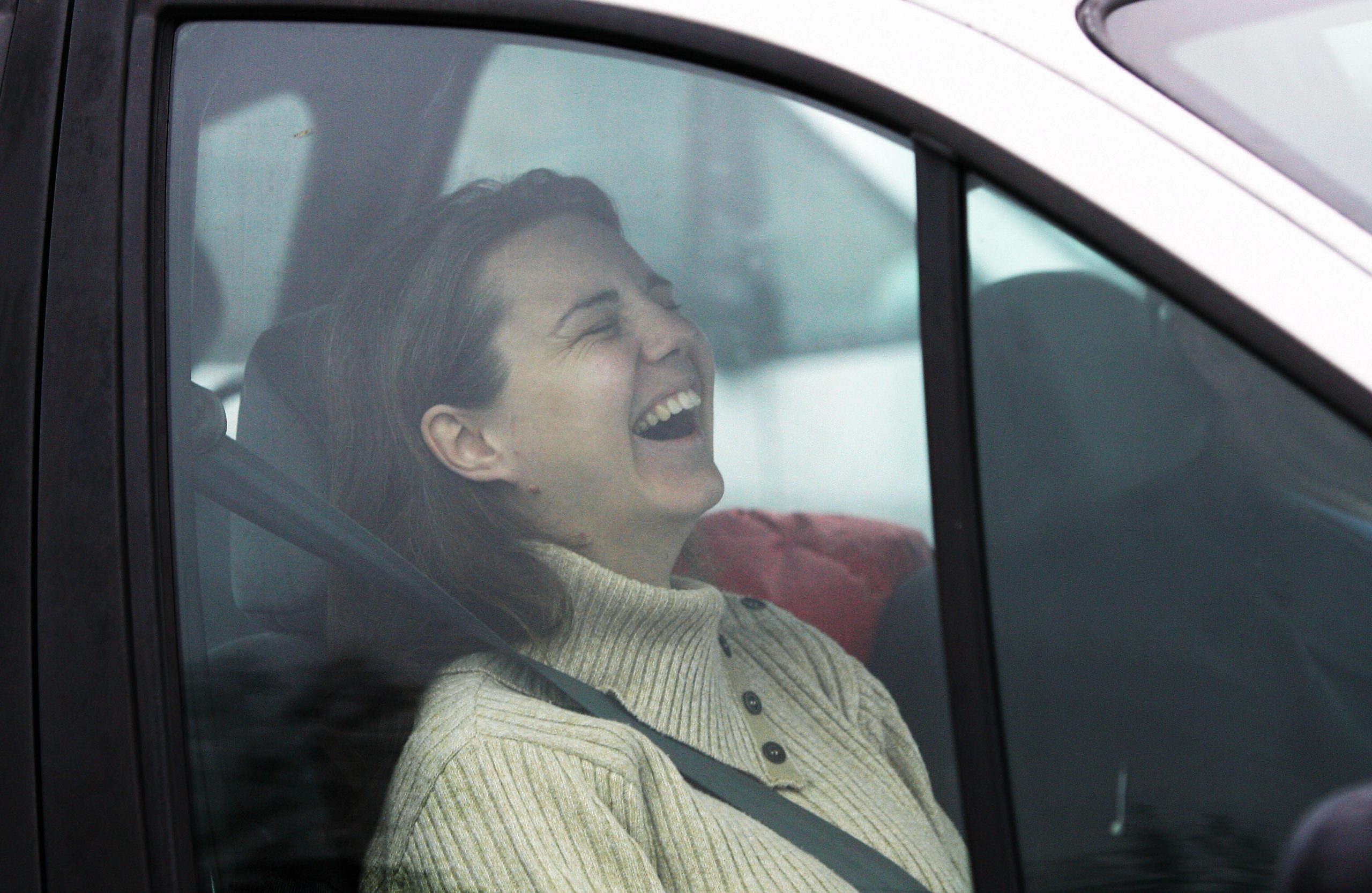
A 57-year-old woman was driving with her daughter beside her when they both started laughing hard. Mid-laugh, she lost consciousness. Her daughter grabbed the wheel and steered the car off the road, avoiding a major collision. The woman came round shortly afterward with a fractured left wrist and no memory of the seconds that had passed.
It was not the first time. She had blacked out during a laughing fit at home once before, and nobody had worked out why.
Her general practitioner referred her to an urgent cardiology clinic, where the resulting workup produced a diagnosis most people have never heard of, and many clinicians never encounter: laughter-induced syncope. The case report appears in Clinical Case Reports, written by Stephanie Abutu and colleagues at Kettering General Hospital and the University of Leicester.
The Monitor Caught It Happening in Real Time
Fainting is a common complaint, and it is frequently evaluated without any precipitating cause ever being identified. Establishing a trigger usually depends on a patient’s own account, which is exactly what makes it easy to get wrong.
This case is unusual because the event was captured. Her resting 12-lead electrocardiogram was normal, with no QT prolongation, no ST changes and no evidence of pre-excitation. Her echocardiogram showed a structurally normal heart with preserved function on both sides. Then, during 72 hours of continuous heart monitoring, she had another laughter-triggered blackout while the recorder was running, and it showed her heart in normal sinus rhythm throughout.
That combination is the diagnosis. A normal rhythm during loss of consciousness rules out the arrhythmias that would otherwise be the leading suspects and points instead toward a reflex mechanism. Reflex fainting, orthostatic hypotension, and cardiac arrhythmia make up the three broad categories a clinician has to separate, and they carry very different implications for what happens next. It mattered here more than usual, because she had a history of supraventricular tachycardia, which made an electrical cause the obvious first thing to exclude.
A Valsalva Maneuver Hiding Inside a Belly Laugh
Sustained laughter is, mechanically, a form of forced expiration against a partly closed airway. That raises pressure inside the chest, which reduces the volume of blood returning to the heart.
The Leicester team describes the proposed pathophysiology as an exaggerated vagal response or an inappropriate withdrawal of sympathetic tone, leading to transient cerebral hypoperfusion, and they are careful to say the exact mechanism remains unclear. One longstanding hypothesis holds that when the heart contracts hard against an underfilled chamber, mechanoreceptors in the left ventricle misread the situation and trigger a reflex drop in heart rate and blood pressure. Brain blood flow falls, and consciousness goes with it.
The condition also goes by gelastic syncope, from the Greek word for laughter. A case series in Postgraduate Medicine titled “Sitcom Syncope” described three patients who lost consciousness during vigorous laughter. All three underwent exhaustive testing and had an abnormal response to head-up tilt-table testing, leading the authors to propose that gelastic syncope is a variant of vasodepressor syncope. Structural causes have occasionally turned up too, including one patient in whom the trigger was ultimately linked to narrowing of the vertebrobasilar arteries.
Why It Gets Mistaken for Epilepsy
The most important alternative diagnosis is a gelastic seizure, a rare epilepsy in which laughter is the seizure itself rather than the trigger. Gelastic seizures typically arise from a brain lesion and come with automatisms, impaired awareness, or a confused period afterward.
The Leicester team lists the features that separated the two in their patient. The blackouts happened only during genuine, voluntary laughter; there were no automatisms, there was no postictal confusion, and recovery was immediate and complete. They also flag a detail worth noting for anyone reading witness accounts of fainting. Her daughter estimated the episode lasted two to three minutes. The authors caution that bystanders routinely overestimate these durations, and that the episode was in fact brief.
The Real Danger Is Where You Happen to Be
Laughter-induced syncope is generally benign once cardiac and neurological causes are excluded. The harm comes from the fall, or from the vehicle, and the author singles out driving as the high-risk setting that gives this otherwise minor reflex its teeth. In this case, only a passenger’s reaction prevented a crash from becoming something worse.
Treatment is not a pill. The authors describe management as a tailored, trigger-focused approach built on patient education and behavioral modification, and report that at six months the patient had experienced no further episodes after adhering to trigger avoidance. They also note that their patient, a woman with obesity and a prior arrhythmia, does not fit the usual profile, since most reported cases involve middle-aged men without structural heart disease.
Anyone who has fainted, regardless of the trigger, should discuss driving with a clinician and check the licensing rules in their jurisdiction, since reporting requirements and waiting periods vary. The broader lesson the authors draw is about history-taking. A trigger that sounds absurd is still a trigger, and describing it precisely is what steers the workup toward the right answer.
Key Questions Answered
What is laughter-induced syncope?
A rare form of situational reflex fainting in which intense, sustained laughter causes a temporary drop in blood flow to the brain and a brief loss of consciousness.
Is it dangerous?
The fainting itself is usually harmless and self-limiting. The risk comes from injury during the fall or from losing consciousness while driving or operating machinery.
How is it diagnosed?
By excluding structural and electrical heart disease and neurological causes, and ideally by capturing an episode on cardiac monitoring, as happened in this case.
How is it different from a seizure?
Gelastic seizures involve laughter as part of the seizure, often with automatisms, impaired awareness or postictal confusion. Reflex syncope follows genuine laughter and resolves immediately and completely.
Is there a treatment?
There is no established drug therapy. Management focuses on recognizing and avoiding triggers, as well as counseling on high-risk activities.
Should people who faint stop driving?
That depends on the cause, the circumstances, and local law. Anyone who has lost consciousness while driving should stop driving until a clinician has assessed them.
Leave a Reply