

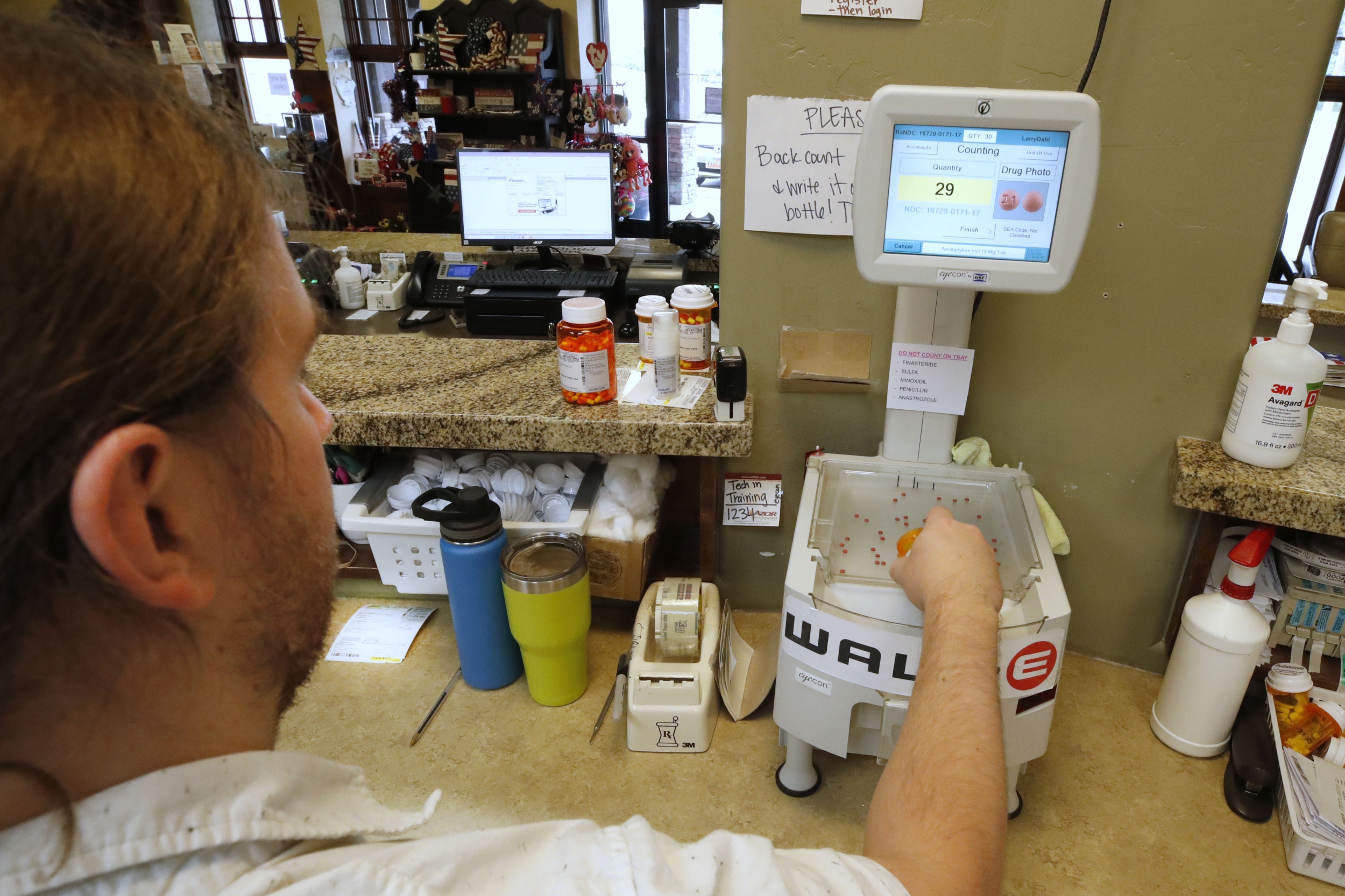
Florida’s attorney general filed an antitrust lawsuit on August 27, accusing Express Scripts and Prime Therapeutics, two of the country’s largest pharmacy benefit managers, of entering an illegal price-fixing agreement that cut what independent pharmacies are paid to fill prescriptions.
The complaint, filed in the Circuit Court of the Tenth Judicial Circuit in Polk County, alleges that the two competitors announced a collaboration in December 2019 under which Prime adopted Express Scripts’ lower reimbursement rates. The state says the arrangement took effect in April 2020, has been extended repeatedly, and remains in place.
These are allegations in a civil complaint. No court has ruled, and neither company has been found liable. What makes the filing worth a household’s attention is not the legal theory but the mechanism it describes, because that mechanism determines whether a neighborhood pharmacy stays open.
The Middle Layer Most Patients Never See
A pharmacy benefit manager sits between insurers, drug manufacturers, and pharmacies. It negotiates rebates, decides which drugs a plan covers, sets what pharmacies are paid for each prescription, and determines which pharmacies are in a plan’s network.
That last set of powers is why reimbursement rates function as a survival threshold rather than a profit margin. A pharmacy buys a drug at wholesale, dispenses it, and is reimbursed by the benefit manager. If the reimbursement falls below acquisition cost plus dispensing expense, the pharmacy loses money on that prescription and cannot decline to fill it without leaving the network.
Prime Therapeutics is based in Orlando and owned by a consortium of Blue Cross and Blue Shield plans. Express Scripts is owned by the insurer Cigna. Court filings describe Prime as the largest benefit manager in Florida, with roughly 40 percent market share, and state that it had previously paid independent pharmacies about 20 percent more than larger competitors.
The Specific Numbers Florida Put in the Complaint
After the agreement took effect, reimbursement rates declined across roughly 80 percent of branded drugs and 70 percent of generic drugs, according to the state. The complaint says Prime valued the first three years of the arrangement at $2.5 billion in cost savings extracted from pharmacies.
Attorney General James Uthmeier offered one concrete example. A pharmacy outside Orlando saw reimbursement for a single medication fall about 45 percent, turning a profitable prescription into a loss of $15.45 each time it was filled.
“Prime and Express Scripts colluded to fix prices and underpay those pharmacies,” Uthmeier said in a statement released by his office. Describing the example at a news conference in The Villages, he said the arrangement was not sustainable for the pharmacies involved and reduced competition in the market, according to WFTV.
The state alleges a per se violation of the Florida Antitrust Act as horizontal price fixing, unfair methods of competition under the Florida Deceptive and Unfair Trade Practices Act, and common law unjust enrichment. It has demanded a jury trial and is seeking an injunction, civil penalties, disgorgement of profits, and damages greater than $50,000. The National Community Pharmacists Association summarized the filing for independent pharmacy members the following day.
The Pathway from a Court Filing to a Pharmacy Counter
The connection to households runs through closures rather than through prices at the register. When a pharmacy dispensing below cost eventually closes, the patients it served do not save money. They lose the shortest trip, the pharmacist who knows their medication list, and, in some communities, the only pharmacy within driving distance.
That burden concentrates. Older adults on multiple maintenance medications, patients without reliable transportation, rural residents, and people in low-income neighborhoods where chains have already withdrawn feel a closure first and hardest. Patients in assisted living or on delivery arrangements can lose a service that has no local substitute.
The effect on out of pocket cost is less direct and should not be overstated. What a patient pays at the counter is set by plan design, deductibles, and copay structure, not by what the pharmacy receives. A lawsuit over reimbursement rates does not by itself change a copay.
MedicalDaily reported in July that courts have repeatedly struck down state laws aimed at pharmacy middlemen, often on federal preemption grounds. This case takes a different route, using state antitrust law against conduct between two companies rather than regulating plan design, which is part of why it is being watched beyond Florida.
Practical Steps and What Happens Next
Patients who find a familiar pharmacy has closed or left their network can ask their plan for the current in-network list before a refill lapses, request that prescriptions be transferred rather than restarted, and ask about 90-day fills to reduce trips. Anyone facing a coverage denial can ask a prescriber about prior authorization, an appeal, a generic alternative, or a manufacturer’s patient assistance program. Independent pharmacies that remain open can often match chain pricing on generics through discount programs, which is worth asking about directly rather than assuming.
For maintenance medications, the most useful habit is checking network status at each plan year change rather than at the pharmacy counter, since networks are typically revised annually.
The two companies have faced earlier litigation over the same network arrangement, including a separate antitrust suit filed by a pharmacy group in July, in which Prime defended the arrangement as lowering prescription drug costs for patients and payers. Neither company’s response to the Florida complaint was available when the filing was reported, according to WINK News. The Florida attorney general’s office issued a civil investigative demand to CVS Health in June concerning its treatment of independent pharmacies, and that inquiry remains open.
The next milestones are the companies’ responses and any early motions to dismiss. Until a court rules, this remains a set of allegations, and the most reasonable step for a patient is to confirm where their prescriptions can still be filled.
Key Questions Answered
What is Florida alleging? That Express Scripts and Prime Therapeutics entered an illegal horizontal price fixing agreement in December 2019 under which Prime adopted Express Scripts’ lower pharmacy reimbursement rates, cutting what pharmacies are paid.
Has anything been proven? No. These are allegations in a civil complaint filed in Polk County. No court has ruled, and neither company has been found liable.
What is a pharmacy benefit manager? A company that sits between insurers, drugmakers, and pharmacies, negotiating rebates, setting which drugs a plan covers, deciding pharmacy payment, and determining network membership.
Will this change what I pay at the pharmacy? Not directly. Out of pocket cost is set by plan design, deductibles, and copays. The lawsuit concerns what pharmacies are reimbursed.
Who is most affected if pharmacies close? Older adults on multiple medications, people without reliable transportation, rural residents, and patients in neighborhoods where chain pharmacies have already withdrawn.
What can patients do now? Confirm which pharmacies are in network before a refill lapses, transfer rather than restart prescriptions, ask about 90-day fills, and discuss appeals, generics, or patient assistance programs after a denial.
What happens next? The companies must respond to the complaint, and early motions are expected. A separate Florida inquiry into CVS Health concerning independent pharmacies remains open.


