Category: Mental Health

  • Free Meditation Apps Worthy of Your Attention

    Free Meditation Apps Worthy of Your Attention

    There’s no shortage of mindfulness and meditation apps these days, promising to help you combat anxiety, sleep better, hone your focus, and more. In fact, the Wall Street Journal reports that more than 2,000 new meditation apps launched between 2015 and 2018, and offerings have only increased as a result of higher demand during the pandemic—according to the New York Times, mindfulness apps surged in 2020. We took the overwhelm out of finding the most valuable and easy-to-use meditation apps that are available free and narrowed it down to these five apps.

    Summary

    Mindfulness.com

    • Platforms: iOS, Android, web
    • Highlights: Over 2,000 guided meditations with a customizable “For You” experience, quick mini exercises,sleep aids, and calming soundscapes.
    • Paid Upgrade: Offers Mindfulness Plus+ for enhanced features like daily coaching.

    Insight Timer

    • Platforms: iOS, Android, web
    • Highlights: Massive library of 80,000+ free meditations from 10,000+ teachers, live events, and a global community showing real-time meditation stats.
    • Paid Upgrade: Annual subscription unlocks courses, offline downloads, and advanced player controls.

    Smiling Mind

    • Platforms: iOS, Android, web
    • Highlights: Not-for-profit with structured programs for different age groups and needs, including quick sessions and family-friendly content.
    • Cost: Entirely free with no premium options.

    UCLA Mindful

    • Platforms: iOS, Android
    • Highlights: Developed by UCLA’s Mindful Awareness Research Center, featuring bilingual guided meditations and research-based practices, plus longer “podcast” sessions.
    • Cost: Free.

    Healthy Minds Program

    • Platforms: iOS, Android
    • Highlights: Merges neuroscience with meditation training using a four-pillar approach (Awareness, Connection, Insight, Purpose) and offers micro practices for on-the-go mindfulness.
    • Cost: Free.

    5 Free Meditation Apps We’re Happy We Downloaded

    1) Mindfulness.com

    Available for iOS, Android, and web

    Entry price: Free

    With over 2,000 guided meditations from world-leading teachers, this app caters to both beginners and seasoned practitioners.

    The interface includes five tabs: Mini, where you can find quick and easy mindfulness exercises you can do anytime throughout the day; Meditate, where you’ll find all of the app’s 2,000+ guided meditations; Sleep, which houses restful and relaxing meditations for deep sleep; Radio, where you can find mindfulness music and sound scapes for focus and calm; and finally the For You tab, which is really what makes this app stand out.

    Throughout your use of this app, you’ll be prompted to provide information about your preferences, goals, and the type of support you’re looking for. The app will then offer personalized daily coaching videos paired with guided meditations on the For You tab. You can choose what length you’d like your daily meditations to be—from five to 30 minutes—depending on your schedule and level of practice. Opportunities to dive deeper include meditation courses, expert Q&As, breath work, journaling prompts, and more.

    Whether you’re looking to reduce stress and anxiety or seeking support for overall mental health, the Mindfulness.com app is a solid resource. The multitude of functionalities offered by this app puts your mindfulness journey in your hands and enables you to grow in the direction of your choosing at your own pace.

    Paid option: For $84.99 per year (with a 14-day free trial) or $169 for a lifetime membership, both with a 30-Day money-back guarantee, Mindfulness Plus+ includes: daily mindfulness video coaching and meditations; courses and tools to help manage anxiety, sleep, and stress; over 2,000 meditations, calm music, nature soundscapes, and more.
    Insight Timer - Free Meditation Apps

    Available for iOS, Android, and web

    Entry price: Free

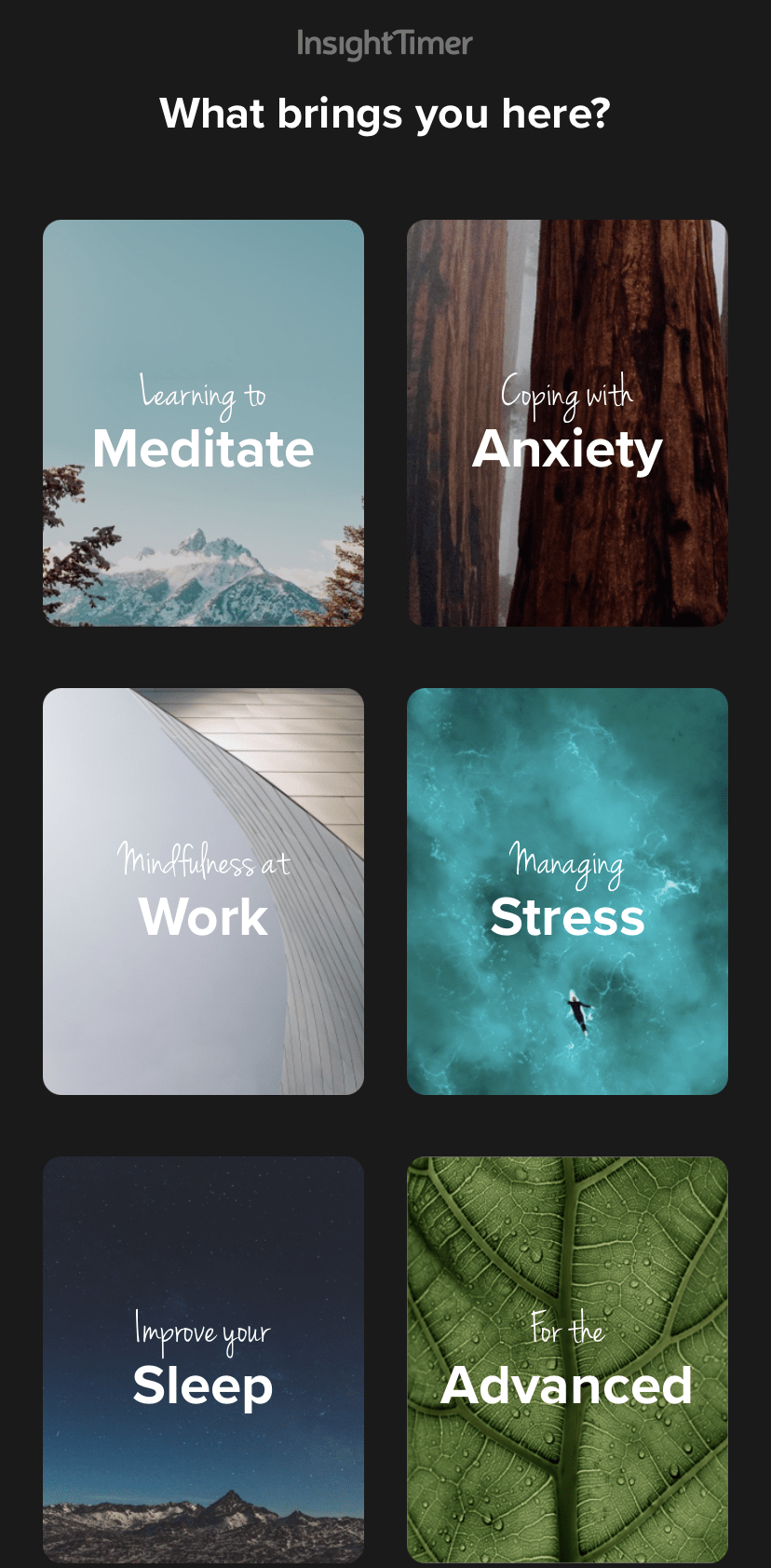
    Insight Timer has a huge library of content: over 80,000 free guided meditations from over 10,000 teachers on topics like stress, relationships, healing, sleep, creativity, and more.

    Right from the beginning, the app feels like a global community—the world map on the home screen shows a collective of 18 million meditators, and announces, “741k today, 7k now.” After you finish a meditation, you’ll learn exactly how many people were meditating “with you” during that time—and by setting your location, you can even see meditators nearby and what tracks they’re listening to.

    Once you find a teacher you enjoy—like Jack Kornfield, Tara Brach, Sharon Salzberg, or Rhonda Magee—you can follow them to make sure you don’t miss any new content. You can also tune in to free talks for life advice and inspiration. For those craving real-time interactions, Insight Timer offers live events every hour of the day to join on a whim or plan into your schedule. 

    You can even sign up to Circle for Teams, one of their newer offerings, which allows you to create circles (read: groups) to meditate in real-time with friends or colleagues.

    If you prefer a quieter meditation, however, you can simply set a timer and meditate to intermittent bells, calming ambient noise, or soothing music.

    Depending on your preferences, Insight Timer’s extensive collection can be either a blessing or a curse—an endless list of choices that leave you overwhelmed or a buffet of tempting options to sink your teeth into.

    Paid option: For $60 per year (with a 30-day free trial), you get access to courses with well-known teachers, the ability to download meditations and listen offline, and advanced player functions like repeat mode and fast forward and rewind.

    3) Smiling Mind
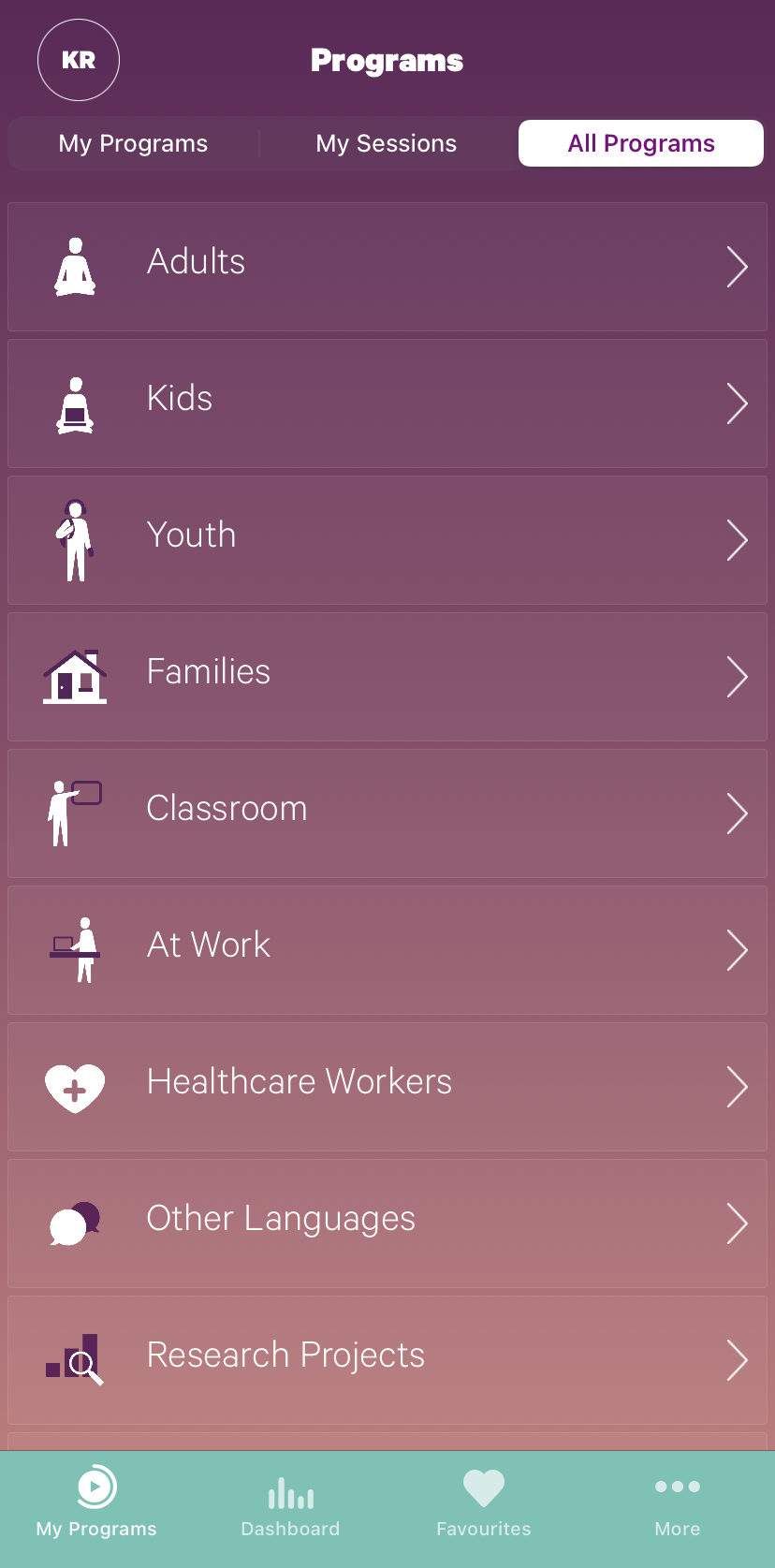
    Free Meditation Apps - Smiling Mind app screenshot

    Available for iOS, Android, and web

    Entry price: Free

    Smiling Mind hits the sweet spot for a free mindfulness app in so many ways. 

    The not-for-profit app features hundreds of meditations, enough to keep you engaged without overwhelming you with choice. They are organized into structured programs like Mindful Foundations (35 sessions), Sleep (6 sessions), Digital Detox (8 sessions), and Stress Management (10 sessions), but you have the flexibility to choose where to start and to easily jump between programs. Most meditations are in the five- to fifteen-minute range, with a few practices up to 45 minutes for advanced meditators. Smiling Mind also offers bite-sized meditations between 2 to 5 minutes for moments when you’re in need of a quick, mindful pause in the day.

    Downloaded by over 5.5 million people, the app also has a variety of specialized programs for families, children and teens of various ages, healthcare workers, and educators (including curricula they can use in the classroom); all developed with the help of psychologists and health professionals.

    While you could use a meditation app as a temporary break from your hectic life, Smiling Mind wants you to take your mindfulness practice off the cushion and into the rest of your day. Interspersed with some of the meditation programs are instructions for “activities” like Journaling Exercise, Go Offline, Where Did My Food Come From, and Count Your Senses. In the Count Your Senses activity, for example, the audio prompts you to bring your attention to your senses by counting things that can be seen, felt, heard, smelled and tasted. 

    Smiling Mind was originally created for kids, so they offer a robust selection of kid- and youth-appropriate mindfulness sessions. 

    Created by a nonprofit by the same name, Smiling Mind is entirely free—so you don’t have the distraction of paid content that’s inaccessible to you as a free user. The app wants to put a “smile on your mind”—and it might just succeed. 

    Paid option: None

    4) UCLA Mindful

    Free Meditation App—UCLA Mindful

    Available for iOS and Android

    Entry price: Free

    If all the research on mindfulness has persuaded you that you need to meditate, the UCLA Mindful app could be a good place to start. 

    Developed by the Mindful Awareness Research Center at the University of California, Los Angeles (UCLA), the app features about a dozen meditations of different types in English and Spanish. You can learn to focus on your breath, your body, or sounds; work with difficult emotions; and cultivate loving-kindness in sessions ranging from 3 to 19 minutes long.

    If you’re new to mindfulness, you might choose to take advantage of their Getting Started section, which offers information on what mindfulness is, how to choose a meditation, which posture is best for your practice, and what research-backed benefits you might expect from it.

    As a bonus, the app also offers longer meditations that it calls “podcasts.” These are half-hour audio recordings of meditations that include talks, typically by UCLA Director of Mindfulness Education Diana Winston, before and after the meditation, as well as plenty of silent practice time. 

    If you’re looking for an app that is heavily grounded in the science of mindfulness, you can put your trust in UCLA Mindful.

    Paid option: None

    5) Healthy Minds Program

    Available for iOS and Android

    Entry price: Free

    Healthy Minds Program Free Mindfulness App

    The Healthy Minds Program app wants to help you develop the skills for a healthy mind—by strengthening mental focus, decreasing stress, and growing resilience, compassion, and better immune health.

    Founded by neuroscientist Dr. Richard Davidson (who also founded the research institute Center for Healthy Minds at the University of Wisconsin-Madison), the app integrates neuroscience and research-based techniques with meditation training to increase overall well-being.

    The framework of the app’s mindfulness and well-being training is organized into four pillars: Awareness, Connection, Insight, and Purpose. Each pillar consists of three to five parts, and each part contains three series and multiple sessions within. For the Connection pillar, for example, the Innate Self-Worth series includes five sessions packaged to foster self-worth (think sessions like Practice Seeing the Good In Ourselves, and Learn Negativity Bias). You have a choice of either a Sitting or Active type of practice—“active” practices include guidance for being mindful while you exercise, or during your commute—and you can customize the length of time (five minutes to 30 minutes).

    The app offers a collection of 27 meditations outside their four-pillar wellness framework, including one-minute Micro Practices for when you’re in need of a brief respite. 

    At times the podcast-style app may encourage more thinking compared to typical guided meditations, but for the listener who is seeking guided meditations with the greater goal to increase awareness, cognition, and well-being, Healthy Minds Program app may be just the ticket.

    Paid option: None 



    Source link

  • Exciting News from Mindful: Please Welcome Our New CEO, Joseph Russell

    Exciting News from Mindful: Please Welcome Our New CEO, Joseph Russell

    In 2020, tech entrepreneur Matt Dickinson launched Mindfulness.com with teacher Melli O’Brien. Together, they envisioned an accessible, practical resource that could empower people to realize their fullest potential through the transformative power of mindfulness. 

    For six years, the Mindfulness app and website have been a global hub where beginners, experienced practitioners, and everyone in between can access thousands of practices, meditations, talks, courses, playlists, nature soundscapes, and more.  

    In 2023, we here at Mindful.org joined up with Mindfulness. As our community knows, we’ve got 15 years of evidence-based editorial content that reaches millions of readers globally with more than 4,000 articles, the 12 Minute Meditation podcast, expert-led courses, an annual print magazine, and a new app. We’ve been the definitive English-language resource for practitioners, clinicians, educators, and researchers since 2009.

    We recognize that we’re shepherding a legacy that’s thousands of years old, using the latest tech tools—and we take both the responsibility and the opportunity seriously. 

    Together, Mindfulness x Mindful brings what few other organizations bring: the very latest in technological developments combined with grounded, human-centered, science-backed mindfulness resources. Our apps are cutting-edge and aim to make accessing mindfulness training seamless, fast, beautiful, and personalized. We also hold the conviction that real human connection is the heart of mindfulness practice in the first place—so we partner with globally-respected writers, teachers, researchers, and thought leaders to bring you articles, guided meditations, talks, courses, and events that are alive with human compassion, wisdom, and creativity.  

    We recognize that we’re shepherding a legacy that’s thousands of years old, using the latest tech tools—and we take both the responsibility and the opportunity seriously. 

    A New Chapter

    On May 25, 2026, we welcomed Joseph Russell as our new Chief Executive Officer.

    Russell brings over 15 years of experience building, scaling, and leading digital products and mobile technology businesses. As co-founder and CEO of DreamWalk, one of Australia’s most recognised app development companies, he helped hundreds of brands and businesses—from Coca-Cola to The Secret—design and launch successful digital experiences. Throughout his tenure, DreamWalk produced dozens of chart-topping mobile applications before it was acquired by multinational advertising group Wellcom in 2012. Russell then re-acquired the brand and relaunched under his leadership in 2017.

    Russell has been featured by The Today Show, The Project, The Australian, Lifehacker, and Executive Style, and has written extensively on digital product strategy for Smart Company, B&T Weekly, and Inside Small Business. He has also served as a mentor and advisor to social impact startups through ygap.

    “We’re living through a period of extraordinary uncertainty. The research on what mindfulness does for human resilience—our capacity to respond rather than react—has never been more relevant.” — Joe Russell, new CEO of Mindfulness United

    As our new CEO, he’s joining Mindfulness United at a pivotal moment for both the company and the broader mindfulness industry. 

    Russell was candid about why the timing feels meaningful: “We’re living through a period of extraordinary uncertainty. The research on what mindfulness does for human resilience—our capacity to respond rather than react—has never been more relevant.”

    Russell added: “Mindful.org has spent 15 years earning the trust of readers, researchers, and practitioners. When you combine that with an app guided by teachers who helped build the clinical science of mindfulness—that’s something genuinely rare. My job is to bring those two things together and do justice to the groundbreaking products and legacy this team has built.”

    Matt Dickinson has faithfully led the work of MU for six years, and we are grateful for his vision and dedication. Reflecting on this transition and why he chose Joe to carry on the work of MU as our new CEO, he said, “Joe brings exactly the combination of skills this company needs at this moment—deep expertise in mobile product and digital growth, a genuine understanding of what it takes to engage an audience, and a personal connection to the mission. We are thrilled to welcome him to the team and excited to see what he builds.”

    Joe also recognizes that joining Mindfulness United is a rare opportunity to create genuine, lasting change for millions of people who are hungry for more clarity, calm, wisdom, and connection in a world that often feels fragmented and frantic. 

    “Mindfulness isn’t a wellness trend,” he says. “These practices have been around for thousands of years. The science is real, the teachers are world-class, and the need has never been greater.” 

    He says his job is to make sure this platform reaches everyone who needs it. 

    As the leaders, organizers, developers, designers, creators, and editors that make up the Mindfulness x Mindful team, we’re on board with that, and we can’t wait to see what’s next.


    Source link

  • Addiction, Recovery, and How Mindfulness Can Support Emotional Sobriety

    Addiction, Recovery, and How Mindfulness Can Support Emotional Sobriety

    As someone who has been sober for 26 years, and in my work as a recovery coach, I’ve come to understand there is more to recovery and wellness than being substance- free. While it may begin there, what is equally, if not more important, is our emotional sobriety.

    When I first heard the term emotional sobriety, it sounded like an unattainable, distant experience reserved for Buddhist monks. Heroines of mine like Tara Brach and Pema Chödrön seemed like they might have it nailed, but it felt well out of reach for someone like me. It wasn’t until I went through a particularly emotionally challenging time —one that ultimately became a portal—that I truly came to understand its significance and have since been able to share this important facet of recovery with my clients.

    When I first heard the term emotional sobriety, it sounded like an unattainable, distant experience reserved for Buddhist monks.

    One day my son announced he was moving from New York City to Los Angeles. On the surface his decision seemed exciting and full of promise, but he didn’t have a job or a place to live; he was going to figure it out once he got there. The ongoing uncertainty around his well-being pitched me over the edge. I was an anxious, nervous wreck. For weeks, I checked my phone to see if he had texted me, and scrolled through Instagram and Facebook, furtively scanning for little snippets of his life, trying to confirm if he was okay.

    His life had been my favorite TV show, and I couldn’t get my fix. I couldn’t stop thinking about him, couldn’t stop worrying, and I felt emotionally hijacked.

    Noticing When Your Past Shows Up In Your Present

    As the saying goes: When it’s hysterical, it’s historical. When I took a deeper dive in therapy, I began to understand why his departure had hit me so hard. It mirrored something much older. When I was in college, my mother abruptly moved to Switzerland. No long goodbye, no gradual adjustment — she was simply gone. Decades later, my nervous system didn’t know the difference between then and now.

    My body was grieving an old loss through a new one. I knew enough to attend Al-Anon meetings to try to unhook emotionally, but my peace of mind remained elusive.

    My body was grieving an old loss through a new one. I knew enough to attend Al-Anon meetings to try to unhook emotionally, but my peace of mind remained elusive.

    The shift came when I learned to meditate. As a novice, I was first encouraged to turn my attention to my breath, and to notice the moment, the pause, between my in-breath and my out-breath.

    As I practiced that awareness, an insight bubbled to the surface. My breath, the singular most subtle physical experience, was my life force. This quiet activity that happened without my making it happen—it was the defining characteristic between life and death. I felt a reverence for my breath that I had never had before. Slowly but surely, I developed the ability to observe how my mind, like a cricket, jumped from thought to worry to thought—and eventually, it began to settle.

    For many, substances helped to numb their feelings and had been a type of escape hatch. So when we put substances down, and come into a more intimate relationship with ourselves, being still and quieting our minds might not feel safe. We no longer have something to shut off the noise or dampen the fears.

    Over time, I felt at peace—I felt emotionally sober. I wasn’t scrambling for something outside of myself to ease my discomfort.

    Making the Mind a Quieter Place

    In my work with people who struggle with substance use disorders and/or eating disorders, many clients share with me that they continue to struggle with quieting their minds. For many, substances helped to numb their feelings and had been a type of escape hatch.

    So when we put substances down, and come into a more intimate relationship with ourselves, being still and quieting our minds might not feel safe. We no longer have something to shut off the noise or dampen the fears.

    In my coaching sessions, we discuss the concept of emotional sobriety, and I offer a variety of entry points, like: 

    • Breath work or a body scan
    • The “notice and name” technique
    • Practicing recruiting a sense of stability from the room and immediate surroundings
    • A short, guided meditation
    • Journaling for twenty minutes

    In all these small practices, I am gently guiding them to reconnect with themselves through curiosity rather than judgment. Given there is no single path to stillness, we find one that fits, and we go at the client’s pace.

    Being emotionally un-sober can look like checking out, endless distraction, mindless scrolling. Mindfulness practices help us, over time, to understand that we can be with our uncomfortable emotions without lurching for that escape hatch.

    What I’ve come to understand is that insight and self-awareness are essential, but even with the best intentions we can still get emotionally hijacked, triggered in an instant—and suddenly the urge to escape those uncomfortable feelings feels overwhelming.

    And while we might not reach for the substance or the activity that brought us to recovery in the first place—which is in itself, of course, a marvelous accomplishment—we might reach for other, perhaps more innocuous activities that serve a similar purpose. Being emotionally un-sober can look like checking out, endless distraction, mindless scrolling. Mindfulness practices help us, over time, to understand that we can be with our uncomfortable emotions without lurching for that escape hatch.

    What mindfulness and meditation offer, and what my clients tell me again and again, is a way to reset the emotional thermostat, regardless of what’s happening around them.

    A pause between the in-breath and the out-breath. A moment of choice where there used to be none.

    That is emotional sobriety.


    Stephanie Hazard is a certified peer recovery specialist (CPRS) as well as a certified Carolyn Costin Institute eating disorder recovery coach (CCIEDC). Her debut book, Making Sobriety Stick: A Recovery Coach’s Guide to Sustainable Change, will be released September 22nd during National Recovery Month, and can be pre-ordered at www.pathtowardrecovery.com.


    Source link

  • A Meditation on the Art of Stopping (Extended)

    A Meditation on the Art of Stopping (Extended)

    In this practice, teacher Shalini Bahl reminds us that in its simplest form, mindfulness is just about stopping—stopping to notice, to breathe, to gently interrupt our engrained habits of thought with our quiet presence.

    We often think of mindfulness and meditation as a drawn-out, sustained exercise—when in reality, they’re just a collection of micro-moments of stopping, breathing, really noticing our own bodies and our own lives, getting distracted, and then coming back again. Over and over.

    As this week’s teacher Shalini Bahl puts it, today’s guided practice is about the art of stopping: letting go of our regular habits of the mind—the pushing, pulling, running in circles— and instead just being for a moment.

    This is an extended practice, but as a bonus, we’re also sharing a micro-practice version below that you can take into busy days.

    And don’t miss Shalini’s article on Mindful.org that’s all about the power of micro-practices to affect our daily choices.

    A Meditation on the Art of Stopping

    Read and practice the guided meditation script below, pausing after each paragraph. Or listen to the audio practice.

    1. Start by coming to a comfortable posture where you feel supported. If you need more cushions or something to support your back so you feel the elongation along the back of your spine and rolling your shoulders up, back, and down. Rest your hands facing palms up or palms down. When you feel ready, lower or close your eyes.
    2. Receive the sound of the bells as an invitation to the mind to be fully present. To this body, to this breath. Notice the fact that you’re breathing. There’s no need to change your breath in any way. If it’s shallow, let it be shallow, if it’s deep, let it be deep. Just rest your awareness in this breath, entering your body, following it as far as it wants to go. Notice the slight pause when the in-breath changes to out-breath. Then rest in the awareness of that exhale until the out-breath fully leaves your body. And then the pause, resting in that pause before the breath enters the body. 
    3. Follow this cycle of breathing at your own pace, resting in awareness. You’re not thinking about your breath, you’re really starting to sense the breath, the coolness, the touch of the breath as soon as it enters your nostrils. Feel it move in your body, the expansion, as you breathe in, in your lungs, in your chest, in the belly, wherever you feel it. As you inhale, breathe in and then exhale, really sensing that contraction, the letting go. 
    4. Every time your mind wanders, which it will, just notice that with kindness. Let go of that thought for now, knowing you can always return to the plans, to your thoughts, after the practice. For now, just let go of those thoughts and return back to this awareness of the breath. 
    5. Just for these few moments, let go of any rushing, of any judging, of expectations. Allow yourself to breathe just the way you are, as you are. Give your full care and attention to every inhale. To every exhale. And the spaces in between. 
    6. When you’re ready, find one place in your body where you can really feel the direct sensations of breathing. It could be the touch of the breath in the nostrils or the upper lip region where you feel the coolness of the new breath entering the nose, the tingling in your nostrils, or the warmth as you exhale, touching your upper lip. 
    7. If it feels more natural for you, you can turn your attention to feel your breath in the region of your chest or your belly. Find that one place where you can feel the direct experience of breathing. For the next few minutes, stay there with the direct sensations of breathing. Again, keep it effortless, just a very gentle resting in that awareness of the breath. 
    8. If it feels dull, you can open your eyes a little bit. Make your inhale more conscious. If your mind is really active, give more attention to the exhale, the slowing down of your exhale. 
    9. What we are practicing here is the art of stopping and letting go—letting go of our distractions, of our regular habits of the mind, of pushing, pulling, running in circles. We’re just being here, fully present to your breath, allowing yourself to feel your breath directly. 
    10. Notice your expectations of what’s next, of how things should be, even how this practice should be. Notice how your attachments can get in the way of your experience of inner calm in this moment. Soften the grip of those attachments and just return to your direct experience of the breath. Just this one breath. 
    11. Now, expand your awareness of this breath, of the feeling of this breathing in your whole body. You can stay either focused on that one place or you can expand the awareness of this breath moving through your body. Feel your whole body breathing in, breathing out. Notice those micro-moments of letting go of distractions and staying present. 
    12. Before we end this practice, take a few moments to listen within to what’s present. Just listen, taking a few moments to listen as your mind and body are a little calmer. Maybe there’s clarity of way you can bring in more of this practice of inner calm in your life, whether it’s in your relationships, with yourself, in your work. Just listen within to where this practice of inner calm can be most skillful, most beneficial to you and your loved ones. May we carry forward these qualities of inner and outer calm in all our actions and interactions.

    Micro-practice here:


    Source link

  • A Meditation to Bring Comfort and Kindness to Pain and Illness

    A Meditation to Bring Comfort and Kindness to Pain and Illness

    Chronic, complex medical conditions rarely have easy answers—but as meditation teacher Juliana Sloane reminds us in this soothing practice, we can always meet our suffering with creativity, gentleness, and compassion.

    Learning to live with pain and illness is challenging, arduous work. Often, people can go for months or even years without sufficient answers. Life gets turned completely upside down. The body you thought you had suddenly becomes something you don’t recognize or know how to work with. 

    This week, meditation teacher and hypnotherapist Juliana Sloane offers an imaginative meditation that invites softness and self-compassion in the midst of discomfort.

    A Meditation to Bring Comfort and Kindness to Pain and Illness

    Read and practice the guided meditation script below, pausing after each paragraph. Or listen to the audio practice.

    1. In this meditation, we’ll be using some imaginative and mindfulness-based practices to work with discomfort or illness or pain in the body. These practices have been shown to be very supportive for symptom management, as well as finding ways to meet challenging health situations with more patience, more kindness, and more space. 
    2. Begin by getting comfortable, allowing yourself to find a place seated or lying down where you can really relax. Close your eyes if that feels comfortable, or soften your gaze. 
    3. Imagine that right now, any place in your body where you rest your attention could begin to soften and relax and get more comfortable. Begin by resting your attention on the muscles around your mouth. Invite those muscles around your mouth to move into relaxation, ease, comfort, letting those muscles just let go. 
    4. Now notice the space inside your mouth. The surface area of the roof of your mouth, the sides of your cheek. Rest your attention on the back of your tongue. And allowing the back of your tongue to begin to relax. Let that tongue come down maybe from the roof of the mouth or allow it to just soften or loosen or come into resting. 
    5. Bring your awareness to the cheeks and jaw and just let that jaw, those cheeks loosen and soften. You might feel the mouth open slightly as you do, or you might feel those cheeks just get heavier and looser. 
    6. Bring your attention now to the muscles around and behind the eyes. Let those muscles around the eyes relax. 
    7. Move your attention up to the forehead, letting those muscles in the forehead soften and relax. Notice the top of your head and imagine that as you rest your attention there on the top of the head, you could even allow the scalp to relax. 
    8. Now slide your attention down the back of your head, almost like that relaxation could just flow down the back of your head. Down your neck and shoulders, letting those shoulders loosen and soften and relax. 
    9. Notice the space between your shoulder blades, and breathe that sense of softening and relaxation into that space. Let your attention flow down to your arms and hands, inviting every muscle in those arms and hands to begin to relax and soften, as if those arms and hands could just get heavy, as if they’re saturated with that comfort, that ease, that relaxation. 
    10. Let that same softness flow down into your chest and belly. Down into your legs and your feet. 
    11. Now, choose a sensation that doesn’t feel too overwhelming. It might be a specific symptom or a place where there’s pain in the body. Rest your attention there on that place where the symptom has been, or the place where you’re experiencing discomfort. Get a little closer to it with a sense of curiosity and creativity and even resourcefulness. 
    12. Now imagine: if this sensation had a color, what color would it be? You might notice the specific color, whether it’s dark or light. Notice how big that color is, how much space it takes up. Imagine what qualities, what resources this color might need—for example, maybe it needs kindness. Maybe it needs patience. Maybe it needs more understanding. 
    13. Sense into what might support this color here in the body. When you land on that, allow yourself to imagine if that resource, if that supportive quality had a color, what color would that be? Once you have that supportive, beautiful quality in its colo, imagine that you could take this resource, this support, this other helpful color, and you could wrap it around that first color. And as you do, you can imagine that now this supportive color is moving into that space and changing the color of the entire area, filling it with that supportive, resourcing energy of that color. You might imagine this almost like you were wrapping that area with color and that color had a healing balm or a medicinal quality to it as you infuse the space with that color, bringing that kindness or that patience or that understanding. 
    14. Imagine that that supportive, beautiful color could begin to move outward. It could fill the body so that you could rest in this color. 
    15. Spend some quiet time with this image. Notice what’s different. Know that right now, you can send that color that’s so supportive, so soothing into any place it’s needed. Let’s rest in that color for one more moment. Then, gently come back into the room, stretching and opening your eyes.


    Source link

  • Are Shame and Guilt Bad—Or Do We Just Need a Different Relationship With Them?

    Are Shame and Guilt Bad—Or Do We Just Need a Different Relationship With Them?

    In the new Apple TV series, Margo Has Money Problems, Michelle Pfeiffer, in a comeback performance, plays a mom, Shyanne, who got pregnant after a one-night stand with a married man. Now her daughter, Margo, whom she raised on her own, has herself given birth to a child with a married man who’s not in the picture.

    At one point, in a parking lot outside the chain restaurant where Margo works, Shyanne has a total breakdown. Having failed at her first stint babysitting her grandchild, she hands over the boy to Margo and shouts that she is a horrible grandmother just as she was a horrible mother: “I wish I could be a better person, but I’m not!…and I will not be judged, by him or anyone else.”

    As much as we may recoil from shame and guilt, these emotions are a part of being human. Yet so many of us, maybe most of us, handle them very poorly.

    This is a classic shame spiral. We start feeling bad about something we’ve done or are unable to do, then leap straight to the appraisal—not of our wrongdoing or inability, but of ourselves: We are bad and we want to hide away because of it, lest we be judged even more.

    Guilt and shame are dirty words, painful words. As much as we may recoil from them, though, these emotions are a part of being human. Yet so many of us, maybe most of us, handle them very poorly. We beat ourselves up psychologically. We beat others up verbally (and in extreme cases physically) in an effort to inflict guilt and shame and retribution for wrongdoing. At a global level, wars are fought and people die out of vengeance—simply because we have so much trouble dealing with how to respond when we do something wrong or are wronged.

    Taking a Closer Look at Guilt and Shame

    Yes, these are tricky emotions, and this is likely not the first time you’ve considered them, but it never hurts to contemplate the thornier sides of life with a fresh mind. If you meditate, you spend your life doing that. Each time, hopefully, with a more open mind.

    To begin, it helps to distinguish guilt and shame.

    Meditation teacher Caverly Morgan expresses the difference succinctly in her book The Heart of Who We Are: “When you feel guilty, there’s a judgment that something you’ve done is wrong. When you feel shame, you believe that your whole self is wrong.”

    Is it realistic to think that an emotion that’s been around as long as anyone can imagine is just going to be removed from the human toolbox?

    Brené Brown, author of the groundbreaking book on human vulnerability, Daring Greatly, says on her website that while guilt is “adaptive and helpful” and can spur accountability for our actions, shame, “the intensely painful feeling or experience of believing that we are flawed and therefore unworthy of love and belonging” is neither helpful or productive. She goes on to “call for an end to shame as a tool for change.”

    I’m a huge Brené Brown fan, so I get where she’s going. Shame is so damaging. It ruins whole lives and families (witness Shyanne’s breakdown in the parking lot). And it is quite often wildly ineffective in bringing about change. I’m sure we’ve all tried to shame someone into better behavior only to have it backfire.

    Yet, is it realistic to think that an emotion that’s been around as long as anyone can imagine is just going to be removed from the human toolbox?

    If They’re Not Going Anywhere…How Do We Learn to Live With Them?

    Other researchers are not quite as ready to completely eliminate shame from the spectrum of human responses. Rather, they simply caution us to notice the ways our responses are so very often maladaptive.

    In his recent book, The Power of Guilt, developmental psychologist Chris Moore says we have guilt in the first place to motivate us to repair harms and heal relationships. Shame, he goes on to say, by contrast, tends to make people shy away from interacting with others, leaving a relationship damaged, perhaps permanently. This tendency to descend into a deep dark place makes shame into a dangerous drug.

    Psychologist June Tangney, co-author of Shame and Guilt, however, admits to being shame-prone herself and counsels that it’s possible to be resilient in the midst of shame and divert ourselves from spiraling. In other words, we might be better off accepting that shame is going to emerge and figure out how to work with it more effectively.

    Our problem with shame, then, may not be that as a group we have no need for it, but rather we have a bad habit of taking it way too far.

    Evolutionary psychologists like Dacher Keltner see shame as part of a family of human responses known as the self-conscious emotions—guilt, shame, pride, and embarrassment—that all play a role in regulating social behavior. According to these students of human behavior, “…shame serves the important function of appeasing observers of social transgressions, a function which reestablishes social harmony.” In other words, publicly blushing when you’ve done something wrong signals to others that you know you’ve made a mistake and you care. To say, for example, that someone “has no shame,” means they don’t care what others think about their behavior. Think of certain world leaders who seem to do and say whatever they want, regardless of how immoral or illegal it is, and without concern for the harm those actions cause.

    Our problem with shame, then, may not be that as a group we have no need for it, but rather we have a bad habit of taking it way too far. A very little bit of shame can go a long way. Even a little bit too much can be destructive. The lesson then, seems to be: Shame is likely to be a part of life, respond appropriately and in proportion to that feeling, and focus entirely on action in the future.

    In other words: Do not beat yourself up. Meet the feeling, but don’t build a home there.

    Focusing on Repair

    Knowing how guilt and shame tear at the heart and sever the bonds that hold communities together, spiritual traditions developed forms of atonement—honest acknowledgment of harm, repairing the harm if possible, and vowing not to repeat it.

    Catholics have the confessional and the season of Lent. Judaism has Yom Kippur, the day of atonement. In Islam, tawba, repentance, is practiced continuously, but especially in the last ten days of Ramadan. Twelve-step programs devote several steps to atonement and making amends. While the place of confession in Buddhism is little known, the ancient code of monastic discipline calls for regular acknowledgement of wrongdoing, including in some traditions the collective wrongdoing that has occurred “since beginningless time.”

    It’s not necessary to engage in one of these traditions to develop a healthy relationship with guilt and shame—but it can certainly help to examine our own experience to see how we might be easier on ourselves and on others while still addressing the feelings that emerge when things go wrong.

    Guilt—that uneasy feeling about doing something wrong or not fully showing up—can be a motivator. But as all the researchers, teachers, and commentators here note, it too can gnaw away at us and morph into shame. Fortunately, a practice like mindfulness can help interrupt the descent into needless shame and help us focus on our future actions. In mindfulness practice, we can begin to see what’s happening more clearly and as the ancient prayer goes, forgive our trespasses as we forgive those who trespass against us.


    Source link

  • Mindfulness and Hypnosis: Tools for Navigating Chronic Illness

    Mindfulness and Hypnosis: Tools for Navigating Chronic Illness

    Several years ago, I experienced what at the time I did not realize was the beginning of a life-changing journey into chronic illness. 

    It started with noticing shortness of breath when I bent over to pick something up off the floor, and rapidly snowballed. It felt as if I had stepped into an alternate reality, where I went from being a healthy person whose life was punctuated with hiking, dancing, and travel, to someone whose body would no longer cooperate with life. At my worst, my heart rate spiked throughout the day and night to levels that would send healthy friends running to the ER. I was exhausted and at times too weak to walk.

    Already a Buddhist meditation teacher and hypnotherapist, I found myself on a crash course in treating a complex medical condition and learning how to live a meaningful life inside a body that had fundamentally changed.

    This was the beginning of a complex condition involving almost every system in my body, eventually traced back to my time living in a small cottage that unknowingly housed an uninvited tenant: black mold. At the time, I couldn’t have imagined how profoundly this experience would change my body, my life, and my work.

    Already a Buddhist meditation teacher and hypnotherapist, I found myself on a crash course in treating a complex medical condition and learning how to live a meaningful life inside a body that had fundamentally changed. 

    Over the years that followed, I worked to carve out spaces of healing, resilience, and joy, rebuilding a life that in many ways felt happier and more free than the one I had lost. I also found myself supporting more clients navigating complex illnesses themselves. Again and again, I saw how mindfulness and hypnosis could help people feel a renewed sense of hope, agency, and capacity to relate to their lives and bodies differently.

    A Nervous System Mobilizing Against Threat

    When we live with chronic illness or pain, it can often feel like we are stuck on high alert—and with good reason. The body is designed to detect danger and mobilize quickly against threat. We have survived across generations of human evolution because of this finely honed system. It’s an incredible gift—until it’s not.

    Pain, stress, illness, and other issues can send signals throughout our body communicating that something is profoundly wrong. It’s our system’s way of saying, “Hey! Stop! Please take care of me.” 

    Maladaptive neuroplasticity” happens when the body and mind begin to reorganize in order to address the ongoing threat that is occurring. Unfortunately, we don’t always reorganize in a way that helps us long-term or feels particularly good. To our brain and body, it’s about one thing and one thing alone: our survival. 

    But in chronic conditions occurring over time, this repeated activation can make our nervous system extra sensitive to threat. Our body’s warning system begins to fire over and over, responding to even small changes in posture, environment, or life conditions as if they were a five alarm fire. This is part of why hypnosis and meditation have been shown to be highly supportive for chronic illness and pain, when used in complement with appropriate medical care.

    You’ve probably heard the term “neurons that fire together wire together,” meaning that when we repeat anything over and over, we build strong neural pathways that operate automatically. This trait is fantastic in so many situations: we effortlessly remember how to drive a car, we see the face of someone we love and a feeling of warmth washes over us, we wake up and go to our meditation cushion because it’s a habitual part of our routine.

    Our brains are incredibly efficient. They want to save energy, so they create shortcuts to do so. This is often helpful, but when it comes to chronic pain and illness, this can result in heightened sensitivity, and what some researchers call maladaptive neuroplasticity

    What does that mean for us? Essentially, the body and mind begin to reorganize in order to address the ongoing threat that is occurring. Unfortunately, we don’t always reorganize in a way that helps us long-term or feels particularly good. To our brain and body, it’s about one thing and one thing alone: our survival.

    Over time, an inner algorithm is created in the brain, body, and nervous system: We get exposed to a trigger or feel the beginning of the symptom and automatically, a cascade of chemical, physiological, and emotional responses fire up within a fraction of a second. Emotions are heightened, thought loops start spinning, discomfort worsens, and the neural pathways connecting things like fear, grief, hopelessness, frustration, and physical symptoms grow stronger. 

    The wonderful thing about neuroplasticity is that you have agency over more of this process than you might imagine, especially when it comes to navigating habitual thoughts and reactions, distress, and overwhelm.

    Neuroplasticity Means You Have More Power Than You Know

    It’s understandable that these processes can feel big, automatic, and beyond our control, but that’s not the full picture. The wonderful thing about neuroplasticity is that you have agency over more of this process than you might imagine, especially when it comes to navigating habitual thoughts and reactions, distress, and overwhelm.

    This is where mindfulness and hypnosis can offer real support. Both practices help you notice when the alarm bells start going off, so that you can interrupt the cascade of reactivity and learn to steer it in a different direction. Through relaxation, breath, focused attention, visualization, and active work with the subconscious mind, you can begin to support the nervous system and create space where triggers, symptoms, and recurring attitudes and thoughts can be met and worked with. 

    The more you practice cultivating and resting in qualities like safety, compassion, kindness, and relaxation, the more hardwired and automatic they become. Just like you’ve strengthened the muscles of stress and overwhelm, you can strengthen the muscles of ease, trust, and permission to rest and take care of yourself.

    One of my clients has described this process as being able to access her “own little sanctuary”—a place where even in the midst of years-long, complex illness, she is able to rest, remember her wholeness, and feel relief. With that, her sleep has significantly improved along with her overall sense of hope, personal power, and wellbeing.

    Addressing the Whole Person

    Of course, this does not mean thinking we can just “meditate away” a condition that needs treatment. These practices are best done in conjunction with medical care, because they allow us to navigate the full spectrum of our experience—from stress around doctor’s appointments and treatment protocols, to changes in our relationships and career, to celebrating the wins and progress when they do come. Living with pain and illness touches our bodies but also our identities, spirituality, and outlook on the world. These practices can allow us to show up for all parts of it. 

    Adding meditation and hypnosis to our chronic illness care regimen can reveal that we have more power than we think: the ability to interrupt familiar thought loops, to create moments of relief and inner safety, and even to reshape the emotions, beliefs, and patterns that can make life with chronic illness feel harder than it already is.

    Adding meditation and hypnosis to our chronic illness care regimen can reveal that we have more power than we think: the ability to interrupt familiar thought loops, to create moments of relief and inner safety, and even to reshape the emotions, beliefs, and patterns that can make life with chronic illness feel harder than it already is.

    This is so powerful because in the type of mind states available through meditation and hypnosis, the mind becomes more flexible, creative, and adaptive. In fact, early research suggests that mind-body practices like meditation and hypnosis may influence brain-derived neurotrophic factor (BDNF), a molecule linked to neuroplasticity, learning, pain modulation, and the nervous system’s capacity to adapt in response to stress. 

    When we add these practices to our toolbox, we are partnering with the subconscious mind so that we can remodel our relationship to illness from the inside out.


    Source link

  • How Micro-Practices Can Be the Bridge Between Your Meditation and Your Choices

    How Micro-Practices Can Be the Bridge Between Your Meditation and Your Choices

    There is a moment so small you almost never notice it.

    The moment before you click. Before you reply. Before you reach for what’s easy.

    These moments shape your life.

    And they’re the ones most meditations never touch.

    The Belief I Never Paused to Question

    I’ve meditated for over two decades—Vipassana retreats, MBSR certification, thousands of hours on the cushion. I’m also a mindful marketing professor who teaches conscious marketing and consumer behavior, a former town councilor, and a mindfulness teacher. I care deeply about this work.

    So when I say I ordered from Amazon for over ten years, I want to be clear: I was not unaware. I knew about the working conditions. I watched local bookstores close. I taught my students about values-aligned consumption. When I could, I shopped local.

    Underneath all of it was a quiet belief I had never paused to examine. But the assumption I had built my consumer life around was simply not true.

    But life was full—raising a family, teaching, serving on council, writing, offering free community classes. Amazon was convenient. Books, audiobooks, protein bars, gifts—it was one-click easy, and I was doing good in so many other ways.

    Underneath all of it was a quiet belief I had never paused to examine: There is no real alternative to Amazon. Not an articulated belief. Just an assumption so woven into my decision-making that it felt like fact.

    Then I learned that Amazon was actively funding politics that conflicted with everything I teach and stand for. That was the moment I felt compelled to confront my belief—and visible beliefs can be questioned.

    I paused. I looked for alternatives and almost immediately found Thrive Market. It had been there the whole time. So had a local food cooperative. Some items were actually cheaper in the alternative stores. The assumption I had built my consumer life around was simply not true.

    This is about something deeper: whether mindfulness can change how we actually think and make decisions—beyond the cushion, in our lives.

    I want to be clear: this isn’t about judging anyone who shops at Amazon. It’s about pausing long enough to ask whether my choices are aligned with my values—and discovering that when I finally asked, the answer had been waiting for me all along.

    Three qualities of mind that I had cultivated in meditation for twenty years seldom showed up at checkout—Curiosity, Compassion, and Inner Calm. They’re three of eight mindfulness skills that disrupt the default habits running our decisions. We’ll meet the others as we go.

    The evidence that mindfulness reduces stress is well established. That’s not what this article is about. This is about something deeper: whether mindfulness can change how we actually think and make decisions—beyond the  cushion, in our lives.

    Reducing stress and changing decisions are not the same thing. A person can feel calmer and continue making the same unconscious choices—choices that may perpetuate the very conditions that create stress in the first place.

    We don’t have one unified self making all these decisions. We have different selves that take turns being in charge depending on context. Each runs on its own defaults. And the mindfulness your morning self cultivated does not automatically transfer to the decision the consumer self is about to make.  

    The deeper question is whether mindfulness can reach the place where our decisions are actually formed. The emerging evidence says yes.

    Researchers Maymin and Langer presented participants with 22 classic cognitive biases—the endowment effect, overconfidence, anchoring, loss aversion, confirmation bias, and seventeen others. Half received a brief induction in active noticing—instructions to look for what’s new and unfamiliar in their environment. On 19 of the 22 biases, those induced into this curious, attentive state were significantly less likely to show the bias. Not through years of meditation. Through a brief shift into the kind of active noticing that disrupts our habitual ways of categorizing and assuming—what I call Curiosity.

    This is not stress reduction. This is the quality of thinking itself changing.

    My own research adds another layer. We don’t have one unified self making all these decisions. We have multiple I-positions—different selves that take turns being in charge depending on context. Your morning self sets intentions on the cushion. Your consumer self shops. Your work self navigates meetings. Each runs on its own defaults. And the mindfulness your morning self cultivated does not automatically transfer to the decision the consumer self is about to make.  

    Longer meditation matters enormously. It builds the nervous system’s capacity to stay present with difficulty. It deepens the reservoir that micro-practices draw from.

    What Meditation Builds, What Micro-Practices Reach

    Let me be clear: longer meditation matters enormously. When we settle the mind over twenty, forty, or sixty minutes, patterns rise to the surface that are invisible in the rush of ordinary life—the conditioning we inherited, the beliefs we absorbed without choosing them, the default ways of thinking that shape our decisions before we’re aware a decision is being made. Formal practice is where we discover them. It builds the nervous system’s capacity to stay present with difficulty. It deepens the reservoir that micro-practices draw from.

    Even though the research suggests we don’t need decades of meditation to begin shifting decisions, the ability to calm the mind enough to see deeper interconnections and patterns comes from taking time for that—whether in mindful walking, a sitting practice, or any practice dedicated to sharpening our attention and perceptions.

    But calm alone is not enough. Wagner and colleagues demonstrated why in their 2025 study published in Communications Psychology. Simply repeating a choice in a given context—independent of any reward—biases us toward making that choice again. Each repetition increases our valuation of the option and decreases our uncertainty about it. We become more confident in choices we’ve merely repeated—mistaking familiarity for wisdom.

    Longer meditation is like going to the gym—it builds capacity, strengthens attention, and uncovers the deeper patterns running our decisions. Micro-practices are like taking the stairs instead of the elevator—small, repeated choices woven into the day that change how we actually move through our lives.

    This repetition bias operates at the checkout, in the meeting, at the dinner table—deepening every time we make the same choice without awareness intervening. A morning meditation may bring calm and clarity, but it is often not enough to offset a bias that has been compounding with repeated decisions throughout the day over time. To disrupt repetition bias, we need micro-practices that meet the moment and invite the right skills to disrupt and transform the defaults.

    Longer meditation is like going to the gym—it builds capacity, strengthens attention, and uncovers the deeper patterns running our decisions. Micro-practices are like taking the stairs instead of the elevator—small, repeated choices woven into the day that change how we actually move through our lives.

    And unlike a longer meditation, micro-practices don’t require separate time. They happen inside what you’re already doing—in the pause between activities, the breath before you speak, the moment before you reach for your phone. Saying we’re too busy for micro-practices is like saying we’re too busy to breathe.

    What makes them powerful is that they meet the nervous system and mind in context, where change is actually possible. And the more we practice in non-critical moments—with the morning coffee, the commute, the routine checkout—the more available these skills become in critical ones. Over time, we gradually shift from our old default reactions to making mindfulness itself our new default.

    We need both. The gym builds the strength. The stairs put it to use. One without the other leaves a gap—a gap our defaults will happily fill.

    Eight Defaults, Eight Skills

    Through my research—studying original contemplative texts alongside modern psychology and neuroscience, and testing this framework with hundreds of practitioners and students—I’ve identified eight default habits that consistently run our decisions and eight innate qualities of mind that disrupt them.

    We’ve already met several. Curiosity disrupted confirmation bias. Compassion disrupted the judging mind. Inner Calm disrupted attachment. Awareness made autopilot visible.

    My research published in the Journal of Consumer Affairs found that these eight skills relate differently to stress and life satisfaction—confirming that we need different skills in different situations. A one-size-fits-all approach to mindfulness misses this.

    Figure: Eight Mindfulness Skills to Disrupt Default Habits, from Return to Mindfulness

    The question is not, “Which skills do I need to learn?” but “How do I get them to show up in the pause before the click, the reply, the reaction?” That is the work of a micro-practice.

    These skills are not new qualities we need to acquire. Every human being has experienced moments of compassion, curiosity, and calm. The problem has never been their absence. It has been their absence at the moment they are most needed.

    The question is not Which skills do I need to learn? but How do I get them to show up in the pause before the click, the reply, the reaction?

    That is the work of a micro-practice. And it has a specific architecture.

    (To learn more about each skill, see “Cultivating Mindfulness Beyond Meditation: How 8 Skills Empower Us in Everyday Life“)

    Three Steps to Meet the Moment: Return–Listen–Begin

    Knowing that our defaults run faster than conscious thought still leaves a practical question: what do I actually do in the pause? Return–Listen–Begin is a three-step framework—simple enough to use in a single breath, deep enough to draw on the full architecture of the eight skills.

    Step 1: Return

    Return is a deliberate redirection of attention from the automatic pattern to present-moment experience. The body is the most reliable anchor—feeling the breath, the heartbeat, sensations of touch. 

    In my Amazon moment, Return was the pause itself—the instant before the click when something said wait. Awareness made the autopilot visible. Inner Calm softened my attachment to convenience long enough for a question to arise.

    If restlessness, attachment, or resistance arises, that is not an obstacle to the practice—it is the practice. The hindrance becomes the path.

    Return is not about pushing past whatever is in the way. If restlessness, attachment, or resistance arises, that is not an obstacle to the practice—it is the practice. The hindrance becomes the path. We invite the relevant skill to meet what’s blocking our presence, and in doing so, we learn what we need to return to our inner knowing.

    Step 2: Listen

    Listen is turning toward what lies beneath the surface of what is immediately observable—within ourselves and between ourselves and others. This is not an analytical process. It is heartfelt. We listen for the underlying causes and conditions of the situation—the needs, fears, assumptions, and patterns that aren’t visible in the immediate reaction but are driving it. We listen to our own deeper knowing and also seek to understand others’ experiences and perspectives. We open to possibilities we couldn’t see when the default was running. 

    In my Amazon moment, Listen was the question beneath the question—not just Is there an alternative? but What do I actually value here, and who is affected by my choice?

    • When Confirmation Bias is present, we invite Curiosity to question assumptions.
    • When the Judging Mind is present, we invite Compassion—for others and for ourselves.
    • When Negativity Bias is present, we invite Appreciative Joy to stay open to what might actually be possible.

    Trust that you will know what you need to know. Be patient and kind to yourself.

    Step 3: Begin

    Begin is taking the clarity gained from listening into skillful action. But here is an important truth: profound insights don’t automatically translate into action. Our deep-seated habits may impede our ability to act on what we’ve seen. We may need to invite the skills again:

    • Energy to move past Status Quo Bias
    • Focus to gather the Distracted Mind
    • Equanimity to steady us against Impulsivity

    Begin wasn’t just the act of closing Amazon that day—it was choosing, in every subsequent moment of temptation, to pause again rather than let the old groove pull me back.

    Before acting, we can ask: Are my thoughts, speech, and actions aligned with my intentions? Are they promoting well-being for me and others, or are they causing harm?

    And in moments when there isn’t time for a full pause—when a response is needed now—three questions can serve as a compass:

    • What’s present?
    • What’s important?
    • What’s possible?

    In a culture that has turned mindfulness into a billion-dollar commodity, the difference between true micro-practices and what gets marketed as “mindfulness in five minutes” is easy to miss.

    What Makes Micro-Practices More Than a Hack

    Ron Purser coined the term “McMindfulness” to describe what happens when mindfulness is stripped of its ethical roots and sold as a quick fix for busy people—a do-it-yourself technique for stress reduction that leaves the systems producing the stress completely unexamined. His critique is worth taking seriously, because in a culture that has turned mindfulness into a billion-dollar commodity, the difference between what I’m describing and what gets marketed as “mindfulness in five minutes” is easy to miss.

    On the surface, these look like micro-practices. Both are brief. Both fit into a busy day. But the difference runs deep—and it starts with intention. The intention shapes what the practice holds and what it leaves out.

    A hack privatizes the problem. It treats difficulty as an individual deficiency—you’re stressed, you’re distracted, you’re reactive—and offers a personal fix. Breathe for five minutes. Sharpen your focus. Calm your nerves before the presentation. These effects are real. But the hack never asks whether the meeting itself needs examining, whether the system that produced the stress needs changing, or who else is affected by how you move through the situation. It adjusts the person to fit the system. The system stays intact.

    A micro-practice situates the person inside the larger picture. It starts not with a goal but with what is actually present—the causes and conditions for this moment to arise, not just in the last five minutes but in the patterns and systems we’ve been participating in. It asks: What default is running? What does this moment need—not just for me but for everyone involved? Are my actions promoting well-being or perpetuating harm?

    A hack draws on one dimension—typically cognitive—to produce one outcome: improved individual performance. A micro-practice draws on the full range of our intelligences—physical, emotional, mental, and spiritual—not to force our way into being present but to realign with what is genuinely important: our values, our intentions, the others we are present with, and the systems our choices help sustain or disrupt.

    In Thich Nhat Hahn’s concept of interbeing, we do not exist as separate selves improving in isolation. When I pause before a purchase, I am not practicing consumer discipline. I am reconnecting with the people and communities my choice affects.

    The same five-minute practice can carry either orientation. A breathing exercise before a meeting can be a tool for sharper performance—or it can be a return to awareness that includes the people in the room, the conversation, the values we want our next words to reflect. We can be effective and aligned with what matters most. The technique is identical. What it holds is not.

    Thich Nhat Hanh called this interbeing—the understanding that we do not exist as separate selves improving in isolation. When I pause before a purchase, I am not practicing consumer discipline. I am reconnecting with the people and communities my choice affects. Our awareness—or our autopilot—shapes not only our own experience but the experience of everyone our lives touch.

    The question is not, How do I feel after five minutes of breathing? The question is, What kind of person am I becoming through the way I practice—and what kind of world am I participating in through the choices that practice shapes?

    The Invitation

    This week, try both.

    Practice a longer meditation—whatever length and tradition is yours. Let the mind settle. Let the deeper patterns surface. This is the foundation.

    Then, practice the Art of Stopping at transition points and decision points in your day—before a purchase, before hitting send, before reaching for what’s easy, between meetings, during the commute, in the pause before you speak. When you feel the pull of a habit, stop and return to the three steps.

    • Return. Simply stop. Without judgment, observe the momentum of your thoughts, strivings, or emotions. Take three deliberate, deep breaths and exhale slowly, releasing any tension in the body.
    • Listen. Once you find stillness, listen within. Notice your ingrained habits of rushing and reacting. What are your actual needs and intentions? What are the causes and conditions that brought you here?
    • Begin. Once you soften the grip of your habitual reactions, begin your response with inner calm and clarity. Let your next action arise from awareness rather than autopilot.

    This practice might be five or six minutes—a guided meditation before a difficult conversation or while waiting in line. It might be sixty seconds—pausing before opening your laptop to check in with your intention. Or it might be a single conscious breath—the space between the impulse to add to cart and the click that completes the purchase.

    At the end of the week, notice what’s different. Not whether you feel calmer—though you might. Notice whether any decisions changed. Whether a belief you hadn’t questioned became visible. Whether a habit you thought was fixed turned out to be a choice you’d simply been making on autopilot.There is a moment so small you almost never notice it.

    Now you know it’s there. The practice is learning to meet it—
    both in meditation
    and in the moments that shape your life.


    Source link

  • A Meditation on Working With Our Fear And Parenting From Love

    A Meditation on Working With Our Fear And Parenting From Love

    Experiencing a season of struggle with your kid? You’re not alone. This gentle practice can help reconnect you with steadiness so you can keep parenting from love.

    In our concern for our children, sometimes we respond from a place of fear and worry. From time to time, we can even lose touch with the love that lies beneath that concern. 

    Reconnecting with the ground of our love and the wish for our children to be happy and well, especially in moments of difficulty, can be incredibly beneficial. 

    This practice from Wendy O’Leary offers a pause of support and encouragement that can bring you back to that core of compassionate wisdom—and you can return to it anytime you need help parenting from love.

    A Meditation on Working With Our Fear And Parenting From Love

    Read and practice the guided meditation script below, pausing after each paragraph. Or listen to the audio practice.

    1. Get into a comfortable seated position. You can close your eyes or gently look down and soften your gaze, whatever works best for you. 
    2. As we settle in here, bring your attention to your breath or feel the sensations of your body as it connects with the earth. Feet on the floor, backs of the legs on a chair or a cushion. Invite the attention to settle in a bit. Arrive in this moment by dropping into the body with the breath and the sensations of the contact points of the body. Gently settle in. 
    3. Now, I invite you to shift your attention to think about your child, maybe even picturing them in your imagination, calling to mind a time when you felt warm and loving feelings towards them. Notice what they were doing and remember how you felt in that moment. You might even imagine that someone has asked you, What do you love about your child? What words, phrases, images, or descriptions come to mind? 
    4. Gently check in and notice how you feel in your body, mind, and heart as you recall what you love about your child. You could even invite that feeling of love and connection to grow and expand in your body, gently resting here in this felt sense of love for your child. Let yourself marinate in this feeling of love and warmth and care. 
    5. Now, think of the time when your child was struggling. You don’t need to think of the most difficult struggle—instead, go with something that is a three or a four on a one to 10 scale. 
    6. As you allow the situation to more fully enter your awareness, check in again with your body. Often, when we are focused on a difficulty, especially when it’s related to our child, there can be a habitual tendency to contract and lean forward. Check it out and see if that’s true for you. To counteract this tendency, gently lean back just a little. This can be a physical leaning back or even an energetic settling back. Settle back and now invite the body to soften, even widen, creating space to hold whatever is there. We aren’t forcing anything here, it’s just a very gentle invitation to settle back and soften. Gently softening around the edges of any emotions we’re experiencing. 
    7. Now intentionally invite back that sense of love, holding the challenge in a spacious field of loving care and awareness. To help you do this, you might once again remind yourself of all the things you love about your child. You could even offer them some wishes of well-being and happiness as you picture them in your mind. May you be happy. May you well. May you safe. Or any wishes that feel true for you in this moment. 
    8. If the situation you’re calling to mind requires some response from you in some way, you might ask yourself, How would this love respond? You can also offer yourself a bit of care, because if your child is struggling, you are, too. So maybe place a gentle hand on the heart, or take a moment to remind yourself of our common humanity. You might say something to yourself like, Every parent struggles with their children sometimes. Every parent worries about their child at times. Or another phrase that might fit your situation. You could even say to yourself, This is hard, and I’m here for you, honey.  
    9. As you’re ready, you can open your eyes to close our formal practice. This practice can be a powerful way of reconnecting with feelings of love and cut through the worry and fears that we often experience as parents. It can be helpful to do the first part, remembering the love and care as a brief daily practice for a while, so you can more easily call up those feelings of love and connection in the midst of a challenging moment when you need the most help parenting from love. We want to acknowledge the hard stuff and not lose sight of the good and love that is underneath our worries and sometimes even our difficulties with our children. With my very best wishes, may you be happy and peaceful and move through life with ease and equanimity. Thank you for practicing with me.


    Source link

  • How To Meditate as an Adult — Even With Noise around you

    How To Meditate as an Adult — Even With Noise around you

    The crack team at How to Adult takes on basic seated meditation. Take 5 minutes and follow the demonstration.

    It takes so much energy to just be sometimes.

    Add in adult responsibilities like work, family, relationships, finances, and worry about the world, and it can all feel like way too much.

    While mindfulness meditation can’t take away the stressors of grown-up life, it can help us regulate our nervous systems, process emotions, improve memory and sleep, and bring clarity in our decision-making. And these are all benefits that can help us at least learn how to adult with a little more peace.

    If you’re curious about starting a practice but aren’t sure where to start, the creators of the How to Adult Youtube channel crafted a five-minute primer on how to meditate. They discuss the benefits, the practice—including some pointers from Mindful on basic seated meditation.

    All you need is five minutes and a chair to follow the demonstration.


    Source link