

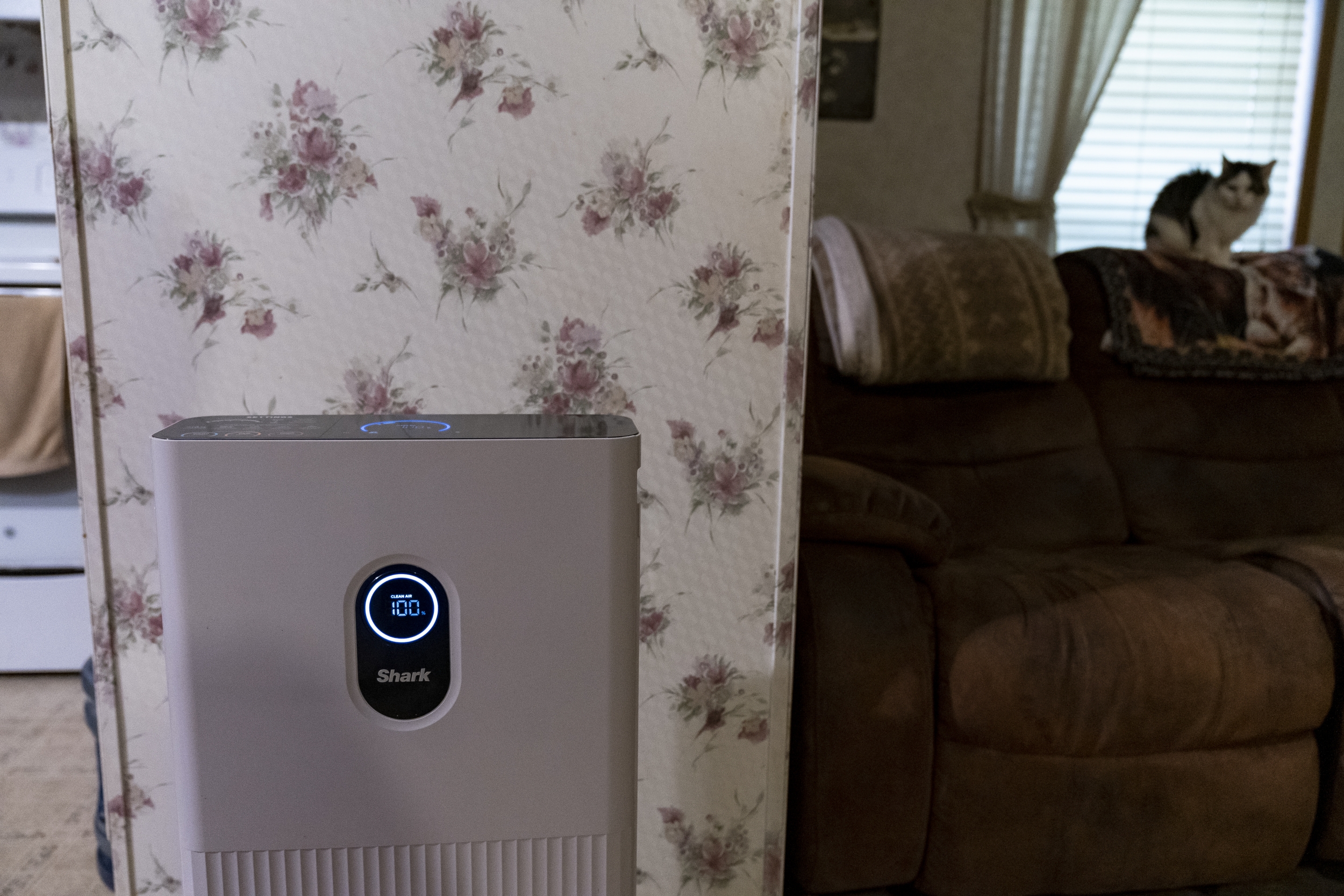
Adults aged 40 and older completed a test of mental flexibility about 12 percent faster after using a HEPA air purifier at home for one month than they did after a month using a fake purifier, according to a randomized crossover trial published in Scientific Reports in April.
The study was conducted in Somerville, Massachusetts, a densely built city just outside Boston that sits along Interstate 93 and Route 28. That location was chosen deliberately, because traffic related air pollution there runs high, making it a useful setting for testing whether filtering indoor air produces measurable effects.
The result is a secondary analysis, the sample is modest, and the effect appeared in one cognitive domain and one age group rather than across the board. Those caveats are essential to reading it correctly. But the direction is consistent with a broader body of research linking particulate exposure to brain health.
Inside the Somerville Crossover Trial
Researchers analyzed data from 119 people aged 30 to 74 enrolled in the Home Air Filtration for Traffic-Related Air Pollution trial, all living full-time within 200 meters of major highways. Participants were randomly assigned to use a real HEPA purifier for one month and then a sham purifier for one month, with a month-long break in between, or to use them in the reverse order. The sham device looked and operated like the real thing but lacked the filtering element.
After each period, participants completed the Trail Making Test. Part A assesses visual scanning and motor speed by timing how quickly participants draw lines connecting sequential numbers. Part B assesses executive function and mental flexibility by asking them to alternate between numbers and letters.
There was no significant overall difference in completion times between the real and sham conditions across the full sample. Age was a significant moderator. The 12 percent improvement appeared on Part B and only among participants 40 and older, who made up about 42 percent of the sample, roughly 50 people. Average completion times in that group were 54.0 seconds after HEPA filtration and 61.4 seconds after sham filtration. The finding held after accounting for how much time participants spent indoors and how stressful they found the test.
The researchers compare the size of the effect to the cognitive benefit associated with increasing daily exercise. The authors also wrote their own plain language summary for The Conversation.
Highways, Filters and Unequal Exposure
Particulate matter exposure has been connected to respiratory and cardiovascular illness and to neurological diseases including Alzheimer’s and Parkinson’s. HEPA filtration removes particulate matter from indoor air, and environmental health researchers have increasingly recommended home purifiers to reduce exposure.
What had been missing is evidence on whether that reduction translates into measurable cognitive benefit for people living near major pollution sources. The study authors note that research has been particularly sparse for people living near highways.
The exposure is not evenly distributed. People living near highways and heavy traffic corridors face higher pollution levels and higher rates of pollution related disease, and the authors note that people of color and low income households are more likely to live in those areas. That distributional point is the study’s clearest public health implication, and it echoes findings on other environmental exposures, including the link between prolonged heat and mental health hospitalizations.
Reading a Twelve Percent Result Carefully
Several limitations deserve prominence rather than a footnote. This was a secondary outcome analysis. The trial’s original primary outcome was blood pressure, not cognition, and the age subgroup was examined after the trial was designed. Secondary and subgroup findings carry a higher chance of a spurious result than pre-specified primary endpoints.
The subgroup driving the result was roughly 50 people. Fewer than 10 of the 119 participants were over 60, so the study cannot speak to older adults, the group where cognitive decline matters most. The authors say so explicitly. Enrollment also excluded people taking blood pressure medications or with a history of major cardiovascular events, which further narrows who the result applies to.
Participants used the purifier for one month. Nothing here establishes what happens over a year or a decade, whether the improvement persists, or whether it accumulates. The Trail Making Test is also known to improve with practice, and while the crossover design partly accounts for that, some practice effect is likely.
The mechanism is unresolved. The authors describe research suggesting particulate exposure reduces the brain’s white matter, and note that the brain regions most affected by air pollution govern mental flexibility and executive function, the same domain where they saw improvement. They describe planned follow-up work to test that. It is a hypothesis, not a demonstrated pathway.
Cost of Cleaner Indoor Air
For households considering a purifier, this study is a reason to think it is plausibly worthwhile near heavy traffic, not a reason to treat it as an established medical intervention. Units and replacement filters carry ongoing costs, and filters must be changed on schedule to work at all. Consumer products sold to reduce an environmental exposure often promise more than the labeling can support, a mismatch visible in sunscreen labeling and UVA protection.
Households that cannot afford a commercial unit have lower-cost options. Do it yourself box fan and filter designs have been evaluated for particulate removal, and some local health departments and community programs distribute purifiers in high pollution neighborhoods. Checking with a city or county health department is a reasonable first step.
Renters near highways may also have standing to raise ventilation and filtration with a landlord, and some jurisdictions have building standards addressing this in new construction near major roadways.
For households that do buy a unit, the details that determine whether it works are unglamorous. Size the purifier to the room where people actually spend time, usually a bedroom rather than a living room, since sleeping hours are the longest continuous indoor exposure. Run it continuously rather than intermittently, and replace filters on the manufacturer’s schedule. A clogged filter in an unused room delivers nothing.
Nobody should read this as a treatment for cognitive decline or a substitute for evaluating memory concerns clinically. That distinction between a plausible population-level benefit and an individual clinical effect runs through much of this research, including what a large statin trial found about independence in older adults. Anyone experiencing new memory problems, difficulty with familiar tasks, or noticeable changes in thinking should raise it with a clinician. Those symptoms have many causes and require assessment, not an appliance.
Key Questions Answered
What did the trial find? Participants aged 40 and older completed a mental flexibility and executive function task about 12 percent faster after a month using a real HEPA purifier than after a month using a sham one.
How many people were studied? 119 participants aged 30 to 74 in Somerville, Massachusetts. The 12 percent finding came from the roughly 42 percent who were 40 or older, about 50 people.
Was this a well-designed trial? It used randomization and a sham comparison, which are strengths. But the cognitive result was a secondary outcome analysis rather than the trial’s original primary endpoint, which lowers confidence.
Did it show benefit for older adults? No. Fewer than 10 participants were over 60, so the study cannot address the age group in which cognitive decline is most consequential.
How long did participants use the purifiers? One month per condition. Nothing in the study establishes whether any benefit persists, grows, or fades over longer periods.
Who lives with the highest traffic pollution exposure? People near highways and heavy traffic corridors, and the authors note that people of color and low-income households are more likely to live in those areas.
Is a purifier a treatment for memory problems? No. New memory difficulties or noticeable changes in thinking should be evaluated by a clinician, since they have many possible causes requiring assessment.


