

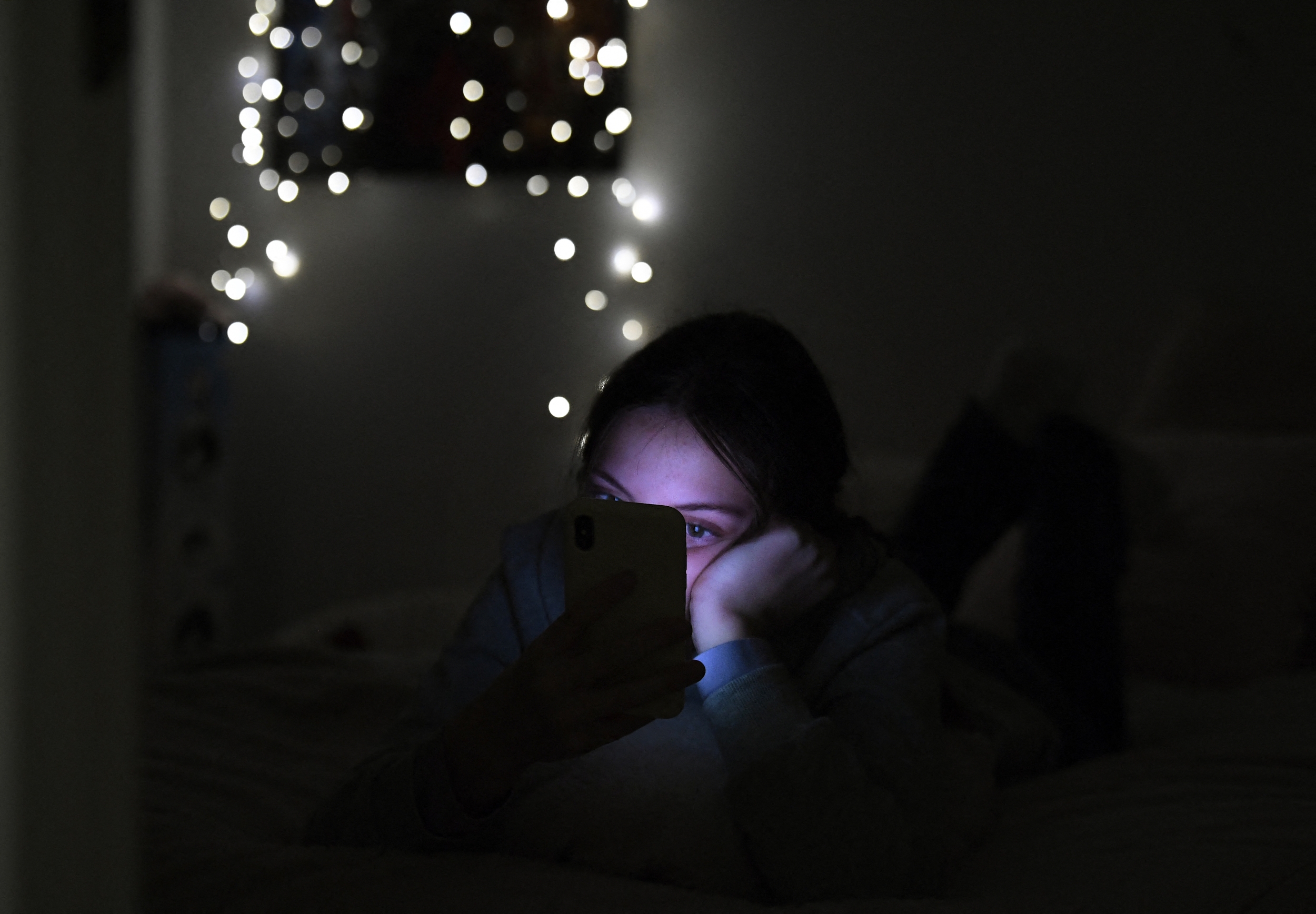
On nights when teenagers used their phones after 10 p.m. more than they usually did, they fell asleep about 65 minutes later and slept about 20 minutes less, according to a new study in JAMA Pediatrics published on Oct. 19. The study tracked 425 U.S. teens and also found that phone use in the final minutes before sleep was linked with more time awake soon after falling asleep.
For parents, the findings put numbers on a familiar bedtime argument. A late start to sleep on a school night leaves less time before an early alarm, and too little sleep in adolescence is linked with problems in mood, attention and school performance.
The study does not prove that phones cause poor sleep. It does offer detailed real-world data on when late-night phone use appears to matter most.
Inside the Phone and Fitbit Tracking Data
Researchers from Columbia University in New York, Stony Brook University on Long Island, and Seattle Children’s Research Institute used data from the national Adolescent Brain Cognitive Development Study. Participants averaged 14.8 years old, and about half were girls. All used Android phones with an app that passively recorded phone use, all wore Fitbit devices that measured sleep, and each contributed at least 14 days of matched data.
Data were collected between November 2020 and February 2024 and covered 7,591 nights. Rather than only comparing heavy users with light users, the team compared each teen’s nights with that teen’s own typical evening. That approach helps separate the effect of an unusually busy phone night from a teen’s overall habits.
Each extra minute of phone use after 10 p.m., beyond a teen’s own average, was linked with falling asleep 0.87 minutes later, waking up 0.37 minutes later and sleeping 0.43 minutes less. The links grew steadily stronger at each later cutoff from 8 p.m. to midnight, so scrolling closer to midnight tracked with larger sleep losses.
A second pattern involved the final moments before sleep. Phone use in the last five minutes before falling asleep was tied to about 0.74 extra minutes awake after sleep began, mostly within the first 30 minutes. That link became negligible when the researchers looked at phone use across the final 20 minutes.
The authors concluded that cutting back on evening phone use, “particularly after 10 pm and immediately before bedtime,” may help improve teen sleep. The study was led by Yihong Zhao, PhD, of Columbia, with Lauren Hale, PhD, of Stony Brook and Dimitri Christakis, MD, MPH, of Seattle Children’s, who is also the editor of JAMA Pediatrics.
A Strong Signal, but Not Proof of Cause
This was an observational cohort study, so it shows an association rather than cause and effect. A teen who cannot fall asleep may reach for a phone, which would produce a similar pattern in reverse. The published summary also does not break results down by what teens were doing on their phones, such as texting friends, watching videos, or doing homework.
Other limits matter for families. Only Android users were included, consumer Fitbits are less precise than overnight lab sleep tests, and part of the data came from pandemic years when school schedules were unusual. Current pediatric sleep recommendations have not changed because of this study.
Those recommendations already set a clear target. The American Academy of Sleep Medicine advises 8 to 10 hours of sleep a day for teens ages 13 to 18. In CDC’s analysis of 2015 survey data, 72.7% of U.S. high school students reported sleeping less than 8 hours on an average school night. The CDC links too little sleep in young people with obesity, diabetes, poor mental health, injuries, attention and behavior problems, and poor academic performance.
School schedules add pressure. In 2014, the American Academy of Pediatrics recommended that middle and high schools start no earlier than 8:30 a.m., but a CDC review of school start times found that fewer than 1 in 5 public middle and high schools started that late in the 2011-12 school year. A teen who falls asleep an hour late on a school night has little room to recover, because the alarm does not move.
Bedtime Phone Rules Families Can Try Tonight
Teens with early school start times, heavy homework loads, part-time jobs, or anxiety or depression may feel the effects of late scrolling most. Every household is different, and rules that teens help create may be easier to keep than strict bans.
Practical steps are free. Families can set a household phone curfew around 10 p.m., charge devices outside the bedroom, and aim for a phone-free final 20 minutes before lights out. Keeping a similar bedtime and wake time on weekends helps protect the body clock, and parents who follow the same rules make them easier to keep.
Some signs point to a bigger sleep problem than screen habits. Loud snoring, gasping during sleep, trouble falling asleep most nights for weeks, or severe daytime sleepiness should be discussed with a pediatrician or family doctor. Sudden changes in mood, withdrawal from friends, or talk of self-harm need prompt attention, and teens and families can call or text the 988 Suicide and Crisis Lifeline at any hour.
Researchers still need to learn which kinds of phone activity matter most and whether household or school rules improve sleep over time. For now, the pattern points to a specific window, and moving the phone out of the bedroom before 10 p.m. is a low-cost step most families can try this week.
Key Questions Answered
What did the study find?
On nights when teens used phones after 10 p.m. more than usual, they fell asleep about 65 minutes later and slept about 20 minutes less. Phone use in the final minutes before sleep was tied to more time awake shortly after falling asleep.
Does this prove phones cause poor sleep?
No. The study found an association, and teens who already have trouble sleeping may pick up their phones more.
How much sleep do teens need?
The American Academy of Sleep Medicine recommends 8 to 10 hours a day for ages 13 to 18. CDC survey data show most high school students get less on school nights.
What is a reasonable phone cutoff time?
The findings point to limiting use after 10 p.m. and avoiding phones in the last 20 minutes before sleep. Charging phones outside the bedroom makes this easier.
When should parents talk to a doctor?
Weeks of trouble falling asleep, loud snoring, gasping at night or heavy daytime sleepiness should be checked. Mood changes or talk of self-harm need prompt help, including the 988 crisis line.
Published by Medicaldaily.com


