

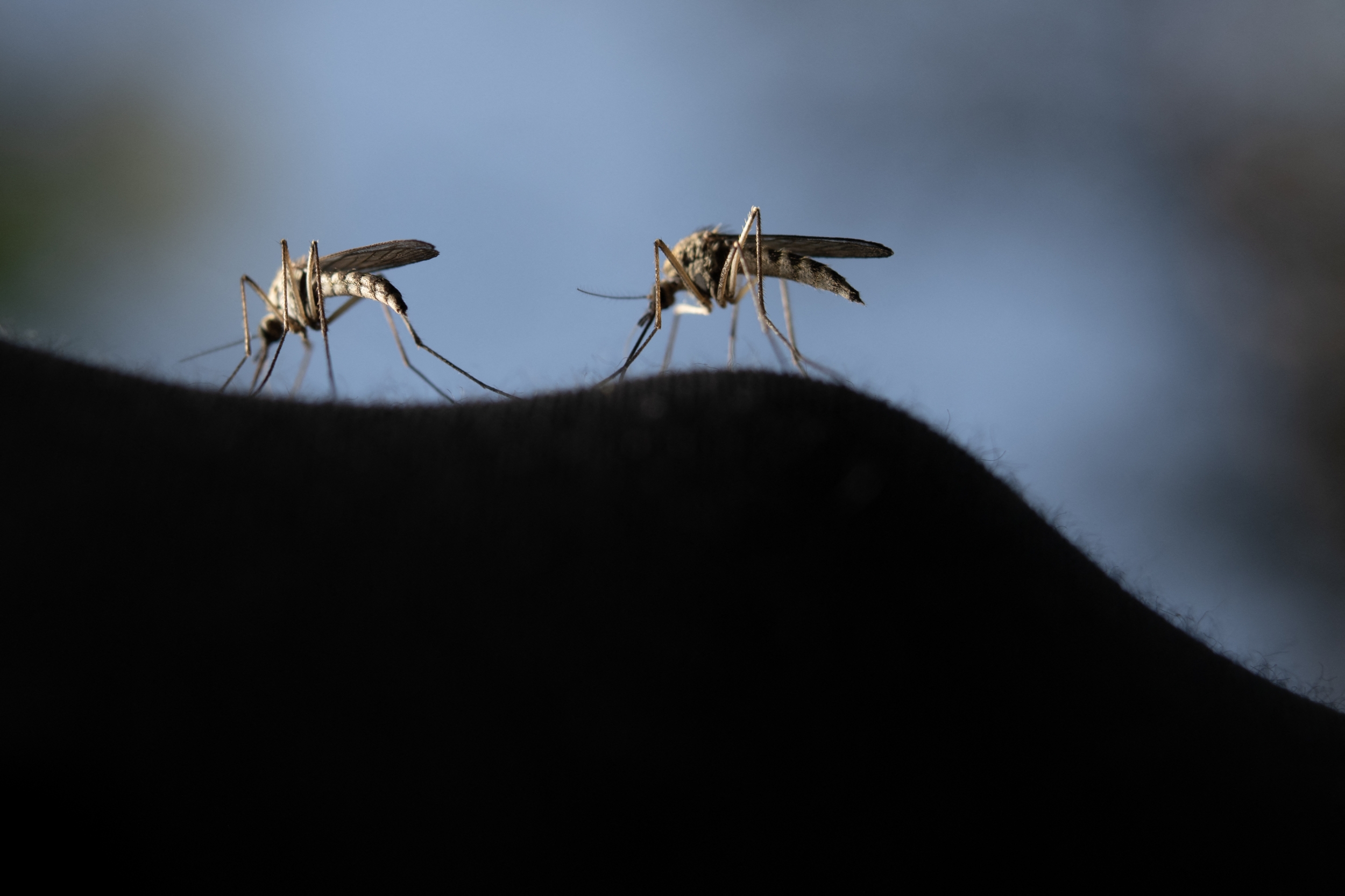
A Brookhaven resident over 50 is Suffolk County’s first confirmed human case of West Nile virus this year, county health officials announced Wednesday, and the details they released describe a version of the illness most people never hear about.
The person developed symptoms consistent with West Nile at the end of July and was not hospitalized, according to the Suffolk County Department of Health Services. No further identifying information was released.
That combination, a confirmed case with no hospital stay, is the part worth pausing on. Most West Nile coverage describes patients with brain or spinal cord infections, because those are the cases that reach an intensive care unit and make the news. This one did not, and it still counts.
Inside the Details Officials Did Release
Suffolk County Health Commissioner Dr. Gregson Pigott framed the announcement as a seasonal warning rather than an alarm, saying it is “a reminder that mosquitoes are not only a nuisance but can transmit serious diseases.
The county estimates that about 20% of people infected with West Nile develop clinically noticeable symptoms. Those run from fever, headache, body aches, rash, and swollen lymph glands at the mild end to high fever, neck stiffness, disorientation, tremors, convulsions, muscle weakness, vision loss, and paralysis at the severe end. Neurological effects can be permanent, and West Nile can be fatal.
A patient who is not hospitalized almost certainly had West Nile fever rather than neuroinvasive disease, the form that reaches the brain or the membranes around it. Roughly one in 150 infected people develop the neuroinvasive form, and that group accounts for nearly all hospitalizations and deaths.
That distinction is why the case matters as surveillance rather than as an emergency. A non-hospitalized patient had to feel unwell enough to seek care; a clinician had to consider West Nile, order tests that are not part of a standard workup, and report the result. Each of those steps can fail, and when they do, the case is never counted.
Three Weeks Between Illness and Confirmation
The reported timeline contains a detail that changes how anyone should read a county case count.
Symptoms began at the end of July. Confirmation was announced on August 19, roughly three weeks later. That gap covers the time from illness to a clinical visit, to specimen collection, to laboratory testing and reporting.
The practical consequence is that a county reporting its first case is not describing a virus that arrived this week. It describes transmission that occurred a month or more earlier, and any infections that happened since then are still working through the same pipeline.
MedicalDaily has reported on the same lag at the federal level, where national surveillance runs weeks behind local health departments. The lesson at the county level is the same. A case count is a rearview mirror; prevention decisions should be based on mosquito activity rather than human case totals.
Local Mosquito Detections Preceded the Case
Environmental surveillance around Long Island had been sounding the alarm for weeks.
As of last week, 54 mosquito samples had tested positive for West Nile in Suffolk County this season, including samples collected across Brookhaven Town communities such as North Patchogue, Port Jefferson Station, Farmingville, Mount Sinai, and Rocky Point. Three samples tested positive for Jamestown Canyon virus. Two dead crows found in Ronkonkoma in June and one found in Nesconset in early August also tested positive for West Nile.
New York City has identified more than 1,000 positive mosquito pools across all five boroughs this year, with the first detected on June 16, and reported its own first human case the same day as Suffolk.
Those detections arrived before the human cases, which is the sequence surveillance is designed to produce. Mosquito testing is meant to give households and vector control programs time to act while the virus is circulating in insects and birds, but before it reaches people in numbers.
Nationally, the CDC counted 222 human cases as of mid-August, concentrated in Arizona, Texas, and California. Peak transmission in the Northeast runs through August and September, so the season is not close to over on Long Island.
Protection During the Weeks That Remain
There is no human vaccine for West Nile and no specific antiviral treatment. Care for severe illness is supportive, leaving bite prevention to carry the entire load.
Use an EPA-registered repellent containing DEET, picaridin, IR3535, or oil of lemon eucalyptus, and apply it at dawn and dusk when the mosquitoes that carry West Nile are most active. Wear long sleeves and pants when the weather allows. Repair window and door screens.
Standing water is the piece households control most directly. Empty flower pot saucers, buckets, birdbaths, tarps, and children’s toys weekly, and keep pools and ornamental ponds chlorinated, covered, or drained. Neglected swimming pools are among the largest sources of mosquitoes in residential neighborhoods. Suffolk residents can report mosquito problems to the county Division of Vector Control at 631-852-4270 and dead birds to the Bureau of Public Health Protection at 631-852-5999, which feeds the surveillance system rather than leaving a neighbor’s neglected pool to chance.
Risk of severe illness concentrates in adults over 50 and in people with chronic illness or weakened immune systems, including those on immunosuppressive medications. MedicalDaily has reported on a federal advisory covering that drug class and severe mosquito-borne brain infections.
Cost is not the obstacle here, which is worth saying plainly. Repellent runs a few dollars at any pharmacy, and emptying standing water is free. The one real expense is screen repair, and some town and county programs assist older residents with that kind of home maintenance.
Fever with headache or body aches during mosquito season warrants a call to a clinician, and mentioning outdoor exposure is important because West Nile testing is not routinely ordered. The CDC symptom guidance describes the range, and the agency posts current national activity as it is reported. Severe headache with neck stiffness, sudden confusion, tremors, muscle weakness, or vision changes warrants urgent evaluation.
Two things determine what happens next on Long Island. Additional Suffolk cases are plausible simply because the reporting pipeline is still catching up with July and early August transmission, and the first hard frost will end the season regardless. For scale, the county recorded 21 human cases in 2024, and nine Suffolk residents have died of West Nile since 2000. MedicalDaily will report additional Suffolk or regional cases.
Key Questions Answered
What did Suffolk County announce? It’s the first confirmed human West Nile case of the season, in a Brookhaven resident over 50 who developed symptoms at the end of July and was not hospitalized.
Does a non-hospitalized case still count? Yes. A confirmed case requires laboratory evidence regardless of severity. This patient almost certainly had West Nile fever rather than the neuroinvasive form that reaches the brain.
Why did confirmation take three weeks? Testing follows a clinical visit, specimen collection, laboratory work, and reporting. County case counts describe transmission that happened weeks earlier, not current activity.
How many infected people get sick? Most never develop symptoms. Suffolk County puts the symptomatic share at about 20%. Roughly one in 150 infected people develop severe neuroinvasive disease.
Was there a warning before this case? Yes. Suffolk had logged 54 positive mosquito samples and three positive dead birds this season before the human case was announced.
Who faces the highest risk of severe illness? Adults over 50 and people with chronic illness or weakened immune systems, including those taking immunosuppressive medications for cancer, autoimmune disease, or transplants.
When should someone seek urgent care? Severe headache with neck stiffness, sudden confusion, tremors, muscle weakness, or vision changes. Mild fever and body aches warrant a call to a clinician instead.


