

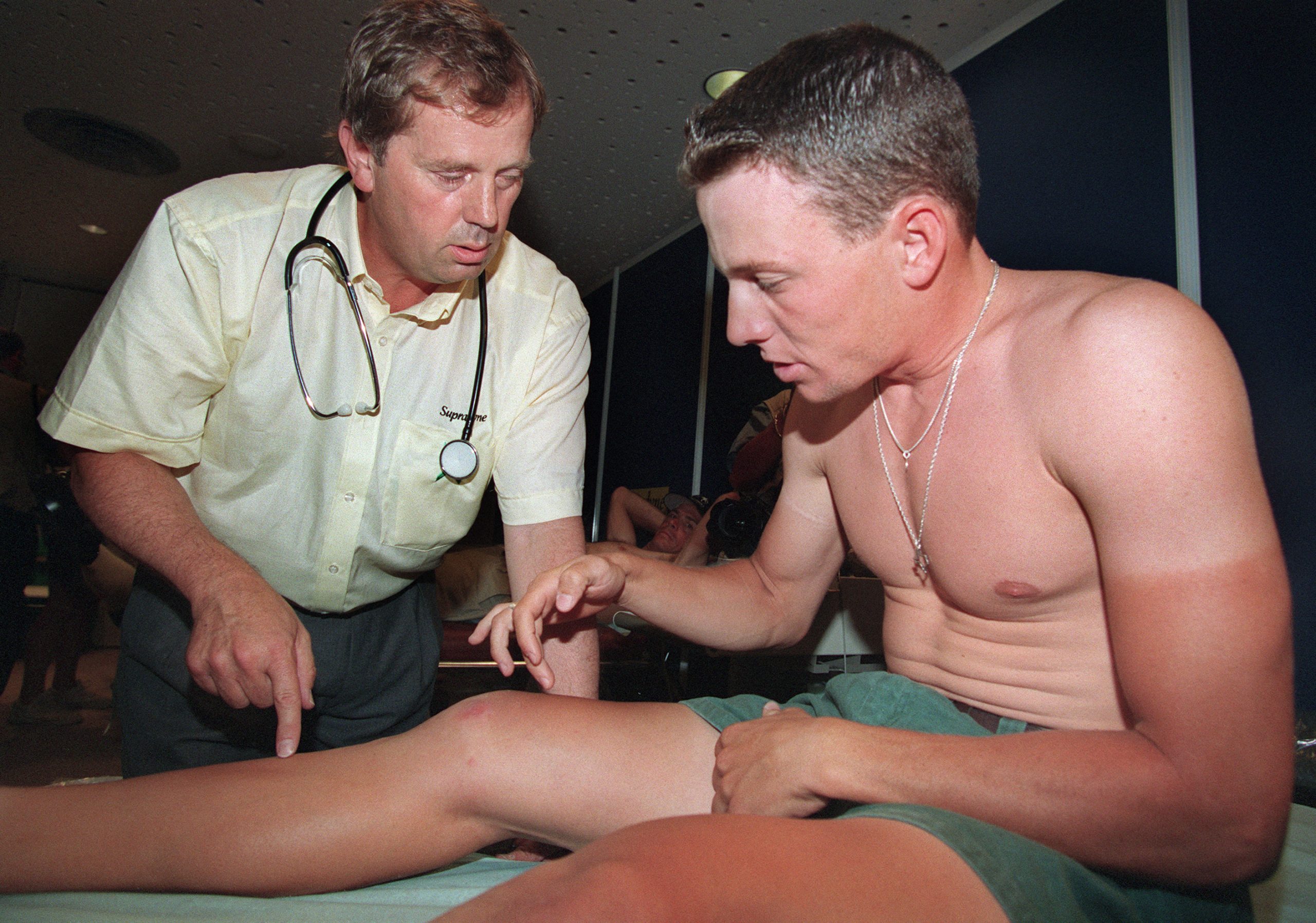
For millions of people living with knee osteoarthritis, the current treatment ladder has a frustrating middle step that is largely empty. Conservative measures — physical therapy, NSAIDs, corticosteroid injections — provide relief that wanes over months. Full joint replacement surgery is effective but invasive, carries surgical risks, requires weeks of rehabilitation, and comes with a prosthetic lifespan of 15 to 20 years, making it poorly suited for younger or less medically robust patients who face decades of living with arthritis.
Between those two rungs is a gap that has driven years of research into minimally invasive interventional options. A study published June 16, 2026, in Radiology — the flagship journal of the Radiological Society of North America — now provides the strongest evidence yet that one of those options delivers a full year of meaningful pain relief and functional improvement for appropriately selected patients.
“For many patients with knee osteoarthritis, there is a real treatment gap today,” said lead author Florian Nima Fleckenstein, M.D., deputy head of Interventional Radiology Campus Mitte at Charité — Universitätsmedizin Berlin. “Conservative measures such as intra-articular injections no longer provide sufficient relief, but joint replacement is not an option for medical or personal reasons.”
What Genicular Artery Embolization Is — and How It Works
Genicular artery embolization (GAE) is a minimally invasive procedure performed by interventional radiologists using fluoroscopy (real-time X-ray imaging) and catheter-based techniques. The procedure targets a specific feature of the arthritic knee joint that conventional treatments have largely ignored: abnormal blood vessel formation.
According to ScienceDaily’s coverage, in a healthy knee, the synovial tissue and supporting structures maintain a normal, controlled blood supply. In osteoarthritis, the chronic inflammation process triggers the growth of abnormal new blood vessels — called neovascularization — in and around the joint. These pathological vessels contribute to sustained inflammation and pain. Standard treatments target the inflammation downstream; GAE targets the vascular supply driving it.
During GAE, an interventional radiologist threads a thin catheter through a puncture in the femoral artery, navigates it to the genicular arteries supplying the knee, and injects tiny microspheres that block blood flow to the abnormal vessels. By shutting down these pathological vessels, the procedure aims to reduce the vascular contribution to joint inflammation — producing pain relief and functional improvement without cutting, implanting, or removing anything.
The version studied in the June 2026 Radiology paper uses rapidly resorbable, gelatin-based microspheres — a key distinction from earlier GAE studies that used permanent microspheres. The resorbable particles dissolve in the body over time, potentially reducing risks associated with permanent vascular occlusion in the lower extremity.
| GAE Radiology Study Key Data (June 16, 2026) | Detail |
| Published in | Radiology (RSNA), June 16, 2026 |
| DOI | 10.1148/radiol.253312 |
| Lead author | Florian Nima Fleckenstein, M.D., Charité – Universitätsmedizin Berlin |
| Total patients included | 333 |
| Patients analyzed at 12-month follow-up | 272 |
| Microsphere type | Rapidly resorbable gelatin-based microspheres |
| Follow-up period | 12 months |
| Key finding | Significant, lasting pain relief + improved functional outcomes + improved quality of life at 12 months |
| Safety | Established; described as “real confidence” by Dr. Fleckenstein |
| Procedure type | Minimally invasive; image-guided catheter-based; outpatient |
| Comparison | No randomized placebo control — observational cohort design |
| Global OA knee prevalence (WHO) | 365 million adults |
| U.S. OA prevalence | ~32.5 million adults |
What the Study Found — and Why Scale Matters
According to the Radiology abstract, 333 patients were included in the study, with 272 analyzed at the 12-month follow-up point. “This lets us speak about safety and efficacy with real confidence,” Dr. Fleckenstein told ScienceDaily. The study used validated outcome measures, including patient-reported pain scores and functional assessments, to document improvement.
The clinical finding was clear: in patients with symptomatic knee osteoarthritis, GAE using rapidly resorbable microspheres provided long-lasting pain relief, improved functional outcomes, and enhanced quality of life across the 12-month observation period.
According to Applied Radiology’s analysis, Dr. Fleckenstein framed the study’s significance specifically: “This study addresses osteoarthritis, which is a significant public health issue and the leading cause of chronic pain and disability worldwide. With millions of people affected by knee osteoarthritis, particularly in aging populations, finding effective, minimally invasive treatments is critical.”
“GAE has the potential to reduce the need for more invasive surgeries, lower healthcare costs and significantly improve the quality of life for countless individuals suffering from knee osteoarthritis,” Dr. Fleckenstein added.
An important technical caveat: this is a prospective observational cohort study, not a randomized controlled trial with a placebo or sham procedure comparison group. The absence of a randomized control arm means the study cannot fully exclude the placebo effect and selection bias as contributors to the observed outcomes. The evidence base for GAE is growing — including prior trials with permanent microspheres that also showed benefit — but the gold-standard randomized trial with a sham control remains an important next step in confirming GAE’s efficacy.
Who Is an Appropriate Candidate for GAE?
The procedure is designed for patients who have osteoarthritis-related knee pain that is no longer adequately controlled by conservative measures (physical therapy, NSAIDs, injections) but who are not candidates for or do not wish to pursue joint replacement surgery. This includes:
- Patients who are too young or too active for joint replacement (where prosthetic lifespan becomes a concern)
- Patients with medical comorbidities that increase surgical risk
- Patients on blood thinners or immunosuppressants that complicate surgery
- Patients who have declined joint replacement for personal reasons
- Patients for whom prior injections have provided diminishing returns
GAE is not appropriate for patients with advanced, end-stage osteoarthritis where the joint has lost virtually all cartilage, nor for patients with inflammatory arthritis (rheumatoid arthritis, psoriatic arthritis), local knee infection, significant peripheral arterial disease, or irreversible coagulopathy. Patient selection is performed by the interventional radiologist in consultation with an orthopedic specialist or rheumatologist.
The procedure is typically performed in an outpatient or same-day surgery setting under conscious sedation. Recovery is significantly less demanding than joint replacement — most patients resume normal activities within days rather than weeks.
The Road to Widespread Availability
In the United States, GAE is currently performed primarily at academic medical centers and major hospital systems with active interventional radiology programs. It is not yet widely available at community hospitals. Insurance coverage is variable; Medicare and many private insurers have not universally adopted coverage policies for GAE, though this is an active and rapidly evolving area given the growing evidence base.
The June 2026 Radiology study’s scale — 333 patients, 272 analyzed at 12 months — represents the largest body of evidence assembled for GAE using rapidly resorbable microspheres, and it is likely to support additional insurance coverage petitions and professional society guidance updates in the coming months.
Frequently Asked Questions
What is genicular artery embolization (GAE)?
GAE is a minimally invasive procedure where an interventional radiologist uses a thin catheter to navigate to the blood vessels supplying an arthritic knee joint and injects small particles that block abnormal (pathological) vessels. By reducing the vascular contribution to joint inflammation, the procedure aims to provide sustained pain relief without surgery.
How long does the pain relief from GAE last?
In the June 2026 Radiology study, significant pain relief and improved functional outcomes were sustained at 12-month follow-up in the 272 patients analyzed. Longer-term follow-up data is still being collected.
Is this better than cortisone injections?
Cortisone (corticosteroid) injections typically provide relief lasting weeks to a few months. GAE has demonstrated 12-month sustained benefit in this study and prior research, suggesting it offers more durable relief than repeat injections for appropriately selected patients. However, direct head-to-head randomized comparison with injections has not yet been published.
What does the procedure involve?
An interventional radiologist makes a small puncture in the femoral artery, threads a catheter to the genicular arteries of the knee, identifies abnormal blood vessels using imaging, and injects tiny resorbable microspheres that block them. The procedure is performed under fluoroscopy guidance, typically with conscious sedation, in an outpatient setting.
Is GAE covered by insurance?
Coverage in the U.S. varies by insurer and is still evolving. Medicare and private insurers are reviewing coverage policies as the evidence base grows. Patients should check with their insurer and the interventional radiology team about coverage and prior authorization requirements.


