Tag: virus

  • The Link Between Breast Cancer and a Virus in Meat and Dairy

    The Link Between Breast Cancer and a Virus in Meat and Dairy

    Exposure to the bovine leukemia virus from meat and dairy (or a blood transfusion from those who eat meat or dairy) is a risk factor for cancer.

    In 2015, researchers in California found bovine leukemia virus (BLV) stitched into the DNA of human breast cancer tumors from mastectomies. The virus was found at much higher rates than in normal breast tissue obtained from breast reduction surgeries. Based on this difference, they calculated that as many as 37% of breast cancer cases may be attributable to exposure to BLV, likely through consuming milk or meat from infected animals.

    In response, the milk and meat industries seemed more concerned about consumer confidence than consumer cancer. But scientifically, the research priority turned to the question: Could the California results be replicated? The answer, it turns out, was yes. They were replicated among women in Iran. Replicated in Brazil. In Australia, the link was even stronger. In Texas, they found the same thing. Women diagnosed with breast cancer were found to be so much more likely to have bovine leukemia virus DNA in their breast tissue compared with women without cancer, that the attributable risk was calculated at 51.82%, indicating that this meat and dairy virus may be responsible for at least half of the breast cancer cases among the women in Texas they studied.

    All in all, six of the eight studies performed to date found the virus in human breast tissues, which “suggests strongly that BLV does infect humans, and breasts can be targets of infection.” Four of the five studies that compared infection rates in cancerous versus normal breast tissue found that the odds of detecting the virus in tumors were, on average, four times higher. How does that compare to other breast cancer risk factors? If you go on hormone replacement for five years, you can bump up your breast cancer risk by 30%. If you take birth control pills for more than a dozen years, your risk may go up by 40%. If you’re obese when you’re older, your risk can go up by 60%. Having a first-degree relative with breast cancer may double your risk. But having your breast infected with bovine leukemia virus may quadruple your risk, as you can see below and at 2:16 in my video Breast Cancer and the Bovine Leukemia Virus in Meat and Dairy.The only risk factors more potent than BLV infection were having the BRCA gene mutation, like Angelina Jolie has, or a high dose of ionizing radiation, like being in the wrong place at decidedly the wrong time, like Hiroshima and Nagasaki during World War II.

    Beyond confirmation, one study suggested that older patients had a greater likelihood of testing positive for bovine leukemia virus. That makes sense if BLV is from exposure to dairy and meat. The older we get, the more meals we’ve had—and the more opportunities to become infected over time. Researchers also discovered that the virus comes first, before the cancer diagnosis; they found it was present in some breast tissues 3 to 10 years before cancer was found. “This argues against the idea of viral invasion of already malignant cells,” quashing the theory that maybe the virus is somehow just attracted to the cancer after the fact. Could this explain the consistent findings that breast cancer tissue is more likely to harbor infection? Again, the data showed no — the virus appeared to come first. While the review doesn’t provide absolute proof that BLV is a cause of breast cancer, based on the best available balance of evidence, BLV infection does indeed appear to be a risk factor for breast cancer.

    The latest revelation is that BLV has now been found in human blood, too. This has a number of potential ramifications. Blood banks, for example, don’t screen for it. So, it’s possible you can get it from consuming meat or dairy, as well as from getting blood from someone who consumed meat or dairy. This could also mean that BLV could cause leukemia in people. It does in chimpanzees. Two infant chimps were fed milk from cows naturally infected with BLV, and both died of leukemia. We didn’t even know chimps could get leukemia. This certainly suggests the possibility of transmission or induction of leukemia through the ingestion of milk from BLV-infected cows, or blood-borne spread could carry the virus to other organs. In cattle, the virus causes blood cancers, but this may be just because dairy cattle are slaughtered and turned into hamburger when they are still so young, so maybe they don’t have time for tumors to grow in other organs.

    How concerned should we be about bovine leukemia virus? “It is not clear whether this is a good news story or a bad news story.” If future studies show that BLV does cause breast cancer in people, there will be significant repercussions for the dairy and cattle industries. But that means there is something we can do about it. Perhaps action should be taken now to eradicate the infection from cattle, rather than waiting for a final verdict. Twenty-one nations have already eradicated BLV from their dairy cattle. In contrast, the BLV prevalence in the United States just keeps increasing. If industries are not going to step up and try to eliminate the disease, then the least they could do is eliminate some of the practices that spread the disease between animals.

    BLV is spread via blood through contaminated needles, saw or gouge dehorners, ear taggers, hoof knives, tattoo pliers, nose tongs, and other tools of the agribusiness trade. Though “in view of the emerging information about BLV in human breast cancer, it is prudent to encourage the elimination of BLV in cattle, particularly in the dairy industry.” The hope is that, either way, it may help reduce the scourge of breast cancer.

    Doctor’s Note

    If you missed the previous video, see Bovine Leukemia Virus as a Cause of Breast Cancer.

    Avoiding infectious risks like BLV is another advantage of making meat without animals. See my video, The Human Health Effects of Cultivated Meat: Food Safety.


    Source link

  • Could Bovine Leukemia Virus be a Cause of Breast Cancer?

    Could Bovine Leukemia Virus be a Cause of Breast Cancer?

    As many as 37% of breast cancer cases may be attributable to exposure to the bovine leukemia virus.

    The incidence of breast cancer continues to increase worldwide. In the United States, this amounted to a 40% increase in the incidence by the turn of the century. Presently, the main approach to preventing mortality is early detection and treatment. That’s important, but why not focus more on primary prevention—protecting people from risk factors so they don’t develop breast cancer at all?

    “Overall, it is estimated that 20% of all human cancers have an infectious origin.” Viruses can trigger cancer by turning on cancer genes or turning off cancer-suppressing genes, but they can also contribute to tumor formation just by causing chronic inflammation. Currently, cancer-causing viruses are considered “the major plausible hypothesis for a direct cause of human breast cancer.” How did we get here?

    It all started about 40 years ago when a professor of virology at UC Berkeley learned how the mammary tumor virus was discovered in mice. Scientists switched baby mouse pups from mothers with a high incidence of mammary cancer with the babies from mouse strains with a low incidence and found that the cancer incidence in pups matched their foster mothers’—not their biological ones’—showing it wasn’t genetic. “It occurred to me that humans are foster nursed on the cow,” the professor said.

    Bovine leukemia virus (BLV) had just been identified as a cancer-causing cow virus. At the time, only about 10% of U.S. dairy cows were infected, but now it’s closer to half. Initially, 66% of herds were affected. Then, it was more like 80%, based on their milk testing positive for the virus, and 100% of the herds in the larger industrial farms. And now, more than 94% of U.S. herds are affected, continuing the historical trend of BLV persistently proliferating within U.S. dairy herds.

    We’ve long known that people in countries that consume the most milk have the highest breast cancer incidence. But, as you can see below and at 2:32 in my video, Bovine Leukemia Virus as a Cause of Breast Cancer, the link between dairy consumption and breast cancer incidence isn’t only on the country level.Individual women who are lactose intolerant and consume less dairy also seem to have decreased risk of breast cancer. Milk contains many things that could be contributing to the cancer risk, such as saturated fat and the presence of cancer-promoting growth hormones like IGF-1.

    Yes, we know bovine leukemia virus is present in beef and dairy products. About half of the milk and meat samples turn up positive for the virus. In fact, you can sample the virus straight out of the air on dairy farms, on surfaces, and in the milk itself. Most milk is pasteurized, but many dairy products, like raw, aged cheeses, are not. And who hasn’t eaten a pink-in-the-middle hamburger at some point in their life?

    Yes, we have evidence that people are exposed to the virus. Yes, we have evidence that people are actively infected with the virus. But it wasn’t until 2015 that we learned infection rates were highest in cancerous breast tissue, as you can see below and at 3:30 in my video.So much so that as many as 37% of breast cancer cases may be attributable to exposure to the bovine leukemia virus.
    That was enough for me to make a whole series of videos on the role the virus plays in breast cancer and how the meat and dairy industries responded to the news. What’s the latest update? That’s what I’ll cover next.

    Doctor’s Note

    You may remember that I’ve previously discussed The Role of Bovine Leukemia in Breast Cancer and the Industry Response to Bovine Leukemia Virus in Breast Cancer.

    Stay tuned for the next video: Breast Cancer and the Bovine Leukemia Virus in Meat and Dairy.


    Source link

  • Hidden Gut Virus Inside a Common Bacterium May Double Colon Cancer Risk and Could Become a Future Stool-Based Screening Marker

    Hidden Gut Virus Inside a Common Bacterium May Double Colon Cancer Risk and Could Become a Future Stool-Based Screening Marker

    Hidden viruses in the gut are emerging as a new frontier in cancer research, and the virome may be just as important as bacteria when it comes to colorectal cancer risk. A newly described bacteriophage hiding inside common Bacteroides bacteria has been linked to roughly doubled odds of developing colorectal cancer, and it may one day serve as a non‑invasive stool biomarker for earlier detection.

    This finding is pushing scientists to look beyond bacteria alone and consider how viral communities in the intestine shape health and disease.

    Colorectal Cancer and the Need for Better Screening

    Colorectal cancer starts in the colon or rectum, usually from small polyps that can become malignant over many years.

    Because early stages often cause no symptoms, detection before spread is crucial for survival and treatment success. When found early, colorectal cancer is usually much more treatable and associated with better long‑term outcomes.

    Current screening tools include colonoscopy, sigmoidoscopy, fecal occult blood tests (FOBT/FIT), and stool DNA tests. Colonoscopy is highly effective but invasive, requires bowel preparation, and can be difficult to access for some people.

    Stool‑based tests are simpler and non‑invasive, but they can miss early cancers or advanced polyps. These limitations drive interest in new stool biomarkers, including those that come from the gut virome, bacteriophages, and specific Bacteroides strains.

    Microbiome, Virome, and Cancer Risk

    Most research on colorectal cancer and the gut has focused on the microbiome, the community of bacteria in the intestine. Studies repeatedly show that certain bacteria, such as Fusobacterium and some Bacteroides species, are more common in people with colorectal cancer than in healthy controls.

    These microbes may promote inflammation, produce toxins, or form biofilms that help tumors develop and escape immune defenses.

    Alongside bacteria, the gut also hosts a rich virome, made up largely of bacteriophages, viruses that infect bacteria, not human cells. Bacteriophages can integrate into bacterial genomes (as prophages) or lyse their hosts. In doing so, they can change which bacteria are present and how they behave.

    A bacterium carrying a particular prophage may produce more toxins, adhere more strongly to the gut lining, or interact differently with the immune system.

    Because of these effects, the virome is now seen as an important factor in colorectal cancer. Distinct bacteriophage patterns have been observed in stool samples from colorectal cancer patients.

    These patterns suggest that certain phages, especially those linked to Bacteroides, could act as both contributors to disease and as stool biomarkers that signal increased risk.

    Bacteroides fragilis and a Hidden Bacteriophage

    Bacteroides is a major bacterial genus in the human colon and plays key roles in digestion and immune development. Among its species, Bacteroides fragilis is widely present in healthy individuals.

    Most strains are harmless or beneficial, but some enterotoxigenic Bacteroides fragilis (ETBF) strains produce toxins that can cause diarrhea and chronic inflammation.

    Recent work has revealed a previously unrecognized bacteriophage integrated into Bacteroides fragilis genomes. In its prophage state, this virus sits quietly inside the bacterial DNA and is not visible as an active infection.

    Using high‑throughput sequencing of bacterial isolates and stool samples, researchers identified a specific viral sequence that appeared far more often in Bacteroides fragilis from people with colorectal cancer than in those without the disease.

    This suggests that the combination of Bacteroides and a particular bacteriophage may matter more than the bacterium alone.

    How Strong Is the Association With Colorectal Cancer?

    Across large international cohorts, individuals with colorectal cancer were about twice as likely to carry this Bacteroides‑associated bacteriophage compared with cancer‑free controls.

    This does not prove that the virus causes cancer, but it signals a strong association worth further study. It raises the possibility that the bacteriophage could affect bacterial virulence, toxin production, or interactions with the gut lining in ways that promote tumor development.

    Mechanistically, researchers suspect that prophage integration might alter gene regulation in Bacteroides fragilis, increase production of inflammatory or genotoxic factors, or encourage biofilm formation on the colon mucosa.

    Even if the virus itself is not directly oncogenic, it may mark a broader virome and microbiome shift that creates a more cancer‑prone environment. From a screening perspective, this kind of consistent association is valuable, because a reliable marker can help identify people at higher risk.

    Virome-Based Stool Biomarkers: A New Screening Frontier

    Stool is an ideal medium for non‑invasive testing because it contains DNA and RNA from bacteria, viruses, and the host. Traditional stool tests for colorectal cancer look for blood or human DNA mutations.

    Microbiome‑based approaches add information about bacterial composition. Virome‑based testing extends this by targeting bacteriophages and other gut viruses as additional indicators.

    Bacteriophages are attractive stool biomarkers because they are abundant and often highly specific to their bacterial hosts. A virome‑focused assay could, in principle, detect the Bacteroides‑associated bacteriophage linked to colorectal cancer.

    This could be done with broad metagenomic sequencing or with targeted PCR approaches that look specifically for the viral sequence.

    In real‑world use, such a viral marker would likely be combined with bacterial, human DNA, and blood‑based markers in a multi‑parameter stool test, improving sensitivity for early disease while maintaining acceptable false‑positive rates.

    Before any virome‑based stool biomarker becomes part of standard care, it must be validated in large prospective studies, tested across diverse populations, and shown to be cost‑effective and practical in routine clinics. Laboratory methods will need standardization, and regulatory approval will be required.

    Virome-Driven Advances in Colorectal Cancer Prevention

    The emerging link between the gut virome, specific bacteriophages, Bacteroides, and colorectal cancer underscores how complex the intestinal ecosystem is. As research continues, virome‑based stool biomarkers may complement colonoscopy and existing stool tests, offering more personalized and less invasive screening options.

    If the Bacteroides‑associated bacteriophage consistently identifies individuals at higher risk, an accessible stool biomarker built around this virome signal could help detect colorectal cancer earlier and guide timely prevention and treatment.

    Frequently Asked Questions

    1. Can changing my diet modify the gut virome and possibly affect colorectal cancer risk?

    A diet rich in fiber, fruits, and vegetables can shift both the microbiome and virome toward more diverse, stable communities, which is generally associated with lower inflammation and may indirectly reduce colorectal cancer risk.

    2. Is it possible to remove harmful bacteriophages like the one in Bacteroides with probiotics?

    Current probiotics mainly influence bacteria, not specific bacteriophages; while they might alter the overall ecosystem, there is no evidence yet that standard probiotic products selectively remove this Bacteroides‑associated virus.

    3. Could antibiotics help by eliminating Bacteroides strains carrying cancer‑linked bacteriophages?

    Broad antibiotics can reduce Bacteroides and associated phages, but they also disrupt beneficial microbes and may harm long‑term gut health, so they are not considered a targeted or preventive strategy for colorectal cancer.

    4. Are at-home microbiome tests able to detect virome patterns linked to colorectal cancer?

    Most consumer microbiome kits focus on bacterial DNA and do not comprehensively profile the virome, so they cannot reliably detect cancer‑associated bacteriophage signatures at this time.


    Originally published on Science Times

    Source link

  • A Virus of Our Own Hatching

    A Virus of Our Own Hatching

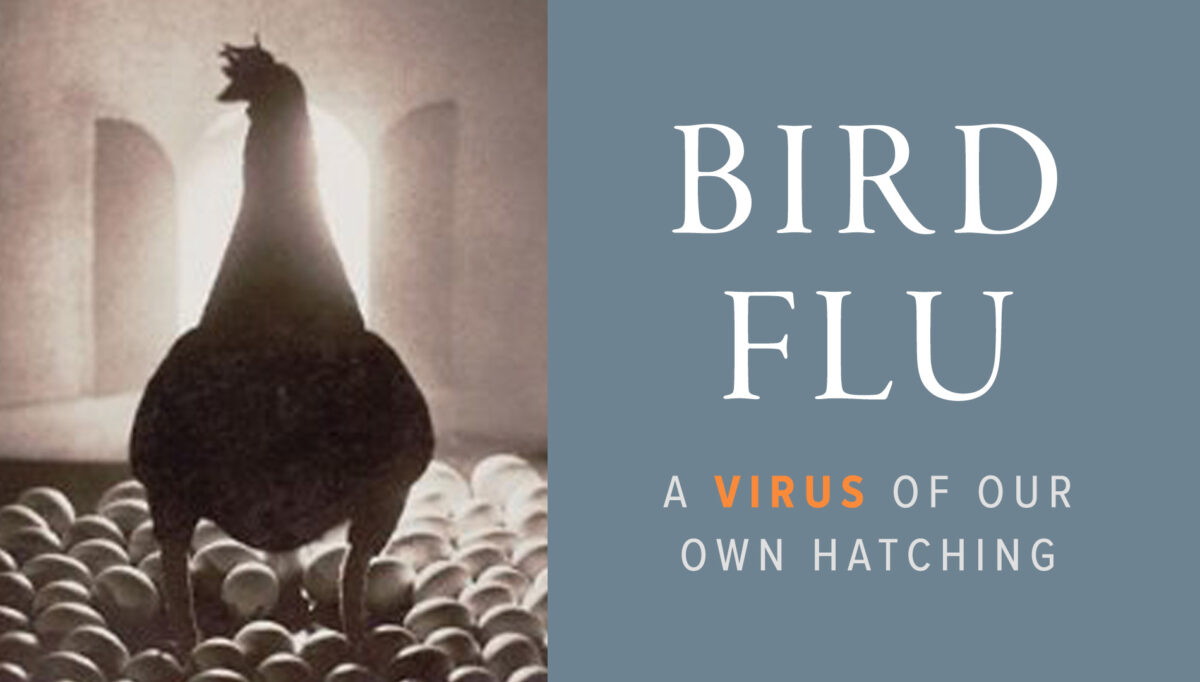
    The influenza virus has existed for millions of years as an innocuous intestinal virus of wild ducks. What turned a harmless waterborne duck virus into a killer? In his classic book Bird Flu: A Virus of Our Own Hatching, Michael Greger, M.D. FACLM, founder of NutritionFacts.org and New York Times Best-Selling author, traces the human role in the evolution of this virus, whose humble beginnings belie its transformation into a potentially deadly strain with the potential to become the next pandemic.

    Visit h5n1book.org to read the full text of Dr. Greger’s Bird Flu for free. Given the latest bird flu cases and outbreaks in 2025, the urgency in understanding animal-to-human diseases, their history and causes, and how we may prevent their emergence is once again paramount.

    In the midst of the COVID-19 pandemic, 14 years after his now-classic Bird Flu: A Virus of Our Own Hatching was published, Dr. Greger dove once again into the research and released How to Survive a Pandemic, an updated and expanded book on infectious zoonotic diseases. Borrow it from your local public library or purchase a copy.


    Source link

  • CDC Warns Travelers Of Deadly Virus That Has No Approved Vaccines Or Treatment

    CDC Warns Travelers Of Deadly Virus That Has No Approved Vaccines Or Treatment

    The U.S. Centers for Disease Control and Prevention (CDC) has issued a health advisory warning travelers about an Ebola outbreak in Uganda caused by the deadly Sudan virus, which has no approved vaccines or treatments.

    The CDC raised the alert to Level 2, urging travelers to “Practice Enhanced Precautions,” according to a Health Alert Network advisory issued Thursday.

    The current outbreak of Sudan Virus Disease (SVD) has been reported in the Kampala, Mbale, and Wakiso regions of Uganda. Since 2000, the country has already experienced seven outbreaks of the virus.

    The first case of the current outbreak was identified after a male nurse died from the infection on January 29. A second case, identified as the wife of the index patient, has also developed symptoms and tested positive, according to a WHO weekly bulletin issued last week.

    While three of the man’s close contacts have developed symptoms and are in isolation for treatment and testing, a total of 234 contacts have been traced, including 118 linked to medical settings.

    Although there are no direct flights from Uganda to the United States, travelers from or passing through affected areas can enter the U.S. on flights connecting from other countries. Hence the CDC cautions health officials to be on alert and evaluate any patients suspected of having SVD.

    However, the CDC confirmed that “currently, no suspected, probable, or confirmed Ebola cases related to this outbreak have been reported in the United States, or outside of Uganda.”

    An initial investigation suggests the latest outbreak is not linked to the earlier outbreaks and officials suspect a new jump from animals to people.

    “The source of exposure remains unknown, raising concerns about undetected transmission chains or a new zoonotic spillover,” the WHO bulletin stated. Previous outbreaks have shown a case fatality rate ranging from 41% to 70%.

    As part of the “enhanced precautions” to reduce the risk of infection, the CDC recommends people who travel to Uganda avoid contact with sick individuals, their bodily fluids, and items they have touched, including those who have died. They are also advised to refrain from handling wild animals, visiting high-risk areas like caves or healthcare facilities in affected regions, and engaging in burial practices that involve touching the deceased.

    Travelers are asked to watch out for symptoms during the stay and three weeks after returning. Anyone experiencing symptoms is advised to isolate immediately and alert the local healthcare facility. Symptoms include fever, chills, headache, muscle aches, rash, chest pain, sore throat, nausea, vomiting and diarrhea. As the disease progresses, the patients may also develop unexplained bleeding or bruising.

    “Calling ahead before going to a healthcare facility helps the facility prepare for your arrival, including contacting health authorities and taking any precautions needed to protect staff and other patients,” the CDC said.

    Source link