
Tag: Thoughts

  • A 12 Minute Meditation on Our Relationship to Thoughts

    A 12 Minute Meditation on Our Relationship to Thoughts

    Meditation teacher Vinny Ferraro offers a practice to notice our relationship to thoughts: to see them clearly as they arise, gently note them, and return to the breath and body.

    The nature of the mind is to make thoughts. All day long, mostly without our even noticing, the mind is generating thousands of thoughts. What is our relationship to thoughts? Not only does the mind have a mind of its own, but, literally, we can have thoughts about not having thoughts. All of this is completely independent of our own doing.

    It’s very easy to villainize thought as some kind of enemy of practice. We get in our heads that if there were no thoughts we would be at peace, but even that’s just another thought.

    It’s very easy to villainize thought as some kind of enemy of practice. We get in our heads that if there were no thoughts we would be at peace, but even that’s just another thought. So, we’ll be using a noting practice, where we practice seeing thoughts clearly as they arise, gently noting them, and returning to the breath and body. If there is no mindfulness of mind, we live in a world completely defined by our thoughts. Here, we let go of that orientation and just see things as they are. We still hear the internal talk, we still see the images, but we know them as phenomena. We see their impermanence.

    If we look, we may see how often our thoughts include judgment, fear, grasping, or just arguing our point of view. When we see how compulsively these thoughts repeat themselves, we begin to understand the circular, repetitive nature of thought. So, this training in awareness is a training in wisdom.

    A Meditation on Our Relationship to Thoughts

    We can’t stop thoughts from arising but we can stop getting lost in them. Here we can see our views, our thoughts, our worries, as only one part of a much larger story. As we begin this session, feel your body and allow yourself to arrive. This is the practice of kind awareness. Allow the breathing to be natural, easy. See if there’s a sense of relief that you don’t have to make anything happen or stop happening.

    Just simply note when thoughts arise. When you notice thoughts arise, gently note: “planning, planning,” or: “judging, judging.” We’re not noting things so that we can change them, we’re just turning toward this phenomenon and noticing thoughts that usually fly under the radar, just like the light little whisper. We don’t usually feel their impact; most of the time, we’re not even aware that they’re there and the next thing you know we’re carried off. So, we don’t want to be lost in the dream of our own mental activity.

    Don’t “quiet” your thoughts. You don’t have to control thoughts or quiet them down; we just want to be aware of them as they arise, because any moment we’re aware of them, we’re not lost in them. You can think about it like we’re sitting in a movie theater, and there are images and voices projected on the screen of the mind, but we’re witnessing this phenomenon instead of being seduced by it. This frees up a lot of our awareness, when we don’t have to chase every thought, so we can see the well-worn patterns of the mind and begin to recognize some of the themes that we’re working with.

    Note thoughts without empowering them. Note thoughts without indulging or empowering or needing to suppress or avoid them. This way, whatever arises is known and allowed to simply pass through. Thought bubbles are touched lightly, their content completely irrelevant—they are just another object.

    Rest in your body. Here we are resting in the body, aware of sensation, watching thoughts come and go, and yet we remain. As things pass through the mind, be open and empty. This is a being, not a doing, so we don’t have any need to search for something to note. But as thoughts are known, gently note them. Lightly touching thoughts, not lost in content, not trying to figure it out, but resting in the witnessing of what is naturally unfolding. The practice is to keep noticing, not by bearing down on thoughts or drilling into them, but by resting in your intuitive awareness and opening up your field of attention to include thoughts. Thoughts are so prevalent, they are a worthy anchor for a meditation.



    Source link

  • When Life Gives You Lemons: How to Flip Negative Thoughts into Positive Ones

    When Life Gives You Lemons: How to Flip Negative Thoughts into Positive Ones

    Introduction

    The phrase "when life gives you lemons, make lemonade" has been a popular saying for decades, encouraging people to make the most of the situations they are given. However, this phrase can be applied to more than just tangible objects. It can also be used to describe the way we think and react to negative thoughts and emotions. In this article, we will explore the concept of flipping negative thoughts into positive ones, and provide tips and strategies for doing so.

    Understanding Negative Thoughts

    Negative thoughts can be overwhelming and debilitating, making it difficult to function and enjoy life. They can stem from a variety of sources, including past experiences, current circumstances, and future worries. Negative thoughts can also be self-perpetuating, creating a cycle of negativity that is hard to break. However, it is essential to recognize that negative thoughts are not necessarily based on reality, but rather on our perception of reality. By changing our perception, we can change our thoughts and emotions.

    Identifying Negative Thoughts

    The first step in flipping negative thoughts into positive ones is to identify them. This requires self-awareness and introspection. Take time to reflect on your thoughts and emotions, and notice when you are experiencing negative thoughts. Ask yourself questions like "what am I thinking right now?" and "how is this thought making me feel?" Be honest with yourself, and try not to judge your thoughts. Remember, the goal is to acknowledge and understand your thoughts, not to suppress or deny them.

    Challenging Negative Thoughts

    Once you have identified your negative thoughts, the next step is to challenge them. This involves examining the evidence for and against your thoughts, and looking for alternative explanations. Ask yourself questions like "is this thought really true?" and "is there another way to look at this situation?" Be open-minded and willing to consider different perspectives. Remember, your thoughts are not facts, but rather interpretations of facts.

    Reframing Negative Thoughts

    Reframing negative thoughts involves looking at a situation from a different angle. It requires creativity and flexibility, as well as a willingness to let go of your original perspective. Ask yourself questions like "what can I learn from this experience?" and "how can I grow as a person?" Focus on the possibilities and opportunities, rather than the obstacles and challenges. Remember, every cloud has a silver lining, and every difficult situation has the potential for growth and learning.

    Practicing Positive Self-Talk

    Positive self-talk is an essential part of flipping negative thoughts into positive ones. It involves speaking to yourself in a kind, supportive, and encouraging way. Use affirmations like "I am capable and competent" and "I can handle whatever comes my way." Repeat these affirmations to yourself regularly, especially when you are feeling stressed or anxious. Remember, the way you talk to yourself matters, and positive self-talk can help to boost your confidence and self-esteem.

    Cultivating Gratitude

    Gratitude is a powerful tool for flipping negative thoughts into positive ones. It involves focusing on the good things in your life, rather than the bad. Make a conscious effort to appreciate the people, experiences, and things that bring you joy and fulfillment. Keep a gratitude journal, write down three things you are grateful for each day, and reflect on why they are important to you. Remember, gratitude can help to shift your perspective and improve your mood.

    Seeking Social Support

    Social support is essential for flipping negative thoughts into positive ones. It involves surrounding yourself with people who are positive, supportive, and encouraging. Seek out friends, family members, or colleagues who can offer you guidance, advice, and emotional support. Join a community or group that aligns with your interests and values, and engage in activities that bring you joy and fulfillment. Remember, social support can help to boost your mood, improve your self-esteem, and increase your resilience.

    Taking Care of Yourself

    Taking care of yourself is essential for flipping negative thoughts into positive ones. It involves prioritizing your physical, emotional, and mental well-being. Make time for activities that nourish your body, mind, and spirit, such as exercise, meditation, and spending time in nature. Get enough sleep, eat a healthy diet, and engage in activities that bring you joy and relaxation. Remember, taking care of yourself can help to improve your mood, increase your energy, and enhance your overall well-being.

    Conclusion

    Flipping negative thoughts into positive ones is a process that takes time, effort, and practice. It requires self-awareness, introspection, and a willingness to challenge and reframe your thoughts. By practicing positive self-talk, cultivating gratitude, seeking social support, and taking care of yourself, you can shift your perspective and improve your mood. Remember, life is full of ups and downs, but with the right mindset and strategies, you can turn obstacles into opportunities and make the most of every situation.

    FAQs

    Q: How can I start to flip negative thoughts into positive ones?
    A: Start by identifying your negative thoughts and challenging them. Practice positive self-talk, cultivate gratitude, and seek social support. Take care of yourself physically, emotionally, and mentally, and make time for activities that nourish your body, mind, and spirit.
    Q: What if I am struggling to flip negative thoughts into positive ones?
    A: Don’t give up! Flipping negative thoughts into positive ones is a process that takes time, effort, and practice. Be patient with yourself, and remember that it’s okay to make mistakes. Seek out support from friends, family members, or a therapist, and try different strategies until you find what works for you.
    Q: Can flipping negative thoughts into positive ones really make a difference in my life?
    A: Yes! Flipping negative thoughts into positive ones can have a profound impact on your life. It can improve your mood, increase your self-esteem, and enhance your overall well-being. It can also help you to develop a more positive and resilient mindset, which can help you to navigate life’s challenges with greater ease and confidence.
    Q: How can I maintain a positive mindset in the face of adversity?
    A: Maintaining a positive mindset in the face of adversity requires practice, patience, and persistence. Focus on the present moment, and try not to worry about the future or dwell on the past. Practice gratitude, positive self-talk, and seek social support. Take care of yourself physically, emotionally, and mentally, and make time for activities that bring you joy and fulfillment.
    Q: Can anyone learn to flip negative thoughts into positive ones?
    A: Yes! Anyone can learn to flip negative thoughts into positive ones, regardless of their background, circumstances, or personality. It requires a willingness to learn, practice, and take action, but the benefits can be profound and life-changing. Remember, flipping negative thoughts into positive ones is a skill that can be developed over time with patience, persistence, and practice.

  • The Journaling Habit: How Writing Down Your Thoughts Can Transform Your Life

    The Journaling Habit: How Writing Down Your Thoughts Can Transform Your Life

    The Journaling Habit: How Writing Down Your Thoughts Can Transform Your Life

    In today’s fast-paced world, it’s easy to get caught up in the hustle and bustle of daily life and lose sight of what’s truly important. With the constant barrage of social media updates, email notifications, and texts, it’s a wonder we can even speak, let alone think, let alone write. But writing down your thoughts can be a powerful tool for reflecting, processing, and gaining clarity on the chaos that surrounds us.

    The Benefits of Journaling

    Research has shown that journaling can have a profound impact on both physical and mental health. By putting pen to paper (or finger to keyboard), we can:

    • Reduce stress and anxiety: Studies have shown that journaling can lower cortisol levels, blood pressure, and heart rate, leading to a overall sense of calm and relaxation.
    • Improve mood: Writing down our thoughts and feelings can help us process and release negative emotions, leading to a more positive outlook and increased self-awareness.
    • Enhance creativity: Journaling can help us tap into our inner wisdom, sparking new ideas and insights that might have otherwise gone unexplored.
    • Gain clarity and perspective: By putting our thoughts and feelings into words, we can gain a deeper understanding of ourselves, our goals, and our priorities, making it easier to make decisions and move forward.
    • Improve sleep: Writing in a journal before bed can help us wind down, clear our minds, and prepare for a restful night’s sleep.

    How to Get Started with Journaling

    So, how do we get started with this powerful practice? Here are a few simple steps to get you started:

    • Choose a journal: Pick a journal that feels comfortable to you – it can be a traditional paper journal or a digital app on your phone or computer. Choose one that you enjoy using and that fits your style.
    • Set a schedule: Commit to a regular writing routine – this could be daily, every other day, or weekly. Consistency is key to seeing benefits.
    • Start simple: Don’t worry too much about grammar, spelling, or perfection. Just write. Write whatever comes to mind, whatever is on your chest. Just get it down.
    • Don’t edit or censor: This is your space to express yourself honestly and authentically. Don’t worry about what others might think or whether what you’re writing is "good enough".

    Common Journaling Myths

    There are several myths surrounding journaling that can hold us back from embracing this powerful practice. Let’s set the record straight:

    • Myth: Journaling is only for artists or creatives: Not true! Journaling is for anyone who wants to reflect, process, and gain clarity on their thoughts and feelings.
    • Myth: Journaling is only for morning or night: Not true! You can journal at any time that works for you – in the morning, during your lunch break, or before bed.
    • Myth: Journaling is only for writing down your "deep, meaningful thoughts": Not true! Journaling is about getting your thoughts and feelings down on paper, no matter how silly, mundane, or mundane they may seem.

    Conclusion

    In conclusion, journaling is a powerful tool that can transform your life in profound ways. By setting aside time to reflect, process, and gain clarity on your thoughts and feelings, you can reap the many benefits of journaling, from reduced stress and anxiety to improved mood and creativity. So why not give it a try? Choose a journal that feels right for you, commit to a regular routine, and start writing. You might be surprised at just how transformative this simple practice can be.

    FAQs

    Q: How long should I journal for?
    A: Start with a manageable amount of time – 10-15 minutes a day. As you get into the habit, you can gradually increase the frequency or duration.

    Q: What if I struggle to write anything?
    A: That’s okay! Sometimes it’s tough to get started. Try freewriting – write whatever comes to mind, no matter how silly or mundane. This can help get your creative juices flowing.

    Q: Is it better to journal at the same time every day?
    A: Yes! Consistency is key to seeing benefits. Try to journal at the same time every day, whether it’s morning, afternoon, or evening.

    Q: Can I journal on my phone?
    A: Absolutely! There are many digital journaling apps available, including Day One, Evernote, and Penzu. Choose one that works for you and your style.

    Q: Can I use bullet points and lists in my journal?
    A: Absolutely! Sometimes a list or bullet point can be a great way to get your thoughts and feelings organized and clear. Don’t be afraid to mix it up and try different formats to see what works best for you.

  • The Power of Mindset: How Your Thoughts Can Make or Break Your Fitness Goals

    The Power of Mindset: How Your Thoughts Can Make or Break Your Fitness Goals

    The way we think about ourselves and our abilities has a profound impact on our ability to achieve our fitness goals. The power of mindset is a widely recognized concept that suggests that our thoughts and attitudes can either make or break our success. In the context of fitness, a positive mindset can be the difference between reaching our goals and giving up. In this article, we’ll explore the power of mindset and how it can affect our fitness journey.

    The Science Behind Mindset

    Research has shown that our thoughts and attitudes can have a significant impact on our physical performance. In one study, athletes who were told they were going to perform poorly actually performed worse than those who were told they were going to perform well. This is known as the "self-fulfilling prophecy" and it highlights the power of mindset in shaping our outcomes.

    Another study found that people who had a growth mindset, meaning they believed their abilities could be developed through hard work and dedication, were more likely to achieve their fitness goals than those with a fixed mindset, who believed their abilities were innate and couldn’t be changed.

    The Power of Positive Self-Talk

    Positive self-talk is a key component of a positive mindset. When we talk to ourselves in a positive and encouraging way, we can boost our confidence and motivation. This can be as simple as repeating affirmations to ourselves, such as "I can do this" or "I’m strong and capable".

    Positive self-talk can also help us to overcome self-doubt and negative thoughts. When we’re feeling discouraged or frustrated, it’s easy to get caught up in negative self-talk, such as "I’ll never be able to do this" or "I’m not good enough". However, by practicing positive self-talk, we can shift our focus away from negative thoughts and towards positive and empowering ones.

    The Impact of Negative Self-Talk

    On the other hand, negative self-talk can have a devastating impact on our fitness journey. When we’re constantly telling ourselves that we’re not good enough or that we’ll never reach our goals, we can become discouraged and demotivated. This can lead to a lack of effort and a lack of progress, ultimately causing us to give up on our goals.

    Negative self-talk can also affect our physical performance. When we’re feeling anxious or stressed, our bodies release stress hormones such as cortisol, which can cause us to feel tired and sluggish. This can make it harder to exercise and can even lead to injury.

    How to Develop a Positive Mindset

    So, how can we develop a positive mindset and achieve our fitness goals? Here are a few tips:

    • Practice Positive Self-Talk: As we mentioned earlier, positive self-talk is a key component of a positive mindset. Make an effort to talk to yourself in a positive and encouraging way, and try to avoid negative self-talk.
    • Focus on Progress: Instead of focusing on how far you have to go, focus on how far you’ve come. Celebrate your progress and accomplishments, no matter how small they may seem.
    • Reframe Negative Thoughts: When you catch yourself thinking negative thoughts, try to reframe them in a positive light. For example, instead of thinking "I’ll never be able to do this", try thinking "I’ll get there with hard work and dedication".
    • Surround Yourself with Positivity: The people we surround ourselves with can have a big impact on our mindset. Try to surround yourself with positive and supportive people who encourage and motivate you.

    The Importance of Mindfulness

    Mindfulness is another important component of a positive mindset. When we’re mindful, we’re able to focus on the present moment and let go of worries about the past or future. This can help us to stay motivated and focused on our goals.

    Mindfulness can also help us to develop a greater sense of self-awareness, which is essential for making positive changes in our lives. When we’re mindful, we’re able to tune in to our thoughts and emotions and make conscious choices about how we want to react to them.

    Conclusion

    The power of mindset is a powerful tool that can help us to achieve our fitness goals. By developing a positive mindset, we can boost our confidence and motivation, overcome self-doubt and negative thoughts, and stay focused on our goals. Remember to practice positive self-talk, focus on progress, reframe negative thoughts, and surround yourself with positivity. And don’t forget the importance of mindfulness in staying motivated and focused.

    FAQs

    Q: How can I develop a positive mindset if I’ve always been negative?
    A: Developing a positive mindset takes time and practice, but it’s definitely possible. Start by practicing positive self-talk and reframing negative thoughts. You can also try keeping a gratitude journal to focus on the positive things in your life.

    Q: How can I stay motivated and focused on my fitness goals?
    A: Staying motivated and focused requires a combination of positive self-talk, goal-setting, and accountability. Try setting small, achievable goals for yourself and celebrating your progress along the way. You can also find a workout buddy or accountability partner to help keep you motivated.

    Q: What if I have a setback or don’t see immediate results?
    A: Setbacks are a normal part of the fitness journey, and it’s essential to learn how to bounce back from them. Instead of getting discouraged, try to focus on what you can control and take things one step at a time. Remember that progress may not always be linear, and it’s okay to take things at your own pace.

    Q: How can I cultivate a growth mindset?
    A: Cultivating a growth mindset requires a willingness to learn and adapt. Try to focus on the process of getting better rather than the outcome, and be open to feedback and constructive criticism. You can also try to focus on the effort you’re putting in rather than the results you’re getting.

    the-power-of-mindset-how-your-thoughts-can-make-or-break-your-fitness-goals

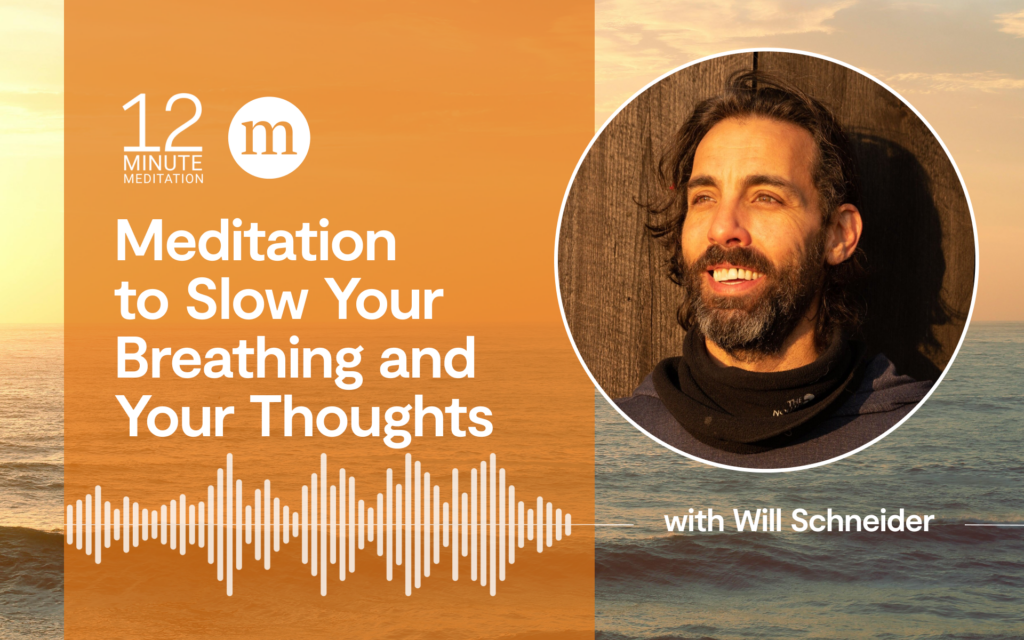
  • Slow Your Breath and Your Thoughts: 12-Minute Meditation

    Slow Your Breath and Your Thoughts: 12-Minute Meditation

    Paying attention to the gentle, natural flow of our breath can help us witness the chatter of the mind without judgment.

    By becoming more aware of our inhales and exhales, we gradually bring calm to our mind and our nervous system. We’re giving ourselves permission to slow down for a few minutes. And as we breathe, we can also witness the active chatter of our mind without being swept away, and the thoughts about the past or worries about the future.

    Mindfulness practice reveals how our thoughts and emotions are constantly changing, and this simple, relaxing meditation gives us a chance to release expectations and judgments. A state of mind awareness is strengthened each time we notice the mind wandering and choose to come back to the sensations of the breath moving in and out of our body.

    A Guided Meditation to Slow Your Breathing and Your Mind

    1. First, get yourself ready. You can sit in a comfortable position, in a chair, on a traditional meditation cushion, or on the floor. If you’re sitting, try to sit up tall, working for that dignified spine. Or, maybe you want to take this lying down.  
    2. Let’s start by finding our breath. Empty the breath all the way out, and let it go. Then take a big breath into your belly, then let it go out the mouth nice and easy. Keep breathing like this: really big inhales, slow the breath out. See if you can deepen the breath on each round. 
    3. Become aware of the flow of the breath. Instead of thinking about your breathing, just be curious about it. Curiosity is so nice, because you can step back and just observe the sensations of the breath, allowing it to help slow things down. 
    4. Bring a hand onto your belly, or maybe both hands onto your belly, or right hand in your belly, left hand on your chest. Use the hands to feel more of that breath flowing in and out and focusing just on the simple flow of the breath. By deepening this breath and becoming more aware of the breath, we naturally begin to slow our neurological processes down. We begin to naturally slow the biology down, the heart rate, the blood pressure. We begin to naturally, cognitively slow down the mind. 
    5. Now, let the breath rest in its natural state. It doesn’t have to be as big as the first few minutes. Using the breath as the focusing tool, stay with the flow of the breath as it inflates and then expands the belly and also deflates and contracts the belly. If you’re only breathing into your chest at this point, try to invite the breath down deep into the belly. It’s okay if you’re not breathing this way right now, but just be with the breath as it is, where it is, and be aware without judgment.  
    6. By focusing in this way, you’re going to be able to see the cleverness of the mind, trying to pull you somewhere into the future or drag you into the past. Notice that you’re thinking. You can even label it: That’s thinking. Then come back to the awareness, the simple awareness of your breath as it fills and spills. Be with the mind and the body as they are. The mind is made to be distracted. It always has a sense of alertness to it, but we don’t have to attach to the mind.  
    7. Be curious with the subtleties of each passing breath. Be aware emotionally, as well. Are you beating yourself up when you get attached to a thought? Or swept up in an emotion? Just let that go, too, and come back to the breath. 
    8. Notice, too, where you are holding expectations, and gently let them go. Maybe you came to your practice with the sense of, Oh, I should feel more peaceful right now. I should be experiencing this. I was hoping today that my meditation would yield this. Let it all go. No expectations, no attachment. Being with things as they are inside and outside: inside, just following the breath as it is; outside, letting the world around you be as it is.
    9. Remember, it doesn’t matter if you need to come back 1,000 times to one breath. That’s the practice. It’s not about getting it right or being perfect. It’s about showing up, doing the best you can with where you are physically, mentally, and emotionally in this moment. 
    10. Take a moment and thank yourself for taking the time today to honor your practice and honor your commitment to this course. Thank you for practicing. We’ll see you back here again tomorrow. Have a fantastic day. Way to show up.

    Never Miss a Meditation

    Enter your email below to get new podcast episodes delivered straight to your inbox! You’ll also get insights from expert mindfulness teachers and exclusive deals on Mindful Shop products, events, and more.


    Source link

  • Visualize Thoughts as Clouds in the Sky: 12 Minute Meditation

    Visualize Thoughts as Clouds in the Sky: 12 Minute Meditation

    Gently let go of attachment to your thoughts with a technique called “cognitive defusion” from Acceptance and Commitment Therapy.

    In this practice, you’ll explore how to allow your thoughts to come and go without feeling the need to hold onto them or push them away. This technique, called “cognitive defusion,” is part of Acceptance and Commitment Therapy, and it uses the visualization of thoughts as clouds to guide you through this process in a soothing and mindful way.

    A Guided Meditation to Visualize Your Thoughts As Clouds In the Sky

    1. You can do this exercise with your eyes open or your eyes closed, either in a seated position or lying down. Just choose a posture that’s most comfortable for you.
    2. Take a couple of gentle, long breaths. Let your breath ground you in your body and in the present moment
    3. Notice yourself sitting or lying here. Notice the sensations that are on your skin. Notice what it’s like inside your body—any places of tension are holding, any emotions that might be present for you right now. 
    4. Now, imagine that you are lying in a vast, spacious field, looking up at the sky. Imagine what it would feel like to lie here, letting yourself sink into the ground below. Bring your attention and your awareness to looking up at the sky, being present in the field, watching the clouds. 
    5. As you lie here, you may begin to notice that thoughts come into your awareness. Each time you notice the thought, imagine placing it on one of the clouds, and letting it float on by in the sky. You can place your thoughts on these clouds, whether they’re positive thoughts or negative thoughts, pleasant thoughts or unpleasant thoughts. Your job is just to be aware of the sky, noticing the clouds. 
    6. If there is space between your thoughts, notice that space as you would notice the space between the clouds, like the blue sky that lies behind it all.
    7. You might have thoughts about doing this exercise. You might think something like This is boring or It’s not working or I don’t like this or When is it going to end? That’s normal, and you can place those thoughts on clouds as well, allowing them to pass on through. 
    8. If a thought gets stuck, you don’t have to force it to go away. You can allow it to be stuck there. Make space for it. Let it settle on its cloud. Let it hang around, for a little while. All you’re doing is just observing your experience. There’s no need to force the thought to go away. 
    9. If you notice some feelings like boredom or impatience, that’s okay. You can say to yourself, Here is a feeling of boredom. Here is a feeling of impatience. And you can pick it up and put it on a cloud as well.
    10. It’s normal and natural to lose track during this exercise. When that happens, just catch yourself and bring yourself back to lying in this field, looking up at the sky and placing thoughts. You are becoming an observer of your own mind. You are not your thought. Thoughts are coming and going like the clouds in the sky. Some are slow. Some are fast. And you are observing it all. 
    11. Now, allow the image to begin to dissolve. Bring your awareness back into your body, feeling your breath inside your body. Notice sensations on your skin, the temperature of the air, your body touching the ground. Feel yourself fully present back in your body.
    12. When you’re ready, open your eyes and you can bring yourself fully back into the room. Thank you for practicing with me. I hope that you can bring this practice into your day to day and that it’s helpful for you. 


    Source link