Tag: technology

  • Mindfulness and the Rise of Analog Living

    Mindfulness and the Rise of Analog Living

    I recently walked into an abstract art class for the first time. I’m not a painter. I had no idea what I was doing. I stood in front of a blank canvas with a brush in my hand and a small, anxious voice in my head asking, What now?

    With encouragement from the passionate teacher, I dipped the brush in the paint, touched it to the canvas, and watched a streak of colour appear. The voice in my head got a little softer. The studio smelled of turpentine and quiet joy. I could hear the bristles dragging across the surface. There was no algorithm telling me what to do next. No notification. No metric of success for once. Just the paint, the canvas and whatever was about to happen.

    I left that first painting class feeling something I hadn’t felt in a while: fully engaged. Not because I’d done nothing, but because, for three whole hours, there had been nowhere else to be.

    I left that first class feeling something I hadn’t felt in a while: fully engaged. Not because I’d done nothing, but because, for three whole hours, there had been nowhere else to be.

    It turns out I’m not the only one feeling this. Quietly, all around us, something is shifting.

    Revisiting analog living: a cultural turn

    People are buying film cameras again—not because they can’t afford digital, but because they actually want the grain. They want the uncertainty of not knowing how the photo turns out. They’re filling their bags with paper journals and puzzle books and leaving their phones in their pockets. Searches for analog hobbies have surged. Sales of film photography equipment have more than doubled since 2020. Craft kits are flying off the shelves. There’s even a viral trend called the Analog Bag—a curated little collection of essentials (a journal, a puzzle book, a film camera, a magazine) so that when your hand reaches for something to occupy itself, it finds something other than your phone.

    Forbes has called this the year of Analog Living. Design platforms are calling it the year of imperfect visuals: grain, hand-drawn lines, messy textures. Interior designers have moved from sterile minimalism to what they call dopamine decor: bold colours, personal heirlooms, physical collections that make a room feel something rather than merely photograph well.

    A phrase that caught my attention recently is brain wealth. This is the idea that mental longevity comes from slow, attentive activities: long-form reading, writing by hand, making something with your hands. One survey found that around a quarter of Brits are actively looking for creative, non-digital hobbies specifically to help them switch off after work.

    That’s a quarter of a country quietly raising its hand and saying, Something isn’t quite right with the way I’m living.

    Why a brush in your hand changes things

    Here’s what struck me in the abstract art class. The information available to me was, in one sense, far less than what’s available on my phone. There’s no infinite scroll. I won’t find tutorials autoplaying. There’s an obvious absence of comments and likes. And yet I felt more, not less. More awake. More here.

    Every piece of digital technology we use has been brilliantly, expertly designed to remove friction. To make things faster, smoother, more seamless. You don’t have to wait or be patient. You don’t have to sit with uncertainty. On the surface, that sounds wonderful.

    But here’s the thing: some friction is the point.

    Why does holding a physical book feel different from reading the same words on a screen? Why does a handwritten letter land differently than an email of identical content? Why does a grainy, slightly imperfect photograph feel more alive than a flawless high-resolution image?

    I think one answer is friction.

    Every piece of digital technology we use has been brilliantly, expertly designed to remove friction. To make things faster, smoother, more seamless. You don’t have to wait or be patient. You don’t have to sit with uncertainty. On the surface, that sounds wonderful.

    But here’s the thing: some friction is the point.

    When you wind a film camera, you only have thirty-six photos. That constraint forces you to actually look before you press the shutter. When you write by hand, you can’t type as fast as you can think—so you slow down, choose your words, dwell in a thought rather than blasting through it. When you stand in front of a canvas with a brush in your hand, the paint doesn’t care that you’re running late or that your inbox is full. It simply is what it is, and it asks for your full attention.

    In mindfulness, we sometimes call this beginner’s mind. The quality of meeting something freshly, without the overlay of habit or expectation. Analog activities seem to invite beginner’s mind almost by default. There’s no algorithm predicting what comes next. There is only this moment, and what you do with it.

    The deeper question to hold in our awareness

    Now, I could stop here and tell you to go and buy a film camera or sign up for a pottery class. And that wouldn’t be bad advice! But I want to go a layer deeper, because I think this cultural shift is pointing at something that no number of analog hobbies can fully resolve on its own.

    Here’s the question I keep returning to:

    Who is the one who wants to switch off?

    We talk about digital overwhelm as if it’s a problem out there—the apps, the notifications, the powerful and persuasive algorithms. And those things are real. But the deeper discomfort, the thing that makes someone reach for the puzzle book or the film camera, isn’t really coming from the phone. It’s coming from inside.

    It’s restlessness. A constant low-level mental buzz. A sense that you’re never quite here, because some part of your mind is always somewhere else—planning, comparing, scrolling, performing.

    The phone made the restlessness visible. It gave the restless mind somewhere to go, constantly, without relief.

    The phone made the restlessness visible. It gave the restless mind somewhere to go, constantly, without relief.

    So when people say they want to switch off, what they’re really saying, I think, is: I want a break from being so relentlessly me. From the constant commentary. The self-monitoring. The performing. The quiet undercurrent of not-good-enough.

    That’s the beginning of an inquiry that meditators and contemplatives have been pointing at not just for decades, but for centuries. No phones around then!

    The self is exhausting. And somewhere, on a level we don’t usually put into words, we know it.

    Why craft is therapeutic—and where it leads

    When your hands are full, literally full of clay, or yarn, or paint, the chattering mind gets a little quieter. Its attention has been absorbed somewhere more immediate.

    These activities work with the mind’s natural tendency to rest in sensory experience. They give the thinking mind something to do that doesn’t feed the anxiety loop.

    This is why craft is therapeutic. Why gardening is meditative. Why cooking from scratch feels centring in a way ordering delivery never does. These activities work with the mind’s natural tendency to rest in sensory experience. They give the thinking mind something to do that doesn’t feed the anxiety loop.

    In my abstract art class, I notice this every time. There’s a moment, usually about twenty minutes in, when something settles. I’m no longer thinking about whether the painting is good. I’m just there, with the colour, with the canvas, with whatever wants to emerge. It’s not unlike the moment in meditation when the breath stops being an object you’re observing and just becomes something happening, here, now.

    But—and this is the gentle but—analog hobbies are the doorway, not necessarily the destination. Because after the painting class, the restlessness comes back. After the lovely walk without headphones, you get home and the self returns. The deeper practice that mindfulness points towards isn’t to keep busy enough that the restlessness can’t find you. It’s to learn to meet it. To get curious about it. To eventually ask, gently, without demanding an answer: Who is this restless one?

    That inquiry is where analog living and deep mindfulness practice can become something far more profound than a passing trend.

    How to connect to this analog living moment more mindfully

    If any of this lands with you, here are a few suggestions.

    Choose friction on purpose. Pick one activity each week where you deliberately use the slower version. Write a card by hand instead of sending a message. Read a chapter of a physical book instead of an article on your phone. Cook something from scratch that you’d normally order in. The point isn’t efficiency. The point is the friction itself.

    Let the activity be the meditation. When you do your analog thing, resist the urge to put a podcast on in the background. Let it be the only thing happening. Notice the sensations:  the weight of the pen, the smell of the paint, the sound of the page turning. This is mindfulness in plain clothes.

    Don’t pick the impressive one. People often assume the analog hobby has to be photogenic like pottery, calligraphy, vinyl records. It doesn’t. Making a slow cup of tea counts. Folding laundry without a screen counts. Walking somewhere without headphones counts. The hobby is not the point. Presence is the point.

    Pick the activity your hands already want. Notice what your hands do when you’re idle. Some people, like me, doodle. Some people fiddle with objects. Some people are always tidying. Some people are drawn to texture—fabric, wood, soil. Your hands have already been telling you, for years, what kind of analog activity would suit you. Listen to them.

    Pick what your inner critic dismisses. I almost didn’t go to the abstract art class because a voice in my head said, But you’re not an artist. That voice is often a useful clue. The thing it tries to talk you out of That’s silly, that’s frivolous, that’s not productive—is frequently the thing your nervous system most needs.

    Pair the activity with one quiet question. While you’re doing your analog thing, gently hold one question in the back of your mind: Who is the one noticing this? You don’t need to answer it. In fact, the not-answering is the whole point. Just hold it lightly. That question, if you let it, is a thread that leads somewhere extraordinary.

    Let it be imperfect. The grain on the photograph. The wobble in the handwriting. The stripe of colour you didn’t plan in the painting. These are not flaws to be edited out. They are the signature of something real having actually happened. A life that has been touched leaves marks. Let it.

    Walking through the door

    The analog movement is giving millions of people a small, daily taste of presence. A moment of real, embodied, here-ness. That taste is the beginning. That’s the door.

    Mindfulness is what teaches you to walk through it.

    So this week, pick one analog thing. Make it small. Make it ordinary. And while you’re doing it, instead of just doing it, get a little curious. Notice the quality of attention that arises. Notice the way the mind settles. And then, very gently, notice the one who is noticing.

    That noticing—that quiet, unhurried looking—is where this all leads. Not back to a romanticised past, but forward, into a life that is actually being lived.

    May you find at least one moment this week that is beautifully, imperfectly analog.


    Join Us: The Seven Strengths Global Event

    Looking for more ways to slow down and anchor in an interior calm—even (or maybe especially) when the world feels so frantic and uncertain?

    From May 13–19, 2026, I’ll be joining some of the most respected teachers alive – including Sharon Salzberg, Rick Hanson, Kristen Neff, Tami Simon, Mamphela Ramphele, and Melli O’Brien – for a free, seven-day online global event called The Seven Strengths.

    The event is hosted by Mindfulness.com in collaboration with Sounds True and DailyOM, and all proceeds support the Global Compassion Coalition’s work to build a more compassionate, resilient world. That means joining is both an act of personal growth and an act of collective generosity.

    Part of this resurgence in interest in analog living is that we are all intuiting something vital: the world doesn’t need more anxious, exhausted people trying to hold everything together. It needs calmer, wiser, more compassionate human beings choosing to show up, day after day, from a place of genuine inner strength.


    Source link

  • Wearable Health Technology Breakthroughs That Help Your Smartwatch Detect Illness Early

    Wearable Health Technology Breakthroughs That Help Your Smartwatch Detect Illness Early

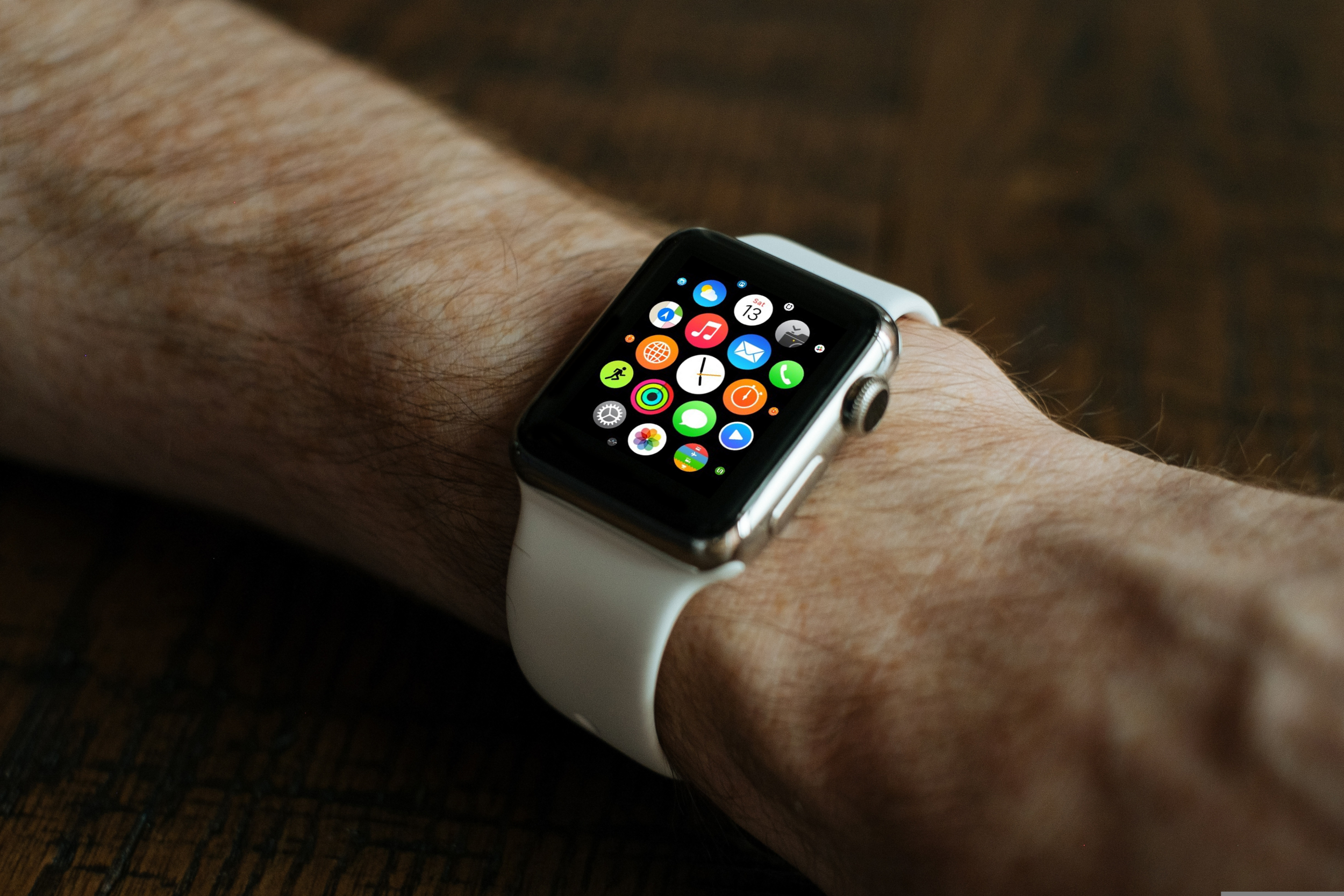
    Wearable health technology has moved rapidly from niche fitness gadgets to everyday companions that promise deeper insight into the body’s signals. Smartwatches now track far more than steps, offering continuous heart rate, sleep, and activity data that some people use to spot changes before they feel obviously unwell. This raises a central question: how reliably can these devices detect illness early?

    The Rise of Wearable Health Technology

    Wearable health technology refers to body-worn devices that collect health-related data in real time, such as heart rate, activity, sleep, and sometimes temperature or blood oxygen. Smartwatches and fitness bands are the most visible examples, while smart rings, patches, and medical-grade devices extend the category further.

    What makes them powerful is their ability to monitor people continuously during everyday life rather than only during clinic visits.

    Consumer wearables focus mainly on wellness and lifestyle insights, whereas clinical devices are designed and tested to support medical decisions.

    The line between them is blurring as smartwatches add advanced health features like ECG recording and irregular rhythm alerts. Still, most wearable health technology in the consumer market remains closer to screening and self-awareness than formal diagnosis.

    How Smartwatches Detect Health Changes

    Smartwatches rely on a set of small sensors to capture signals from the body. Optical sensors estimate heart rate and heart rate variability using light, while accelerometers and gyroscopes measure movement and activity intensity. Some devices also estimate blood oxygen levels, breathing rate, or skin temperature trends.

    Software turns these raw streams into meaningful information. Algorithms learn a person’s baseline patterns and highlight deviations that may matter. For example, a smartwatch might notice that resting heart rate remains higher than usual, sleep is disrupted, and activity has dropped.

    Within the broader world of wearable health technology, these pattern shifts underpin features like irregular rhythm notifications and prompts to check for possible illness.

    Can Smartwatches Detect Illness Early?

    Current evidence suggests that smartwatches can sometimes identify certain issues earlier than a person might otherwise notice, especially for heart rhythm problems like atrial fibrillation.

    In these cases, devices act as screening tools that encourage users to seek professional evaluation when irregular patterns are detected. The watch does not confirm a diagnosis; instead, it raises a flag that something may need attention.

    For infections or other acute illnesses, early signs may show up as a combination of elevated resting heart rate, reduced variability, poorer sleep, and changes in temperature-related metrics. Some users report that these indicators change a day or two before symptoms.

    However, these patterns are not specific to illness and may also reflect intense exercise, stress, travel, or stimulants like caffeine. Smartwatch signals are therefore best viewed as clues rather than answers, according to the Centers for Disease Control and Prevention.

    What Smartwatches Monitor – And How Accurate They Are

    Smartwatches are strongest in tracking cardiovascular and lifestyle-related metrics. Continuous heart rate, movement patterns, workout tracking, and sleep timing are now standard.

    Some models offer on-demand ECG readings that can help detect specific arrhythmias, while others include blood oxygen and basic stress indicators derived from heart rate variability.

    Accuracy depends on the metric and the context. Heart rate at rest or during moderate activity is often close to clinical instruments, but high-intensity exercise or a loose fit can degrade signal quality.

    Skin tone, tattoos, sweat, and motion all influence optical sensor performance. Because of these limitations, wearable health technology is most reliable for showing trends over time rather than precise single measurements.

    Medical Claims and Regulatory Limits

    Some smartwatch features have regulatory clearance for narrow medical uses, such as detecting possible atrial fibrillation episodes or recording a single-lead ECG. This means the feature was tested in defined conditions and met specific performance criteria. Even so, these tools are intended to support, not replace, medical judgment.

    Many other features of wearable health technology, including step counts, generic sleep scores, or stress estimates, are marketed as wellness tools and do not go through the same level of scrutiny.

    They can still be helpful but should not be interpreted as formal diagnoses. Understanding this distinction keeps expectations realistic and prevents overreliance on any one metric or alert.

    Using Smartwatch Alerts Wisely

    When a smartwatch issues a health alert, context is crucial. Checking for obvious causes, such as intense recent exercise, emotional stress, caffeine, or poor sleep, can explain many short-term changes, as per Harvard Health.

    If unusual patterns persist, seem out of character, or occur alongside concerning symptoms like chest pain, extreme shortness of breath, or fainting, seeking medical care becomes more important.

    Sharing summaries or exported reports from wearable health technology can help clinicians see broader trends instead of isolated readings.

    The most useful information often includes timing, duration, and associated symptoms rather than raw second-by-second data. In this way, smartwatch data can support clinical decision-making without overwhelming professionals.

    Who Gains the Most From Wearable Health Technology?

    People who are already motivated to understand and improve their lifestyle often benefit most from wearable health technology.

    They tend to act on insights by increasing activity, prioritizing sleep, or managing stress, which can have a cumulative impact on long-term health. For them, early detection is less about one dramatic alert and more about noticing gradual changes over weeks and months.

    Individuals with known risk factors for heart rhythm disorders or other chronic conditions may also gain value, especially when they use wearables under guidance from healthcare providers.

    Older adults and caregivers may appreciate features like fall detection and emergency SOS. Across these groups, the real advantage comes from combining continuous data with thoughtful interpretation and professional input.

    Wearable Health Technology’s Growing Role in Early Detection

    As sensors become more capable and algorithms more sophisticated, wearable health technology is poised to play a larger role in early detection and ongoing health monitoring.

    Future devices may track additional physiological signals and integrate seamlessly with telehealth and electronic records, offering a more complete picture of day-to-day health. For now, smartwatches are best understood as powerful companions that highlight trends and potential warning signs rather than definitive diagnostic tools.

    Used with realistic expectations and in collaboration with clinicians, wearable health technology can help people notice meaningful changes sooner and make more informed decisions about when to seek care.

    Frequently Asked Questions

    1. Can wearable health technology help reduce healthcare costs over time?

    Yes, by encouraging preventive habits and prompting earlier checkups, wearable health technology can sometimes help avoid more expensive treatments later, especially for lifestyle-related conditions.

    2. Is smartwatch health data admissible or useful in legal or insurance claims?

    It can be considered supporting information but is rarely treated as primary evidence; insurers or courts typically rely more on medical records and professional evaluations.

    3. Can smartwatches detect mental health issues like anxiety or depression?

    They cannot diagnose mental health conditions, but changes in sleep, activity, and heart rate patterns may highlight stress or behavior shifts worth discussing with a clinician or therapist.

    4. Do different smartwatch brands interpret health data in the same way?

    No, each brand uses its own algorithms, metrics, and scoring systems, so results can differ; trends over time on the same device are usually more meaningful than cross-device comparisons.


    Source link

  • Workplace Wellbeing in This Digital Age: Mindful Guidance for Digital Fatigue and Burnout

    Workplace Wellbeing in This Digital Age: Mindful Guidance for Digital Fatigue and Burnout

    It’s 3p.m., and you’ve been at your desk for all or most of the day. Maybe you even worked through lunch, hunched over your keyboard while eating a sandwich. If you paused and tuned into your body, would you notice how your eyes are burning, how your neck and shoulders are tense and achey? Swamped at work, trying to stay on deadline, can you remain focused and calm your frazzled mind—or do you struggle with staying on task?

    Or how about when the workday is over? Maybe you crawl into bed, exhausted—but still can’t sleep through the night. And when you’re away from your office, how often do you remember to unplug and wander screen-free in healing green spaces? 

    All of these are extremely common symptoms and contributors to what we call screen-related stress, digital fatigue, and burnout—and they’re endemic in the workplace. 

    The good news is that you don’t have to keep living this way. We have the option to work more mindfully: by improving our computer station; learning on-the-spot de-stressing techniques; taking nature breaks to recharge; and establishing better tech habits.

    When we get serious about Digital Wellness, we can create healthier workplaces, be kinder to our bodies and minds, and engage in activities that actually replenish our energy and combat burnout when we’re not at work.

    Our Digital Wellness Best Practices: 4 Easy-to-Use Tips

    I’ve been fortunate to work with Dr. Michael Rich, Director of Harvard University’s Digital Wellness Lab, in developing these research-backed strategies for greater digital wellness. Dr. Rich contributed to our book Less Screen More Green, and we were truly blessed to have the late Dr. Jane Goodall write the foreword.

    The reality is, today’s digital workplace was not designed for our wellbeing, as you probably know all too well. It’s clear that we need to be intentional about fostering our wellbeing more than ever. Here are four essential places to start.

    1. Check Your Workstation Ergonomics

    How your workstation is set up has a significant impact on you and your work. Pamela Dempster, a Certified Professional Ergonomist and collaborator in our programs, cautions: “Laptops can be a health issue as they promote more neck bending/cervical flexing which should be avoided for extended periods of time. Also, poorly designed workstations, and the current trend of ‘hot desking’ [where workstations are continually rotated], significantly increase workplace stress.” So let’s look more closely at how a workstation should be set up to limit stress and promote better skeletal, muscular, nervous-system, and eye health.

    First, a good chair with lumbar (lower back) support and a good armrest is key. Supportive armrests are critical for upper body/upper extremity health, and they’re best if padded with soft foam underlay. Your screen should be an arm’s length away and at eye level so you are looking straight ahead into the upper part of the screen, not looking down and straining your neck. Monitors at eye height promote neutral head/neck positioning. This promotes downward eye gazing which is healthier for our near-sighted visual system and its ability to focus better on what it’s reading.

    As you probably know, staring at blue-lit screens and unhealthy tech habits, including poor ergonomics, increase our stress levels and our exhaustion. They drain our physical and mental fuel and contribute to burnout. To support eye health, invest in blue-light filtering glasses to ease eye strain, and keep lubricating eyedrops at your desk and remember to blink. (Yes, we “forget” to blink when we’re glued to screens!)

    2. Do Regular Deskercises

    It’s important to keep the body moving during the day, even when you’re right at your desk. This keeps us from developing muscle strain and repetitive injuries like “Tech Neck.” Regular gentle movement practices like Chi Gong, and intentional practices like mindfulness meditation and breathing exercises (yes, we “forget” to breathe, as well) help relax our bodies and calm and focus our minds. This not only increases ease and productivity at work, but also helps us sleep much better at night.

    Turn away from your screen frequently to refocus your gaze and take some deep breaths for on-the-spot relaxation and recharging. One of the easiest deskercises we recommend is called 20-20-20: Set a timer, and every 20 minutes, shift your gaze away from your screen—even better if it’s out a window. Look at least 20 feet away, for at least 20 seconds, and do some deep breathing.

    One of our Digital Wellness participants reported that since doing the Mindful Tech program, she’s rearranged her desk and computer setup, relieving tension in her neck and low back. She now also takes regular breaks to do the 20-20-20 practice and stand up and stretch. “It’s made me feel better with the amount of screen time in my work, and it’s non-negotiable.”

    3. The Nature Remedy: A Daily Dose of Nearby Nature

    In a world that is tech-obsessed, noisy, and chaotic, it’s so easy to forget that “nature” is not something out there in the woods. It’s not separate from us. We humans are part of nature! (Although this isn’t always evident by how recklessly we treat our environment.) Being in the forest, a city park, a patch of grass, or just pausing to turn inward for a moment and take some lungfuls of fresh air is coming home to our true selves, in some way.

    We call this intentional practice The Nature Remedy, and it is the ground of our workplace wellness program.

    Scientific evidence by researchers including Dr. Qing Li, the Scientific Advisor for The Forest Bathing Institute, supports the benefits of mindfulness in nature for many physical and mental health issues including: hypertension, anxiety, depression, empathy fatigue, and burnout. This Japanese practice of Shinrin Yoku is emerging as a key strategy for workplace wellness and is practiced by many eminent health professionals themselves.

    Our co-author Dr. Rich is an advocate of the healing power of nature as a key aspect of workplace wellbeing and was surprised by the effect of Shinrin Yoku: “Recently, at a conference in Aspen, I had my first experience with Forest Bathing. Surprisingly, it may seem that nothing is happening; there we were under the canopy of trees just focusing on specific senses. Yet somehow it is everything as we paused, slowed down, and listened to the trees. Most of this digital generation are so used to being hyper-stimulated that it takes them time to ease into the quiet that is so key to their mental health. Gearing down, being in nature, without our phones, is truly beneficial for us all.”

    Dr. Rich explains what is happening in this simple moment. Forest Bathing works, because when we shift from our habitually speedy and cluttered mind, this can have a profound impact on resetting our nervous system. We’re shifting from the sympathetic (stress) mode, to the parasympathetic (relaxation) mode. The mental health benefits are similar to clearing your mind in meditation. You’re connecting with an inner stillness that is usually drowned out by the noise of our highly urbanized workplaces.

    Remember, it’s important to do this screen free. Screens disrupt our sense of connection to time and place and our bodies, which limits our ability to settle into the quietness.

    We’ve found that this intentional reconnection with nature is resonating, even with people whose jobs require them to spend entire days on screens. One IT professional reported this experience after taking our Digital Wellness program and trying our Nearby Nature tip: “Instead of moaning about not being able to get out for a long hike, I take frequent breaks. Just walk around the block without checking my phone or listening to music. That’s a big change for me! I am seriously hooked, worse than my caffeine habit. Our boss is happy we’re taking fewer sick days. It’s a good reminder to do some of my mindfulness stuff outdoors when I can, without my phone.”

    4. Sleep Strategies

    The quality and duration of your sleep has an immense impact on your mental, emotional, and physical wellbeing. We need it for good immune function, to process thoughts and emotions, and to repair our bodies and balance our nervous system. But we don’t always make the connection between our daily screentime, digital fatigue, burnout, and our ability to get the very sleep we need to recover.

    One of the most helpful things you can do is just unplug at least one hour before bedtime. Leave your phone powered off; get a battery alarm clock to use instead. As you may know, there’s scientific evidence that wireless radiation affects our sleep, so you will also sleep much better in this tech-free sanctuary if you also turn off your WiFi. Avoid all caffeine in the late afternoon and evening, and consider natural supplements such as calcium, magnesium and low-dose melatonin. When you can’t get to sleep, fussing about not sleeping generally tends to make things worse. Instead, doing a sleep meditation or deep breathing can often help you sink into a deep rest.

    Reclaiming Our Right to Workplace Wellbeing

    Inertia is a strange thing. It’s easy to assume, just because most workplaces, by default, encourage unhealthy daily routines and habits, that this is “just the way it is.” The truth is that it doesn’t have to be this way at all. We can reclaim our right to workplace wellbeing.

    We’re also seeing positive signs every day that change is coming: A significant number of businesses and organizations are waking up to how crucial it is to have employees take care of themselves if they want workplaces that can actually function.

    If you’re inspired to take action for your own wellness, please try these practices for yourself, and check out the resources we offer.

    Details about our program: www.DigitalWellnessPrograms.com

    Our book: www.LessScreenMoreGreen.org

    Our nonprofit: www.GlobalHealthAlliance.ca

    More from Pamela Dempster and healthy ergonomics: www.DempsterWellness.com

    Details about The Forest Bathing Institute: www.tfb.institute 


    Source link

  • The Great Outdoors: How Disconnecting from Technology Can Upgrade Your Social Wellness – article about the joys of unplugging and outdoor activities.

    The Great Outdoors: How Disconnecting from Technology Can Upgrade Your Social Wellness – article about the joys of unplugging and outdoor activities.

    Introduction to The Great Outdoors

    The world has become increasingly digital, with technology dominating every aspect of our lives. From the moment we wake up to the moment we go to bed, we are constantly connected to our devices, scrolling through social media, checking emails, and texting friends and family. While technology has made our lives easier and more convenient, it has also taken a toll on our mental and social well-being. The constant stream of information, the pressure to present a perfect online persona, and the fear of missing out (FOMO) can be overwhelming, leading to stress, anxiety, and depression. However, there is a way to escape the digital chaos and upgrade our social wellness: by disconnecting from technology and spending time in the great outdoors.

    The Benefits of Unplugging

    Unplugging from technology can have a significant impact on our mental and social health. When we disconnect from our devices, we are able to break free from the constant stream of information and distractions, and focus on the present moment. This can help reduce stress and anxiety, improve our mood, and increase our sense of calm and well-being. Additionally, unplugging can help us reconnect with ourselves, our thoughts, and our emotions, allowing us to develop a greater sense of self-awareness and introspection. By taking a break from technology, we can also improve our relationships with others, as we are able to engage in face-to-face interactions, listen more intently, and respond more thoughtfully.

    The Joys of Outdoor Activities

    Spending time in the great outdoors can be a powerful way to upgrade our social wellness. Outdoor activities such as hiking, camping, swimming, and biking can help us disconnect from technology and reconnect with nature. Being in nature has been shown to have a range of benefits, including reducing stress and anxiety, improving mood, and increasing feelings of happiness and well-being. Outdoor activities can also provide opportunities for social interaction, such as joining a hiking group or participating in a recreational sports team. These interactions can help us build relationships, develop social skills, and increase our sense of belonging and connection to others.

    Building Social Connections in the Outdoors

    One of the most significant benefits of spending time in the outdoors is the opportunity to build social connections. When we participate in outdoor activities, we are able to meet new people, form new relationships, and strengthen existing ones. Outdoor activities can provide a sense of community and camaraderie, as we work together to achieve a common goal, such as completing a difficult hike or participating in a group sporting event. Additionally, outdoor activities can provide opportunities for meaningful conversations and interactions, such as sharing stories and experiences around a campfire, or discussing the beauty of nature while on a hike. By building social connections in the outdoors, we can increase our sense of belonging and connection to others, and develop stronger, more meaningful relationships.

    Improving Mental Health in the Outdoors

    Spending time in the outdoors can also have a significant impact on our mental health. Being in nature has been shown to have a range of benefits, including reducing symptoms of anxiety and depression, improving mood, and increasing feelings of happiness and well-being. Outdoor activities can provide a healthy distraction from the stresses of daily life, allowing us to focus on the present moment and let go of worries and concerns. Additionally, outdoor activities can provide opportunities for mindfulness and meditation, such as paying attention to the sights and sounds of nature, or practicing yoga or tai chi in a park or other outdoor setting. By improving our mental health in the outdoors, we can increase our sense of calm and well-being, and develop greater resilience and coping skills.

    Overcoming Barriers to Outdoor Activities

    While spending time in the outdoors can be a powerful way to upgrade our social wellness, there are often barriers that prevent us from doing so. One of the most common barriers is lack of access to outdoor spaces, such as parks, trails, or other natural areas. Additionally, some people may feel intimidated or unsure about how to participate in outdoor activities, such as hiking or camping. Others may be concerned about safety, such as the risk of injury or encountering wildlife. However, there are many ways to overcome these barriers, such as finding local parks or trails, joining a recreational group or club, or taking a class or workshop to learn new skills. By overcoming these barriers, we can increase our opportunities for outdoor activities, and develop greater confidence and self-efficacy.

    Creating a Balance between Technology and Nature

    While disconnecting from technology and spending time in the outdoors can be beneficial, it is also important to create a balance between the two. Technology can be a powerful tool for connecting with others, accessing information, and improving our lives. However, when we spend too much time on our devices, we can neglect our relationships, our health, and our well-being. By creating a balance between technology and nature, we can enjoy the benefits of both, while minimizing the negative effects. This can involve setting boundaries, such as not using our devices during certain times of the day or in certain locations, or prioritizing outdoor activities and scheduling them into our daily or weekly routine. By creating a balance between technology and nature, we can upgrade our social wellness, and develop greater harmony and balance in our lives.

    Conclusion

    In conclusion, disconnecting from technology and spending time in the great outdoors can be a powerful way to upgrade our social wellness. By unplugging from our devices, we can reduce stress and anxiety, improve our mood, and increase our sense of calm and well-being. Outdoor activities can provide opportunities for social interaction, building relationships, and developing social skills. Additionally, spending time in nature can have a range of benefits for our mental health, including reducing symptoms of anxiety and depression, and improving our mood. By overcoming barriers to outdoor activities, creating a balance between technology and nature, and prioritizing outdoor activities, we can increase our opportunities for social connection, improve our mental health, and develop greater harmony and balance in our lives.

    FAQs

    Q: What are the benefits of unplugging from technology?
    A: The benefits of unplugging from technology include reducing stress and anxiety, improving mood, and increasing sense of calm and well-being. Unplugging can also help us reconnect with ourselves, our thoughts, and our emotions, and develop greater self-awareness and introspection.
    Q: How can outdoor activities improve social wellness?
    A: Outdoor activities can provide opportunities for social interaction, building relationships, and developing social skills. Participating in outdoor activities can help us meet new people, form new relationships, and strengthen existing ones, increasing our sense of belonging and connection to others.
    Q: What are some common barriers to outdoor activities?
    A: Common barriers to outdoor activities include lack of access to outdoor spaces, feeling intimidated or unsure about how to participate, and concerns about safety. However, there are many ways to overcome these barriers, such as finding local parks or trails, joining a recreational group or club, or taking a class or workshop to learn new skills.
    Q: How can I create a balance between technology and nature?
    A: Creating a balance between technology and nature involves setting boundaries, prioritizing outdoor activities, and scheduling them into our daily or weekly routine. This can involve not using our devices during certain times of the day or in certain locations, or limiting our screen time to certain hours of the day.
    Q: What are some tips for getting started with outdoor activities?
    A: Tips for getting started with outdoor activities include finding local parks or trails, joining a recreational group or club, or taking a class or workshop to learn new skills. It’s also important to start small, begin with activities that are enjoyable and manageable, and gradually increase our level of participation and challenge as we become more comfortable and confident.

  • Don’t Let Distance Ruin Your Relationships! How Technology Can Help bridge the gap – article about using technology as a tool to maintain positive relationships over long distances or during isolating periods such as a pandemic.

    Don’t Let Distance Ruin Your Relationships! How Technology Can Help bridge the gap – article about using technology as a tool to maintain positive relationships over long distances or during isolating periods such as a pandemic.

    Introduction

    In today’s world, maintaining relationships over long distances or during isolating periods can be challenging. With the rise of globalization, people are more likely to move away from their families and friends for work, education, or other opportunities. Additionally, the COVID-19 pandemic has forced many people to stay at home, making it difficult to maintain social connections. However, with the help of technology, it’s possible to bridge the gap and stay connected with loved ones, no matter where they are in the world.

    Staying Connected through Video Calls

    One of the most effective ways to maintain relationships over long distances is through video calls. Platforms like Zoom, Skype, and Google Meet allow people to connect face-to-face, even if they’re on opposite sides of the world. Video calls can help to reduce feelings of loneliness and isolation, and can even help to strengthen relationships by allowing people to communicate in a more personal way. Whether it’s a weekly catch-up with family members or a daily check-in with friends, video calls can help to keep relationships strong and healthy.

    Social Media and Messaging Apps

    Social media and messaging apps are another great way to stay connected with loved ones over long distances. Platforms like Facebook, Instagram, and WhatsApp allow people to share updates, photos, and messages with each other, helping to stay connected and up-to-date on each other’s lives. Social media can also be used to share experiences, such as watching the same TV show or movie, and discussing it together. Messaging apps like WhatsApp and Facebook Messenger also allow people to send voice messages, make voice calls, and even send files to each other.

    Online Communities and Forums

    Online communities and forums can also provide a sense of connection and belonging, even when people are physically isolated. Joining online groups or forums related to shared interests or hobbies can help people connect with others who share similar passions and interests. Online communities can also provide a safe space for people to share their thoughts, feelings, and experiences, and can help to reduce feelings of loneliness and isolation.

    Virtual Events and Activities

    Virtual events and activities can also help to bridge the gap and maintain relationships over long distances. Online events, such as concerts, festivals, and conferences, can be attended remotely, allowing people to participate and connect with others who share similar interests. Virtual activities, such as online gaming, virtual book clubs, and online yoga classes, can also provide a sense of connection and community. These activities can help to create shared experiences and memories, even when people are physically apart.

    Sharing Photos and Memories

    Sharing photos and memories is another great way to maintain relationships over long distances. Platforms like Instagram and Facebook allow people to share photos and updates with each other, helping to stay connected and up-to-date on each other’s lives. Sharing memories, such as photos from special events or vacations, can also help to strengthen relationships by creating a sense of shared history and experience.

    The Importance of Regular Communication

    Regular communication is key to maintaining healthy and strong relationships over long distances. Whether it’s through video calls, messaging apps, or social media, regular communication can help to reduce feelings of loneliness and isolation, and can even help to strengthen relationships. Scheduling regular check-ins or catch-ups can help to ensure that relationships stay strong and healthy, even when people are physically apart.

    Overcoming Challenges and Barriers

    Despite the many benefits of technology in maintaining relationships over long distances, there are also challenges and barriers to overcome. Time zone differences, internet connectivity issues, and language barriers can all make it difficult to stay connected. However, with a little creativity and flexibility, these challenges can be overcome. For example, scheduling calls in advance can help to accommodate time zone differences, and using translation apps or software can help to overcome language barriers.

    Building and Maintaining Trust

    Building and maintaining trust is crucial in any relationship, and can be particularly challenging when people are physically apart. However, with regular communication and transparency, trust can be built and maintained over long distances. Being open and honest, following through on commitments, and being reliable can all help to build trust and strengthen relationships.

    The Future of Long-Distance Relationships

    The future of long-distance relationships is exciting and full of possibilities. As technology continues to evolve and improve, it’s likely that we’ll see new and innovative ways to stay connected with loved ones over long distances. Virtual reality, augmented reality, and artificial intelligence are all likely to play a bigger role in the future of long-distance relationships, providing new and immersive ways to connect and communicate.

    Conclusion

    In conclusion, technology can be a powerful tool in maintaining positive relationships over long distances or during isolating periods. Whether it’s through video calls, social media, online communities, or virtual events, there are many ways to stay connected and build strong, healthy relationships, even when people are physically apart. By staying connected, being open and honest, and building trust, relationships can thrive, even over long distances. As technology continues to evolve and improve, it’s likely that we’ll see new and innovative ways to stay connected and build strong, healthy relationships, no matter where we are in the world.

    FAQs

    Q: What are some of the best video call platforms for long-distance relationships?

    A: Some of the best video call platforms for long-distance relationships include Zoom, Skype, and Google Meet. These platforms offer high-quality video and audio, and are easy to use, making them perfect for staying connected with loved ones over long distances.

    Q: How can I stay connected with friends and family during a pandemic?

    A: Staying connected with friends and family during a pandemic can be challenging, but there are many ways to do so. Video calls, social media, and messaging apps can all help to stay connected and up-to-date on each other’s lives. Online communities and forums can also provide a sense of connection and belonging.

    Q: What are some tips for building and maintaining trust in long-distance relationships?

    A: Building and maintaining trust in long-distance relationships requires regular communication, transparency, and reliability. Being open and honest, following through on commitments, and being reliable can all help to build trust and strengthen relationships.

    Q: Can technology really help to bridge the gap in long-distance relationships?

    A: Yes, technology can really help to bridge the gap in long-distance relationships. Video calls, social media, online communities, and virtual events can all help to create a sense of connection and community, even when people are physically apart.

    Q: How can I overcome time zone differences and other challenges in long-distance relationships?

    A: Overcoming time zone differences and other challenges in long-distance relationships requires creativity and flexibility. Scheduling calls in advance, using translation apps or software, and being patient and understanding can all help to overcome these challenges and stay connected with loved ones.

  • The Nature Remedy: Find Freedom from Tech Overload

    The Nature Remedy: Find Freedom from Tech Overload

    In the summer of 2014, I participated in the first-ever digital detox retreat, Camp Grounded in Northern California.

    My camp name was Momma Zen. Each morning, I led mindfulness practice to ease the adult campers’ edgy tech cravings, guiding them through simple breath work to settle their restless minds.

    I had also joined a songwriting “play-shop.” I’d never written a song, but how hard could it be?

    Under a majestic canopy of towering redwoods, I was awkwardly front and center on the roughly hewn wooden stage, moments from belting out my just-written song “Digital Distraction Brings NO Satisfaction.” (Yes, inspired by the Stones’ classic.)

    On that last night, everyone was gathered beneath those grand old trees for our closing celebration. Unexpectedly, the young crowd of Silicon Valley techies stamped their feet loudly and cheered wildly.

    I mumbled to the musicians, “Can you play some slow funk?” Honestly, I had no idea what that was. Fortunately, they did. Then we all sang together, belting out the words:

    Digital Distraction Brings … NO Satisfaction

    Why does life often feel so empty
    When your digital feed never ends?
    Why is the night so long and lonely
    When you’ve got five thousand “friends”?

    Isolated inside children; families gone astray
    All sadly disconnected
    Forgotten how to play

    Selfies, trolling, swiping, scrolling
    Hey my friends, hear what I say
    Endless digital distraction
    Brings NO true satisfaction.

    We are living, breathing humans
    Who long to be seen
    Truly connected … heart to heart
    Face to face … not on a screen!

    Here in the redwoods, happy just to be
    Playing like kids again
    Joyously screen-free!

    That night we celebrated being free from all those notifications, the pinging and buzzing of digital demands. We were simply present. And it was glorious.

    The Lure of Digital Distraction

    You’ve probably felt that pull, too, right?—the urge to check your phone, the compulsion to scroll endlessly, the creeping exhaustion that comes from too many hours in front of a screen. Digital overload is real, and it’s quietly seeping into every corner of our lives.

    Here’s some good news: If you are already a meditator, or interested in mindfulness, you have a distinct advantage in finding freedom from tech overload.

    Dr. Michael Rich is author of The Mediatrician’s Guide and a Harvard University pediatrician who directs the Digital Wellness Lab at Boston Children’s Hospital. He has spent years studying the effects of digital media on our well-being (and is a major contributor to my book, Less Screen More Green). Threaded through all of his robust research are two major recommendations.

    Digital overload is real, and it’s quietly seeping into every corner of our lives.

    Here’s some good news: If you are already a meditator, or interested in mindfulness, you have a distinct advantage in finding freedom from tech overload.

    Make Friends With Boredom

    Dr. Rich advises not to fill most of our waking hours with digital media:

    Bring back boredom! Perhaps the most difficult challenge to overcome in finding healthier alternatives to screens is our cultural aversion to boredom. Locked in our downward gaze, we no longer look at the world around us, or talk to each other. It’s easier to absorb the continuous feed of stimulus on our phones.”

    Balance screentime with more greentime

    “For many of us, our focus on screens has distanced us from the natural world. Albert Einstein said it well: ‘Look deep, deep into nature, and you will understand everything better.’ Time in nature is often prescribed by physicians aware of the many benefits to human health, and breaking free from tech overload. Research shows that even modest steps to spend more time outdoors can make a difference in our media use, and in our health and well-being.”

    When we keep these two maxims in mind—more boredom, more greentime—it’s easier to guide our choices as we take steps to bring more balance and sanity to our tech usage.

    Digital Detox, Made Fun: 4 Steps to Mindful Tech Use

    Dr. Rich offers four simple reminders for those moments when the pull of digital consumption feels intense or overwhelming:

    Be mindful. Use our powerful digital tools for what they do well and turn them off when they are not the best tool for the activity.

    Be balanced. Intentionally balance your screen use and non-screen activities.

    Be bored. Shake off the tendency to default to a screen and use the discomfort of nothing to do and the available space in your attentive mind to imagine the new.

    Be present. Consciously put down your devices so their near-infinite connectivity with strangers does not undermine our deep and sustaining connectedness with those we love.

    4 Practical Techniques for Freedom From Tech Overload

    1. Recognize the Early Warning Cues

    Just like we recognize hunger or thirst, we can learn to recognize the subtle (or not-so-subtle) signs of tech fatigue:

    • Eyes feeling dry or strained?
    • Headaches creeping in?
    • A vague sense of restlessness or irritability?
    • That odd, disoriented feeling when you finally look up from your screen?

    These are your body’s way of whispering, “Hey, I need a break.” Listen.

    2. Try the 20-20-20 Remedy

    One simple way to protect your eyes and refocus your mind is the 20-20-20 rule:

    Every 20 minutes, look at something 20 feet away for 20 seconds.

    Your eyes will thank you, and so will your nervous system.

    3. Savor the Nature Remedy

    If you take away nothing else from this article, take this: Less screen, more green.

    Even if you live in the middle of a bustling city, find ways to step outside.

    • Drink your morning tea on the balcony.
    • Walk to a park on your lunch break.
    • Sit under a tree and just be.

    There’s something about fresh air, the movement of leaves, the simple act of looking at the sky—it resets us in a way that no digital escape ever can.

    4. Create Your Tech-Free Sanctuary

    Choose one place in your home to be completely screen-free. Maybe it’s your bedroom. Maybe it’s the dinner table. Maybe it’s that cozy corner where you like to read or meditate.

    Guard this space like a sacred garden, a refuge from the endless digital noise.

    Your Invitation to Healthier Tech Habits

    This isn’t about guilt. It’s not about demonizing technology or vowing to live like your great-grandparents. It’s about finding balance.

    Pick one of these steps and try it today. Just one.

    • Set a timer for the 20-20-20 rule.
    • Take five minutes to step outside.
    • Decide that, tonight, the phone stays out of the bedroom.

    And then, notice. Notice how you feel. Notice if you breathe a little easier. Notice if you see the people around you just a little more clearly.

    Notice how you feel. Notice if you breathe a little easier. Notice if you see the people around you just a little more clearly.

    If you do, I’d love to hear about it. Share your experience with us: What’s the hardest part of unplugging for you? What little changes have helped? Let’s start the conversation.

    And stay tuned for Part Two, where we’ll explore how to bring mindful tech habits into your workplace. Because if there’s one thing I know for sure, it’s that we can find freedom from tech overload. And it begins—always—with awareness.

    Excerpted with permission of the author from Less Screen More Green: Finding Freedom with The Mindful Tech Plans™ by Kerry Crofton, PhD. Revised and updated second edition (2025).


    Source link

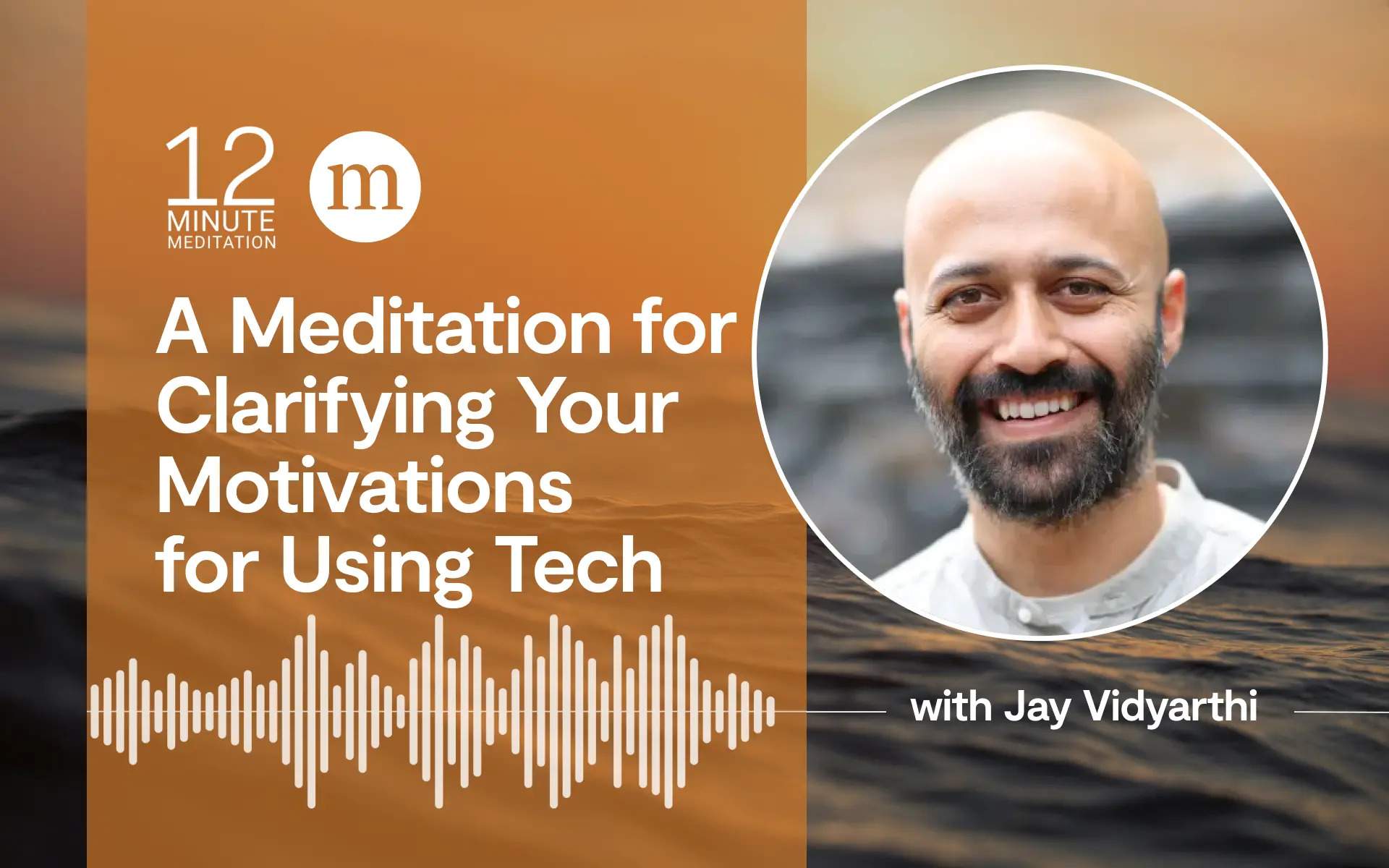
  • A Meditation for Clarifying Your Motivations for Using Tech

    A Meditation for Clarifying Your Motivations for Using Tech

    Your motivations for using tech can also point the way toward developing a healthier relationship with it. In today’s practice, Jay Vidyarthi guides us to identify our motivations and ways to establish more balance and intention in our tech use — without the guilt.

    Recent studies have confirmed that the constant presence and use of tech in our lives has become a hazard to our well-being on multiple levels. Yet it’s not going anywhere—so how do we mindfully hold that tension and seek balance in our relationship to technology?

    Meditation teacher, mindful tech designer, and self-identified tech lover Jay Vidyarthi observes, “It’s okay to enjoy technology. Tech becomes a problem when we get so attached to it that our lives fall out of balance—and this happens because a certain device or app or game or even your work email might satisfy a specific, lacking, healthy emotional need.”

    In today’s practice, Jay leads us through a contemplative practice that can help us dig down and understand our motivations for using tech, while also helping us identify ways to be more intentional about the why, how, and when of our digital consumption.

    A Meditation for Clarifying Your Motivations for Using Tech

    Read and practice the guided meditation script below, pausing after each paragraph. Or listen to the audio practice.

    1. This is going to be a contemplation. So choose whether you want to meditate with your eyes closed in a certain posture or position, or whether you’d rather journal, in which case you can grab a pen or a paper or even type on your computer.
    2. Hit pause on the audio if you need a little bit more space to get settled. There’s never a need to rush into this kind of thing, so try to find a place that’s quiet, maybe even inspiring, for your contemplation or journaling.
    3. When you’re ready, start by thinking or writing about why you personally might be interested in a better relationship with technology. What’s motivating you here? Is it a general feeling? Are there specific patterns you’re trying to change? Are there specific things that have happened that felt off to you that maybe inspired this idea that you needed to work on your relationship with technology? Are there maybe stories you’ve heard in the media or the press about technology and what it might be doing to us? Are there positive experiences that you have with technology where you find joy or meaning or purpose that maybe you want to get more of, or maybe you want to get back to? Maybe those are memories from an earlier incarnation of technology that feels lost.

    Are there positive experiences that you have with technology where you find joy or meaning or purpose that maybe you want to get more of, or maybe you want to get back to?

    1. Consider or write down how a more mindful relationship with technology might positively impact you and the people around you, whether those are family members or friends or roommates or coworkers, or even just the barista at the coffee shop or the clerk at the grocery store.
    2. If you’re having a hard time getting to deeper answers, try asking why over and over again like young children do. It’s a very powerful word. You might start with, Why am I interested in a better relationship with technology? Your mind might answer that with something like, I want to be less stressed. From there you might ask, Why do I want to be less stressed? Maybe your answer is because you want to be more present for the people you care about. You might ask why again, Why do I want to be more present for the people I care about? Keep going with this, and you’ll eventually find yourself at some deeper personal truths.
    3. Now, as you do this, notice if any judgment or shame is coming up. If you’re journaling, you can look back over the page, but if you are contemplating, you can just reflect. If judgment is arising, just let that come and go. So for example, you might ask why and hear your inner voice get self-critical. Like, Why do I want a healthy relationship with technology? Oh, well, because I can’t control myself and I’m addicted and destroying my life with this technology. Our inner voice can go all over the place, as you well know. If that happens, there’s no need to resist it, but don’t give it more energy, either. Try to stay curious and focus on those motivations, those intentions, those answers that feel like they’re encouraging positive growth.
    4. As we approach the end of our session here, see if you can distill what’s come up in this practice into a simple word or phrase. If you’re journaling, you can draw a big line on the page. If you are contemplating, you can clear your palate. Try to find something that captures the essence of what is motivating you, what your intention is to form a more mindful, healthier, better relationship with the technology in your life. Try to be very specific and concise.
    5. Once you have something, commit that to memory or write it down. Then, let go of all the effort that we’ve put into this practice and let’s take a few moments to just be as we are. There’s nothing more to do, yet we’re not yet moving into the next thing. We’re enjoying this transition, this moment of emptiness and non-doing.
    6. When you’re ready, you can gradually open your eyes if they were closed. Have a little stretch or a sip of water, whatever you need. And if you haven’t yet, you can write down the word or phrase you came up with, put that in a visible place, and let that be a reminder of your intention, your motivation, your commitment to an improved relationship with technology. 

    It’s important to remember that this doesn’t necessarily mean only setting boundaries around problematic use patterns. It also means setting yourself up to fully enjoy the parts of technology you enjoy and to find authentic connection online and to allow any meaning or purpose that you get from technology to fully flourish into your life. I hope this was helpful. See you next time.


    Source link

  • Detox Your Mind: How Disconnecting from Technology Can Improve Your Mental Health

    Detox Your Mind: How Disconnecting from Technology Can Improve Your Mental Health

    Detox Your Mind: How Disconnecting from Technology Can Improve Your Mental Health

    In today’s digital age, it’s easy to get caught up in the never-ending stream of notifications, emails, social media updates, and text messages. We’ve become so accustomed to the constant buzz of technology that it’s hard to imagine living without it. However, research suggests that disconnecting from technology can have a significant impact on our mental health. In this article, we’ll explore the benefits of disconnecting from technology and provide tips on how to do it safely and effectively.

    The Risks of Excessive Technology Use

    We’re not suggesting that technology is inherently bad, but excessive use can have serious consequences on our mental health. Here are a few risks to consider:

    • Anxiety and Stress: The constant stream of notifications can be overwhelming, leading to feelings of anxiety and stress.
    • Sleep Disturbances: Exposure to screens and the blue light they emit can suppress melatonin production, leading to difficulty falling asleep and poor sleep quality.
    • Social Isolation: While technology can connect us, it can also isolate us from others. Research has shown that people who spend more time on social media have poorer social skills and are more likely to experience depression.
    • Addiction: The instant gratification and constant notifications can lead to addiction, with some people experiencing withdrawal symptoms when they’re unable to access their devices.

    The Benefits of Disconnecting from Technology

    So, what are the benefits of disconnecting from technology? Here are a few:

    • Reduced Stress and Anxiety: Taking a break from technology can help reduce stress and anxiety levels, giving you a sense of calm and clarity.
    • Improved Sleep: Disconnecting from technology before bed can improve the quality of your sleep, leading to better rest and recovery.
    • Increased Social Connection: Taking a break from technology can help you focus on real-life social connections, strengthening relationships and building new ones.
    • Increased Productivity: Without the constant distractions of technology, you may find that you’re more productive and focused, able to tackle tasks with greater ease.

    How to Detox from Technology

    So, how do you detox from technology? Here are a few tips:

    • Set Boundaries: Establish specific times when you’ll use technology, and stick to those times.
    • Designate Tech-Free Zones: Identify areas in your home or office where technology is not allowed, such as the bedroom or dining table.
    • Find Alternative Activities: Replace technology with other activities, such as reading, exercise, or hobbies.
    • Practice Digital Hygiene: Regularly clean up your digital footprint, deleting unwanted apps, and unsubscribing from unwanted notifications.
    • Take Breaks: Take regular breaks from technology, such as phone-free hours or digital detox days.

    Conclusion

    Disconnecting from technology is not about cutting it out completely, but about finding a healthy balance. Bysetting boundaries, designating tech-free zones, and finding alternative activities, you can improve your mental health and reduce the risks associated with excessive technology use. Remember, it’s not about shunning technology, but about being mindful of its impact on your life.

    FAQs

    Q: How long should I take breaks from technology?
    A: Start with small increments, such as 30 minutes to 1 hour, and gradually increase the time as you become more comfortable.

    Q: What should I do if I need to use technology for work or school?
    A: Set specific times for work or school, and stick to those times. Use technology only during those times, and restrict other uses to non-work hours.

    Q: What about emergencies?
    A: Establish an emergency contact list, and set up alerts for critical situations. This way, you’ll receive notifications without feeling the need to constantly check your device.

    Q: How can I stay connected with others if I’m not on technology?
    A: Schedule regular meetups or phone calls with friends and family. Use technology only for specific, planned interactions, such as video conferencing.

    Q: What about email?
    A: Consider using email filter tools to categorize messages, and check your email only at designated times. Consider using a "batch" system, where you check and respond to multiple messages at once.

    By disconnecting from technology, you can improve your mental health, reduce stress and anxiety, and increase productivity. Remember, it’s not about cutting out technology entirely, but about finding a healthy balance that works for you.

  • Tech is Human Nature: Reframing Your Relationship With Technology

    Tech is Human Nature: Reframing Your Relationship With Technology

    Key Points:

    • Technology is disruptive and distracting, yet it also has many useful roles in our life.
    • Instead of feeling guilty or ashamed for relying on technology, accept tech and learn to use it well.
    • Technology isn’t separate from human nature—it is part of our nature.
    • Clarifying why you want a healthier relationship with tech can help you shift your habits.

    When I first started meditating, I was banging my head against the wall, trying to silence my mind. I was so harsh with myself because I was desperate. I was numb and lost, and I thought that if only I could stop thinking, everything would be bliss. So I gritted my teeth and tried to force my mind to shut up.

    My practice opened up when I gave up on trying so hard to clear my mind. I learned to embrace thoughts as a natural and expected part of the human experience, because they are. Sometimes challenging, sometimes useful, sometimes silly—I accept my thoughts. I let them come and go as if they were clouds passing in the sky. Turns out the idea that thinking is a problem was just another passing thought.

    Many of us get caught in a similar pattern with our tech. In the modern world, trying to completely stop using technology feels a lot like trying to stop thinking. Some inspirational quote from a yoga teacher on social media tells you to “clear your mind,” and not only is that impossible, but it also generates a ton of unnecessary guilt and shame. When more thoughts inevitably come, you beat yourself up for failing. You start to think you’re broken.

    There are technologies out there that respect your attention, and even some that restore it, but they are certainly not the norm. We’re mostly swimming in a cornucopia of mindless, triggering tech that narrows our awareness and erodes our patience.

    The more tech disrupts our lives, the more we blame it for everything. We get desperate for freedom and try to disconnect. But tech is so integrated into modern life that it’s not long before we need to reconnect. The pendulum swings back and forth as we spiral into shame and self-judgment for being so attached to the very devices we depend on.

    Mindfulness is a way out, and acceptance is the first step. 

    A Middle Way with Tech

    Blaming technology for all our problems is the same mistake we make when we try to force ourselves to stop thinking. In the same way meditators learn to befriend their thoughts, we can work gently and gradually toward finding a middle way with technology. It won’t necessarily be easy, but awareness is mysterious, powerful, and always present. Tap into it directly and you just might be able to conquer a few tugs from devious little apps that are trying to manipulate you. If that feels impossible, you may need formal meditation to train up in meta-awareness. If even that feels impossible, it might be time to set boundaries or delete a few apps.

    Certainly, corporations need to design more ethically, scientists need to continue researching the impact on mental health and well-being, and lawmakers need to consider if regulation can help. But in the meantime, you are not powerless. Right here, right now, you can stand up for your right to point your mind in whichever direction you damn well please. Pessimists who claim we are all victims of forces larger than ourselves love to convince everyone they’re realists, but this is a battle being waged in the mundane moments of everyday life. You have choice. Even if you don’t have the power to influence your family, community, organization, or lawmakers, you don’t have to give up on your own mind.

    Whether you choose to put the devices away today, or whether you choose to spend the whole day in front of a screen, there’s nothing to be ashamed of. A little bit of guilt can help you stick to your intentions, but if you’re constantly feeling bad about yourself, there are better ways. It’s easy to drown in guilt when you wake up from a digital trance and realize you’ve spent the whole day online. It’s just as easy to feel guilty for disconnecting, missing messages, or falling behind on social media and news.

    Blaming technology for all our problems is the same mistake we make when we try to force ourselves to stop thinking.

    Is there ever a moment to just . . . not feel guilty? Even when glued to a screen, you are worthy just as you are. No shame necessary. No need to beat up on yourself. Accept the part of you that loves tech and the part that wants to lock it away. While you’re at it, accept your loved ones, even when they ignore you for their screens. No need to harshly punish your kids, or shame other people just for living a modern life. Accept people both younger and older, even if their relationship with tech looks alien to you.

    From this foundation of acceptance, pay close attention to how tech shapes you. Forgive yourself when it captures you, because it most definitely will. See clearly how it happened, and you can get better at seamlessly moving between offline and online worlds without getting stuck. It is possible to live a mindful digital life.

    You don’t have to retreat to the mountains or switch to a dumbphone to find balance. By all means, take an offline day when you need it. Or head off to a retreat center. Hell, go to India and find yourself. I certainly got a lot out of retreating over the years. Time apart from your everyday routine can help you break compulsive habits and find new perspectives. But don’t let the benefits of a temporary digital detox distract you from learning how to use tech well in everyday life.

    What We Forget About Nature

    When we get overwhelmed, we often say we want to “get out in nature” or go on a “nature walk,” but we are just as natural as the birds and the trees. So is the fly buzzing around your garbage can and the mold growing on old fruit. Nature is not somewhere out there. It’s everywhere. So where exactly are we trying to go?

    When we get overwhelmed, we often say we want to “get out in nature” or go on a “nature walk,” but we are just as natural as the birds and the trees. So is the fly buzzing around your garbage can and the mold growing on old fruit. Nature is not somewhere out there. It’s everywhere. So where exactly are we trying to go?

    We think of our modern lives as artificial, but is that really true? For the past two years, in the spring, a robin has built a nest on top of the light fixture beside my front door. Every time we step out of our home, she squawks to protect her hatchlings. My little boy and I love keeping tabs on Mrs. Robinson.

    Inside the house holding up that nest, my family and I cook in a sophisticated kitchen and fiddle with temperature controls. We watch TV, use social media, play video games, and work on laptops. It all feels very different from a nest, but the way we source materials from our natural environment to build these modern lives is not so different from a bird gathering sticks, though certainly on a different scale.

    We think of our modern lives as artificial, but is that really true?

    It can be useful to reframe our technological wonders as natural. We imagine our civilization as somehow removed from the wild world. We love to think we’re special, but you probably accept that you are a part of nature. So why wouldn’t your nest be natural too, just like Mrs. Robinson’s?

    If this feels off, you might be idealizing Mother Nature. Remember, she can be just as destructive as she can be harmonious. There is infinite wonder in the ocean, trees, and skies, but there are also viral infections, natural disasters, and predators killing their prey. When I describe our tech as natural, I’m certainly not saying it’s all good.

    These days, we yell at our kids to put away their phones while lost in our own. We glance to check a text and end up scrolling for hours. We go down rabbit holes on social until we feel inadequate. We skim polarizing headlines until it feels like the world is on fire. We compulsively reply to work emails on our day off.

    Some days we feel more used than user.

    But tech is also beautiful, wonderful, and awe-inspiring. It connects us in ways previously thought impossible. It can bring us so much joy. It can help us be productive and organized. We can express ourselves like never before. I use it to stay in touch and collaborate with people across the planet. I use it to listen to and make music. And yes, I even use it to meditate.

    Tech as Human Nature

    You might love smartphones and the social internet. If that’s you, it can be hard to admit to the problems without getting defensive. Or you might be someone who hates the way your devices interfere with every moment. You might feel like they’re running your life—or worse, ruining your life. You might even notice how they’re causing harm to people you care about. If you’re the type who wants to escape and live on a mountain somewhere, it can be hard to admit how amazing technology can be.

    Accepting tech as part of who we are means acknowledging that it’s not some foreign, alien invader. It’s neither good nor evil. It’s us. Even the AIs that seem more independent than ever before depend on the text and images we feed them. They don’t exist without us. The internet is a powerful extension of our minds. It amplifies our flaws as much as our strengths. To have a better relationship with technology, we need a better relationship with ourselves.

    Accepting tech as part of who we are means acknowledging that it’s not some foreign, alien invader. It’s neither good nor evil. It’s us.

    This is where the issue becomes spiritual.

    Tech isn’t just nature, it’s human nature. And these days, it’s getting exhausting. With our minds constantly plugged in to amplifiers, it’s never been more important to find balance. Our tech mirrors our own values back at us in a distorted way, often causing the opposite effect of what we intend. It isolates us as much as it connects us. It numbs us as much as it inspires us. It bores us as much as it entertains us.

    Sometimes we just want to run away from all the emails, feeds, and desperate pleas to like and subscribe. We want to escape the news. And social media. And online shopping and porn and video games and those group chats where everyone keeps misunderstanding each other. When we say we want to “get out in nature,” what we really mean is that we want to get away from human nature. We want to escape who we are.

    Understandable. Our brains are plugged in to a billion other brains, each having tens of thousands of thoughts per day. Many organize to profit from all this, designing greedy, distracting, stressful apps—weapons of mass distraction. On the other hand, many also work to make the hive mind useful, fun, and powerful. Unfortunately, both sides produce a ton of unintended consequences.

    You Always Have a Choice

    Experts are studying technology’s effects on our mind, trying to regulate its use and establish standards for designing ethical, humane tech. Where does that leave the rest of us? What if you’re not a decision-maker? What if you don’t have any influence on science, government, media, or tech? Do you just have to sit and wait, hoping they figure it out? Of course not.

    Our job is to become aware of how tech affects us and those we care about. We can choose to be better users of technology in everyday life. We can become more discerning about the tech we pay attention to, setting boundaries around apps that exploit us, but also unapologetically delighting in the experiences that bring us joy, improve our lives, and transform us for the better.

    It feels like a big job, especially when compulsive screen time can feel completely out of our control. Tech companies can be manipulative. Unethical decision-makers need to face consequences. Still, there’s no need to give up and wait for someone to save you. With tech constantly demanding our attention and overwhelming us, your well-being is becoming more and more dependent on the quality of your relationship with it. If mindfulness has taught me anything, it’s that you always have a choice in how you relate to whatever you experience.

    A Practice for Tuning In to the Joy of Tech

    When you’ve got a moment to explore, try fully enjoying a technology that makes you happy. It’s so easy to get wrapped up in the idea of what you should and shouldn’t be doing. This little practice is an antidote to that. Let yourself enjoy something!

    1. Choose a technology that brings you joy. It can be hard to stay present with something that changes a lot, so ideally, choose something with a slower pace. For example, if you love stand-up comedy, find a video of a longer performance instead of a bunch of short clips.
    2. Put away all your distractions. Set up your experience by queuing up the tech and putting away anything that might distract you. So if you’re watching a TV show, put your phone and tablet away, and maybe even ask anyone you live with for some privacy.
    3. Enjoy the experience fully. If you want, you can start with a few deep breaths, maybe even with your eyes closed. When you’re ready, start interacting with the tech and see if you can stay present with how it makes you feel. It helps to take it slow. For example, if you’re playing a video game, take your time and notice any feelings, thoughts, or impulses that might arise as you play.
    4. Let go of shame, guilt, and doubt. If any thoughts or feelings come up about how you might be wasting your time, how weird this practice feels, or even your ability to stay aware, let that come and go. No need to resist it, but don’t dive into it either. Stay with your moment-to-moment experience of the technology.
    5. Let positive emotions flow. If any positive thoughts or feelings come up, pay close attention to them and let them flower. So for example, if you’re listening to a podcast and someone says something funny, see if you can fully enjoy that without reservation.
    6. Stop when you’re ready, but no sooner. Some experiences have a natural end, like a TV show. Others you might need to find your own end for, such as browsing a social media feed. In any case, avoid ending the practice at the first moment of resistance. See if you can give it time to run its course. Ride a few ups and downs. When you’re done, turn off your tech and take a moment to breathe, reflect, or meditate before moving on.

    Excerpt from RECLAIM YOUR MIND: Seven Strategies to Enjoy Tech Mindfully by Jay Vidyarthi, published by Still Ape Press (February 2025). Copyright © 2025 by Jay Vidyarthi. Reprinted with the permission of the author.


    Source link

  • How to Build Mindful Social Media Habits in the Age of TikTok—for You and Your Kids

    How to Build Mindful Social Media Habits in the Age of TikTok—for You and Your Kids

    A few years back, I was scrolling through my Instagram feed when I came across an image of Miranda, my childhood best friend. She was on a beautiful white-sand tropical beach, tan and radiant, contorted into an incredible yoga pose. In contrast, I was sitting in my living room, pasty white and deeply bundled against the frigid Maine temps, nearly comatose from tech use. And I noticed something. As I stared at the pic, my throat clenched slightly. My shoulders rose up just a hair. And my stomach dropped. I had a wisp of a thought: Ugh. I wish that was me. This was followed by a cascade of reasons that I was better than her, in a desperate attempt to make myself feel better. 

    What makes this moment notable, even though this yucky feeling had happened a bajillion times while looking at Insta, was a recognition of how that image impacted me. If I think about my technology consumption like a diet, what I just ate left me feeling bloated and heavy—perhaps the equivalent of eating an entire bag of Cheetos. In the past, I might have scrolled on for thirty minutes, continuing with my day and feeling some unnamed uneasiness, but not really noticing or connecting my feelings to anything in particular. This time, though, it was clear as day. This time helped me wake up and ask myself, “Is scrolling through social media healthy for me?” The answer was a resounding no.

    So then I deleted all the apps and never got on social media again. 

    Yeah, right. 

    What is true is that this was the beginning of a long process of really waking up to how my technology use was impacting me. I was able to start noticing when my face felt hot and my muscles clenched because an email triggered me before shooting off a fiery response. I recognized that if I woke up and looked at the news on my phone first thing in the morning, I was extra grouchy toward my family as I got ready to teach school that day.

    Mindfulness basically asks us to take off our judgy pants for a second and really look at our experiences, especially the ones we think we already know.

    On the flip side, my awareness of some of the ways tech really served me grew as well. I was able to notice that I felt empowered by calls to action posted by friends who were promoting social justice. I was grateful for the electronic calendar that reminded me of a forgotten appointment I was supposed to go to in thirty minutes. And especially as we braved the COVID-19 pandemic, I deeply appreciated being able to connect with my students, family, and friends over Zoom.

    Listen, I have an obvious bias here. I believe it is really easy for us as humans to get sucked into mindless technology use, and I think that sometimes makes us feel like crap. I believe there are forces at work that make it hard to put the phone or video controller or computer screen down. And I believe that we do have control over ourselves and our choices, but only if we are paying enough attention to notice what’s going on. 

    Listen to Your Kids

    I want to be clear: This is not just a concern for young people. Though the specifics of the challenges around tech use may be generational, the modern struggle for balance and wellness affects all ages.

    I am a mother of two young kiddos (ages one and four at the time of publication), which means I am grappling with how to best support them in developing their own healthy relationships with technology.

    For now, it is easy because I can just turn off the iPad after one episode or take away the phone after the timer dings. But at some point, I need to transfer that power to them so they can start noticing and making their own choices about the impact their tech use has on them. Of course, they will make mistakes. Of course, I will make mistakes. But I’m hoping, much as I do with my students, that we can figure it out together.

    I encourage you to be vulnerable with the young people in your life. Model owning your struggles. Invite them to share theirs. Sit on the same side of the table and problem-solve together rather than fight. We all want less fighting. Be open to the possibility that you are in this together.

    You can learn a lot just by listening to kids. The world is different from the one we grew up in. I didn’t have a mobile phone or social media until college and a smartphone came well after that. I had an entire childhood before modern tech became a reality. I can’t fully comprehend what it would be like to grow up in a world where my relationships were mediated by technology. The closest I can come is simply listening to young people. One piece of advice that has really stuck with me came from Jeremy, a teen from Virginia, who said, “One of the biggest mistakes I see parents make is they try to relate too much. While both generations have issues, it’s not the same and they don’t fully understand. Parents should just acknowledge the generation gap, and be open to listening and understanding.” 

    So, I encourage you to be vulnerable with the young people in your life. Model owning your struggles. Invite them to share theirs. Sit on the same side of the table and problem-solve together rather than fight. We all want less fighting. Be open to the possibility that you are in this together.

    Create Social Media Habits That Serve You

    Mindfulness basically asks us to take off our judgy pants for a second and really look at our experiences, especially the ones we think we already know. When we fully pay attention, defenses down, hearts open, we can be amazed by how much more there is to learn. By hearts open, I mean we can do this work with care. We can do it because we care . . . about ourselves, about our families and friends, and about the larger community. Acknowledging that we truly do want what is best for all can help us make moves that might not feel easy. Perhaps we create a social justice post to highlight the ways we can better care for one another and this world. Perhaps we put our phones down to really show care to the people we love.

    Close your eyes. Okay, I guess you have to read through this first, but then come back and close your eyes and walk yourself through this exercise.

    1. Imagine yourself waking up on your most perfect day. What does it feel like to be in bed? How do you soak in that moment? Do you stay there for a while to enjoy the restfulness? Are you someone who loves to jump right up and throw on some upbeat music? Whatever those first few moments in your ideal day look like, imagine them.
    1. Afternoon rolls around. What now? Do you go out for a walk? Take a catnap in a sunny patch on the couch? Hit the beach or slopes?
    1. How will you wind down from your day? Watch a movie with your family? Read a book curled up in your beanbag chair? Take a short walk around the block?
    1. When you are ready, come back to the present.

    This is an idealizing exercise. Obviously, we don’t usually have this much control over every moment of the day. We must consider other people’s needs. And we do things—work, errands, exercise, and so on—that may not feel gratifying in the moment but may ultimately serve us. Some life circumstances simply do not allow for us to do all that we wish. But it can be really helpful to know in our bodies what it feels like to live a beautiful day, as well as what factors help create those feelings.

    This exercise is meant to highlight the fact that how you spend your time matters. What you fill your mind with—experiences, content, images—matters. It may be the most important thing to consider. The way we spend each moment ultimately adds up to our lives. If we really want to start being clear about how our tech can best serve us, we need to be very clear about what we want it to serve. Many people grapple with this big question their whole lives: What work, activities, causes, and ways of being in the world make me feel most alive, most connected, and most authentically myself? There will not be a final answer to this question. It will be a lifelong inquiry, and your response will undoubtedly shift as you grow and have new priorities.

    Finding meaning in our lives won’t come just from what we do, but how we show up.

    Finding meaning in our lives won’t come just from what we do, but how we show up. Are we all the way there for those experiences? Or are we distracted? Can we find meaning and contentment even in moments that are not exciting, awe-inspiring, or fun? Our tech habits do not exist in isolation. Sometimes they are a result of some unmet need in our lives. Sometimes our habits result in an unmet need. It helps to figure out what things nourish us and help us to feel most alive. Only then can we really understand how our tech use can support that. 

    You Can Always Begin Again

    The truth is, at least momentarily, it is easier not to try. It is easier not to notice. It is easier to just hop in our tech inner tube and let the tech companies’ brilliant neuroscientists and psychologists whisk us away on a “happy,” tech-fueled river float. It’s easier to let our habits and patterns whisk us away than it is to look at those habits and ask them, “Are you getting me where I want to go? Are you creating the life I want to live?” Sometimes just asking ourselves to pause can feel Herculean. We aren’t used to it. Our habits push us to stick with what we know. Knowing this, perhaps you ask yourself, Can I love the dance? Can I love my humanness? Can I love myself when my actions create sleep deprivation, jealousy, work backlogs, or sadness? Can I fuel my desire to keep coming back with love and care instead of shame?

    If we go into the practice of examining our tech habits by criticizing ourselves, and criticizing others, for not living up to our ideals, we won’t want to keep trying. Lead with love.

    Maybe we notice we have been scrolling for over an hour one day, only to miss noticing the same behavior a week later. Maybe we choose to set a timer when we play video games one day and hop up after thirty minutes to go get some fresh air, only to hole up for a whole weekend playing games a month later. Still, we can begin again.

    And still, we can value ourselves as we fall. We can value ourselves enough to try again. 

    Attention Hijacked: Using Mindfulness to Reclaim Your Brain from Tech by Erica B. Marcus. Text copyright © 2022 by Erica B. Marcus. Reprinted with the permission of Zest Books, a division of Lerner Publishing Group, Inc. All rights reserved. No part of this text excerpt may be used or reproduced in any manner whatsoever without the prior written permission of Lerner Publishing Group, Inc.

    Can We Have Compassionate Tech? 

    Aden Van Noppen, founder of compassionate tech company Mobius, answers our questions about how technology hijacks attention and how we can foster a healthier relationship with our screens.
    Read More 

    • Ava Whitney-Coulter
    • August 16, 2022

    You Can Change Your Life by Loving Yourself 

    Learning to take care of your heart, to accept the pain that comes with seeing the people you love suffer, and to be okay with suffering yourself, is the true work of self-love—and it begins with the breath.
    Read More 

    • Ali Smith, Atman Smith, and Andres Gonzalez
    • June 10, 2024


    Source link