Tag: surge

  • HEALTH ALERT: Houston’s Summer Heat Season Begins With a 329% Surge in ER Visits — And Officials Fear the Worst Is Still Ahead

    HEALTH ALERT: Houston’s Summer Heat Season Begins With a 329% Surge in ER Visits — And Officials Fear the Worst Is Still Ahead

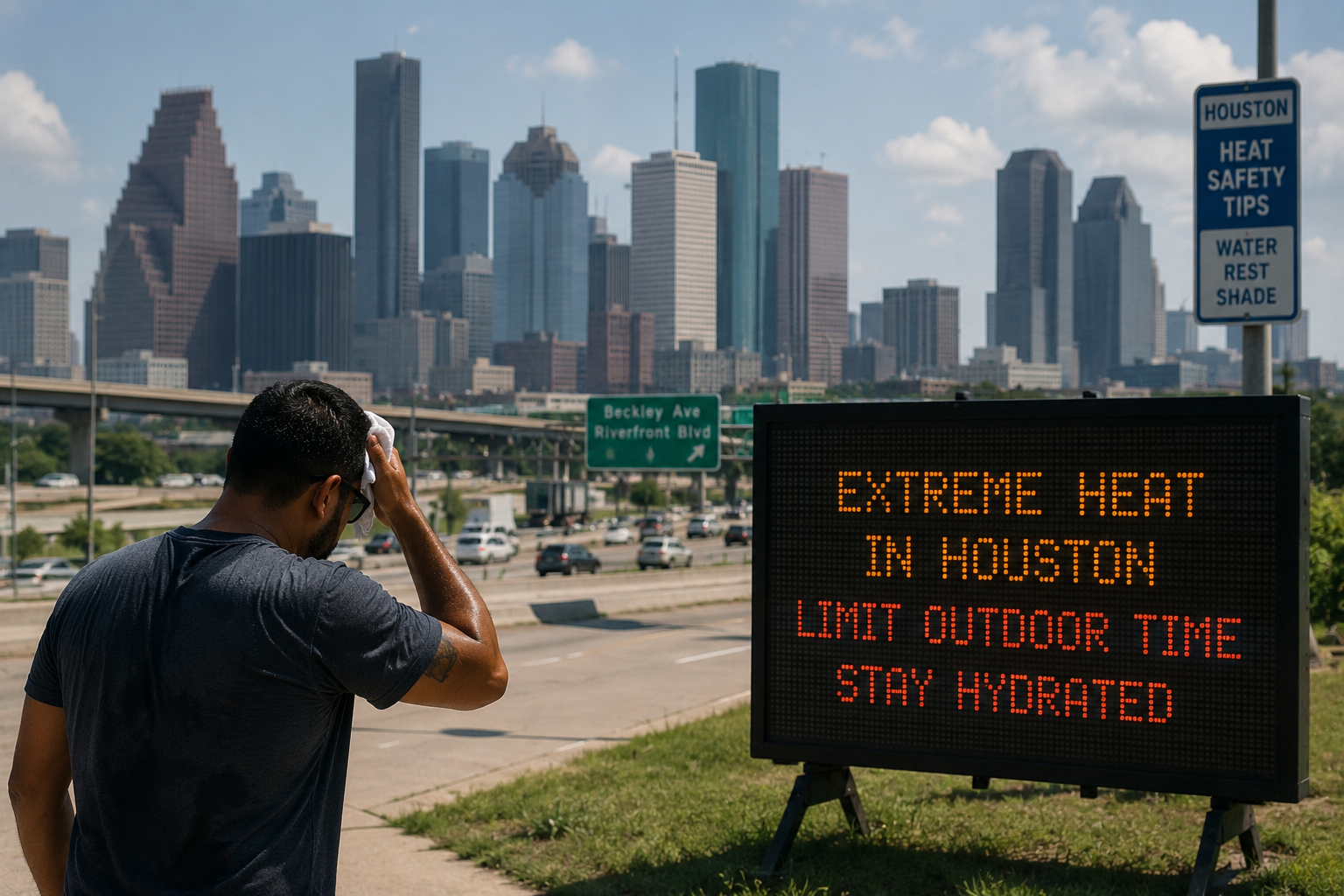
    HOUSTON — As the first days of meteorological summer descend on Southeast Texas, the Houston Health Department (HHD) and Harris County Public Health are bracing for what is shaping up to be another potentially lethal heat season. The numbers are stark: heat-related emergency room visits in Harris County have surged 329% between 2019 and 2023, according to a landmark study by Harris County Public Health. With the 2026 summer just beginning, there is no credible reason to believe that trajectory has reversed.

    The HHD has activated its annual Summer Surveillance program, an interactive dashboard that tracks heat-related illness (HRI) across Harris, Fort Bend, and Montgomery counties on a weekly basis. The dashboard is designed to identify vulnerable populations and trigger protective interventions — but as public health advocates have repeatedly warned, surveillance is only as valuable as the policy response it generates.

    A 329% Increase: What the Data Actually Tells Us

    The Harris County Public Health study, covering 2019 through 2023, is not a projection. It is a documented record of real emergency room visits by real Houstonians who required medical care because of the heat. The 329% jump over four years represents a compounding crisis — one that accelerated dramatically in 2024, when Hurricane Beryl knocked out power for up to 2.7 million customers in the middle of a heatwave. Houston-area hospitals reported about twice their normal ER patient load during that period, with more than 320 patients suffering heat-related illness — roughly triple the seasonal norm.

    The study found that older adults accounted for 39% of heat-related illness cases — a demographic that is disproportionately likely to live alone, to lack air conditioning, or to be unaware they are overheating until it is too late. Workers who labor outdoors — construction workers, landscapers, delivery drivers — represent another heavily affected group, as do children who may be left in vehicles or who lack access to air-conditioned spaces during the day.

    Dr. Jennifer Kiger of Harris County Public Health noted that the correlation between high heat index values — when temperature and humidity combine to reach life-threatening levels — and ER visits is unmistakable. Four of the past five summers in Houston ranked among the top 10 warmest on record. The National Weather Service regularly issues Excessive Heat Warnings for the region when heat indices are expected to exceed 108°F for multiple consecutive days.

    West Nile Virus: The Additional Threat

    Heat is not the only compounding risk this summer. The Texas Department of State Health Services (DSHS) has already confirmed the state’s first West Nile virus case of 2026 in a Harris County resident — diagnosed with neuroinvasive West Nile disease, the most severe and potentially fatal form of the illness. Neuroinvasive West Nile can cause encephalitis (brain swelling), meningitis, and permanent neurological damage. There is no specific treatment or vaccine.

    West Nile spreads through the bite of infected mosquitoes, which thrive in exactly the hot, standing-water conditions that Houston’s summer reliably produces. Flooding from summer storms — a near-annual occurrence — creates breeding grounds for Culex mosquitoes throughout the Houston metro. Public health officials are urging residents to eliminate standing water on their properties, use EPA-registered insect repellents, and wear long sleeves and pants during peak mosquito activity at dusk and dawn.

    The Systemic Problem: Heat Undercounting and Infrastructure Gaps

    Experts believe Texas is significantly undercounting heat-related deaths. Medical examiners frequently list the immediate physiological cause of death — cardiac arrest, organ failure, respiratory collapse — rather than the underlying heat exposure that triggered the cascade. The CDC uses Maricopa County in Arizona as its national model for heat death investigation methodology; Texas counties vary dramatically in their capacity and willingness to code heat as a contributing cause of death, which means the true toll in Houston and across Texas is almost certainly higher than official figures reflect.

    The infrastructure problem is equally acute. After Hurricane Beryl’s 2024 devastation exposed the fragility of CenterPoint Energy’s grid — leaving half a million people without power in triple-digit heat for more than a week — calls for accountability were loud but action was slow. The city’s cooling center network, while improved, remains inadequate for the scale of need: not all centers are open 24 hours, and transportation access to them remains a major barrier for the elderly, the disabled, and the unhoused.

    What Houston Residents Must Do This Summer

    The Houston Health Department’s advice for the 2026 summer heat season is urgent and practical:

    • Never leave children, elderly persons, or pets in parked vehicles — even briefly.

    • Check on elderly neighbors, especially those living alone or without air conditioning.

    • If your home loses power during a heat event, go to a cooling center immediately. Find locations at the Houston Office of Emergency Management website.

    • Drink water consistently throughout the day — do not wait until you feel thirsty, especially during physical activity.

    • Know the signs of heat exhaustion (heavy sweating, weakness, cold/pale/clammy skin, weak pulse, nausea) and heat stroke (hot/red/dry skin, rapid/strong pulse, unconsciousness), which is a medical emergency requiring immediate 911 contact.

    Monitor the Houston Summer Surveillance dashboard at houstonhealth.org for weekly updates on heat-related illness trends across the region.

    Conclusion: Houston Is Running Out of Time to Treat Heat as a Public Health Emergency

    A 329% surge in ER visits in four years is not a weather story. It is a public health emergency with a predictable, data-confirmed trajectory. The city of Houston and Harris County have surveillance tools, a published Summer Surveillance program, and years of mortality data. What has been slower to materialize is the political will and the infrastructure investment to match the scale of the crisis — particularly for the city’s most vulnerable residents, who are disproportionately low-income, elderly, or living without stable housing.

    As June approaches, the window for preparedness is closing. Houston’s emergency rooms deserve more than a summer of predictable overcrowding. The residents who end up in them deserve more than reactive care after a preventable crisis.

    RELATED ON MEDICALDAILY.COM

    Houston’s Deadly Heat Season Is About to Begin — and the City’s ERs Are Already Behind

    • Phoenix Heat Deaths: Maricopa County Confirms First Fatality of 2026

    • West Nile Virus: What You Need to Know This Summer

    • Climate Change and Urban Heat Islands: How American Cities Are Becoming Death Traps

    Source link

  • Alpha Surge

    Alpha Surge

    Product Name: Alpha Surge

    Click here to get Alpha Surge at discounted price while it’s still available…

    All orders are protected by SSL encryption – the highest industry standard for online security from trusted vendors.

    Alpha Surge is backed with a 60 Day No Questions Asked Money Back Guarantee. If within the first 60 days of receipt you are not satisfied with Wake Up Lean™, you can request a refund by sending an email to the address given inside the product and we will immediately refund your entire purchase price, with no questions asked.

    (more…)

  • RFK Jr. Pushes Unproven Measles Treatments Amid Surge; Experts Urge Vaccination

    RFK Jr. Pushes Unproven Measles Treatments Amid Surge; Experts Urge Vaccination

    As measles cases spike in Texas, affecting 159 people, hospitalizing 22, and claiming the life of a school-aged child, U.S. Health Secretary Robert F. Kennedy Jr. expressed “deep concern” about the outbreak while promoting an unconventional treatment protocol.

    “As the Secretary of the U.S. Department of Health and Human Services, I am deeply concerned about the recent measles outbreak,” Kennedy Jr. said in a statement.

    In a Fox News interview, Kennedy Jr. praised measles treatment using vitamin A, the steroid budesonide, the antibiotic clarithromycin, and cod liver oil, claiming they yield “good results.” However, health experts warn that it should not replace vaccination and caution against relying on it entirely.

    Measles is a highly contagious virus that spreads through the air when an infected person coughs or sneezes. It starts with fever, cough, and red, watery eyes before a telltale rash appears. While most cases resolve on their own, complications like pneumonia, blindness, and brain inflammation can be severe, especially for unvaccinated individuals.

    Kennedy Jr. acknowledged that vaccines not only protect individual children from measles but also contribute to community immunity, safeguarding those who cannot be vaccinated for medical reasons. However, in an opinion piece on Fox Nation, Kennedy Jr. said the decision to vaccinate kids will be a personal choice. Meanwhile, he emphasized the importance of good nutrition and the consumption of vitamins such as A, B12, C, D, and E as the “best defense against” chronic and infectious illnesses.

    He also pointed to a 2010 study showing that two doses of vitamin A treatment reduced measles mortality by 62%. The same study found that the measles vaccine is highly effective, with one dose preventing 85–95% of cases and two doses up to 98%.

    Since vaccines remain the only proven way to prevent outbreaks, some doctors worry that promoting unconventional therapies during a surge could undermine vaccination efforts and fuel misinformation online.

    The U.S. Centers for Disease Control and Prevention (CDC) reaffirmed last week that vaccination remains the strongest defense against measles, as no specific antiviral treatment exists. However, the agency acknowledged that supportive care, including vitamin A administration under the guidance of a physician may help in managing the infection.

    “Relying on vitamin A instead of the vaccine is not only dangerous and ineffective, but it puts children at serious risk,” Dr. Sue Kressly, president of the American Academy of Pediatrics, told The Washington Post.

    Experts like Dr. Amesh Adalja, a senior scholar at the Johns Hopkins Center for Health Security believes that supplementation with vitamin A helps in cases where there are deficiencies but it “really doesn’t have much of a role in the current discussion on the West Texas measles epidemic because it becomes a distraction about what we really need to focus on, which is vaccinating our kids.”

    Source link

  • Why Are Heart Attacks More Common On Christmas Day? Doctor Explains Winter Surge And Warning Signs

    Why Are Heart Attacks More Common On Christmas Day? Doctor Explains Winter Surge And Warning Signs

    As the holiday season brings festive cheer and celebration, beware of a secret risk that quietly looms on Christmas Day. Well, it’s not the Grinch stealing decorations, but a life-threatening emergency.

    According to the American Heart Association, heart attacks and strokes spike during the last two weeks of December, and December 25 marks the year’s peak for cardiac events. Dr. Patricia Vassallo, a cardiologist with Northwestern Medicine, explains that the increased risk during the winter months results from a combination of cold weather, holiday stress, and disrupted routines.

    “Cold temperatures cause blood vessels to constrict, which raises blood pressure and makes the heart work harder to pump blood. At the same time, stress around the holidays and disrupted routines — like less sleep, more alcohol and skipped medications — add to the strain. Overexertion from winter chores like shoveling heavy snow can further increase the risk, especially in people with existing heart conditions,” said Dr. Vassallo.

    Holidays may not be the season filled with joy for everyone, it can bring feelings of stress or sadness due to grief of lost loved ones, managing large gatherings, or dealing with complex family dynamics. Emotional and physical stress have a significant effect on heart health, which is why there is a spike in heart attacks and strokes on Monday mornings when stress levels are at the highest, Dr. Vassallo said.

    How to reduce risk:

    Since cold weather, increased stress, and changes in routine are key factors driving the winter surge of cardiac events, Dr. Vassallo recommends following specific tips to reduce the risk.

    1. Dress for the weather: To stay warm in cold conditions, wear layers, and use essential accessories like hats, gloves, and heavy socks.

    2. Come inside often: Spending extended time outdoors in the cold can increase the risk of hypothermia and heart attacks. If you have to spend time outdoors, make sure to take breaks inside to warm up.

    3. Avoid excess alcohol: Although alcohol seems to give a temporary feeling of warmth, it can lower your body’s core temperature and make you more vulnerable to the cold.

    4. Do not shovel for long periods: Shoveling is an activity that puts extra strain on your heart, especially if you have a pre-existing heart condition. It’s important to check with your doctor whether it’s safe for you to shovel or if you should limit the activity.

    5. Wash your hands frequently: Respiratory infections are common in the winter months, and they can increase the risk of heart attacks. Frequent handwashing helps reduce the spread of germs and infections.

    6. Get help: If you experience any new symptoms of a heart condition or your existing symptoms worsen, do not hesitate to seek medical help, even if it’s a holiday.

    Signs To Look out for:

    Knowing the signs of heart attacks and strokes can save lives. It is important to seek immediate medical attention if you notice symptoms like severe chest pain, nausea, dizziness, shortness of breath, pain or numbness in the jaw, back, neck, or shoulders, cold sweat, heartburn, or sudden fatigue.

    Source link