Tag: Self care

  • How To Meditate as an Adult — Even With Noise around you

    How To Meditate as an Adult — Even With Noise around you

    The crack team at How to Adult takes on basic seated meditation. Take 5 minutes and follow the demonstration.

    It takes so much energy to just be sometimes.

    Add in adult responsibilities like work, family, relationships, finances, and worry about the world, and it can all feel like way too much.

    While mindfulness meditation can’t take away the stressors of grown-up life, it can help us regulate our nervous systems, process emotions, improve memory and sleep, and bring clarity in our decision-making. And these are all benefits that can help us at least learn how to adult with a little more peace.

    If you’re curious about starting a practice but aren’t sure where to start, the creators of the How to Adult Youtube channel crafted a five-minute primer on how to meditate. They discuss the benefits, the practice—including some pointers from Mindful on basic seated meditation.

    All you need is five minutes and a chair to follow the demonstration.


    Source link

  • Setting Intentions and How to Manifest Your Deepest Desires

    Setting Intentions and How to Manifest Your Deepest Desires

    If you want to be successful at anything, whether it’s being a more relaxed parent, quitting smoking, or running a marathon, setting an intention—and then concentrating on it mindfully—will give you the focus to help turn your dream into reality. Our culture often uses the terms goal and intention interchangeably. But they actually aren’t the same. In reality, intentions are the things that should be leading the way, and that’s why it’s essential that when you’re setting intentions, you’re aligned with your deepest, truest self.

    Intentions help you stay oriented toward your goal when strong emotions, exhaustion, boredom, or distraction threaten to throw you off course. Intentions connect deeply to your true heart’s desire, to what really matters to you, and use that rudder to set your course forward. 

    An intention isn’t a wish or a fantasy. It isn’t a proclamation of who or how you think you should be. It comes from truly listening to what’s important for you to feel most alive and, well, yourself. 

    Not an intention: I want to lose 25 pounds and fit into my old jeans. 

    Intention: I am listening deeply to my body’s desire to be healthy and active, and my heart’s desire to feel vibrant and whole. 

    We offer ourselves the greatest potential for easing our own suffering.

    Here’s where mindfulness plays an essential role. When we take the time to tune into ourselves, to learn our inner landscape, it’s easier to discern our truth from fantasy. It’s like when you investigate a sudden craving. Is it that your body needs chips right this minute to function, or are you looking for a distraction (a crunchy, salty, flavor-bomb of one) while you nervously await word from your publisher about your manuscript?

    Perhaps what you really want is to have fulfilling, creative, intellectually stimulating work, own a home you love, where friends and family will come to visit and where you have a place to garden, or learn to manage your stress better, and feel more grounded and happy. 

    From this place of deep knowing, you can craft a plan to achieve what you’ve identified. And when you veer off track—you’re tempted by the mind-numbing job because you’re scared no one else will hire you; you contemplate spending all your savings on a trip to Paris; or find yourself (again) stress-eating at 9 p.m.—you have something real and true to anchor you.  

    Saying Yes to Commitment

    Change isn’t easy. But it’s often exactly what’s needed. Knowing what really matters to us, and setting an intention that helps create the circumstances for that desire to flourish, also makes it far easier to commit to changing behavior or habits that keep us from our goal. 

    After mindfully reflecting on my experience with my stepdaughter, I realized that my deepest desire was to have a warmer relationship with her. I set the intention to be loving and warm toward her, as I am with other people I care deeply for. On a recent visit, when I felt myself becoming cranky and brittle, I recalled my intention. In an instant, I saw the extraneous stuff that wasn’t contributing to greater love or warmth but instead lessening my resolve to keep my intention. I recommitted to what I really wanted, not to the random thoughts and feelings that were triggered by, say, my low blood sugar or my petulance. And because it mattered—this is how I want to live—that commitment felt invigorating, and was easy. The rest of the day went beautifully.  

    Two things here speak to the power of intention: When you know what’s important to you, and you intend to honor that, your intention is an alarm that goes off when you forget what really matters. Then you can choose to chart a different way forward.  

    Saying No to Resolutions

    You may want to lose weight, get your real estate license, or be a better listener—but if you don’t know why you want this, you will quickly lose motivation and fall back into your old habits. However, discomfort and resistance are no longer insurmountable obstacles when we know what we really want and recommit to it again and again.

    I’ve never been able to diet. But I have managed to control my diabetes by setting the intention to stay alive through changing the way I eat. I tell people, “I’m not on a diet. I just don’t want to die-yet.” Once I focused on my intention of staying alive, eating healthfully was a breeze. 

    Intention can also, simply, help you align your values with the way you live your life, in ways big and small. Without it, life can feel a bit like a pinball machine, slinging you about, miserable, confused, never satisfied with what you have because you don’t know what you really want. In this way, intention becomes less about making wishes come true; it’s really about honoring who you are. 


    Source link

  • Where To Start When There Is So Much Suffering

    Where To Start When There Is So Much Suffering

    Let’s face it: Things feel incredibly hard right now. Of course, there are always difficulties and challenges, but particularly at this moment, I find myself heartbroken, overwhelmed, and angry more often than usual. Maybe you can relate?

    Perhaps like you, I am at a loss for what to do to address the suffering around me at this time. There is heartbreak, struggle, anger, fear, and despair in our homes, communities, and on the news and social media. Though there are some things we can do and action we can take, often much of this suffering is beyond our capacity to control.

    Self-Compassion Works for Collective Pain, Too

    When it starts to feel like too much to bear, I find myself wondering how to be with it all. How to be with the heartbreak, the suffering, the difficulties inherent in life. In my experience and work, I have found that one of the most helpful ways to navigate these challenges is through self-compassion. 

    Of course, self-compassion is a powerful ally when we are personally experiencing a difficulty. But self-compassion is also a powerful internal resource we can draw on in response to the suffering of others. Even if it is someone we don’t know, our hearts are touched when others are struggling. That is why it is essential to start with ourselves so that we can respond from a place of love and care, rather than fear, despair, frustration, or anger.

    So, what is self-compassion? Imagine if a dear friend was struggling with something, and then consider how you would respond to them. Now, gently turn that care, warmth, and kindness toward yourself; that is self-compassion.

    In the research, self-compassion is shown to have many benefits, including increasing resilience and optimism as well as decreasing anxiety and depression. It helps us hold suffering, both our own and that of others, more spaciously and with tenderness and warmth. The ability to offer ourselves compassion helps buffer the emotional distress that can accompany the empathetic response.

    Though self-compassion doesn’t necessarily fix the problem, it does invite a deeper calm and clarity as we approach it, because we tend to make wiser choices when we feel cared for. Caring for ourselves, especially when things are hard, enhances our capacity to navigate those difficulties and is a skill that we can learn and access readily.

    Practices You Can Try Today

    These practices work to strengthen our awareness and compassion, which can  help us avoid the extremes of being either overwhelmed or numbing out.

    One For Me And One For You:

    Based on the giving and receiving compassion practice from the Mindful Self-Compassion Program, the “one for me and one for you” practice can be tremendously helpful when we are feeling overwhelmed by the suffering of others. With a little repetition, it can even be accessible in the moment when encountering someone who is struggling.

    Bring to mind someone, even a group of people, who you know are suffering. This could be someone you know personally or hear about on the news. Now, check in with yourself and see what would best support you in being with their struggles as much as possible. It could, for example, be patience, calm, strength, or acceptance. Bring your attention to your breath and consciously offer that to yourself on the inhale and gently release on the exhale.

    After a few rounds, and if it feels right for you, you may now consider what they most need—they may have even voiced this need. It may be the same thing you need or something different. Continue to take in for yourself what you need on the inhale and offer them what they need as you exhale. You can even let go of the specific words and simply say to yourself, “One for me, and one for you,” as you continue to focus on your breathing.

    Kind Touch:

    Offering yourself a tender and gentle touch is one of the easiest ways to access self-compassion. Try putting a hand on your heart, holding your own hand, gently touching your cheek, or rubbing your arms like a gentle self-hug. Though it may initially feel awkward, research shows the benefits of this practice. Just as we might reach out to hug a friend or gently touch the arm of someone in need, we can also offer this loving, caring touch to ourselves. This kind touch releases the chemicals that support comfort, care, and connection, giving our body the message that we are safe and cared for in the moment.

    Of Course…Honey Practice:

    This phrase integrates the three aspects of self-compassion—mindfulness, common humanity, and self-kindness—used in the Mindful Self-Compassion Program. When you are struggling with something, you can say to yourself, “Of course, this is hard, honey,” or “Of course, you are scared, honey,” or “Of course you feel sad (angry, overwhelmed…), honey.” Saying the words “of course” as part of this phrase acknowledges our common humanity, that anyone in our circumstances could feel this way. Feeling like this is simply part of being human. Naming the emotion is the mindfulness aspect of the phrase, and using the term ‘honey’ (or another term of endearment) is an expression of self-kindness. I often use this phrase, usually with my hand on my heart, and have found it to be invaluable, especially when caught in a moment of intense reactivity.

    Start Where You Are, and Go From There

    If you are feeling heartbreak, fear, outrage or anything else in response to the depth and breadth of suffering in the world (or in your own life), start right where you are. Take a moment to care for your own heart and mind before responding to the world, which so desperately needs our loving presence.


    Source link

  • Summer Meditation Retreat: 6 Mindfulness Practices for Self-Care

    Summer Meditation Retreat: 6 Mindfulness Practices for Self-Care

    Summary

    • During the summer mindfulness can become an invitation to savor things more completely.
    • Rather than only appreciating the best experiences, savoring every aspect of life allows us to discover the gifts that often hide within unwelcome or challenging moments.
    • Savor the summer with a free collection of 6 guided meditations from expert mindfulness teachers.

    The word “savoring” crops up a lot in instructions for mindful eating, but why stop there? Inspired by that notion, I decided to challenge myself to a week of savoring things. As I started out, I began to see that I was automatically leaving lots of things out—things that were, well, unsavory—so the challenge had to undergo some immediate reengineering. It would have to become about savoring everything. Yikes.

    If I was going to savor the unsavory I would have to be thankful somehow for whatever came my way.

    That immediately led me to the understanding that if I was going to savor the unsavory I would have to be thankful somehow for whatever came my way. I would have to embrace the artificially sweetened (but still valuable) “attitude of gratitude.” It was a bit of a revelation. What I was prepared for was taking time to really enjoy things, in the present moment. What I wasn’t prepared for was how much it would challenge underlying attitudes and assumptions. When the week was over, I came to some conclusions about how savoring can reach into every area of life.

    6 Ways to Savor the Moment

    By Barry Boyce

    1) When things are good…savor the joy

    When things are good, it should be easy to savor them. But it took more effort to savor something I already appreciated than I would have imagined. Joy came in the sudden realization that the body is always in the present, no matter where my thoughts take me, and I can always return to that.

    2) When it’s every kind of bad…savor the resilience

    I can glimpse the fact that pain, whether physical or emotional, is something that lets us know we are alive. And as we try to manage it as best we can, we are humbled, we are vulnerable, we seek help. We find a way. We bounce back. And, as we savor the equanimity, we learn to take the good and the bad.

    3) When it’s boring…savor the freedom

    As we all keep discovering in meditation, we don’t really need to keep ourselves occupied with extra thoughts. It’s peaceful to take a break from that. My savoring challenge helped me learn (once again) to savor the freedom from the need to entertain myself every minute of the day.

    4) When it’s unwieldy…savor the laughter

    When things go haywire, the same tendency we have with hassles—to indulge in some “why me?” time—can easily take over. But, I’m starting to really appreciate the antidote that a meditation teacher friend of mine told me about: Just say “Why not me?”

    5) When you’re alone…savor the space

    In the right doses, being by ourselves can be deeply restorative. It can help us discover a deep reservoir of contentment that does not need to be chased after. That kind of space—a space of awe and wonder and simplicity—is well worth savoring. It may be the most savory treat of all.

    6) When you’re with others…savor the companionship

    The sheer joy of a shared laugh. The moments of listening when you need to be heard. The shoulder to cry on. Someone to share ups and downs, without caring which it is. I’m blessed with friends all over the world, people I can connect with within minutes no matter how long it’s been. Other human beings…what’s not to savor?

    Summer Meditation Retreat: 6 Mindfulness Practices for Self-Care

    Day 1: Connect With Presence

    By Sharon Salzberg

    If we can practice savoring the present moment when we’re sitting in formal meditation, we can also practice while standing in line at the grocery store, sitting anxiously in a doctor’s waiting room, or sitting down for a meal in good company. A portable exercise in meditation is focusing on the sensations of the in- and out-breath. If the breath is not a comfortable place for you, choose another object of attention like the sensation of your hands touching your knees.

    A 10-Minute Breathing Meditation

    This variation of breath meditation can be especially supportive if you feel restless or bored. Savor the freedom to simply let your mind be. It doesn’t matter how many times your attention wanders or how long you may dwell in distraction during this summer meditation. The practice is gently letting go and, with kindness toward yourself, beginning again.

    1. Sit comfortably and relax. Let your attention settle on the feeling of the breath at the nostrils, chest, or abdomen. As you breathe in make the silent mental note “in,” and as you breathe out you can count “one.” This becomes inhale “in,” exhale “one,” inhale “in,” exhale “two,” all the way up to ten. When you get to ten you can begin again.
    2. If your mind becomes distracted, and you lose touch with the breath—that’s OK. You can begin again. Stay connected to the rhythm of the breath with the mental note and the number.
    3. See if your awareness of the breath can be full and complete. Your attention is wholehearted with “in, five,” “in, six,” “in, seven,” all the way through to ten. Each breath is full and complete on its own—with the counting there to support you.
    4. When you feel ready, you can move into the rest of your day.

    A 7-Minute Meditation to Rest Your Attention

    Our habitual tendency is to grasp a thought or a feeling, to build an entire world around it, or push it away and struggle against it. It can be helpful to instead note what is painful, pleasant, or otherwise. Here we stay even, balanced, and calm, as we recognize what arises and bring our attention back, one breath at a time.

    1. Sit comfortably or lie down. Settle in to a comfortable position.
    2. Center your attention on the sensations of the in- and out-breath, at the nostrils, chest, or abdomen. As you feel the sensations of the breath, you can make a mental note of “breath” with the in-breath and then again with the out-breath.
    3. When a thought or feeling arises that’s strong enough to take your attention away from the breath, note it silently as “not breath.” You don’t have to judge yourself; you don’t have to get lost in a thought or elaborate it. Recognize that it’s simply not the breath.
    4. Bring your attention back to the sensations of the breath. Some of your thoughts or feelings may be tender, caring, cruel, or hurtful, but they’re not the breath. You can recognize them, let them go, and bring your attention back to the sensations of the breath.
    5. When you feel ready, come back to your surroundings.

    Day 2: Connect With Yourself

    By Sebene Selassie

    Belonging is the sense of ease and joy we can savor when we are truly present. Often we don’t feel like we belong because we’re caught in feelings of loneliness, anxiety, and doubt. Feelings of not belonging are learned over time and lead us to think that there’s something wrong with us, that we’re not enough, that we don’t belong—but we do. By the very nature of our existence, we belong. Mindfulness helps us remember this by allowing us to experience belonging in any moment.

    A 9-Minute Meditation to Listen to Your Body

    Meditation can help us be more present to life, and mindfulness of body and breath help ground that presence. It’s only when we’re present with each moment that we can savor our experience. This summer meditation invites you to try grounding yourself throughout the day, feeling the body and using the inquiry, “What’s happening in my body right now?”

    1. Find a comfortable posture. You don’t have to do anything special, just make sure that you’re relaxed and alert. Lower your gaze and give yourself the opportunity to go inward.
    2. Bring awareness to the sensations you notice while sitting. It can take some time and practice to feel sensations in the body rather than think about them. Is there a sensation in the body that’s particularly strong or clamoring for attention? It’s OK if you don’t notice anything. Just recognize your experience as it is and see if you can bring a sense of curiosity to it. You can ask yourself, “What’s happening in my body right now?”
    3. Whatever is happening, continue this inquiry. Notice the sensations that are present. When the mind starts to wander, gently bring your awareness back to the body. Again, ask yourself, “What’s happening in my body right now?”
    4. Bring the same curiosity to your breath. If the breath is not a comfortable place for you, continue grounding in sensations of the body. Otherwise, take a moment to connect to the natural rhythm of your breath. Notice your belly rising and falling. You can always ask yourself, “What’s happening in my body right now?”
    5. Know that you can come back to the body at any moment, as you come back to the space around you.

    A 7-Minute Meditation to Welcome Open Awareness

    Open awareness meditation is often associated with the metaphor of the mind being like an open sky. We can observe thoughts, sensations, sounds, but they simply pass like clouds in the sky, or they can flow like a river savor the space between you and what drifts past. The sky is not bothered, the river is not changed, everything is carried by the current of awareness.

    1. Find a comfortable posture. If you like you can gaze down softly at a point in front of you. Allow your body to soften and rest. Feel the connection between your body and the floor or the chair beneath you.
    2. Bring your awareness to the sensations of being right here, right now. Begin to listen to the play of sounds around you. You can notice sounds that are loud or soft, far or near—just listening. You don’t need to name the sound, or follow the sound, just listen in a relaxed and open way. Notice how all sounds arise and vanish as you listen.
    3. Sense that your awareness is expanding to be like the sky—open, clear, vast. Allow your awareness to extend in every direction. Sounds come and go, moving through the sky of your awareness, appearing and disappearing as you rest in this open awareness. You might notice that thoughts and images also arise and vanish. You can let them come and go without resistance or grasping.
    4. Allow the breath or sensations in the body to move like a breeze in this open sky of awareness. Notice that this awareness is naturally clear and spacious. Allow all sounds, thoughts, and sensations, feeling that spaciousness.
    5. As you lift your gaze, pause for a moment to reorient to the space around you.

    Day 3: Connect With Everything

    By Jessica Morey

    We tend to focus our minds on what is wrong or threatening or what could harm us so that we might be better protected through the vagaries of life. But if we allow that bias to run rampant, we risk missing out on what’s beautiful, joyful, and nourishing in our lives. Not to mention, we grow less equipped to cultivate beauty and joy and nourishment in ourselves.

    A 14-Minute Summer Meditation to Appreciate Joy

    Perhaps it seems strange to investigate what we consider to be a positive emotion, but we often miss joy. We don’t pay a lot of attention to it and let it slip by without much notice. The good news is, there are practices to cultivate joy. It can be sparked by something enjoyable, or we can attend to and support joy in our felt experience. One of the great ways to do that is to savor—really stop and savor—what’s beautiful and good in life.

    1. Take a seat or lie down if you’re in a place where you can do that. Take a few deep breaths, lengthening your inhale and your exhale. During these opening breaths, notice how you’re feeling. If you’re feeling tired or drowsy, emphasize the inhale. If you’re feeling agitated or restless, emphasize the exhale. Then allow your breath to come to its natural rhythm.
    2. Now bring to mind recent joyful moments. Alternatively, you could reflect on things you’re grateful for in your life. Choose a few moments of joy and gratitude to focus on.
    3. Reflect on receiving the joy of these experiences. Bring your attention into your body. Notice how you experience joy in this moment. Where do you feel it in your body? The chest, the belly, the throat, the face? What do you notice? Is there a temperature to the joy? Is there a flow or movement to the energy of joy in your body?
    4. If you lose that felt sense of connection, just recall the images, people, or situations that bring you joy. Then return to savoring the felt sense of joy in your body. Breathe into it.
    5. Take a moment to reflect on the people, places, or situations that bring you joy. What were the things that really inspired a felt sense of joy for you? How can you bring more of that into your life?
    6. When you’re ready, bring your attention back to your environment. Take a deep breath. Orient yourself to the space around you and notice how you feel right now.

    A 14-Minute Meditation to Explore What’s True

    Longing is a vulnerable emotion, but it’s also very important. It directs us toward what we want in the world—where we want to go, what we value, what we want to create. When we can stay with the emotion and get to know it on a deeper level, there’s a great deal of wisdom at our disposal. If we can feel into it, be with it, and notice what’s underneath and inside of it, we can then better decide how we want to respond next.

    1. Settle into a comfortable position. You may be seated, or you’re welcome to lie down. Wherever you are, take a few deep breaths. You can cast your gaze down and ahead.
    2. Feel into your body and ask yourself: Is there anything I need right now? Is there anything I’m longing for in this moment? You may want something to be different, or you may be longing for a particular experience. Ask yourself: What do I want? What do I need?
    3. If nothing is emerging for you, bring to mind a recent experience when you really wanted something. Maybe you wanted to be seen or acknowledged; maybe you wanted to connect with a certain person, or you wanted someone to call you or attend to you. Identify a recent experience you had of longing and consider the situation, the people, the place.
    4. Turn your attention toward the felt sense of the wanting. Hold this feeling of wanting, and as you do, see if you can identify what it is that you want—below the particularities. What universal need are you touching upon? Maybe you want respect, ease, joy, or connection.
    5. Consider this question: How could I meet this need? Take a few moments to explore the creative ways this need could be met.
    6. Take a few deep breaths. Feel your body on the chair or on the ground. When you’re ready, lift your gaze.


    Source link

  • A Guided Meditation for Coming Home to Yourself

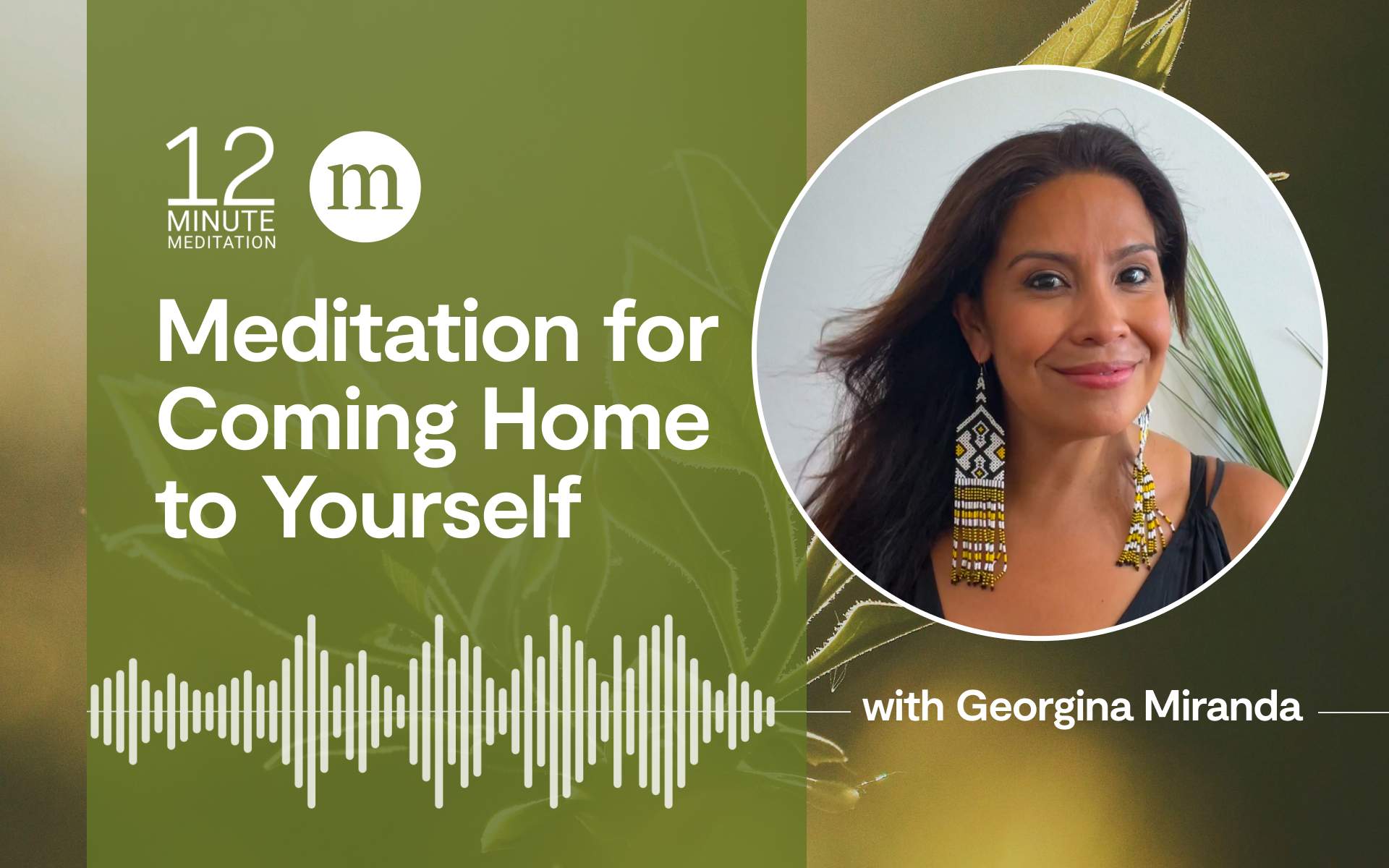
    A Guided Meditation for Coming Home to Yourself

    In this guided practice, Georgina Miranda invites you to pause, reflect, and reconnect with your inner strength.

    This article is independently researched and written by the Mindful editors. However, we may earn revenue or commission if you purchase via links included.


    In a world that constantly pulls us in different directions—from productivity and external validation to endless distractions—coming home to ourselves is one of the most powerful things we can do. True resilience isn’t about pushing through; it’s about creating an inner refuge, a place of strength and safety that stays steady no matter what’s happening around us.

    That’s what we’re exploring in Coming Home to Yourself, a meditation guided by Georgina Miranda. This meditation invites you to pause, reflect, and reconnect with your inner strength. Georgina reminds us that while mindfulness can be a refuge in difficult times, its real power comes from regular practice. This meditation is an opportunity to reset, find stability, and ground yourself in the present moment.

    A Meditation for Coming Home to Yourself with Georgina Miranda

    1. Find a quiet space where you will not be distracted. Take a seat on the floor or on a chair. Keep your spine straight. Place your palms on your lap facing up. Close your eyes or simply lower your gaze. Ease into your seat.
    2. Start connecting with your breath. If your mind is busy, you can count your breaths as above to refocus and slow down. 
    3. Connect with the rhythm of your breath. With each inhale ground yourself a little more into your seat. With each exhale let go of any tension, worries, doubts, or fears that arise. 
    4. As you inhale next, feel the beauty of the breath moving through your body. Connect with a sense of renewal and ease.
    5. As you exhale, release any remaining tension a little bit more, embracing a feeling of lightness come over you. 
    6. As you inhale, softly mentally affirm, “I am safe, I am home.” 
    7. As you exhale, softly mentally affirm, “I am well, and at ease.”
    8. Continue with these affirmations and cycles of breath until you feel a shift within you. Feel your sense of safety, joy, ease, and peace and with each breath come home more to yourself.

    More From Georgina Miranda

    Take back your power, ease your suffering, and create space for growth, renewal, and intentional living with Reset and Let Go: The Freedom to Live Fully, a transformative course by Georgina Miranda. Rooted in mindfulness, self-awareness, and practical tools for transformation, this journey will help you release what no longer serves you, reset your mindset, and embrace the life you truly want to live.


    Source link

  • Self-Care Is an Act of Resistance

    Self-Care Is an Act of Resistance

    Grass-roots meditation activist Shelly Tygielski offers 3 ways to practice self-care so we can recharge, refresh, and rewire for action.

    This article was originally published in November, 2018.


    The day after the 2018 US midterms, after a bitter election season with hard-fought victories, severely-close losses, and some horrific violence in its wake, I found myself thinking back to a program I put together for the Women’s Convention the previous October in Detroit for thousands of impassioned, powerful women. We were all embarking on a journey we knew would be long and hard.

    I called my talk Self-Care Is an Act of Resistance: Shifting the Fight-or-Flight Response to Empathy-or-Action Response and here’s why.

    The main idea is that neither “fighting” nor “fleeing” are sustainable. More than that, they are responses we can move away from, we can evolve beyond. We often hear that our brains are hard-wired for fight-or-flight, that “we evolved this way,” but we know now that we continue to evolve. Our brains can be rewired.

    How can we evolve beyond fight-or-flight? By choosing to move towards two new responses: empathy and action. And I believe this starts with self-care.

    The Power of Empathy and Action

    I woke up the morning after the election to find over 100 messages in my inbox and via text with such a tone of despair. We had all worked hard, but so much more work remains.

    I started to respond, one by one, to the messages reminding everyone that they have PERMISSION to feel this way. It is okay to cry. To be sad. Disappointed. Tired. And in order to not add a secondary layer of emotion to everything we’re feeling— namely, guilt—we all have permission to pause, to reset, to breathe.

    It may feel inappropriate to take time to rest, or to seek out pleasure, or even indulge in some positivity in the midst of our heated social, political, and environmental climate. But I want you all to know that it’s crucial for us to acknowledge the importance of our own self-care and to act upon it. Self-care is not frivolous; self-care is a radical act of love.

    Yes, there is still work to be done. A lot of work to be done. But we don’t need to do it today. Today we can rest. Tomorrow we can rest. And then the next day and the next. We can pre-game for the holidays and think about all that we have to be grateful for, personally, and collectively. And then, those who are ready can rise up, dust off, unravel and lift up the rest of us.

    Self-care is a movement in and of itself.

    It’s a movement of love amidst defeat, of kindness in the face of loss as well as victory. It’s declaring yourself as self-deserving of emotional agency. Self-care is an act of resistance.

    Here are 3 ways to practice self-care today:

    1. Allow yourself to (finally) unplug from the news and social media for a few days. Turn off your alerts and push motivations, turn off the TV and don’t access social media. If you must access it for work or otherwise, limit your time and do not engage or comment on posts. It’s not forever—it’s a few days of peace and being off the grid. 
    2. Recognize when you are in need of self-care and then respond to that need. Sometimes taking time for self-care may impact the lives of those around you (for example, you need to take the day off from work or ask for someone to watch the kids). Inform those around you that you are responding to a personal need but do not feel the need to ask for permission. 
    3.  Have a self-care checklist ready that has dozens of options tailored just for you.  These self-care options can range from scheduling a mid-day call with a friend to drawing a bubble bath. Having this list ready is important because when you are on the verge of burnout, you may not have the capacity to come up with the options in that moment.


    Source link

  • How to Build Mindful Social Media Habits in the Age of TikTok—for You and Your Kids

    How to Build Mindful Social Media Habits in the Age of TikTok—for You and Your Kids

    A few years back, I was scrolling through my Instagram feed when I came across an image of Miranda, my childhood best friend. She was on a beautiful white-sand tropical beach, tan and radiant, contorted into an incredible yoga pose. In contrast, I was sitting in my living room, pasty white and deeply bundled against the frigid Maine temps, nearly comatose from tech use. And I noticed something. As I stared at the pic, my throat clenched slightly. My shoulders rose up just a hair. And my stomach dropped. I had a wisp of a thought: Ugh. I wish that was me. This was followed by a cascade of reasons that I was better than her, in a desperate attempt to make myself feel better. 

    What makes this moment notable, even though this yucky feeling had happened a bajillion times while looking at Insta, was a recognition of how that image impacted me. If I think about my technology consumption like a diet, what I just ate left me feeling bloated and heavy—perhaps the equivalent of eating an entire bag of Cheetos. In the past, I might have scrolled on for thirty minutes, continuing with my day and feeling some unnamed uneasiness, but not really noticing or connecting my feelings to anything in particular. This time, though, it was clear as day. This time helped me wake up and ask myself, “Is scrolling through social media healthy for me?” The answer was a resounding no.

    So then I deleted all the apps and never got on social media again. 

    Yeah, right. 

    What is true is that this was the beginning of a long process of really waking up to how my technology use was impacting me. I was able to start noticing when my face felt hot and my muscles clenched because an email triggered me before shooting off a fiery response. I recognized that if I woke up and looked at the news on my phone first thing in the morning, I was extra grouchy toward my family as I got ready to teach school that day.

    Mindfulness basically asks us to take off our judgy pants for a second and really look at our experiences, especially the ones we think we already know.

    On the flip side, my awareness of some of the ways tech really served me grew as well. I was able to notice that I felt empowered by calls to action posted by friends who were promoting social justice. I was grateful for the electronic calendar that reminded me of a forgotten appointment I was supposed to go to in thirty minutes. And especially as we braved the COVID-19 pandemic, I deeply appreciated being able to connect with my students, family, and friends over Zoom.

    Listen, I have an obvious bias here. I believe it is really easy for us as humans to get sucked into mindless technology use, and I think that sometimes makes us feel like crap. I believe there are forces at work that make it hard to put the phone or video controller or computer screen down. And I believe that we do have control over ourselves and our choices, but only if we are paying enough attention to notice what’s going on. 

    Listen to Your Kids

    I want to be clear: This is not just a concern for young people. Though the specifics of the challenges around tech use may be generational, the modern struggle for balance and wellness affects all ages.

    I am a mother of two young kiddos (ages one and four at the time of publication), which means I am grappling with how to best support them in developing their own healthy relationships with technology.

    For now, it is easy because I can just turn off the iPad after one episode or take away the phone after the timer dings. But at some point, I need to transfer that power to them so they can start noticing and making their own choices about the impact their tech use has on them. Of course, they will make mistakes. Of course, I will make mistakes. But I’m hoping, much as I do with my students, that we can figure it out together.

    I encourage you to be vulnerable with the young people in your life. Model owning your struggles. Invite them to share theirs. Sit on the same side of the table and problem-solve together rather than fight. We all want less fighting. Be open to the possibility that you are in this together.

    You can learn a lot just by listening to kids. The world is different from the one we grew up in. I didn’t have a mobile phone or social media until college and a smartphone came well after that. I had an entire childhood before modern tech became a reality. I can’t fully comprehend what it would be like to grow up in a world where my relationships were mediated by technology. The closest I can come is simply listening to young people. One piece of advice that has really stuck with me came from Jeremy, a teen from Virginia, who said, “One of the biggest mistakes I see parents make is they try to relate too much. While both generations have issues, it’s not the same and they don’t fully understand. Parents should just acknowledge the generation gap, and be open to listening and understanding.” 

    So, I encourage you to be vulnerable with the young people in your life. Model owning your struggles. Invite them to share theirs. Sit on the same side of the table and problem-solve together rather than fight. We all want less fighting. Be open to the possibility that you are in this together.

    Create Social Media Habits That Serve You

    Mindfulness basically asks us to take off our judgy pants for a second and really look at our experiences, especially the ones we think we already know. When we fully pay attention, defenses down, hearts open, we can be amazed by how much more there is to learn. By hearts open, I mean we can do this work with care. We can do it because we care . . . about ourselves, about our families and friends, and about the larger community. Acknowledging that we truly do want what is best for all can help us make moves that might not feel easy. Perhaps we create a social justice post to highlight the ways we can better care for one another and this world. Perhaps we put our phones down to really show care to the people we love.

    Close your eyes. Okay, I guess you have to read through this first, but then come back and close your eyes and walk yourself through this exercise.

    1. Imagine yourself waking up on your most perfect day. What does it feel like to be in bed? How do you soak in that moment? Do you stay there for a while to enjoy the restfulness? Are you someone who loves to jump right up and throw on some upbeat music? Whatever those first few moments in your ideal day look like, imagine them.
    1. Afternoon rolls around. What now? Do you go out for a walk? Take a catnap in a sunny patch on the couch? Hit the beach or slopes?
    1. How will you wind down from your day? Watch a movie with your family? Read a book curled up in your beanbag chair? Take a short walk around the block?
    1. When you are ready, come back to the present.

    This is an idealizing exercise. Obviously, we don’t usually have this much control over every moment of the day. We must consider other people’s needs. And we do things—work, errands, exercise, and so on—that may not feel gratifying in the moment but may ultimately serve us. Some life circumstances simply do not allow for us to do all that we wish. But it can be really helpful to know in our bodies what it feels like to live a beautiful day, as well as what factors help create those feelings.

    This exercise is meant to highlight the fact that how you spend your time matters. What you fill your mind with—experiences, content, images—matters. It may be the most important thing to consider. The way we spend each moment ultimately adds up to our lives. If we really want to start being clear about how our tech can best serve us, we need to be very clear about what we want it to serve. Many people grapple with this big question their whole lives: What work, activities, causes, and ways of being in the world make me feel most alive, most connected, and most authentically myself? There will not be a final answer to this question. It will be a lifelong inquiry, and your response will undoubtedly shift as you grow and have new priorities.

    Finding meaning in our lives won’t come just from what we do, but how we show up.

    Finding meaning in our lives won’t come just from what we do, but how we show up. Are we all the way there for those experiences? Or are we distracted? Can we find meaning and contentment even in moments that are not exciting, awe-inspiring, or fun? Our tech habits do not exist in isolation. Sometimes they are a result of some unmet need in our lives. Sometimes our habits result in an unmet need. It helps to figure out what things nourish us and help us to feel most alive. Only then can we really understand how our tech use can support that. 

    You Can Always Begin Again

    The truth is, at least momentarily, it is easier not to try. It is easier not to notice. It is easier to just hop in our tech inner tube and let the tech companies’ brilliant neuroscientists and psychologists whisk us away on a “happy,” tech-fueled river float. It’s easier to let our habits and patterns whisk us away than it is to look at those habits and ask them, “Are you getting me where I want to go? Are you creating the life I want to live?” Sometimes just asking ourselves to pause can feel Herculean. We aren’t used to it. Our habits push us to stick with what we know. Knowing this, perhaps you ask yourself, Can I love the dance? Can I love my humanness? Can I love myself when my actions create sleep deprivation, jealousy, work backlogs, or sadness? Can I fuel my desire to keep coming back with love and care instead of shame?

    If we go into the practice of examining our tech habits by criticizing ourselves, and criticizing others, for not living up to our ideals, we won’t want to keep trying. Lead with love.

    Maybe we notice we have been scrolling for over an hour one day, only to miss noticing the same behavior a week later. Maybe we choose to set a timer when we play video games one day and hop up after thirty minutes to go get some fresh air, only to hole up for a whole weekend playing games a month later. Still, we can begin again.

    And still, we can value ourselves as we fall. We can value ourselves enough to try again. 

    Attention Hijacked: Using Mindfulness to Reclaim Your Brain from Tech by Erica B. Marcus. Text copyright © 2022 by Erica B. Marcus. Reprinted with the permission of Zest Books, a division of Lerner Publishing Group, Inc. All rights reserved. No part of this text excerpt may be used or reproduced in any manner whatsoever without the prior written permission of Lerner Publishing Group, Inc.

    Can We Have Compassionate Tech? 

    Aden Van Noppen, founder of compassionate tech company Mobius, answers our questions about how technology hijacks attention and how we can foster a healthier relationship with our screens.
    Read More 

    • Ava Whitney-Coulter
    • August 16, 2022

    You Can Change Your Life by Loving Yourself 

    Learning to take care of your heart, to accept the pain that comes with seeing the people you love suffer, and to be okay with suffering yourself, is the true work of self-love—and it begins with the breath.
    Read More 

    • Ali Smith, Atman Smith, and Andres Gonzalez
    • June 10, 2024


    Source link

  • A 12 Minute Meditation to Come Home to Your Heart

    A 12 Minute Meditation to Come Home to Your Heart

    Jenée Johnson welcomes us home to our hearts with a guided meditation to rest, replenish, and renew.

    This is a practice to usher us home for the holidays—“home” meaning to our inner selves, with love and care. In her book, Real Love: The Art of Mindful Connection, Sharon Salzberg says, “awareness and love are qualities we can rely on moment to moment…They protect us during whatever storms or blow outs we undergo.” 

    Awareness and love are qualities we can rely on moment to moment

    Jenée Johnson, mindfulness, health, and racial healing innovator, and the founder of the Right Within Experience, guides us in this seven-minute meditation. We will explore a HeartMath practice called Quick Coherence that helps to synchronize the heart, mind, emotions, and body. This practice can help us work on being present with ourselves in an aware, kind, and loving way to take respite from the storms and renew strength and resilience. 

    A 12-Minute Guided Meditation to Come Home to Your Heart

    1. Please be seated in a relaxed, upright position. Drop your gaze or close your eyes and sit with ease. Take a deep breath in and an audible sigh out.

    2. I invite you to come home to yourself, come home to your own heart. I invite you to acknowledge any sadness, loss, or uncertainty you may be experiencing. Hold it gently, and hold it tenderly. I invite you to acknowledge your discoveries, your hopes and passions. Hold them lightly and with kindness as well. 

    Welcome home. Welcome to our hearts to heal, replenish, rest, and renew.

    3. Focus your attention on the area of the heart. Imagine your breath is flowing in and out of your heart and chest area a little slower and deeper than usual. Inhale to the count of five and exhale to the count of five, or find a rhythm that is comfortable.  If you would like, you can place a hand gently over your heart. This can help you center and invite inner ease and coherence.

    4. Meet yourself in a compassionate and easy way with language like, “I’m so glad you’re here,” “It’s good to be with you.” Stay with slow, deep breaths through the heart or chest area. Rest here.

    5. Now, let’s create an experience of renewal. On the next breath, make a sincere attempt to experience a renewing feeling such as appreciation or care for something or someone in your life. Re-experience the feeling you have for someone you love, a pet, a special place, or an accomplishment.

    6. Simply focus on a feeling of calm or ease. Stay with calm easy breaths through the heart and chest area.

    Welcome home for the holidays. May you have calm in the storms, ease, and grace.

    A Guide to Practicing Self-Care with Mindfulness 

    Making sure our own needs are met is as important as taking care of those we love most. When turning your attention toward yourself feels challenging, there are simple ways to move through the discomfort. Explore our new guide for tips, practices, and reminders on how to engage in self-care.
    Read More 

    • Mindful Staff
    • December 18, 2020


    Source link

  • The Value of Mindfulness Practice: 13 Quotes from Women Leading the Movement

    The Value of Mindfulness Practice: 13 Quotes from Women Leading the Movement

    Earlier this year, the Mindful editorial team had the joy of interviewing 10 women leading the charge to make the world a more kind, connected place for our 2025 edition of the Powerful Women of the Mindfulness Movement feature article. With each conversation, we were inspired by these women’s stories, heartened by their dedication to true compassion, and puzzled over how we were going to fit so much wisdom into such short profiles. Spoiler alert: Despite our best efforts, a lot of great stuff ended up having to be cut. Here, we’re sharing some of their wise words about mindfulness that didn’t make it into the feature, but deserve to be shared. 

    To learn more about The Powerful Women of the Mindfulness Movement: 2025, check out the feature article here, and guided meditations by the women here

    13 Quotes About Mindfulness and Meditation

    1. “I think the absolute superpower of mindfulness is that it’s always available. We can find mindfulness in any moment. We don’t need any equipment.” – Vidyamala Burch

    2. “If you put 50 different brains together in a circle and you look at all of them, they’re all going to be completely different. They’re all going to be thinking and perceiving their environment in individual and unique ways. And they’re all perfect exactly as they are. Same with mindfulness: Every single person who sits down to meditate is doing so through the fabric of their wiring and their brain structure, so it’s going to be different for every single solitary person.” – Sue Hutton

    “Every single person who sits down to meditate is doing so through the fabric of their wiring and their brain structure, so it’s going to be different for every single solitary person.”

    Sue Hutton

    3. “Mindfulness doesn’t have to be all serious, something we only do when we’re stuck or when there’s suffering. We can even play with mindfulness. When we are having a good time, a good conversation, in the good moments when everything is going well for us, we tend to forget about mindfulness.” – Shalini Bahl

    4. “What I understand, through my practice, is that we all get the journeys we’re meant to have.” – Nanea Reeves

    5. “As a pastor, I believe in this process of mindfulness meditation. You have to own your own space, and so it’s not one-size-fits-all. Everybody approaches it differently. Nevertheless, it’s still mindfulness. It’s still meditation, it’s still tuning in, and it’s still allowing yourself to be present with yourself in the moment. You’re not in control of externals, but you do own the process, your own reckoning, your body structure and system.” – Brenda K. Mitchell

    “You have to own your own space, and so it’s not one-size-fits-all. Everybody approaches it differently. Nevertheless, it’s still mindfulness.”

    Brenda K. Mitchell

    6. “The power of contemplative practice is that it makes us observe what we are bringing, and then question that. Not falling to the inflation of, like, ‘All of what we do is right,’ but rather like, ‘Wait a second, is this truly helpful?’ And if not, what needs to change?” – Yuria Celidwen

    7. “Be present. Let go of clinging. Release into flow and love. Breathe in, breathe out. And that’s kind of it, really.” – Vidyamala Burch

    8. “When we are disconnected from the humanity of ourselves, we behave in ways that are less humane, and that paves the way to see others not in their humanity.” – Shelly Harrell

    9. “The more we can bathe ourselves in self-compassion and realize we’re okay exactly as we are, then we can build that strength, and that gives us a little bit more of a foundation to handle the tough stuff.” – Sue Hutton

    10. “Just by sitting in the moment to connect to our breath, to try to shift our mindset to just being grateful for the gift of life—which, you know, a breathing practice will definitely connect you to—even if I don’t feel good about who I am in the world in that moment, the fact that I’m taking that time to approach self-care is an act of self-love.” – Nanea Reeves

    “Who we truly are, what we truly are, has been calling us home.”

    Caverly Morgan 

    11. “What we long for is our very being. We are what we’ve been striving after. Who we truly are, what we truly are, has been calling us home. It’s possible, then, to rest in who you are rather than trying to become who you think you should be. So if you meditate to be a better person or to be more compassionate, you’ll always be busy trying to be a better person or trying to be more compassionate. But if you practice mindfulness because you’re just in love with resting in your own luminous, infinite being, you’ll always be in love.” – Caverly Morgan

    12. “Clearly, within mindfulness, if we really look at the teachings more deeply, interconnectedness is core, but a lot of the teaching front-facing is how it can help you with stress and be more happy and be more individually not attached to the world in some way…There’s a different vibe you can feel when you’re in spaces that are emphasizing things like detachment and bliss.” – Shelly Harrell

    13. “What we call pain is a mixture of all those factors: sensations, resistance, resentment, breath holding, tension, stress, anxiety, fear, all that. And what we can do with mindfulness is we can interrupt that cascade.” – Vidyamala Burch


    Source link

  • 5 Mindful Reasons to Lean In to Self-Love

    5 Mindful Reasons to Lean In to Self-Love

    This article is independently researched and written by the Mindful editors. However, we may earn revenue or commission if you purchase via links included.


    Even today, the idea of loving ourselves often gets a bad rap. Won’t that make me egotistical? we might think, or, Shouldn’t I spend my time and energy caring for others first? Or, we seek love and acceptance exclusively from other people, forgetting that we can always find them within ourselves.

    Both mindfulness teaching and scientific studies show that, far from leading to self-indulgence, a daily practice of self-compassion can have powerful benefits that extend beyond ourselves. As leading Mindful Self-Compassion researcher Kristin Neff writes, “We can learn to embrace ourselves and our lives, despite inner and outer imperfections, and provide ourselves with the strength needed to thrive.”

    Benefits of Self-Love

    With inspiration from our community of mindfulness teachers and experts, we’re sharing five reasons for everyone to cultivate self-love.

    1. Loving yourself supports improved mental health and well-being, as well as positive habit change. Many of us were brought up to think that being kind to ourselves is equivalent to being complacent or lacking the drive to “better” ourselves. Whole sections of the self-help industry have made millions off this assumption that we need “tough love” to force ourselves to change. Fortunately, current research shows that the reverse is true.

    As clinical psychologist and Acceptance and Commitment Therapy trainer Diana Hill shares, “Self-criticism lowers your self-confidence and increases anxiety and depression, undermining your ability to take steps toward change. In contrast, self-compassion motivates you to make healthier decisions and care for yourself.”

    2. Self-love is part of healing from hurt and trauma. Once thought to be a result of living through catastrophic events such as wars or natural disasters, trauma is now more broadly understood by researchers as “normal reactions to abnormal circumstances.” Whether or not a person experiences trauma after going through something difficult depends on a complex set of factors, including available coping mechanisms, access to the resources needed to bounce back, and community response.  

    While it is important that anyone seeking to heal from trauma be supported by a mental health professional, beginning to cultivate self-love is one powerful tool for a healing journey. When we offer ourselves care and compassion, this helps create a sense of inner safety and acceptance, instead of (in many cases) blaming ourselves for something that happened to us. Ali Smith, Atman Smith, and Andres Gonzalez, who work with youth in disadvantaged communities in West Baltimore, summarize this by saying: “Trauma closes all of our hearts. Self-love practices can open them.”

    3. Self-love creates more thoughtful, resilient leaders. All types of leaders risk burning out, whether they are responsible for a committee, a company, or a classroom. Leaders often care so much about the work itself—and about the people they are leading—that they neglect their own well-being. While genuine care for others is a leadership asset, it isn’t sustainable if we never take the time to fill our own cup. 

    CEO and leadership consultant Georgina Miranda suggests several ways that we can incorporate small habits of self-love and self-care into our leadership style: “When the world feels heavy and overwhelming, we can take a pause and ask ourselves: What would actually be helpful in this moment?”

    4. Self-compassion makes us braver, more mindful communicators. Most of us prefer to avoid what Mitch Abblett calls “the muck of difficult interactions—the blame, shame, resentment, and anxiety,” if we have the option. Even if we are willing to talk about the problem, humans are neurologically wired to slip into reactive habits such as blaming, bias, or defensiveness.

    When the time comes for a tough conversation, a foundation of self-love is our ally. Self-compassion practice allows us to stay grounded and present in the moment, so even if things start to get heated, we are able to engage with respect and consideration for all involved. Abblett says, “Bringing more flexible awareness to discomfort seems to open pathways to communication, even when it’s quite challenging.”

    5. Last but not least, loving yourself affirms that you are already enough. One reason we often seek love from others instead of ourselves is that we want someone else’s approval and acceptance–things we often don’t feel we can give to ourselves. We may spend years chasing accomplishments and accolades, and yet still feel unfulfilled. External “wins” are wonderful, but if we can’t accept ourselves as we are, it will never feel like enough. 

    Jenée Johnson offers this reminder that self-compassion empowers us to release perfectionism and realize that we are already worthy of acceptance and love: “You are a unique and perfect expression of life. No one before you and no one after you, is like you. Your journey is composed of experiences and the things you think, do, and pay attention to with consistency. You are enough.”

    Practice Self-Love With Mindful Affirmations

    Meet the Self-Love Affirmations Deck: A collaboration between Mindful and Mindfulness.com that reminds us all to fuel our heart and mind with the deepest kindness.

    Each of the 52 cards in this brand-new deck draws on the time-honored wisdom of mindfulness teachers and traditions, whispering notes of self-love, optimism, and inner courage and strength, so you can take on whatever comes your way.

    Guiding your journey on this path, each card is also embedded with a QR code. Simply scan it with your phone’s camera to access a special collection of 25 guided meditations from beloved teachers, curated specifically to enhance self-kindness and self-care.

    These cards are perfect for those of us who want:

    • Increased self-esteem: Choosing to love yourself, no matter what, can boost your self-worth and confidence, enabling you to approach life’s challenges with a positive and resilient mindset.
    • Reduced anxiety and improved mental well-being: Having a self-compassionate perspective helps in managing stress and anxiety, promoting a sense of inner peace and calm and nurturing emotional balance.
    • Self-care for all: Using Self-Love Affirmations makes it easy to bring mindfulness and self-compassion into your daily life, wherever you are on your journey.
    • Beautiful practice tools: The Self-Love Affirmations cards are created to last and, most importantly, to be enjoyed. Featuring a matte finish, silky smooth texture, and sturdy cardstock, you’ll want to bring them everywhere you go.
    • Versatility in our practice: Ideal for personal reflection or as a meaningful gift, the cards can be used in various settings, including personal meditation, family bonding time, or group activities in educational or professional environments.


    Source link