The treatment of severe gum disease has long faced a fundamental limitation: existing therapies can control infection and inflammation, but they cannot rebuild the bone and tissue that periodontitis destroys. A new biomaterial developed by researchers in Brazil — made from three ingredients that would look more at home in a kitchen than a pharmacy — may be closing that gap simultaneously.
ScienceDaily reported on June 19, 2026 on research published in Polymer Bulletin by scientists at the Pontifical Catholic University of São Paulo (PUC-SP) in Sorocaba, Brazil, led by Professor Eliana Aparecida de Rezende Duek. The team developed a biomaterial combining jackfruit latex, pomegranate peel extract, and simvastatin — a cholesterol-lowering drug — into a mucoadhesive gel that, in early laboratory testing, demonstrated infection control, anti-inflammatory activity, and the ability to promote bone-forming tissue growth within 14 to 21 days.
“We began to view latex extracted from jackfruit as an interesting alternative, as it has adhesive properties,” explained Professor Duek in the FAPESP Agency press release. “This led us to believe that it could remain longer at the site affected by periodontitis, promoting a more targeted release of therapeutic compounds and potentially reducing the need for systemic antibiotic use.”
How the Three-Ingredient Combination Works — and Why Each Component Matters
The biomaterial works through the combined action of three components that address different aspects of the disease process simultaneously — a design principle called multi-modal therapy that is increasingly recognized as essential for treating complex chronic inflammatory conditions.
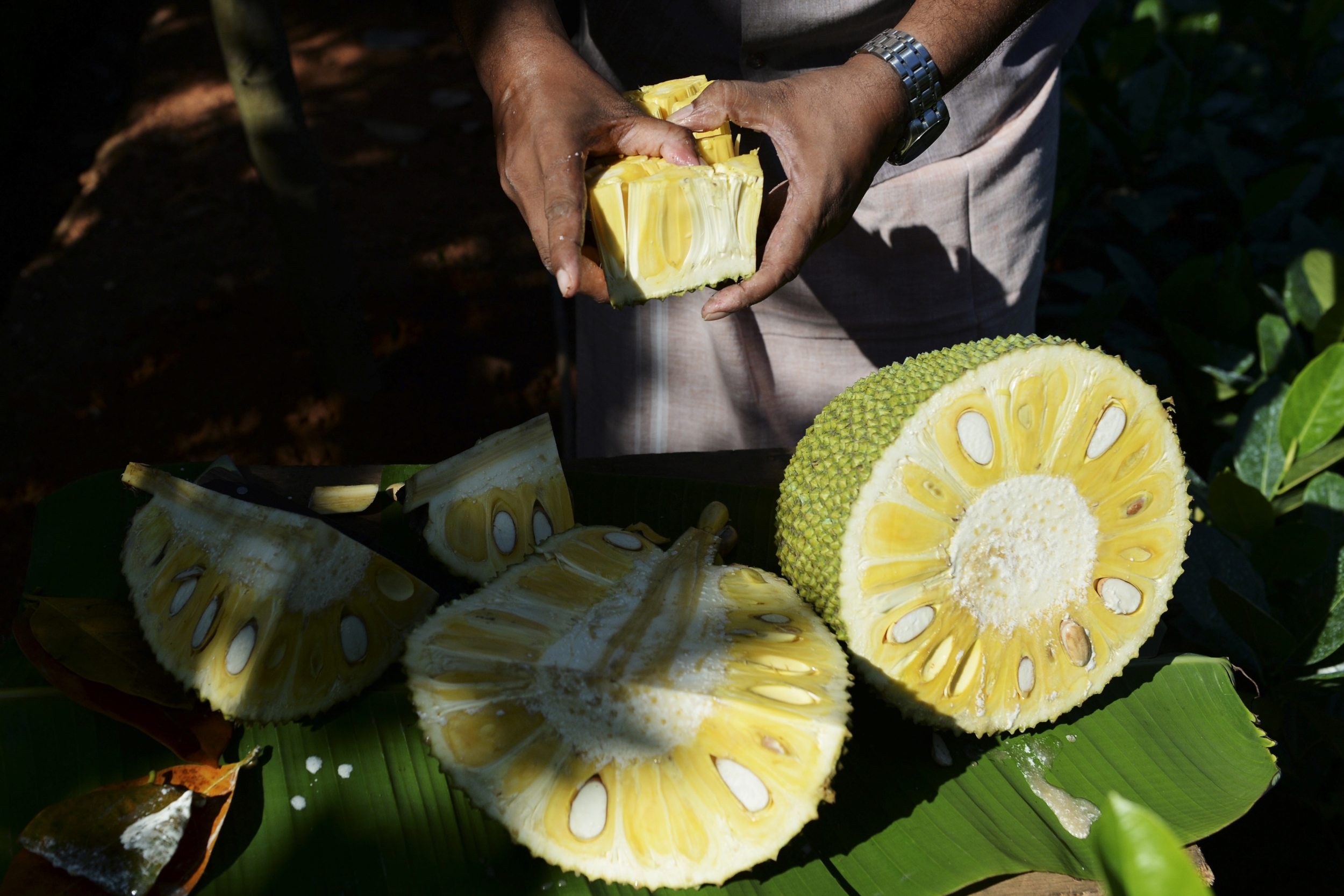
Jackfruit latex — the structural vehicle. Jackfruit (Artocarpus heterophyllus) is the world’s largest tree fruit, widely cultivated across South and Southeast Asia and increasingly in Brazil. When freshly harvested, it produces a natural latex — a sticky, adhesive substance that the PUC-SP team recognized as potentially valuable in periodontal treatment. As Phys.org reported: jackfruit latex has mucoadhesive properties — it can stick to mucous membrane surfaces like gum tissue. This adhesiveness is the delivery mechanism: the gel stays at the treatment site rather than washing away with saliva, allowing a “more targeted release of therapeutic compounds” over time.
Pomegranate peel extract — the antimicrobial. Pomegranate peel extract has documented antimicrobial properties, specifically for topical application against the bacterial pathogens involved in periodontal disease. As Indian Defence Review reported: “Pomegranate extract contributes antimicrobial effects” in the biomaterial. This addresses the infection component of periodontitis — the bacterial accumulation around the gum line that initiates and perpetuates the disease.
Simvastatin — the bone-forming driver. This is the component that most directly addresses the gap in current periodontal treatment. Simvastatin is widely known as a cholesterol-lowering drug, but it has been studied for an additional and less well-known property: it stimulates bone formation. As The Microbiologist reported: “simvastatin, an anti-inflammatory drug that has been studied for its ability to stimulate bone formation.”
When administered orally as a cholesterol drug, simvastatin is predominantly captured by the liver, with only a small fraction reaching the systemic circulation, requiring high doses that carry significant side effects, including acute muscle degeneration (rhabdomyolysis). By delivering simvastatin directly into the periodontal pocket via the jackfruit latex gel, the researchers bypass the liver entirely. The drug acts locally, at the site of bone loss, at the concentrations needed for bone regeneration, without the systemic dose and risk profile of oral administration.
| Jackfruit-Pomegranate Biomaterial — Key Data |
Detail |
| Published in |
Polymer Bulletin, March 9, 2026 |
| DOI |
10.1007/s00289-026-06358-w |
| ScienceDaily coverage |
June 19, 2026 |
| Institution |
PUC-SP (Pontifical Catholic University of São Paulo), Sorocaba, Brazil |
| Lead researcher |
Professor Eliana Aparecida de Rezende Duek (FCMS) |
| Components |
Jackfruit latex + pomegranate peel extract + simvastatin |
| Jackfruit latex role |
Mucoadhesive vehicle — stays at treatment site, enables targeted drug release |
| Pomegranate peel role |
Antimicrobial activity against periodontal pathogens |
| Simvastatin role |
Anti-inflammatory + bone formation stimulation |
| Simvastatin concentrations tested |
0.3%, 0.6%, 1.2% (all safe; none altered gel structure) |
| Osteoinduction (bone-forming activity) |
All three concentrations promoted it within 14 days |
| Effect at 21 days |
Even stronger osteoinductive effect |
| In vitro model |
Human adipose-derived stem cells |
| Advantage of topical simvastatin |
Bypasses liver; acts at site of bone loss without systemic side effects |
| Current periodontitis treatment limitation |
Controls infection and inflammation but does NOT regenerate bone/tissue |
| Periodontitis global prevalence |
~47% of U.S. adults over 30; hundreds of millions worldwide |
What Periodontitis Is — and Why Current Treatments Fail Regeneration
Periodontitis is not simply “gum disease.” It is a chronic inflammatory disease of infectious origin that progressively destroys the supporting structures of the teeth: the periodontal ligament, the alveolar bone, and the cementum that anchors teeth roots. As the disease advances, patients lose the bone that holds their teeth in place — leading to tooth mobility and, eventually, tooth loss.
Periodontitis affects approximately 47% of American adults over 30, with severe disease affecting approximately 9%. According to GB News’ coverage of the research: “Periodontitis affects hundreds of millions of people worldwide and remains a leading cause of tooth loss in adults.”
Current standard treatments — scaling and root planing (deep cleaning to remove bacterial deposits) combined with antimicrobial therapy — are effective at controlling infection and halting further destruction. But they cannot regenerate lost bone. “Current treatments are designed to control infection and inflammation, but they generally do little to regenerate damaged periodontal tissue,” the ScienceDaily summary noted. More advanced techniques, including guided tissue regeneration (using barrier membranes to encourage natural tissue growth) and bone grafting, are available but have “inconsistent and sometimes unpredictable” clinical effects.
A material that simultaneously controls infection, reduces inflammation, AND promotes bone regeneration within 14 days in laboratory conditions — using components that are naturally derived or already clinically approved — represents a meaningful advance over each of these existing approaches, if the results translate to clinical trials.
Limitations and the Path to Clinical Translation
The current research is in vitro — laboratory-based testing using human stem cells and physicochemical analysis. It has not been tested in animal models of periodontitis or in human clinical trials. Clinical translation requires multiple additional steps: animal model efficacy studies, safety profiling, formulation optimization for clinical application, and ultimately clinical trials comparing the biomaterial to existing treatments.
Professor Duek and her team have expressed confidence in the material’s potential: “We observed that the developed biomaterial has great potential for future applications in treating periodontitis and in other areas as well.” The fact that simvastatin is already an FDA-approved drug with a well-established safety profile in humans is an advantage — not for its oral use, but because basic pharmacological safety data already exists, which may reduce some regulatory pathway complexity for the topical application.
Frequently Asked Questions
What is the jackfruit/pomegranate gum disease biomaterial?
A mucoadhesive gel combining jackfruit latex, pomegranate peel extract, and simvastatin developed by PUC-SP researchers in Brazil and published in Polymer Bulletin(March 2026; ScienceDaily June 19, 2026). It sticks to gum tissue at the treatment site, fights infection with pomegranate’s antimicrobial properties, and uses locally delivered simvastatin to stimulate bone formation.
What makes this different from current gum disease treatments?
Current treatments (scaling, root planing, antimicrobials) can control infection and halt disease progression, but cannot rebuild lost bone. The jackfruit biomaterial is designed to do all three simultaneously: fight infection, reduce inflammation, and promote bone-forming tissue growth within 14 days in laboratory tests.
Has this been tested in humans?
Not yet. The current research is in vitro, using human adipose-derived stem cells in laboratory conditions. Animal model studies and clinical trials would be needed before clinical application. The study is a promising proof-of-concept finding, not a clinical treatment.
Why use simvastatin in a gum disease treatment?
Simvastatin is a cholesterol drug with the additional property of stimulating bone formation. When administered directly to the periodontitis site in the biomaterial gel, it bypasses the liver and acts locally at concentrations that promote bone growth — without the systemic side effects (including muscle damage) that can occur with high oral doses.
Why jackfruit latex specifically?
Jackfruit latex is naturally adhesive (mucoadhesive) — it sticks to gum tissue rather than washing away with saliva. This keeps the therapeutic compounds at the treatment site for prolonged local release, potentially reducing the need for systemic antibiotic use.