Tag: Saved

  • The Rare Surgery That Saved Their Lives

    The Rare Surgery That Saved Their Lives

    Born twice? It sounds impossible, but that’s exactly the story of miracle baby Rafferty Isaac in the U.K. At just 20 weeks, he was temporarily removed while in the womb so doctors could perform life-saving surgery on his mother, who had been diagnosed with ovarian cancer. After the complex five-hour procedure, Rafferty was placed back into the womb to finish growing and was “born again” at full term in January.

    Rafferty’s mother, 32-year-old Lucy Isaac, was just 12 weeks pregnant when she received the devastating diagnosis of ovarian cancer. The cancerous cells needed to be removed urgently, as delaying treatment until after childbirth would allow the disease to spread, threatening the life. But by then, Lucy had already entered her second trimester, so doctors ruled out the possibility of performing standard keyhole surgery.

    That’s when a team of surgeons at John Radcliffe Hospital in Oxford proposed a bold, life-saving solution: an extraordinary and rare procedure that involved temporarily removing Lucy’s womb, still carrying her unborn baby, from her abdomen to reach the cancerous cells hidden behind it, before carefully repositioning it to allow her pregnancy to continue. The surgery was risky to both mother and child and was carried out very rarely.

    However, trusting the expertise of her medical team, Lucy agreed to the high-risk surgery in October. During the operation, doctors successfully removed the tumors, which had already progressed to grade two, and began invading the tissues surrounding her ovaries.

    During the procedure, Lucy’s womb was outside for two hours, carefully wrapped in a sterile, warm saline pack to replicate the conditions inside the body and maintain the proper temperature. Throughout the operation, two medics closely monitored the child’s heart rate and temperature to ensure his safety.

    Rafferty’s birth as a healthy, full-term baby in January, weighing 6lb 5oz, was not just a medical triumph but a deeply emotional milestone for the Isaac family. Just two years earlier, Lucy’s husband, Adam, 42, had undergone a kidney transplant. “To finally hold Rafferty in our arms after everything we have been through was the most amazing moment,” Adam told the Daily Mail.

    In the weeks after the delivery, Lucy returned to John Radcliffe Hospital with her miracle baby to express their gratitude to the medical team. “It felt as if I had met him previously. It was a rare and a very emotional experience for me,” said surgeon Hooman Soleymani Majd, who led the team.
    Source link

  • ‘A dietitian saved my life’

    ‘A dietitian saved my life’


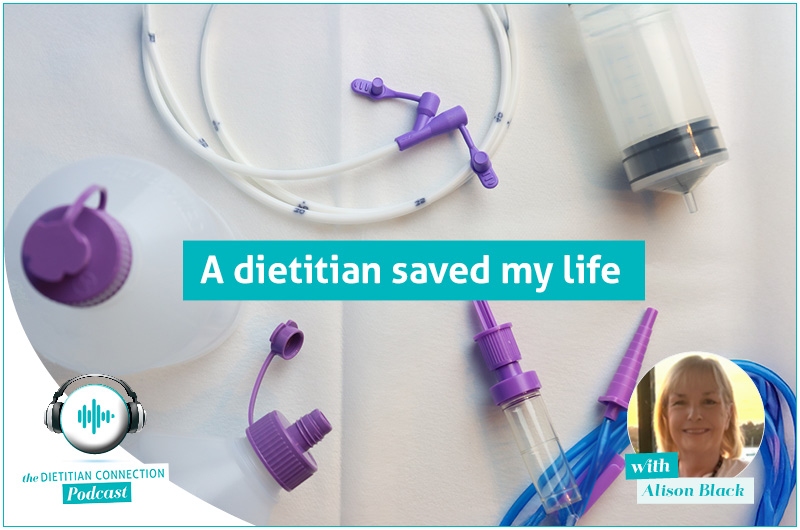
    In this special episode for Feeding Tube Awareness Week, we’re joined by Alison Black, a world-renowned TV producer whose life took a drastic turn after a cancer diagnosis. Alison shares her powerful story of how tube feeding became part of her treatment and the profound impact her dietitian, Nina Bonner, had on her recovery. Feeding Tube Awareness Week is an important opportunity to raise awareness and support those living with feeding tubes. You’ll hear firsthand insights into the emotional and psychological aspects of tube feeding, and learn how dietitians can foster trust and support in these challenging times.

    Hosted by Bec Sparrowhawk 

    Biography

    Alison Black is a Logie-winning television producer behind two groundbreaking Australian documentary series, Choir of Hard Knocks and Changing Minds (ABC). Originally trained as a journalist, she worked in the UK before moving to Australia nearly 20 years ago. Now, she helps companies, charities and individuals refine their branding and messaging, alongside ghostwriting and filming life stories for those with life-limiting illnesses. In 2011, Alison was diagnosed with head and neck cancer. Now cured, she leads a dynamic life running her own business and volunteering at her local hospice.


    In this episode, we discuss:

    • Alison’s journey from TV producer to cancer survivor
    • Navigating the emotional challenges of tube feeding
    • The pivotal role of dietitians in cancer treatment and recovery
    • Trust-building with healthcare providers
    • Three key tips for dietitians working with tube-fed patients
    •  


    Additional resources

    This episode discusses sensitive topics related to body image and disordered eating. If these topics are triggering, please listen with care and we encourage you to seek support from a healthcare professional. For support, visit Butterfly Foundation.

    Click here to learn more about Feeding Tube Awareness Week

    Click here for Dietitians Unite 2025 tickets in Melbourne on 30 May

    The content, products and/or services referred to in this podcast are intended for Health Care Professionals only and are not, and are not intended to be, medical advice, which should be tailored to your individual circumstances. The content is for your information only, and we advise that you exercise your own judgement before deciding to use the information provided. Professional medical advice should be obtained before taking action. The reference to particular products and/or services in this episode does not constitute any form of endorsement. Please see  here  for terms and conditions.


    Source link
  • Pregnant Woman And Baby Saved After Doctors Identify Her Bad Cough, Breathlessness Was Rare Tumor In Chest

    Pregnant Woman And Baby Saved After Doctors Identify Her Bad Cough, Breathlessness Was Rare Tumor In Chest

    MaKenna Lauterbach from Illinois was 36 weeks pregnant when she received the shocking diagnosis of a large tumor in her chest, revealing the real cause of the persistent cough and breathlessness during her pregnancy. The 26-year-old, who was diagnosed with stage 3 melanoma, is now stable and recovering, along with her healthy baby, thanks to the timely intervention and coordinated efforts of a dedicated team of doctors.

    When Lauterbach experienced a bad cough while she was expecting, she knew something was wrong. Simple tasks, like walking to the barn to feed her horses, left her unusually winded, as if she had just run two miles. However, doctors were initially hesitant to perform chest scans due to concerns about radiation exposure.

    When Lauterbach was almost due, the cough worsened to the extent that she started throwing up and had to be hospitalized for shortness of breath. The scans then revealed a grapefruit-sized tumor in her chest, blocking the artery to her right lung.

    By the time Lauterbach received the diagnosis, she was in respiratory distress, the tumor obstructing her airway, putting both her life and her baby’s at risk.

    After being airlifted to the intensive care unit at Northwestern Memorial Hospital in Chicago, her condition worsened, she went into labor, her blood pressure spiked, and the baby began showing signs of distress during contractions.

    “Lauterbach was in real trouble, and we had to act quickly – this wasn’t something that could wait for Monday morning. When you’re pregnant with a baby that’s nearly full-term, your lungs already aren’t functioning at full capacity, and when you add a huge tumor on top of it, you run the risk of having respiratory collapse and cardiac arrest,” said Dr. Lynn Yee, maternal-fetal medicine specialist at Northwestern Medicine in a news release.

    Doctors quickly prepared Lauterbach for extracorporeal life support (ECMO) and performed an emergency C-section, successfully delivering a healthy baby boy.

    “Because of the tumor, the delivery happened so quickly. I was grieving the birth plan I had spent months preparing for, while also dealing with the news of my unexpected diagnosis,” Lauterbach said.

    While her newborn remained in the hospital’s neonatal intensive care unit, doctors performed an advanced bronchoscopy on Lauterbach. The procedure revealed that her tumor was stage 3 melanoma, prompting the medical team to immediately begin developing a treatment plan.

    “Lauterbach’s diagnosis was difficult to make because we weren’t sure if the melanoma started in the chest or somewhere else, and there isn’t much literature or published cases on how to best treat tumors like these, so we had to rely on the expertise that we’ve developed here at Northwestern Medicine,” said Dr. Kalvin Lung, a thoracic surgeon with the Northwestern Medicine Canning Thoracic Institute.

    The medical team decided on surgery to remove the tumor. Before the procedure, Lauterbach was given three cycles of immunotherapy which helped shrink the tumor from 13 centimeters to nine centimeters.

    “We think at some point, Lauterbach had a melanoma on her skin and her own immune system took care of it, but not before a cell or two may have escaped and eventually started growing inside her body,” explained Dr. Sunandana Chandra, medical oncologist with the Robert H. Lurie Comprehensive Cancer Center of Northwestern University at Northwestern Memorial Hospital.

    During the surgery, doctors had to remove her right lung parts of the main pulmonary artery, and lymph nodes. “The tumor was sitting on top of Lauterbach’s heart and extended into the right lung, impacting all three lobes and the entire main trunk of the pulmonary artery, which is why we had to remove the right lung,” said Dr. Lung who conducted the surgery along with Dr. Chris Mehta, a cardiac surgeon with the Northwestern Medicine Bluhm Cardiovascular Institute.

    “It’s extremely rare to see this type of tumor invading into the major blood vessels of the heart. We may see something like this once every few years,” Dr. Mehta added.

    Lauterbach’s latest scans show no evidence of metastatic melanoma, and while her cancer remains stable with no new tumors, she will continue immunotherapy treatments for the next year.

    Source link