Tag: Relationship

  • Conflict Resolution: How to Fight Fair and Strengthen Your Relationship

    Conflict Resolution: How to Fight Fair and Strengthen Your Relationship

    Introduction to Conflict Resolution

    Conflict is an inevitable part of any relationship. Whether it’s a romantic partnership, a friendship, or a family bond, disagreements and misunderstandings are bound to arise. However, it’s not the conflict itself that can damage a relationship, but rather how it’s handled. Learning how to fight fair and resolve conflicts in a healthy and constructive manner can actually strengthen your relationship and bring you closer together. In this article, we’ll explore the importance of conflict resolution, the key principles of fair fighting, and provide tips and strategies for resolving conflicts in a way that benefits your relationship.

    Understanding Conflict and Its Impact on Relationships

    Conflict can arise from a variety of sources, including differences in opinion, misunderstandings, and unmet needs or expectations. When conflicts are not resolved in a healthy and constructive manner, they can lead to feelings of resentment, hurt, and anger, which can ultimately damage the relationship. On the other hand, when conflicts are resolved in a fair and respectful manner, they can actually bring people closer together and strengthen their bond. This is because conflict resolution requires communication, empathy, and understanding, all of which are essential components of a healthy and fulfilling relationship.

    Key Principles of Fair Fighting

    Fair fighting is not about winning or losing, but about resolving conflicts in a way that respects the needs and feelings of both parties. The following are some key principles of fair fighting:

    • Active listening: This involves listening carefully to what the other person is saying, both verbally and non-verbally, and making an effort to understand their perspective.
    • Respect: This involves treating the other person with respect and dignity, even when you disagree with them.
    • Empathy: This involves trying to see things from the other person’s point of view and understanding their feelings and needs.
    • Non-defensiveness: This involves avoiding becoming defensive or dismissive, even when you feel attacked or criticized.
    • Open-mindedness: This involves being willing to consider different perspectives and find a mutually beneficial solution.

    Strategies for Conflict Resolution

    In addition to the key principles of fair fighting, there are several strategies that can help you resolve conflicts in a healthy and constructive manner. These include:

    • Stay calm: It’s essential to remain calm and composed, even when the conversation becomes heated. Take a break if you need to, and come back to the conversation when you’re feeling calmer.
    • Use “I” statements: Instead of blaming or accusing the other person, use “I” statements to express your feelings and needs. This can help prevent defensiveness and promote a more constructive conversation.
    • Focus on the issue, not the person: Avoid making personal attacks or criticisms, and focus on the issue at hand. This can help prevent hurt feelings and promote a more respectful conversation.
    • Seek common ground: Look for areas of agreement and try to find a mutually beneficial solution. This can help you find a compromise that works for both parties.

    Effective Communication in Conflict Resolution

    Effective communication is essential for conflict resolution. This involves not only listening to what the other person is saying, but also expressing yourself clearly and respectfully. The following are some tips for effective communication in conflict resolution:

    • Use clear and simple language: Avoid using jargon or technical terms that the other person may not understand.
    • Be specific: Instead of making general statements, be specific about what you’re feeling and what you need.
    • Avoid assumptions: Don’t assume you know what the other person is thinking or feeling. Instead, ask open-ended questions to clarify their perspective.
    • Show appreciation: Express gratitude and appreciation for the other person’s perspective, even if you don’t agree with it.

    Managing Emotions in Conflict Resolution

    Emotions can run high in conflict situations, and it’s essential to manage them in a healthy and constructive manner. The following are some tips for managing emotions in conflict resolution:

    • Recognize your emotions: Be aware of how you’re feeling and take a step back if you need to.
    • Take a break: If you’re feeling overwhelmed or angry, take a break and come back to the conversation when you’re feeling calmer.
    • Use positive language: Frame your messages in a positive and respectful way, focusing on what you want rather than what you don’t want.
    • Practice empathy: Try to understand how the other person is feeling and show that you care.

    Conclusion

    Conflict resolution is an essential skill for any relationship. By learning how to fight fair and resolve conflicts in a healthy and constructive manner, you can strengthen your relationship and bring you closer together. Remember to stay calm, listen actively, and communicate effectively, and always seek common ground and a mutually beneficial solution. With practice and patience, you can develop the skills you need to resolve conflicts in a way that benefits your relationship and promotes a deeper understanding and connection with your partner.

    FAQs

    Q: What is conflict resolution?

    A: Conflict resolution is the process of resolving disputes or disagreements in a way that respects the needs and feelings of all parties involved.

    Q: Why is conflict resolution important in relationships?

    A: Conflict resolution is essential in relationships because it helps to prevent hurt feelings, resentment, and anger, and promotes a deeper understanding and connection between partners.

    Q: What are the key principles of fair fighting?

    A: The key principles of fair fighting include active listening, respect, empathy, non-defensiveness, and open-mindedness.

    Q: How can I manage my emotions in conflict situations?

    A: You can manage your emotions in conflict situations by recognizing your emotions, taking a break if you need to, using positive language, and practicing empathy.

    Q: What is the most important thing to remember in conflict resolution?

    A: The most important thing to remember in conflict resolution is to stay calm, listen actively, and communicate effectively, and always seek common ground and a mutually beneficial solution.

  • A 12 Minute Meditation on Our Relationship to Thoughts

    A 12 Minute Meditation on Our Relationship to Thoughts

    Meditation teacher Vinny Ferraro offers a practice to notice our relationship to thoughts: to see them clearly as they arise, gently note them, and return to the breath and body.

    The nature of the mind is to make thoughts. All day long, mostly without our even noticing, the mind is generating thousands of thoughts. What is our relationship to thoughts? Not only does the mind have a mind of its own, but, literally, we can have thoughts about not having thoughts. All of this is completely independent of our own doing.

    It’s very easy to villainize thought as some kind of enemy of practice. We get in our heads that if there were no thoughts we would be at peace, but even that’s just another thought.

    It’s very easy to villainize thought as some kind of enemy of practice. We get in our heads that if there were no thoughts we would be at peace, but even that’s just another thought. So, we’ll be using a noting practice, where we practice seeing thoughts clearly as they arise, gently noting them, and returning to the breath and body. If there is no mindfulness of mind, we live in a world completely defined by our thoughts. Here, we let go of that orientation and just see things as they are. We still hear the internal talk, we still see the images, but we know them as phenomena. We see their impermanence.

    If we look, we may see how often our thoughts include judgment, fear, grasping, or just arguing our point of view. When we see how compulsively these thoughts repeat themselves, we begin to understand the circular, repetitive nature of thought. So, this training in awareness is a training in wisdom.

    A Meditation on Our Relationship to Thoughts

    We can’t stop thoughts from arising but we can stop getting lost in them. Here we can see our views, our thoughts, our worries, as only one part of a much larger story. As we begin this session, feel your body and allow yourself to arrive. This is the practice of kind awareness. Allow the breathing to be natural, easy. See if there’s a sense of relief that you don’t have to make anything happen or stop happening.

    Just simply note when thoughts arise. When you notice thoughts arise, gently note: “planning, planning,” or: “judging, judging.” We’re not noting things so that we can change them, we’re just turning toward this phenomenon and noticing thoughts that usually fly under the radar, just like the light little whisper. We don’t usually feel their impact; most of the time, we’re not even aware that they’re there and the next thing you know we’re carried off. So, we don’t want to be lost in the dream of our own mental activity.

    Don’t “quiet” your thoughts. You don’t have to control thoughts or quiet them down; we just want to be aware of them as they arise, because any moment we’re aware of them, we’re not lost in them. You can think about it like we’re sitting in a movie theater, and there are images and voices projected on the screen of the mind, but we’re witnessing this phenomenon instead of being seduced by it. This frees up a lot of our awareness, when we don’t have to chase every thought, so we can see the well-worn patterns of the mind and begin to recognize some of the themes that we’re working with.

    Note thoughts without empowering them. Note thoughts without indulging or empowering or needing to suppress or avoid them. This way, whatever arises is known and allowed to simply pass through. Thought bubbles are touched lightly, their content completely irrelevant—they are just another object.

    Rest in your body. Here we are resting in the body, aware of sensation, watching thoughts come and go, and yet we remain. As things pass through the mind, be open and empty. This is a being, not a doing, so we don’t have any need to search for something to note. But as thoughts are known, gently note them. Lightly touching thoughts, not lost in content, not trying to figure it out, but resting in the witnessing of what is naturally unfolding. The practice is to keep noticing, not by bearing down on thoughts or drilling into them, but by resting in your intuitive awareness and opening up your field of attention to include thoughts. Thoughts are so prevalent, they are a worthy anchor for a meditation.


    Source link

  • The Importance of Intimacy: How to Keep the Spark Alive in Your Relationship

    The Importance of Intimacy: How to Keep the Spark Alive in Your Relationship

    Introduction

    Intimacy is the foundation of any successful relationship. It is the glue that holds couples together, creating a bond that is strong and unbreakable. Intimacy is not just about physical touch, but also about emotional connection, trust, and communication. In today’s fast-paced world, it’s easy to get caught up in our busy lives and neglect our relationships. However, it’s essential to prioritize intimacy and make it a vital part of our daily lives. In this article, we’ll explore the importance of intimacy, how to keep the spark alive in your relationship, and provide tips and advice on how to nurture and strengthen your bond with your partner.

    What is Intimacy?

    Intimacy is a complex and multifaceted concept that encompasses physical, emotional, and spiritual connection with our partner. It’s about feeling comfortable and secure with each other, being able to share our thoughts, feelings, and desires without fear of judgment or rejection. Intimacy is built on trust, respect, and communication, and it’s essential for creating a deep and meaningful connection with our partner. Physical intimacy, such as sex and touch, is an important aspect of any romantic relationship, but it’s not the only component of intimacy. Emotional intimacy, such as sharing our feelings and thoughts, is also crucial for building a strong and lasting bond.

    The Benefits of Intimacy

    Intimacy has numerous benefits for our physical and mental health, as well as our relationships. Some of the benefits of intimacy include:

    • Reduced stress and anxiety
    • Improved mental health and wellbeing
    • Stronger immune system
    • Better sleep quality
    • Increased feelings of happiness and satisfaction
    • Deeper emotional connection with our partner
    • Improved communication and conflict resolution skills
    • Increased intimacy and physical connection

    How to Keep the Spark Alive

    Keeping the spark alive in your relationship requires effort and dedication from both partners. Here are some tips on how to nurture and strengthen your intimacy:

    • Schedule regular date nights: Set aside time for just the two of you, free from distractions and interruptions.
    • Practice emotional intimacy: Share your thoughts, feelings, and desires with your partner, and listen to theirs.
    • Make time for physical touch: Hold hands, give hugs, and cuddle with your partner.
    • Try new things together: Engage in new hobbies, activities, and experiences that bring you both joy and excitement.
    • Communicate openly and honestly: Talk to your partner about your needs, desires, and concerns.
    • Show appreciation and gratitude: Express your love and appreciation for your partner through small gestures and surprises.

    Building Emotional Intimacy

    Emotional intimacy is a crucial component of any romantic relationship. It’s about feeling comfortable and secure with our partner, being able to share our thoughts and feelings without fear of judgment or rejection. Here are some tips on how to build emotional intimacy:

    • Practice active listening: Listen to your partner without interrupting or judging, and show that you’re engaged and interested in what they’re saying.
    • Be vulnerable: Share your thoughts, feelings, and desires with your partner, and be open to their feedback and response.
    • Show empathy and understanding: Put yourself in your partner’s shoes and try to see things from their perspective.
    • Validate each other’s emotions: Recognize and validate each other’s feelings, even if you don’t agree on everything.

    Overcoming Intimacy Challenges

    Every relationship faces challenges and obstacles, and intimacy is no exception. Here are some common intimacy challenges and how to overcome them:

    • Lack of communication: Make time to talk to your partner, and listen to their needs and desires.
    • Trust issues: Work on rebuilding trust by being transparent, honest, and dependable.
    • Physical intimacy issues: Talk to your partner about your needs and desires, and seek professional help if necessary.
    • Emotional disconnection: Make time for emotional intimacy, and practice active listening and empathy.

    Conclusion

    Intimacy is the foundation of any successful relationship. It’s about creating a deep and meaningful connection with our partner, built on trust, respect, and communication. By prioritizing intimacy and making it a vital part of our daily lives, we can strengthen our bond with our partner, improve our physical and mental health, and increase our overall happiness and satisfaction. Remember, intimacy is a two-way street that requires effort and dedication from both partners. By following the tips and advice outlined in this article, you can nurture and strengthen your intimacy, and keep the spark alive in your relationship.

    FAQs

    Q: What is intimacy, and why is it important in a relationship?
    A: Intimacy is a complex and multifaceted concept that encompasses physical, emotional, and spiritual connection with our partner. It’s essential for creating a deep and meaningful connection with our partner, and has numerous benefits for our physical and mental health, as well as our relationships.
    Q: How can I keep the spark alive in my relationship?
    A: Keeping the spark alive in your relationship requires effort and dedication from both partners. Schedule regular date nights, practice emotional intimacy, make time for physical touch, try new things together, communicate openly and honestly, and show appreciation and gratitude.
    Q: What is emotional intimacy, and how can I build it with my partner?
    A: Emotional intimacy is about feeling comfortable and secure with our partner, being able to share our thoughts and feelings without fear of judgment or rejection. Practice active listening, be vulnerable, show empathy and understanding, and validate each other’s emotions.
    Q: How can I overcome intimacy challenges in my relationship?
    A: Every relationship faces challenges and obstacles, and intimacy is no exception. Lack of communication, trust issues, physical intimacy issues, and emotional disconnection are common intimacy challenges. Make time to talk to your partner, work on rebuilding trust, talk to your partner about your needs and desires, and make time for emotional intimacy.
    Q: Is intimacy only about physical touch and sex?
    A: No, intimacy is not just about physical touch and sex. It’s also about emotional connection, trust, and communication. Emotional intimacy is a crucial component of any romantic relationship, and it’s essential for creating a deep and meaningful connection with our partner.

  • Respect and Boundaries: How to Set Healthy Limits in Your Relationship

    Respect and Boundaries: How to Set Healthy Limits in Your Relationship

    Introduction to Respect and Boundaries

    Setting healthy limits in any relationship is crucial for maintaining respect, trust, and understanding between partners. Respect and boundaries are the foundation upon which successful relationships are built, ensuring that both individuals feel valued, heard, and understood. Without these boundaries, relationships can become unhealthy, leading to feelings of resentment, frustration, and even emotional or physical harm. In this article, we will delve into the importance of respect and boundaries, how to communicate them effectively, and why they are essential for a thriving relationship.

    Understanding Respect in Relationships

    Respect is a fundamental aspect of any relationship. It involves valuing and considering the feelings, thoughts, and rights of your partner. When both partners respect each other, they create an environment where open communication, trust, and mutual support can flourish. Respect is not just about grand gestures; it’s also about the small, everyday actions and considerations that show you care about your partner’s well-being and feelings. This can include respecting their time, their decisions, and their personal space.

    Understanding Boundaries in Relationships

    Boundaries are the limits we set for ourselves in relationships to protect our physical, emotional, and mental well-being. They are essential for defining what we are and are not comfortable with in a relationship, helping prevent misunderstandings and conflicts. Healthy boundaries can include limits on personal space, emotional involvement, and physical contact, among others. Setting boundaries is not about building walls or pushing your partner away; it’s about creating a safe and respectful environment where both partners can thrive.

    Communicating Respect and Boundaries

    Effective communication is key to establishing and maintaining respect and boundaries in a relationship. It involves expressing your needs, desires, and limits clearly and respectfully, while also being open to listening to and understanding your partner’s perspective. When communicating your boundaries, it’s essential to be direct, clear, and assertive without being aggressive or passive. Using "I" statements can help express your feelings and thoughts without placing blame on your partner. For example, saying "I feel overwhelmed when you call me multiple times a day. Can we find a better way to stay in touch?" communicates your boundary and your feelings effectively.

    Setting Healthy Limits

    Setting healthy limits in a relationship requires mutual understanding and respect. Here are a few steps to consider:

    1. Identify Your Boundaries: Start by understanding what your limits are. Reflect on what makes you feel uncomfortable or disrespected.
    2. Communicate Your Boundaries: Share your boundaries with your partner in a calm and respectful manner. Use "I" statements to express your feelings.
    3. Listen to Your Partner: Respect and consider your partner’s boundaries and feelings as well. Relationships are about compromise and mutual respect.
    4. Establish Consequences: Discuss and agree on what happens if boundaries are not respected. This can help prevent conflicts and misunderstandings.
    5. Review and Adjust: Boundaries can change over time. Regularly check in with your partner to review and adjust boundaries as needed.

    Maintaining Respect and Boundaries

    Maintaining respect and boundaries over time requires effort and commitment from both partners. Here are a few tips:

    • Practice Active Listening: Always listen to your partner with the intention of understanding their perspective and feelings.
    • Show Appreciation: Regularly show your partner that you value and appreciate them. Small gestures can go a long way in nurturing respect.
    • Respect Privacy: Respect your partner’s need for privacy and personal space.
    • Seek Consent: Always seek consent before engaging in any physical or intimate activity.
    • Address Conflicts: Deal with conflicts as they arise. Unresolved issues can lead to resentment and undermine respect and boundaries.

    Overcoming Challenges

    Setting and maintaining respect and boundaries can come with challenges, especially if one or both partners struggle with asserting their needs or respecting the other’s limits. Here are a few common challenges and how to overcome them:

    • Fear of Rejection: The fear of being rejected or upsetting your partner can hinder your ability to set boundaries. Remember, healthy relationships are built on mutual respect, and setting boundaries is a sign of strength, not weakness.
    • Past Experiences: Traumatic or negative past experiences can make it difficult to set or respect boundaries. Seeking professional help, such as therapy, can provide the tools and support needed to overcome these challenges.
    • Cultural or Societal Pressures: Sometimes, cultural or societal expectations can make it hard to set boundaries, especially around issues like intimacy or personal space. Remember, your relationship and your choices are unique to you and your partner.

    Conclusion

    Respect and boundaries are the cornerstones of a healthy and fulfilling relationship. They ensure that both partners feel valued, respected, and understood, creating a foundation for trust, open communication, and mutual support. By understanding the importance of respect and boundaries, communicating them effectively, and making a commitment to maintain them, couples can build strong, resilient relationships that thrive over time. Remember, relationships are journeys of growth and learning, and respecting and setting boundaries is an ongoing process that requires patience, understanding, and open communication.

    FAQs

    Q: How do I know if my boundaries are being respected in a relationship?

    A: If your boundaries are being respected, you should feel heard, valued, and comfortable in your relationship. You should not feel pressured, coerced, or disrespected. Regular communication with your partner can help clarify if your boundaries are being respected.

    Q: What if my partner doesn’t respect my boundaries?

    A: If your partner consistently disregards your boundaries, it may indicate a deeper issue in the relationship. Communicate your feelings and concerns clearly. If the disregard for boundaries continues, it may be necessary to reevaluate the relationship and consider seeking professional help.

    Q: Can boundaries change over time?

    A: Yes, boundaries can and do change over time as individuals grow and circumstances change. Regularly communicating with your partner and being open to adjusting boundaries is important for maintaining a healthy and respectful relationship.

    Q: How do I set boundaries without hurting my partner’s feelings?

    A: Setting boundaries is about being clear and direct while also being respectful and considerate. Using "I" statements and focusing on your feelings and needs can help set boundaries without blaming or hurting your partner.

    Q: Are boundaries the same as rules?

    A: No, boundaries and rules are not the same. Boundaries are about defining what you are and are not comfortable with in a relationship to protect your well-being. Rules are more about dictating behavior and can be restrictive. Boundaries should be based on mutual respect and understanding.

  • Relationship Rescue: How a Life Coach Can Help You Heal and Grow

    Relationship Rescue: How a Life Coach Can Help You Heal and Grow

    Introduction to Relationship Rescue

    In today’s fast-paced world, relationships can be a significant source of stress, anxiety, and emotional pain. Whether it’s a romantic partnership, a family bond, or a friendship, relationships can be challenging to navigate. When conflicts arise, it’s not uncommon for individuals to feel lost, helpless, and unsure of how to move forward. This is where a life coach can be incredibly beneficial. A life coach can help you rescue your relationship by providing guidance, support, and practical tools to heal and grow. In this article, we’ll explore the ways in which a life coach can help you rescue your relationship and provide you with the skills and knowledge you need to create a more fulfilling and meaningful connection with others.

    Understanding the Role of a Life Coach

    A life coach is a professional who helps individuals identify and achieve their personal and professional goals. They work with clients to uncover their values, passions, and strengths, and develop a plan to overcome obstacles and challenges. When it comes to relationship rescue, a life coach can help you identify the root causes of conflict and develop strategies to improve communication, build trust, and strengthen your bond with others. Life coaches are not therapists, but rather mentors who provide guidance and support to help you achieve your goals.

    Identifying the Signs of a Troubled Relationship

    Before seeking the help of a life coach, it’s essential to recognize the signs of a troubled relationship. These may include:

    • Frequent arguments and conflicts
    • Feeling unheard, unseen, or unappreciated
    • Lack of intimacy or emotional connection
    • Trust issues or feelings of betrayal
    • Difficulty communicating effectively
    • Feeling stuck or stagnant in the relationship

    If you’re experiencing any of these signs, it may be time to seek the help of a life coach. A life coach can help you identify the underlying causes of your relationship problems and develop a plan to address them.

    How a Life Coach Can Help You Heal and Grow

    A life coach can help you heal and grow in several ways:

    • Improved Communication: A life coach can help you develop effective communication skills, including active listening, assertiveness, and conflict resolution. By improving your communication skills, you can better express your needs, desires, and feelings to your partner, which can help to reduce conflict and strengthen your bond.
    • Increased Self-Awareness: A life coach can help you gain a deeper understanding of yourself, including your values, passions, and strengths. By increasing your self-awareness, you can better understand your role in the relationship and make positive changes to improve your interactions with others.
    • Building Trust: A life coach can help you develop strategies to build trust, including setting boundaries, being reliable, and following through on commitments. By building trust, you can create a safer and more secure environment in your relationship, which can help to reduce conflict and improve intimacy.
    • Managing Conflict: A life coach can help you develop strategies to manage conflict, including staying calm, listening actively, and seeking common ground. By managing conflict effectively, you can reduce the stress and anxiety associated with arguments and improve your overall relationship satisfaction.

    The Benefits of Working with a Life Coach

    Working with a life coach can have numerous benefits, including:

    • Improved Relationship Satisfaction: By developing effective communication skills, building trust, and managing conflict, you can improve your overall relationship satisfaction and create a more fulfilling and meaningful connection with others.
    • Increased Confidence: A life coach can help you develop the confidence you need to express yourself effectively, set boundaries, and advocate for your needs and desires.
    • Better Stress Management: A life coach can help you develop strategies to manage stress and anxiety, which can help to reduce conflict and improve your overall well-being.
    • Greater Self-Awareness: By working with a life coach, you can gain a deeper understanding of yourself, including your values, passions, and strengths, which can help you make positive changes in your life and improve your relationships.

    What to Expect from a Life Coaching Session

    If you’re considering working with a life coach, it’s essential to understand what to expect from a coaching session. A typical coaching session may include:

    • Introduction and Goal Setting: The life coach will introduce themselves, explain the coaching process, and help you set goals for your relationship.
    • Exploring Your Relationship: The life coach will ask you questions about your relationship, including your history, challenges, and desires.
    • Identifying Patterns and Challenges: The life coach will help you identify patterns and challenges in your relationship, including communication styles, conflict management, and trust issues.
    • Developing Strategies and Solutions: The life coach will work with you to develop strategies and solutions to address the challenges and patterns you’ve identified.
    • Accountability and Support: The life coach will provide you with accountability and support to help you stay on track and achieve your goals.

    Choosing the Right Life Coach

    When choosing a life coach, it’s essential to consider several factors, including:

    • Experience and Qualifications: Look for a life coach with experience working with clients on relationship issues and qualifications in coaching, psychology, or a related field.
    • Personal Connection: Choose a life coach with whom you feel a personal connection, including a sense of trust, empathy, and understanding.
    • Coaching Style: Consider the coaching style of the life coach, including their approach to communication, conflict resolution, and goal setting.
    • Reviews and Testimonials: Read reviews and testimonials from previous clients to get a sense of the life coach’s effectiveness and success rate.

    Conclusion

    Relationship rescue is possible with the help of a life coach. By providing guidance, support, and practical tools, a life coach can help you heal and grow, improving your communication skills, building trust, and managing conflict. When choosing a life coach, consider their experience, qualifications, personal connection, coaching style, and reviews. With the right life coach, you can create a more fulfilling and meaningful connection with others and achieve your relationship goals.

    FAQs

    Q: What is a life coach, and how can they help me with my relationship?
    A: A life coach is a professional who helps individuals identify and achieve their personal and professional goals. They can help you with your relationship by providing guidance, support, and practical tools to improve communication, build trust, and manage conflict.
    Q: How do I know if I need a life coach?
    A: If you’re experiencing challenges in your relationship, including frequent arguments, feeling unheard or unappreciated, or difficulty communicating effectively, it may be time to seek the help of a life coach.
    Q: What can I expect from a life coaching session?
    A: A typical coaching session may include introduction and goal setting, exploring your relationship, identifying patterns and challenges, developing strategies and solutions, and accountability and support.
    Q: How do I choose the right life coach?
    A: Consider the life coach’s experience, qualifications, personal connection, coaching style, and reviews when choosing the right coach for you.
    Q: Can a life coach guarantee success in my relationship?
    A: While a life coach can provide guidance and support, they cannot guarantee success in your relationship. Success depends on your willingness to work on your relationship and make positive changes.

  • The Power of Emotional Intelligence: How to Recognize and Manage Your Emotions in Your Relationship

    The Power of Emotional Intelligence: How to Recognize and Manage Your Emotions in Your Relationship

    The Power of Emotional Intelligence: How to Recognize and Manage Your Emotions in Your Relationship

    Emotional intelligence is the ability to recognize and understand emotions in yourself and others, and to use this awareness to guide your thoughts and actions. In the context of a romantic relationship, emotional intelligence is essential for building a strong and healthy bond with your partner. When both partners possess high emotional intelligence, they can better communicate, navigate conflicts, and connect on a deeper level.

    Recognizing Your Emotions

    The first step in developing emotional intelligence is to become aware of your own emotions. This may seem simple, but it is often overlooked. Many people are not conscious of their emotions, and as a result, they may act impulsively or react to their emotions without fully understanding what they are feeling. To recognize your emotions, take time to reflect on how you feel. Ask yourself:

    • What am I feeling right now?
    • Is this emotion based on fact or perception?
    • How am I reacting to this emotion?

    By taking the time to identify and label your emotions, you can better understand what you are feeling and why. This can help you to respond more thoughtfully to situations, rather than reacting impulsively.

    Understanding Your Partner’s Emotions

    In addition to recognizing your own emotions, it is essential to understand your partner’s emotions as well. This can be challenging, as everyone experiences and expresses emotions differently. However, by actively listening to your partner and seeking to understand their perspective, you can build a deeper connection and improve communication. To better understand your partner’s emotions, try the following:

    • Ask open-ended questions: Instead of asking yes or no questions, ask open-ended questions that encourage your partner to share their thoughts and feelings.
    • Listen actively: When your partner is speaking, make sure to listen actively, avoiding interrupting or dismissing their feelings.
    • Seek clarification: If you don’t understand something, ask for clarification. Avoid making assumptions or jumping to conclusions.

    Managing Your Emotions in Your Relationship

    Once you are aware of your emotions and have an understanding of your partner’s emotions, it’s time to learn how to manage them. Emotional intelligence is not just about recognizing and understanding emotions, but also about managing them in a healthy way. Here are some tips for managing your emotions in your relationship:

    • Take a step back: When feelings are running high, take a step back and breathe. This can help to calm down and clear your head.
    • Communicate openly: Share your feelings and concerns with your partner, but do so in a respectful and non-accusatory way.
    • Practice empathy: Put yourself in your partner’s shoes and try to understand their perspective. This can help to diffuse tension and build a deeper connection.
    • Use "I" statements: Instead of saying "you always" or "you never," use "I" statements to express your feelings and needs.

    Benefits of Emotional Intelligence in Your Relationship

    Developing emotional intelligence in your relationship can have numerous benefits. Some of the advantages of emotional intelligence in your relationship include:

    • Improved communication: When both partners are emotionally intelligent, they can better communicate, reducing conflicts and misunderstandings.
    • Deeper connection: By understanding and accepting each other’s emotions, couples can build a deeper, more intimate connection.
    • Conflict resolution: Emotional intelligence can help couples resolve conflicts more effectively, leading to a stronger and more resilient relationship.
    • Increased empathy: When both partners are emotionally intelligent, they can better understand and support each other, leading to a more compassionate and supportive relationship.

    Conclusion

    Emotional intelligence is a powerful tool for building a strong and healthy romantic relationship. By recognizing and managing your emotions, as well as understanding and supporting your partner’s emotions, you can create a deeper and more meaningful connection. Remember, emotional intelligence is not a natural talent, but rather a skill that can be developed through practice and effort. By incorporating the tips and strategies outlined in this article, you can cultivate a more emotionally intelligent relationship and build a stronger, more resilient bond with your partner.

    FAQs

    Q: What is emotional intelligence?
    A: Emotional intelligence is the ability to recognize and understand emotions in yourself and others, and to use this awareness to guide your thoughts and actions.

    Q: Can emotional intelligence be developed?
    A: Yes, emotional intelligence is not a natural talent, but rather a skill that can be developed through practice and effort.

    Q: How do I improve my emotional intelligence?
    A: To improve your emotional intelligence, take time to reflect on your own emotions, practice active listening, and learn to manage your emotions in a healthy way.

    Q: What are some common benefits of emotional intelligence in a relationship?
    A: Emotional intelligence can improve communication, build a deeper connection, facilitate conflict resolution, and increase empathy in a relationship.

  • Tech is Human Nature: Reframing Your Relationship With Technology

    Tech is Human Nature: Reframing Your Relationship With Technology

    Key Points:

    • Technology is disruptive and distracting, yet it also has many useful roles in our life.
    • Instead of feeling guilty or ashamed for relying on technology, accept tech and learn to use it well.
    • Technology isn’t separate from human nature—it is part of our nature.
    • Clarifying why you want a healthier relationship with tech can help you shift your habits.

    When I first started meditating, I was banging my head against the wall, trying to silence my mind. I was so harsh with myself because I was desperate. I was numb and lost, and I thought that if only I could stop thinking, everything would be bliss. So I gritted my teeth and tried to force my mind to shut up.

    My practice opened up when I gave up on trying so hard to clear my mind. I learned to embrace thoughts as a natural and expected part of the human experience, because they are. Sometimes challenging, sometimes useful, sometimes silly—I accept my thoughts. I let them come and go as if they were clouds passing in the sky. Turns out the idea that thinking is a problem was just another passing thought.

    Many of us get caught in a similar pattern with our tech. In the modern world, trying to completely stop using technology feels a lot like trying to stop thinking. Some inspirational quote from a yoga teacher on social media tells you to “clear your mind,” and not only is that impossible, but it also generates a ton of unnecessary guilt and shame. When more thoughts inevitably come, you beat yourself up for failing. You start to think you’re broken.

    There are technologies out there that respect your attention, and even some that restore it, but they are certainly not the norm. We’re mostly swimming in a cornucopia of mindless, triggering tech that narrows our awareness and erodes our patience.

    The more tech disrupts our lives, the more we blame it for everything. We get desperate for freedom and try to disconnect. But tech is so integrated into modern life that it’s not long before we need to reconnect. The pendulum swings back and forth as we spiral into shame and self-judgment for being so attached to the very devices we depend on.

    Mindfulness is a way out, and acceptance is the first step. 

    A Middle Way with Tech

    Blaming technology for all our problems is the same mistake we make when we try to force ourselves to stop thinking. In the same way meditators learn to befriend their thoughts, we can work gently and gradually toward finding a middle way with technology. It won’t necessarily be easy, but awareness is mysterious, powerful, and always present. Tap into it directly and you just might be able to conquer a few tugs from devious little apps that are trying to manipulate you. If that feels impossible, you may need formal meditation to train up in meta-awareness. If even that feels impossible, it might be time to set boundaries or delete a few apps.

    Certainly, corporations need to design more ethically, scientists need to continue researching the impact on mental health and well-being, and lawmakers need to consider if regulation can help. But in the meantime, you are not powerless. Right here, right now, you can stand up for your right to point your mind in whichever direction you damn well please. Pessimists who claim we are all victims of forces larger than ourselves love to convince everyone they’re realists, but this is a battle being waged in the mundane moments of everyday life. You have choice. Even if you don’t have the power to influence your family, community, organization, or lawmakers, you don’t have to give up on your own mind.

    Whether you choose to put the devices away today, or whether you choose to spend the whole day in front of a screen, there’s nothing to be ashamed of. A little bit of guilt can help you stick to your intentions, but if you’re constantly feeling bad about yourself, there are better ways. It’s easy to drown in guilt when you wake up from a digital trance and realize you’ve spent the whole day online. It’s just as easy to feel guilty for disconnecting, missing messages, or falling behind on social media and news.

    Blaming technology for all our problems is the same mistake we make when we try to force ourselves to stop thinking.

    Is there ever a moment to just . . . not feel guilty? Even when glued to a screen, you are worthy just as you are. No shame necessary. No need to beat up on yourself. Accept the part of you that loves tech and the part that wants to lock it away. While you’re at it, accept your loved ones, even when they ignore you for their screens. No need to harshly punish your kids, or shame other people just for living a modern life. Accept people both younger and older, even if their relationship with tech looks alien to you.

    From this foundation of acceptance, pay close attention to how tech shapes you. Forgive yourself when it captures you, because it most definitely will. See clearly how it happened, and you can get better at seamlessly moving between offline and online worlds without getting stuck. It is possible to live a mindful digital life.

    You don’t have to retreat to the mountains or switch to a dumbphone to find balance. By all means, take an offline day when you need it. Or head off to a retreat center. Hell, go to India and find yourself. I certainly got a lot out of retreating over the years. Time apart from your everyday routine can help you break compulsive habits and find new perspectives. But don’t let the benefits of a temporary digital detox distract you from learning how to use tech well in everyday life.

    What We Forget About Nature

    When we get overwhelmed, we often say we want to “get out in nature” or go on a “nature walk,” but we are just as natural as the birds and the trees. So is the fly buzzing around your garbage can and the mold growing on old fruit. Nature is not somewhere out there. It’s everywhere. So where exactly are we trying to go?

    When we get overwhelmed, we often say we want to “get out in nature” or go on a “nature walk,” but we are just as natural as the birds and the trees. So is the fly buzzing around your garbage can and the mold growing on old fruit. Nature is not somewhere out there. It’s everywhere. So where exactly are we trying to go?

    We think of our modern lives as artificial, but is that really true? For the past two years, in the spring, a robin has built a nest on top of the light fixture beside my front door. Every time we step out of our home, she squawks to protect her hatchlings. My little boy and I love keeping tabs on Mrs. Robinson.

    Inside the house holding up that nest, my family and I cook in a sophisticated kitchen and fiddle with temperature controls. We watch TV, use social media, play video games, and work on laptops. It all feels very different from a nest, but the way we source materials from our natural environment to build these modern lives is not so different from a bird gathering sticks, though certainly on a different scale.

    We think of our modern lives as artificial, but is that really true?

    It can be useful to reframe our technological wonders as natural. We imagine our civilization as somehow removed from the wild world. We love to think we’re special, but you probably accept that you are a part of nature. So why wouldn’t your nest be natural too, just like Mrs. Robinson’s?

    If this feels off, you might be idealizing Mother Nature. Remember, she can be just as destructive as she can be harmonious. There is infinite wonder in the ocean, trees, and skies, but there are also viral infections, natural disasters, and predators killing their prey. When I describe our tech as natural, I’m certainly not saying it’s all good.

    These days, we yell at our kids to put away their phones while lost in our own. We glance to check a text and end up scrolling for hours. We go down rabbit holes on social until we feel inadequate. We skim polarizing headlines until it feels like the world is on fire. We compulsively reply to work emails on our day off.

    Some days we feel more used than user.

    But tech is also beautiful, wonderful, and awe-inspiring. It connects us in ways previously thought impossible. It can bring us so much joy. It can help us be productive and organized. We can express ourselves like never before. I use it to stay in touch and collaborate with people across the planet. I use it to listen to and make music. And yes, I even use it to meditate.

    Tech as Human Nature

    You might love smartphones and the social internet. If that’s you, it can be hard to admit to the problems without getting defensive. Or you might be someone who hates the way your devices interfere with every moment. You might feel like they’re running your life—or worse, ruining your life. You might even notice how they’re causing harm to people you care about. If you’re the type who wants to escape and live on a mountain somewhere, it can be hard to admit how amazing technology can be.

    Accepting tech as part of who we are means acknowledging that it’s not some foreign, alien invader. It’s neither good nor evil. It’s us. Even the AIs that seem more independent than ever before depend on the text and images we feed them. They don’t exist without us. The internet is a powerful extension of our minds. It amplifies our flaws as much as our strengths. To have a better relationship with technology, we need a better relationship with ourselves.

    Accepting tech as part of who we are means acknowledging that it’s not some foreign, alien invader. It’s neither good nor evil. It’s us.

    This is where the issue becomes spiritual.

    Tech isn’t just nature, it’s human nature. And these days, it’s getting exhausting. With our minds constantly plugged in to amplifiers, it’s never been more important to find balance. Our tech mirrors our own values back at us in a distorted way, often causing the opposite effect of what we intend. It isolates us as much as it connects us. It numbs us as much as it inspires us. It bores us as much as it entertains us.

    Sometimes we just want to run away from all the emails, feeds, and desperate pleas to like and subscribe. We want to escape the news. And social media. And online shopping and porn and video games and those group chats where everyone keeps misunderstanding each other. When we say we want to “get out in nature,” what we really mean is that we want to get away from human nature. We want to escape who we are.

    Understandable. Our brains are plugged in to a billion other brains, each having tens of thousands of thoughts per day. Many organize to profit from all this, designing greedy, distracting, stressful apps—weapons of mass distraction. On the other hand, many also work to make the hive mind useful, fun, and powerful. Unfortunately, both sides produce a ton of unintended consequences.

    You Always Have a Choice

    Experts are studying technology’s effects on our mind, trying to regulate its use and establish standards for designing ethical, humane tech. Where does that leave the rest of us? What if you’re not a decision-maker? What if you don’t have any influence on science, government, media, or tech? Do you just have to sit and wait, hoping they figure it out? Of course not.

    Our job is to become aware of how tech affects us and those we care about. We can choose to be better users of technology in everyday life. We can become more discerning about the tech we pay attention to, setting boundaries around apps that exploit us, but also unapologetically delighting in the experiences that bring us joy, improve our lives, and transform us for the better.

    It feels like a big job, especially when compulsive screen time can feel completely out of our control. Tech companies can be manipulative. Unethical decision-makers need to face consequences. Still, there’s no need to give up and wait for someone to save you. With tech constantly demanding our attention and overwhelming us, your well-being is becoming more and more dependent on the quality of your relationship with it. If mindfulness has taught me anything, it’s that you always have a choice in how you relate to whatever you experience.

    A Practice for Tuning In to the Joy of Tech

    When you’ve got a moment to explore, try fully enjoying a technology that makes you happy. It’s so easy to get wrapped up in the idea of what you should and shouldn’t be doing. This little practice is an antidote to that. Let yourself enjoy something!

    1. Choose a technology that brings you joy. It can be hard to stay present with something that changes a lot, so ideally, choose something with a slower pace. For example, if you love stand-up comedy, find a video of a longer performance instead of a bunch of short clips.
    2. Put away all your distractions. Set up your experience by queuing up the tech and putting away anything that might distract you. So if you’re watching a TV show, put your phone and tablet away, and maybe even ask anyone you live with for some privacy.
    3. Enjoy the experience fully. If you want, you can start with a few deep breaths, maybe even with your eyes closed. When you’re ready, start interacting with the tech and see if you can stay present with how it makes you feel. It helps to take it slow. For example, if you’re playing a video game, take your time and notice any feelings, thoughts, or impulses that might arise as you play.
    4. Let go of shame, guilt, and doubt. If any thoughts or feelings come up about how you might be wasting your time, how weird this practice feels, or even your ability to stay aware, let that come and go. No need to resist it, but don’t dive into it either. Stay with your moment-to-moment experience of the technology.
    5. Let positive emotions flow. If any positive thoughts or feelings come up, pay close attention to them and let them flower. So for example, if you’re listening to a podcast and someone says something funny, see if you can fully enjoy that without reservation.
    6. Stop when you’re ready, but no sooner. Some experiences have a natural end, like a TV show. Others you might need to find your own end for, such as browsing a social media feed. In any case, avoid ending the practice at the first moment of resistance. See if you can give it time to run its course. Ride a few ups and downs. When you’re done, turn off your tech and take a moment to breathe, reflect, or meditate before moving on.

    Excerpt from RECLAIM YOUR MIND: Seven Strategies to Enjoy Tech Mindfully by Jay Vidyarthi, published by Still Ape Press (February 2025). Copyright © 2025 by Jay Vidyarthi. Reprinted with the permission of the author.


    Source link

  • Building Trust: The Foundation of a Healthy Relationship

    Building Trust: The Foundation of a Healthy Relationship

    Building Trust: The Foundation of a Healthy Relationship

    Establishing trust is an essential aspect of any relationship, whether personal or professional. Trust is the anchor that holds relationships together, providing a sense of security, stability, and understanding. When trust is present, it encourages open communication, fosters collaboration, and promotes a sense of unity. In this article, we will explore the importance of building trust and the key factors that contribute to its development.

    Understanding Trust

    Trust is not just a feeling, but a choice. It’s a deliberate decision to believe in someone’s words, actions, and intentions. Trust is built on a foundation of reliability, integrity, and open communication. It’s the understanding that the other person is acting in good faith, and that their words are consistent with their actions.

    Factors That Affect Trust

    There are several factors that can influence the development of trust in a relationship. Some of the key factors include:

    • Consistency: Consistency is key in building trust. When individuals consistently demonstrate good behavior, such as keeping promises and honoring commitments, it fosters a sense of dependability.
    • Integrity: When individuals act with integrity, it breeds trust. This means being truthful, transparent, and fair in all interactions.
    • Communication: Effective communication is essential in any relationship. When parties are open and honest in their communication, it helps to build trust.
    • Accountability: When individuals are accountable for their actions, it demonstrates a sense of responsibility, which is vital in building trust.
    • Emotional Intelligence: Emotional intelligence (EQ) is the ability to recognize and understand emotions. It’s essential in building trust, as it allows individuals to empathize and connect with others on a deeper level.

    Building Trust in Personal Relationships

    In personal relationships, building trust is crucial for a strong and healthy bond. Here are some tips to help you build trust in your personal relationships:

    • Be transparent: Be open and honest in your communication, sharing your thoughts, feelings, and intentions.
    • Follow through on commitments: Keep your promises and honor your commitments, demonstrating your reliability and accountability.
    • Show empathy and understanding: Be emotionally intelligent, recognizing and acknowledging the feelings and needs of others.
    • Be consistent: Demonstrate consistency in your behavior and actions, fostering a sense of dependability.

    Building Trust in Professional Relationships

    In professional settings, building trust is essential for effective collaboration and success. Here are some tips to help you build trust in your professional relationships:

    • Be transparent: Share information, provide updates, and keep colleagues informed about projects and goals.
    • Be reliable: Meet deadlines, keep promises, and deliver on commitments, showcasing your reliability.
    • Communicate effectively: Communicate clearly and respectfully, actively listening to others and clarifying their concerns.
    • Foster a positive work environment: Encourage collaboration, respect, and a sense of community, promoting a positive and productive work environment.

    Conclusion

    Building trust is a crucial step in fostering strong, healthy relationships. By understanding the factors that influence trust and incorporating the tips outlined above, you can establish a foundation of trust, paving the way for a successful and fulfilling relationship.

    Frequently Asked Questions

    Q: What is the difference between trust and trustworthiness?
    A: Trust is the feeling of reliance or confidence in someone or something, while trustworthiness is the quality of being reliable and trustworthy.

    Q: Can trust be rebuilt if it’s broken?
    A: Yes, trust can be rebuilt, but it requires effort and commitment from both parties to restore and maintain it.

    Q: Is trust a one-way street, or can both parties work to establish trust?
    A: Trust is a two-way street, and both parties must work together to establish and maintain it.

    Q: Can trust be established with someone who has broken trust in the past?
    A: Yes, but it requires a significant amount of effort, communication, and commitment to rebuild trust.

    Q: Is there a limit to how much trust one can have in someone?
    A: While trust can be strong and unwavering, there is a limit to how much trust one can have in someone who has consistently demonstrated untrustworthy behavior.

  • Relationship SOS: Mindful Practices to Rekindle Connection

    Relationship SOS: Mindful Practices to Rekindle Connection

    Relationships of all kinds are dynamic. There are ups and downs, seasons of flourishing, and seasons that feel frustrating and dry. Whether romantic, familial, or platonic, they all require care, attention, and intention to thrive.

    Our days are so filled with obligations, pressures, and distractions. It’s easy to slip into autopilot, where communication becomes transactional, and moments of connection feel few and far between.

    Before we know it, we’re just not connecting in the ways we need the most. Communication might feel tense or rushed. Resentment can build up. Where we long to feel trust and easy intimacy, we might feel distance.

    When connection feels thin, there’s usually a main culprit: We’ve forgotten how to be fully present with this person we care about so much. If we’re wrapped up in the past, holding on to frustrations or grievances, we’re more likely to miss moments of potential gratitude, closeness, and support. If we’re caught up in worry about the future, we’re more likely to miss the goodness that abounds in the here and now. 

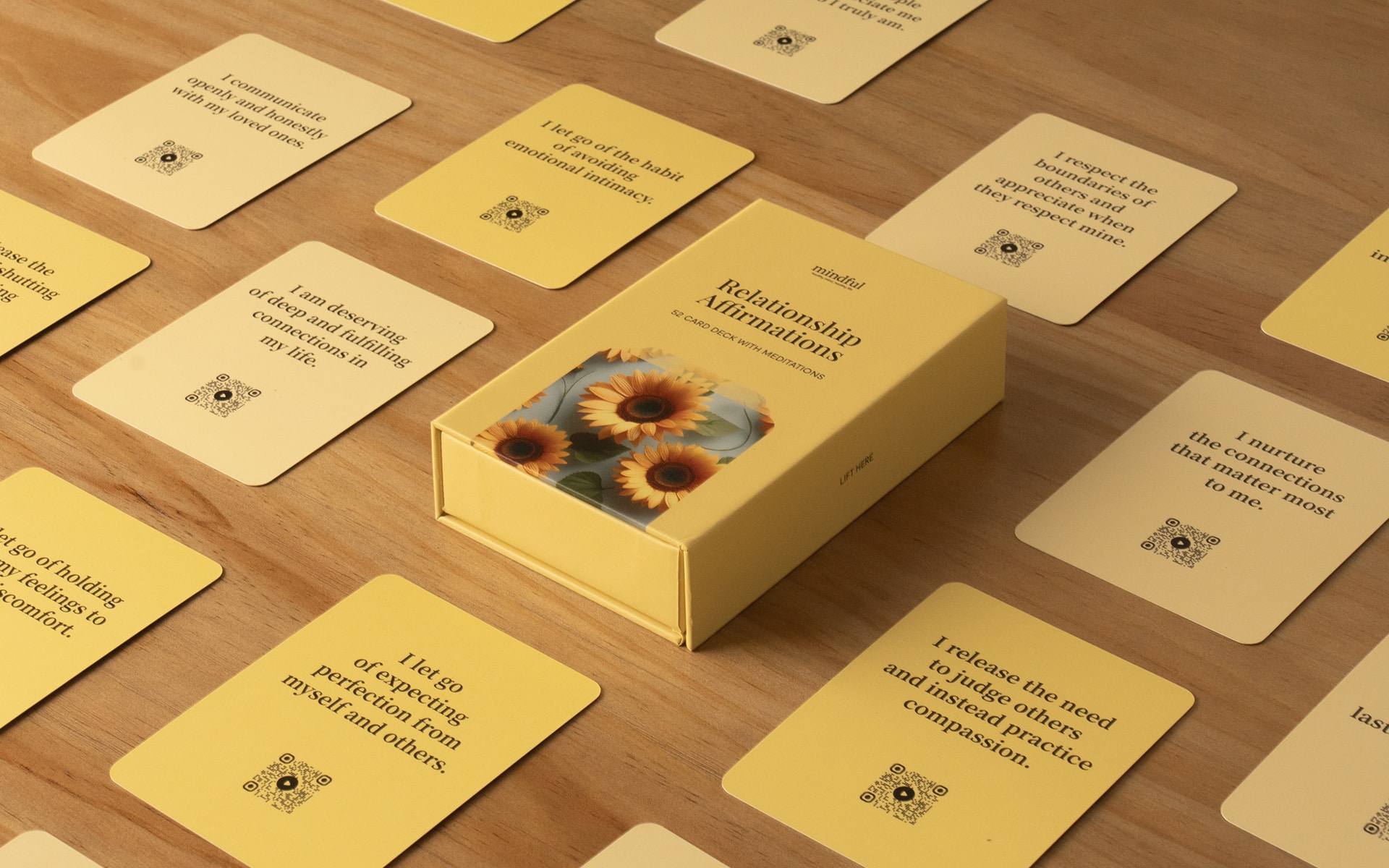
    The newly launched Relationship Affirmations Deck explores the many ways in which mindfulness offers a powerful antidote to this disconnect. By incorporating mindfulness into our relationships, we can cultivate deeper understanding, empathy, playfulness, and appreciation for those we hold dear.

    4 Simple, Mindful Practices to Nourish Relationships

    Whether you’re looking to reconnect after a period of distance, or you just want to build on what you already have, mindful relationship practices can help. Let’s look at four mindful ways to nourish connection in your relationships, helping them grow stronger and more fulfilling over time.

    1. Practice Active Listening

    Here’s a question to gently ask yourself: How often do I truly listen to others without planning a response, letting my thoughts wander, or interrupting? It’s more challenging than you might think.

    Active listening is a cornerstone of mindfulness in relationships, requiring full presence and an open heart. 

    What is active listening?

    Active listening involves giving your undivided attention to the speaker, genuinely seeking to understand their perspective. This means suspending judgment, refraining from offering solutions unless asked, and showing that you value their words.

    How to incorporate active listening into your relationship

    Here are three ways you can boost your active listening skills.

    • Don’t let distraction get the upper hand. Put away devices like phones or laptops. Face the person you’re speaking with, maintain eye contact, and let them know they have your attention.  
    • Use verbal and nonverbal cues. Nod, lean in, smile, or say things like, “I hear you,” or “Tell me more.” These small gestures show engagement and encouragement.  
    • Reflect and validate. When your conversation partner is done talking, it can help to summarize what they’ve said to confirm you understand. For example: “It sounds like you felt hurt when that happened. Is that right?” Remember, validation doesn’t mean agreeing; it simply acknowledges their feelings as real and understandable.

    By practicing active listening, you create a reliable space for your partner or loved one to share openly, which strengthens trust and intimacy. 

    2. Be Intentional About Gratitude and Appreciation

    In long-term relationships, it’s easy to take the other person for granted. Over time, we may focus more on what’s lacking or on minor annoyances than on the things we admire about our partner, family members, or close friends.

    Why gratitude matters in relationships

    Gratitude shifts attention to the positive aspects of your relationship, reminding you of the qualities and experiences you cherish. When expressed regularly, appreciation fosters feelings of being seen, valued, and loved. 

    At first it can feel awkward to be intentional about gratitude. Calling out specific examples might even feel a little silly. But this practice has been shown again and again to shift our perspective, to sharpen our awareness of all the goodness around us and all the ways we’re held up and supported. All of this makes us better friends, partners, parents, and co-workers, deepening the bonds we share.

    How to practice gratitude together

    If you want to boost your experience of gratitude and aren’t sure where to begin, here are three simple strategies that can get you started.

    • Start a daily gratitude practice. This does not have to be complicated or drawn out! Each day, share one thing you’re grateful for about your partner or your relationship. It could be something small, like how they made you coffee, or something significant, like their support during a tough time.  
    • Write thank-you or love notes. Leave a heartfelt note expressing appreciation for something specific they’ve done. Over time, these little gestures build a reservoir of positive feelings.  
    • Celebrate the small wins. Acknowledge and celebrate each other’s achievements, no matter how minor. Recognizing effort strengthens your bond and boosts mutual respect. 

    When gratitude becomes a habit, it acts as a glue that holds your relationship together through ups and downs. Over time, noticing what’s working becomes the default. When frustrations or disappointments occur—which they inevitably will in our imperfect human relationships—you’ll have this large bank of truthful, positive reminders to draw from. 

    3. Be Present for Shared Experiences

    Relationships thrive on shared experiences, but the depth of connection depends on how present you are in those moments. Whether it’s a dinner date, a weekend hike, or simply watching a movie together, mindfulness can transform routine activities into meaningful bonding opportunities. 

    What is shared presence and why does it matter?

    It’s easy to assume that spending time together automatically equals connection. But proximity isn’t the same as presence. You can sit next to someone for hours and still feel a million miles apart. What transforms time into connection is being fully there.

    “Being present” is a phrase you’ll see a lot in mindful spaces. While it can sound a little vague and New Agey, in reality, it’s a very practical approach to investing in our ordinary, everyday lives. 

    When we talk about being fully present, what we mean is that we’re marshaling our attention on purpose. That looks like putting our focus on the person we’re with, opening our ears and our hearts to them. It also involves being in our bodies—noticing sights, sounds, smells, and sensations—instead of always stuck in our heads and the stories we get hooked on.  We’re not getting caught up in something that happened earlier or something that’s going to happen later. When our attention drifts, which it will, we just gently bring it back. 

    When you’re fully present, even mundane moments become an opportunity for connection. Presence fosters intimacy, as it shows the person you’re with that they are worth your undivided attention. 

    Ideas for mindful shared experiences

    There are so many fun and creative ways to build shared experiences. Here are just a few ideas you can try:

    • Mindful meals. Shared meals used to be a cornerstone of cultural connection, and in some places, people are trying to bring them back to combat the epidemic of loneliness that has seeped into Western culture. A mindful meal is simply a meal without distractions. It doesn’t have to be fancy at all. The focus is on savoring the flavors, enjoying the ambiance, and engaging in conversation.  
    • Digital detox dates. Set aside time to disconnect from screens and connect with each other. Use this time to talk, play a game, or try something new together.  
    • Explore something new. Novelty and spontaneity strengthen bonds by creating new, positive associations. Take a dance class, cook a new recipe, or visit a place neither of you has been before.  
    • Practice mindfulness together. Meditate, do yoga, or simply sit quietly and breathe together. Shared mindfulness practices can deepen your emotional connection and align your energies.

    One additional benefit of intentional presence? We remember things more vividly. By being fully present during shared experiences, you create memories that are rich in connection and joy. 

    4. Practice Compassion and Forgiveness

    No relationship is immune to conflict or mistakes. In these moments, the way we respond determines whether we drift apart or grow closer. Practicing compassion and forgiveness is a mindful approach to navigating challenges while strengthening the bond between you. 

    Why compassion and forgiveness are so crucial to connection

    Compassion involves understanding and caring for your partner’s feelings, even when you disagree or feel hurt. It’s about recognizing their humanity and approaching difficulties with kindness rather than judgment.  

    Forgiveness is an emotionally-complicated and often-misunderstood concept. People sometimes fear that forgiveness is the same as saying what happened was okay, or that it means we “forget” or pretend it never happened. That isn’t the case with healthy forgiveness.

    Holding onto resentment creates barriers to intimacy. Forgiveness doesn’t mean condoning hurtful behavior, but rather letting go of the emotional weight it carries, so you can move forward together. 

    How to practice compassion and forgiveness

    Studies have shown that a regular mindfulness practice makes forgiveness easier, in part because it expands our compassion and makes seeing another perspective less difficult. Here are five habits that foster real, healthy compassion and forgiveness. 

    • Pause before reacting. When emotions flare, take a breath. That pause can be the difference between a response that builds connection and one that tears it down.
    • Include yourself. Often the person we are hardest on is ourselves. The more we practice taming our ferocious inner critic, the more likely we are to be able to extend that same grace to others. 
    • Seek understanding. Ask yourself: What might they be feeling or fearing? What’s beneath their words or actions?
    • Apologize and accept apologies. A sincere “I’m sorry” can be healing. So can saying, “I forgive you.” Neither one erases the hurt, but both open the door to repair.
    • Let go of what no longer serves you. Resentment is heavy. Releasing it—through mindfulness, journaling, or therapy—creates space for something lighter.

    Compassion and forgiveness aren’t always easy. Some might say that these can be the most challenging part of a mindfulness journey, but they are what allows relationships to grow through challenges rather than crumble beneath them.

    Building a Relationship That Feels Alive

    Mindfulness in relationships isn’t about perfection. It’s about presence—about showing up, over and over, in small but meaningful ways. When we listen deeply, express gratitude, share moments with presence, and choose compassion, we create a relationship that feels alive, tender, and worth tending to.

    And here’s the beautiful thing: every moment is a chance to begin again. So, whether you’re navigating a tough season or just looking to strengthen what’s already good, start small. Start today. The relationships that matter most are worth it.

    Put the Focus Back On Connection with Relationship Affirmations

    If you’re looking for a wonderful companion product that can support your journey to mindful, meaningful connection, you’ll love our new Relationship Affirmations card deck.

    • 52 beautifully designed, high-quality cards, each featuring a unique mindful phrase. 
    • A simple wooden holder to display each day’s card. A QR code on the back of each card that links to 25 bonus premium digital practices, like coaching and guided meditations.

    This deck provides a simple reminder that brings your attention back to gratitude, compassion, honest communication, and healthy interactions. Whether used alone or with a loved one, these cards can provide the gentle structure and support to help you grow your relationships with care and intention.


    Source link