Tag: Rare

  • How a Rare Elbow Megaprosthesis Restored a Life After 27 Years

    How a Rare Elbow Megaprosthesis Restored a Life After 27 Years

    The cause traced back to a severe elbow injury in his youth, one that gradually reshaped both bone and daily life. The joint fused, the structure weakened, and simple routines turned into daily negotiations. When he finally reached Vinmec, the challenge extended beyond surgery itself.

    The Limits of the Elbow

    Years of unsuccessful treatment slowly reshaped Phong’s expectations. Multiple surgeries offered little improvement, and the prospect of living with the deformity became increasingly real, until he reached Vinmec Times City International Hospital.

    There, doctors determined that his condition represented an exceptionally complex post-traumatic sequel. “This is an extremely rare case with a very high level of complexity, and there are virtually no precedents in Vietnam,” said Dr. Tran Quyet, Head of Upper Limb Surgery, Musculoskeletal and Orthopedic Trauma Center, Vinmec Times City.

    Time had taken more than movement from Phong’s elbow. In fact, it had stripped away much of its structure. The joint was completely fused and unstable, with an estimated six-centimeter defect in the distal humerus, leaving the left arm four to five centimeters shorter than the right.

    That degree of damage placed the case beyond the reach of standard elbow replacement. Historically, megaprostheses were developed primarily for limb-salvage surgery in bone cancer. While their use has gradually expanded over time, its application at the elbow, particularly outside oncologic settings, continues to remain uncommon.

    Phong’s condition fell into that demanding category, where conventional solutions had long since run out.

    Engineering a Second Chance

    After extensive multidisciplinary discussions, Vinmec’s medical team reached a decision shaped as much by responsibility as by expertise: a total elbow megaprosthesis combined with reconstruction of the extensive bone defect. For a patient who had already waited 27 years, there was little room for uncertainty.

    The work began long before the day of surgery. Using in-hospital 3D technology, surgeons rebuilt Phong’s elbow virtually, layer by layer, studying what time had altered, anticipating what could be restored. CT-based models allowed the team to visualize the deformity in full, plan each step with care, and design a prosthesis tailored specifically to his anatomy. From that digital reconstruction, a patient-specific elbow joint was created using 3D printing.

    Vinmec’s doctors created a bespoke elbow joint designed exclusively for Phong.

    “The patient has waited for 27 years. Another failure would have had a severe psychological impact. That is why we were determined to create a new opportunity to change his life,” Dr. Quyet stated.

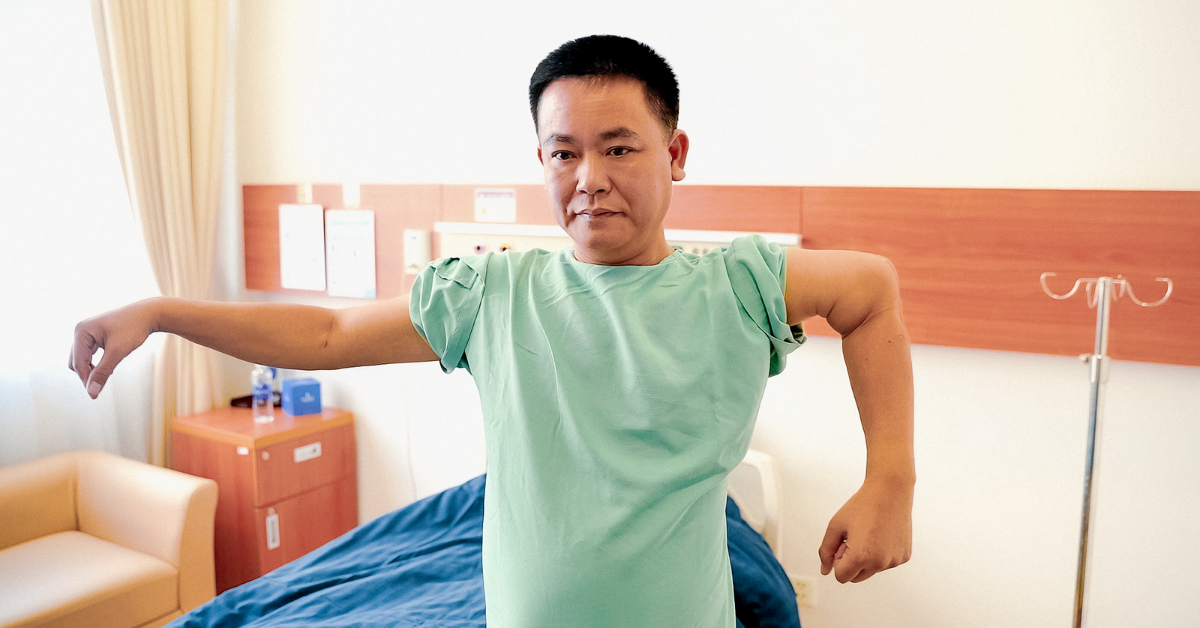
    That preparation changed everything. The surgery was completed successfully, with no nerve or vascular injury recorded. Within three days, Phong was able to begin gentle movement of his arm. Two weeks later, he could extend and flex the elbow, lift his arm, and raise it overhead.

    “After nearly 30 years, I finally feel like I have a normal arm again,” Phong said. “It moves so naturally, almost as if I never had surgery at all.”

    Yet the most profound outcome was not measured in surgical time or range of motion. It emerged quietly, as a man who had learned to live within limitation began to reclaim independence, through ordinary actions.

    Advancing Orthopedic Excellence

    Such a miracle did not happen in an instant. It emerged gradually, shaped by a series of groundbreaking clinical achievements. In 2025, Vinmec carried out a personalized total femoral replacement using 3D-printed metal for a young child with aggressive bone cancer—preserving the limb in a case where amputation had been widely advised. Earlier, the system became the first hospital in Southeast Asia to successfully perform a fully 3D-printed titanium chest wall reconstruction.

    These landmark procedures exemplify Vinmec’s patient-centered philosophy, where multidisciplinary expertise converges to confront the most complex conditions.

    Stories like Phong’s extend far beyond Vietnam. They echo among patients worldwide, many of whom have been told that options are exhausted. At Vinmec International Healthcare System, growing clinical evidence shows that those paths are being created thoughtfully and deliberately.

    Source link

  • Gene Therapy for Children With Rare ‘Bubble Boy Disease’ Proves Effective After Long-Term Follow-Up

    Gene Therapy for Children With Rare ‘Bubble Boy Disease’ Proves Effective After Long-Term Follow-Up

    The 62 children who were found to have the rare “Bubble Boy disease” as babies and toddlers between 2012 and 2017 still seem cured after long-term follow-up, after being treated with a genetic therapy for severe combined immunodeficiency.

    The results of the trial noted that by 2019, 95 percent of the children, which equates to all but two of the young patients, showed complete immune system reconstruction. And now, years later, long-term follow-up results show that the therapy is still 95 percent effective.

    Treatment for Children With Rare “Bubble Boy Disease”

    In a statement, a pediatric transplant physician at the University of California, Los Angeles, Donald Kohn, MD, said that the durability of immune function, the consistency over time, and the continued safety profile among the children were all encouraging.

    Severe combined immunodeficiency due to adenosine deaminase deficiency (ADA-SCID) is typically caused by mutations in an individual’s ADA gene. This gene is responsible for creating an enzyme that is essential for a person’s immune function, according to Good News Network.

    For kids who have this rare condition, typical daily activities, such as going to school or playing with friends, can result in dangerous, life-threatening infections. If left untreated, ADA-SCID can even be fatal within an infant’s first two years of life.

    SCID suddenly became well-known in America in 1984 because of “the boy in the bubble,” David Vetter. He received a special spacesuit from NASA that allowed him to leave his total medical isolation and see the world. However, despite this suit, the boy passed away due to an infection when he was 12 years old.

    The researchers who led the multi-center program related to the cured children said that the persistence of healthy immune systems and results of long-term follow-up should be taken as signs that the approach could become a standard treatment for individuals with ADA-SCID, Science Media Centre reported.

    An Effective Approach

    The families whose lives were previously defined by the strict isolation of affected individuals are now able to describe ordinary childhood milestones that they would never have dreamed were possible.

    The gene therapy in question is a treatment that was tested by researchers at UCLA in collaboration with institutions in the United Kingdom. It takes a personalized, cell-based approach to correct an individual’s genetic defect.

    The first step in the process is doctors collecting a child’s hematopoietic stem cells from their bone marrow or blood. Then, a laboratory team uses a modified viral vector to deliver a healthy copy of the ADA gene into those stem cells. Finally, those corrected stem cells are returned to the patient, where they then engraft and produce a continual supply of functional immune cells, as per the Valley Vanguard Online.


    Originally published on parentherald.com

    © {{Year}} ParentHerald.com All rights reserved. Do not reproduce without permission.

    Source link

  • The Rare Surgery That Saved Their Lives

    The Rare Surgery That Saved Their Lives

    Born twice? It sounds impossible, but that’s exactly the story of miracle baby Rafferty Isaac in the U.K. At just 20 weeks, he was temporarily removed while in the womb so doctors could perform life-saving surgery on his mother, who had been diagnosed with ovarian cancer. After the complex five-hour procedure, Rafferty was placed back into the womb to finish growing and was “born again” at full term in January.

    Rafferty’s mother, 32-year-old Lucy Isaac, was just 12 weeks pregnant when she received the devastating diagnosis of ovarian cancer. The cancerous cells needed to be removed urgently, as delaying treatment until after childbirth would allow the disease to spread, threatening the life. But by then, Lucy had already entered her second trimester, so doctors ruled out the possibility of performing standard keyhole surgery.

    That’s when a team of surgeons at John Radcliffe Hospital in Oxford proposed a bold, life-saving solution: an extraordinary and rare procedure that involved temporarily removing Lucy’s womb, still carrying her unborn baby, from her abdomen to reach the cancerous cells hidden behind it, before carefully repositioning it to allow her pregnancy to continue. The surgery was risky to both mother and child and was carried out very rarely.

    However, trusting the expertise of her medical team, Lucy agreed to the high-risk surgery in October. During the operation, doctors successfully removed the tumors, which had already progressed to grade two, and began invading the tissues surrounding her ovaries.

    During the procedure, Lucy’s womb was outside for two hours, carefully wrapped in a sterile, warm saline pack to replicate the conditions inside the body and maintain the proper temperature. Throughout the operation, two medics closely monitored the child’s heart rate and temperature to ensure his safety.

    Rafferty’s birth as a healthy, full-term baby in January, weighing 6lb 5oz, was not just a medical triumph but a deeply emotional milestone for the Isaac family. Just two years earlier, Lucy’s husband, Adam, 42, had undergone a kidney transplant. “To finally hold Rafferty in our arms after everything we have been through was the most amazing moment,” Adam told the Daily Mail.

    In the weeks after the delivery, Lucy returned to John Radcliffe Hospital with her miracle baby to express their gratitude to the medical team. “It felt as if I had met him previously. It was a rare and a very emotional experience for me,” said surgeon Hooman Soleymani Majd, who led the team.

    Source link

  • Man Hospitalized With Fever, Recurrent Falls Diagnosed With Rare Infection Linked To Lake Swimming In Iowa

    Man Hospitalized With Fever, Recurrent Falls Diagnosed With Rare Infection Linked To Lake Swimming In Iowa

    A 77-year-old man’s mysterious symptoms, fever, and frequent falls due to fatigue left doctors puzzled for days until they diagnosed him with a potentially fatal Legionnaires’ disease, linked to his vacation swimming in an Iowa lake.

    According to the case published in CMAJ, the unidentified patient was admitted to a Winnipeg hospital with fever, cough, and multiple sudden falls due to fatigue. Tests showed an elevated blood cell count, indicating an infection, along with high levels of creatine kinase, suggesting potential kidney damage. Further testing revealed that the patient had developed severe pneumonia.

    The patient was initially treated for five days with antibiotics piperacillin-tazobactam, a broad-spectrum antibiotics for pneumonia but his condition did not improve. Doctors then performed a bronchoscopy but could not identify the specific bacteria from the sample.

    Although doctors initially requested Legionella testing of the bronchoalveolar lavage culture, the laboratory declined due to a lack of clinical justification. However, after the doctors highlighted the patient’s risk factors including recent travel, exposure to stagnant water, and pneumonia unresponsive to standard antibiotics, the lab proceeded with the test.

    While the bronchoalveolar lavage culture tested negative, a urine test confirmed the presence of Legionella. The negative culture result was likely due to recent antibiotic use.

    Once Legionnaires’ disease was confirmed, doctors prescribed a 10-day course of antibiotics levofloxacin (750 mg daily). By the fourth day of treatment, the patient had improved significantly and no longer needed supplemental oxygen, allowing him to be discharged from the hospital to continue his recovery at home.

    Legionnaires’ disease develops within 10 days after exposure to Legionella bacteria, which enters the body through inhalation from water or soil. Outbreaks have been linked to various water sources, including hot tubs, whirlpools, cooling towers in air conditioning systems, hot water tanks, heaters, decorative fountains, swimming pools, birthing pools, and drinking water.

    The initial signs of the infection include headache, muscle aches, and a high fever. Within three days, additional signs may appear, including cough, shortness of breath, chest pain, gastrointestinal issues, and confusion. Though it primarily affects the lungs, it can sometimes lead to infections in other parts of the body, such as wounds or the heart. If left untreated it can lead to life-threatening complications including septic shock, and lung and kidney failure.

    A milder form of the infection from the same bacteria causes Pontiac fever, with similar symptoms but doesn’t affect the lungs and generally resolves in a few days.

    Source link

  • Rare Water Allergy Causes Excruciating Pain For Woman—From Drinking To Showering, She Shares Her Daily Struggle

    Rare Water Allergy Causes Excruciating Pain For Woman—From Drinking To Showering, She Shares Her Daily Struggle

    You may never realize how often water touches our lives until you have a disorder like the 25-year-old young mother from the U.K. who describes simple daily activities such as washing hands, drinking water, or taking a bath as “excruciatingly painful”.

    An extremely rare condition called aquagenic urticaria makes the life of Kendall Bryce, from Durham, UK, a real struggle. As a young mother of one, pregnant with her second child, she finds it difficult to take care of herself and or her child while battling the condition.

    “I’ve never been able to give my one-year-old son a bath. My mom has to do it for me. And I even feel my throat burning when I drink water,” she said.

    “It really is a daily struggle. I can only have a bath or take a shower twice a week because of how excruciating the pain is, so I constantly worry I stink,” said Bryce.

    Bryce’s condition began when she was just 15 when she started noticing hives after she took a bath. But little did she realize that was the beginning of her battle with water allergy until she was diagnosed with the condition four years back.

    “The GP didn’t have a clue what to do. It’s just such a rare condition, so not many people have it and not many people know about it,” Bryce recalled, still living with the constant pain. The pain is so severe that her body sometimes goes into shock.

    “My life is dictated by the weather as I have to avoid rain — and even hot humid days. I check the forecast every day and stay home if it’s raining or going to rain, but if I get caught out by surprise, my body reacts and it’s really painful,” she added.

    There is currently no cure for water allergy, but treatment options are available to manage the symptoms. Treatments include the use of oral antihistamines, topical medications like creams or emulsions, phototherapy using artificial UV light, and sometimes other medications like asthma drugs, anabolic steroids, or SSRIs.

    While pregnant, Bryce’s treatment options are however limited. “They’ve tried lots of different medications but I kept reacting. I still haven’t found something that helps,” Bryce said. However, she hopes that by sharing her story, she might connect with someone who knows how to treat her condition.

    Source link

  • Rare “Gorilla Cherry” Secret Helps Support A Healthy Prostate

    Rare “Gorilla Cherry” Secret Helps Support A Healthy Prostate

    Product Name: Rare “Gorilla Cherry” Secret Helps Support A Healthy Prostate

    Click here to get Rare “Gorilla Cherry” Secret Helps Support A Healthy Prostate at discounted price while it’s still available…

    All orders are protected by SSL encryption – the highest industry standard for online security from trusted vendors.

    Rare “Gorilla Cherry” Secret Helps Support A Healthy Prostate is backed with a 60 Day No Questions Asked Money Back Guarantee. If within the first 60 days of receipt you are not satisfied with Wake Up Lean™, you can request a refund by sending an email to the address given inside the product and we will immediately refund your entire purchase price, with no questions asked.

    (more…)

  • Teen Dies From Rare Brain Tumor After Unusual Symptoms; Heartbroken Mom Urges Others To Recognize Signs

    Teen Dies From Rare Brain Tumor After Unusual Symptoms; Heartbroken Mom Urges Others To Recognize Signs

    When 12-year-old Jody tripped and fell multiple times, had trouble walking straight, and struggled to fasten her shirt buttons, her mother never suspected it could be a sign of something serious—until doctors delivered the devastating news of a rare brain tumor.

    After years of battling the disease, Jody passed away in 2022, at the age of 16, and her heartbroken mother, Sarah Levett, from Surrey in South East England, now raises awareness about the condition, hoping that parents could spot the signs as soon as possible.

    Levett, who is organizing a fundraiser next month for the Brain Tumor Charity in her daughter’s memory, says she does it so no other parent or child has to endure the unimaginable heartbreak they experienced.

    When Jody first experienced symptoms like migraines, difficulty with balance, and frustration that led to screaming fits, Levett thought it might be related to her autism. But during a check-up, doctors discovered that Jody was in the advanced stages of a rare brain tumor.

    “It was absolutely terrifying. As the doctor spoke about how big the tumor was, I couldn’t take it all in,” Levett recollected the moments following the diagnosis.

    “I just wanted it gone. But I tried as hard as I could to hide how scared I was, as Jody was so young. I didn’t want her to worry – in fact, she was more bothered about the fact she was unable to go to school. She started bumping into things, like a wheelie bin on the pavement, only a few months before the diagnosis,” she said.

    Jody underwent treatment for around 10 months, including a surgery that removed 80% of the tumor, followed by chemotherapy and radiotherapy until she was stable. However, a year later, a follow-up scan revealed that the tumor had returned.

    As Jody’s condition rapidly declined, she underwent four more surgeries and doctors discovered a brain bleed before she tragically died.

    “The main aim [of the fundraiser] is to continue the awareness of brain tumors and changes needed, and the lack of mental health support for bereaved parents. I know there’s a lot of strain on healthcare at the moment, but I really don’t want any other parents or children to have to go through the unimaginable heartbreak like we have done,” Levett said.

    Brain tumors may present with symptoms such as seizures, balance issues, behavioral changes, slurred speech, fatigue, weakness, headaches, nausea, and vomiting.

    Source link

  • Fitness Trainer Gets Diagnosed With Rare Blood Cancer At 25 After Brushing Off Strange Symptoms

    Fitness Trainer Gets Diagnosed With Rare Blood Cancer At 25 After Brushing Off Strange Symptoms

    For a 23-year-old fitness trainer, Dilan Patel in the U.K., life was going normal until he began experiencing a strange, recurring symptom that kept him up two to three times a night. For nearly two years, Patel ignored night sweats and several other warning signs. However, when they became impossible to overlook, he was faced with a life-altering diagnosis: Hodgkin lymphoma, a rare type of blood cancer.

    Hodgkin Lymphoma is a cancer that affects the lymphatic system. Although a serious form of cancer, the tumors in the lymph nodes can be cured if diagnosed and treated early. However, most often signs such as night sweats can easily be mistaken for less serious issues.

    “You won’t believe it… I was 25 years old, living my life like any other young adult – working hard, working out, hanging with friends, and trying to figure out my future. Life felt normal. I had no reason to think anything was wrong. But then something strange started happening,” Patel said in a TikTok video.

    “I’d wake up in the middle of the night drenched in sweat. I mean SOAKED. My clothes, my bed – everything would be wet. It happened 2-3 times every single night. At first, I just thought, ‘Maybe I’m getting too hot under the covers?’ So I brushed it off,” he added.

    Apart from night sweats, Patel experienced persistent itchy skin, which he brushed off as nothing more than dryness, and fatigue and lumps on his neck that he assumed were from intense gym workouts.

    “Everything had an explanation – or so I thought,” Patel said. However, by the time Patel was diagnosed with stage 4B Hodgkin’s Lymphoma, he already had five tumors and the cancer had even spread to his lung.

    “I couldn’t believe it. I’d spent so long brushing off my symptoms, convincing myself they weren’t a big deal. But my body had been screaming at me for almost 2 years,” Patel said.

    The symptoms of Hodgkin lymphoma include painless, swollen lymph nodes in the neck, underarm, or groin, unexplained fever, drenching night sweats, weight loss over six months without a clear reason, persistent fatigue, and itchy skin, particularly after bathing or drinking alcohol.

    “If there’s one thing I’ve learned from this experience, it’s to pay attention to your body. Those little signs and symptoms? They’re there for a reason. Don’t wait until it’s too late,” Patel added.


    Source link

  • Woman’s Migraines, Motion Sickness Thought To Be From Phone Use Revealed Rare Brain Disorder

    Woman’s Migraines, Motion Sickness Thought To Be From Phone Use Revealed Rare Brain Disorder

    For years, 44-year-old Charlie Rolstone from the U.K. brushed off her migraines, motion sickness, and occasional blackouts as the side effects of spending too much time on her phone. But a medical emergency three years ago revealed a chilling truth that her symptoms stemmed from a rare brain disorder from her skull pushing against the brain.

    An MRI taken during the emergency visit revealed that Rolstone had epilepsy and a Chiari malformation, a condition caused by an abnormal skull structure that forces the brain to extend downward into the spinal canal.

    “I’ve had it my whole life, but my symptoms have only been getting worse as I’ve got older,” said Rolstone, SWNS reported.

    “I’ve suffered with migraines since I was a teen. Whenever I cough, I also get a very piercing pain in my head, covering the back of my skull. It only lasts for, maybe, 30 seconds — but it’s enough to make me grab my head. I can’t even shout or raise my voice without getting a headache. These were symptoms I knew to be there, but I thought they were normal,” she added.

    Rolstone thought she would grow out of the symptoms until she received the diagnosis while she was taken to the hospital after collapsing from a seizure. The doctors also found out that she had brain lesions and an aneurysm.

    “I don’t know the full extent of the damage the condition has done, but I’m glad we’ve caught it now. That seizure saved my life — it revealed my Chiari malformation,” she said.

    Rolstone now manages her migraines with painkillers and limits her phone use to reduce motion sickness. With medications for epilepsy, she has been seizure-free for 21 months.

    Chiari malformation can be present with or without symptoms, and the signs depend on the type of condition. In Chiari malformation type 1, symptoms such as headaches, particularly while coughing or sneezing, neck pain, poor hand coordination, numbness in the hands and feet, and difficulty swallowing, typically begin in late childhood or adulthood, though the condition is often congenital.

    In rare cases, individuals with Chiari malformation type 1 may experience additional symptoms, including ringing or buzzing in the ears (tinnitus), muscle weakness, a slow heart rhythm, curvature of the spine (scoliosis) linked to spinal cord impairment, and breathing difficulties.

    Type 2 Chiari malformation is typically associated with a myelomeningocele, a form of spina bifida where the spinal canal and backbone fail to close properly before birth. The symptoms include difficulty swallowing, changes in breathing pattern, sudden downward eye movements and weakness in arms.

    Source link

  • Pregnant Woman And Baby Saved After Doctors Identify Her Bad Cough, Breathlessness Was Rare Tumor In Chest

    Pregnant Woman And Baby Saved After Doctors Identify Her Bad Cough, Breathlessness Was Rare Tumor In Chest

    MaKenna Lauterbach from Illinois was 36 weeks pregnant when she received the shocking diagnosis of a large tumor in her chest, revealing the real cause of the persistent cough and breathlessness during her pregnancy. The 26-year-old, who was diagnosed with stage 3 melanoma, is now stable and recovering, along with her healthy baby, thanks to the timely intervention and coordinated efforts of a dedicated team of doctors.

    When Lauterbach experienced a bad cough while she was expecting, she knew something was wrong. Simple tasks, like walking to the barn to feed her horses, left her unusually winded, as if she had just run two miles. However, doctors were initially hesitant to perform chest scans due to concerns about radiation exposure.

    When Lauterbach was almost due, the cough worsened to the extent that she started throwing up and had to be hospitalized for shortness of breath. The scans then revealed a grapefruit-sized tumor in her chest, blocking the artery to her right lung.

    By the time Lauterbach received the diagnosis, she was in respiratory distress, the tumor obstructing her airway, putting both her life and her baby’s at risk.

    After being airlifted to the intensive care unit at Northwestern Memorial Hospital in Chicago, her condition worsened, she went into labor, her blood pressure spiked, and the baby began showing signs of distress during contractions.

    “Lauterbach was in real trouble, and we had to act quickly – this wasn’t something that could wait for Monday morning. When you’re pregnant with a baby that’s nearly full-term, your lungs already aren’t functioning at full capacity, and when you add a huge tumor on top of it, you run the risk of having respiratory collapse and cardiac arrest,” said Dr. Lynn Yee, maternal-fetal medicine specialist at Northwestern Medicine in a news release.

    Doctors quickly prepared Lauterbach for extracorporeal life support (ECMO) and performed an emergency C-section, successfully delivering a healthy baby boy.

    “Because of the tumor, the delivery happened so quickly. I was grieving the birth plan I had spent months preparing for, while also dealing with the news of my unexpected diagnosis,” Lauterbach said.

    While her newborn remained in the hospital’s neonatal intensive care unit, doctors performed an advanced bronchoscopy on Lauterbach. The procedure revealed that her tumor was stage 3 melanoma, prompting the medical team to immediately begin developing a treatment plan.

    “Lauterbach’s diagnosis was difficult to make because we weren’t sure if the melanoma started in the chest or somewhere else, and there isn’t much literature or published cases on how to best treat tumors like these, so we had to rely on the expertise that we’ve developed here at Northwestern Medicine,” said Dr. Kalvin Lung, a thoracic surgeon with the Northwestern Medicine Canning Thoracic Institute.

    The medical team decided on surgery to remove the tumor. Before the procedure, Lauterbach was given three cycles of immunotherapy which helped shrink the tumor from 13 centimeters to nine centimeters.

    “We think at some point, Lauterbach had a melanoma on her skin and her own immune system took care of it, but not before a cell or two may have escaped and eventually started growing inside her body,” explained Dr. Sunandana Chandra, medical oncologist with the Robert H. Lurie Comprehensive Cancer Center of Northwestern University at Northwestern Memorial Hospital.

    During the surgery, doctors had to remove her right lung parts of the main pulmonary artery, and lymph nodes. “The tumor was sitting on top of Lauterbach’s heart and extended into the right lung, impacting all three lobes and the entire main trunk of the pulmonary artery, which is why we had to remove the right lung,” said Dr. Lung who conducted the surgery along with Dr. Chris Mehta, a cardiac surgeon with the Northwestern Medicine Bluhm Cardiovascular Institute.

    “It’s extremely rare to see this type of tumor invading into the major blood vessels of the heart. We may see something like this once every few years,” Dr. Mehta added.

    Lauterbach’s latest scans show no evidence of metastatic melanoma, and while her cancer remains stable with no new tumors, she will continue immunotherapy treatments for the next year.

    Source link