Tag: questions

  • Trump’s Nearly 5-Hour Physical Exam Raises Questions About His Health After Massive Bruise Saga

    Trump’s Nearly 5-Hour Physical Exam Raises Questions About His Health After Massive Bruise Saga

    President Donald Trump underwent a nearly 5-hour physical exam this morning, raising questions about his health following last month’s bruise saga.

    According to the president’s official schedule, Trump arrived at Walter Reed Medical Center in Washington at 11 a.m. and did not leave until 3:45 p.m. For comparison, former President Joe Biden’s physical exam last about 2.5 hours last year, AP News reported at the time. Although Biden forwent a cognitive exam, those typically take just 15 minutes, according to NPR.

    Trump wrote in a Truth Social post shared Monday that he has “never felt better, but nevertheless, these things must be done!” Trump is the oldest president to start a second term in the White House at 78.


    Trump’s doctors have issued glowing statements about his health throughout his political career. In 2012, his then-doctor stated, at Trump’s request, that he was the “healthiest individual ever elected to the presidency,” NPR reported. Then, in 2018, another doctor told the press he had “great genes.”

    The latest physical comes less than two months after Trump was photographed with a massive bruise on his right hand. It was captured during a White House meeting with French President Emmanuel Macron. One doctor chalked up the cause of the bruise to an “aggressive handshake” while another guessed the president’s tanning habits and potential use of blood-thinning medications could make his skin more prone to bruising.

    Many took to social media to share concern around the president’s abnormally long exam. Despite the results, a lot of Americans believe the Trump administration won’t release the real results.

    “What kind of physical takes 4 hours and 45 minutes? Seems sus,” X user @ArtCandee wrote.


    “Trump is at Walter Reed Hospital today, getting his annual physical, after which he and his doctors will lie,” @rogertansey stated in an X post.


    “Let me guess… At #Trump’s physical today, the doctor will proclaim very powerfully that he is the most physically fit of all our our presidents and that he’s a remarkable specimin [sic] who’s likely to live to the age of 150 or perhaps longer,” a third added.


    Some users lambasted Trump for scheduling his physical exam ahead of a weekend spent golfing at Mar-a-Lago.

    “Trump’s schedule today is to do his physical and then fly to Mar-a-Lago for the weekend to golf…” an X user wrote, along with a screenshot of Trump’s schedule.


    We need him to just golf every day tbh,” another joked.


    Originally published on Latin Times


    Source link

  • Foster Your Authentic Self With These 4 Questions

    Foster Your Authentic Self With These 4 Questions

    When we fear that we can’t think and act as we truly are, we put parts of ourselves on hold. Here’s how we can begin to let go of expectations and pressures and tend to our wants and needs with kindness.

    Key Points

    • Authenticity is linked to happiness, confidence, and better relationships with ourselves and others, but fear holds us back.
    • Inquiring into our fears about showing up as our authentic self can help us understand barriers to authenticity and how we can move past them.
    • The meditation practice of loving-kindness is one way to build self-trust and connection with our inner truth and well-being.

    Did you know that authenticity is inextricably linked to happiness? To be authentic is to feel at home in your body, accepted into a particular group, and to feel true to our sense of values. It is a kind of confidence that doesn’t come from attaining something outside of ourselves, but knowing deeply we are enough whatever our particular feelings, needs, or skills are and that we add to the greater whole of life and matter. We can be true to our authentic self—to our own personality, spirit, or character—despite external pressures.

    Authenticity is one of the most important ingredients in creating a healthy and sustainable relationship. Yet it can also be one of the most challenging to practice on a day-to-day basis. Why? the answer is simple: fear. We fear that if we showed up as we truly are—saying, doing, and feeling the real things that are going on within us without augmenting or censoring ourselves in any way—that others might disconnect from us, feel upset with us, or even leave us.

    “Authenticity is the daily practice of letting go of who we think we are supposed to be and embracing who we actually are.”
    —Brené Brown,
    author and researcher

    Authenticity: The Ultimate Practice of Letting Go

    Brené Brown, who has spent the past ten years studying authenticity, writes in her book, The Gifts of Imperfection: “Authenticity is the daily practice of letting go of who we think we are supposed to be and embracing who we actually are.” Choosing authenticity means:

    • cultivating the ability to be imperfect
    • allowing ourselves to be vulnerable, and
    • setting boundaries.

    If we aren’t being authentic with our deeper feelings and needs, then we can’t establish healthy boundaries. (In my last post, I share tools for how to cultivate compassionate boundaries at home and work.)

    One of the things I personally practice and share with my students that enhances authenticity is to choose “discomfort over discontentment.” For example, when fear arises, it can feel uncomfortable and to avoid discomfort we can distract or push away how we really feel and what we really need—but this is ultimately never satisfying.

    There is a risk involved when we put ourselves out there personally and professionally. However, if we don’t honor our true feelings and needs, they will eventually leak out when we sometimes least expect it and cause harm to oneself and others. The more we’re connected to our authentic self, the easier it becomes to live and lead from this place.

    Authenticity in Action

    I was sitting with Amy, a student in one of my Mindful & Well-Being programs at work. We were speaking to the practice of authenticity when she shared her feelings: “I feel afraid to share something with my husband—I am afraid it will ‘ruin’ our night and he will disconnect from me. I am afraid of his reaction. So I tuck it under the rug. Then it arises again a few days later and I put it off again. Resentment builds within me and I start to feel disconnected from him. After a week, a wall begins to form between us. I start to feel less connected to myself. He asks what is wrong and notices that I feel distant. My feelings have built up so much that I explode in a fit of anger and frustration. We get into a fight. All of this could have been prevented if I had just had the courage to share what I was really feeling and needing.”

    Authenticity Practice: 4 Questions for Authenticity

    Think of a recent experience with a partner, friend, family member, or co-worker where you wanted to be your authentic self but weren’t. Imagine pausing at the height of this interaction and asking yourself the following questions:

    1. What am I afraid would happen if I shared my experience right now with this person?
    2. How will feel if I don’t share what I’m thinking and feeling?
    3. If I weren’t afraid, what would I most want to say to this person right now?
    4. How can I share this with even more vulnerability?

    I asked these questions to Amy (the student above) and these were her responses:

    1. What are you afraid would happen if you really shared your truth with your husband? That he won’t love or accept what I want to share, and this will create conflict and he will become defensive and/or distant with me.
    2. How will you feel if you don’t share this? I will become angry at myself and him for not sharing my feelings and needs. I will then likely then be aggressive or distant with him.
    3. If you weren’t afraid, what would you most want to say? I would say, “Sweetheart, I know your mother is coming out for a visit next month, but I would really prefer she only stay with us for three days instead of a whole week. I understand you have a close relationship with her, but due to our work schedules during her visits, I often feel overwhelmed by her demands on top of our full schedules. I feel the duration of her visit puts a strain on our relationship and makes it difficult to enjoy the time she is here. I feel it would be easier and more enjoyable for everyone if she spent half the time with us and half the time with your sister, or maybe there is a way that you can take some time off to spend more time with her? I don’t know what the solution is and I would like your support and welcome your input. I want to have a good visit with her and I know that is important to you too. Could we come up with a plan that works for both of us for her visit?”

    How Do We Listen to the Internal and External Pressures and Make the Right Decision?

    When we meditate, we sense the interconnectedness of all beings and can tap into what matters to us. Authenticity is an important value of mine. I grow my authenticity daily by loving myself enough to take the risk to show myself warts and all to my friends, family, clients, and the world. It can be really scary sometimes and fear often shows up right before I show my truth. Fear will say, “What if others don’t love or accept this part of me?” They may not, but no one is ever going to love or like everything about me. The consequence of not being real and genuine is that I start to live only from a few rooms in the “Carley Castle” and I put the rest of me that is bright, loud, and a little silly at times in the closet. Who wants to live life like that? I have lived this way before and it wasn’t fulfilling. So I am opening doors, closets, and sharing these authentic parts of me in skillful ways personally and professionally.

    “Loving-kindness” is defined as a well wishing for oneself and others. It also has the meaning of trusting oneself and trusting that we have what it takes to know ourselves thoroughly and completely without feeling hopeless, and most importantly, without turning against ourselves for what we see.

    The practice of loving-kindness has been a large support of mine that aids in authenticity. “Loving-kindness” is defined as a well wishing for oneself and others. It also has the meaning of trusting oneself and trusting that we have what it takes to know ourselves thoroughly and completely without feeling hopeless, and most importantly, without turning against ourselves for what we see.

    8 Ways to Be Your Authentic Self

    • Maintain alignment between what you feel and need and what you say and do.
    • Make value-based choices while taking into account intuition, research, and the bigger picture.
    • Do something each day that reflects your deepest needs, wishes, and values.
    • Speak up for yourself and ask for what you want.
    • Don’t put up with abuse of any kind.
    • Give up designing your behavior by the desire to be liked (be imperfectly perfect and yourself!)
    • State and maintain your boundaries, especially about the level of energy you can handle being around or taking in.
    • Offer your fear loving-kindness and compassion.

    Keep Learning and Growing

    A regular meditation practice facilitates and enhances authenticity. When we are mindful, we are leaning in and listening to what is true and matters in the midst of the external forces, pressures, and influences that can often times be in opposition to our internal truth and knowing.

    Another way to cultivate authenticity is setting goals for learning, which helps us experiment with our identities without feeling like impostors. We shouldn’t expect to get everything right from the start. We stop trying to protect our comfortable old selves from the threats that change can bring, and start to explore how we can lead our lives from greater authenticity, power, and well-being.


    Source link

  • 12 Questions To Ask Your Doc

    12 Questions To Ask Your Doc

    Kickstart the New Year with better brain health. While several factors influence brain health, improving or protecting brain health is easier than you think. The American Academy of Neurology has identified 12 key factors to protect your brain, and it all starts with a simple conversation with your neurologist or primary care physician.

    “Neurologists are the experts in brain health, with the training and insight needed to help you keep your brain in top shape throughout life,” said Dr. Carlayne E. Jackson, President of the American Academy of Neurology in a news release.

    In the latest online issue of the journal Neurology, the experts explored various factors that may protect brain function and outline a practical framework for screening and preventive interventions.

    To help organize and remember these factors, the researchers created a mnemonic called “SAFEST BRAINS,” where each letter stands for different aspects that may contribute to the development and long-term maintenance of brain health.

    Here are the 12 key factors that come under SAFEST BRAINS and the questions to discuss with your doctor:

    Sleep- Check with the doctor if you are sleep is optimal for brain health.

    Affect, Mood, and Mental Health- Talk to your doctor if you have concerns about your mood, anxiety, or stress.

    Food, Diet, and Supplements-Check with your doctor if you need supplements and whether your diet provides the necessary nutrients.

    Exercise- Discuss your daily or weekly exercise routine and physical activity levels with your doctor.

    Supportive Social Interaction- Talk about your social support system and interactions. This is also a chance to screen for intimate partner abuse.

    Trauma Avoidance- Inquire about occupational risks or fall risks based on your age and life stage.

    Blood Pressure- Have your blood pressure checked at your doctor’s office. Ask about secondary causes of high blood pressure, the relationship between medications and blood pressure, and ways to manage systolic hypertension.

    Risks: Metabolic & Genetic Factors- Discuss your genetic risk with your doctor and learn ways to maintain a healthy weight and control lipids and diabetes.

    Affordability and Adherence: Talk about any issues with the cost of medications and how life transitions might affect your insurance.

    Infection: Ask if you are up to date on vaccines, and discuss your risk of infections from animals, sexually transmitted infections, and travel.

    Negative Exposures: Get screened for tobacco use, pesticides, alcohol, nonprescription substances, and workplace exposures.

    Structural and Social Determinants Of Health: Talk to your doctor about your concerns about housing, transportation, access to care and insurance, or personal safety.

    The experts believe that discussing these key factors with your doctor will enable them to provide advice, medical care, and resources to help improve your brain health.

    Source link

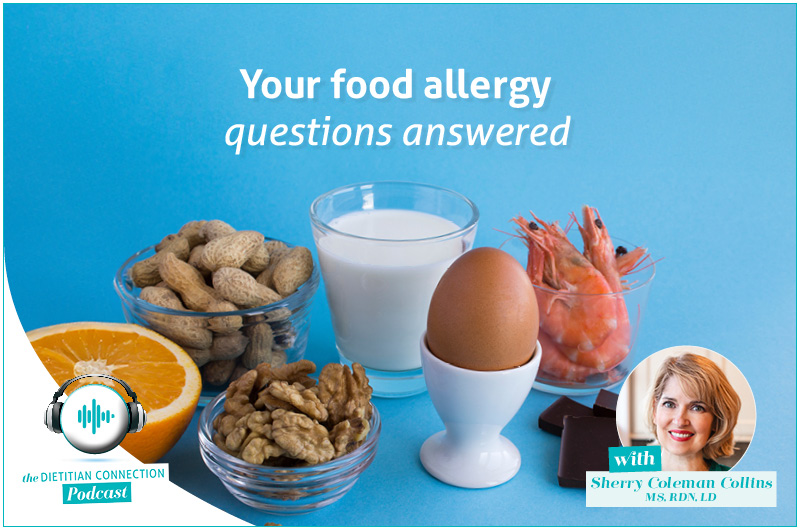
  • Your food allergy questions answered​ ​

    Your food allergy questions answered​ ​


    Join us for a fascinating Q&A with food allergy expert Sherry Coleman Collins, MS, RDN, LD a follow-up to our popular webinar, Advancing food allergy care: The latest innovations and insights.” Find out more about the unique way food allergies impact adults, the transient nature of food allergies, and why we even bother with skin and blood testing when the false positive rate is so high.

    Hosted by Kristin Houts

    Biography

    Sherry Coleman Collins, MS, RDN, LD, is a Marietta, GA-based Registered Dietitian Nutritionist with more than 15 years of experience in food allergies, pediatric nutrition, school food service and nutrition communications. She is a nutrition educator, speaker and writer, and serves as an expert to the media. Sherry spearheaded the development of the Academy of Nutrition and Dietetics’ Certificate of Training in Food Allergies, authored the Academy’s Practice Paper on the Role of the RDN in Food Allergy Diagnosis and Management, and has completed the FARE Pediatric Food Allergy Certificate of Training. She’s a fellow with the Academy of Nutrition and Dietetics Foundation. 


    In this episode, we discuss:

    • Sherry’s framework for thinking about food allergy prevention, diagnosis, and management
    • The ins and outs of the oral challenge
    • How the gut microbiome may play a role in food allergies
    • The dietitian’s opportunity to provide positive education and support for patients


    Additional resources

    In case you missed it, you can watch Sherry’s webinar Advancing food allergy care: The latest innovations and insights” here.


    The content, products and/or services referred to in this podcast are intended for Health Care Professionals only and are not, and are not intended to be, medical advice, which should be tailored to your individual circumstances. The content is for your information only, and we advise that you exercise your own judgement before deciding to use the information provided. Professional medical advice should be obtained before taking action. The reference to particular products and/or services in this episode does not constitute any form of endorsement. Please see  here  for terms and conditions.


    Source link