Tag: positive

  • Cultivating Resilience: How to Stay Positive in the Face of Adversity

    Cultivating Resilience: How to Stay Positive in the Face of Adversity

    Introduction to Cultivating Resilience

    Cultivating resilience is an essential skill for navigating the challenges of modern life. Resilience is the ability to bounce back from adversity, trauma, or significant stress, and it is a quality that can be developed and strengthened over time. When we are resilient, we are better equipped to handle the ups and downs of life, and we are more likely to emerge from difficult situations with a positive outlook and a renewed sense of purpose. In this article, we will explore the concept of resilience, discuss the benefits of cultivating resilience, and provide practical tips and strategies for staying positive in the face of adversity.

    Understanding Resilience

    Resilience is not just about being able to withstand challenges; it is also about being able to learn and grow from them. When we are resilient, we are able to approach problems with a sense of curiosity and openness, rather than fear or resistance. We are able to see challenges as opportunities for growth and development, rather than threats to our well-being. Resilience is also closely linked to emotional intelligence, which involves being able to recognize and manage our emotions, as well as empathize with others.

    The Benefits of Cultivating Resilience

    Cultivating resilience has numerous benefits, both for individuals and for society as a whole. Some of the key benefits of resilience include:

    • Improved mental health: Resilience is closely linked to mental health, and people who are resilient are less likely to experience anxiety, depression, and other mental health problems.
    • Better relationships: Resilient people are more likely to have strong, supportive relationships, which are essential for both physical and mental health.
    • Increased productivity: When we are resilient, we are more able to manage stress and stay focused, which can lead to greater productivity and achievement.
    • Greater sense of purpose: Resilience is closely linked to a sense of purpose and meaning, and people who are resilient are more likely to feel connected to their values and goals.

    Strategies for Cultivating Resilience

    So, how can we cultivate resilience? Here are some practical strategies for staying positive in the face of adversity:

    • Practice self-care: Taking care of our physical, emotional, and spiritual needs is essential for building resilience. This can include activities such as exercise, meditation, and spending time in nature.
    • Develop a growth mindset: People with a growth mindset believe that their abilities and intelligence can be developed through hard work and dedication. This mindset is essential for resilience, as it allows us to approach challenges with a sense of curiosity and openness.
    • Build a support network: Having a strong support network of friends, family, and colleagues is essential for resilience. When we have people to turn to in times of need, we are more likely to feel supported and less alone.
    • Practice mindfulness: Mindfulness involves being present in the moment, without judgment. This can help us to stay focused and calm, even in the face of challenges.

    Overcoming Obstacles to Resilience

    While cultivating resilience is an important goal, there are often obstacles that can get in the way. Some common obstacles to resilience include:

    • Negative thinking patterns: Negative thinking patterns, such as self-criticism and catastrophizing, can make it difficult to cultivate resilience.
    • Lack of self-care: Failing to take care of our physical, emotional, and spiritual needs can make us more vulnerable to stress and adversity.
    • Trauma and adversity: Experiencing trauma or significant adversity can make it difficult to cultivate resilience, as it can affect our ability to trust ourselves and others.

    Building Resilience in the Face of Adversity

    So, how can we build resilience in the face of adversity? Here are some strategies for staying positive and focused, even in difficult circumstances:

    • Stay present: When we are faced with challenges, it can be tempting to get caught up in worries about the future or regrets about the past. However, staying present and focused on the moment can help us to stay grounded and calm.
    • Practice gratitude: Focusing on the things we are grateful for, rather than the things that are going wrong, can help us to stay positive and resilient.
    • Seek support: Reaching out to friends, family, or a therapist can provide us with the support and guidance we need to navigate challenging situations.

    Conclusion

    Cultivating resilience is an essential skill for navigating the challenges of modern life. By understanding the concept of resilience, recognizing its benefits, and practicing strategies for building resilience, we can develop the skills and resources we need to stay positive and focused, even in the face of adversity. Whether we are facing personal or professional challenges, resilience can help us to emerge stronger, wiser, and more compassionate. By prioritizing self-care, developing a growth mindset, and building a support network, we can cultivate the resilience we need to thrive in all areas of our lives.

    FAQs

    Q: What is resilience, and why is it important?
    A: Resilience is the ability to bounce back from adversity, trauma, or significant stress. It is important because it allows us to navigate challenges with greater ease and emerge stronger, wiser, and more compassionate.

    Q: How can I cultivate resilience?
    A: You can cultivate resilience by practicing self-care, developing a growth mindset, building a support network, and practicing mindfulness.

    Q: What are some common obstacles to resilience?
    A: Common obstacles to resilience include negative thinking patterns, lack of self-care, and trauma or adversity.

    Q: How can I build resilience in the face of adversity?
    A: You can build resilience in the face of adversity by staying present, practicing gratitude, and seeking support from friends, family, or a therapist.

    Q: Is resilience something that can be developed, or is it an innate trait?
    A: Resilience is something that can be developed and strengthened over time, with practice and dedication.

    Q: How can I prioritize self-care and make it a part of my daily routine?
    A: You can prioritize self-care by scheduling time for activities that nourish your mind, body, and spirit, such as exercise, meditation, and spending time in nature.

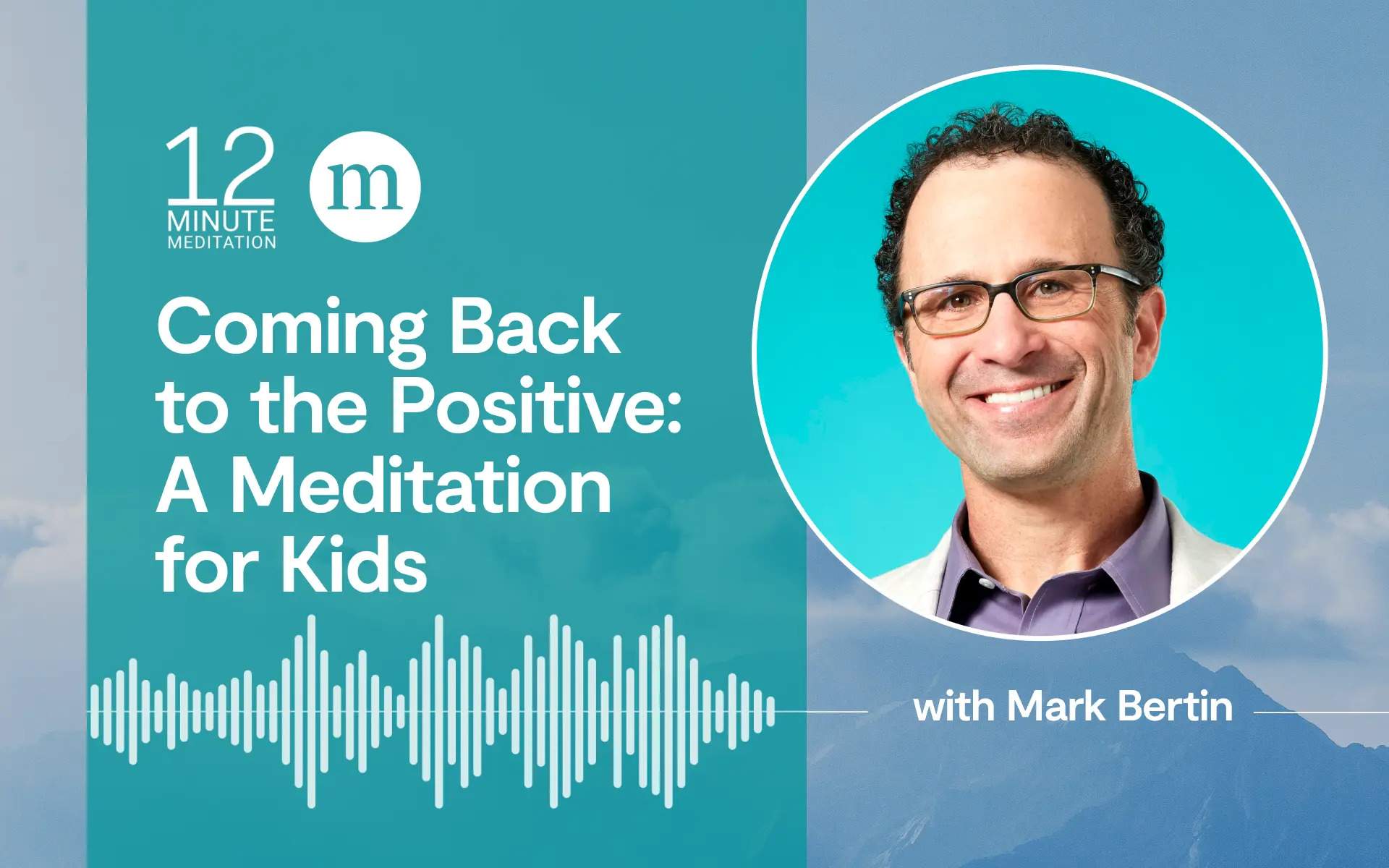
  • A Meditation for Kids: Coming Back to the Positive

    A Meditation for Kids: Coming Back to the Positive

    What went well today? Kids and teens can explore this eight-minute guided meditation for noticing the positive.

    Summary

    • Children often focus on scary or unpleasant thoughts, which can effect their mental health.
    • This short kids’ meditation uses conscious breathing and happy thoughts to help them notice the good and feel more positive.

    Our brains are hardwired to notice the negative. It’s part of how our ancient ancestors were able to survive in constantly threatening environments.  

    But this negativity bias can also make it difficult for us and our kids, even in our comparatively less threatening environments, to navigate other daily stressors, like big tests, arguments, or disappointments. 

    In this practice specifically designed for younger meditators, Dr. Mark Bertin shows kids how to gently guide their attention back to the positive things they might have missed, in order to help soothe the nervous system. 

    A Meditation for Kids: Coming Back to the Positive

    1. Lie down somewhere comfortable. Let your arms and legs fall to the ground. Close your eyes gently.
    2. Start to notice how your body changes with each breath you take. Each time you breathe, your belly moves up, and your belly moves down. If it is easier, put a hand on your belly. Or if you want, put a stuffed animal there.
    3. Each time you breathe, your belly moves. Your hand, or your toy, rises, and then falls. See if you can count ten breaths that way. Breathing in, one, breathing out, one. (Repeat for nine more inhales, and nine more exhales.)
    4. When you lose count, don’t worry about it. That’s normal, and happens to everyone. Come back to whatever number you last remember.
    5. Now, shift your attention to your day. Breathing in, focus on your breath as your belly goes up. Breathing out, focus on something that went well today.
    6. With each breath: breathing in, noticing your belly move, and with each breath out, noticing something that went well today.
    7. Now, picture something about yourself that makes you proud. Breathing in, focus on your belly moving. Breathing out, picture something that makes you proud about yourself. If nothing comes to mind, that sometimes happens. If that’s how you feel, picture what you’d wish for yourself instead.
    8. Finally, bring someone to mind who makes you happy. Before we end, try one more practice. Breathing in, notice your belly move. And now, breathing out picture someone who makes you happy.
    9. As you come to the end of this practice, take a few deep breaths, and start to wiggle your arms and legs. Pause and decide what you’d like to do next.
    10. It’s normal to have thoughts that make us feel scared or bad. We should never ignore anything important, but it’s useful to focus on the rest of our lives too. Take a few minutes every day to notice what has gone well, and see what happens next.


    Source link

  • When Life Gives You Lemons: How to Flip Negative Thoughts into Positive Ones

    When Life Gives You Lemons: How to Flip Negative Thoughts into Positive Ones

    Introduction

    The phrase "when life gives you lemons, make lemonade" has been a popular saying for decades, encouraging people to make the most of the situations they are given. However, this phrase can be applied to more than just tangible objects. It can also be used to describe the way we think and react to negative thoughts and emotions. In this article, we will explore the concept of flipping negative thoughts into positive ones, and provide tips and strategies for doing so.

    Understanding Negative Thoughts

    Negative thoughts can be overwhelming and debilitating, making it difficult to function and enjoy life. They can stem from a variety of sources, including past experiences, current circumstances, and future worries. Negative thoughts can also be self-perpetuating, creating a cycle of negativity that is hard to break. However, it is essential to recognize that negative thoughts are not necessarily based on reality, but rather on our perception of reality. By changing our perception, we can change our thoughts and emotions.

    Identifying Negative Thoughts

    The first step in flipping negative thoughts into positive ones is to identify them. This requires self-awareness and introspection. Take time to reflect on your thoughts and emotions, and notice when you are experiencing negative thoughts. Ask yourself questions like "what am I thinking right now?" and "how is this thought making me feel?" Be honest with yourself, and try not to judge your thoughts. Remember, the goal is to acknowledge and understand your thoughts, not to suppress or deny them.

    Challenging Negative Thoughts

    Once you have identified your negative thoughts, the next step is to challenge them. This involves examining the evidence for and against your thoughts, and looking for alternative explanations. Ask yourself questions like "is this thought really true?" and "is there another way to look at this situation?" Be open-minded and willing to consider different perspectives. Remember, your thoughts are not facts, but rather interpretations of facts.

    Reframing Negative Thoughts

    Reframing negative thoughts involves looking at a situation from a different angle. It requires creativity and flexibility, as well as a willingness to let go of your original perspective. Ask yourself questions like "what can I learn from this experience?" and "how can I grow as a person?" Focus on the possibilities and opportunities, rather than the obstacles and challenges. Remember, every cloud has a silver lining, and every difficult situation has the potential for growth and learning.

    Practicing Positive Self-Talk

    Positive self-talk is an essential part of flipping negative thoughts into positive ones. It involves speaking to yourself in a kind, supportive, and encouraging way. Use affirmations like "I am capable and competent" and "I can handle whatever comes my way." Repeat these affirmations to yourself regularly, especially when you are feeling stressed or anxious. Remember, the way you talk to yourself matters, and positive self-talk can help to boost your confidence and self-esteem.

    Cultivating Gratitude

    Gratitude is a powerful tool for flipping negative thoughts into positive ones. It involves focusing on the good things in your life, rather than the bad. Make a conscious effort to appreciate the people, experiences, and things that bring you joy and fulfillment. Keep a gratitude journal, write down three things you are grateful for each day, and reflect on why they are important to you. Remember, gratitude can help to shift your perspective and improve your mood.

    Seeking Social Support

    Social support is essential for flipping negative thoughts into positive ones. It involves surrounding yourself with people who are positive, supportive, and encouraging. Seek out friends, family members, or colleagues who can offer you guidance, advice, and emotional support. Join a community or group that aligns with your interests and values, and engage in activities that bring you joy and fulfillment. Remember, social support can help to boost your mood, improve your self-esteem, and increase your resilience.

    Taking Care of Yourself

    Taking care of yourself is essential for flipping negative thoughts into positive ones. It involves prioritizing your physical, emotional, and mental well-being. Make time for activities that nourish your body, mind, and spirit, such as exercise, meditation, and spending time in nature. Get enough sleep, eat a healthy diet, and engage in activities that bring you joy and relaxation. Remember, taking care of yourself can help to improve your mood, increase your energy, and enhance your overall well-being.

    Conclusion

    Flipping negative thoughts into positive ones is a process that takes time, effort, and practice. It requires self-awareness, introspection, and a willingness to challenge and reframe your thoughts. By practicing positive self-talk, cultivating gratitude, seeking social support, and taking care of yourself, you can shift your perspective and improve your mood. Remember, life is full of ups and downs, but with the right mindset and strategies, you can turn obstacles into opportunities and make the most of every situation.

    FAQs

    Q: How can I start to flip negative thoughts into positive ones?
    A: Start by identifying your negative thoughts and challenging them. Practice positive self-talk, cultivate gratitude, and seek social support. Take care of yourself physically, emotionally, and mentally, and make time for activities that nourish your body, mind, and spirit.
    Q: What if I am struggling to flip negative thoughts into positive ones?
    A: Don’t give up! Flipping negative thoughts into positive ones is a process that takes time, effort, and practice. Be patient with yourself, and remember that it’s okay to make mistakes. Seek out support from friends, family members, or a therapist, and try different strategies until you find what works for you.
    Q: Can flipping negative thoughts into positive ones really make a difference in my life?
    A: Yes! Flipping negative thoughts into positive ones can have a profound impact on your life. It can improve your mood, increase your self-esteem, and enhance your overall well-being. It can also help you to develop a more positive and resilient mindset, which can help you to navigate life’s challenges with greater ease and confidence.
    Q: How can I maintain a positive mindset in the face of adversity?
    A: Maintaining a positive mindset in the face of adversity requires practice, patience, and persistence. Focus on the present moment, and try not to worry about the future or dwell on the past. Practice gratitude, positive self-talk, and seek social support. Take care of yourself physically, emotionally, and mentally, and make time for activities that bring you joy and fulfillment.
    Q: Can anyone learn to flip negative thoughts into positive ones?
    A: Yes! Anyone can learn to flip negative thoughts into positive ones, regardless of their background, circumstances, or personality. It requires a willingness to learn, practice, and take action, but the benefits can be profound and life-changing. Remember, flipping negative thoughts into positive ones is a skill that can be developed over time with patience, persistence, and practice.

  • Don’t Let Distance Ruin Your Relationships! How Technology Can Help bridge the gap – article about using technology as a tool to maintain positive relationships over long distances or during isolating periods such as a pandemic.

    Don’t Let Distance Ruin Your Relationships! How Technology Can Help bridge the gap – article about using technology as a tool to maintain positive relationships over long distances or during isolating periods such as a pandemic.

    Introduction

    In today’s world, maintaining relationships over long distances or during isolating periods can be challenging. With the rise of globalization, people are more likely to move away from their families and friends for work, education, or other opportunities. Additionally, the COVID-19 pandemic has forced many people to stay at home, making it difficult to maintain social connections. However, with the help of technology, it’s possible to bridge the gap and stay connected with loved ones, no matter where they are in the world.

    Staying Connected through Video Calls

    One of the most effective ways to maintain relationships over long distances is through video calls. Platforms like Zoom, Skype, and Google Meet allow people to connect face-to-face, even if they’re on opposite sides of the world. Video calls can help to reduce feelings of loneliness and isolation, and can even help to strengthen relationships by allowing people to communicate in a more personal way. Whether it’s a weekly catch-up with family members or a daily check-in with friends, video calls can help to keep relationships strong and healthy.

    Social Media and Messaging Apps

    Social media and messaging apps are another great way to stay connected with loved ones over long distances. Platforms like Facebook, Instagram, and WhatsApp allow people to share updates, photos, and messages with each other, helping to stay connected and up-to-date on each other’s lives. Social media can also be used to share experiences, such as watching the same TV show or movie, and discussing it together. Messaging apps like WhatsApp and Facebook Messenger also allow people to send voice messages, make voice calls, and even send files to each other.

    Online Communities and Forums

    Online communities and forums can also provide a sense of connection and belonging, even when people are physically isolated. Joining online groups or forums related to shared interests or hobbies can help people connect with others who share similar passions and interests. Online communities can also provide a safe space for people to share their thoughts, feelings, and experiences, and can help to reduce feelings of loneliness and isolation.

    Virtual Events and Activities

    Virtual events and activities can also help to bridge the gap and maintain relationships over long distances. Online events, such as concerts, festivals, and conferences, can be attended remotely, allowing people to participate and connect with others who share similar interests. Virtual activities, such as online gaming, virtual book clubs, and online yoga classes, can also provide a sense of connection and community. These activities can help to create shared experiences and memories, even when people are physically apart.

    Sharing Photos and Memories

    Sharing photos and memories is another great way to maintain relationships over long distances. Platforms like Instagram and Facebook allow people to share photos and updates with each other, helping to stay connected and up-to-date on each other’s lives. Sharing memories, such as photos from special events or vacations, can also help to strengthen relationships by creating a sense of shared history and experience.

    The Importance of Regular Communication

    Regular communication is key to maintaining healthy and strong relationships over long distances. Whether it’s through video calls, messaging apps, or social media, regular communication can help to reduce feelings of loneliness and isolation, and can even help to strengthen relationships. Scheduling regular check-ins or catch-ups can help to ensure that relationships stay strong and healthy, even when people are physically apart.

    Overcoming Challenges and Barriers

    Despite the many benefits of technology in maintaining relationships over long distances, there are also challenges and barriers to overcome. Time zone differences, internet connectivity issues, and language barriers can all make it difficult to stay connected. However, with a little creativity and flexibility, these challenges can be overcome. For example, scheduling calls in advance can help to accommodate time zone differences, and using translation apps or software can help to overcome language barriers.

    Building and Maintaining Trust

    Building and maintaining trust is crucial in any relationship, and can be particularly challenging when people are physically apart. However, with regular communication and transparency, trust can be built and maintained over long distances. Being open and honest, following through on commitments, and being reliable can all help to build trust and strengthen relationships.

    The Future of Long-Distance Relationships

    The future of long-distance relationships is exciting and full of possibilities. As technology continues to evolve and improve, it’s likely that we’ll see new and innovative ways to stay connected with loved ones over long distances. Virtual reality, augmented reality, and artificial intelligence are all likely to play a bigger role in the future of long-distance relationships, providing new and immersive ways to connect and communicate.

    Conclusion

    In conclusion, technology can be a powerful tool in maintaining positive relationships over long distances or during isolating periods. Whether it’s through video calls, social media, online communities, or virtual events, there are many ways to stay connected and build strong, healthy relationships, even when people are physically apart. By staying connected, being open and honest, and building trust, relationships can thrive, even over long distances. As technology continues to evolve and improve, it’s likely that we’ll see new and innovative ways to stay connected and build strong, healthy relationships, no matter where we are in the world.

    FAQs

    Q: What are some of the best video call platforms for long-distance relationships?

    A: Some of the best video call platforms for long-distance relationships include Zoom, Skype, and Google Meet. These platforms offer high-quality video and audio, and are easy to use, making them perfect for staying connected with loved ones over long distances.

    Q: How can I stay connected with friends and family during a pandemic?

    A: Staying connected with friends and family during a pandemic can be challenging, but there are many ways to do so. Video calls, social media, and messaging apps can all help to stay connected and up-to-date on each other’s lives. Online communities and forums can also provide a sense of connection and belonging.

    Q: What are some tips for building and maintaining trust in long-distance relationships?

    A: Building and maintaining trust in long-distance relationships requires regular communication, transparency, and reliability. Being open and honest, following through on commitments, and being reliable can all help to build trust and strengthen relationships.

    Q: Can technology really help to bridge the gap in long-distance relationships?

    A: Yes, technology can really help to bridge the gap in long-distance relationships. Video calls, social media, online communities, and virtual events can all help to create a sense of connection and community, even when people are physically apart.

    Q: How can I overcome time zone differences and other challenges in long-distance relationships?

    A: Overcoming time zone differences and other challenges in long-distance relationships requires creativity and flexibility. Scheduling calls in advance, using translation apps or software, and being patient and understanding can all help to overcome these challenges and stay connected with loved ones.

  • The Science of Happiness: Uncovering the Surprising Benefits of Positive Thinking

    The Science of Happiness: Uncovering the Surprising Benefits of Positive Thinking

    Introduction to the Science of Happiness

    The pursuit of happiness is a fundamental human endeavor. For centuries, philosophers, psychologists, and scientists have explored the concept of happiness, seeking to understand its underlying mechanisms and how it can be cultivated. Recent advances in the field of positive psychology have led to a significant shift in our understanding of happiness, revealing that it is not just a fleeting emotional state, but a complex and multifaceted construct that has a profound impact on our overall well-being. In this article, we will delve into the science of happiness, uncovering the surprising benefits of positive thinking and exploring the various strategies that can be employed to cultivate happiness in our daily lives.

    The Benefits of Positive Thinking

    Positive thinking has long been touted as a key component of happiness, but its benefits extend far beyond the realm of emotional well-being. Research has shown that positive thinking can have a profound impact on our physical health, relationships, and even our career success. When we think positively, our brains release neurotransmitters such as dopamine, serotonin, and endorphins, which have been shown to have a range of benefits, including reducing stress and anxiety, improving mood, and even boosting our immune system. Furthermore, positive thinking has been linked to increased resilience, creativity, and problem-solving ability, making it an essential tool for navigating the challenges of everyday life.

    The Neuroscience of Happiness

    So, what exactly happens in our brains when we experience happiness? Neuroscientists have made significant progress in understanding the neural mechanisms underlying happiness, and their findings are fascinating. When we experience pleasure or reward, our brains release dopamine, a neurotransmitter that plays a key role in motivation, pleasure, and reward processing. Dopamine release is associated with the activation of the brain’s reward system, which includes structures such as the ventral tegmental area and the nucleus accumbens. Additionally, happiness has been linked to increased activity in the prefrontal cortex, an area responsible for executive function, decision-making, and emotional regulation. By understanding the neural mechanisms underlying happiness, we can gain insight into the ways in which we can cultivate happiness in our daily lives.

    The Role of Gratitude in Happiness

    Gratitude is a powerful emotion that has been shown to have a significant impact on our happiness. When we focus on what we are grateful for, we begin to shift our perspective, moving away from a focus on what is lacking in our lives and towards an appreciation for what we already have. Research has shown that practicing gratitude can have a range of benefits, including increased happiness, improved relationships, and even better physical health. So, how can we cultivate gratitude in our daily lives? One effective strategy is to keep a gratitude journal, where we write down three things we are grateful for each day. This simple practice can help us develop a greater appreciation for the good things in our lives and shift our focus towards the positive.

    The Importance of Social Connections in Happiness

    Social connections are a critical component of happiness, and research has shown that people with strong social relationships tend to be happier and healthier than those who are isolated or disconnected. When we have close relationships with others, we experience increased feelings of belonging, support, and validation, all of which are essential for our emotional well-being. Furthermore, social connections have been shown to have a range of benefits, including reduced stress, improved mental health, and even increased longevity. So, how can we cultivate stronger social connections in our lives? One effective strategy is to prioritize face-to-face interactions, such as meeting friends for coffee or joining a social club. By investing in our social relationships, we can build stronger, more meaningful connections with others and cultivate greater happiness in our lives.

    The Impact of Mindfulness on Happiness

    Mindfulness is a powerful practice that has been shown to have a significant impact on our happiness. When we are mindful, we are fully present in the moment, paying attention to our thoughts, feelings, and sensations without judgment. This increased awareness allows us to develop a greater appreciation for the present moment and to cultivate a sense of acceptance and compassion for ourselves and others. Research has shown that mindfulness can have a range of benefits, including reduced stress, improved emotional regulation, and even increased happiness. So, how can we cultivate mindfulness in our daily lives? One effective strategy is to practice meditation or deep breathing exercises, which can help us develop greater awareness and presence in the moment.

    The Role of Self-Care in Happiness

    Self-care is an essential component of happiness, and research has shown that people who prioritize self-care tend to be happier and healthier than those who do not. When we take care of our physical, emotional, and mental needs, we experience increased feelings of relaxation, rejuvenation, and overall well-being. So, how can we prioritize self-care in our lives? One effective strategy is to schedule self-care activities into our daily or weekly routine, such as taking a relaxing bath, reading a book, or practicing yoga. By prioritizing self-care, we can cultivate greater happiness and well-being in our lives.

    Conclusion

    The science of happiness is a complex and multifaceted field that has revealed a range of surprising benefits to positive thinking and happiness. By understanding the neural mechanisms underlying happiness, cultivating gratitude, prioritizing social connections, practicing mindfulness, and taking care of ourselves, we can cultivate greater happiness and well-being in our lives. Remember, happiness is not just a fleeting emotional state, but a complex and multifaceted construct that has a profound impact on our overall well-being. By incorporating these strategies into our daily lives, we can build stronger, more meaningful relationships with others, improve our physical and mental health, and cultivate a greater sense of purpose and fulfillment.

    FAQs

    Q: What is the most effective way to cultivate happiness in my life?
    A: The most effective way to cultivate happiness in your life is to incorporate a range of strategies, including practicing gratitude, prioritizing social connections, practicing mindfulness, and taking care of yourself.

    Q: Can positive thinking really make a difference in my life?
    A: Yes, positive thinking can have a significant impact on your life, from improving your emotional well-being to boosting your physical health and career success.

    Q: How can I prioritize self-care in my busy life?
    A: One effective strategy is to schedule self-care activities into your daily or weekly routine, such as taking a relaxing bath, reading a book, or practicing yoga.

    Q: What is the role of neuroscience in understanding happiness?
    A: Neuroscience has made significant progress in understanding the neural mechanisms underlying happiness, revealing that happiness is associated with increased activity in the brain’s reward system and prefrontal cortex.

    Q: Can I really change my happiness levels by changing my thoughts?
    A: Yes, research has shown that our thoughts and attitudes have a significant impact on our happiness levels, and that by changing our thoughts, we can cultivate greater happiness and well-being in our lives.

    Q: How can I cultivate stronger social connections in my life?
    A: One effective strategy is to prioritize face-to-face interactions, such as meeting friends for coffee or joining a social club, and to invest in your relationships with others.

    Q: What is the benefit of practicing mindfulness?
    A: Mindfulness has been shown to have a range of benefits, including reduced stress, improved emotional regulation, and even increased happiness.

    Q: Can happiness be learned?
    A: Yes, happiness can be learned, and research has shown that by incorporating strategies such as gratitude, social connections, mindfulness, and self-care into our daily lives, we can cultivate greater happiness and well-being.

  • From Feeling Lonely to Feeling Connected: Simple Tips for Building Positive Relationships in Your Community – article about making an effort to connect with others, even in solo activities like volunteering or book clubs.

    From Feeling Lonely to Feeling Connected: Simple Tips for Building Positive Relationships in Your Community – article about making an effort to connect with others, even in solo activities like volunteering or book clubs.

    From Feeling Lonely to Feeling Connected: Simple Tips for Building Positive Relationships in Your Community

    Feeling lonely is a common experience that can be overwhelming and isolating. According to a survey conducted by the American Psychological Association, 47% of Americans report feeling lonely, with young adults (18-22 years old) and older adults (65+ years old) being the most likely to feel lonely. However, it’s important to know that feeling lonely doesn’t have to be a permanent state. By making a conscious effort to connect with others, you can build strong, meaningful relationships in your community.

    Breaking the Ice: Small Steps to Building Connections

    One of the most significant obstacles to building connections with others is often our own fear of rejection or judgment. However, small, low-risk activities can help you get started. Here are a few ideas:

    • Join a book club: Book clubs are an excellent way to meet fellow book lovers and engage in meaningful discussions. You can find book clubs in your local library, community center, or even online.
    • Volunteer: Volunteering is another great way to meet like-minded individuals while doing something good for your community. You can search for local organizations or charities that align with your values and interests.
    • Take a class or workshop: Whether it’s a cooking class, language course, or art workshop, taking a class or workshop is a great way to meet new people who share similar interests.

    Building Relationships: Tips and Tricks

    Once you’ve started making connections, it’s essential to nurture those relationships. Here are a few tips for building strong, meaningful relationships:

    • Listen actively: Pay attention to what others are saying, ask open-ended questions, and show genuine interest in their lives.
    • Be genuine and authentic: Don’t try to be someone you’re not or pretend to have interests you don’t really have. Be yourself, and others will appreciate your authenticity.
    • Follow up: If you hit it off with someone, make an effort to follow up and stay in touch. Suggest getting together for coffee or another activity.

    Connecting with Others in Your Community

    Even small, solo activities can be a great way to meet new people and build connections. Here are a few ideas:

    • Attend community events: Whether it’s a concert, festival, or street fair, attending community events can be a fun and laid-back way to meet new people.
    • Join a community garden or park: Many communities have gardens or parks that offer a space for residents to meet, socialize, and connect.
    • Take a walking group: Join a walking group, and you’ll get some exercise while meeting new people who share similar interests.

    Conclusion

    Building positive relationships in your community doesn’t have to be overwhelming. By taking small, manageable steps, you can start building connections with others. Remember to be genuine, listen actively, and follow up with new contacts. Most importantly, be patient and kind to yourself as you build relationships – it takes time and effort, but the rewards are well worth it.

    FAQs

    Q: I’m hesitant to join a book club or volunteer because I’m not sure if I’ll fit in.
    A: That’s completely normal! It’s okay to feel a little anxious about trying new things. Just take the leap and remember that it’s okay to quiet the room with questions or share your thoughts. You’ll be surprised at how much you have in common with others.

    Q: I’m not sure what to talk about in a group setting. What should I say?
    A: Start with light, casual conversation – topics like your job, hobbies, or favorite movies can be great conversation starters. Remember to listen actively and show genuine interest in what others are saying.

    Q: It feels like I tried connecting with people, but nothing seems to work. What am I doing wrong?
    A: It’s not uncommon to face setbacks or feel like you’re not connecting with others. Keep in mind that building relationships takes time, and it’s okay to face some challenges along the way. Try to re-evaluate your approach, and don’t give up – you might just need to try a different approach or find a different group that aligns with your interests and values.

  • From Fear to Confidence: How Positive Thinking Can Transform Your Career

    From Fear to Confidence: How Positive Thinking Can Transform Your Career

    From Fear to Confidence: How Positive Thinking Can Transform Your Career

    Are you tired of feeling nervous, anxious, and self-doubting about your career? Do you often find yourself second-guessing your abilities and worried about making mistakes? You’re not alone. Many of us struggle with imposter syndrome, fear of failure, and self-doubt, which can hold us back from reaching our full potential. However, the good news is that positive thinking can be a game-changer in transforming your career and helping you achieve confidence and success.

    The Power of Positive Thinking

    Positive thinking is the practice of focusing on the positive aspects of a situation, rather than dwelling on the negative. It’s a powerful tool that can help you overcome self-doubt, build confidence, and achieve your goals. Research has shown that people who practice positive thinking tend to be more optimistic, resilient, and successful in their personal and professional lives.

    How Positive Thinking Can Transform Your Career

    So, how can positive thinking transform your career? Here are a few ways:

    • Boosts Confidence: When you focus on the positive, you begin to see yourself in a more positive light. You start to recognize your strengths, accomplishments, and abilities, which boosts your confidence and gives you the courage to tackle new challenges.
    • Improves Performance: With increased confidence, you’re more likely to take on new responsibilities, innovate, and try new approaches, which can lead to better performance reviews, promotions, and career advancement.
    • Buys You Time: When you’re positive and focused, you’re more likely to take calculated risks, rather than playing it safe. This can help you seize opportunities and stay ahead of the competition.
    • Enhances Resilience: Positive thinking helps you bounce back from setbacks, failures, and rejections. It allows you to learn from mistakes, and try again, rather than getting discouraged and giving up.
    • Strengthens Networks: When you exude confidence and positivity, others are more likely to notice and be drawn to you, leading to stronger professional relationships, mentorship, and potential job opportunities.

    Overcoming Fear and Self-Doubt

    So, how do you overcome fear and self-doubt to unlock the benefits of positive thinking? Here are a few strategies to help you get started:

    • Reframe Negative Thoughts: The next time you catch yourself thinking negative thoughts, challenge them by reframing them in a positive light. For example, instead of "I’ll never be good enough," try "I’ll learn and grow from this experience."
    • Practice Self-Care: Take care of your physical, emotional, and mental well-being. Get enough sleep, exercise regularly, and engage in activities that bring you joy and relaxation.
    • Set Realistic Goals: Break down large goals into smaller, achievable steps. Celebrate your successes, no matter how small, to build momentum and confidence.
    • Seek Support: Surround yourself with positive and supportive people who encourage and believe in you.
    • Ask for Help: Don’t be afraid to ask for help when you need it. Seek guidance from mentors, coaches, or peers who can offer valuable insights and advice.

    Conclusion

    From fear to confidence, positive thinking can be a powerful catalyst for transformation in your career. By reframing negative thoughts, practicing self-care, setting realistic goals, seeking support, and asking for help, you can overcome self-doubt and unlock your full potential. Remember, confidence is not the absence of fear, but the willingness to take action despite it. Start your journey towards positive thinking and confidence-building today, and watch your career soar to new heights.

    FAQs

    Q: Is positive thinking just a matter of attitude?
    A: While attitude plays a significant role, positive thinking is a practice that requires intentional effort and discipline.

    Q: Can anyone learn to think positively?
    A: Yes, anyone can learn to think positively. It’s a skill that can be developed with practice and patience.

    Q: How long does it take to see results?
    A: The time it takes to see results varies, but with consistent effort, you can start to notice improvements in your mood, energy, and performance within a few weeks.

    Q: Is positive thinking a one-size-fits-all solution?
    A: While positive thinking is a universal principle, everyone’s journey is unique, and what works for one person may not work for another. Be patient, and experiment with different approaches to find what works best for you.

    Q: Can positive thinking fix all my problems?
    A: While positive thinking can help you navigate challenges, it’s not a silver bullet. It’s just one of many tools to help you overcome obstacles and achieve success. Be realistic about the potential outcomes and challenges you’ll face.

  • The Power of Positive Thinking: How to Change Your Mindset

    The Power of Positive Thinking: How to Change Your Mindset

    The Power of Positive Thinking: How to Change Your Mindset

    It’s estimated that our thoughts and emotions play a significant role in shaping our lives. Positive thinking is the process of cultivating a positive mindset, which can have a profound impact on our well-being, relationships, and overall success. In this article, we’ll explore the power of positive thinking, its effects on our lives, and provide practical tips on how to adopt a positive mindset.

    The Psychology of Positive Thinking

    Positive thinking is not just a fleeting feeling or a temporary mood swing; it’s a way of perceiving the world and ourselves. It’s a state of mind that is characterized by optimism, confidence, and resilience. Research has shown that people who practice positive thinking tend to experience a range of benefits, including:

    • Improved mental health and well-being
    • Better relationships and communication skills
    • Increased motivation and productivity
    • Enhanced creativity and problem-solving skills
    • Greater resilience and adaptability in the face of challenges

    Breaking Down Negative Patterns

    To cultivate a positive mindset, it’s essential to identify and challenge negative thought patterns. This process is often referred to as cognitive re-framing. By recognizing the emotions and thoughts that lead to negative thinking, we can begin to reframe them in a more positive light. This requires self-awareness, self-reflection, and a willingness to change.

    Practical Strategies for Positive Thinking

    So, how can we cultivate a positive mindset? Here are some practical strategies to get you started:

    1. Practice Gratitude: Take a few minutes each day to reflect on the things you’re thankful for. This can be as simple as a good cup of coffee or a beautiful sunset.
    2. Reframe Negative Thoughts: Challenge those pesky negative thoughts by reframing them in a more positive light. For example, instead of "I’m a failure," try reframing it as "I made a mistake, but I can learn from it."
    3. Focus on the Present: Rather than dwelling on the past or worrying about the future, focus on the present moment. Mindfulness practices such as meditation and deep breathing can be incredibly helpful in achieving this.
    4. Surround Yourself with Positivity: Positive people, positive environments, and positive experiences can have a significant impact on our mood and outlook. Seek out people who uplift and inspire you, and prioritize self-care activities that bring you joy.
    5. Celebrate Small Wins: Acknowledge and celebrate your achievements, no matter how small they may seem. This can help to build confidence and reinforce positive thinking patterns.

    The Power of Affirmations

    Affirmations are positive statements that can help to rewire our brains and cultivate a positive mindset. Repeat these affirmations regularly, with conviction and emotion, to program your mind with positive thoughts and feelings. Here are some examples:

    • "I am capable and competent."
    • "I am worthy of love and respect."
    • "I trust myself and my abilities."
    • "I am strong and resilient."
    • "I can do this."

    Conclusion

    The power of positive thinking is undeniable. By understanding the psychology of positive thinking, identifying and challenging negative patterns, and practicing practical strategies, we can cultivate a positive mindset. With consistent effort and commitment, we can reap the benefits of a positive mindset, including improved mental health, stronger relationships, and increased success.

    Frequently Asked Questions

    Q: How can I overcome negative thought patterns?
    A: Start by becoming more aware of your thoughts and emotions, and challenge negative thoughts by re-framing them in a more positive light.

    Q: How long does it take to see the benefits of positive thinking?
    A: The benefits of positive thinking can be experienced almost immediately, but it’s essential to be consistent and patient, as the effects can take time to develop.

    Q: Can I force myself to think positively, or is it something that comes naturally?
    A: While it’s possible to fake it until you make it, true positive thinking is rooted in self-awareness, self-reflection, and a willingness to change. It’s a journey, not a destination.

    Q: Is it possible to be positive all the time?
    A: No, it’s normal to experience a range of emotions, including negative ones. The key is to learn to manage and regulate these emotions, rather than letting them dictate your life.

    Q: Can I use positive thinking to overcome traumatic experiences?
    A: While positive thinking can be incredibly powerful, it’s not a replacement for professional help or therapy. If you’re struggling with trauma, it’s essential to seek out appropriate support and resources.

  • Texas Doctor Accused of Being High During Surgeries Loses License After Testing Positive for Cocaine

    Texas Doctor Accused of Being High During Surgeries Loses License After Testing Positive for Cocaine

    A Houston urologist had his medical license revoked after testing positive for cocaine, following previous allegations of him performing surgeries under the influence.

    Dr. Nathan Robert Starke reportedly exhibited signs of impairment while consulting a patient before a prostate biopsy in August 2024. Records indicated he was absent for all but three minutes of one surgical procedure, despite being the attending physician, as reported by KTRK.

    By September, Houston Methodist had suspended him and later confirmed that he was no longer working at the hospital.

    After the Texas Medical Board to suspend his license in September, drug tests submitted in October indicated the presence of cocaine and kratom in Starke’s system. Kratom is a controversial supplement often associated with energy boosts and managing withdrawal symptoms, as reported by ABC13.


    Since earning his medical license in 2017, Starke’s legal troubles shadowed his career. Within a month of being licensed, he was arrested for driving under the influence. His record also includes a 2023 charge for assaulting a former girlfriend, leaving her with a chipped tooth and bruises.

    These incidents raised red flags about his fitness to practice, leading to mandated drug and alcohol screenings last year.

    “You are putting people’s lives in your hands,” a former patient told ABC13.

    Starke previously served as the head of the men’s health clinic, a position he held until the recent suspension. The hospital has since erased his profile. Houston Methodist’s Fannin Street location, where Starke performed surgeries, is currently listed online as “permanently closed.”

    What’s next for the doctor remains unclear, yet FOX26 reported that he could get his license back.

    Substance use was the leading cause of actions against U.S. physicians’ licenses, comprising 76.3% of cases between 2004 and 2020, a 2022 study found.

    Source link

  • The Power of Human Connection: How Surrounding yourself with Good Peeps Improves Mental and Physical Health – article about the benefits of having positive social relationships in one’s life.

    The Power of Human Connection: How Surrounding yourself with Good Peeps Improves Mental and Physical Health – article about the benefits of having positive social relationships in one’s life.

    The Power of Human Connection: How Surrounding yourself with Good Peeps Improves Mental and Physical Health

    In today’s fast-paced, technology-driven world, it’s easy to get caught up in the hustle and bustle of daily life and neglect the importance of human connection. We often prioritize work, social media, and other digital distractions over face-to-face interactions with others. However, surrounding yourself with good people can have a profound impact on both your mental and physical health.

    The Science Behind Human Connection

    Studies have shown that social isolation can have severe consequences on our well-being. In fact, research has linked social isolation to a range of negative outcomes, including:

    • Increased risk of depression and anxiety
    • Weakened immune systems
    • Higher blood pressure
    • Increased risk of heart disease
    • Shorter lifespan

    On the other hand, surrounding yourself with positive social relationships can have numerous benefits. Here are just a few examples:

    • Improved Mental Health: Social connections can help reduce stress, anxiety, and depression by providing emotional support and a sense of belonging.
    • Boosted Immune System: Studies have shown that people with strong social connections tend to have stronger immune systems and are less likely to get sick.
    • Increased Happiness: Surrounding yourself with positive people can increase feelings of happiness and overall well-being.
    • Better Physical Health: Social connections have been linked to lower blood pressure, healthier weight, and a reduced risk of chronic diseases.

    The Power of Positive Relationships

    So, what makes a positive social relationship? It’s not just about having a large social network – it’s about having meaningful, supportive relationships with others. Here are some characteristics of positive relationships:

    • Emotional Support: People who provide emotional support and validation can help you feel seen, heard, and understood.
    • Trust: Trust is essential in any relationship. When you feel trusted and secure, you’re more likely to open up and be your authentic self.
    • Communication: Effective communication is key to any successful relationship. When you can express yourself freely and openly, you’re more likely to feel heard and understood.
    • Empathy: Empathetic relationships can help you feel understood and validated, which can be especially important during times of stress or uncertainty.

    Building Positive Relationships

    So, how can you build positive relationships in your life? Here are a few tips:

    • Put Away Your Phone: Make an effort to put away your phone and focus on the people around you.
    • Practice Active Listening: When engaging with others, make an effort to truly listen and understand their perspective.
    • Show Appreciation: Express gratitude and appreciation for the people in your life – it can go a long way in building strong relationships.
    • Be Vulnerable: Don’t be afraid to be vulnerable and open with others. It’s often the most meaningful connections that come from being authentic and honest.

    Conclusion

    Surrounding yourself with good people can have a profound impact on both your mental and physical health. By building positive relationships and prioritizing human connection, you can reduce stress, boost your immune system, and increase feelings of happiness and well-being. So, take the time to nurture your relationships and prioritize the people in your life. Your health and happiness will thank you!

    FAQs

    Q: How can I build positive relationships in my life?
    A: Start by putting away your phone, practicing active listening, showing appreciation, and being vulnerable with others.

    Q: What are some signs of a positive relationship?
    A: Signs of a positive relationship include emotional support, trust, effective communication, and empathy.

    Q: Can I still have positive relationships if I’m socially anxious?
    A: Yes! While social anxiety can make it challenging to form relationships, there are many ways to build connections without feeling overwhelmed. Start small and focus on building relationships with people who understand and support you.

    Q: How can I prioritize human connection in my busy life?
    A: Make time for face-to-face interactions, schedule regular check-ins with friends and family, and prioritize activities that bring you joy and connection with others.

    Q: What if I’m struggling to form positive relationships?
    A: Don’t be discouraged! Building positive relationships takes time and effort. Start by focusing on small, incremental steps, such as reaching out to a friend or family member, or joining a social group that aligns with your interests.