Tag: Perspective

  • Recibio’s Perspective on the Standard of Care

    Recibio’s Perspective on the Standard of Care

    Cesarean delivery is among the most frequently performed surgeries in the world. Alongside its familiarity, the procedure carries surgical considerations that merit ongoing attention, including wound healing, recovery experience, and postoperative complications. These realities invite continued reflection on how care at the moment of closure can support both short-term recovery and longer-term maternal well-being.

    Recibio, Inc., a Houston-based medical technology company, approaches this landscape with thoughtful acknowledgment of those considerations. Through its work, the company champions the use of a mother’s own amniotic fluid during cesarean wound closure as part of the standard of care, with the intent of supporting wound healing and influencing adhesion formation in a biologically aligned way.

    “From what we’re seeing, even small steps forward in wound care could have a meaningful influence on mothers, newborns, and the systems that support them,” Geoffrey Jones, founder of Recibio, says. Within this context, Recibio’s insights center on how naturally available biological materials, already present during surgery, may be thoughtfully reintegrated into care pathways.

    Amniotic tissue and fluid have drawn sustained interest across regenerative medicine for their distinctive biological properties, demonstrating useful characteristics that modulate inflammation, provide microbial defense, and resist tissue adhesion for improved wound healing.

    Research on amniotic-derived materials describes their broad differentiation potential and immunologically compatible profile, qualities that have informed exploration across skin, musculoskeletal, and organ-related applications. This body of work suggests that amniotic fluid offers a supportive biological environment for healing, one that mirrors processes familiar from fetal development while remaining suitable for adult tissues.

    Recibio

    Recibio’s CeaLogic product line emerges from this scientific foundation with a focused clinical application. Designed specifically for women undergoing cesarean delivery, CeaLogic products enable the collection and immediate reapplication of autologous amniotic fluid at the time of surgery. “Basically, we’re taking something from the mother that would normally be donated or discarded and using it to support her healing,” Jones explains. “As it relies on the patient’s own amniotic fluid, there is zero chance of rejection, and it easily fits into standard surgical practice.”

    The mechanism guiding this approach focuses on leveraging cells and bioactive components already present in amniotic fluid. These elements are understood to participate in tissue signaling, inflammation modulation, and antimicrobial activity, creating conditions that may support repair while preventing scar formation.

    Research supported by Recibio adds clinical nuance to this understanding. In the study titled The Collection and Application of Autologous Amniotic Fluid to Cesarean Delivery Closure, investigators demonstrated that amniotic fluid could be successfully collected and reapplied during closure using the CeaLogic system. Jones states, “Over the six‑week follow‑up, participants reported consistently lower pain scores and no wound complications or infections. To me, that really shows how feasible and reliable this approach is in everyday clinical practice.” The study emphasized the need for continued research while underscoring the promise of this biologically informed technique.

    Complementing these findings, a prospective clinical registry initiative at UTHealth Houston explores autologous amniotic fluid as an antimicrobial adjunct during cesarean delivery. According to the registry proposal, amniotic fluid contains defensins, lactoferrin, and other peptides associated with antimicrobial activity, alongside properties that support epithelialization and comfort during healing. By documenting outcomes such as wound appearance, patient experience, and adverse events, the registry aims to build real-world evidence around how this approach may function alongside existing prophylactic practices as part of the standard of care.

    For patients, the implications extend beyond clinical metrics. “Birth is already an intense moment. If we can support healing in a way that feels intuitive to the body, we offer mothers a path through recovery,” Jones remarks. Recibio’s perspective frames the use of autologous amniotic fluid as a way to support less pain, greater comfort, and a sense of reassurance that healing draws from one’s own biology.

    Scalability remains central to this vision. Cesarean deliveries often occur in regions where access to follow-up care varies widely. Recibio positions CeaLogic as adaptable across any environment where the surgery takes place, from high-volume urban facilities to hospitals serving geographically isolated communities. “Because the system relies on materials already present during surgery and integrates into established procedures, implementation can feel more familiar,” Jones states. This practicality supports broader adoption, including in settings where infection risk carries heightened consequences and resources may be constrained.

    “Our hope is that every mother, regardless of where she delivers, receives the same thoughtful support at closure,” Jones shares. “Using her own amniotic fluid honors the biology of birth and invites healing to continue naturally.” In this future, CeaLogic becomes embedded in routine practice, recognized globally as a standard of care for cesarean delivery.

    As cesarean rates continue to influence obstetric landscapes worldwide, attention to healing at the moment of closure gains renewed significance. Through research-supported exploration, biologically aligned design, and a focus on patient experience, Recibio contributes a humane perspective to this conversation. The result is an evolving model of care that invites collaboration and thoughtful integration into the places where mothers and clinicians meet at one of life’s most meaningful thresholds.
    Source link

  • A 12-Minute Meditation to Widen Your Perspective

    A 12-Minute Meditation to Widen Your Perspective

    This guided mindfulness practice helps us relax and see the full scope of the possibilities in front of us.

    When we feel stressed, anxious, irritated, or angry, one of the things that happens to the mind is that it shrinks down and zooms in on the challenge at hand—the stressful moment, the emotion we don’t want to feel. There’s a researcher, Andrew Huberman at Stanford, who calls this “the soda straw view” of the mind. This is the view of stress. When we’re stressed, our perspective becomes small and possibilities fade away. All we can see is the thing that we want to get rid of, or that we want to change, or that we wish wasn’t happening in our lives, or even in the world. 

    One of the most powerful mindfulness practices we can do is intentionally and consciously expand our perspective, expand the size of our awareness.

    One of the most powerful mindfulness practices we can do is intentionally and consciously expand our perspective, expand the size of our awareness. Research shows that we can do this by adjusting our visual focus. When we shift from an intensely focused stare to something more like a relaxed gaze, taking in a panoramic awareness of our environment,  we’re actually shifting the nervous system itself. It has a similar effect as taking a few deep breaths. 

    We’re going to play with this shift in this guided meditation. You can think of this shift as going from a small, contracted, tight mind to a relaxed, wide open, big mind. From here, we can begin to create this habit in our lives, intentionally creating an experience of relaxation, especially during tense moments. Stress, moments of discomfort, irritation, and anxiety, are often like looking up into the sky at a dark thundercloud, and all we can focus on is the dark cloud. What we’re going to do in this practice is zoom out from that one small cloud and begin to see that surrounding that one small dark cloud in the sky is miles beautiful, clear blue sky. 

    A Guided Meditation to Expand Perspective and Let Go of Stress

    1. Find a comfortable seat. For this practice, unlike many other forms of mindfulness practice, I actually find that it’s very helpful to keep your eyes open. In addition to that, it can be very helpful to align yourself somewhere where you have a view of something. It could just be a view of your house, a view of your room. Maybe you have a window you can look out of. We’re kind of giving ourselves this visual field that’s going to become part of the practice. This practice is unbelievable when done on the top of a mountain, or sitting at a beach, or at a park, or at sunset—but we’ll take whatever we’ve got. 
    2. As always, I like to start by just feeling the sensations in the body. Feeling a sense of relaxation trickle down from your head, through your neck, into your torso, your hips, your legs, all the way down into your feet. Relaxation, it turns out, is the key to this practice. You might also notice the breath. Notice the sensations happening with each inhale and exhale. 
    3. Now let’s turn our attention to the first element of this bigger view: the big mind. And that is the visual field. So just for fun, let’s start by picking an object in your visual field. One small, tiny object. Maybe it’s a tree outside. Maybe it’s a chair in your room. It doesn’t matter what it is, but we’re going to start with the opposite of the wide view that we’re trying to cultivate. Focus in on this one small thing as intently as you possibly can. Bringing all of your visual perception to this one small dot of awareness. Let’s do it for about ten more seconds…and now drop all effort. 
    4. Let your eyes relax. Notice that almost automatically, after a moment of focus like that, the mind just sort of relaxes into this wider, bigger view. Notice what it’s like now to see the panoramic view of whatever’s in front of you. You’re not trying, you’re not effort-ing. You’re just allowing yourself to take in this view, to gaze at what’s in front of you. In a relaxed way, you can even imagine the edges of your visual field slowly expanding. It’s like you’re now the wide-angle camera on your phone. And we do this from a spirit of allowing and receptivity. You’re just allowing yourself to be in this state where you’re gazing at the world in panoramic awareness. The big view. 
    5. Now let’s add one more piece to this. Begin to notice sound. We’re now going to add auditory perception. Just notice sounds that are close by from this open, receptive, relaxed state. You might even notice the sound of each breath. And now allow the scope of your hearing to expand. Noticing sounds in the room. Maybe there’s the sound of ventilation. 
    6. And now in a relaxed and gentle way, allowing yourself to notice sounds even further off into the distance. Maybe the sound of the breeze outside, the sound of birds, just relaxing into this wide, big view. Eyes relaxed and open. Ears relaxed and open. And now we might add one more sense. As you hold this wide open gaze and you hear the sounds you might also notice that sensation is happening in the body. That’s also part of this view. 
    7. Now see what happens when you just allow the sensations of the body to be part of this view. Noticing that your awareness, the scope of your mind, keeps getting bigger, broader, wider, vast. Noticing the visual field. Noticing sounds. Noticing sensations. No attempt to change. Relaxing into things as they are. Seeing this moment with this totally fresh, wide open view. 
    8. Chances are, if you’re new to a practice like this, it takes a little bit of effort and concentration to stay with this kind of a wide open perspective. So the invitation for the next minute or two is to drop that effort. Don’t try. But see if you can still stay connected in some way to this wide open view. If you feel even the slightest part of yourself wanting to push your eyes open or your ears open, or expand the size of your mind, let that go. No effort, but staying in this relaxed, receptive view. Now see if you can just stay in this effortless open view for the next 30 seconds or so. And now, before we come back, I want to give you a few moments just to explore and investigate this bigger perspective.
    9. Staying where you are, just noticing any differences between the way you ordinarily see life or the world, and the way you’re seeing it now. Comparing and contrasting the big mind that we’ve been trying to cultivate to the small mind, which, for most of us, is our home base. 
    10. Now you can bring yourself here. We never really left. For me, when I enter that state of mind, or that mindfulness practice around opening awareness, the scope of the mind, it often feels like my mind becomes almost like a security camera, that I’m just watching the feed of this camera, listening to the feed of the microphones, watching whatever’s happening. It tends to be really boring and not very interesting, but it starts to become incredibly interesting the more my perspective widens. 
    11. One of the things I’d like to do before you go is to give you a practice that you can take with you for the rest of the day, a way of integrating this shift from the small mind to the big mind into your everyday life. The way to do this is really quite simple. It’s to imagine several times throughout the rest of the day that you’re seeing whatever it is that you’re seeing from the perspective of a mountain top. Or maybe it’s the perspective of a beach. Pick your favorite natural metaphor. The basic idea is that if you catch yourself feeling stressed out, or if you notice that you’ve spent the last 45 minutes scrolling Instagram on your phone with a tight-gripped stare, just take 10 seconds, 15 seconds, 30 seconds, to see whatever’s happening from the mountain top. In fact, it can be quite interesting to bring this big perspective into something like email, or the document you’re working on, or surfing the news, or whatever it is. It’s actually so radically different that it can change your entire perspective of some of these things that make up a big part of our day. So that’s the homework for the rest of the day: three moments where you are seeing whatever’s happening in life from the mountaintop, and then see what happens.

    Never Miss a Meditation

    Enter your email below to get new podcast episodes delivered straight to your inbox! You’ll also get insights from expert mindfulness teachers and exclusive deals on Mindful Shop products, events, and more.


    Source link

  • Student Perspective: My lessons in vulnerability

    Student Perspective: My lessons in vulnerability

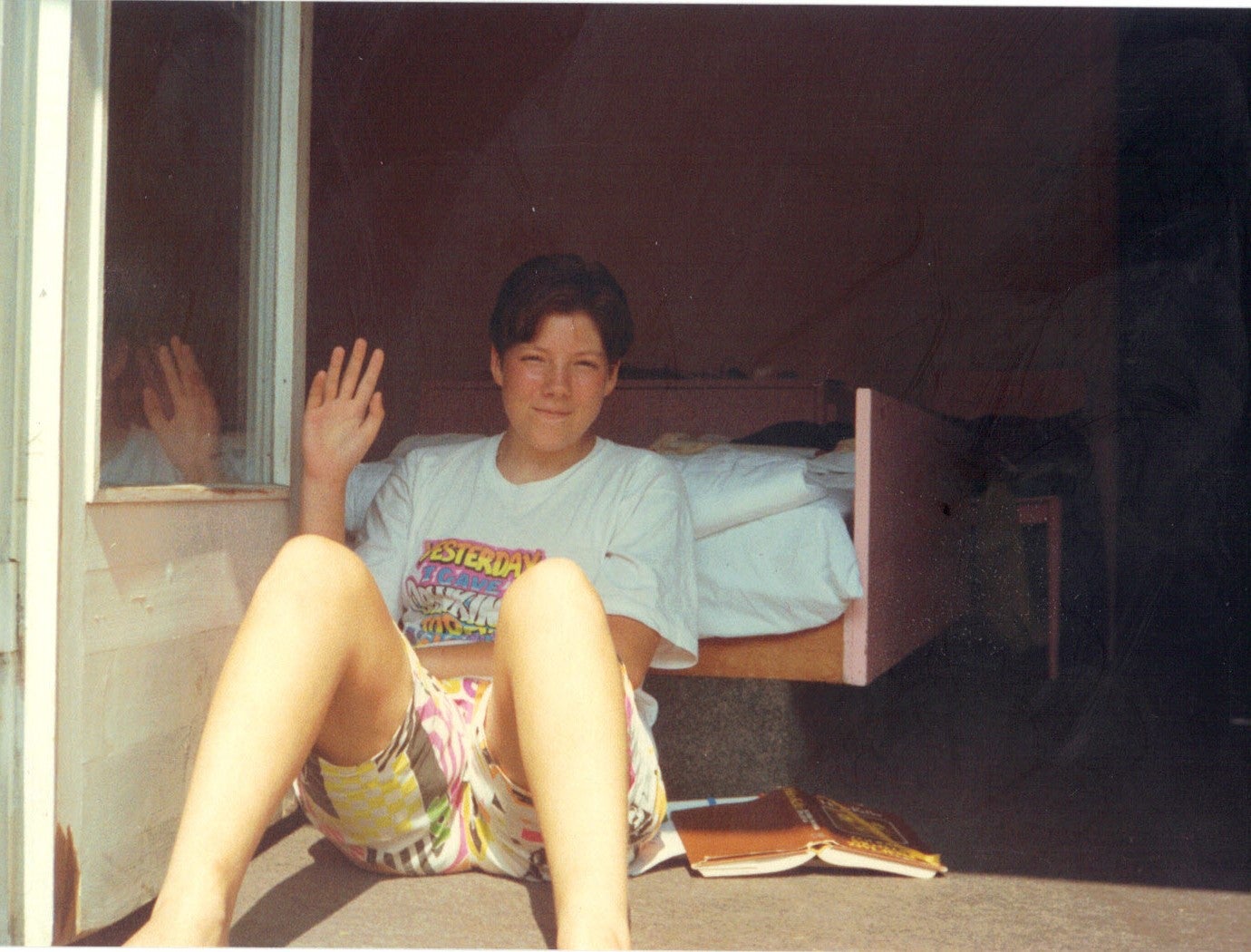
    Tina Purnat in 1991
    Tina Purnat in 1991. / Photo: Courtesy of Tina Purnat

    In July 1991, I found myself sitting in the back seat of our family car, heart pounding with a mix of excitement and apprehension.

    The 10-day war for Slovenian independence from Yugoslavia had just ended, and while the armed conflict was officially over, the atmosphere was still thick with uncertainty. The weeks prior had been marked by listening to press conferences of the national war cabinet and evacuating hurriedly to bomb shelters. I remember the fear that gripped me as both my parents left for work each day—my mother to care for patients at the regional hospital, and my father, a first responder, on site to protect a key factory from potential bombings that could lead to deadly chemical spills.

    It was against this backdrop that my parents were now driving me to Villach, Austria, where I was to attend a four-week immersive German language course. This was something I had been looking forward to all year—a chance to brush up on my German before entering my freshman year of secondary school where I’d study it as the second foreign language.

    But as we crossed the border, the thrill of the upcoming adventure was tinged with a new, deeper sense of fear.

    When we arrived in Villach, my parents helped me settle in, and then it was time for them to leave. As we stood outside the small dormitory where I would be staying, my mother turned to me with a seriousness I hadn’t seen in her before. “If the war breaks out again,” she said, her voice steady but her eyes betraying a deep worry, “don’t try to come back to Slovenia. Stay here in Austria and find a way to your uncle in Sweden.” I nodded, the gravity of her words sinking in. Suddenly, the world seemed much larger, and far less certain, than it had just moments before. Despite the bombing scares and evacuations I had endured during the brief war, it was in that moment, hearing my mother’s words, that I felt the most afraid. I realized that if conflict erupted again, I would be on my own as a 14-year-old girl in a foreign country.

    For the next four weeks, I was surrounded by other teenagers from Slovenia and various other parts of Europe. We spent our days conjugating verbs, practicing vocabulary, swimming, hiking and navigating the cultural quirks of our peers. But in the back of my mind, my mother’s words lingered. What would happen if the conflict reignited? How would I make my way to Sweden on my own? How would I even find my uncle there? The thought of being stranded in a foreign country, unable to return home, was terrifying. It was my first real encounter with the vulnerability that so many people around the world experience daily—the fear of being uprooted, of losing the safety of home.

    Thankfully, the weeks passed without incident. No more armed conflict erupted in Slovenia, and my parents returned to pick me up as planned. But I was not the same person who had arrived in Villach just four weeks earlier. The experience had left an indelible mark on me, a heightened awareness of the fragility of safety and the ever-present possibility of displacement.

    Tina Purnat
    Tina Purnat today / Photo: Courtesy of Tina Purnat

    Back in Slovenia, I couldn’t shake the thoughts of what might have been. I imagined what it would be like to be forced to flee my home, to live in a place where I didn’t speak the language, surrounded by people who didn’t understand my culture. These thoughts only grew stronger in the following weeks and months as the war in Croatia and Bosnia and Herzegovina intensified. Refugees were fleeing their homes, seeking safety wherever they could find it, and often first in Slovenia before moving on to other countries. Many of them were children, just like me, whose lives had been upended overnight.

    Later on, I decided to volunteer as a companion and homework tutor for kids my own age at the refugee center. It wasn’t just about helping them with English homework and math; it was about being there for them, offering some semblance of normalcy in their otherwise chaotic lives.

    I remember a brother and sister, both in their early teens, who never left each other’s side. I remember thinking: we grew up in the same federation of Yugoslavia, just in different parts of it, and just because of where we were born, I had a home but they lost it. Despite their reserved demeanor, I made it my goal to connect with them. I would bring bubble gum and comic books to our meetups, hoping to break the ice. At first, our interactions were limited to simple exchanges—sharing a piece of gum, pointing out a favorite comic strip. But over time, these small gestures began to build a bond between us.

    We never talked about the war or their experiences—those topics remained unspoken, heavy in the background. But through our shared love of comic books and the simple pleasure of chewing gum, we found a way to connect. They would smile, sometimes even laugh, and in those moments, I knew I was making a difference, however small. We communicated in the language of teen friendship, where words were less important than the shared experiences that brought us a bit of lightheartedness in a difficult time.

    Then, one day, they were gone—moved on to Germany for asylum. I never got to say goodbye, but I like to think that our time together left a positive mark on their lives, just as it did on mine. I often wonder where they ended up—Canada? The U.S.? New Zealand? Sweden? Maybe they ended up settling in Germany? Wherever they are, I hope they remember those afternoons spent laughing over comic books and enjoying the small pleasures of pink bubble gum.

    These experiences shaped my understanding of vulnerability in profound ways. They led me to the profession of public health because public health, at its core, prioritizes the needs of the most vulnerable and at-risk populations. It emphasizes the values I learned from my parents and wider family—the importance of empathy, service, and resilience. My time with those refugee kids taught me that vulnerability is not just about addressing immediate needs but also about the layers of crises people experience and endure, often silently. Public health approaches cannot solve all their problems, but working in this field gives me a tangible way to address some of the critical needs of people who, like those refugee kids, experience and navigate multiple crises. It’s about creating systems, structures and solutions that support their resilience, help them find stability, and, ultimately, help them to rebuild their lives and thrive.

    Thirty-five years later, I’ve built a career in public health. The responsibility to serve and protect the most vulnerable remains at the forefront of everything I do. Whether I’m working with health information and evidence, implementing digital health solutions, combating health misinformation, pointing out deceptive marketing of vapes to youth, or responding to outbreaks, it’s never just about the policy, tools, data or the technology. It’s always about the people—the children, the families, the communities—who need health systems and public health efforts to better serve them and meet their needs.

    Returning to that summer in Villach, I realize now that it was a turning point in my life. The uncertainty I faced then is minute compared to the struggles of those who live in conflict zones or walk thousands of miles in search of a safer home, but it gave me a window into their experience. It taught me that the safety and stability I had always taken for granted could be lost in an instant, and that those who are forced to flee their homes or are displaced within their own country or even within their own city need more than just shelter and services—they need understanding, compassion, and a sense of belonging.

    As I continue my work in public health, I carry these lessons with me. My mother’s words, spoken with such quiet urgency, have stayed with me, reminding me of the responsibility we all share to protect the vulnerable.

    And every time I meet someone who has been displaced, I think back to that 14-year-old girl in Villach, standing alone in a foreign country, and I know that I am doing what I am meant to be doing—helping to build a world where no one has to face that kind of uncertainty alone.

    Tina Purnat is a DrPH student and Prajna Leadership Fellow.


    Last Updated

    Get the latest public health news

    Stay connected with Harvard Chan School

    Source link

  • The Power of Perspective: How Emotional Intelligence Fosters Deeper Human Connections

    The Power of Perspective: How Emotional Intelligence Fosters Deeper Human Connections

    The Power of Perspective: How Emotional Intelligence Fosters Deeper Human Connections

    Humans are complex and multifaceted, and our experiences, emotions, and relationships play a significant role in shaping our lives. One essential aspect of our well-being and relationships are our emotional intelligence (EI), which is the ability to recognize, understand, and manage our emotions and those of others. In this article, we will explore the power of perspective and how emotional intelligence fosters deeper human connections.

    The Importance of Perspective

    Perspective is the ability to see things from another person’s point of view, to empathize with their feelings and experiences, and to understand their emotions. It is a cornerstone of emotional intelligence, and it is essential for building strong, meaningful relationships. With empathy and understanding, we can create a deeper connection with others, and this connection can lead to more harmonious and fulfilling relationships.

    Emotional Intelligence: The Key to Effective Communication

    Effective communication is the bedrock of any successful relationship, but it is often littered with misunderstandings and miscommunications. Emotional intelligence allows us to communicate more effectively by providing a deeper understanding of the emotions and needs of ourselves and others. By being able to recognize and express our emotions, we can better express our needs and desires, and by being able to recognize and understand the emotions of others, we can build stronger, more meaningful connections.

    The Power of Active Listening

    One of the most effective ways to develop our emotional intelligence is through active listening. Active listening is the ability to fully concentrate on the person speaking, to understand their words, tone, and emotions, and to respond in a way that shows empathy and understanding. When we practice active listening, we create a safe and supportive space for others to express themselves, and this can lead to deeper, more meaningful connections.

    Cultivating Empathy and Compassion

    Empathy and compassion are essential components of emotional intelligence. When we can put ourselves in someone else’s shoes and understand their struggles and challenges, we can show compassion and support. This can be as simple as offering a word of encouragement or a listening ear, or it can be as significant as providing financial or emotional support. Cultivating empathy and compassion allows us to build stronger, more meaningful relationships, and to create a more harmonious and supportive community.

    The Benefits of Emotional Intelligence

    There are many benefits to developing our emotional intelligence, including:

    • Improved relationships: By understanding and managing our emotions, we can build stronger, more meaningful relationships with others.
    • Increased self-awareness: Emotional intelligence allows us to better understand our own emotions and needs, leading to greater self-awareness and personal growth.
    • Better communication: Emotional intelligence enables us to communicate more effectively, reducing misunderstandings and conflicts.
    • Improved mental and physical health: Chronic stress and anxiety can have negative impacts on our physical and mental health, but emotional intelligence can help us manage these emotions and reduce their effects.

    Conclusion

    In conclusion, the power of perspective is a vital component of emotional intelligence, which is essential for building deeper human connections. By developing our emotional intelligence, we can improve our relationships, increase our self-awareness, and better communicate with others. By cultivating empathy, compassion, and active listening, we can create a more harmonious and supportive community, and by promoting emotional intelligence, we can create a more compassionate and caring world.

    Frequently Asked Questions

    • Q: What is emotional intelligence?
      A: Emotional intelligence is the ability to recognize, understand, and manage our emotions and those of others.
    • Q: Why is emotional intelligence important?
      A: Emotional intelligence is essential for building stronger, more meaningful relationships, improving our communication, and promoting a more harmonious and supportive community.
    • Q: How can I develop my emotional intelligence?
      A: Developing emotional intelligence requires practice and dedication. It is essential to cultivate empathy, compassion, and active listening, and to work on self-awareness and self-regulation.
    • Q: Can I develop emotional intelligence later in life?
      A: Yes, emotional intelligence can be developed at any age. It is never too late to start working on improving your emotional intelligence, and it can have a profound impact on your personal and professional relationships.

    By recognizing the power of perspective and the importance of emotional intelligence, we can develop the skills and qualities necessary to build stronger, more meaningful relationships and create a more compassionate and caring world. It is never too late to start working on our emotional intelligence, and it is essential for achieving greater happiness, well-being, and fulfillment in our lives.