Tag: mindfulness practice

  • You Can Investigate Your Emotions Without Suppressing Them

    You Can Investigate Your Emotions Without Suppressing Them

    When presented with difficulty, a first reaction may be to ward off or ignore unpleasant emotions. It’s normal. However, with practice, we can learn to lean on the comfort of safe spaces—or meditation spaces—to instead engage with them directly. One of the essential qualities of mindfulness is being with whatever comes up, rather than suppressing emotion or running away from inner challenges.

    In this short video, founding editor Barry Boyce answers our questions about emotional health and how we can turn toward our feelings.

    A Q&A with Mindful Founding Editor Barry Boyce

    How to Let Go of Suppressing Our Emotions

    Q: If we let ourselves feel our emotions, one concern may be that we won’t be able to stop feeling them. If we’ve avoided our emotions for a long time, will it be too much to handle? What would you recommend? 

    A: The fear that our emotions will overtake us and rule our lives (or at least a significant chunk of our time) is indeed one of the reasons we seek mindless distraction. Being kind to ourselves, repeatedly, is job one. Mindfulness practice is not about aggressively “tackling” our emotions in a fight to the death. If we’ve been suppressing something for a long time and mindfulness begins to bring it up into our conscious awareness—as it will—the key instruction is to notice it and move on. When it comes up again, maybe seconds later, we do the same. This approach of a little bit at a time, moment by moment, reduces the emotional wallop by breaking it into momentary pieces, rather than treating it as one big permanent thing, which it is not.

    It never pays to push ourselves to the brink in the hopes of gaining freedom or insight.

    This is easy to say, but it does take a bit of ongoing gentle effort—leavened with a lot of kindness toward ourselves—to touch the emotion and let it go. Touch it, and let it go. If we are really overwhelmed and breaking down, we may need the help of a friend or a counselor. It never pays to push ourselves to the brink in the hopes of gaining freedom or insight. Easy does it. If you’re wounded, attend to the wound, or get the help you need to heal.

    At some point, when we feel safer, we can explore our emotional landscape further, with the benefit of the repeated noticing we’ve been doing. But that is more awareness and inquiry practice, as opposed to straight mindfulness.

    Coping Mechanisms and Suppressing Emotions

    Q: Sometimes ignoring our feelings can be a coping mechanism in stressful times. Can we suppress our feelings sometimes, but also open up to them the rest of the time? Is “not suppressing emotions” an all-or-nothing deal? 

    A: An excellent and delicate question. As noted above, first and foremost, it’s vital to be kind to ourselves—again and again and again. So, when emotions threaten to overwhelm us, we can respond to them with some form of “Yes, I know you’re there, but now is not the time for me to go there.” You may have to do that repeatedly. That kind of attitude doesn’t mean you are suppressing or ignoring the emotion. You are, in fact, noticing it and acknowledging it. Touching it and moving on. That’s mindfulness.

    When emotions threaten to overwhelm us, we can respond to them with some form of “Yes, I know you’re there, but now is not the time for me to go there.”

    When you notice it simply like that, you generally lessen its power to overwhelm you a bit. By contrast, suppressing—actively, energetically pushing it down and away—increases that power.

    Is Emotional Intelligence a Luxury?

    Q: For some, working on emotional intelligence seems impractical—or a like luxury. What are some examples of ways we might use emotional intelligence in our daily lives?

    A: To appreciate why emotional intelligence might not be an impractical luxury, it will first help to define what we mean by “emotional intelligence.” According to the Yale Center for Emotional Intelligence, this notion first emerged when two emotion researchers, Peter Salovey and John Mayer, “lamented that theories of intelligence had no systematic place for emotions,” which inspired them to articulate “a theory that described a new kind of intelligence: the ability to recognize, understand, utilize, and regulate emotions effectively in everyday life.” In a pivotal paper, published in 1990, they described this revolutionary idea, which they called “emotional intelligence.” The idea caught on, and Salovey and his laboratory at Yale became recognized leaders, pushing the field toward new discoveries and innovations. Five years later, Dan Goleman’s book Emotional Intelligence: Why It Can Matter More than IQ, became a bestseller and popularized the idea further. When Google began its mindfulness program, Search Inside Yourself, in 2007, it emphasized emotional intelligence. In that respect, the program followed the belief that mindfulness and awareness practice as well as loving-kindness and compassion practices could enhance our emotional intelligence.

    When we have less ability to “recognize, understand, utilize, and regulate emotions effectively in everyday life,” it quite simply creates pain, for others and for ourselves. Finding ways to lessen pain is not impractical nor a luxury. It’s the healthy thing to do.

    How do we find ways to use emotional intelligence in our daily lives? From a mindfulness perspective, the key habit that can help us cultivate more emotional intelligence is pausing, which lets the momentum of our emotions to be interrupted, so we have a moment to notice how they are showing up in our body and mind. As we do that more often—a little bit of regular mindfulness practice helps develop the pausing habit—the choices we make concerning how we express and act on our emotions may be more “intelligent.” When they’re not so intelligent and we make a mess? We might notice that and learn from our encounter, rather than blindly stumbling toward wherever our emotions lead us.

    We featured the Yale Center for Emotional Intelligence’s assistant director, Dena Simmons, in the April 2019 issue of Mindful and on mindful.org. The center’s director, Marc Brackett, recently released his book Permission to Feel: Unlocking the Power of Emotions to Help Our Kids, Ourselves, and Our Society Thrive, which is reviewed on mindful.org.

    Men and Emotional Well-Being

    Q: Men are often taught that crying (or showing nearly any emotion) is too feminine. What can we do to help change this ingrained idea, in ourselves and those around us? 

    A: On a very simple level, when a man or boy seems on the verge of tears, we can very gently let them know that’s it’s fine to cry. A word or two or a nonverbal message can often be enough to convey that feeling without having to get too conceptual about it. Quiet listening and warmth go a long way in allowing someone to let their emotion simply be. At least you can respond without judging it as inappropriate.

    Changing gender stereotyping on a broader scale raises deep questions that go beyond the scope of personal mindfulness practice. The ways children are socialized and taught what gender means has been explored extensively by many people and form the basis of a variety of programs aimed at social change. One of the most interesting is The Representation Project, started by Jennifer Seibel Newsom (who is married to the current governor of California).

    Her film Miss Representation concerns how girls are taught to think about gender in limiting ways, while The Mask You Live In “follows boys and young men as they struggle to stay true to themselves while negotiating America’s narrow definition of masculinity,” according The Representation Project website. Newsome’s most recent film, The Great American Lie, focuses on a social addiction to a certain definition of masculine values, which are held up as superior to those identified as feminine. Newsome has presented on these issues several times at the Wisdom 2.0 conference. The Mask You Live In features the work of Ashanti Branch, who is one of the featured teachers in Mindful’s Mindful30 challenge. These films can be screened by school groups and others interested in gender education.

    How to Test Your Emotional Maturity 

    Learning the language of emotional maturity is like learning a second language. If you weren’t raised with it, it may take tens of thousands of hours to master.
    Read More 
    • Nicole Bayes-Fleming
    • November 22, 2019


    Source link

  • How to Feel Present, and Stay Present

    How to Feel Present, and Stay Present

    When your schedule (and your mind) never seem to rest, here are three simple ways to feel more present in everyday life that don’t take much time.

    We’ve all been through a lot—both together and alone—and as the long, warm days of summer turn the corner toward autumn, there’s a little more darkness each night and a cooler nip to the air. It’s like the tilt of the Earth is sending a reminder: that each of us can be the light in the darkness (and that on the other side of that darkness is light).

    Many take this time of year to look back (poring over a summer’s worth of photos, anyone?) or look ahead (rushing into a new term, a new routine, a new vision for what we want to achieve). Here’s an invitation to just be here. Right here, right now, in this moment.

    It’s like the tilt of the Earth is sending a reminder: that each of us can be the light in the darkness (and that on the other side of that darkness is light).

    Some of these moments will bring great peace. Others may leave us in pieces. The more we can bring our focus and presence to these moments, the more skilled we become at kindness, compassion—for ourselves and others—and finding joy, and the more we can surf the changes of life with ease. It all starts with being present, here and now.

    3 Mindful Practices to Feel Present—and Find Your Presence

    1. Bring your whole heart to the moment.

    “Joy has its roots in wholehearted appreciative attention,” writes Willem Kuyken. “As you go about your day, bring your attention to seeing, touching, and listening wholeheartedly—mindful of how you are touching and being touched by the world. Take moments to pause.” There are just two steps in this practice, so you can use it anytime you need it.

    Deepen Your Practice: Unhook from Negativity and Savor Joy

    2.  Find your foundation in the breath.

    When we face stress, it can be tempting to zone out, ruminate on the past, or plan the future. Give yourself—and the mindful kids in your life— the gift of this moment, with a basic breathing practice to anchor you in the simplicity of the present. J.G. Larochette shares a catchy rhyme to help you feel present, calm, and clear all day long: “Repeat to yourself, “I’ve got my feet on the floor, I’ve got my spine in a line, I’ve got my hands in my lap, I’ve got my heart to the sky.”

    Deepen Your practice: A Meditation to Breathe Out Love

    3. Savor what comes.

    It’s all going to come anyway—the good and the bad, the highs and the lows. During his week-long savoring practice, founding editor Barry Boyce writes, “What I was prepared for was taking time to really enjoy things, in the present moment. What I wasn’t prepared for was how much it would challenge underlying attitudes and assumptions.”  It’s an invitation to be with the moments as they come and savor them, no matter their flavor.

    Deepen Your Practice: Gratitude Practice: Savor the Moment by Tapping In to Your Senses

    6 Ways to Enjoy Mindful Walking 

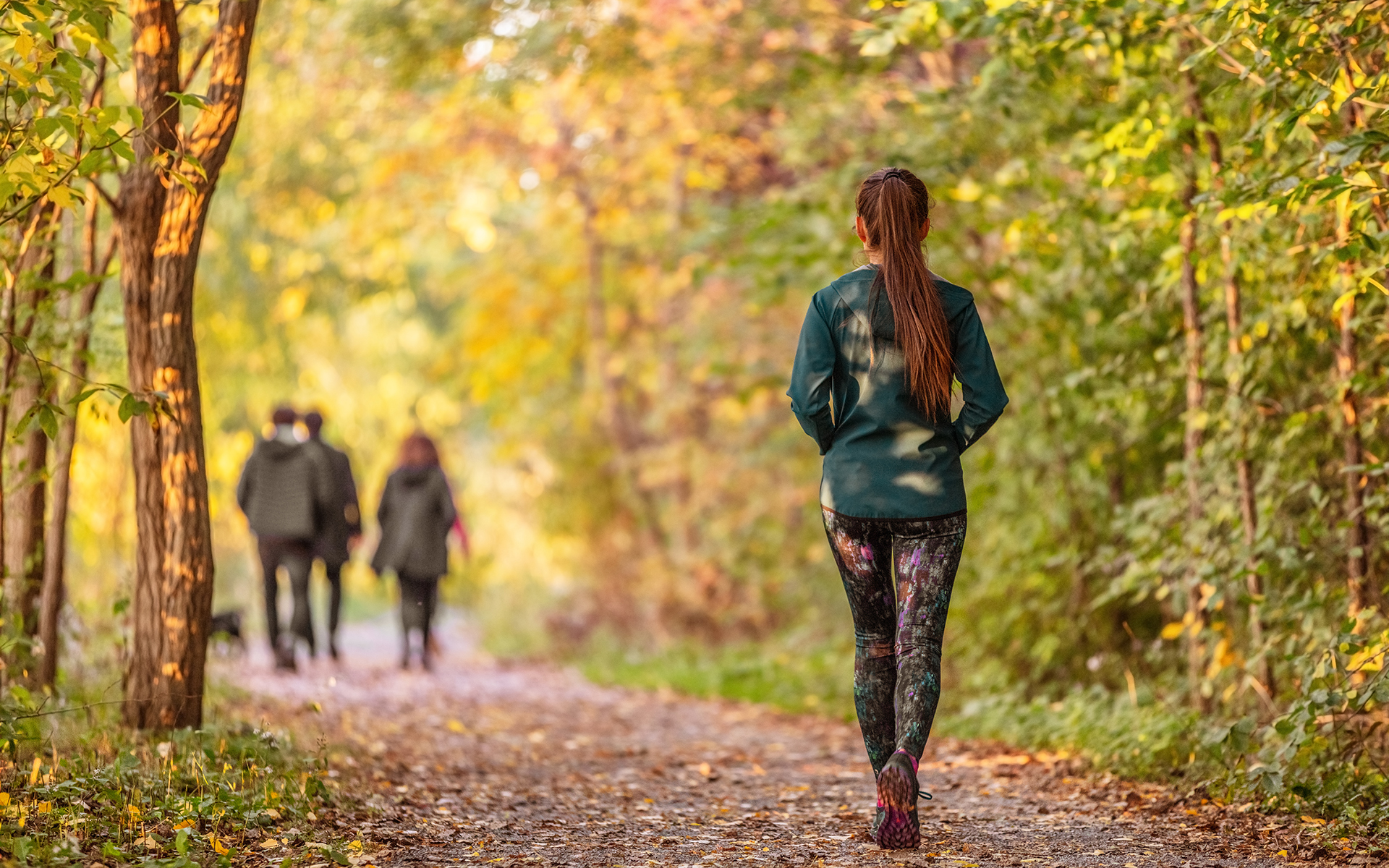
    Research shows that mindful walking in nature offers stress-busting and mood-boosting advantages, plus a welcome chance to stretch our legs. Chris Willard, PhD shares six ways to customize your next mindful stroll.
    Read More 

    • Christopher Willard
    • June 20, 2023


    Source link

  • Formal vs. Informal Mindfulness: 2 Ways to Practice

    Formal vs. Informal Mindfulness: 2 Ways to Practice

    In this 2-minute video, meditation teacher Christiane Wolf explains what “formal” and “informal” mean when it comes to mindfulness.

    If you’ve heard the terms “formal mindfulness” or “informal mindfulness,” you might have been left scratching your head. Isn’t mindfulness just mindfulness? Yes, it is—and it can still refer to different kinds of practices. 

    In this short video, meditation teacher and author Christiane Wolf offers simple definitions of formal and informal mindfulness. Within each of these terms, there’s an abundance of ways to come home to the present moment. As Sharon Salzberg wrote in her book Real Happiness: “Mindfulness isn’t difficult, we just need to remember to do it.”

    What Is Formal Mindfulness Practice?

    Formal practice is what we call every type of practice where you really take the time to do nothing but this particular practice or meditation at that moment. (Formal mindfulness meditation usually includes a clear structure or framework, such as steps to follow, a beginning and an end, and/or techniques that are an integral part of the practice.) That could be when you do a five-minute breathing meditation, or it could be when you do a body scan, or when you do formal walking meditation. Any of these examples would be “formal” meditation. 

    The idea with formal practice is that you’re really only focusing on your given object of meditation during that time. Your focus could be on the sensations of the breath going in and out of the body, the sound of your feet on the floor, or the movements of walking.

    Examples of Formal Mindfulness

    For some beginner-friendly formal practices, try these guided meditations:

    What Is Informal Mindfulness Practice?

    Informal practice, on the other hand, is about bringing the same quality of kind, open attention to whatever you’re already doing in your day, whether it’s petting your cat, opening your car door, or brushing your teeth. It’s really the idea that you bring all your attention and all your senses to this particular moment.

    Being mindfully aware through informal practice does not take any extra time. If you see it from this point of view, then suddenly you have an opportunity to practice mindfulness in every moment that you are awake—and, of course, in every moment that you remember.

    Examples of Informal Mindfulness

    For a few ideas for how to easily integrate informal mindfulness into your day-to-day activities, check out the following:


    Source link

  • Allow the Storm to Pass

    Allow the Storm to Pass

    In this practice, Scott Rogers guides us to take the role of observer to difficult emotions, so that we can more easily create the space we need to let them go.

    Sometimes we can see our intense emotions coming, and sometimes we can’t. Emotions can build up, increasing in strength slowly. At other times, they crash down on us all at once. We can get lost in our emotions, swept up in a feeling. They can be beautiful and they can be scary. In all of these ways, emotions are like storms. As such we need to allow the storm to pass.

    Let’s look to different aspects of the hurricane and see how they connect to our own thoughts, feelings, and sensations.  

    The good news is that we can allow the storm to pass, and so do emotions. With mindfulness, we can practice taking the role of observer to our strong feelings. When we put that space between ourselves and the whirlwinds, we can find stability and cultivate resilience. Scott Rogers leads us in this guided practice with the metaphor of a hurricane to help us recognize the qualities and the impermanence of even our stormiest emotions. 

    A 12-Minute Meditation for Emotional Resilience

    1. We begin this 12-minute mindfulness practice by bringing ourselves into a posture that’s upright and stable. We lower or close our eyes and bring our attention to our body sitting in the chair. 
    2. As we breathe, we are aware of where our bottom meets the seat of the chair and of where our back meets the back of the chair. We are aware of our feet and where they make contact with the ground, our shoes, or our socks. We are aware of the sensations of the body, of the hands resting one in the other or on our lap. We are aware of the fingertips, the palms, the points of contact, as we begin this practice by coming to our senses as we breathe.
    3. At times, things can become intense and quickly turn, much like a hurricane, so this practice will draw upon the metaphor of a hurricane to help us understand our own true nature. It can help us understand the ways that mindfulness practice can be helpful in observing our nature moment by moment. That observation can create spaciousness around the tumultuousness that can arise during the course of our day and at times throughout our life. 
    4. We take three slow, deep breaths. A little slower and a little deeper than we might otherwise take. Inhale and exhale. Inhale and exhale. Inhale and exhale. 
    5. The hurricane arises when the conditions are sufficient for it to come together and, in time, it dissipates, much like our own emotional conditions. So, let’s look at a few of the different aspects of the hurricane and see how they connect to our own thoughts, feelings, and sensations, and the spaciousness and ease that we can find with agitated thoughts, feelings, and sensations. In this way, we can allow the storm to pass. 
    6. There are times when we experience agitation and frustration in the body, much like the strong, gusty winds and heavy rains that feed into the hurricane. We might reflect for a moment on times when we have felt that intensity in the body—that tension, that tightness.
    7. Thoughts arise from time to time that can be judgmental, pessimistic, and reactive, like the outflow of high-level clouds that intensify the hurricane as they move away from it. We might take note of thoughts that arise in our mind now, or thoughts that have arisen today, that carry that judgmental, harsh, reactive quality. Just notice these thoughts as we breathe. 
    8. There are moments we experience intense emotions like anger and fear that are akin to the eye wall, the extreme conditions that form around the eye of the hurricane. You may notice these arising now, perhaps because of the circumstances of the day, or that they arise on a fairly regular basis. 
    9. And so, too, there are times we experience inner calm, much as is found within the eye of the storm. This is a reminder that we don’t have to have the intense and agitated thoughts, feelings, and sensations go away to find that inner calm, that inner tranquility. By shifting to an observing state, we find freedom from the intensity of those thoughts, feelings, and sensations. It’s like finding our way into the eye of the storm,  into a place of our own safe refuge without needing anything to change. 
    10. Let us settle into the body, aware of thoughts, aware of feelings that will come and go, aware of the sensations in the body, aware of preserving and allowing the breath to anchor us a little bit more fully, to steady us a little bit more comfortably into the moments of this practice. In doing so, we begin to develop and cultivate a resilience to steady us in the moments of our life. 
    11. Breathe in and out, allowing this moment to be as it is. When, from time to time, the mind wanders, gently return to the sensations of the breath flowing through the body. When you’re ready in the next moment or two, with awareness, lift the gaze, open the eyes. 


    Source link

  • Brighten Your Day: Learn Mindfulness From First Graders

    Brighten Your Day: Learn Mindfulness From First Graders

    Students Elijah and Romir share what they’ve learned about the practice of mindfulness via their school program run by the nonprofit Space Between.

    There are myriad benefits of mindfulness being taught in schools. To name just a few, it supports students and teachers in managing stress, trauma, overwhelm, and more. But one of the cutest upsides has to be kids teaching meditation.

    The Seattle-based nonprofit Space Between has been teaching trauma-informed mindfulness practices in school communities since 2016, supporting the mental health and well-being of both teachers and students.

    Learn the Zig-Zag Breath With Romir

    According to Romir, a first grader in the Space Between program, the Zig-Zag Breath involves just two simple steps:

    1. Move your head in a zig-zag shape.
    2. Breathe out calmly.

    Romir says that this practice can not only help you feel warmer, but makes you feel better if you get hurt.

    Thanks, Romir! We’ll be keeping this quick and easy practice in our toolkit should we get chilly or need a pick-me-up.

    Practice Square Breathing With Elijah

    1. Point your finger and close your eyes, if you feel comfortable. Get ready to imagine you’re drawing the shape of a square with the tip of your finger.
    2. Breathe in through your nose and move your finger in a line, drawing the first side of the square in the air in front of you.
    3. Breathe out through your mouth, drawing the next side of the square.
    4. Breathe in through your nose and draw the third side of the square. 
    5. Breathe out through your mouth and complete the square.
    6. Repeat this three times.

    We know that deep, intentional breathing calms our nervous system and focuses our minds. This easy-to-remember practice is a great way to tap into the power of the breath any time, anywhere. Thanks for the lesson, Elijah!

    Mindfulness Practices for Kids

    If you’d like to explore mindfulness meditation with the school-aged children in your life, there are many ways to go about it. Over the years, we’ve gathered a number of wonderful guided practices for young children and teenagers, created by renowned meditation teachers. Here are just a few of our most popular articles to help you get started:


    Source link

  • Election Day Meditation – Mindful

    Election Day Meditation – Mindful

    Follow along as Rhonda Magee guides us through a S.T.O.P. practice for focused awareness. The invitation is to be kind to yourself, take a conscious breath, and gently relate to thoughts, emotions, and sensations that arise.

    If we’ve been practicing mindfulness and other awareness practices, we know that even on difficult days like election day we’re just a moment of awareness away from a sense of greater ease and greater capacity to be with what is.

    The acronym S.T.O.P. encapsulates how mindfulness practice can support us in making the most of opportunities for engagement in the world most especially during election day. Like all mindfulness practices, it has many different applications. For one, it is a simple tool that can support us in being here in a much more lively way with ourselves, opening up to what is coming up for us, right here, right now.

    Stop and Take a Conscious Breath

    S stands for Stop

    Stop what you are doing and if possible, perhaps take a seat. If standing, just pause where you are standing. It’s really about standing in your dignity or sitting in your dignity, to support bringing mindfulness to this moment. As you settle in, breathe in and out, allowing attention to rest on the feeling of the breath as it flows into the body, and out. Feel the nourishment of taking a moment to pause. This first step can be as short as just an instant, or as long as you like. 

    T stands for Take a conscious breath

    Now, taking one, very slow and conscious breath in, and a full complete breath out, really notice what it’s like to allow your attention to rest on these sensations of breathing. Continuing to take a few very conscious, very intentional breaths. Simply allow yourself to feature the breathing aspect of the experience of this moment, one breath at a time. 

    O stands for Observe

    What is coming up for you in this moment? The shorthand T.E.S.—thoughts, emotions, sensations—can remind you of what you might gently scan for as you observe your experience. 

    What kind of thoughts might be arising? Imagine thoughts as being like clouds, moving through the sky of your consciousness, and just note the thoughts as they come up for you. 

    Then, what emotions or feelings are present? Is there some discomfort? Some feeling of opening to joy? Whatever is arising is perfectly OK. There is no right or wrong way to feel. Mindfulness is about rolling out this welcome mat, allowing yourself to feel what’s here right now. 

    Then, notice sensations: You might feel a tightness around the shoulders, or a sinking feeling in the belly. Whatever is prominent, invite a reflection on the sensations that are coming up for you. The intention is just to create a spacious way of holding the sensations. Yes, these sensations are here right now. 

    P stands for Proceed

    Finally, when you’re ready, notice the opportunity presented in this moment to proceed, to choose how to move from this place of reflective awareness into engagement. Proceed with presence, all the while holding your experience with kindness, friendliness, and self-compassionate for your experience in this moment. 

    Notice the opportunity presented in this moment to proceed, to choose how to move from this place of reflective awareness into engagement.

    When you are ready, transition out of this practice. Feel what it was like, and any way in which that moment of practice may have shifted your experience. Bring awareness to that shift, to help you see just how mindfulness practice is for you. Many teachers use the term “YOU-ru” as opposed to “guru,” which means you can take full ownership of the great opportunity that being alive presents: to deepen your ability to meet whatever is coming up, with more steadfastness, more stamina, more resilience, and more intentionality about how you want to be during election day. 


    Source link

  • Connect with Your Senses With A Guided Walking Meditation

    Connect with Your Senses With A Guided Walking Meditation

    We can connect to our senses and nourish our relationship to the peace, pleasure, and technicolor qualities of the present moment, as we walk. Starting your day with an intentional morning walking meditation can be the key to bringing calm awareness, as you very simply pay attention to what the body is experiencing, as you bring your awareness to the physical sensations of feeling your feet as you walk. This walking exercise can be done on the way to your car, in a park, or even as you’re walking down a hallway. All it takes is being awake to what you notice while you’re walking.

    Connect With Your Sense in Walking Meditation

    1. Choose a foot to start with. Pick it up, move it through space, and gently place it on the ground, feeling the sensations of each part of this process from heel to toe. So, picking the foot up, making a choice, picking a foot up, lifting it, moving it through space, feeling it touching down from heel to toe, connecting with your senses.

    2. Walk with intention. We’re so used to walking in what we call automatic pilot, basically being tuned out and just letting the body go. You may notice that this feels a little strange to be so intentional about walking. That’s okay. This intention that you’re bringing is a way for you to reconnect with the present moment and what you’re feeling right now. This intention is what makes this a walking meditation.

    3. Let yourself notice.  Notice as much as you can about the feel of picking your foot up, moving through space, and gently placing it down. I get most of us are so used to walking, when we first bring our attention to it, we might even feel a little wobbly. It’s okay: this is normal, and part of what it feels like to wake up and actively connect with the senses and notice the details of what we are doing.

    We’re so used to walking in what we call automatic pilot, basically being tuned out and just letting the body go. You may notice that this feels a little strange to be so intentional about walking. That’s okay.

    4. Focus your attention. Focus on the feeling of your feet making contact with the ground right now. Can you notice a difference between thinking about your feet and feeling them making contact with the floor or the earth? Can you let yourself experience what it’s like to be grounded and connected as you make a conscious choice to be present for this walking meditation?

    5. Feel your surroundings. If you’ve chosen to walk outside, allow yourself to feel the impact of the air on your skin. What do you notice? Is it warm or cool? Is the air damp or dry? Allow yourself to feel it.

    6. Notice when thoughts take over. You may notice how quickly your attention is drawn to your thoughts, whether it’s thoughts of your day, list making, maybe you’re running an old conversation or story over and over in your mind. Once you notice your thoughts trying to hijack your walk, you may also notice that being lost in thought makes it more difficult to connect with your senses. You probably will notice that you find it harder to hear what’s going on in your environment, harder to smell anything, or taste anything. Thoughts are that powerful. So, when you know the thoughts are pulling you away, just notice that this is what’s happening, smile, and then you can gently and kindly choose to redirect your attention back to connecting with your senses and even more particularly, back to the feeling of your feet walking. Come back to this experience of the senses and the feet over and over throughout your walking meditation.

    Connect with the Present Moment

    7. Let yourself experience your surroundings. What do you notice about the weather? Do you have an opinion about it? What happens if you just experience that weather is here, noticing the qualities of the weather, and how you’re experiencing it on the skin or in the body? What happens when you let yourself notice the sounds around you? What do you notice about the smells around you? Can you experience these sensory qualities as the symphony of the world?

    The smell of the world: noticing pungent, acrid, sweet, sour, fresh, earthy. Maybe you can notice sounds as high-pitched, low hums, loud, or soft. How much can you allow yourself to take in the world in the minutest detail as your senses experience what’s here, without adding the layer of judgment on it about how you feel about it? Just for now, see what you’re able to do as you take in the raw data of the world around you—experience it in this morning walking meditation.

    8. Pause now and then. Another way you might heighten the sensory experience of this walking meditation is, every once in a while, stop right in your tracks if you’re able and it’s appropriate, and notice in a very specific way what it feels like to be grounded as you feel your feet making contact with the earth or the floor. Maybe take a moment to choose a particular thing to experience through the eyes, focusing on color, shape, texture.

    Another way you might heighten the sensory experience of this walk is, every once in a while, stop right in your tracks if you’re able and it’s appropriate, and notice in a very specific way what it feels like to be grounded as you feel your feet making contact with the earth or the floor.

    Let your nose have a big sniff in and intentionally smell the air. Redirect your attention to your ears and hear the world right now. Can you hold everything you’re noticing lightly, and just let it be part of your environment while you experience it? You don’t have to judge it, or change it, or do anything about it. Just be here for you right now and then when you’re ready, make a choice to select which foot you’ll begin with and start your walking meditation again.

    9. Find your pace. Walking, noticing which foot is moving as you pick it up, move it through space, gently place it down feeling the foot making contact with the earth. Although it might help to begin by practicing going slowly, once you have learned to be present to walking in this new way, there’s no reason you can’t move more quickly. Find whatever pace allows you to stay present while you’re experiencing.

    Be Curious and Let Yourself Wander

    10. Try aimless wandering. You might want to use this morning wake-up walk to take you to work, or any particular destination. But if it feels safe to do so, it can also be wonderful to allow yourself to do an aimless walk. Maybe setting a timer, perhaps 15 minutes, and allowing your feet to take you wherever they want to go, staying present to your ever-changing environment without having a goal as your destination, just walking freely. Noticing what it feels like to reconnect to inner instincts that show up as everything starts to quiet a bit, as you heighten your senses with this morning walking meditation. Noticing over and over as the attention is drawn to other things, particularly thinking.

    Bringing your attention back to your feet over and over can be the greatest help to reconnecting with the present moment as you let your felt senses and the feeling of your feet touching the ground bring you back, right here, right now, coming back over and over and over. At the end of your walk, notice how you feel, check in with each one of your senses. What are you aware of right now, having spent this time bringing attention to the sensory experiences? What do you notice now about your mood? Notice what it feels like to inhabit your body and be awake to your precious life.

    While many of us lean on mindfulness to help us through times of inner and outer chaos, we can cultivate the greatest resilience through consistency in our practice, even when it doesn’t feel urgent. Read More 

    • Georgina Miranda
    • July 23, 2024

    While moving through nature, we have the opportunity to enter a state of being, be present with all of our sensations, and awaken gratitude for the Earth that is also part of us. Read More 

    • Georgina Miranda
    • July 16, 2024

    Ruth King guides us in a practice to explore the truth of our interconnectedness. Read More 


    Source link

  • The Benefits of Meditating With Others

    The Benefits of Meditating With Others

    This article is independently researched and written by the Mindful editors. However, we may earn revenue if you purchase via links included.


    In the midst of the global pandemic that disrupted our routines and heightened stress levels, many people turned to meditation as a source of comfort, healing, and much-needed self-care in scary and uncertain times.

    Millions of people discovered the benefits of mindfulness, like deeper relaxation, heightened self-awareness, better sleep, and a more grounded sense of well-being. Plus, meditation apps and online platforms made it easy to practice in the comfort of our own homes.

    Research confirms the value of a regular meditation practice, and much of that research is focused on solo practicing. However, there’s now also an emerging recognition of the benefits that come with meditating in community.

    If you’ve been curious about expanding your own practice to include intentionally being with others, here’s what you need to know about the history and benefits of meditation in community.

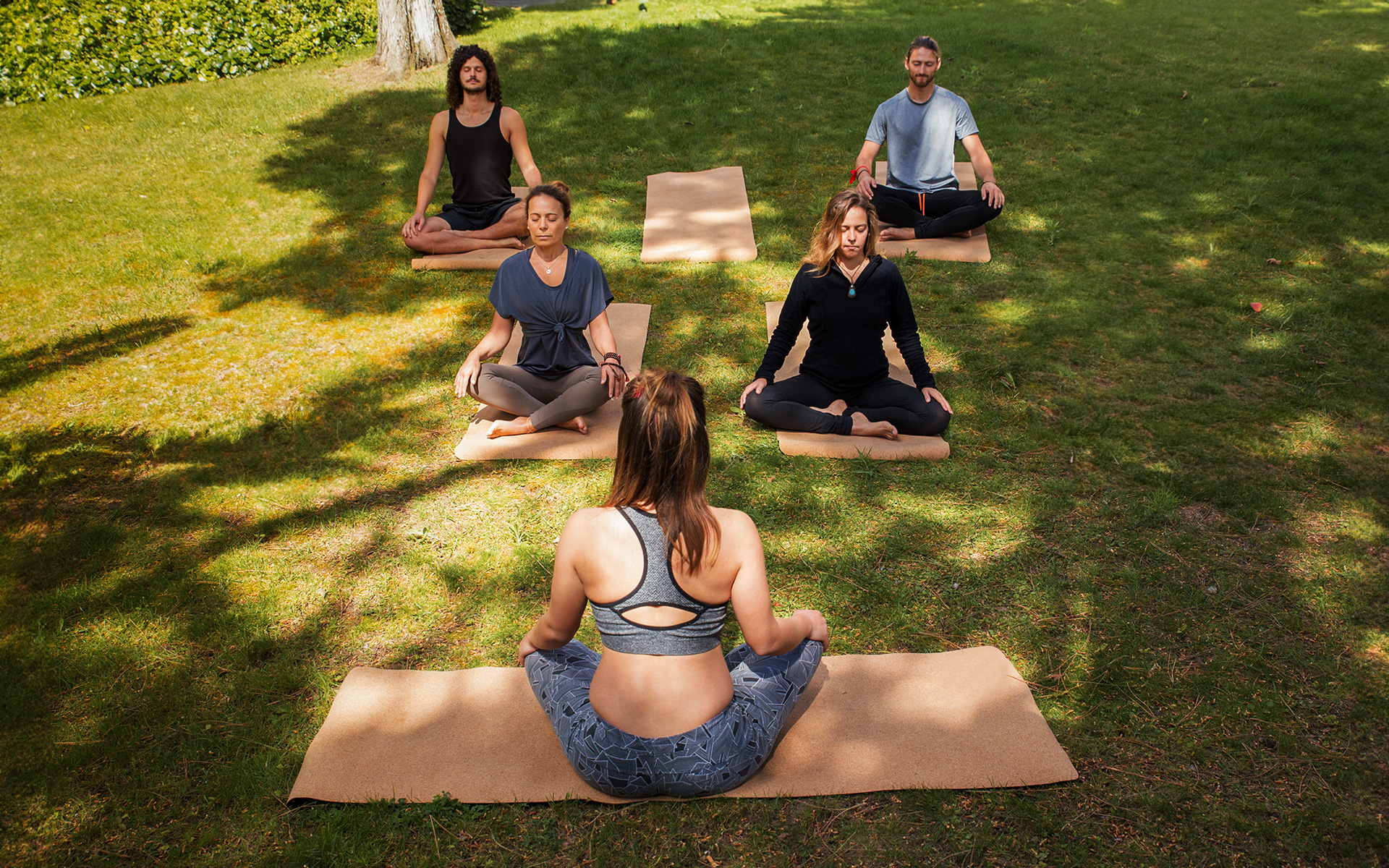
    Meditation, in various forms, has a rich and diverse history that spans cultures, centuries, and traditions. Historically, rather than just being a solitary activity, meditation was often practiced in communal settings, rooted in the belief that collective intention enhanced the experience and benefits of the practice.

    Rather than just being a solitary activity, meditation was often practiced in communal settings, rooted in the belief that collective intention enhanced the experience and benefits of the practice.

    Monasteries, ashrams, and other spiritual communities have been pivotal in fostering a shared meditative environment for millenia, but group meditation certainly hasn’t only been connected to religious settings.

    In the West, meditation has been a part of secular communities for decades, focusing on the mind-body benefits of a regular practice: stillness, self-observation, calming reactivity, and extending compassion to all beings. Programs like Jon Kabat-Zinn’s Mindfulness-Based Stress Reduction offer meditation instruction for clinicians, schools, offices, therapists, and other science-based healing modalities.

    In all of these diverse group settings, meditating in community has offered a space for people to share wisdom and support each other on their mindfulness journeys. And that tradition is still going strong.

    So why do people like group practice? Let’s look at what more and more people are seeking on their journeys, and how meditating in community can meet these needs.

    1. Enhanced Meaning

    If you’ve ever felt the amplified joy and connection of being in a like-hearted group—say, at an outdoor concert or a convention of dedicated enthusiasts—you’ve probably experienced that moment where it all seems like you’re tuned into the same beautiful channel. Meditating in a group can do exactly the same thing, creating a powerful and motivating atmosphere.

    2. Camaraderie and Connection

    Humans are inherently social beings, and meditation in community provides an opportunity for shared experiences. It fosters a sense of camaraderie, reducing feelings of isolation and promoting a supportive network. Especially after the years of the pandemic, people are hungry for a sense of meaningful social reconnection.

    3. Deeper Mindfulness

    Group meditation can deepen one’s mindfulness practice. The shared commitment to practice fosters a sense of accountability, encouraging regular meditation and creating a more profound and transformative experience.

    4. Diverse Perspectives

    In an era of unprecedented division and siloing, there is healthy, challenging work that can really only happen when we are intentionally present with people who are different from us. Meditating in community exposes individuals to diverse perspectives and approaches to meditation. This variety can enrich one’s practice by offering different insights, techniques, and philosophies.

    While there’s not much research available on meditation in group environments versus solitary practice, here are some of the benefits that people who have chosen to meditate in community report.

    1. Enhanced Focus

    The collective intention of a group can help participants achieve a deeper state of focus during meditation, reducing distractions and enhancing the overall quality of the practice.

    2. Stress Reduction

    Shared meditation experiences can contribute to a sense of calm and relaxation, especially in groups where there is a genuine sense of trust and care. Being around people we feel safe with alleviates stress and anxiety, promoting emotional well-being.

    3. Increased Motivation

    Sometimes going it alone is just plain harder. Group meditation provides a shared commitment, a space where everyone can feel cheered on, and a positive cycle of encouragement.

    4. Supportive Environment

    Meditating in community fosters a supportive environment where individuals can share their challenges, successes, and insights. This sense of community can be a valuable resource on one’s meditation journey.

    In the contemporary context, the choices for meditating in community have expanded, catering to a diverse range of preferences and beliefs. Importantly, these options are often designed to be inclusive and secular, making meditation accessible to people from various walks of life.

    Here are some to consider:

    1. Banyan

    Co-founded by globally-renowned teachers Tara Brach and Jack Kornfield, Banyan is an online platform that focuses on creating a digital meditation community where users can participate in live sessions, courses, discussions, and challenges. It strives to build a real sense of connection in the online space. Banyan honors both old and new, using proven practices from ancient wisdom traditions and adapting them to the modern world.

    2. Meetup Meditation Groups

    People can access the Meetup platform to connect individuals interested in local in-person or virtual meditation groups. This allows for a diverse range of community experiences. Many groups are secular and welcome participants with different backgrounds.

    3. Plumline

    For those who want to connect with people all across the globe and meditate in the Plum Village tradition, Plumline offers online group meditation options. Plumline also offers affinity groups, so meditators can connect with others sharing similar challenges or life experiences.

    4. Your Local Gym or Yoga Studio

    As demand grows, more fitness centers and yoga studios are featuring group meditation classes as part of their offerings. Call around and find out!

    5. Start Your Own Group

    As teacher Tara Brach notes, there’s nothing fancy or formal that is required to be in a meditation group. It’s possible to simply gather some friends together and create your own experience of meditating in community.

    As the world navigates the challenges of the pandemic and beyond, the practice of meditating in community offers a profound and accessible path to well-being. Whether online or in-person, the diverse options available cater to individuals seeking a sense of connection, shared focus, and personal growth.

    You can discover the transformative power of communal mindfulness with our 5-day online community event series, designed to fit seamlessly into your busy life. 

    Each day, you’ll experience a 20-minute guided meditation followed by a 10-minute Q&A session, led by our expert mindfulness teachers.

    We believe in making mindfulness accessible to everyone, so we’re offering this event on a ‘Pay What You Can’ basis. While we suggest a value of $75 or more to support the creation of these valuable resources, we welcome any contribution that feels right or possible for you.

    Event Details:

    • Dates: August 26th-30th, 2024
    • Time: 8am PDT / 11am EDT daily
    • Format: Live virtual event, 30 minutes each
    • Price: Pay what you can
    DATE TEACHER THEME
    26 Aug Chris Willard Belonging in Nature
    27 Aug Shamash Alidina Finding Peace Within
    28 Aug Caverly Morgan  Clear Inner Clutter
    29 Aug Sue Hutton Honoring Ourselves As We Are
    30 Aug Tovi Scruggs-Hussein Deepen Into BE-ing
    community connection meditation series


    Source link

  • Let Your Practice Guide You Beyond Crisis Mode

    Let Your Practice Guide You Beyond Crisis Mode

    The pandemic tested many of us on every level: mental, physical, emotional, and financial. Whether it was the endless hours on Zoom, the extended periods of isolation, not being able to do the things we loved or see the people we cared about, the past year and a half has taken a toll on all of us as we’ve moved in and out of crisis mode. As a meditation teacher, I have noticed one kind of challenge in particular: For some people, this was the most time they had actually had to spend with themselves without external distractions. Understandably daunting, for those who have kept busy enough to avoid being alone with themselves for most of their lives. 

    Mindfulness, yoga, meditation, and breathwork all became desired tools to get through each day of lockdowns. I continue to be inspired by the shift I have seen in so many of my clients—Fortune 500 companies, entrepreneurs, soul seekers, and conscious leaders—during this period. And my own mindfulness path has taught me that challenges can always be a portal to growth if we can take a moment to pause, reflect, and develop practices to build inner strength and resilience that nothing outside of us can disrupt.  

    My mindfulness practice came to me when my life was crumbling and in crisis mode. Like most of society I had learned from an early age to lean on everything outside of myself to define my happiness and success. So, in a period of my life when I was stripped of work, relationships, goals, and personal timelines for accomplishing a number of things, I crumbled. It was one of those moments where there was nowhere to go, but in. This moment was a not so gentle nudge to start exploring what it meant for me personally to “journey inward” and discover tools and practices that could aid me on my journey. 

    Making Mindfulness a Way of Life

    Since 2007 I have trained physically to climb mountains. For me, not being a naturally skilled athlete, climbing is 20% physical and 80% mental. When I summited peaks like Mt. Everest, it was mindfulness that was the game changer in my training, that got me up the mountain. My daily practice truly developed after my successful summit in 2013. Before that, I was using my mindfulness practice only as a tool to get out of a “hot mess” state or to accomplish major goals—mindfulness needed to become a way of life. Otherwise, I would simply keep arriving at the same place with nowhere to turn, but inward.

    When my life is chaotic, mindfulness provides an almost instantaneous relief. For those few seconds or minutes when I practice, I can feel a sense of deep inner peace. In moments of heightened stress, anxiety, depression, sadness, or fear, it’s easy for me to practice regularly. But, when life eases its grip, my practice can fall lower on the priority list. When the urgent need for relief dissipates, I can get lulled into thinking my practice is less important.

    When my life is chaotic, mindfulness provides an almost instantaneous relief.

    We will continue to encounter those peaks and valleys in life, and so having a tool to help us remain centered and well at either end of the spectrum and everywhere in between remains critically important. I look at this as an aspect of prevention. We exercise our bodies, eat well, and get adequate sleep to remain healthy and keep our immunity levels high—it’s best not to wait to start these things only after a major health crisis. And I’ve realized it’s the same with keeping my heart and mind well. Both according to research and anecdotally, mindfulness can help people manage depression, stress, anxiety, compulsiveness, aid in better quality of sleep, keep better focus, and the list goes on. While a life or work crisis can be the spark of inspiration to start practicing mindfulness, a new crisis or challenging moment doesn’t need to be the reminder to keep practicing. 

    Coming Home to Yourself

    With mindfulness practice, I’ve come to realize I always have the choice to not get swept away with whatever is going on outside, but to reconnect with myself—to come home to myself, as some meditation teachers say. This is something available to us with every single intentional breath we take. I value my practice not only because it’s comforting or calming; it also helps me let go of the idea that joy, peace, and success are external. The more I practice and connect with inner peace, the more I take back my power, instead of depending on external things, people, or factors to provide this for me. 

    Beginning to emerge from the pandemic, I face a new decision: Whether I’ll continue to lean on my practice as the world begins to open, or drift away from it in the excitement of returning to former ways of living and working. The reality is that who I was pre-pandemic has changed. Having grown through this global challenge, I know I have an opportunity for reflection, before diving back into the way things were—into who I was—to decide who I will be going forward.

    Let Your Practice Guide You 

    When training for my climbs, my mental training was increasingly more important than the physical. 100% of how we respond to extreme environments and unpredictable circumstances depends on our mind, on our ability to cultivate inner calm and come home to ourselves, despite the intensity that surrounds us at times. As we move forward to create a new normal—a world that is more aware, compassionate, and interconnected—let’s continue to lean on our practice to consistently remind us of our inner home, not only for our own benefit, but for those around us.

    I invite you to reflect on these prompts to clarify your intentions around self-care for this next chapter:

    • What did I learn about myself over these past 16 months?
    • What practices helped me most in my overall well-being?
    • What shifted most for me during this time?
    • How did I better prioritize self-care and compassion during this time?
    • How can I lean further into my practice, now that life seems to be going back to a normal I once knew?
    • Did I discover a hidden gift about myself, life, work, during this time? 

    A 12-Minute Meditation for Coming Home to Yourself

    When we start to build a mindfulness practice that brings us home to ourselves, it helps us let go of the desire to seek a sense of comfort or stability outside ourselves. Explore this variation on a loving-kindness meditation to feel more grounded and at ease, no matter your external circumstances. 

    1. Find a quiet space where you will not be distracted. Take a seat on the floor or on a chair. Keep your spine straight. Place your palms on your lap facing up. Close your eyes or simply lower your gaze. Ease into your seat. 
    1. Start connecting with your breath. If your mind is busy, you can count your breaths as above to refocus and slow down. 
    1. Connect with the rhythm of your breath. With each inhale ground yourself a little more into your seat. With each exhale let go of any tension, worries, doubts, or fears that arise. 
    1. As you inhale next, feel the beauty of the breath moving through your body. Connect with a sense of renewal and ease.
    2. As you exhale, release any remaining tension a little bit more, embracing a feeling of lightness come over you. 
    1. As you inhale, softly mentally affirm, “I am safe, I am home.” As you exhale, softly mentally affirm, “I am well, and at ease.”
    1. Continue with these affirmations and cycles of breath until you feel a shift within you. Feel your sense of safety, joy, ease, and peace and with each breath come home more to yourself.

    I revisit this practice weekly to ground me and feel safe, regardless of what might be happening around me or whether I’m in crisis mode. It’s a beautiful way to start your day. I also have practiced these affirmations while climbing intense sections on peaks or in the midst of stressful or fearful situations, reminding myself I can always come back to the safety of my home within.

    Never Miss a Meditation

    Enter your email below to get new podcast episodes delivered straight to your inbox! You’ll also get insights from expert mindfulness teachers and exclusive deals on Mindful Shop products, events, and more.

    When we allow what is to simply be, we relieve ourselves of the suffering that can get heaped on top of our moments of difficulty. That extra suffering is optional, even if the difficult causes and conditions are not. Read More 

    • Frank Ostaseski
    • May 19, 2022

    When Georgina Miranda was diagnosed with severe asthma, she realized how working with mindfulness could help her find the courage not only to summit mountains, but also to slow down and embrace taking things one breath at a time. Read More 

    • Georgina Miranda
    • November 6, 2021

    Compassion is the emerging paradigm of great leadership, writes Georgina Miranda—yet the most challenging part may be cultivating compassion for ourselves. Here she offers practical ways leaders can show themselves the same kindness they wish to show others. Read More 

    • Georgina Miranda
    • March 16, 2022


    Source link