Tag: mindfulness for kids

  • 7 Creative Family Gratitude Practices That Make Appreciation Meaningful and Accessible

    7 Creative Family Gratitude Practices That Make Appreciation Meaningful and Accessible

    You’re sitting around the dinner table with your family after a long day. Homework is scattered across one end, someone’s still chewing the last bite of dinner, and you ask the question… 

    “What are you grateful for today?”

    Without even looking up, your oldest mumbles something about video games. Your youngest shrugs. The silence stretches just long enough to feel awkward before someone asks to be excused.

    Children need to see gratitude in action to really grasp the idea. They need to experience it with us. Only then does gratitude become real for our kids—when we live it together.

    We can’t expect our children to understand gratitude just because we ask them about it. The question itself falls flat because it’s abstract and repetitive. Kids end up saying the same things over and over (“my family,” “our house,” and “my dog”), and what could be a meaningful practice becomes just another item to check off before leaving the table. 

    Children need to see gratitude in action to really grasp the idea. They need to experience it with us. Only then does gratitude become real for our kids—when we live it together.

    Why Starting Family Gratitude Practices Early Matters

    There’s something powerful about introducing gratitude when children are young. Their minds are like sponges, absorbing everything around them—the good, the challenging, and everything in between. When we weave gratitude into their early years, we’re creating neural pathways that support resilience and emotional well-being throughout their lives.

    Early gratitude practice can shape how children see the world. It teaches them to notice the good alongside the hard, to appreciate the helpers in their lives, and to find joy in small moments. Research shows that gratitude contributes substantially to individual well-being, strengthens relationships, and helps people navigate adversity with greater resilience.

    And children are naturally receptive to new practices. While adults might struggle to shift ingrained patterns of thinking, kids can more easily develop habits that become second nature, especially when those activities are  fun, engaging, and done together as a family.

    The Power of Practicing Gratitude Together

    Kids learn by watching us. When we model appreciation (not just talking about it but actually living it) our children see what gratitude looks like in real life. Practicing gratitude together means actively engaging with each other, noticing the good in our lives, and celebrating it as a family. 

    By doing so, we’re building individual resilience in each family member while simultaneously deepening our relationships with one another. We develop a shared language of appreciation that helps our family navigate challenges, stress, and uncertainty as a team.

    The good news? This change doesn’t require hours of practice or complicated strategies. It just requires showing up together with intention and a willingness to notice the good.

    7 Creative Family Gratitude Practices

    So how do we move beyond the abstract question of “What are you grateful for?” and into practices that actually resonate with kids? The key is making gratitude something families do together rather than just talk about.

    Look for practices that are:

    • Part of daily life: Focus on real people, moments, and experiences that fill your days.
    • Concrete and tangible: Kids can see, touch, or create something related to their gratitude.
    • Fun and engaging: When practices feel playful, children (and parents!) want to do them.
    • Quick and simple: Keep it to five minutes or less, because who has endless time?
    • Varied and interesting: Different practices keep gratitude fresh and exciting.

    Each of the following seven practices focus on a different aspect of appreciation, from celebrating the people in our lives to noticing everyday comforts we often overlook. Try one that resonates with your family or rotate through them to mix things up!

    1. Family Appreciation Photo Walk

    Take a brief weekly walk together where each family member takes “mental photos” of things that remind them of someone they love. Maybe a certain flower reminds your daughter of Grandma’s garden, or a basketball hoop makes your son think of his best friend. As you walk, use your hands like a camera viewfinder and say, “Click!” to capture the moment in your mind. When you return home or gather for dinner, share your mental photos and explain the connections.

    Tip: Want to extend the practice? Bring a real camera along so you can capture and share actual photos later, talking about why each image reminded you of someone special.

    2. Helper Hero Cards

    Invite your kids to create simple thank-you cards for people who helped them during the week. These might be teachers, bus drivers, siblings, neighbors, or anyone who lent a hand. Include drawings, stickers, or just a few heartfelt words. Then deliver them together. This practice makes gratitude tangible and teaches children to notice helpful actions in their daily lives. 

    Tip: Keep a stack of blank cards or paper readily available so kids can create these spontaneously in the moment when a feeling of gratitude strikes.

    3. Mirror Moments

    This thirty-second daily practice is simple but powerful. Have your child look in the mirror and say one thing they’re proud of about themselves. It might be, “I was kind to my sister today” or, “I tried really hard in soccer practice.” The key? Parents should model this, too. Kids love (and need) to see adults appreciate themselves. This builds self-compassion, self-esteem, and confidence—for the whole family. 

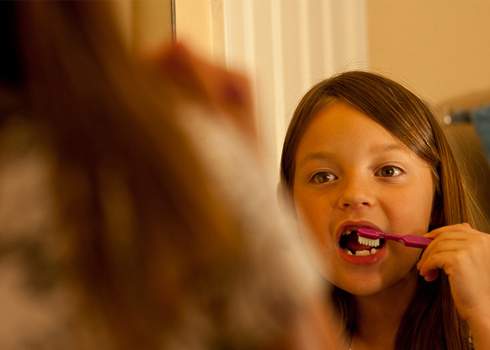
    Tip: Make it part of your family’s routine by doing it right before or after everyone brushes their teeth in the morning or at bedtime.

    4. Memory Jar Magic

    Keep a jar in a common area of your home along with small pieces of paper and pens. Encourage family members to write down a favorite moment and drop it in the jar each day. These might be big moments (“Dad came to my recital!”) or tiny ones (“The dog made a funny face”). On tough weeks or at the end of each month, read them together and re-live the joy. This creates anticipation for good moments and helps families hold on to happiness during stressful times. 

    Tip: Decorate your jar together to make it special or use different colored papers for each family member.

    Make it a family practice to genuinely acknowledge and thank the community helpers you encounter during your regular routines. When you’re out running errands together, pause to thank the grocery store cashier, wave to the mail carrier, or say good morning to the crossing guard. The key is doing this together as a family so kids see you modeling appreciation and learn that gratitude can be woven into everyday moments. At dinner, share who you thanked that day and why their work matters.

    Tip: Challenge younger kids to remember one helper they want to thank on your next outing. Make it a game to spot and appreciate people who make your community work.

    6. Nature Gratitude Ritual

    Step outside together into your backyard or a nearby park, or even just look out a window. Each person should try to find one thing in nature they appreciate right now. Maybe it’s the way sunlight filters through leaves, a bird’s song, or the smell of fresh air. Share your discoveries without phones or distractions. Stay fully present with each other and the natural world. This practice works in any season and any weather! 

    Tip: Younger children might enjoy collecting their gratitude finds (a special rock, interesting leaf, or pinecone) to keep as a reminder of their appreciation for nature.

    7. Gratitude Detective Game

    Turn gratitude into a playful detective game where everyone searches for everyday things we usually overlook. Challenge your family: “I spy with my grateful eye… something that keeps us warm!” (blankets, the heater, or cozy sweaters). Take turns being the detective who gives clues about everyday comforts while others guess. Play during dinner, car rides, or before bed. This helps families appreciate the invisible infrastructure of daily life, such as running water, electricity, safe roads, and working appliances—in a fun, engaging way.

    Tip: Keep score if your kids are competitive or make it collaborative by seeing how many “gratitude clues” your family can come up with together in five minutes.

    Starting Your Family’s Gratitude Journey 

    Building gratitude practices when children are young gives them tools for lifelong resilience and emotional well-being. It shows them how to notice goodness even during challenging times, how to appreciate the people and moments that make life rich, and how to stay connected to what matters most.

    When families practice gratitude together, we create shared experiences that strengthen our bonds and help us navigate life’s inevitable ups and downs as a team. Remember, the goal here is connection, not perfection. You don’t need to do all seven practices, or even multiple practices. Even one practice done regularly makes a real difference. 

    Start with whichever one resonates most with your family right now. Try it for a week or two and see what happens! Through this simple act of practicing gratitude together, you’re shaping how your children see the world. That perspective will serve them throughout their entire lives!

    And that’s worth celebrating.



    Source link

  • Wellness Washing and the Rise of Mandated Mindfulness

    Wellness Washing and the Rise of Mandated Mindfulness

    In June 2023 New York Mayor Eric Adams announced a new policy that would go into effect that fall. Every morning every public school student would engage in two to five minutes of mindful breathing unless they chose to opt out. At a time when the youth mental health crisis was a major news story, this seemed like a win. Research had suggested that mindfulness could have a beneficial impact on adolescent anxiety and depression. Now the more than one million students in NYC public schools would be getting a daily dose of it.

    Yet to those in the mindfulness world, the reaction was nuanced. While mindfulness can be a powerful tool, it is one that is typically taught by experienced practitioners. Asking overwhelmed teachers to add another lesson to their plate on a topic they might not have familiarity with had the potential to backfire. Programming that is implemented by burnt out educators going through the motions with bored students is not usually a recipe for success.

    Asking overwhelmed teachers to add another lesson to their plate on a topic they might not have familiarity with had the potential to backfire.

    Weighing Positives and Negatives

    As a PE teacher and Mindfulness Director at a PK-8 school in Massachusetts, I had my concerns from afar. I’m well aware of my own skills and limitations. If, for example, research revealed the benefits of singing, and there were a mandate to practice if for a few minutes at the start of every class, my lack of expertise would result in some seriously out of tune kiddos. There is a reason people are encouraged to teach to their strengths.

    Kimberly Daniels, a School Counselor and Mindfulness Director at The Greenwich Village School in Manhattan, saw the mandate as a positive step at first. Both Daniels and I worked with WholeSchool Mindfulness to integrate the position of Mindfulness Director at our respective schools. I wanted to get her take as someone who understands the benefits of bringing mindfulness to schools and as an expert on the thoughtful, research-backed implementation of these practices.

    “Initially, I was like, that’s actually really good,” said Daniels. “It’s being seen as something all schools should be doing. It’s a strange thing to mandate, but if it’s bringing awareness to all New York City public schools, that could be a good thing.”

    Asking More of Already-Overwhelmed Teachers

    The reaction among teachers, however, was more of a mixed bag. “I think a lot of teachers were rolling their eyes because it was one more thing they were being mandated to do,” said Daniels. 

    Once the program got underway, Daniels was able to be a thought partner with teachers at her school and provide resources and ideas. “When it first rolled out, I talked about it at a professional development session at my school,” recalled Daniels. “We were able to come up with different things that teachers could do in the classroom. A lot of teachers really loved the idea of mindful coloring.” However, her position is a rarity in the public school system, and other schools lacked the support of an educator trained in the discipline.

    Is There Needed Support?

    The other major issue was the overall lack of accountability and support from the Department of Education. It is one thing to announce a mandate and then provide training, resources, and professional development on the subject, as might happen with the introduction of a new math curriculum. It is quite another to issue a mandate without any plan for following through and supporting teachers.

    Such a mandate may serve more as a form of wellness washing: allowing the powers-that-be to gain positive press and check a box without actually creating effectual change. Is it a coincidence that Mayor Adams’ federal corruption investigation came to light only a few months after this announcement? In the end, this kind of empty mandate only serves to promote the interests of the administrators and politicians who can claim such initiatives as feathers in their cap while a generation of students becomes alienated by half-hearted wellness measures.

    Such a mandate may serve more as a form of wellness washing: allowing the powers-that-be to gain positive press and check a box without actually creating effectual change.

    Additionally, unsupported initiatives like these don’t take into account the potential pitfalls of mindfulness practice in environments not suited to it, such as unintended trauma responses. There is evidence that mindfulness practices can trigger trauma, and a classroom teacher who is forced to teach it might not have the requisite training or experience to recognize and respond to students who are in distress because of practice.

    In addition, if a teacher is not bought into mindfulness programming but has to introduce it anyways, they might do so in a way that stokes apathy in the practice rather than interest. As a basketball coach, I certainly wouldn’t want people who don’t have a passion for the game to be tasked with introducing to students, but that is precisely the case with mindfulness. Students who first encounter practice in a classroom setting where it is being rolled out without enthusiasm or knowledge might sour on it pretty quickly.

    What Now?

    So what would be a better approach? Daniels believes a much more lasting impact would come from the adoption of an Social Emotional Learning (SEL) curriculum with a focus on mindfulness. An SEL curriculum includes programs and lessons designed to help students develop “soft” skills that are actually essential for healthy functioning in relationships and in the world—things like managing emotions, setting goals, showing empathy, building positive relationships, and making responsible decisions.

    “If you don’t have your own mindfulness practice and it’s not something you’ve ever been interested in, I think it can be daunting for teachers,” said Daniels. “But if it were an actual curriculum that you’re properly trained in, that would have way more of an impact than than two to five minutes of mindfulness per day.”

    Mindfulness is an incredible tool for stoking awareness. Yet it can’t be just a means of wellness washing, and requires the same pedagogical mastery as any other discipline, whether it be art, chemistry, or social studies. All of those disciplines are taught by educators trained in a specific philosophy or curriculum.

    Despite the potential benefits of mindfulness being more accessible and widely disseminated, the reach may not be worth the risk without follow up, support, and training for teachers. In the end, to be most effective, mindfulness practice must be implemented thoughtfully by those with experience in the discipline. In other words, we need to be mindful about mindfulness programming.


    Source link

  • Henna as Mindfulness: A Creative Practice for Calm and Connection

    Henna as Mindfulness: A Creative Practice for Calm and Connection

    In this practice, mindful teacher Rose Felix Cratsley invites kids and caregivers to explore henna as an art form and as a gentle mindfulness activity that nurtures stillness, creativity, and cultural appreciation.

    A Mindful Ritual at Your Fingertips

    Children are naturally drawn to creative expression. The process of making and applying henna slows us down, encouraging presence, sensory awareness, and loving connection through touch and design.

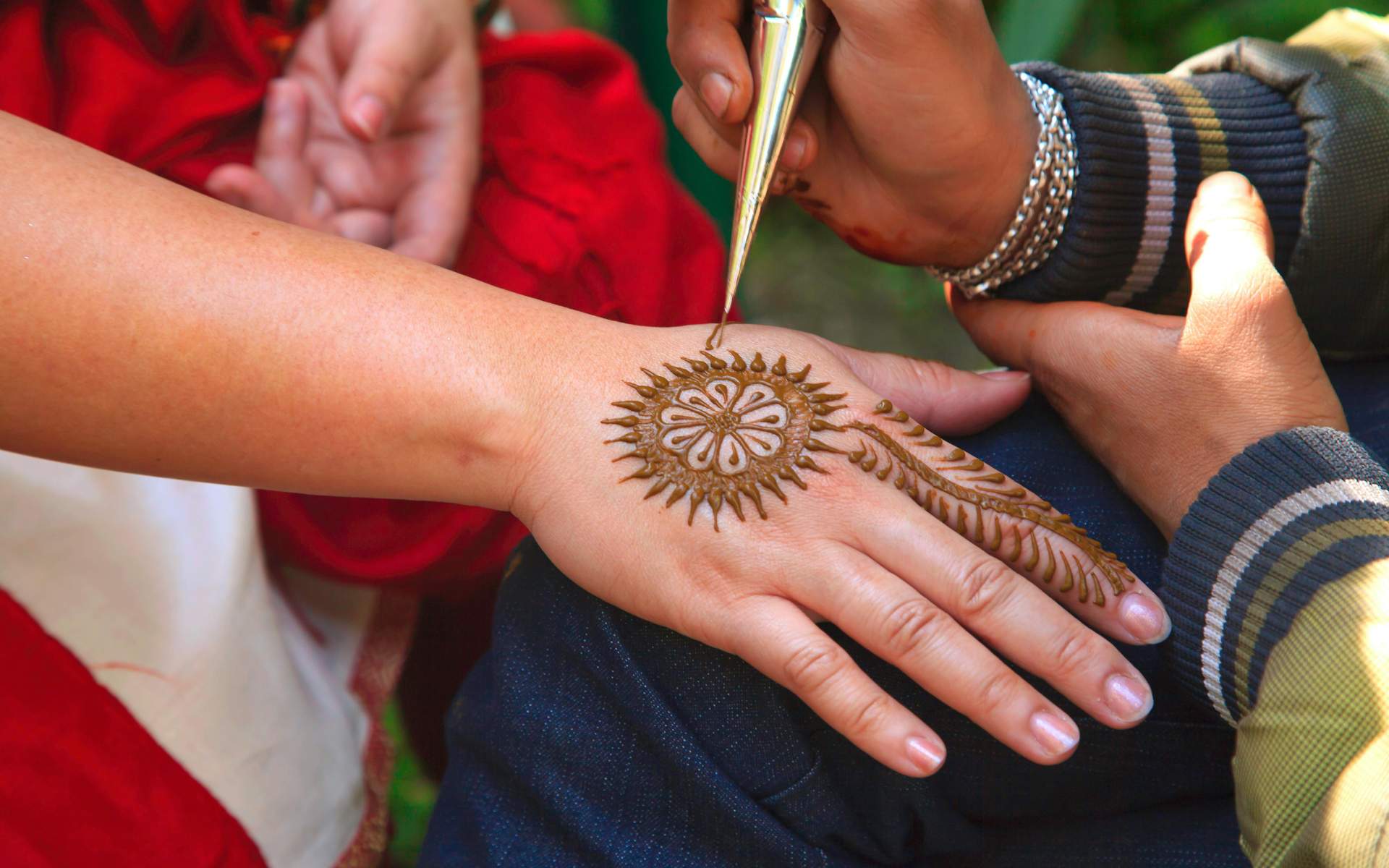
    Rooted in South Asian, Middle Eastern, and African cultures, henna (or mehndi) is a sacred ritual of celebration, storytelling, and connection. This practice invites us into mindful moments: as we mix the paste, trace the lines, feel the coolness on our skin, and observe our thoughts. Whether it’s a quiet moment shared between caregiver and child, or at a community gathering rich with color and conversation, henna becomes a living reminder: we are here, together, in this moment.

    Henna Mindfulness Practice

    1. Begin with Breath

    Invite your child or group to take three slow, deep breaths. Feel the belly rise and fall. Notice how your body begins to soften. You might say: “We are here, we are calm, we are ready to create together.”

    2. Mix with Intention

    Mix 2 tablespoons of natural henna powder with lemon juice until a smooth paste forms. Optionally add a drop of essential oil and a pinch of sugar. Stir slowly and notice the texture and scent. As you mix, set a quiet intention: peace, joy, strength—whatever quality you want to hold in your design.

    3. Trace the Moment

    Before applying henna on the skin, practice simple shapes on paper. Spirals, dots, leaves, hearts—anything your child imagines. Encourage slowing down: 

    • How does it feel to trace that line?
    • What happens to your breath as you move your hand?

    4. Apply with Care

    Using a cone or small brush, apply a simple design to the hand or wrist. Notice the sensation of the cool paste, the stillness of the body, and the breath anchoring the experience.

    *Caregivers can gently apply henna to children’s hands, offering this as a moment of love, bonding, and grounding.

    5. Rest and Reflect

    Once the design is complete, let it dry naturally. Use this time for quiet reflection or journaling. Invite conversation:

    • What story does your henna design tell?
    • How did it feel to go slowly and focus?
    • What do you want to remember and cherish from this moment?

    6. Close with Gratitude and intention

    As the henna sets and your breath softens, invite a final moment of stillness. You might say together:

    “We are present. We are creative. We are calm. We welcome peace.”

    Let these words settle into your heart, mind, and body, like the design resting on your skin. This simple affirmation becomes a living mantra, carrying the essence of the practice forward: grounded in mindfulness, rich with cultural meaning, and full of possibility.

    While henna fades in time, the peace we create through these practices becomes cherished memories.

    Its Significance

    Henna, as a mindfulness practice, invites children into their senses, their heritage, their bodies, and their relationships with care. For caregivers, it’s an opportunity to share calm and culture in one breath.

    Rooted in tradition and adaptable for all ages, this ritual offers connection across generations—where stories, symbols, and emotions can live on the skin and in the heart.


    Source link

  • Shifting Habits: Three Mindful Parenting Tips You Can Try Today

    Shifting Habits: Three Mindful Parenting Tips You Can Try Today

    Susan Kaiser Greenland offers three mindful parenting tips to help kids pause and reflect so they can identify and shift habits.

    We all have habits—some of them helpful or neutral, others that persistently create problems in our lives. It’s easier for kids to change habits than grown-ups. One way to start recognising your pattern of automatic behavior is to create external signals that will automatically show up throughout the day. These three mindful parenting tips can be interrupters that provide an opportunity to pause and reflect.

    1. Create mindfulness reminders

    I have seen kids tie a string around one finger, make mindfulness bracelets of ribbons or beads, or tape a colorful sticker to their cell phones. Whenever you see them, just pause to take in what’s happening in your mind and body.

    2. Implement breathing prompts

    Suggest to your children to practice breath awareness whenever they brush their teeth or put their socks on. Breathing prompts help kids recognise just how many things they do are on automatic pilot. By interrupting automatic behavior, kids have the time and mental space to make connections between what they’re doing, what they’re thinking, and how they’re feeling.

    3. Notice funny feelings

    Kids talk about having a funny feeling in the split second just before they do something that they later wish they hadn’t done, maybe a tightening in their chests, or a sinking feeling in their stomachs. That funny feeling occurs in the “about to” moment.

    By noticing their funny feelings, kids pause before they act to ask:

    • Why am I choosing to do this?
    • How does it make me feel?
    • Is my motivation friendly or unfriendly?

    If, upon reflection, the action doesn’t feel right, they can choose to act differently.

    Photo © flickr.com/Josh Kenzer


    Source link

  • How to Model Mindfulness When Talking to Kids

    How to Model Mindfulness When Talking to Kids

    Kids are highly perceptive—so how can we give them feedback while also modeling mindfulness, calm, and kindness? Mindfulness Director and educator Alex Tzelnic shares tried-and-true tips for effective, mindful communication, whether in the classroom or at home.

    Summary

    • Modeling mindfulness when we communicate with kids and students is a research-backed educational tool.
    • Giving wise feedback is a framework for encouraging students’ learning, without the sense they’re being criticized.
    • Teachers can create a Mindful Language Cheat Sheet with go-to phrases for clarity, calm, and kindness.

    As much as we might like to believe that growing up involves possessing wisdom, kids have a way of undermining that perception. Think of how often our most well-intentioned advice is met with a dramatic eye roll. It can even feel like sarcasm is the primary purpose of eyeballs, with sight being just a byproduct, particularly if it is unsolicited feedback you’ve deigned to offer up.

    Yet kids are also often in need of feedback. Without feedback they would be in danger of losing the eyes they are so adept at rolling (“Don’t run with scissors!”). Of course, their job is to test boundaries, and our job as educators and caregivers is to nudge them toward navigating those boundaries independently without letting them fall off the cliff. It can be a delicate balance.

    As a Mindfulness Director at a PK-8 school, I often think about the ways we communicate with students and how language can be such a powerful way to model mindfulness.

    What Happens When Teachers Model Mindfulness?

    At the start of this school year, I shared with the faculty at my school just how impactful our communication styles can be. I related one of my favorite studies on mindfulness. It involved 599 high school students, and took place over the course of the year. The study found that students that had merely perceived their teachers as more mindful at the start of the year showed greater development in mindfulness and compassion by the end of the year.

    The point I was trying to make was that one doesn’t have to have a deeply developed personal practice to have an impact on student well-being. As someone trying to encourage teachers to incorporate mindfulness into their classrooms, I wanted to let them know their ability to implicitly model mindfulness might be more powerful than any explicit mindfulness lessons. After all, teaching your own curriculum is challenging in and of itself, and people feel uncomfortable implementing a tool that is not part of their own personal repertoire. If somebody asked me to start weaving chemistry into my lessons, I’d be hard-pressed to even know where to begin.

    One doesn’t have to have a deeply developed personal practice to have an impact on student well-being.

    It can be illuminating to grasp that how we show up and engage with students can be a crucial factor in their development. The study identified the characteristics of a mindful teacher as one that is calm, clear, and kind. The researchers concluded, “The presence of a calm, clear, and kind teacher can support students’ holistic growth, whether through modeling or need fulfillment.” Language can impart the kind of coded lessons that could meaningfully influence student behavior, letting them know that they are seen and supported, and in turn helping them see and support others.

    How to Give Wise Feedback

    Of course, it can be difficult to communicate with clarity, calmness, and kindness, particularly when you are outnumbered by an audience that is there because it has to be, and not necessarily because it wants to be. Though we might assume our statements are innocuous, from the student perspective much of our communication can feel critical. Asking, “Did you complete the assignment?” could be interpreted by a student as their teacher thinking they’re  too inept to remember to get work done on their own.

    To help with inadvertent critiquing, I also shared the concept of “wise feedback” with my faculty. Psychologist David Yeager explained that providing a clear and transparent statement about the reason feedback is being given helps adolescents understand that one has high standards that can be met, and the feedback comes across as encouragement rather than nagging. “I’m wondering if you completed that assignment, because there are some fascinating nuggets in there and I’m looking forward to hearing your thoughts on them,” lands much differently.

    Language can impart the kind of coded lessons that could meaningfully influence student behavior, letting them know that they are seen and supported, and in turn helping them see and support others.

    Yeager pointed to a study he conducted in which seventh grade social studies teachers returned papers to their students with corrections and either a neutral note or a note featuring wise feedback. Eighty percent of students who received the wise feedback ended up revising their essays as opposed to forty percent in the neutral note group. Anecdotally, I can report that the use of wise feedback in my own pedagogy has led to a significant reduction in eye rolling.

    Mindful Language, Made Easy

    At the end of my session with the faculty, I expressed that I was confident most teachers probably already do express the elements of mindful teaching even if they don’t realize it. One of the hallmarks for being an educator is having the patience and compassion required to nurture learning. But in the words of the Zen teacher Shunryu Suzuki, “You are perfect as you are and you could use a little improvement.” To expand our collective repertoire of mindful phrases, I gave everyone an index card so that we could take advantage of the assembled wisdom.

    I asked teachers to help me create a “mindful language cheat sheet” that featured language they use when they are trying to communicate with clarity, calmness, and kindness. In other words, it was a collection of wise feedback. I then sent out a document that compiled these phrases, which featured such pearls of wisdom as:

    • Everything is figureoutable.
    • Worrying is paying a debt you don’t owe.
    • This is one day. There are many days.
    • Everyone’s best looks different. Focus on what your best looks like.
    • I’m walking with you in this.
    • When in doubt, breathe it out.

    Thus, we were equipped with language to start the year that could help cut to the heart of the matter, support students through challenging moments, and bring a little levity to the proceedings.

    In the ancient lore of meditation and mindfulness, we hear stories of legendary teachers who effortlessly transmit all their wisdom to adoring and rapt students in a single act. It’s an impossibly high bar for modern educators, of course, and not how regular learning occurs, which is most often in tiny moments that accumulate over the course of years. For us mere mortals that find ourselves in the position of dispensing wisdom—whether it is to students of mindfulness, students of chemistry, or students of Play-Doh—it typically takes a much higher word count to get our point across. Teaching is hard. But don’t forget, everything is figureoutable.


    Source link

  • Calming Hands: A Mindfulness Practice for Kids to Ease Difficult Emotions

    Calming Hands: A Mindfulness Practice for Kids to Ease Difficult Emotions

    Try this creative, calming mindfulness practice for kids and families, designed to help ease difficult emotions and manage stress.

    Key Points:

    • When children feel anxious or overwhelmed, mindful breathing and counting can help them feel safe and calm.
    • Engaging in mindful activities together as a family strengthens connections and boosts emotional resilience.
    • Try this Calming Hands activity to help your child soothe strong emotions through breathing, counting, and making handprint art.

    Mindfulness can be fun, simple, and hands-on—literally! The Calming Hands practice, created and shared by Rose Felix Cratsley at Ivy Child International, introduces young children to mindful breathing through art and counting. This activity is perfect for caregivers and educators who want to help kids cultivate calm and focus playfully.

    Exploring this practice helps us connect with our bodies, our breath, and the calming energy of our hands. When we feel anxious, stressed, upset or overwhelmed, our hands can be a tool for bringing peace and relaxation. This practice can help you feel safe and calm, no matter what you’re going through.

    Scroll down to follow along with the guided audio of this practice!

    How to Adapt for Kids with Sensory Needs

    Children are encouraged to explore different textures such as soft fabric, smooth stones etc. while practicing the calming hands technique, allowing them to engage with their senses.

    Parental Hack

    This practice is most effective when caregivers model by practicing alongside children, reinforcing the idea that mindfulness is a family activity and ritual. This can help both kids and parents bond while building emotional resilience and their psychological immune system, together.

    Highlights and Benefits:

    • Introduction: Guides children to notice the sensations in their hands and introduces the concept of hands as calming tools.
    • Breathing Practice: Uses finger-by-finger breathing, teaching kids to inhale and exhale deeply while counting from 1 to 10.
    • Reflection: Encourages kids to observe how their hands and bodies feel after the practice, reinforcing self-awareness and relaxation.

    Calm and Creative: Make Art With Your Handprint

    The Calming Hands practice is best paired with an engaging art activity where kids trace or do handprints, decorate, and personalize their calming hands. By integrating creativity with this simple and engaging mindfulness practice, this activity becomes a lasting tool for emotional regulation and relaxation.

    What You’ll Need:

    • Paper (large enough for a handprint)
    • Non-toxic markers, crayons, or paint

    How to Practice Calming Hands:

    1. Make the Handprint: Invite your child to trace their hand onto the paper or create a painted handprint. Let them have fun choosing colors or decorating their hand outline—it’s part of the creative mindfulness process!
    2. Number the Fingers: Together, write numbers from 1 to 10 on the fingers, starting at the thumb and moving outward.
    3. Begin Mindful Breathing:
      • Encourage the child to place their real hand on top of their handprint.
      • Start at the thumb (1) and breathe in deeply, then exhale as you count out loud.
      • Move to the next finger (2), breathing in and out again.
      • Continue until all 10 fingers are complete.
    4. Repeat if Needed: If the child enjoys the exercise, they can trace back through the numbers or start again.

    Children and families can turn this mindfulness practice into a creative keepsake by tracing their hands, numbering their fingers, and decorating the artwork. This hands-on activity teaches kids to ease difficult emotions by providing a visual and tactile reminder of the breathing practice, making it easy for them to return to in stressful moments. Calming hands can be mounted on the fridge, bedroom door or even in the car as a tool to remind us all to count and breathe.

    Audio Practice: Use Your Hands to Explore Mindful Breathing

    By Rose Felix Cratsley

    Before starting the practice, find a blank piece of paper and something to draw with, like a marker or pencil.

    1. Step 1: Get Comfortable. Find a comfortable seat, either on the floor or in a chair, and sit tall like a strong tree. You can rest your hands gently on your lap, or place them in front of you. Let your shoulders relax, and your body feel soft. You are in a safe place.
    2. Step 2: Notice Your Hands. Take a moment to notice your hands. How do they feel? Are they warm or cool? Do they feel heavy or light? If you’re feeling nervous or anxious, that’s okay—just notice what’s happening in your hands without judgment. If you feel tense, give your hands a little shake and let the tension fall away.
    3. Step 3: Trace Your Hands. Now, we’re going to trace our hands to create a picture of calm. Place your hand on a piece of paper and trace around it with a pencil or marker. While you trace, feel your fingers, the palm of your hand, and the space between your fingers. Let each stroke of the marker be a reminder that you are safe and in control.

      As you trace your hands, know that you’re building something special. Your hands are your own calming tool, always available when you need to relax and feel grounded.

    4. Step 4: Breathe with Your Hands. Now that your hands are traced, we’re going to use them to help us breathe deeply. Each finger will guide us through one breath. We will count from 1 to 10, one number for each finger. With each number, we’ll take a slow, deep breath in and out.

      Start with your pinky and breathe in as you count “1.” Feel your chest and belly rise. Now, breathe out as you count “2.” Let the air flow out slowly and feel your body soften. Keep breathing slowly, one number for each finger. As you breathe in, feel your hands fill with calm. As you breathe out, feel your hands and body relax even more.

    5. Step 5: Focus on the Sensation. As you go through each number, pay close attention to how your hands feel. Do they feel warm, soft, or tingly? Notice any changes as you breathe. Imagine your breath flowing through your hands, bringing calmness to every part of your body.

      As your mind wanders, simply bring your attention back to your hands and your breath. Take your time, enjoying each breath as an opportunity to slow down and find peace.

    6. Step 6: Feel Grounded and Safe. Take a moment to reflect on how your body feels now. Does your body feel more relaxed? Do your hands feel more calm and steady? Remember, this practice helps us feel grounded—like our feet are firmly planted in the earth, and we are in control of our breath and emotions. Your hands can always be a source of calm. If you ever feel anxious or upset, you can come back to this practice, take a deep breath, and find peace through your hands.
    7. When you feel ready, come back to your day.  Take one more deep breath in, and gently breathe out. Slowly bring your awareness back to the space around you. You are calm, centered, and ready to face whatever comes next. You can always return to your calming hands whenever you need them.


    Source link

  • Brighten Your Day: Learn Mindfulness From First Graders

    Brighten Your Day: Learn Mindfulness From First Graders

    Students Elijah and Romir share what they’ve learned about the practice of mindfulness via their school program run by the nonprofit Space Between.

    There are myriad benefits of mindfulness being taught in schools. To name just a few, it supports students and teachers in managing stress, trauma, overwhelm, and more. But one of the cutest upsides has to be kids teaching meditation.

    The Seattle-based nonprofit Space Between has been teaching trauma-informed mindfulness practices in school communities since 2016, supporting the mental health and well-being of both teachers and students.

    Learn the Zig-Zag Breath With Romir

    According to Romir, a first grader in the Space Between program, the Zig-Zag Breath involves just two simple steps:

    1. Move your head in a zig-zag shape.
    2. Breathe out calmly.

    Romir says that this practice can not only help you feel warmer, but makes you feel better if you get hurt.

    Thanks, Romir! We’ll be keeping this quick and easy practice in our toolkit should we get chilly or need a pick-me-up.

    Practice Square Breathing With Elijah

    1. Point your finger and close your eyes, if you feel comfortable. Get ready to imagine you’re drawing the shape of a square with the tip of your finger.
    2. Breathe in through your nose and move your finger in a line, drawing the first side of the square in the air in front of you.
    3. Breathe out through your mouth, drawing the next side of the square.
    4. Breathe in through your nose and draw the third side of the square. 
    5. Breathe out through your mouth and complete the square.
    6. Repeat this three times.

    We know that deep, intentional breathing calms our nervous system and focuses our minds. This easy-to-remember practice is a great way to tap into the power of the breath any time, anywhere. Thanks for the lesson, Elijah!

    Mindfulness Practices for Kids

    If you’d like to explore mindfulness meditation with the school-aged children in your life, there are many ways to go about it. Over the years, we’ve gathered a number of wonderful guided practices for young children and teenagers, created by renowned meditation teachers. Here are just a few of our most popular articles to help you get started:


    Source link