The crack team at How to Adult takes on basic seated meditation. Take 5 minutes and follow the demonstration.
It takes so much energy to just be sometimes.
Add in adult responsibilities like work, family, relationships, finances, and worry about the world, and it can all feel like way too much.
While mindfulness meditation can’t take away the stressors of grown-up life, it can help us regulate our nervous systems, process emotions, improve memory and sleep, and bring clarity in our decision-making. And these are all benefits that can help us at least learn how to adult with a little more peace.
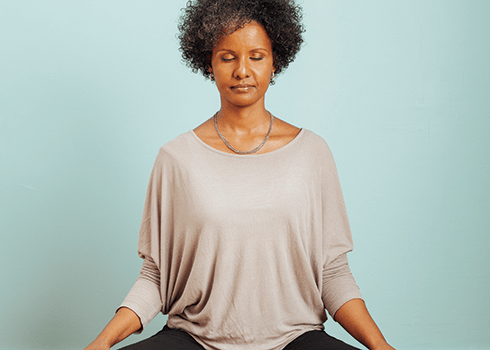
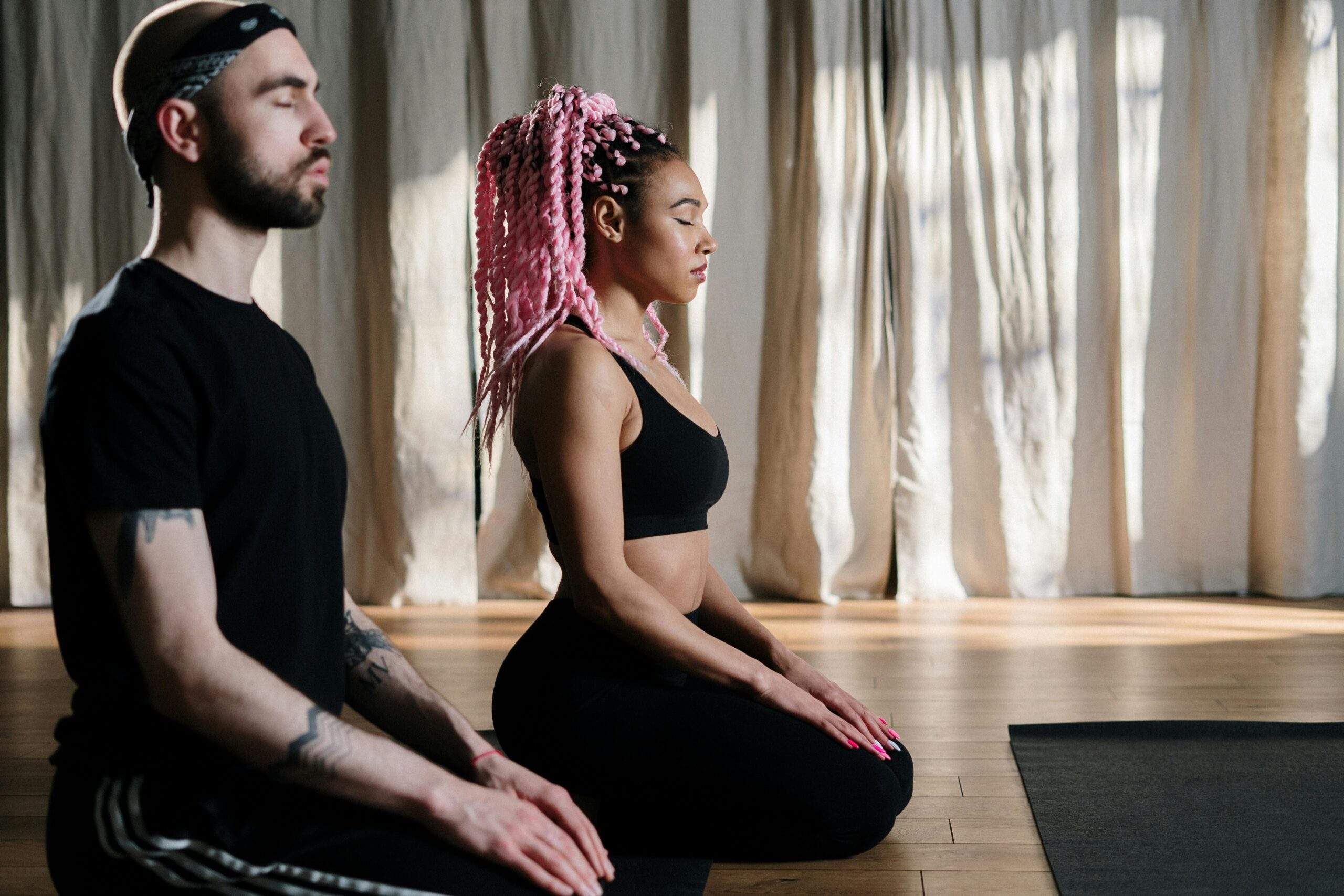
If you’re curious about starting a practice but aren’t sure where to start, the creators of the How to Adult Youtube channel crafted a five-minute primer on how to meditate. They discuss the benefits, the practice—including some pointers from Mindful on basic seated meditation.
All you need is five minutes and a chair to follow the demonstration.
If meditation is feeling just one more thing on your to-do list, try this intention practice to connect with why you meditate.
Sometimes, we can start out a mindfulness practice with lots of energy, but after a while, that commitment fizzles. The key in meditation is to take time to get in touch with what you want, what you value most. Understanding why you meditate can feed your passion and motivation and help you to make a habit of your regular practice.
1. Feel the Body
Begin by feeling your body, connecting with both feet, your legs, your seat, hips, tailbone. Sensing your spine, straight and upright, relax the shoulders down and allow your awareness to travel down through both arms and to the palms of the hands and fingers. Bring the awareness into the belly, the chest, the throat, and then resting your awareness on your face, release any tension in your jaw, eyes, forehead. Sense the whole body as you sit here. And feel the breath moving through the entire volume of the body. And from this place of connection and presence, inquire into why you are meditating. What is your hope, vision, intention?
Tip: Don’t worry if your intention is fuzzy—you can choose to simply pay attention to whatever thoughts or sensations arise.
2. Listen Closely
Listen deeply. Thoughts will arise. Note them, and let them go. Listen deeper still. What feels most compelling, most true in your body? Try not to think about your intention, or to analyze or cognitively discern it. Instead, see if you can listen from a deeper place, a still abiding awareness that is always already there. Listen with your body, with your whole being.
3. Note the Intention
Perhaps, for now, there is no clear answer, and your intention is simply to be present, to stay open, to be curious, allowing whatever arises to be here. Or perhaps a clear felt sense of your intention arises. Either way, hold your intention clearly in your consciousness, regardless of whether it is strong and clearly formed or amorphous and tentative.
4. Let Your Intention Go
Silently repeat your intention, anchor it in your mind and body. And once you feel that it is clear and stable, let it go. And rest back into the body, into the awareness that is enveloping you. The intention simply guides, it is not a goal that we fixate on, but a direction we incline our heart and mind to follow.
Ed Halliwell explores a common question asked by those new to mindfulness meditation: Do I need to meditate to be mindful?
One of the most common questions I’m asked by people wondering if mindfulness is for them is: Do I need to meditate to be mindful?
To be fair, there’s often a subtext behind the inquiry: most mindfulness courses ask participants to practice for up to 45 minutes a day, the suggestion being that this will be a vital part of the learning process. Forty-five minutes a day seems a lot of work for most people, especially in a culture where sitting still and “doing nothing” for any time at all is unusual. If mindfulness just means paying attention, why can’t I do that without having to meditate? Can’t I just decide to notice things a bit more?
Ask yourself this: can you just decide to be good at tennis?
Well, ask yourself this: can you just decide to be good at tennis? Or speak French? Or play the piano? While some of us might have more of an aptitude for learning skills like these, they still have to be practiced. We have to put some effort in. Evidence from the clinical and neuroscientific studies of mindfulness suggests that paying attention is an art to be cultivated in just the same way—we can develop our capacity for awareness through training. It’s also what meditators down the ages have reported.
The more we do something, the more we’re likely to continue to do it, and to do it well—this is how habits form, and skills are acquired. So it makes sense that the more we practice meditation—the art of paying attention—the more mindful we will find ourselves.
Moving From the Head to Embodiment
Perhaps one of the disadvantages of the gradual shift away from the use of the word meditation and towards the word mindfulness is that meditation conveys more of a sense of this being a practice, and not just a given attribute. “Deciding to be mindful” is something that comes from the head, a thought, whereas “practicing meditation” brings more of a sense of embodiment with it. If we want our mindfulness to be something we are, more than just a thought of something we’d like to be, it seems we need to cultivate it through meditation.
Lots of studies suggest that engaging in periods of meditation shifts our brain, body, and experience in seemingly beneficial ways. What’s less clear is the effect of meditation practice over a period of time on those changes—is it this or something else that leads to the benefits seen? In other words: we know meditation works, and we know mindfulness works, but we’re still understanding the mechanisms behind how meditation helps mindfulness to work better.
Tradition, logic, and some strong scientific indicators say the meditation practice is key, but we still can’t be quite sure. Indeed, one review of the impact of practicing meditation during a mindfulness course found much less of a link between practice time and results than received wisdom might have predicted. While there is plenty of evidence suggesting a causal link, it’s early days in the research literature, and it would be good to see some studies which compared the effect of mindfulness courses with (and without) a home practice component. For now, the jury’s out on just how important formal meditation is to cultivating mindfulness.
Accepting the Gift, Choosing the Practice
Today, as I meditated at lunchtime in the churchyard outside our house, I wondered at the magnificent storm clouds billowing low across the hills on the horizon, felt waves of cascading energy flow through my body as the busyness of my morning—and my mind—subsided into moments of inner quiet, letting go into a grace of appreciation at having the senses to experience such a scene. I felt content, tired, a bit wet (raindrops on the grass below) and far more present than when I’d sat down to practice.
Whatever the effect of meditation on my general mindfulness and well-being, experiences like that—the sense of opening into a vivid and vibrant aliveness—feel precious enough to be worth a lot by themselves. Anything else I’ll take as a bonus.
This blog post originally appeared on Mindful.org in July 2012.
The question that nearly all prospective meditators have: Will you actually have greater health and well-being if you meditate? Mindfulness teacher Steven Hickman addresses the question from a scientific (and pragmatic) perspective.
Q: I keep hearing that science has proven the benefits of mindfulness meditation. Is that a thoroughly accurate statement? Does research show, in a way that’s objectively measurable, that your well-being will increase if you meditate?
A: Science can’t definitively show anything, especially when it comes to human experience. That’s not to impugn the value of science, but to note its limitations. Science does its best to predict outcomes in the future based on observations of the past. With meditation science, there is a large and growing body of research that suggests the odds are good that meditation practice will have a generally salutary and positive impact on someone who practices it regularly.
But science works with statistics and probabilities, usually regarding groups, so that what happens for 80% of the population, for example, doesn’t translate into an 80% chance that you will experience it. Statistics can be misleading. If you roll a die five times and each time it comes up as a 5, when you roll that die again, what are the chances you will get another 5? The same as all the other times: 1 in 6.
So, putting the statistics lesson aside, we all know that life is uncertain. The same is true with meditation, but research does suggest that certain practices and programs do seem to have a measurable, and in some cases, clearly observable positive effect on things like mood, well-being, and self-compassion, among others.
My advice would be to let this science lead you to be a skeptic, which means to explore the practice with an open, curious mind that has let go of preconceived notions.
Back to your question: Will your well-being increase if you meditate? My advice would be to let this science lead you to be a skeptic, which means to explore the practice with an open, curious mind that has let go of preconceived notions. As I like to tell my students: Don’t take my word for anything. Let your own experience be your guide.
This article appeared in the February 2018 issue of Mindful magazine.
While this article has been reviewed for accuracy and fairness by Mindful editors, some material in this article was generated by AI. To learn more about our AI practices and why we sometimes use AI to generate content, please see our statement here.
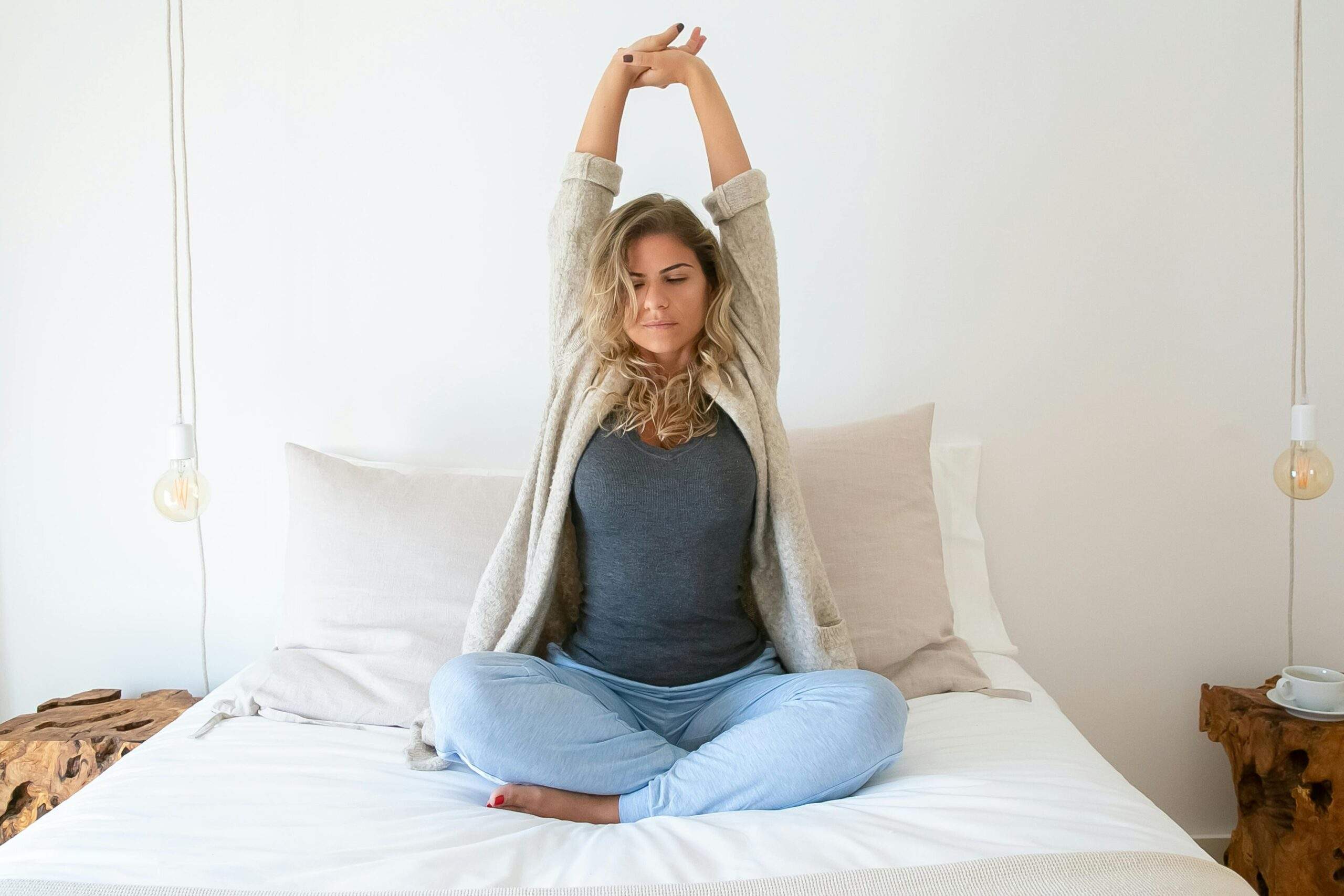
We often imagine a standard meditation practice taking place in a seated position, but sitting is certainly not the only way to get a great meditation session. In fact, one of the most accessible places to meditate is a space where we already spend a third of our lives: in bed. If you’re wondering how to meditate in bed, you’ll find what you need to get started in this simple guide, complete with techniques, benefits, and tips to make the most of this restful practice.
Whether you’re looking to begin your day with clarity, or you’re seeking a soothing practice to quiet your body and mind before sleep, meditating in bed offers a gentle and practical way to weave mindfulness into your routine.
Why Learn How to Meditate in Bed?
Meditating in bed isn’t just convenient—it can also be beneficial. Here’s why this practice is worth exploring:
Accessibility: First of all, at the beginning or end of each day, you’re already there! No need for a special cushion or designated space. Plus, this position can be easier and more comfortable for people with chronic pain or mobility challenges that make traditional seated postures painful or impossible.
A Versatile Option to Add to Your Mindfulness Toolkit: You can meditate in bed while sitting, lying on your back, or resting on your side. And while you might not feel like meditating in bed every day, it can be a great option for times when you aren’t feeling well, or you’re recovering from an injury or medical procedure that makes sitting uncomfortable.
A Gentle Start or End to the Day: Morning meditations set the tone for mindfulness and focus, while evening meditations help transition from the day’s busyness to restful sleep.
Stress and Sleep Support: Mindfulness meditation has been shown to reduce stress and improve sleep quality, making it an ideal practice for those struggling with insomnia or racing thoughts at night.
Body Awareness and Relaxation: In bed, you’re naturally lying down or reclining, a posture that can encourage deep relaxation and help you connect with your body in a soothing way.
How to Prepare for Meditating in Bed
Creating the right environment can significantly enhance your meditation experience. Here are a few steps we recommend to set the stage:
Reduce Distraction: This can include anything from taking a few minutes to declutter the space, making sure your phone is silenced or off, or taking care of a small to-do that might be nagging your mind.
Dim the Lights: Soft lighting or total darkness can help signal your brain that it’s time to wind down. If it’s safe to do so, a lit candle can also be soothing. (For example, if you know you’re prone to falling asleep during this type of meditation, candles might not be the best option.)
Limit Noise: Use earplugs, a white noise machine, or calming background sounds like ocean waves or rain if you’re in a noisy environment.
Dress Comfortably: Wear loose, comfortable clothing or pajamas that don’t restrict your movement or breath.
Avoid Screens: If you’re using this time to wind down at night, minimize screen time for at least 30 minutes before bed to reduce blue light exposure and prepare your mind for stillness.
Techniques for Meditating in Bed
While most meditations can be done sitting, standing, or reclining, there are several meditation methods tailored for bed, each addressing different goals like relaxation, mindfulness, or stress relief. Here are some of our favorites:
1. Body Scan Meditation
The body scan is a soothing technique that helps you become aware of physical sensations, tension, and areas of relaxation.
How to Meditate In Bed with a Body Scan:
Lie flat on your back with your arms resting at your sides. Close your eyes.
Begin by focusing on your breath. Take slow, deep breaths in through your nose and out through your mouth.
Starting at the top of your head, bring your awareness to each part of your body. Notice sensations—warmth, tension, or lightness.
Slowly work your way down your body: forehead, jaw, neck, shoulders, arms, chest, stomach, hips, legs, and feet.
If you notice tension, imagine sending your breath there to gently release it.
Once you’ve scanned your whole body, rest in the stillness you’ve created.
2. Breath Awareness Meditation
Focusing on the breath is a foundational meditation practice that calms the mind and anchors you in the present moment.
How to Meditate In Bed with Breath Awareness:
Lie comfortably on your back or side, closing your eyes.
Inhale deeply through your nose for a count of four, hold for a count of two, and exhale slowly through your mouth for a count of six.
Pay attention to the sensation of air moving in and out—cool air entering, warm air leaving.
If your mind wanders, gently guide it back to the rhythm of your breath.
Continue for 5–15 minutes or until you feel a sense of calm.
3. Guided Visualization
This technique uses imagery to create a sense of peace and relaxation, perfect for setting a vision for your upcoming day, or winding down before sleep.
How to Meditate In Bed with a Guided Visualization:
Find a guided meditation app or audio recording, or create your own imagery.
As you lie in bed, close your eyes and picture a serene setting, like a tranquil beach, a quiet forest, or a warm, glowing light surrounding you.
Use all your senses: imagine the sounds, scents, and textures of your visualization.
Let the imagery carry you into a deep state of relaxation.
4. Loving-Kindness Meditation (Metta)
Loving-kindness meditation is a practice of directing goodwill and compassion toward yourself and others. This can be particularly powerful before you head into work (focusing your attention on compassion for those you’ll encounter during the day) or as a way to re-center after a stressful day.
How to Meditate In Bed with Metta Meditation:
Begin in a comfortable lying position, eyes closed.
Take a few deep breaths and focus on feelings of warmth and love.
Silently repeat phrases like:
“May I be happy.”
“May I be healthy.”
“May I be safe.”
Gradually expand your focus to others: first someone you love, then a neutral person, and finally someone you’ve struggled with.
End by sending loving-kindness to all beings everywhere.
5. Counting or Word Meditation
For those who struggle with a racing mind, creating a single, simple point of focus can help to slow thoughts and bring calm to the body and mind. Counting works, or choosing a short word or phrase can also be useful.
How to Meditate In Bed with Counting or a Simple Word:
Lie on your back and close your eyes.
Begin counting your breaths: inhale as “one,” exhale as “two,” and so on up to ten.
If you’re using a word or phrase, you can repeat it on each inhale and exhale, or you can use the inhale for the first part of the phrase and the exhale for the second. For example, you could say something like, (inhale) I greet this day, (exhale) with gratitude and openness.
If your mind wanders, which it will, just start again without judgment.
Repeat this process until you feel centered and calm.
While it has many overlaps with traditional meditations practices, Yoga Nidra is a restorative and intention-setting practice that’s been around for centuries. It is a form of non-sleep deep rest (NSDR) that activates the brain’s delta waves, which allows the body to enter the “rest and digest” state. It has been shown to bring deep relaxation, mental clarity, and a calm, revitalized energy. Notably, it’s an effective practice for reducing anxiety.
How to Meditate in Bed with Yoga Nidra:
Get comfortable on your back with your feet about shoulder width apart and your arms by your sides.
Set an intention (called a Sankalpa) for your practice. This could be something like, I am courageous, My true nature is love, or, I am a conduit for peace in the world.
Remind yourself that you will remain awake throughout the practice.
Focus on different parts of your body, feeling their weight and then their lightness.
Witness all thoughts and feelings that arise, welcoming them with compassion, not trying to “fix” them, and just allowing them to pass.
Reflect on your intention for the practice and affirm it with your mind and body.
You can learn more about the practice of Yoga Nidra and experience seven full guided sessions with teacher Kelly Boys in our Yoga Nidra course.
Tips for Meditating In Bed as an Ongoing Practice
As with any meditation practice, it might take some time to find what works best for you. As you explore adding this approach to your mindfulness toolkit, here are a few tips to keep in mind:
Be Patient with Yourself: Your mind will wander—this is normal. Gently bring your focus back to the practice without self-criticism.
Experiment with Positions: While lying on your back is common, this might be uncomfortable for people with low back issues. It’s okay to lie on your side, prop your knees up, or lie at a 45º angle with pillows under your shoulders, neck, and head if that’s more comfortable.
Use Props for Comfort: Pillows under your knees or a weighted blanket can enhance relaxation.
Set a Time Limit (or Don’t): Meditate for a specific duration, or simply let the practice carry you into sleep.
Be Consistent: Make meditation a nightly or morning ritual. The more you practice, the easier it becomes to slip into a meditative state.
How to Meditate In Bed: Benefits You Can Experience
As you experiment with different techniques and times of day, see what you notice about how you’re feeling. Here are some benefits you might experience as you develop your practice:
Improved Sleep Quality: Meditating before bed can help quiet the mind, release tension, and prepare your body for restful sleep.
Reduced Anxiety and Stress: Mindfulness lowers cortisol levels, promoting a sense of calm and balance.
Enhanced Emotional Regulation: Regular meditation can help you approach challenges with greater resilience and clarity.
Improved mindset or outlook: Morning meditation sets a positive tone, fostering mindfulness, curiosity, and focus throughout the day.
Deepened Self-Awareness: Spending time with your thoughts and body creates a stronger connection with yourself.
A Cozy, Comfy Way to Grow Your Mindfulness Practice
Meditating in bed is a versatile, gentle way to bring mindfulness into your life. Whether you’re looking to start your day with clarity or unwind into restful sleep, the techniques shared here can help you create a sense of peace and connection.
The beauty of bed meditation lies in its simplicity—you don’t need fancy tools or hours of practice. All you need is your breath, your body, and a willingness to be present. Over time, this practice can transform not just your sleep but also your overall well-being.
FAQs
What if I fall asleep during meditation?
It’s common to fall asleep while meditating in bed, especially at night. This isn’t necessarily a bad thing! If your goal is to wind down and sleep better, drifting off during meditation means your practice is working. However, if you’re aiming for focused mindfulness, consider meditating sitting upright earlier in the day.
Can I combine meditating in bed with other types of meditation?
Of course! Meditation can be done anytime, anywhere, and any way you like. Just find what works for you. You can even combine practices if you like—for example, using yoga stretches to help you relax before bed.
When I learn how to meditate in bed, do I get the same benefits as other types of meditation?
Yep! Meditating in bed still increases relaxation, lessens stress, balances the nervous system, enable better sleep, improves mood, and offers a host of other physical, emotional, and mental benefits.
Meditating through exercise isn’t complicated: You can train the mind and body with the breath as part of any exercise that you already do.
“Nothing ever becomes real till it is experienced.” —John Keats, poet
The revelation that mindfulness can happen with movement is often profound for people—especially those who have resisted meditation because they don’t like to sit still. If you’re committed to morning workout sessions and enjoy the boost that physical movement can bring, you can try turning your activity into a mindfulness meditation.
Runner Ashley Hicks described it to Krista Tippett in a July 2017 On Being podcast this way: “I don’t run with music, headphones, anything—I call myself a true minimalist runner. Literally, it’s just me and my running clothes . . . it’s just the idea of allowing myself to settle into the run, settle in and to feel the road beneath your feet, settle in and really acknowledge your surroundings. When I run, it’s this idea of really being present and acknowledging where I am and what I’m doing and the purpose.”
For devoted and aspiring exercisers, here is some good news. Research suggests that those who intentionally focus on the feeling of moving and deliberately take in their surroundings enjoy exercise more. After tracking how much people exercised, how mindful they were while doing it, and how satisfied they were with their workouts overall, scientists at Utrecht University in the Netherlands suggest “mindfulness may amplify satisfaction, because one is satisfied when positive experiences with physical activity become prominent.” What that means for your daily routine is that being mindful can support your exercising habits, and vice versa.
What exactly does mindful exercise involve? You’re paying attention to your body: your muscles, pace, breathing, resistance, and tension. How does it feel to get out of your comfort zone and twist and stretch beyond your usual seated or standing positions? How do you feel emotionally? Are you energized and determined, or are you feeling depleted, maybe needing a minute to refresh? Listen to your needs, and push or protect yourself accordingly. Be mindful of your thoughts too. Do you have a drill sergeant in your head? Are you comparing yourself to the person doing yoga next to you, or do you bring a curious, kind attention to how your workout is going?
When you meditate through exercise, you’re also taking time to notice what’s around—whether it’s the rhythms of the gym or the changing scenery of an outdoor jog. Although music can be a great motivator, and the built-in TV screen on the elliptical machine is nice entertainment, try unplugging for at least part of your workout to truly meditate.
Harmonizing your mind and body is powerful. You’re making strides—figuratively and literally—for your physical and mental health.
Any activity can work for mindful meditation, and you can find anchors for your attention in the motions: Maybe it’s the point when your right hand enters the water while you swim (my go-to), or the contact of your feet on the pavement as you run. Weight lifters might use the up-and-down repetition of a barbell. Or, you could stick with the one anchor that is always available to you: your breath, in and out. Notice as it quickens or slows, and return to it whenever you find your mind drifting to a thought about that text message you forgot to answer, or the milk you accidentally left on the countertop.
Harmonizing your mind and body is powerful. You’re making strides—figuratively and literally—for your physical and mental health. And, if the research holds, you’re enjoying it more. With that reward potential, a sweaty mindfulness session might be easier to put permanently on the calendar.
8 Ways to Meditate Through Your Exercise Routine
Pause and consider your purpose. Remember why you want to meditate. Is it to train your mind to focus and sustain attention? To learn to navigate emotions? Consider your intention for exercise, too. Is it to live longer, lose weight, or have more energy for your kids? This twofold motivation can help get you up and out, and keep you going.
Unplug. To meditate through exercise, don’t listen to your favorite playlist, talk on the phone, read a magazine, or watch TV. Be fully present where you are: in the woods, on the sidewalk, or on the treadmill.
Tap into body sensations. Bring your attention to your physical experience. Are there any parts of your body that are working extra hard? Does your body feel different today than it did yesterday? When I swim, I focus on the water gliding over my body, the muscles in my arms, and the sensation of my torso rotating with each breath.
Use your breath as a cue to challenge yourself more or ease up as necessary. As you learned with mindful breathing, your inhale or exhale can be an anchor of attention while exercising. If your mind wanders, noticing a new “For Sale” sign in the neighborhood while you run or recalling an email you forgot to return, just notice the thought and reconnect with your breath. Observe the tempo of your breath as you work harder and as you cool down.
Play with different anchors of attention. Experiment with attentional focal points other than your breath: each full rotation of your bike pedals, the up and down of a lunge. You can switch anchors as you vary your exercise, but stay focused on the rhythm of your anchor, returning to it when your mind wanders.
Note your surroundings. There are two aspects of directing attention—focused attention and open awareness—and you can practice both while exercising. To tap into the latter, check out what’s around you. How is the air? Temperature? What are you hearing?
Renew your resolve — burning hamstrings and all. One of the attitudes of mindfulness is acceptance—not wishing the present moment to be different than it is. A brilliant time to practice this is when you’re meditating through exercise. Do you notice any resistance to the workout experience—perhaps wishing you were almost done, or that the pain in your right foot would go away? Commit to your workout time, remember your reasons for being there, and try to stay present from start to finish.
Exercise kindness. Notice the quality of your thinking during workouts: Can you appreciate your current ability, speed, and endurance just as they are? If you work out in a group, can you let go of the “comparing mind” and instead thank yourself for showing up for this healthy activity, and then go at the pace that’s just right for you?