All orders are protected by SSL encryption – the highest industry standard for online security from trusted vendors.
GLP BodyGuard — Protect your muscle while you lose weight is backed with a 60 Day No Questions Asked Money Back Guarantee. If within the first 60 days of receipt you are not satisfied with Wake Up Lean™, you can request a refund by sending an email to the address given inside the product and we will immediately refund your entire purchase price, with no questions asked.
Skipping meals is often seen as a quick shortcut for weight loss because it reduces daily calorie intake. In the short term, it can create a calorie deficit, which is necessary for fat loss. However, the body doesn’t simply burn fat without consequences. When you skip meals, your system responds by adjusting energy use, hunger levels, and hormone balance. This can make weight management more complicated than it appears.
While some people try to skip meals to lose weight, this habit may backfire over time. Hunger hormones can spike, leading to overeating later, while metabolism may slow down to conserve energy. Nutrition for weight loss is not just about eating less—it’s about eating smart. Sustainable fat loss requires consistency, balanced meals, and strategies that support both metabolism and overall health.
Skipping Meals Metabolic Impact Short Long Term
Skipping meals can negatively affect weight loss by triggering metabolic adaptation, where the body reduces energy expenditure to conserve calories. This means that even if you initially lose weight, your metabolism may slow down, making further fat loss more difficult. According to Banner Health, skipping meals can lead to reduced energy levels and a slower metabolism, which may counteract weight loss efforts over time.
Another key issue is the disruption of hunger hormones, which directly affects fat loss and eating behavior. When you skip meals, ghrelin levels increase, making you feel hungrier, while leptin decreases, reducing satiety. This imbalance often leads to overeating later in the day, canceling out the calorie deficit. As a result, trying to skip meals to lose weight may create a cycle of restriction and overconsumption, making consistent fat loss harder to achieve.
Skipping meals also contributes to muscle protein breakdown, especially when protein intake is inadequate. During long gaps without food, the body may use muscle tissue for energy, which reduces lean mass. Since muscle plays a major role in metabolism, losing it can slow calorie burning and impact long-term weight loss. This highlights why proper nutrition for weight loss should include regular meals with enough protein rather than relying on inconsistent eating patterns.
Weight Loss Intermittent Fasting vs Continuous Deficit
Intermittent fasting is a structured way to skip meals to lose weight, but it differs from random meal skipping because it follows a consistent schedule. Methods like the 16:8 approach limit eating to a specific time window, helping reduce calorie intake while still supporting fat loss.
A continuous calorie deficit focuses on lowering daily intake in a steady, predictable way. This supports gradual weight loss while keeping energy levels stable. Based on a study conducted by the National Institutes of Health via PubMed, consistent calorie restriction can be effective for fat loss while reducing extreme metabolic adaptation.
Both approaches can work, but consistency matters most. Unstructured skipping meals often leads to hunger and poor adherence. Nutrition for weight loss works best when it prioritizes balance, whether through intermittent fasting or regular meals.
Nutrition for Weight Loss Sustainable Strategies Beyond Skipping
Nutrition for weight loss is about building habits that support fat loss while protecting your metabolism. According to the National Institutes of Health, balanced nutrition and adequate energy intake are essential for maintaining metabolic health and preventing muscle loss. Instead of relying on skipping meals, focusing on sustainable strategies leads to better long-term results.
Protein Intake for Fat Loss and Muscle Preservation: Increasing protein intake supports fat loss by helping maintain muscle mass and improving satiety. Protein also has a higher thermic effect, meaning your body burns more calories digesting it compared to fats or carbohydrates. This makes it easier to stay in a calorie deficit without extreme restriction or skipping meals.
Diet Breaks and Refeed Periods for Metabolic Support: Using planned diet breaks helps prevent metabolic adaptation and keeps energy levels stable. Temporarily increasing calories to maintenance levels can restore hormone balance and support performance. This strategy allows your body to recover while still progressing toward weight loss goals.
Behavioral Consistency for Long-Term Success: Building consistent habits is key to sustainable nutrition for weight loss. Practices like meal planning, mindful eating, and food tracking improve adherence and reduce overeating. Instead of trying to skip meals to lose weight, focusing on routine makes fat loss more manageable and long-lasting.
Balanced Macronutrient Intake for Energy and Satiety: A proper balance of protein, carbohydrates, and fats supports steady energy levels and reduces cravings. Carbohydrates fuel daily activity, while healthy fats help regulate hormones linked to hunger. This balance improves adherence and makes it easier to maintain a consistent calorie deficit.
Meal Timing and Regular Eating Patterns: Eating at regular intervals helps regulate hunger hormones and prevents extreme hunger later in the day. Consistent meal timing can improve satiety and reduce the urge to overeat. This approach supports both fat loss and metabolic stability without the need to skip meals.
Sustainable Fat Loss Framework Beyond Meal Skipping
Skipping meals may seem like a simple way to lose weight, but it often creates more challenges than benefits in the long run. While it can lead to a short-term calorie deficit, it may also slow metabolism, increase hunger, and reduce muscle mass. These effects can make weight loss less predictable and harder to sustain.
A more effective approach focuses on consistency, balanced nutrition, and realistic habits. By prioritizing protein intake, maintaining a steady calorie deficit, and avoiding extreme restriction, you can support long-term fat loss. Nutrition for weight loss works best when it aligns with your lifestyle, helping you achieve lasting results without compromising your health.
Frequently Asked Questions
1. Is skipping meals a good way to lose weight quickly?
Skipping meals can reduce calorie intake, leading to short-term weight loss. However, it often increases hunger and may cause overeating later. This can cancel out the calorie deficit created earlier in the day. Sustainable weight loss usually works better with consistent eating patterns.
2. Does skipping meals slow down metabolism?
Yes, skipping meals can lead to metabolic adaptation over time. The body may reduce its energy expenditure to conserve calories. This makes it harder to continue losing weight. Maintaining regular meals helps support a stable metabolism.
3. Is intermittent fasting better than skipping meals randomly?
Intermittent fasting is more structured and can be more effective than random meal skipping. It provides a clear eating schedule that helps control calorie intake. Random skipping often leads to inconsistent results and overeating. Structure plays a key role in success.
4. How can I lose fat without skipping meals?
You can lose fat by creating a moderate calorie deficit through balanced meals. Focus on protein intake, portion control, and consistent eating habits. Regular meals help manage hunger and maintain energy levels. This approach supports long-term fat loss and better overall health.
Saffron is another spice found to be effective for treating a major cause of suffering—depression, in this study, with a side effect of decreased appetite. Indeed, when put to the test in a randomized, double-blind, placebo-controlled trial, saffron was found to lead to significant weight loss, five pounds more than placebo, and an extra inch off the waist in eight weeks. The dose of saffron used in the study was the equivalent of drinking a cup of tea made from a large pinch of saffron threads.
That also led to weight loss, but it didn’t do as well as the full saffron extract and only beat the placebo by two pounds and half an inch off the waist. The mechanism appeared to be appetite suppression, as the crocin group ended up averaging about 80 fewer calories a day, whereas the full saffron group consumed an average of 170 fewer daily calories, as you can see below and at 1:21 in my video.
A similar study looked specifically at snacking frequency. The researchers thought that the mood-boosting effects of saffron might cut down on stress-related eating. Indeed, eight weeks of a saffron extract halved snack intake, compared to a placebo. There was also a slight but statistically significant weight loss of about two pounds, as you can see here and at 1:41 in my video, which is pretty remarkable, given that tiny doses were utilized—about 100 milligrams, which is equivalent to about an eighth of a teaspoon of the spice.
The problem is that saffron is the most expensive spice in the world. It’s composed of delicate threads sticking out of the saffron crocus flower. Each flower produces only a few threads, so about 50,000 flowers are needed to make a single pound of spice. That’s enough flowers to cover a football field. So, that pinch of saffron could cost a dollar a day.
That’s why, in my 21 Tweaks to accelerate weight loss in How Not to Diet, I include black cumin, instead of saffron, as you can see here and at 2:30 in my video. And, at a quarter teaspoon a day, the daily dose of black cumin would only cost three cents.
What about just regular cumin? Used in cuisines around the world from Tex-Mex to South Asian, cumin is the second most popular spice on Earth after black pepper. It is one of the oldest cultivated plants with a range of purported medicinal uses, but only recently has it been put to the test for weight loss. Those randomized to a half teaspoon at both lunch and dinner over three months lost about four more pounds and an extra inch off their waist. The spice was found to be comparable to the obesity drug known as orlistat.
If you remember, orlistat is the “anal leakage” drug sold under the brand names Alli and Xenical. The drug company apparently prefers the term “faecal spotting” to describe the rectal discharge it causes, though. The drug company’s website offered some helpful tips, including: “It’s probably a smart idea to wear dark pants, and bring a change of clothes with you to work.” You know, just in case their drug causes you to poop in your pants at the office.
I think I’ll stick with the cumin, thank you very much.
I dive into one of the most fascinating series of studies I’ve ever come across.
Anyone can lose weight by eating less food. Anyone can be starved thin. Starvation diets are rarely sustainable, though, since hunger pangs drive us to eat. We feel unsatisfied and unsatiated on low-calorie diets. We do have some level of voluntary control, of course, but our deep-seated instinctual drives may win out in the end.
For example, we can consciously hold our breath. Try it right now. How long can you go before your body’s self-preservation mechanisms take over and overwhelm your deliberate intent not to breathe? Our body has our best interests at heart and is too smart to allow us to suffocate ourselves—or starve ourselves, for that matter. If our body were really that smart, though, how could it let us become obese? Why doesn’t our body realize when we’re too heavy and allow us the leeway to slim down? Maybe our body is very aware and actively trying to help, but we’re somehow undermining those efforts. How could we test this theory to see if that’s true?
So many variables go into choosing what we eat and how much. “The eating process involves an intricate mixture of physiologic, psychologic, cultural, and esthetic considerations.” To strip all that away and stick just to the physiologic variable, Columbia University researchers designed a series of famous experiments using a “food dispensing device.” The term “food” is used very loosely here. As you can see at 2:02 in my video 200-Pound Weight Loss Without Hunger, the researchers’ feeding machine was a tube hooked up to a pump that delivered a mouthful of bland liquid formula every time a button was pushed. Research participants were instructed to eat as much or as little as they wanted at any time. In this way, eating was reduced to just the rudimentary hunger drive. Without the usual trappings of “sociability,” meal ceremony, and the pleasures of the palate, how much would people be driven to eat? Put a normal-weight person in this scenario, and something remarkable happens. Day after day, week after week, with nothing more than their hunger to guide them, they eat exactly as much as they need, perfectly maintaining their weight, as shown below and at 2:36 in my video.
They needed about 3,000 calories a day, and that’s just how much they unknowingly gave themselves. Their body just intuitively seemed to know how many times to press that button, as seen here and at 2:48 in my video.
Put a person with obesity in that same scenario, and something even more remarkable happens. Driven by hunger alone, with the enjoyment of eating stripped away, they wildly undershoot, giving themselves a mere 275 calories a day, total. They could eat as much as they wanted, but they just weren’t hungry. It’s as if their body knew how massively overweight they were, so it dialed down their natural hunger drive to almost nothing. One participant started the study at 400 pounds and steadily lost weight. After 252 days of sipping the bland liquid, he lost 200 pounds, as you can see here and at 3:35 in my video.
This groundbreaking discovery was initially interpreted to mean that obesity is not caused by some sort of metabolic disturbance that drives people to overeat. In fact, the study suggested quite the opposite. Instead, overeating appeared to be a function of the meaning people attached to food, “aside from its use as fuel,” whether as a source of pleasure or perhaps as relief from boredom or stress. In this way, obesity seemed more psychological than physical. Subsequent experiments with the feeding machine, though, flipped such conceptions on their head once again.
When researchers covertly doubled the calorie concentration of the formula given to lean study participants, they unconsciously cut their consumption in half to continue to perfectly maintain their weight, as seen here and at 4:24 in my video. Their body somehow detected the change in calorie load and sent signals to the brain to press the button half as often to compensate. Amazing!
When the same was done with people with obesity, though, nothing changed. They continued to drastically undereat just as much as before. Their body seems incapable of detecting or reacting to the change in calorie load, suggesting a physiological inability to regulate intake, as shown below and at 4:40 in my video. Might the brains of persons with obesity somehow be insensitive to internal satiety signals? We don’t know if it’s cause or effect. Maybe that’s why they’re obese in the first place, or maybe the body knows how obese it is and shuts down its hunger drive regardless of the calorie concentration. Indeed, the participants with obesity continued to steadily lose weight eating out of the machine, regardless of the calorie concentration and the food being dispensed, as you can see here and at 5:19 in my video. It would be interesting to see if they regained the ability to respond to changing calorie intake once they reached their ideal weight. Regardless, what can we apply from these remarkable studies to facilitate weight loss out in the real world? We’ll explore just that question next.
Are you planning to shed pounds but prefer going the natural, healthy route? You don’t always need Ozempic or GLP-1 medications for weight loss; the right food choices may be all you need. A nutritionist shares tips on foods that naturally mimic Ozempic by helping you feel full longer and slowing digestion.
Luisana Carrero, a nutritionist from Houston, regularly shares simple and sustainable nutrition and workout tips on her Instagram handle, Luisana_nutritioncoach, helping people transform their bodies. In a recent post, she discusses 8 high-quality foods that naturally mimic the effects of Ozempic by boosting satiety, balancing blood sugar, reducing cravings, and helping make fat loss easier.
“Incorporate these foods into your diet to control hunger, stay satisfied longer, and lose fat,” she wrote. Here are the foods to include:
1. Greek Yogurt:
Carrero suggests that the combination of protein and probiotics makes Greek yogurt a top choice. It helps reduce calorie intake while supporting gut health, and adding berries and nuts creates a tasty, balanced snack.
Scientific evidence also supports the weight loss benefits of Greek yogurt. Research shows that yogurt consumption is inversely associated with the incidence of overweight or obesity. A 2014 study evaluating 8,516 participants found that those who consumed more than 7 servings of yogurt per week were less likely to be obese than those who ate 2 or fewer servings.
2. Sweet Potatoes:
As a slow-digesting and nutrient-rich carbohydrate, sweet potatoes help improve satiety. “Bake them at 400°F for 30-45 minutes and pair with your favorite protein,” Carrero wrote.
3. Berries:
With their low glycemic impact and calorie content, berries are a favorable food choice. They transform boring meals into tasty snacks and can be eaten fresh or added to items like yogurt and oatmeal.
4. Avocados:
Another tasty complement to salads and toasts, avocados offer a great combination of healthy fats and fiber that help regulate appetite hormones. In addition to supporting weight loss, this nutrient-rich fruit, packed with vitamins and antioxidants, promotes overall health.
5. Oats:
Oats help release gut hormones like peptide YY (PYY) and glucagon-like peptide 1 (GLP-1), which help reduce food intake. This easy breakfast food also can reduce cholesterol, regulate blood sugar and reduce constipation.
6. Veggies:
Carrero recommends including high-fiber veggies such as broccoli, kale, and Brussels sprouts in the daily diet as they are packed with vitamins & minerals.
7. Lean Beef:
Rich in protein and conjugated linoleic acid (CLA), lean beef supports fat loss in multiple ways. Protein not only helps build and repair muscle but also increases calorie burn during digestion.
8. Eggs:
Using eggs and egg whites can help improve satiety by regulating hunger-controlling hormones like GLP-1 and CCK (cholecystokinin). These hormones signal the brain to reduce appetite, helping you feel full longer and preventing overeating.
All orders are protected by SSL encryption – the highest industry standard for online security from trusted vendors.
Lose Fat Get Jacked 3 Phase Body Transformation Program is backed with a 60 Day No Questions Asked Money Back Guarantee. If within the first 60 days of receipt you are not satisfied with Wake Up Lean™, you can request a refund by sending an email to the address given inside the product and we will immediately refund your entire purchase price, with no questions asked.
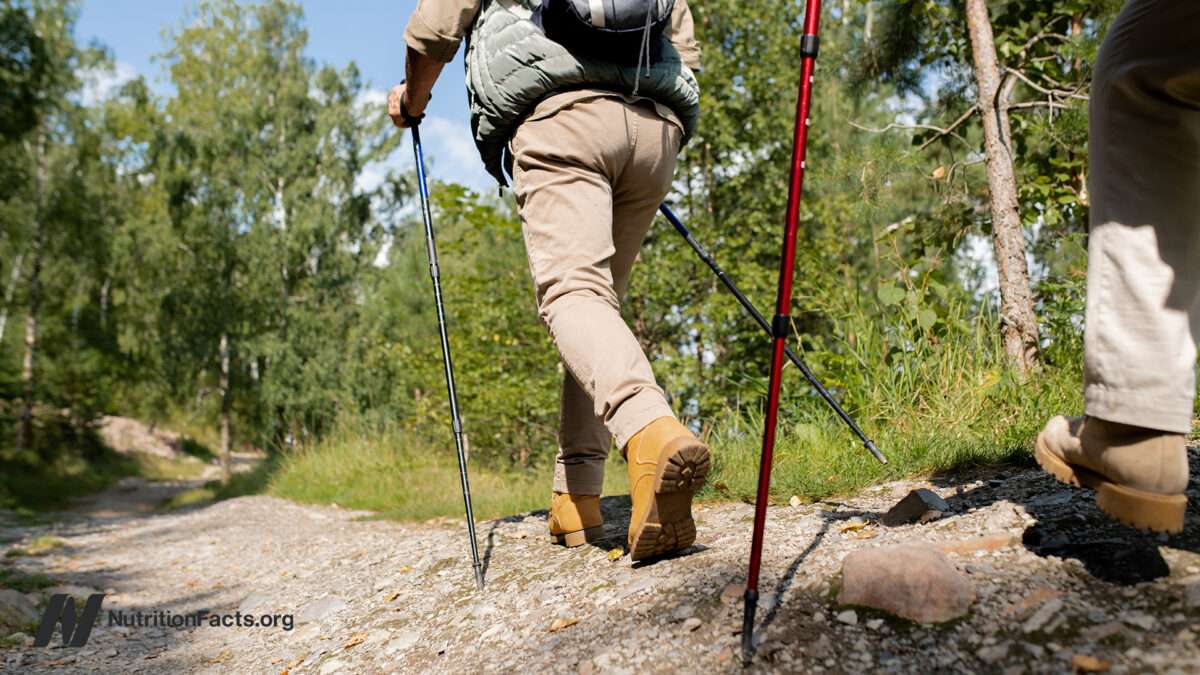
Does walking with poles, also known as Nordic pole walking or “exerstriding,” beat out regular walking for depression, sleep quality, and weight loss?
Exercise recommendations for obesity have been referred to as “the mysterious case of the public health guideline that is (almost) entirely ignored.” Governmental, scientific, and professional organizations call for at least an hour of exercise a day for weight management, but “almost no obese adults meet this target.” As you can see below and at 0:32 in my video Are There Benefits of Pole Walking for Weight Loss?, surveys suggest American men and women watch television ten times more than they exercise.
For Americans with obesity, it may be even worse. Only 2 percent reach even 30 minutes a day, as you can see below and at 0:36 in my video, and the percentage exceeding an hour of exercise a day is expected to be close to zero.
Why don’t individuals with obesity exercise more? Why don’t we just ask them? When questioned, “obese adults typically describe exercise as being unpleasant, uncomfortable and unenjoyable.” How can we break this vicious cycle, where inactivity can lead to weight gain, which can lead to further inactivity and even more weight gain? The first thing to recognize is that “it is normal and natural to be physically lazy.”
“Nothing in Biology Makes Sense Except in the Light of Evolution” is the title of a famous essay written by a noted geneticist. Laziness is in our genes. We evolved to instinctually avoid unnecessary exertion to conserve energy for survival and reproduction. These days, there’s no shortage of available fuel, yet the hard-wired inertia remains. “The vast majority of people today behave just as their ancestors by exercising only when it is fun (as a form of play) or when necessary.” Just like dietary change for weight control, the only way exercise is going to work long-term is if it becomes “a stable, ideally lifelong, activity habit.” Exercise is only effective if it’s sustainable. So, we need “to restructure our environments to require more physical activity,” like using a treadmill desk, and figure out how to make exercise more enjoyable. It should just be a walk in the park—literally, perhaps!
Some wise advice from a 1925 medical journal entry: “The best prescription to be written for a walk is to take a dog…and a friend.” Listening to your favorite music might also help. Music has been described as “a legal method” for improving peak performance and, more importantly, enhancing the enjoyment of high-intensity interval training. As you can see below and at 2:37 in my video, listening to a preferred playlist during exercise can significantly reduce your “rate of perceived exertion,” which is how hard you feel your body is working. When severely obese youth got on a treadmill and were told to go until exhaustion, with or without music, those listening to their favorite tunes “ran significantly longer,” tending to go about 5 percent longer. This was chalked up to “attentional distraction”; the music may have helped them keep their mind off feelings of fatigue. If that’s the case, listening to a podcast or audiobook might have a similar effect.
One way to up your walking game is with walking poles. So-called Nordic walking, also known as exerstriding or Viking hiking, was originally developed in Scandinavia to maintain cross-country ski athletes’ training in the summer. It’s since gained in popularity worldwide as a general fitness activity. The augmented engagement of the upper body musculature may result in an 18 to 22 percent increased calorie expenditure over walking alone (depending, in part, on your pole handling technique). Does that translate into accelerated weight loss?
Before and after studies demonstrate weight loss with pole walking, compared to a sedentary control, but what about compared to regular walking? Of the four such studies I could locate, comparing thrice weekly 40- to 60-minute sessions of Nordic pole walking to regular walking, every single one found no significant difference in body fat measures after 8 weeks, 12 weeks, another at 12 weeks, or 13 weeks. You can see the last one below and at 4:16 in my video.
There are, however, other benefits over regular walking, such as increased upper body muscle bulk, improved muscular endurance, and increased strength, as seen below and at 4:20 in my video, though not as much as was seen with resistance-band training. But, as I was writing How Not to Diet, there wasn’t any evidence of a weight-loss-enhancing effect, which is why Nordic walking didn’t make the cut. Just as we were going to press, a study was published—the first to combine Nordic walking with diet, compared to the same dietary program with regular walking. And, once again, no significant difference was found in body weight or anything else. There was a hint that those in the pole group enjoyed it more, and, in the end, exercise only works if you do it, so that may be a benefit.
There may be other benefits, too. As you can see here and at 5:05 in my video, Nordic walking beat out regular walking in terms of reducing symptoms of depression and improving sleep quality.
Perhaps this should not be surprising, given the greater exercise intensity of pole walking, even approaching that of jogging at higher speeds, shown below and at 5:15 in my video. And that’s where I see the role of walking poles—to fill the intensity gap between people who are ready to graduate from walking but aren’t ready for more rigorous activities, such as running. The only potential downsides are the added expense and, “reminded of Monty Python’s famous ‘ministry of silly walks’ sketch…‘feeling fairly ridiculous’ when trying Nordic walking for the first time.”






 Put a normal-weight person in this scenario, and something remarkable happens. Day after day, week after week, with nothing more than their hunger to guide them, they eat exactly as much as they need, perfectly maintaining their weight, as shown below and at 2:36 in my video.


 Might the brains of persons with obesity somehow
  It would be interesting to see if they regained the ability to respond to changing calorie intake once they reached their ideal weight. Regardless, what can we apply from these remarkable studies to facilitate weight loss out in the real world? We’ll explore just that question next.