Why are nuts associated with decreased mortality, but not peanut butter?
According to the largest study of risk factors for death in human history, a poor diet causes more deaths than anything. Cigarettes only kill about 8 million people a year, whereas humanity’s diet kills millions more, as you can see below and at 0:20 in my video Do the Health Benefits of Peanut Butter Include Longevity?.What are the worst aspects of our diet? Processed meat? Twinkies? Soda? No, the five deadliest things about our diet are: not enough fruit, not enough whole grains, not enough vegetables, too much salt, and not enough nuts and seeds, as shown here and at 0:42 in my video.
Nuts should come as no surprise since interventional trials have shown that eating nuts improves artery function, and arterial diseases like heart disease are among our leading killers. But that’s not all nuts can do. They may also improve blood sugar control, lower cholesterol, suppress inflammation, reduce oxidative stress, and feed our friendly gut flora. Do all nuts do that, or just tree nuts?
What about peanuts and peanut butter? About half of peanut consumption in the United States is from peanut butter, but the link between peanut butter consumption and mortality has not been evaluated thoroughly. To get that specific, we can call on the National Institutes of Health-AARP study, the largest prospective health and diet study in history that followed more than half a million people since the 1990s.
Researchers found that nut consumption in general appeared to protect against all-cause mortality, meaning nut-eaters live—on average—longer lives. Specifically, they are less likely to die from cancer, cardiovascular disease, liver disease, respiratory disease, kidney disease, and infectious causes (so, maybe nuts help immunity as well). However, no such associations were found for peanut butter. So, when it comes to living longer, peanut butter doesn’t seem to count. Why?
Well, we know peanut butter consumers tend to eat more meat, smoke cigarettes, and are less likely to exercise, but the researchers controlled for all those factors, as well as their alcohol consumption, fruit and veggie intake, education, and more. So, it’s not like the peanut butter eaters were just eating more white bread sandwiches or something. (The researchers didn’t control for sugar, though, so it’s possible they could have been eating more sugary jelly.)
Another explanation: It could be the processing that goes into making peanut butter—the added trans fat, oil, salt, and sugar. But regular nuts are also often eaten with added oil, sugar, and salt.
Could it just be the peanuts themselves? Technically, they aren’t nuts, so maybe they don’t have the same benefits. But no, a meta-analysis of all such studies found the same nut-like benefits for whole peanuts, but not peanut butter.
Well, one thing missing from even no-salt, oil-free, sugar-free nut and seed butters is intact cellular structure. As I noted in How Not to Diet, no matter how well we chew whole or chopped nuts, some of the nutrients remain trapped in tiny particles that deliver a bounty of prebiotic goodness to our friendly gut flora. That makes me wonder if there would have been any difference between chunky and smooth peanut butter.
Meanwhile, there is “compelling evidence” to recommend eating nuts (preferably raw nuts over salted or toasted, and whole or chopped nuts rather than nut butters) at least three times a week to maximize our chance of living a longer and healthier life.
Breathing is one of the body’s most automatic and essential functions, yet proper breathing benefits are often taken for granted. Every breath fuels the body with oxygen, sustains energy production, and removes carbon dioxide, all essential processes for maintaining vitality and promoting long-term health.
Recent studies and wellness practices now highlight how proper breathing benefits both the body and mind, influencing everything from stress response to cellular repair. Understanding and optimizing breath health isn’t just a wellness trend; it’s a scientifically supported approach to improving lifespan and overall quality of life.
What Is Proper Breathing and Why Does It Matter?
Proper breathing refers to the natural and efficient use of the diaphragm, allowing the lungs to expand fully and ensuring balanced oxygen and carbon dioxide exchange. This deep, slow, rhythmic breathing pattern contrasts with the shallow chest breathing common among individuals under chronic stress or poor posture.
When practiced correctly, it optimizes oxygenation, reduces muscle tension, and calms the nervous system, according to the American Lung Association. It allows the diaphragm to move freely, improving circulation and supporting core stability.
Conversely, improper or shallow breathing limits oxygen intake, placing additional strain on the heart and brain. Over time, it can contribute to fatigue, anxiety, and even cardiovascular issues. Therefore, proper breathing forms the basis of physical resilience and mental balance.
The Science Behind Breath and Longevity
The link between breathing and longevity lies within the body’s autonomic nervous system, which regulates heart rate, digestion, and stress response. Slow, rhythmic breathing activates the parasympathetic nervous system, often called the “rest and digest” mode, helping to lower blood pressure and promote recovery.
As research advances, scientists are exploring how breathing affects cellular activity and aging. Controlled breathing enhances oxygen utilization efficiency, minimizing oxidative stress, one of the key contributors to aging and chronic disease.
Major Proper Breathing Benefits
The proper breathing benefits extend across multiple systems in the body:
Improved cardiovascular and lung performance: Regular deep breathing enhances oxygen absorption and strengthens the respiratory muscles.
Reduced stress and anxiety: Slower breathing patterns help regulate cortisol levels and emotional responses.
Enhanced focus and mental clarity: Improved oxygen flow to the brain supports cognitive performance.
Improved sleep quality and energy recovery: More efficient breathing supports restorative sleep cycles.
Many wellness experts agree that proper breathing acts as a “reset button” for the body’s internal balance, improving both immediate health and long-term vitality.
Longevity Breathing Techniques for Everyday Life
Various longevity breathing techniques have been developed across cultures to improve vitality, mental clarity, and resilience. Here are several evidence-backed methods that promote breath health and overall longevity:
Diaphragmatic Breathing
This involves breathing deeply into the abdomen rather than the chest. By engaging the diaphragm, it maximizes oxygen intake and reduces tension in the upper body. Practicing for 5–10 minutes daily can significantly improve relaxation and lung efficiency.
Box Breathing
Also known as “square breathing,” this technique involves four equal parts: inhale for four counts, hold for four, exhale for four, and hold again. It’s often used by athletes and professionals to maintain calm focus under pressure.
Alternate Nostril Breathing (Nadi Shodhana)
Rooted in yogic tradition, this technique balances both hemispheres of the brain by alternating the breath between nostrils. It enhances concentration, clears sinus pathways, and stabilizes heart rate variability, all markers of good breath health.
4-7-8 Breathing
This technique involves inhaling for four counts, holding for seven, and exhaling for eight. It activates the body’s relaxation response and is particularly useful for reducing sleep onset time.
Each of these practices promotes mindful control of breathing, helping individuals develop awareness of their own respiration patterns while cultivating long-term physical and mental resilience.
How Breath Health Supports Cellular and Mental Vitality
At a cellular level, breath health directly influences the body’s ability to regenerate and maintain balance. Oxygen is pivotal in cellular metabolism, supporting energy production through the mitochondria, the powerhouses of each cell. Efficient breathing ensures cells receive adequate oxygen to function, grow, and repair themselves, as per Cleveland Clinic.
Furthermore, the balance between oxygen intake and carbon dioxide retention (known as the Bohr effect) determines how effectively cells absorb oxygen. Shallow or erratic breathing disrupts this equilibrium, leading to fatigue and diminished performance.
From a mental perspective, steady breathing patterns synchronize neural activity between different regions of the brain, enhancing focus, memory retention, and emotional regulation. In this way, improved breath health nurtures clarity and vitality on both the physical and psychological levels.
Simple Daily Habits to Improve Breath Health
Developing healthy breathing habits requires both awareness and consistency. Even small adjustments throughout the day can strengthen respiratory function.
Here are simple, actionable steps to integrate into daily routines:
Maintain good posture by keeping the spine aligned and shoulders relaxed, giving the diaphragm space to move freely.
Take mindful breathing breaks, pausing every hour to breathe deeply for 60 seconds can stabilize oxygen levels and reduce stress.
Minimize environmental toxins, using air purifiers and avoiding pollutants protects lung tissue and supports long-term respiratory efficiency.
Stay physically active, as moderate exercise like walking or yoga reinforces proper breathing rhythms.
Consistency is key. By staying mindful of one’s breath and integrating these small practices into daily living, individuals can gradually enhance their breath health and vitality without specialized equipment or training.
Breathing, Sleep, and Recovery
Breathing patterns significantly influence sleep quality and recovery. During sleep, proper nasal breathing ensures efficient airflow and oxygen delivery to tissues. In contrast, mouth breathing or obstructed airflow can lead to snoring, sleep apnea, and morning fatigue.
Addressing these patterns through positional adjustments, nasal breathing retraining, and relaxation breathing before bed can dramatically improve both the depth and quality of sleep.
In response to how proper breathing improves sleep quality, researchers note that consistent breath control promotes parasympathetic activity, slows the heart rate, and induces a state of calm, crucial components for restorative rest.
Integrating Breathing Into a Longevity Lifestyle
Optimal breathing should be seen as part of an integrated lifestyle approach to longevity. Combining longevity breathing techniques with balanced nutrition, regular exercise, and mindfulness practices enhances overall well-being.
Unlike quick fixes, respiratory training influences both immediate relaxation and long-term health outcomes. Regular breathwork complements cardiovascular fitness, supports emotional balance, and can even improve athletic performance by increasing oxygen utilization efficiency.
To the question, how often should one practice breathing exercises for maximum benefit? experts recommend daily practice sessions of 5–15 minutes. Over time, these techniques become automatic habits that continually support the body’s natural rhythms and vitality.
Proper breathing sits at the intersection of mind and body, a natural, accessible pathway to improved longevity and vitality. By understanding and applying proper breathing benefits, individuals enhance oxygen delivery, reduce stress, and strengthen cellular performance.
Integrating longevity breathing techniques into daily routines represents a sustainable, science-backed strategy for maintaining breath health and extending both lifespan and quality of life. With consistent practice, each breath becomes not just a reflex, but a conscious act of renewal.
Frequently Asked Questions
1. Can improper breathing shorten lifespan?
While improper breathing doesn’t directly shorten lifespan, it can contribute to health issues that affect longevity over time. Shallow or rapid breathing elevates stress hormones, increases heart rate, and may reduce oxygen efficiency. These conditions can lead to chronic stress, fatigue, and cardiovascular strain, factors indirectly linked to premature aging.
2. How does hydration affect breath health?
Hydration plays an important role in maintaining breath health because water keeps the mucous membranes in the nose, throat, and lungs moist. When the body is dehydrated, airways can become irritated, increasing the likelihood of shallow breathing and respiratory discomfort. Proper hydration supports smooth airflow and helps the lungs function efficiently.
3. Are there specific foods that support better breathing?
Yes, certain foods can enhance respiratory health and oxygen utilization. Diets rich in antioxidants (like berries, leafy greens, and citrus fruits) reduce inflammation in the airways. Omega-3 fatty acids, found in fish and flaxseeds, also support lung elasticity. Reducing processed foods and sugar helps regulate inflammation that can hinder proper breathing.
4. Can technology or breathing apps help track breath patterns?
Modern breathing and mindfulness apps can be valuable tools for improving breath health. Many offer guided longevity breathing techniques, timing cues, and real-time feedback on breath duration and frequency. Consistent use trains users to develop awareness of their breathing rhythm and gradually integrate healthier patterns into daily life.
Longevity scientists focus on autophagy due to its role in cellular repair, a process that degrades damaged proteins and organelles to maintain healthy cells. Autophagy benefits extend to reducing age-related diseases and promoting lifespan extension in various organisms. In longevity science, enhancing this mechanism counters aging hallmarks like inflammation and mitochondrial dysfunction.
What Is Autophagy?
Autophagy serves as the body’s cellular housekeeping system, where cells engulf and break down dysfunctional components for recycling. This process activates under stress conditions such as nutrient scarcity, enabling cellular repair by clearing debris that accumulates with age. Longevity science views autophagy’s decline as a key driver of pathologies including neurodegeneration and metabolic disorders.
Discovered by Yoshinori Ohsumi, whose 2016 Nobel Prize work highlighted its mechanisms, autophagy involves forming autophagosomes that fuse with lysosomes for degradation. In humans, basal autophagy sustains daily cellular maintenance, while induced forms respond to fasting or exercise, according to Harvard Health.
Autophagy benefits include preserved energy production and reduced oxidative stress, positioning it central to longevity science efforts. Recent 2025 research from the World Longevity Summit in Kyotango reinforces autophagy’s molecular basis, with ATG genes enabling selective forms like xenophagy for pathogen clearance and lysophagy for organelle renewal.
How Does Autophagy Promote Longevity?
Autophagy promotes longevity by mitigating oxidative damage and supporting mitochondrial health, essential for energy and cellular repair. Studies in yeast, worms, and mice demonstrate that boosting autophagy genes extends lifespan, often via pathways like mTOR inhibition. Longevity science links this to evolutionary advantages in long-lived species like whales and naked mole rats, where high autophagic activity correlates with disease resistance.
Enhanced autophagy preserves proteostasis, preventing protein aggregates seen in Alzheimer’s and Parkinson’s. It also fosters metabolic flexibility, allowing cells to adapt to nutrient shifts and reduce inflammation. Pharmacological agents like rapamycin, which induce autophagy, extend mouse lifespan, underscoring its therapeutic potential in longevity science.
Breakthroughs in 2025, such as AutoPhagyGO’s human autophagy measurement tools and Rubicon protein suppression, show lifespan extension in models by countering age-related autophagy inhibitors, enhancing motor function and reducing senescence signals.
What Are Autophagy Benefits for Healthy Aging?
Autophagy benefits for healthy aging include neuroprotection by clearing toxic proteins linked to cognitive decline. Cellular repair through this process supports stem cell renewal and telomere maintenance, delaying senescence. Longevity science research shows autophagy reduces frailty, cancer risk, and chronic inflammation, improving overall healthspan.
Additional autophagy benefits encompass better insulin sensitivity for diabetes prevention and enhanced immune function against infections. In brain health, it combats oxidative stress, preserving memory and slowing Parkinson’s progression.
These effects make autophagy a cornerstone of longevity science strategies for disease mitigation, with 2025 studies highlighting its dual role in aging and cancer suppression by recycling molecules during tumor stress.
Clears damaged mitochondria, boosting energy and reducing reactive oxygen species.
Promotes DNA repair and epigenetic stability for youthful gene expression.
Aids fat metabolism, supporting weight control and cardiovascular health.
Suppresses senescence via Rubicon modulation, extending functional lifespan.
How to Induce Autophagy for Longevity?
Fasting induces autophagy by mimicking starvation, activating AMPK and inhibiting mTOR to trigger cellular repair. Intermittent fasting protocols, like 16:8 or 24-hour fasts, elevate autophagic flux within 12-24 hours, aligning with longevity science findings from experts like Valter Longo. Caloric restriction similarly extends lifespan in models by sustaining autophagy.
Exercise stimulates autophagy through muscle stress, enhancing mitochondrial biogenesis and insulin sensitivity, as per the Cleveland Clinic. Compounds like resveratrol, spermidine, and metformin pharmacologically boost it, with trials showing lifespan benefits in animals.
Emerging 2025 options include IU1 for dual proteasome-autophagy activation and food molecules like fermented teas that trick cells into youth-like cleanup. Longevity science recommends combining these, fasting with activity, for optimal autophagy benefits without extremes.
Heat exposure via saunas and polyphenol-rich diets further promote autophagy. Consistency yields cumulative cellular repair, but consulting professionals ensures safety, especially for those with conditions. AutoPhagyGO’s lifestyle programs integrate diet, exercise, and AI-tracked supplements like Awabancha extract, achieving 14% lifespan gains in worms superior to rapamycin.
Longevity scientists prioritize autophagy for its proven role across species in extending healthy years. Ongoing 2025 trials, including XPRIZE challenges, explore drugs and measurable interventions targeting its pathways, promising interventions for age-related decline. Autophagy benefits and cellular repair mechanisms offer a blueprint for healthier aging.
Frequently Asked Questions
1. Is autophagy safe to induce through fasting for everyone?
Autophagy induction via fasting carries risks for certain groups, such as pregnant individuals, those with eating disorders, or people on medications affecting blood sugar. Clinical studies emphasize monitoring by healthcare providers to avoid nutrient deficiencies or metabolic stress, particularly in older adults where baseline autophagy may already be low.
Longevity science trials, like those on intermittent time-restricted eating, confirm benefits in healthy obese adults but stress personalized approaches.
2. What role does autophagy play in cancer prevention versus progression?
Autophagy acts dualistically in cancer: early stages promote cellular repair to suppress tumors by eliminating damaged cells, while advanced cancers exploit it for survival under stress. 2025 research positions it as a convergence point, where inhibitors or activators could target specific phases, but human trials remain exploratory. Longevity science views balanced autophagy as protective against oncogenic mutations.
3. Are there genetic factors influencing autophagy efficiency for longevity?
Genetic variations in ATG genes affect autophagy flux, with some alleles linked to faster aging in model organisms due to condition-dependent impairments. Human studies suggest polymorphisms influence responses to inducers like daf-2 mutations analogs, impacting lifespan extension potential. Longevity science explores these for personalized interventions, as seen in long-lived species genetics.
4. How do emerging drugs like AA-20 differ from rapamycin in autophagy activation?
AA-20 enhances autophagy without mTORC1 inhibition, reducing lipid and protein aggregates to extend lifespan in nematodes via TFEB pathways. Unlike rapamycin’s broad immunosuppression risks, AA-20 shows promise for proteinopathies without pathway overlap, per 2025 preclinical data. This positions it as a safer candidate in longevity science pipelines.
What are the pros and cons of relative risk, absolute risk, number needed to treat, and average postponement of death when taking cholesterol-lowering statin drugs?
In response to the charge that describing the benefits of statin drugs only in terms of relative risk reduction is a “statistical deception” created to give the appearance that statins are more effective than they really are, it was pointed out that describing things in terms of absolute risk reduction or number needed to treat can depend on the duration of the study.
For example, let’s say a disease has a 2% chance of killing you every year, but some drug cuts that risk by 50%. That sounds amazing, until you realize that, at the end of a year, your risk will only have fallen from 2% to 1%, so the absolute reduction of risk is only 1%. If a hundred people were treated with the drug, instead of two people dying, one person would die, so a hundred people would have to be treated to save one life, as shown below and at 1:01 in my video How Much Longer Do You Live on Statins?.
But there’s about a 99% chance that taking the drug all year would have no effect either way. So, to say the drug cuts the risk of dying by 50% seems like an overstatement. But think about it: Benefits accrue over time. If there’s a 2% chance of dying every year, year after year, after a few decades, the majority of those who refused the drug would be dead, whereas the majority who took the drug would be alive. So, yes, perhaps during the first year on the drug, there was only about a 1% chance it would be life-saving, but, eventually, you could end up with a decent chance the drug would save your life after all.
“This is actually the very reason why the usage of relative risk makes sense…” Absolute risk changes depending on the time frame being discussed, but with relative risk, you know that whatever risk you have, you can cut it in half by taking the drug. On average, statins only cut the risk of a cardiovascular “event” by 25%, but since cardiovascular disease is the number one killer of men and women, if you’re unwilling to change your diet, that’s a powerful argument in favor of taking these kinds of drugs. You can see the same kind of dependency on trial duration, looking at the “postponement of death” by taking a statin. How much longer might you live if you take statins?
The average postponement of death has some advantages over other statistics because it may offer “a better intuitive understanding among lay persons,” whereas a stat like a number needed to treat has more of a win-or-lose “lottery-like” quality. So, when a statin drug prevents, say, one heart attack out of a hundred people treated over five years, it’s not as though the other 99 completely lost out. Their cholesterol also dropped, and their heart disease progression presumably slowed down, too, just not enough to catch a heart attack within that narrow time frame.
So, what’s the effect of statins on average survival? According to an early estimate, if you put all the randomized trials together, the average postponement of death was calculated at maybe three or four days. Three or four days? Who would take a drug every day for years just to live a few more days? Well, let’s try to put that into context. Three or four days is comparable to the gains in life expectancy from other medical interventions. For example, it’s nearly identical to what you’d get from “highly effective childhood vaccines.” Because vaccines have been so effective in wiping out infectious diseases, these days, they only add an average of three extra days to a child’s life. But, of course, “those whose deaths are averted gain virtually their whole lifetimes.” That’s why we vaccinate. It just seems like such a small average benefit because it gets distributed over the many millions of kids who get the vaccine. Is that the same with statins?
An updated estimate was published in 2019, which explained that the prior estimate of three or four days was plagued by “important weaknesses,” and the actual average postponement of death was actually ten days. Headline writers went giddy from these data, but what they didn’t understand was that this was only for the duration of the trial. So, if your life expectancy is only five years, then, yes, statins may increase your lifespan by only ten days, but statins are meant to be taken a lot longer than five years. What you want to know is how much longer you might get to live if you stick with the drugs your whole life.
In that case, it isn’t an extra ten days, but living up to ten extra years. Taking statins can enable you to live years longer. That’s because, for every millimole per liter you lower your bad LDL cholesterol, you may live three years longer and maybe even six more years, depending on which study you’re reading. A millimole in U.S. units is 39 points. Drop your LDL cholesterol by about 39 points, and you could live years longer. Exercise your whole life, and you may only increase your lifespan by six months, and stopping smoking may net you nine months. But if you drop your LDL cholesterol by about 39 points, you could live years longer. You can accomplish that by taking drugs, or you can achieve that within just two weeks of eating a diet packed with fruits, vegetables, and nuts, as seen here and at 5:30 in my video.
Want to know what’s better than drugs? “Something important and fundamental has been lost in the controversy around this broad expansion of statin therapy.…It is imperative that physicians (and drug labels) inform patients that not only their lipid [cholesterol] levels but also their cardiovascular risk can be reduced substantially by adoption of a plant-based dietary pattern, and without drugs. Dietary modifications for cardiovascular risk reduction, including plant-based diets, have been shown to improve not only lipid status, but also obesity, hypertension, systemic inflammation, insulin sensitivity, oxidative stress, endothelial function, thrombosis, and cardiovascular event risk…The importance of this [plant-based] approach is magnified when one considers that, in contrast to statins, the ‘side effects’ of plant-based diets—weight loss, more energy, and improved quality of life—are beneficial.”
Kraft Heinz products, including Jell-O and Kool-Aid, will no longer contain “artificial” food dyes after Robert F. Kennedy, Jr. urged its executives to eliminate harmful ingredients or face regulatory action.
The multinational food and beverage conglomerate announced Tuesday that it will remove all artificial coloring from its products by 2027. Until then, it will not release any new foods that contain synthetic dyes either.
“The vast majority of our products use natural or no colors, and we’ve been on a journey to reduce our use of (artificial) colors across the remainder of our portfolio,” CEO Pedro Navio said in a statement.
Navio added that the company removed artificial colors, preservatives and flavors from Kraft Mac & Cheese in 2016. The corporation is “also working with licensees of its brands to encourage them to remove [Food, Drug & Cosmetic] colors.”
The move follows a March meeting in which RFK Jr met with executives from several major food companies, including Kraft Heinz and General Mills, to push for the removal of what he called the “worst ingredients” from processed foods, according to reporting by Bloomberg.
Following the meeting, Melissa Hockstad, CEO of the Consumer Brands Association, noted in a letter that the Health Secretary “made clear his intention to take action unless the industry is willing to be proactive with solutions.”
The Secret to a Longer, Healthier Life: The Power of Purpose
For decades, researchers and scientists have been on a quest to uncover the secret to a longer, healthier life. While we’ve made significant progress in understanding the role of diet, exercise, and genetics, there’s one key factor that has been gaining increasing attention in recent years: purpose.
The Purpose-Driven Life
The concept of purpose has been explored in various contexts, from psychology to business, and it’s all about having a sense of direction, meaning, and fulfillment in one’s life. When we have a strong sense of purpose, we’re more likely to set goals, take risks, and push through challenges, all of which are essential for living a happy, healthy, and successful life.
Studies have consistently shown that people with a strong sense of purpose are more likely to:
Live longer (Berkman et al., 2000)
Experience lower levels of stress and anxiety (King, 2014)
Have stronger immune systems (Hart, 2015)
Recover more quickly from illnesses (Kim et al., 2013)
Have better mental health and well-being (Stepper et al., 2016)
How Purpose Works Its Magic
So, how does having a strong sense of purpose have such a profound impact on our lives? One reason is that it provides us with a sense of direction and motivation. When we know what we want to achieve, we’re more likely to take action, and this sense of accomplishment can release powerful positive emotions like happiness and pride.
Another reason is that having a strong sense of purpose helps us to cultivate resilience. When we have a clear idea of what’s important to us, we’re better equipped to bounce back from setbacks, failures, and challenges.
Finding Your Purpose
But here’s the catch: finding your purpose is no easy feat. It takes time, effort, and reflection to discover what truly drives you and gives you meaning. So, where do you start?
Here are a few strategies to help you find your purpose:
Explore your values: What are your core values? What’s most important to you? When you’re making decisions, do you think about what’s aligned with your values?
Identify your strengths: What are your natural talents? What do you do with ease and enjoyment? When you’re using your strengths, you’re more likely to feel fulfilled.
Reflect on your past experiences: What have been your most meaningful experiences? What did you learn from them? What did you gain?
Explore your passions: What activities make you lose track of time? What do you look forward to doing every day? When you’re doing what you love, you’re more likely to feel engaged and motivated.
Conclusion
In conclusion, having a strong sense of purpose is a powerful predictor of a longer, healthier life. By setting clear goals, taking risks, and pushing through challenges, people with a sense of purpose are more likely to live a happy, healthy, and successful life. But finding your purpose takes time, effort, and reflection. By exploring your values, identifying your strengths, reflecting on your past experiences, and pursuing your passions, you can uncover the secrets to living a life of purpose, direction, and fulfillment.
FAQs
Q: What’s the difference between purpose and passion?
A: Purpose is a sense of direction and meaning in life, while passion is an intense enthusiasm for a particular activity or activity.
Q: Can someone find their purpose at any age?
A: Yes! While some people may find their purpose earlier in life, others may not discover it until later. What’s important is being open to the process of exploration and discovery.
Q: Is having a strong sense of purpose the only factor that determines a long and healthy life?
A: No, there are many other factors that play a role in determining health and longevity, including genetics, lifestyle choices, and socioeconomic factors.
Q: How do I know if I’ve found my purpose?
A: When you’ve found your purpose, you’ll typically feel a sense of direction, meaning, and fulfillment. You’ll feel like you’re doing what you were meant to do, and that it aligns with your values and passions.
References:
Berkman, L. F., Seeman, T. E., & Breslow, L. (2000). The effects of job loss on health are greater for people with chronic stress. American Journal of Community Psychology, 28(4), 543-556.
Hart, S. E. (2015). The role of purpose in physical health and well-being. Journal of Happiness Studies, 16(5), 1247-1257.
King, H. E. (2014). Purpose and happiness: The effects of having a strong sense of purpose on emotional well-being. The Journal of Positive Psychology, 9(5), 447-456.
Kim, J., Lee, J., & Kim, Y. (2013). The relationship between sense of purpose and psychological well-being in older adults. Journal of Adult Development, 20(2), 124-132.
Stepper, S., & Roberts, B. W. (2016). A purpose-driven life: Effects of purpose on mental and physical health. Personality and Social Psychology Review, 20(1), 54-63.
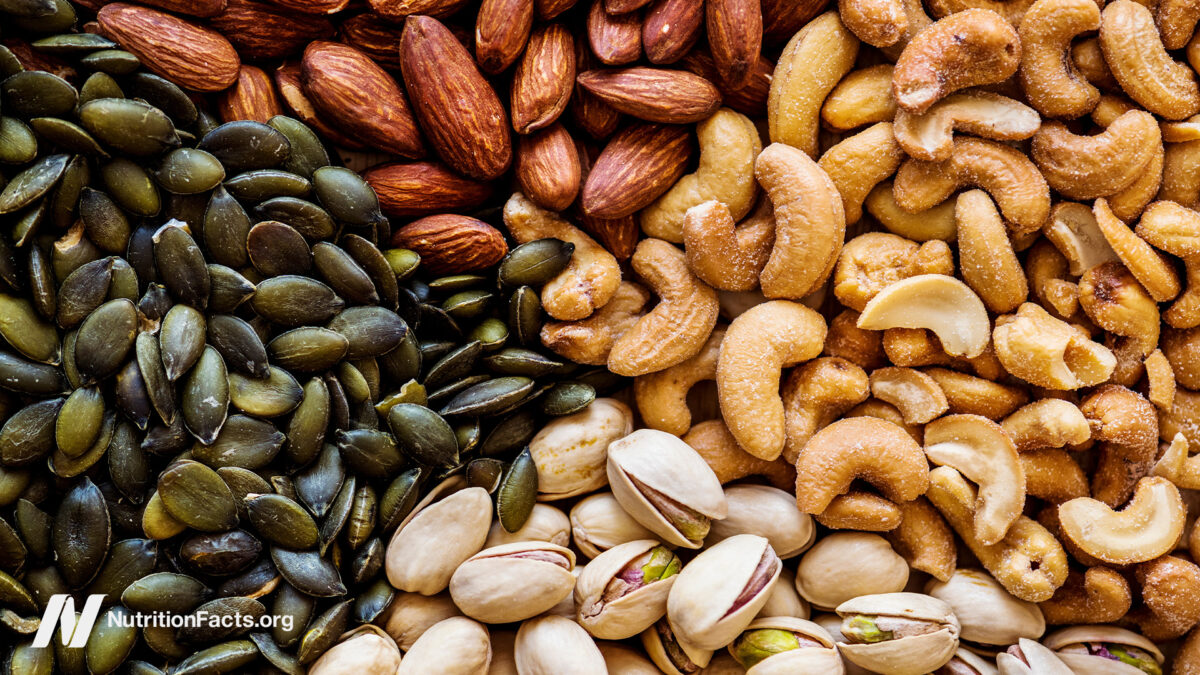
 What are the worst aspects of our diet? Processed meat? Twinkies? Soda? No, the five deadliest things about our diet are: not enough fruit, not enough whole grains, not enough vegetables, too much salt, and not enough nuts and seeds, as shown here and at 0:42 in my video.