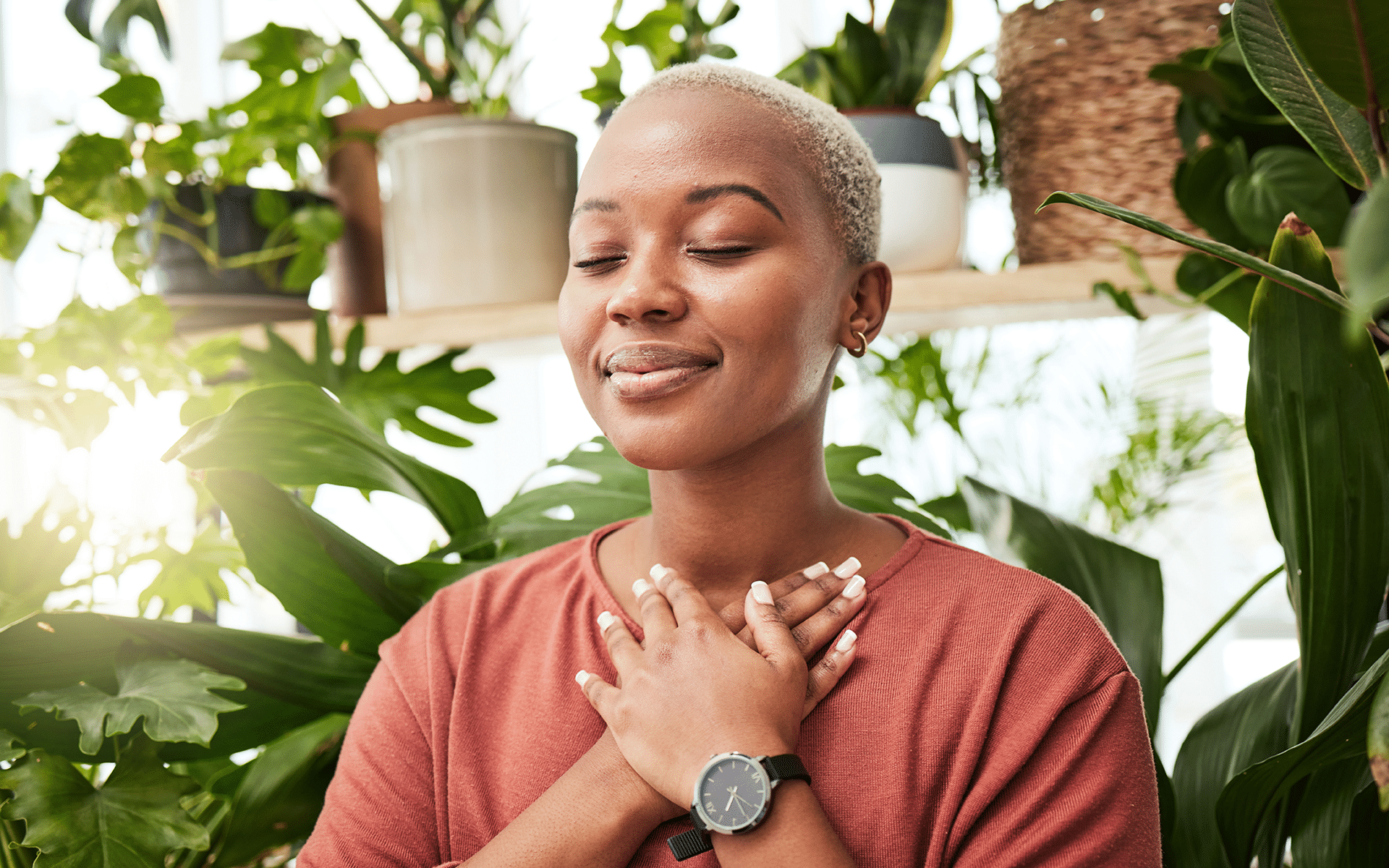
Tag: Letting

  • 5 Lessons on Vanity: An Invitation to Awareness and Letting Go

    5 Lessons on Vanity: An Invitation to Awareness and Letting Go

    I was once considered beautiful. Perhaps, by some, I still am.

    At fourteen years old, I took a modeling course with two of my girlfriends. The ultimate in turning the body into an object to be adored. After three weeks of learning how to walk, sashay, and twirl, we sat down to paint our faces. The palate consisted of endless brushes and shadows—pinks, browns, golds, and glimmering sparkles. 

    Now, I think of it as war paint. We were being trained in the art of disguise, heightening our beauty, to use sexuality as an enticing weapon, and as a means of power. But at the time, it was playing dress up, like a six-year-old getting into mum’s make up and smearing it all over her face, making garish designs that can look cute on children. I didn’t understand the implications. 

    As part of this evolution, thin eyebrows were a necessary part of the mask: pull out all those unsightly and unwanted hairs to create a narrow arch of both surprise and slight disdain, to disarm with a slight tilt of the head, gazing upward and flirtatious.

    One of the instructors, Mary-Anne, was moon-faced, large lipped, and fish-eyed, with long lashes. She came at me with relish, gleeful, saying, “I’ve been waiting for weeks to get at you.” 

    As she carefully tugged out each hair my eye muscles contracted into an excruciating spasm. The tears poured out of my tortured left eye while I endured this in the pursuit of iconic beauty. 

    Lesson One: Vanity Is Costly and Finite

    This was the first indication, although I didn’t get the message, that vanity has a price. 

    This attachment to the body, the idealizing of our skin bag, ultimately comes at great cost. 

    Women so often are defined by, and get their power from, physical characteristics that have a built-in expiry date. But at fourteen we can’t fully know this. It is impossible to feel what will become inevitable; we understand it as happening  to others but not to us. 

    Smiling, she handed me a mirror. I looked and saw that I was a little more hidden—that what I thought of as me, was not really me. 

    So, I sat very still, passive, while my eye cried, fascinated that this eye had a mind of its own. Finally, the teacher finished. She examined her creation and was proud. Smiling, she handed me a mirror. I looked and saw that I was a little more hidden—that what I thought of as me, was not really me. 

    Lesson Two: Desire Leads to Suffering

    When I was fifteen, Judy Welch, a diva of the modelling scene, and the owner of an agency, entered me in the Miss Chin Bikini contest that took place annually on Centre Island in Toronto. 

    We were twenty-two heads of cattle going up for the beauty auction. While uncomfortable, I was still too young to know what I was feeling. I still didn’t fully realize that we were up for scrutiny and judgment. Each of us was an object of comparison, to see who would be most valued. 

    It was 1971, and I wore a white crocheted bikini with daisy-like nipple coverings and brown platform strappy sandals. The contestants lined up before the judges in a back room behind the stage. We were twenty-two heads of cattle going up for the beauty auction. While uncomfortable, I was still too young to know what I was feeling. I still didn’t fully realize that we were up for scrutiny and judgment. Each of us was an object of comparison, to see who would be most valued in this competition of the female form. 

    Following this inspection, we swished along the runway in that contrived, lithe and pseudo-sexual manner to catcalls and Italian exclamations, and it was finally dawning on me that I am an object. It felt a little dangerous. I came in third place. Not the most beautiful, but still in the running. I won a bottle of Baby Duck that I was too young to drink, and my picture was in the Toronto Sun showing me walking, ash blonde hair, sharp jawed, bikini clad. I was a success.

    Obscene breathy phone calls followed this win, until they stopped. Some version of me was wanted. I was repulsed and afraid, but clearly also wishing to be seen. It was confusing to do what was being asked of me  and then putting myself at risk. 

    Thankfully, even then, the news was short-lived. Everything passes. This was the second lesson on vanity: As we attach, so do others, and this grasping is problematic. 

    Lesson Three: The Need for an Inner Life

    The third lesson came when I went to see a photographer to create my modelling portfolio. 

    Every model needs a book of photos to display her various looks to potential employers. These are her wares.

    Derek told me to go into the bathroom and ice my nipples and then put my tight black, ribbed cardigan back on. He directed me to partially undo my sweater. Dutifully, I complied. Already, I knew to do what men tell me. I was fifteen years old. The photographic image conveyed something unrecognizably coquettish in black and white: long hair, head tilted and mouth in a pouty kiss. 

    I see now how quickly we get lost in the appearance of things, hooked by the illusion of sex for sale, reinforcing the manufactured desire of the viewer. 

    It became important to cultivate an internal life so that when I ultimately arrived at the invisibility of middle age and beyond, there would be something more than the loss seen in the mirror. But this was a slow and painful learning.     

    My very brief modeling career soon ended after that experience. I didn’t have what it took to pretend in this way, to completely buy into the dream. 

    I realized early that my moment as a focus of male attention, and the power this gave, was time limited. It became important to cultivate an internal life so that when I ultimately arrived at the invisibility of middle age and beyond, there would be something more than the loss seen in the mirror. But this was a slow and painful learning.      

    At 28 and 34 years old I was pregnant, becoming a woman of substance, gaining 65 and 45 pounds respectively. I stopped traffic in the street when crossing, because I believed I was indestructible. 

    It was a fascinating time. My body was not mine. It did what it wanted and there was freedom in this choicelessness. The body was morphing while these creatures grew inside. I was a temporary accommodation for them. We were symbiotic while they were both inside and out, until they started running away. 

    Mindfulness and parenting are wonderful ways to develop an inner life. You come to know your experience inside and out.

    Lesson Four: Learn to Let Go

    Motherhood is a continual process of letting go. It is unfortunate that I didn’t let go of my attachment to my body and its changing appearance when I had that first opportunity. 

    Varicosities abounded as a result of pregnancy. I had one long, wriggling and twisting vein that traversed my lower leg removed for an obscene price. 

    In my forties, I started running long and fast away from the Grim Reaper, following my husband who is five years younger than I am, trying to hang on to a youth that was already gone. 

    I ran four marathons, culminating in Boston in a 90-degree Fahrenheit heat wave. I finished. So many do not. I have perseverance and pacing. I managed to develop a bleeding gut, from dehydration, and a bacteria called campylobacter picked up a month before in Guatemala. It turned my body into a vomiting, excretive, bloody mess. When this healed, I got pelvic cramping whenever I ran more than five kilometers.    

    Many years have been devoted to the mirror. I sometimes now think of hanging a black cloth over it so I can stop the compulsion to look and mourn the loss of my good looks. 

    I asked an esthetician friend of mine what she thinks are the best anti-aging products or techniques. She says, “Honey, hold back the hands of time and stop them before they start moving.” 

    Every day I examine myself through the looking glass and take in each tiny detail—the fine lines around the mouth, the darkening under the eyes, the fat herniation in my eye lids, and the gentle sagging of the jaw. 

    I asked an esthetician friend of mine what she thinks are the best anti-aging products or techniques. She says, “Honey, hold back the hands of time and stop them before they start moving.” 

    We could also consider accepting the inevitable. Just let go of hanging on to what is already gone. But we revere our youth and beauty, as do others, for so many reasons. If females need protection, it is much more likely we will get it if we are young, gorgeous, and reproductively viable. We can avoid presenting the reality of sickness, aging and death that we desperately want to ignore. Our culture, unlike some, hates aging and the aged. They are a frightening reminder of our end. We push away what we don’t like. We behave in defiance, avoiding the unavoidable truth: that we are mortal. 

    We push away what we don’t like. We behave in defiance, avoiding the unavoidable truth: that we are mortal. 

    I note every wrinkle that has begun to engrave its way into my face and see the effects of gravity over time. I see the development of the estrogen pouch as my waistline thickens. The varicosities increase, and my skin thins. Sunspots creep over my hands. Red dots pop up on my chest and belly. Thank medicine for liquid nitrogen. We can burn a lot away. Hairs sprout from my face.

    I make a pact with my friend that she will pull those hairs out of my chin if I am dying in a hospital bed. Why stop then? I see my nails thicken, skin dry, my hair grey, my libido decline. 

    Lesson Five: Acceptance Is More Helpful Than Resistance 

    I look good for my age. In that sentence there is the gripping on to that which is passing before my eyes, the need to look makes me feel good. I never tell people to guess my age. What if they are right? 

    Unable to let go, I hang on with hair colour, tweezing, exercise, vitamins, estrogen, testosterone, vein removal, facials, botox, and filler. I am careful not to cross the line into looking freakish. No duck lips or chipmunk cheeks for me. I want to look natural. To pretend on top of pretending. 

    A lack of willingness to embrace the impermanence and decline of the body is an expensive practice. Acceptance would be far more skillful than resistance, and this absurd continuous re-modelling of an aging bag. I am still chained to this body and an idea of who I think I am or who I think I should be. 

    What is acceptance if not resignation? I don’t understand it is not a battle.

    Three of my friends are turning fifty. I have three gifts for them. A care kit for the future. These are: a magnifying mirror, Nora Ephron’s I Feel Bad About My Neck, and Larry Rosenberg’s Breath by Breath

    The mirror is such an interesting companion on this journey, and avoidance of its reflection is as much an act of hanging on to your view of self as is the gazing at and manipulation of your image. It can also prevent eye trickery if one can see clearly. The books have two functions. One is for lightening attachment to the body with humour, and the other is an instruction for working with the truth that change can be a friend, rather than the enemy. 

    I have understood this lesson in acceptance, but there is still the looking glass, and I remain bound to its glitter and my image.

    This futile attempt to freeze the march of time on my face and body is the cause of suffering. Intellectually, I know this, but the idea of giving up on my body is currently aversive. The cosmetic surgery business is booming. Women in their 20s and 30s are taking the plunge into myriad injections, surgical removals and implants, spawning a generation of females who are more like Barbie than Barbie herself, with their immobile faces, large eyes, and protruding lips. If only the body were perfect, we would be happy—and yet another part of me knows this is not true. 

    I have understood this lesson in acceptance, but there is still the looking glass, and I remain bound to its glitter and my image.

    I am in my 60s now, still measuring myself against my cohort. I see these bulges of back fat, falling biceps, and increasing fatigue. My bones and muscles, however, carry me lithely and my sight and hearing are still almost perfect. I await the time when I can no longer keep up with the maintenance and am completely unseen. It would be a good time for a second career as a spy.

    Alternatively, as an 80-year old woman I knew once said, I could let it all go, “…wake up every morning, look in the mirror and laugh, shake my head, and say, How did I get here?


    Source link

  • Inner Calm: The Key is Letting Go

    Inner Calm: The Key is Letting Go

    We often hear about inner calm, but it can be so much more than a fleeting moment of peace after yoga or the perfect massage. Inner calm is actually our ability to let go of attachments and reactions to life’s events, resulting in ease and clarity.

    As a mindfulness skill, inner calm is the ability to let go of attachments and reactivity based on an understanding of impermanence—the changing nature of our thoughts, emotions, and desires. When we find ourselves rushing and reacting, we can remind ourselves, This too shall pass. The purpose is not to negate what we’re feeling but to put brakes on accelerated feelings. Once we return to our inner stillness, we can look at the source of our reactivity, intimately seeing its changing nature: This right here is what frees us.

    Once we return to our inner stillness, we can look at the source of our reactivity, intimately seeing its changing nature: This right here is what frees us.

    As a practice, inner calm is the art of stopping, looking and letting go for purposes of healing and clarity. It involves physical composure and mental tranquility. It can be seen as the ultimate balm for your soul—like a cool breeze on a hot day. Inner calm brings ease to body and mind alike. In the body, composure is experienced in the muscles and as an overall feeling of ease. In the mind, inner calm creates the space to hold everything without attachment and resistance. Conversely, the absence of inner calm may show up as restlessness in the body and agitation or reactivity in the mind.

    Seeking inner calm can often leave us wanting more, but it’s ironic that true inner calm is achieved when we let go of our desires, even the desire for inner calm itself—a catch-22 if there ever was one. This paradox becomes evident when we consider the case of a client dealing with anxiety who turned to meditation as a way to ease his mind. Surprisingly, he found himself even more anxious post-meditation. He had hoped that meditation would improve his sleep, but he was left frustrated when he observed his restlessness during a body scan meditation, which only seemed to worsen his sleep problems.

    The moral here? To find peace, he had to let go first of his expectations around finding peace. In order to let go, he learned to see the three hindrances to his achieving mindfulness: running in circles (a restless mind), pulling (striving to sleep), and pushing (frustrated with his restlessness). With practice, he learned to accept his restless mind, which softened the striving and frustration, and he was able to find ease, even when he couldn’t sleep, which ultimately allowed him to sleep.

    Letting go of attachments to certain outcomes doesn’t, however, mean that we’re suppressing or evading challenging situations. Instead, this release occurs organically when we comprehend that emotions arise and dissolve—all within ninety seconds.

    The Ninety-Second Rule

    Inner calm is not about suppressing, denying, or avoiding our emotions. When we don’t give in to the urge to react, we’re cultivating the ability to stay with unpleasantness (knowing that emotions are physiological responses in the body that will arise and dissolve). Just as happiness triggered by external events doesn’t last, negative emotions also don’t last. Have you heard of the ninety-second rule? Neuroscientist Jill Bolte Taylor reveals in her book My Stroke of Insight: A Brain Scientist’s Personal Journey that all emotions have a beginning, middle, and end—all within ninety seconds from when they first arise.

    The reason we continue to experience negative emotions, sometimes for days, weeks, and even years, is that we continue to fuel these feelings with our narratives. Instead, if we stop and let the emotion move through our body, we’ll create space in our minds to better understand what they are trying to tell us. Rather than suppressing or using positive thinking to bypass our experience, we can form an alliance with our feelings. By doing this, we can uncover how they’re trying to protect us, address our unmet needs, or draw our attention to new information in the environment.

    The ninety-second rule is a helpful reminder to ride the waves of our emotions, but emotions can sometimes be so powerful that they hijack our rational thought processes. It’s helpful in these situations to remember where those emotions come from—deep in the past, when we were hunter-gatherers facing real tigers!

    How Inner Calm Supports Resilience

    So much of our lives are marked by perceived threats to our identity, career, or relationships. Our primal reactions—fight-flight-freeze—can be unhelpful when it comes to navigating these everyday psychological and social stressors. What’s needed to resolve problems common to the modern world is clarity and creativity, but our reaction is the opposite—to fight, flee, or freeze. This evolutionary response to any threat is automatic and unconscious.

    What’s needed to resolve problems common to the modern world is clarity and creativity, but our reaction is the opposite—to fight, flee, or freeze.

    When our emotions are triggered such that we can’t think or see clearly, it’s called an “amygdala hijack”—a term popularized by emotional intelligence expert Daniel Goleman. The amygdala is the emotional center of the brain. One of its functions is to scan the environment for threats and prepare the body for an emergency response. When it perceives a threat, such as a tiger lurking in the bushes, it sends an immediate signal to release stress hormones—adrenaline and cortisol—that ramp up an emergency response. Blood stops flowing to the organs and instead floods into the limbs to prepare us for fight or flight. Meanwhile, the prefrontal cortex (which is responsible for thinking and executive decision-making) shuts down because there is no time to think and analyze when we’re facing what the brain perceives as a life-threatening situation.

    During an amygdala hijack, it is said that our IQ temporarily drops by ten to fifteen points. Maybe this explains that feeling after we’ve reacted to a verbal trigger: What was I thinking when I said that? That’s exactly the point. We stop thinking rationally. It also compromises memory, which is why we can’t remember a single good thing about a person with whom we have a conflict or why we can’t find our keys in the middle of a panic attack. Being in a continuous state of fight or flight from modern threats also compromises the integrity of other systems, like immunity and digestion.

    Cultivating inner calm is an important step in avoiding the amygdala hijack so we can think clearly even in highly charged situations. Using practices to promote inner calm—like breath awareness—helps slow our escalating emotions and allows the parasympathetic nervous system to kick back in so we can once again think clearly. Another activity that nudges the prefrontal cortex to start thinking again is “noting” or “labeling.” The act of noting or labeling our emotions gets the prefrontal cortex to regain healthy communication with the amygdala and avoids the hijack. Inner calm offers opportunities to learn and improve or for us to provide a deeper understanding of the “what” and the “why” behind our actions. We can replace tension and misunderstanding with harmony and understanding. Inner calm is key for resilience in relationships and life in general.

    Where Are You on the Inner Calm Continuum?

    You can strengthen your ability for inner calm, regardless of your circumstances. First, pay attention to when you’re calm and when you’re not. Next, notice the causes and conditions that promote calm and what stops you from being calm. By cultivating a habit of calming the mind and body, you’ll develop the ability to access this place more quickly and easily.

    Daily Practice: One-Minute Rest

    Rested, we care again for the right things and
    the right people in the right way.
    —David Whyte

    Take time in your day, several times a day, if possible, to empty your cup and make space for what matters. You can do this very quickly by checking in with your body.

    1. Any tension or tightness in the body is a clue that you’re holding on to something that needs your loving attention. You can’t let go without knowing what it is you’re trying to let go. Just turning your attention to places you’re holding tension can help you uncover the emotions and thoughts associated with that tension.
    2. Once you can see the cause of your tension, you can figure out the solution. It’s also clarifying to realign with your intentions as you’re emptying your cup—what is it you’re clearing the space for?
    3. Return. Take a one-minute rest and return to your body. Rub the palms of your hand and place them on your eyes, allowing them to rest. Move your hands to your jawline, neck, shoulders, chest, or wherever feels good in your body.
    4. Listen. Listen within. What can you let go of at this moment to make room for what matters?
    5. Begin. Begin your activities with a relaxed body and mind aligned with what matters.

    Try practicing and playing with this reminder with your family, with team members, and in your community before beginning a meeting or activity together.

    Excerpted from the book Return to Mindfulness: Disrupting Default Habits for Personal Fulfillment, Effective Leadership, and Global Impact by Shalini Bahl Milne. Copyright © 2024 Shalini Bahl Milne. Republished with permission from the author. Return to Mindfulness will be available on Amazon on January 18, 2024.


    Source link

  • All of That: Reflections on Motherhood and Letting Go

    All of That: Reflections on Motherhood and Letting Go

    My mother died suddenly in 2013 at just 67, when our older daughter was two and our younger daughter was an infant. Before that, my mom helped watch the girls while I worked. I’d drive to my parents’ nearby home and work upstairs in their cozy loft while they read, snuggled, and played with my girls. In retrospect, it was this beautiful stolen season: I got the support I desperately needed, that feeling of being a part of the village so long a part of our shared human history—and I also got to walk downstairs each day and eat lunch and have coffee breaks with my own dear momma. It was the experience of motherhood I had hoped for.

    After my mom died, everything unraveled for a while. I felt so alone. Motherhood was a vast dark ocean, and I was clinging to the sides of a rickety little dinghy.

    Other than a brief stint working on-site part-time for a contract position, I’ve always officed out of our home (I still do). In those early years of being a new mom, depending on the season of life, I worked between 10–40 hours per week, with varying degrees of success and sanity on a day-to-day basis.

    The romance of working from home wears thin when you realize that working and parenting are not really things that can happen simultaneously. This realization sinks in approximately 14 minutes into your first day of working from home while trying to care for one or more children.

    Between the feedings and the diapers and the naps and the fighting and the I’m huuuuunnngrys and the spilled everything everywhere and the Can you fix this? and the scraped elbows and the When are you gonna be done, Mom? — any amount of real productivity felt purely accidental, or was the result of desperately putting on Scooby-Do episodes at 11 in the morning and locking myself in my room.

    Many days, I said no to doing things with my girls because I had a deadline to meet. Or I said yes to them, because I felt guilty, or because I genuinely just wanted to be with them — and then was left frantically working until 2am, long after they’d gone to bed, to get in a workday that had started at 9pm.

    I often felt like both a sub-par parent and a sub-par employee. Some days, I was. I cried in frustration, and beg-yelled to please be left alone so I could just string together a few connected thoughts. I slept through early morning Zoom meetings, forgot to get cupcakes for my kid’s birthday at school, mixed up due dates, was late for every damn thing, and zombied my way through assignments and tea parties alike. That’s the reality.

    There were wonderful days, too, moments of grace and revelation and transcendent connection. Some moments I loved in an otherworldly way, like my whole body was made of warm light. Other days felt like I was falling from an airplane with no parachute. My children are the most effective teachers I’ve ever had in my life. And when I say effective, I mean like in the way that doing 100 squats a day will give you an amazing butt: the triumph comes with some brutality. Like most personal growth, it has mostly all occurred in the trenches.

    Saying the real things out loud

    I resented being a stay-at-home mom sometimes. I know this is a generally frowned-upon thing to say. It’s almost always followed up solicitously by some version of, But kids are amazing, for sure. So amazing. Best thing that ever happened to me. There is this expectation that we temper our messy feelings with a sweeping declaration that negates what doesn’t feel or sound good.

    I don’t think I need to balance out my real human experience with less-messy narratives. So I will let the first statement just be its own reality: I resented being a stay-at-home mom sometimes. At times, I was swallowed by the fear that I was losing the very essence of myself. My creativity, time to write, time to take care of my whole self, my hunger for solitude and silence, my friendships—all of it was getting subsumed under this identity of Mom that so often felt like a too-big coat draped around me.

    There’s a robust body of mindfulness research (I know, I know) that says our greatest joy is found in living fully in the moment. And yes, that’s real. This is also real: it was so hard to be with it all sometimes.

    Yes, there are women who genuinely love full-time motherhood. They make of it an art, feel themselves called and enlivened and energized by this job. They are amazing to watch, and I honor and salute them. I love to see people living enthusiastically into their purpose.

    Me, I have often felt like the guy in those 90s commercials wearing the white coat. You know the one: I’m not a doctor in real life, but I play one on TV.

    Meaning, some days I was really feeling the role, absorbed in the storyline. I was so connected with the character of Mom that I was Mom, like on the inside, too. A lot of other days, I was reciting lines and looking frantically around for stage direction and waiting for some benevolent off-camera Director to call, Cut! And…that’s a wrap, people. Good work today. Why don’t y’all head on home and get some rest?

    Some days I felt out of control, desperate, and deliriously exhausted. I’d watch some mornings, nonsensically enraged, as my husband biked off, unencumbered. He only had one job to do for eight whole uninterrupted hours, surrounded by things like other grown-ups, recognition, annual bonuses, and health care.

    Blissfully-retired people would come up to me, probably just returned from a 10-day Scandinavian river cruise, and coo and congratulate. There I’d be, with my brand-new baby, my teething toddler, my hair unwashed and my clothes wrinkled and smattered with dried spit-up, my body aching—and they’d tell me to “just enjoy every minute.” I knew they meant well, and I get the amnesiac power of nostalgia. But also, part of me was just like, Geez lady, read the room.

    I don’t know what kind of mom that makes me, other than not alone.

    I don’t think it’s necessary for me (or any mom, any woman) to regard these moments of exasperation, unfulfillment, or longing as wasted time. These aren’t feelings I shouldn’t have had, or something to be ashamed of. They just…are.

    I don’t think it’s necessary for me (or any mom, any woman) to regard these moments of exasperation, unfulfillment, or longing as wasted time. These aren’t feelings I shouldn’t have had, or something to be ashamed of. They just…are. They’re as natural and human as my moments of contentment and elation. They have seasons and things to teach. Under this huge umbrella experience called Motherhood, they all belong. I know that wrestling with this complicated identity has never meant that I love my kids any less.

    Even today, when I see new moms at church or in our neighborhood, I always ask how they’re really doing. I always say, “Parenting is a beautiful gift, and it’s also okay to not love every single minute.” Sometimes they laugh knowingly, and sometimes they start to cry. When we’re struggling in silence, even when that struggle is the most normal, near-universal thing in the world, we can feel so defective for not feeling how we think we should be feeling.

    Saying the real things out loud can be a form of tender medicine, I’ve found.

    Saying the real things out loud can be a form of tender medicine, I’ve found.

    Crossing a threshold into a new form of motherhood

    In 2018, for the first time in eight years, I found myself facing the prospect of whole days to myself again. I know there are women who have done it for longer, and bless ’em — but eight years is still a long time. In Introvert Years, it’s like 100. I couldn’t believe that much time had passed. I had a second grader and a kindergartener. The river-cruising retirees where definitely right about one thing: it all went by like I was holding a scoop of water in my hands.

    Before I had kids, I spent hours a day alone. I quite liked it. It was jarring to have that open space suddenly shrink down, to have every spare minute and square inch of my body taken up, occupied, demanded. It was equally as jarring then, nearly a decade later, to have that space reappear. Only now I was a totally different human being. The whole world was different, and I had to figure out how to be in silence again.

    The night before our youngest daughter Stella’s first day of kindergarten, we snuggled up in the dark before bed. (For the record, before-bedtime snuggles are probably my very favorite ritual.) We talked about her first day of kindergarten, and how we were feeling about it. She had been buzzing all day long, spontaneously jumping up and down with excitement as she’d talk about finally going to school. We talked about the last five and a half years together.

    I got to tell her I was so grateful for our time together, because I was. And I got to tell her I was happy for her to go to school, because I was.

    I got to tell her I was so grateful for our time together, because I was. And I got to tell her I was happy for her to go to school, because I was.

    I asked her how she was feeling. She said, “I’m feeling nervi-cited, Mom.” My girls invented this word to describe that mix of emotions that comes with treading unknown but anticipated waters: nervous + excited.

    The next day, as we dropped her off, I watched her bouncy energy suddenly drop as she entered the chaotic classroom. Our girls attend an immersion school, and the teachers spoke to her in Chinese, which of course she didn’t understand yet. She didn’t know anyone. Everything was big and new and unfamiliar. She looked shell-shocked, like she might start crying — not out of sadness, but just out of not knowing what the hell was going on.

    She looked like I had felt so many times in my life, so many times in the previous eight years. My chest welled up with that tidal wash of empathy.

    I knelt down by those tiny tables and chairs. “How are you feeling, kiddo? What’s going on in your heart right now?”

    She looked down at the table, staring hard. “I’m feeling nervi-cited. And a little shy.” I assured her this was normal on such a big day. She nodded.

    She was so quiet, so unlike her usual bombastic self. “Mom?” she said, still looking down, willing herself to be brave. “There’s something else. With the nervi-cited and the shy. It’s miss. I’m going to miss you. Nervi-cited-shy-miss. All of that.”

    Yes. All of that.


    Source link

  • Thousands of Doctors Come Out Against Letting RFK Jr. Become Health Secretary: ‘He Is Actively Dangerous’

    Thousands of Doctors Come Out Against Letting RFK Jr. Become Health Secretary: ‘He Is Actively Dangerous’

    More than 15,000 doctors have signed a letter addressed to the Senate urging the legislature to vote against confirming Robert F. Kennedy Jr. as the Secretary of the Department of Health and Human Services.

    “The health and well-being of 336 million Americans depend on leadership at HHS that prioritizes science, evidence-based medicine, and strengthening the integrity of our public health system,” the letter reads. “RFK Jr. is not only unqualified to lead this essential agency — he is actively dangerous.”

    The letter, published online by the Committee to Protect Health Care, cites numerous instances in which RFK Jr. voiced statements or beliefs incompatible with legitimate medical practice. These include unsubstantiated beliefs that accused vaccines are linked to autism and anti-depressants are linked to school shootings, reported NBC News.

    Kennedy was nominated for the Secretary of Health position by President-elect Donald Trump in November 2024. He has been meeting with senators in advance of his confirmation hearing.

    “This appointment is a slap in the face to every health care professional who has spent their lives working to protect patients from preventable illness and death,” the letter continued.

    “Robert F. Kennedy Jr. will be confirmed and those who are spending their time undermining him will have no place and no voice at HHS,” Katie Miller, Kennedy’s spokesperson within the Trump transition team, told NBC News. “Good luck and best wishes to them.”

    Kennedy has received criticism from other groups and institutions for his beliefs regarding medicine. Health care consumer advocacy group Community Catalyst said that Kennedy was a “wholly unqualified and a dangerous pick.” Furthermore, the nonprofit consumer rights group Public Citizen stated that Kennedy would “endanger people’s lives if placed in a position of authority over health.”

    Originally published by Latin Times.

    Source link