Tag: Lessons

  • 5 Lessons on Vanity: An Invitation to Awareness and Letting Go

    5 Lessons on Vanity: An Invitation to Awareness and Letting Go

    I was once considered beautiful. Perhaps, by some, I still am.

    At fourteen years old, I took a modeling course with two of my girlfriends. The ultimate in turning the body into an object to be adored. After three weeks of learning how to walk, sashay, and twirl, we sat down to paint our faces. The palate consisted of endless brushes and shadows—pinks, browns, golds, and glimmering sparkles. 

    Now, I think of it as war paint. We were being trained in the art of disguise, heightening our beauty, to use sexuality as an enticing weapon, and as a means of power. But at the time, it was playing dress up, like a six-year-old getting into mum’s make up and smearing it all over her face, making garish designs that can look cute on children. I didn’t understand the implications. 

    As part of this evolution, thin eyebrows were a necessary part of the mask: pull out all those unsightly and unwanted hairs to create a narrow arch of both surprise and slight disdain, to disarm with a slight tilt of the head, gazing upward and flirtatious.

    One of the instructors, Mary-Anne, was moon-faced, large lipped, and fish-eyed, with long lashes. She came at me with relish, gleeful, saying, “I’ve been waiting for weeks to get at you.” 

    As she carefully tugged out each hair my eye muscles contracted into an excruciating spasm. The tears poured out of my tortured left eye while I endured this in the pursuit of iconic beauty. 

    Lesson One: Vanity Is Costly and Finite

    This was the first indication, although I didn’t get the message, that vanity has a price. 

    This attachment to the body, the idealizing of our skin bag, ultimately comes at great cost. 

    Women so often are defined by, and get their power from, physical characteristics that have a built-in expiry date. But at fourteen we can’t fully know this. It is impossible to feel what will become inevitable; we understand it as happening  to others but not to us. 

    Smiling, she handed me a mirror. I looked and saw that I was a little more hidden—that what I thought of as me, was not really me. 

    So, I sat very still, passive, while my eye cried, fascinated that this eye had a mind of its own. Finally, the teacher finished. She examined her creation and was proud. Smiling, she handed me a mirror. I looked and saw that I was a little more hidden—that what I thought of as me, was not really me. 

    Lesson Two: Desire Leads to Suffering

    When I was fifteen, Judy Welch, a diva of the modelling scene, and the owner of an agency, entered me in the Miss Chin Bikini contest that took place annually on Centre Island in Toronto. 

    We were twenty-two heads of cattle going up for the beauty auction. While uncomfortable, I was still too young to know what I was feeling. I still didn’t fully realize that we were up for scrutiny and judgment. Each of us was an object of comparison, to see who would be most valued. 

    It was 1971, and I wore a white crocheted bikini with daisy-like nipple coverings and brown platform strappy sandals. The contestants lined up before the judges in a back room behind the stage. We were twenty-two heads of cattle going up for the beauty auction. While uncomfortable, I was still too young to know what I was feeling. I still didn’t fully realize that we were up for scrutiny and judgment. Each of us was an object of comparison, to see who would be most valued in this competition of the female form. 

    Following this inspection, we swished along the runway in that contrived, lithe and pseudo-sexual manner to catcalls and Italian exclamations, and it was finally dawning on me that I am an object. It felt a little dangerous. I came in third place. Not the most beautiful, but still in the running. I won a bottle of Baby Duck that I was too young to drink, and my picture was in the Toronto Sun showing me walking, ash blonde hair, sharp jawed, bikini clad. I was a success.

    Obscene breathy phone calls followed this win, until they stopped. Some version of me was wanted. I was repulsed and afraid, but clearly also wishing to be seen. It was confusing to do what was being asked of me  and then putting myself at risk. 

    Thankfully, even then, the news was short-lived. Everything passes. This was the second lesson on vanity: As we attach, so do others, and this grasping is problematic. 

    Lesson Three: The Need for an Inner Life

    The third lesson came when I went to see a photographer to create my modelling portfolio. 

    Every model needs a book of photos to display her various looks to potential employers. These are her wares.

    Derek told me to go into the bathroom and ice my nipples and then put my tight black, ribbed cardigan back on. He directed me to partially undo my sweater. Dutifully, I complied. Already, I knew to do what men tell me. I was fifteen years old. The photographic image conveyed something unrecognizably coquettish in black and white: long hair, head tilted and mouth in a pouty kiss. 

    I see now how quickly we get lost in the appearance of things, hooked by the illusion of sex for sale, reinforcing the manufactured desire of the viewer. 

    It became important to cultivate an internal life so that when I ultimately arrived at the invisibility of middle age and beyond, there would be something more than the loss seen in the mirror. But this was a slow and painful learning.     

    My very brief modeling career soon ended after that experience. I didn’t have what it took to pretend in this way, to completely buy into the dream. 

    I realized early that my moment as a focus of male attention, and the power this gave, was time limited. It became important to cultivate an internal life so that when I ultimately arrived at the invisibility of middle age and beyond, there would be something more than the loss seen in the mirror. But this was a slow and painful learning.      

    At 28 and 34 years old I was pregnant, becoming a woman of substance, gaining 65 and 45 pounds respectively. I stopped traffic in the street when crossing, because I believed I was indestructible. 

    It was a fascinating time. My body was not mine. It did what it wanted and there was freedom in this choicelessness. The body was morphing while these creatures grew inside. I was a temporary accommodation for them. We were symbiotic while they were both inside and out, until they started running away. 

    Mindfulness and parenting are wonderful ways to develop an inner life. You come to know your experience inside and out.

    Lesson Four: Learn to Let Go

    Motherhood is a continual process of letting go. It is unfortunate that I didn’t let go of my attachment to my body and its changing appearance when I had that first opportunity. 

    Varicosities abounded as a result of pregnancy. I had one long, wriggling and twisting vein that traversed my lower leg removed for an obscene price. 

    In my forties, I started running long and fast away from the Grim Reaper, following my husband who is five years younger than I am, trying to hang on to a youth that was already gone. 

    I ran four marathons, culminating in Boston in a 90-degree Fahrenheit heat wave. I finished. So many do not. I have perseverance and pacing. I managed to develop a bleeding gut, from dehydration, and a bacteria called campylobacter picked up a month before in Guatemala. It turned my body into a vomiting, excretive, bloody mess. When this healed, I got pelvic cramping whenever I ran more than five kilometers.    

    Many years have been devoted to the mirror. I sometimes now think of hanging a black cloth over it so I can stop the compulsion to look and mourn the loss of my good looks. 

    I asked an esthetician friend of mine what she thinks are the best anti-aging products or techniques. She says, “Honey, hold back the hands of time and stop them before they start moving.” 

    Every day I examine myself through the looking glass and take in each tiny detail—the fine lines around the mouth, the darkening under the eyes, the fat herniation in my eye lids, and the gentle sagging of the jaw. 

    I asked an esthetician friend of mine what she thinks are the best anti-aging products or techniques. She says, “Honey, hold back the hands of time and stop them before they start moving.” 

    We could also consider accepting the inevitable. Just let go of hanging on to what is already gone. But we revere our youth and beauty, as do others, for so many reasons. If females need protection, it is much more likely we will get it if we are young, gorgeous, and reproductively viable. We can avoid presenting the reality of sickness, aging and death that we desperately want to ignore. Our culture, unlike some, hates aging and the aged. They are a frightening reminder of our end. We push away what we don’t like. We behave in defiance, avoiding the unavoidable truth: that we are mortal. 

    We push away what we don’t like. We behave in defiance, avoiding the unavoidable truth: that we are mortal. 

    I note every wrinkle that has begun to engrave its way into my face and see the effects of gravity over time. I see the development of the estrogen pouch as my waistline thickens. The varicosities increase, and my skin thins. Sunspots creep over my hands. Red dots pop up on my chest and belly. Thank medicine for liquid nitrogen. We can burn a lot away. Hairs sprout from my face.

    I make a pact with my friend that she will pull those hairs out of my chin if I am dying in a hospital bed. Why stop then? I see my nails thicken, skin dry, my hair grey, my libido decline. 

    Lesson Five: Acceptance Is More Helpful Than Resistance 

    I look good for my age. In that sentence there is the gripping on to that which is passing before my eyes, the need to look makes me feel good. I never tell people to guess my age. What if they are right? 

    Unable to let go, I hang on with hair colour, tweezing, exercise, vitamins, estrogen, testosterone, vein removal, facials, botox, and filler. I am careful not to cross the line into looking freakish. No duck lips or chipmunk cheeks for me. I want to look natural. To pretend on top of pretending. 

    A lack of willingness to embrace the impermanence and decline of the body is an expensive practice. Acceptance would be far more skillful than resistance, and this absurd continuous re-modelling of an aging bag. I am still chained to this body and an idea of who I think I am or who I think I should be. 

    What is acceptance if not resignation? I don’t understand it is not a battle.

    Three of my friends are turning fifty. I have three gifts for them. A care kit for the future. These are: a magnifying mirror, Nora Ephron’s I Feel Bad About My Neck, and Larry Rosenberg’s Breath by Breath

    The mirror is such an interesting companion on this journey, and avoidance of its reflection is as much an act of hanging on to your view of self as is the gazing at and manipulation of your image. It can also prevent eye trickery if one can see clearly. The books have two functions. One is for lightening attachment to the body with humour, and the other is an instruction for working with the truth that change can be a friend, rather than the enemy. 

    I have understood this lesson in acceptance, but there is still the looking glass, and I remain bound to its glitter and my image.

    This futile attempt to freeze the march of time on my face and body is the cause of suffering. Intellectually, I know this, but the idea of giving up on my body is currently aversive. The cosmetic surgery business is booming. Women in their 20s and 30s are taking the plunge into myriad injections, surgical removals and implants, spawning a generation of females who are more like Barbie than Barbie herself, with their immobile faces, large eyes, and protruding lips. If only the body were perfect, we would be happy—and yet another part of me knows this is not true. 

    I have understood this lesson in acceptance, but there is still the looking glass, and I remain bound to its glitter and my image.

    I am in my 60s now, still measuring myself against my cohort. I see these bulges of back fat, falling biceps, and increasing fatigue. My bones and muscles, however, carry me lithely and my sight and hearing are still almost perfect. I await the time when I can no longer keep up with the maintenance and am completely unseen. It would be a good time for a second career as a spy.

    Alternatively, as an 80-year old woman I knew once said, I could let it all go, “…wake up every morning, look in the mirror and laugh, shake my head, and say, How did I get here?


    Source link

  • Student Perspective: My lessons in vulnerability

    Student Perspective: My lessons in vulnerability

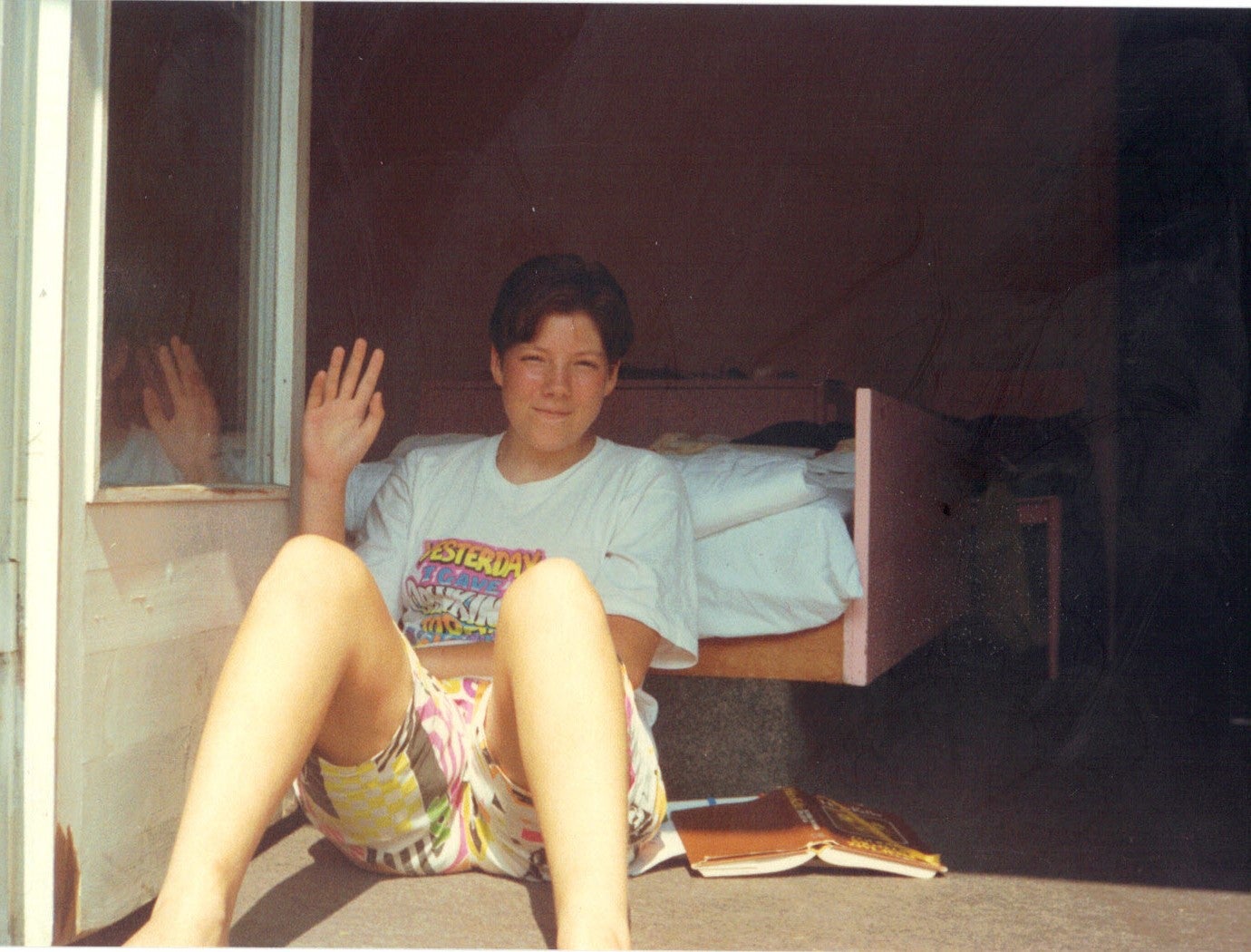
    Tina Purnat in 1991
    Tina Purnat in 1991. / Photo: Courtesy of Tina Purnat

    In July 1991, I found myself sitting in the back seat of our family car, heart pounding with a mix of excitement and apprehension.

    The 10-day war for Slovenian independence from Yugoslavia had just ended, and while the armed conflict was officially over, the atmosphere was still thick with uncertainty. The weeks prior had been marked by listening to press conferences of the national war cabinet and evacuating hurriedly to bomb shelters. I remember the fear that gripped me as both my parents left for work each day—my mother to care for patients at the regional hospital, and my father, a first responder, on site to protect a key factory from potential bombings that could lead to deadly chemical spills.

    It was against this backdrop that my parents were now driving me to Villach, Austria, where I was to attend a four-week immersive German language course. This was something I had been looking forward to all year—a chance to brush up on my German before entering my freshman year of secondary school where I’d study it as the second foreign language.

    But as we crossed the border, the thrill of the upcoming adventure was tinged with a new, deeper sense of fear.

    When we arrived in Villach, my parents helped me settle in, and then it was time for them to leave. As we stood outside the small dormitory where I would be staying, my mother turned to me with a seriousness I hadn’t seen in her before. “If the war breaks out again,” she said, her voice steady but her eyes betraying a deep worry, “don’t try to come back to Slovenia. Stay here in Austria and find a way to your uncle in Sweden.” I nodded, the gravity of her words sinking in. Suddenly, the world seemed much larger, and far less certain, than it had just moments before. Despite the bombing scares and evacuations I had endured during the brief war, it was in that moment, hearing my mother’s words, that I felt the most afraid. I realized that if conflict erupted again, I would be on my own as a 14-year-old girl in a foreign country.

    For the next four weeks, I was surrounded by other teenagers from Slovenia and various other parts of Europe. We spent our days conjugating verbs, practicing vocabulary, swimming, hiking and navigating the cultural quirks of our peers. But in the back of my mind, my mother’s words lingered. What would happen if the conflict reignited? How would I make my way to Sweden on my own? How would I even find my uncle there? The thought of being stranded in a foreign country, unable to return home, was terrifying. It was my first real encounter with the vulnerability that so many people around the world experience daily—the fear of being uprooted, of losing the safety of home.

    Thankfully, the weeks passed without incident. No more armed conflict erupted in Slovenia, and my parents returned to pick me up as planned. But I was not the same person who had arrived in Villach just four weeks earlier. The experience had left an indelible mark on me, a heightened awareness of the fragility of safety and the ever-present possibility of displacement.

    Tina Purnat
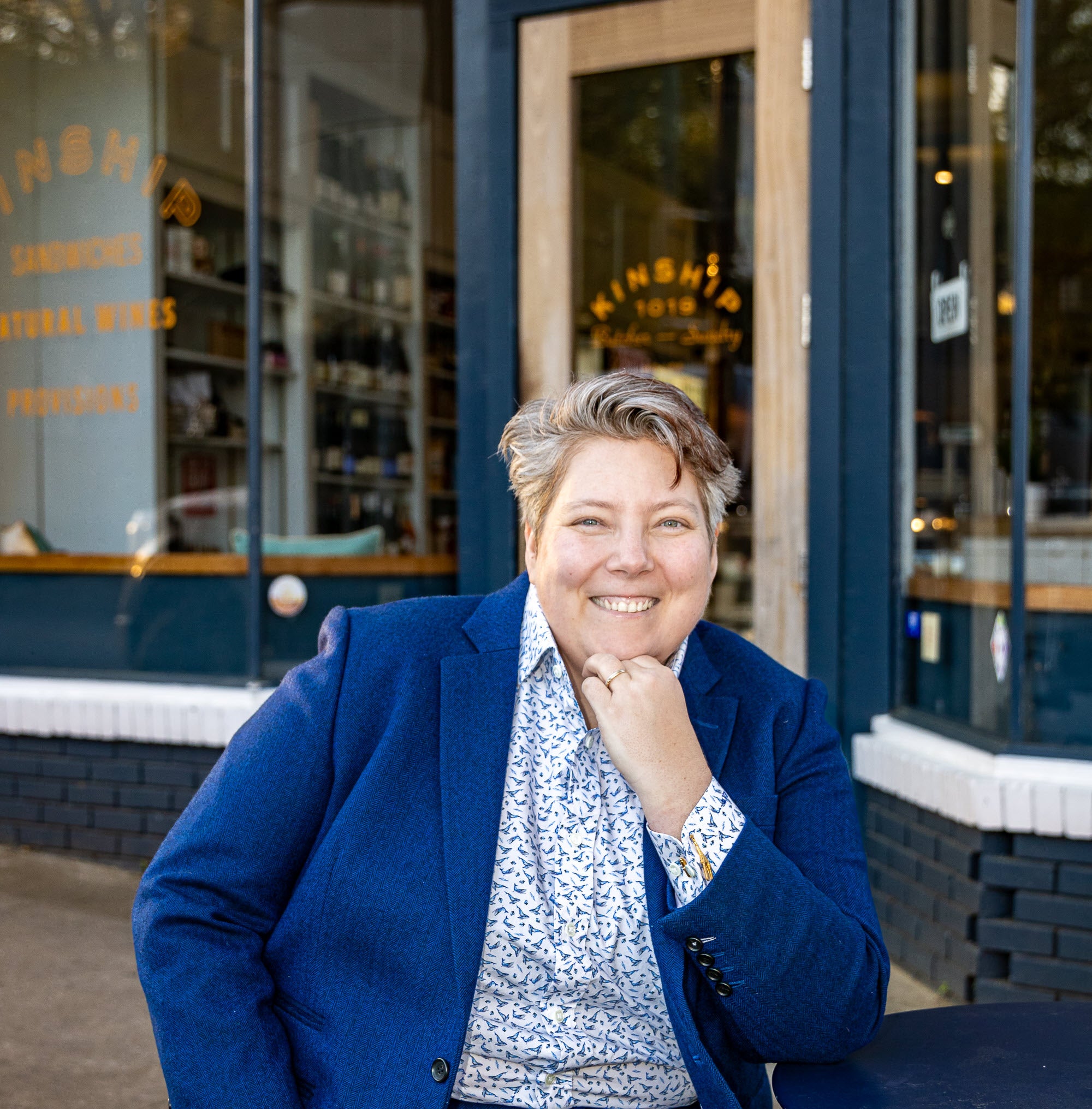
    Tina Purnat today / Photo: Courtesy of Tina Purnat

    Back in Slovenia, I couldn’t shake the thoughts of what might have been. I imagined what it would be like to be forced to flee my home, to live in a place where I didn’t speak the language, surrounded by people who didn’t understand my culture. These thoughts only grew stronger in the following weeks and months as the war in Croatia and Bosnia and Herzegovina intensified. Refugees were fleeing their homes, seeking safety wherever they could find it, and often first in Slovenia before moving on to other countries. Many of them were children, just like me, whose lives had been upended overnight.

    Later on, I decided to volunteer as a companion and homework tutor for kids my own age at the refugee center. It wasn’t just about helping them with English homework and math; it was about being there for them, offering some semblance of normalcy in their otherwise chaotic lives.

    I remember a brother and sister, both in their early teens, who never left each other’s side. I remember thinking: we grew up in the same federation of Yugoslavia, just in different parts of it, and just because of where we were born, I had a home but they lost it. Despite their reserved demeanor, I made it my goal to connect with them. I would bring bubble gum and comic books to our meetups, hoping to break the ice. At first, our interactions were limited to simple exchanges—sharing a piece of gum, pointing out a favorite comic strip. But over time, these small gestures began to build a bond between us.

    We never talked about the war or their experiences—those topics remained unspoken, heavy in the background. But through our shared love of comic books and the simple pleasure of chewing gum, we found a way to connect. They would smile, sometimes even laugh, and in those moments, I knew I was making a difference, however small. We communicated in the language of teen friendship, where words were less important than the shared experiences that brought us a bit of lightheartedness in a difficult time.

    Then, one day, they were gone—moved on to Germany for asylum. I never got to say goodbye, but I like to think that our time together left a positive mark on their lives, just as it did on mine. I often wonder where they ended up—Canada? The U.S.? New Zealand? Sweden? Maybe they ended up settling in Germany? Wherever they are, I hope they remember those afternoons spent laughing over comic books and enjoying the small pleasures of pink bubble gum.

    These experiences shaped my understanding of vulnerability in profound ways. They led me to the profession of public health because public health, at its core, prioritizes the needs of the most vulnerable and at-risk populations. It emphasizes the values I learned from my parents and wider family—the importance of empathy, service, and resilience. My time with those refugee kids taught me that vulnerability is not just about addressing immediate needs but also about the layers of crises people experience and endure, often silently. Public health approaches cannot solve all their problems, but working in this field gives me a tangible way to address some of the critical needs of people who, like those refugee kids, experience and navigate multiple crises. It’s about creating systems, structures and solutions that support their resilience, help them find stability, and, ultimately, help them to rebuild their lives and thrive.

    Thirty-five years later, I’ve built a career in public health. The responsibility to serve and protect the most vulnerable remains at the forefront of everything I do. Whether I’m working with health information and evidence, implementing digital health solutions, combating health misinformation, pointing out deceptive marketing of vapes to youth, or responding to outbreaks, it’s never just about the policy, tools, data or the technology. It’s always about the people—the children, the families, the communities—who need health systems and public health efforts to better serve them and meet their needs.

    Returning to that summer in Villach, I realize now that it was a turning point in my life. The uncertainty I faced then is minute compared to the struggles of those who live in conflict zones or walk thousands of miles in search of a safer home, but it gave me a window into their experience. It taught me that the safety and stability I had always taken for granted could be lost in an instant, and that those who are forced to flee their homes or are displaced within their own country or even within their own city need more than just shelter and services—they need understanding, compassion, and a sense of belonging.

    As I continue my work in public health, I carry these lessons with me. My mother’s words, spoken with such quiet urgency, have stayed with me, reminding me of the responsibility we all share to protect the vulnerable.

    And every time I meet someone who has been displaced, I think back to that 14-year-old girl in Villach, standing alone in a foreign country, and I know that I am doing what I am meant to be doing—helping to build a world where no one has to face that kind of uncertainty alone.

    Tina Purnat is a DrPH student and Prajna Leadership Fellow.


    Last Updated

    Get the latest public health news

    Stay connected with Harvard Chan School

    Source link

  • 13 Life Lessons From Women Leading the Mindfulness Movement

    13 Life Lessons From Women Leading the Mindfulness Movement

    Earlier this year, the Mindful editorial team had the joy of interviewing 10 women leading the charge to make the world a more kind, connected place for our 2025 edition of the Powerful Women of the Mindfulness Movement feature article. With each conversation, we were inspired by these women’s stories, heartened by their dedication to true compassion, and puzzled over how we were going to fit so much wisdom into such short profiles. Spoiler alert: Despite our best efforts, a lot of great stuff ended up having to be cut. Here, we’re sharing some of their wise words and life lessons that didn’t make it into the feature, but deserve to be shared. 

    To learn more about The Powerful Women of the Mindfulness Movement: 2025, check out the feature article here, and guided meditations by the women here

    13 Quotes About Life From Women Leading the Mindfulness Movement

    1. “Oftentimes being the only woman in the room, working in the video game industry, I could really just drop into the moment because I do an open-eye meditation. No one knows what I’m doing. I can choose to not react to how I might be feeling in that moment in a way that could be self-destructive. And sometimes not speaking up can be self-destructive. So it’s really just learning how to insert that pause, and then make the choice that’s the right one for me in that moment.” – Nanea Reeves 

    2. “I didn’t start a mindfulness practice because I was interested in Zen Buddhism or enlightenment. I started a mindfulness practice because, to put it bluntly, I had this holy s*** moment of realizing that something had been running my life that I didn’t even know was running it.” – Caverly Morgan

    “It’s been awesome to honor the space that belongs to my son, because that piece of me has never left me. The love resides, and we occupy the same space.”

    Brenda K. Mitchell

    3. “I lost a son to gun violence, and there is an understanding that there will never be a new norm for you. Normal is not something that I look for. It will never happen. But what I did learn to do [through mindful practices] was to create a new narrative for myself that allowed space to be happy. It’s been awesome to honor the space that belongs to my son, because that piece of me has never left me. The love resides, and we occupy the same space.” – Brenda K. Mitchell

    4. “What I sometimes say these days is that the highest teaching of all is to relax the bum. Because if you like, you just try it right now. If you relax your bum, it’s very hard to be mentally and physically agitated with a soft bum. The other thing about that that makes it the highest teaching is it’s good humored, because that’s another thing about mindfulness: the more I practice it, the more I realize it’s innately associated with lightheartedness, which I find really interesting because we can think mindfulness would make you a very serious, kind of earnest person.” – Vidyamala Burch

    5. “Soul is not a noun, it’s a verb. Soul is experience—of inner aliveness, of being touched and moved and this depth of experience and this real sense of interconnectedness.” – Shelly Harrell

    6. “That was a really huge realization for me, that strength is kind of like a skill, like riding a bike or learning to drive a car or learning the steps of a dance, like you can actually learn it and then get competent at it and then it can become like second nature. When I heard that, for me it was like a beacon of hope.” – Melli O’Brien

    7. “There’s so much craving. Like when my husband [who has dementia] can speak a whole sentence, I go, ‘Oh wow, good!’ and then when he forgets and gets frustrated in expressing himself, my heart sinks. So all of this is happening and I’m very glad that I’ve got this practice of knowing that all this is human, and going, Can I create space to watch it come and go?” – S. Helen Ma

    8. “My late husband was a beautiful meditator, and very traditional. And I feel like our life together informed what I’m building now in a way that, you know, part of his energy is still continuing.” – Nanea Reeves

    9. “When the inner critic speaks, we meet that voice with an unconditionally loving reassurance. And it’s really important to acknowledge that reassurances are just a voice that says the opposite of the inner critic. So it’s not responding to the voice that says, You’re not smart enough with another voice that says, You’re the smartest person in the room! An unconditionally loving reassurance says, I love you no matter what. You’re going to have days where you feel like you nailed it and you’re going to have days where you feel like you flopped. And I’m here and worthy, no matter what. That’s where the real healing is.”  – Caverly Morgan

    “If you want to see me in my fullness, it’s not just on your terms or what makes you comfortable to only see part of me or some fragment of me, but to see the whole me.”

    Shelly Harrell

    10. “Someone actually told me my blackness was not invited into the meditation space. Like I should detach from that, that that would be a better thing to do, that we all should just not even see race, so to speak. That is not the message that is going to make mindfulness inclusive to a diverse population whose real lived experience says, This is what’s happening. If you want to see me in my fullness, it’s not just on your terms or what makes you comfortable to only see part of me or some fragment of me, but to see the whole me.” – Shelly Harrell

    11. “I was so broken, and the trauma changed everything about me. I didn’t want to see another mother go through that. But I’m so grateful to become this new person that I am. I’m still thriving, and I’m still learning. I’m happily on a mindfulness meditation journey and sharing that healing journey with other people.” – Brenda K. Mitchell

    12. “The reason I started this work, and the reason I continue this work, is thinking back to when I was a 25-year-old young woman lying in a hospital bed and being told there wasn’t anything medically that could be done to help me. My back was damaged in such ways that there was no medical solution and I had to figure it all out for myself, how to create a good life with this body. For, you know, a lot of that time it has been very lonely and difficult so I’ve always thought, If I can help one person have an easier time of it, then that is my life’s work. The fact is, it’s now hundreds of thousands of people who have learned this superpower where any given moment you have this choice: Do you crank your pain up or do you dial it down? It’s so accessible. It’s just amazing.” – Vidyamala Burch

    13. “Dance became a place, particularly when I started choreographing, that was a refuge. It was a place where I could connect deeply to my body and allow my body to be a mode of expression. It was a place I could come home to. I very much began to experience my body as home. Coming home to my somatic experience was part of what dance did. Coming home but also allowing expression of whatever that inner experience was, it came out through movement and so movement became meditation.” – Shelly Harrell


    Source link

  • 10 Mindfulness Lessons for Hard Times

    10 Mindfulness Lessons for Hard Times

    10 things you learn from having a mindfulness practice that help foster resilience in the face of whatever life brings.

    Here’s what I know from my practice. I know that:

    1. Things change. Emotions change, thoughts change, the breath changes. Nothing is static. And ideologies change; political movements come and go. And if I try to hold on to the way I think things are supposed to be, I will surely suffer.

    2. That doesn’t mean I can’t have opinions. It is not UN-mindful to deeply want the world to be a certain way.

    3. It’s normal to feel any emotion right now: despair, betrayal, outrage, loss… Someone else is feeling elation, joy, and righteousness. Or maybe you’re feeling nothing—shock or numbness. Mindfulness tells us to be open to any emotion as it is part of the human condition. But the more important question is, how can I practice with it?

    4. Practicing with my emotions means—feeling them in my body in vivo. Can I feel my stomach clenched? Can I feel my heart racing? What is happening right in this moment, in my body? When I can feel it, without trying to change it, I can allow the emotion to be. I can make space for it, without getting overwhelmed.

    5. The same with thoughts: When I’m entangled in my worries for my child, or my worst-case scenarios, I can remember to return to the present moment. What do I feel right here, right now? My toes on the floor. My breath in my belly. That’s all there is right now. I can prevent thoughts from snowballing out of control just by returning to the present moment.

    6. Equanimity—balance and even-mindedness are the fruit of mindfulness practice. The more I sit with my inner experience without reactivity, the more I foster resilience in the face of whatever life brings.

    The more I sit with my inner experience without reactivity, the more I foster resilience in the face of whatever life brings.

    7. This does not mean I don’t act. That is a misunderstanding. It means that I do act, but act with awareness. When I act out of anger or fear, I’m not usually happy with the results. I know this. Acting from equanimity leads to wiser and more skillful actions. But I need to take my time with this. Appropriate action may not be evident immediately.

    8. Peace begins with me. The peace activist A. J. Muste said, “There is no way to peace, peace is the way.” The only way to promote peace is to be it. Now. Through my practice.

    9. Having my meditation practice is the single healthiest thing I can do right now. Having a place to cultivate more capacity to accept change, work with my emotions and thoughts, and cultivate equanimity is what is going to get me through.

    10. Kindness is what matters. In our deeply divisive world, so many of us are at odds with each other. It’s time for us to practice regular acts of kindness—to listen deeply to ourselves and to others. Our meditation practice teaches us not to turn people into enemies, that we are all connected. Can we dig deep within us to find a way to kindness, even in polarized times? I know we can.


    Read More

    Let Your Practice Guide You Beyond Crisis Mode

    While many of us lean on mindfulness to help us through times of inner and outer chaos, we can cultivate the greatest resilience through consistency in our practice, even when it doesn’t feel urgent.

    A Guided Meditation for Turning Awareness Into Action
    An illustration of being compassionate to other.


    Source link