Tag: lead

  • Let Them Lead – Mindful

    Let Them Lead – Mindful

    Many of us strive to show up skillfully for the young people in our lives, whether it’s as their parent or relative, as an educator, coach, or mentor. Yet knowing just what they need to fuel their growth and leadership is not always easy. While facing all the challenges of growing up, youth today are also deeply aware of conflict and uncertainty in the world around them, and many come from families and communities impacted by systemic inequality. However, their experiences and voices are key to their ability to create change—something I recently witnessed firsthand through a youth leadership program.   

    Nuestra Juventud: Creating Communities of Hope was founded on the principle that healing communities means centering youth voices and fostering a deep sense of trust in their own wisdom. Launched in 2023, the fellowship gently nurtures youth leadership, voice, and vision in the heart of Southern New Mexico, a region that has often been overlooked and under-resourced. The program, designed to cultivate philanthropy, leadership, and collective care, invites youth to act with intention and generosity in service of their communities. Serving as the Project Coordinator for Nuestra Juventud, I learned just as much from the first youth cohort as I hoped to offer them. 

    Learning to Lead 

    Developed in partnership with Ivy Child International and Aprendamos Family of Services, Nuestra Juventud—“Our Youth”—is a six-month fellowship that brings together high school and middle school students, primarily those who are Black, Indigenous, and People of Color from underserved communities. Participants gather monthly to engage in leadership workshops, community exploration, and intergenerational dialogue. 

    Nuestra Juventud is guided by six key objectives:

    • Educate and Engage: Youth explore systems of collective impact and have opportunities to visit and learn about nonprofits in their communities.
    • Personal Development: Fellows reflect on their own identities, values, and growth.
    • Cultivate Social Responsibility and Philanthropy: Through learning the “Three T’s” of giving—time, talent, and treasure—youth can see themselves as active contributors.
    • Enhance Collaboration: Intergenerational dialogue and teamwork teach youth how to build with others.
    • Empowerment: Youth discover their voices and the impact they can have.
    • Leadership Skills: Training sessions focus on  SMART (Specific, Measurable, Achievable, Relevant, and Time-bound) goals, Jim Kouzes and Barry Posner’s five practices of leadership, and leadership qualities.

    A cornerstone of the fellowship is the opportunity for each young person to develop their personal mission statement and select a local nonprofit organization that aligns with their values to support with a mini-grant, made possible through the generosity of the Covarrubias–Aprendamos Foundation. Through this process, youth learn not only about the mechanics of philanthropy but also about the importance of aligning one’s actions with deeply held beliefs or values. 

    In the first iteration of the program, our youth chose to award mini-grants to a range of nonprofits spanning services for families and youth, a domestic violence shelter, a community health center, a local arts council, a community faith center, an animal shelter, a children’s literacy group, an immigrant and migrant hospitality and advocacy center, and others. A special highlight for the youth was the opportunity to develop a logo with symbolic meaning to the inaugural group. This logo will be used for the program moving forward.

    Follow the Wisdom of Young Leaders

    From the very first session, youth began discovering their voices and connection to one another. One of the most powerful moments came when several fellows spoke on a youth panel at a regional conference for educators and social workers. Their stories and insights became the highlight of the event, offering powerful reminders of what becomes possible when we trust young people. These reflections speak to the lasting ripple effects of this work. But it wasn’t just the fellows who transformed—mentors, family members, and nonprofit partners shared with me that they’d come to see youth not just as recipients, but as collaborators and visionaries. That shift in perception may be one of the most meaningful outcomes of all. With the permission of the fellows (some of whom prefer to remain anonymous), I share some of their remarks here.

    Youth are not empty vessels waiting to be filled—they’re full of insight born from lived experience. Whether it’s navigating systems, caring for siblings, or advocating for peers, their wisdom is real and necessary.

    1. Trust Young People as Experts of Their Experience

    Youth are not empty vessels waiting to be filled—they’re full of insight born from lived experience. Whether it’s navigating systems, caring for siblings, or advocating for peers, their wisdom is real and necessary.

    Through the first iteration of the program, youth discovered new ways to not only trust their own wisdom, but also put it into action: “I learned that I am not the only one who feels I can do more for our community and the meaningfulness of philanthropy and acts of kindness,” said one participant. Another fellow, Alex, shared, “It takes courage to stand up when you see something wrong. A good leader encourages the heart.”

    2. Recognize Different Kinds of Leadership

    Alexa reminded her peers to “Stay true to what you believe in.” Encouraging youth to lead from who they are, rather than who others expect them to be, is a vital way to nurture their convictions, skills, and dreams.

    One of the greatest lessons from Nuestra Juventud is that leadership doesn’t always look like standing at a podium. Sometimes it’s quiet listening. Sometimes it’s creating space for others. Sometimes it’s saying, “I don’t know, but I want to learn.” As Avery offered, “A leader is someone who is good at listening to others and is understanding of others’ perspectives”—a reminder that authentic leadership is rooted in humility and care.

    3. Celebrate Cultural Identity as a Source of Power

    By centering the cultural backgrounds of participants—Chicana, Indigenous, Afro-Latinx, and more—Nuestra Juventud affirms that cultural knowledge is a leadership asset. Youth reflect on their ancestors, their languages, their lived experiences, and the land itself as sources of strength. As Anelise put it, “I want to lead with my abuelita in my heart.”

    When youth deepen their connection to their own identity, they also gain more confidence to help them understand and communicate across cultures and backgrounds. “I learned how to get out of my comfort zone and talk to new people,” another participant said.

    4. Create Space for Healing

    Many fellows come into the program holding the weight of family challenges, racism, and intergenerational trauma. Through peer circles, storytelling,  mentorship, and opportunities for creativity, they find space to heal. And in healing, they find clarity, courage, and connection.

    Many expressed the desire to continue helping their community after the program ended. Anelise reflected, “A good leader demonstrates compassion with the people they lead.” And in the words of another fellow: “I didn’t know how to be a leader and never considered myself a leader. Now I know I am a leader and can make a difference.” 

    5. Know That We All Have a Role to Play

    Youth benefit from experiencing intergenerational connection and support. As one fellow put it, “I learned how to collaborate with people of all ages and how to share a space with others.” Others shared that they enjoyed having a mentor.

    “Leadership begins with love—for our people, our places, our future generations and the futures we imagine together.” — Manny, youth fellow

    The success of Nuestra Juventud isn’t just about the youth; it’s also about the adults who listen, step back, and support. Community members, mentors, funders, and facilitators show that transformation is collective work.

    As youth fellow Manny said, “My mission is to make my community a better place to live.” It’s a reminder that leadership begins with love—for our people, our places, our future generations and the futures we imagine together.

    5 Ways to Uplift the Next Generation 

    Nuestra Juventud is not just cultivating philanthropy and social responsibility for the future—it’s nurturing the leaders of now and creating communities of hope in Southern New Mexico. Each of these youth fellows is a testament to what’s possible when we trust our youth.

    The wisdom shared by Nuestra Juventud participants makes one thing clear: Young people are ready to lead, but they need us—the adults in their lives—to show up with presence and corazón (a word often used in Chicanx expressions of care and leadership) differently. Here are a few ways we can all support our youth and honor their leadership:

    • Listen With Respect and Curiosity: Create space for youth to speak openly, and listen to them with the intent to understand, not to respond.
    • Mentor Without Controlling: Offer guidance and presence, but let youth lead and make decisions.
    • Invite Youth Into Real Decision-Making: Include them meaningfully in program design, community efforts, and leadership roles.
    • Celebrate Identity, Don’t Erase It: Acknowledge and affirm the cultural backgrounds and lived experiences of our youth.
    • Invest in Youth—Financially and Emotionally: Support programs like Nuestra Juventud and believe in the vision youth hold for their communities. Our collective work is needed for our youth to lead with corazón, culture, and courage.


    Source link

  • RFK Jr. Admits Removing Fluoride From Drinking Water Will ‘Probably’ Lead to More Cavities in Children

    RFK Jr. Admits Removing Fluoride From Drinking Water Will ‘Probably’ Lead to More Cavities in Children

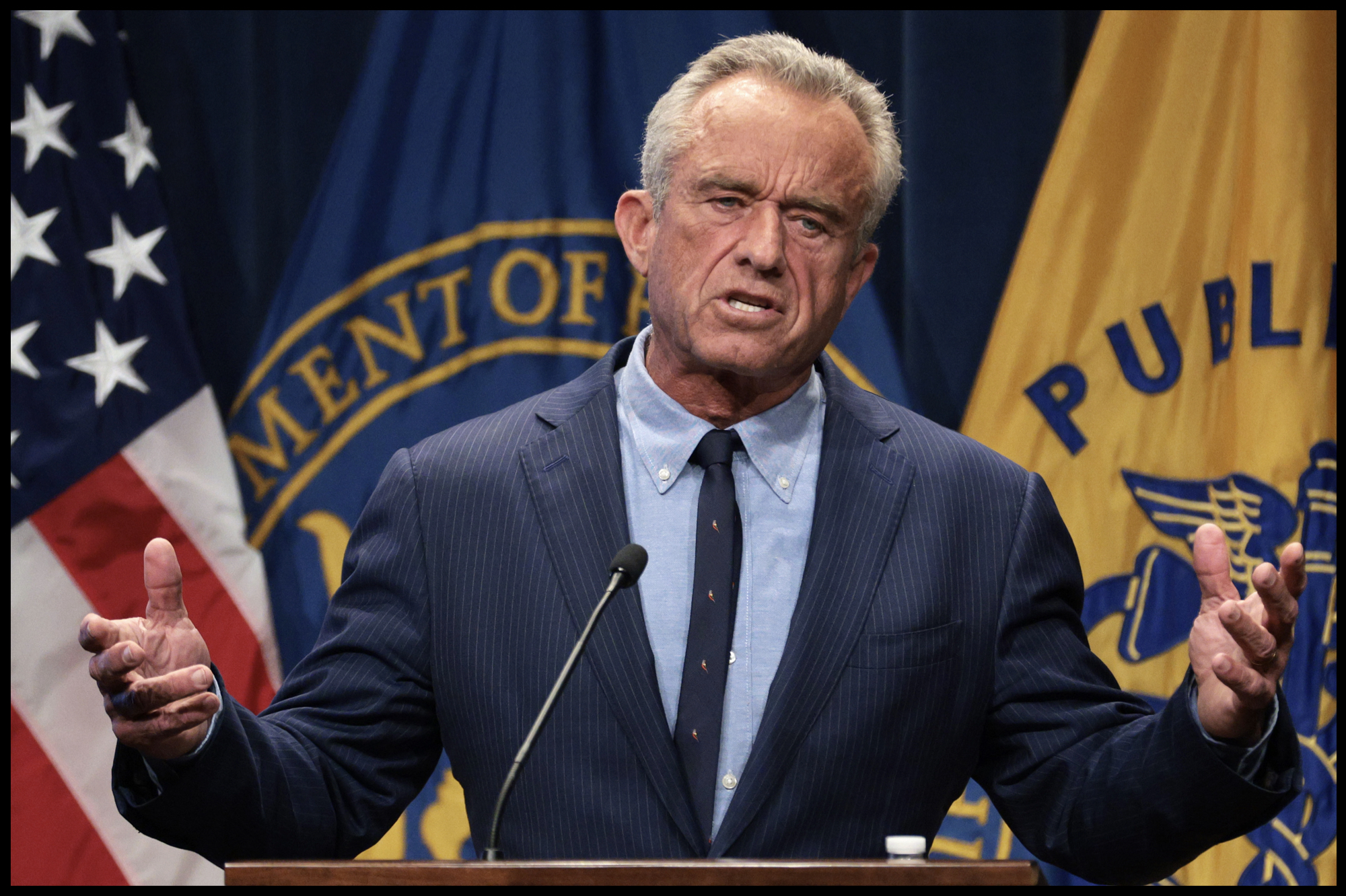
    Health Secretary Robert F. Kennedy Jr. admitted that one of the points on his agenda, removing fluoride from water supplies across the nation, would “probably” result in more Americans getting cavities hence worsening dental health in the United States.

    Kennedy appeared on Fox News with Oklahoma Governor Kevin Stitt on Thursday in conversation with host Harris Faulkner. The two were hosting an event at the Oklahoma State Capitol in Oklahoma City on the same day in order to begin the “Make Oklahoma Healthy Again” campaign focused on promoting “common-sense health policies, medical freedom, and a return to personal responsibility.”


    “On the issue of fluoride, what has been the response from dentists in America who may be concerned that some children in lower incomes in particular don’t get those dental preventative situations where they can go in and get their teeth indemnified and treated against cavities?” Faulkner asked.

    “Well, people will still get indemnified for it, to the extent that they are already indemnified. But you know, it is an issue. It’s a balance. You’re gonna see probably slightly more cavities, although in Europe, where they banned fluoride, they did not see an uptick in cavities. The issue is, parents need to decide, because science is very clear on fluoride,” Kennedy responded.

    Social media users quickly took to online platforms to ridicule the Health Secretary’s rhetoric.

    “Fluoride is safe and effective. RFK has no medical or Dental background that makes him an expert on Fluoride,” wrote one.


    “On the downside there will be more cavities but on the upside there will be… um actually there is no upside,” joked another.


    “More cavities for kids in families who can’t afford dental care. And neglected cavities can cause other health issues with infections etc, not to mention leading to the need for more serious and expensive dental work…” noted a third.


    “So they admit that taking out fluoride is bad, yet they’ll still do it. Morons,” said a fourth.


    “Some dentists are excited. They will have a lot more business soon,” said another.


    The American Dental Association has reiterated their support for fluoridating water supplies after RFK Jr. announced his intention to direct the Centers for Disease Control and Prevention to denounce water fluoridation.

    “As dentists, we see the direct consequences fluoride removal has on our patients and it’s a real tragedy when policymakers’ decisions hurt vulnerable kids and adults in the long term. Blindly calling for a ban on fluoridated water hurts people, costs money, and will ultimately harm our economy,” said ADA President Brett Kessler, D.D.S.

    Originally published on Latin Times


    Source link

  • Modern AI Course: Lead Page

    Modern AI Course: Lead Page

    Product Name: Modern AI Course: Lead Page

    Click here to get Modern AI Course: Lead Page at discounted price while it’s still available…

    All orders are protected by SSL encryption – the highest industry standard for online security from trusted vendors.

    Modern AI Course: Lead Page is backed with a 60 Day No Questions Asked Money Back Guarantee. If within the first 60 days of receipt you are not satisfied with Wake Up Lean™, you can request a refund by sending an email to the address given inside the product and we will immediately refund your entire purchase price, with no questions asked.

    (more…)

  • Is Paracetamol Safe? Regular Use In Older Adults May Lead To Ulcers, Heart, And Kidney Complications

    Is Paracetamol Safe? Regular Use In Older Adults May Lead To Ulcers, Heart, And Kidney Complications

    Is paracetamol your go-to for everything from headaches to fever? You might want to think twice. New research reveals that regular use of this common painkiller in older adults could increase the risk of gastrointestinal, heart, and kidney complications.

    Paracetamol, also known as acetaminophen, is commonly used on its own to treat moderate to severe pain or combined with other ingredients in medicines for allergies, colds, and flu. While it is often taken without much thought due to its easy availability, it is not safe to use more than 4 grams (4,000 milligrams) of acetaminophen in a single day. If you are taking multiple products that contain acetaminophen, it can be difficult to track the total amount you are consuming. Previous studies have shown that long-term use of paracetamol may lead to serious kidney damage.

    A recent study published in Arthritis Care and Research explored the long-term health effects of using paracetamol to manage chronic pain associated with osteoarthritis. The findings suggest that frequent use of this common pain reliever may be linked to several serious complications, such as peptic ulcers, heart failure, hypertension, and chronic kidney disease.

    “Due to its perceived safety, paracetamol has long been recommended as the first line drug treatment for osteoarthritis by many treatment guidelines, especially in older people who are at higher risk of drug-related complications,” said Professor Weiya Zhang, the researcher who led the study in a news release.

    The researchers analyzed the health records of over 180,000 adults aged 65 and older who had been repeatedly prescribed paracetamol—defined as two or more prescriptions within a six-month period. This group’s health outcomes were then compared to those of approximately 400,000 adults of the same age who had never received repeated paracetamol prescriptions.

    The study found that repeated use of paracetamol increased the risk of peptic ulcer bleeding by 24%, uncomplicated peptic ulcers by 20%, lower gastrointestinal bleeding by 36%, heart failure by 9%, hypertension by 7%, and chronic kidney disease by 19%.

    “Whilst further research is now needed to confirm our findings, given its minimal pain-relief effect, the use of paracetamol as a first line pain killer for long-term conditions such as osteoarthritis in older people needs to be carefully considered,” Professor Zhang added.

    Source link

  • Let Curiosity Lead the Way With A 12-Minute Meditation

    Let Curiosity Lead the Way With A 12-Minute Meditation

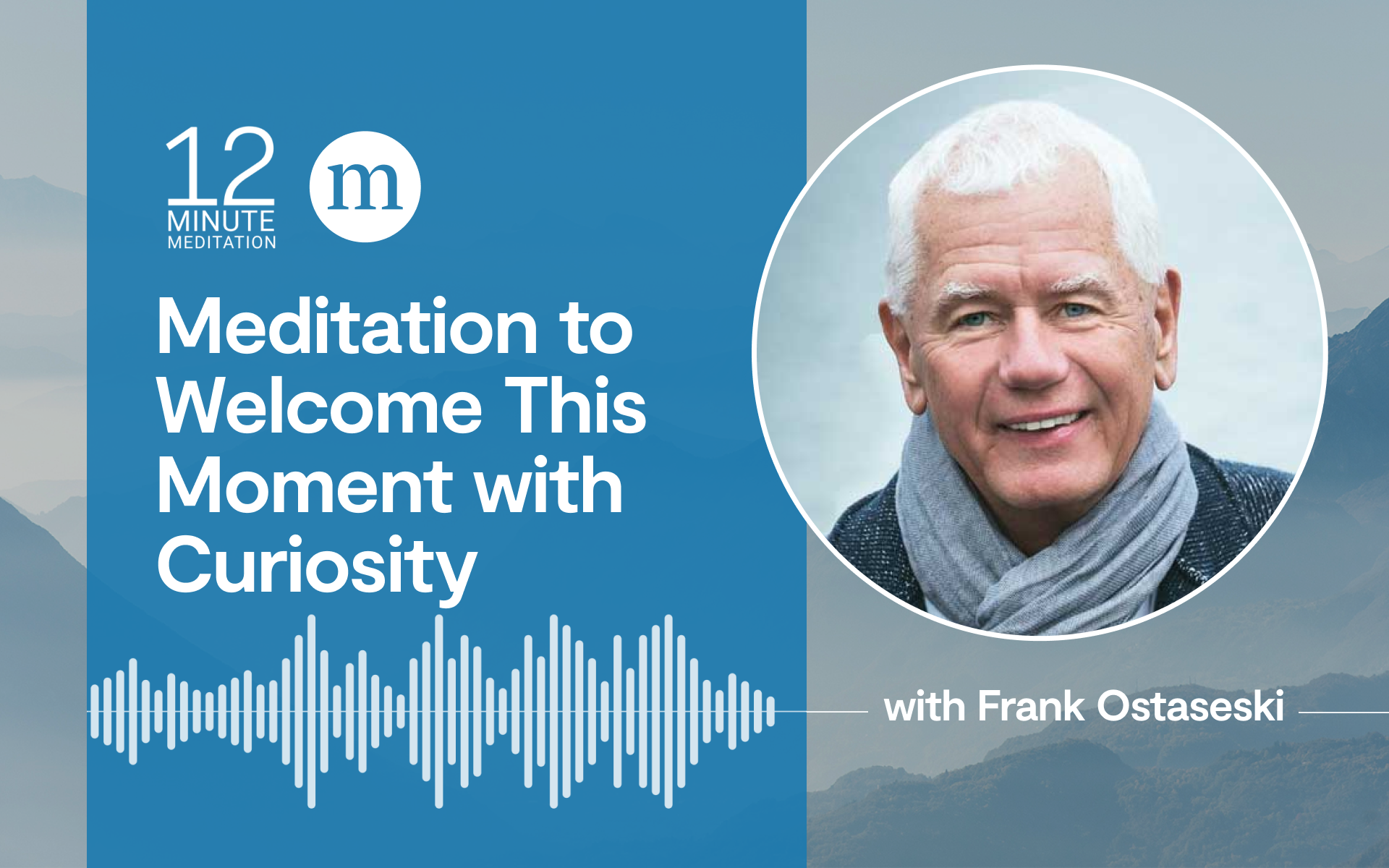
    When we allow what is to simply be, we relieve ourselves of the suffering that can get heaped on top of our moments of difficulty. Frank Ostaseski leads this meditation to let curiosity lead the way.

    A lot of times we use languages like enlightenment or liberation or awakening. These terms feel far off and distant to me, like we’re trying to achieve something supernatural or transformative in our lives. I think meditation practice is about learning to become intimate—intimate with ourselves, with every aspect of life. Then we can bring the healing power of loving awareness to what scares us, what’s sad for us, and what feels raw for us. I prefer the word intimacy because it expresses a wish to come closer—to know that we already belong, that we’re not separate. 

    To me, intimacy expresses what liberation actually feels like: relaxed, easeful, ordinary, in a way. Liberation isn’t found someplace else. It’s found right here. That’s why one teaching says the path is right beneath your feet. When we look into the mind’s conditioning, in a close and personal way, we begin to understand the ways that we cause ourselves suffering—and that’s the real freedom of meditation. It isn’t about helping us to transcend or get out of our experience. It’s about learning to know our experiences intimately. 

    When we look into the mind’s conditioning, in a close and personal way, we begin to understand the ways that we cause ourselves suffering—and that’s the real freedom of meditation.

    To love the past is simply a memory, and to love the future is just a fantasy. The only place we can love, the only place we can really be aware, is right here, in this present moment. Intimacy connects us with each other with a deep sense of belonging. And with this belonging, we know that we’re not separate anymore. And this helps us to move beyond our small story of a limited sense of self. 

    Meditation, like love, is intimate, and this intimacy is the condition of deepest learning. Mindfulness and compassion are the least expensive, most available, and most appropriate tool we can use in just about every situation in our lives. But sadly, often they’re viewed as inappropriate or even shelved for some other time. And I think, as a result, a lot of us live and work in a great deal of fear and distress. And I think we can do something about that.

    A 12-Minute Meditation to Let Curiosity Lead the Way

    1. Let’s begin really simply: Just pause. A pause is an opportunity not to be swept away by the habit of our lives. A pause is an opportunity to remember who we actually are. A pause is a way of bringing our mind, heart, and body, collecting it all into the present moment. So let’s just pause. No hurry. 
    2. Now, relax. See how little effort is required just to hear the sound of my voice. Relaxing body, heart, and mind—mindfulness emerges much more easily in a relaxed mind, heart, and body. So, pause. And relax.
    3. Now, open. A Characteristic of an open mind is spaciousness infused with interest. Open. You’ll be open for just a moment, liberating yourself from any limiting ideas about who you are and what you think is possible. Can your curiosity be greater than your criticality? Open. So, again and again: Pause. Relax. Open. 
    4. And now, allow. Allowing takes us beyond accepting and rejecting altogether—beyond hope and fear. Just rest in a moment of allowing. There’s no one special to be, nothing special to do, no place special to go. It’s resting in allowing, again and again: Pause. Relax. Open. And allow.
    5. And now, become intimate. This is a kind of communion with your experience, or willingness to enter the immediacy of your life. It’s a kind of fearless receptivity—a willingness to welcome everything and push away nothing—nothing between you and your experience: no subject and object; no I and other. Just intimacy. So, again and again: Pause. Relax. Open. Allow. Become intimate. 
    6. Pause. Relax. Open. Allow. Become intimate


    Source link