Tag: kindness

  • The Art of Self-Compassion: Why Practicing Kindness Towards Yourself is Essential

    The Art of Self-Compassion: Why Practicing Kindness Towards Yourself is Essential

    Introduction to Self-Compassion

    The art of self-compassion is a powerful tool that has been gaining recognition in recent years for its profound impact on mental health and wellbeing. In a world where self-criticism and perfectionism are often encouraged, practicing kindness towards oneself can be a revolutionary act. Self-compassion involves treating oneself with the same kindness, care, and concern that one would offer to a good friend. It is about being gentle, understanding, and accepting of oneself, even in the face of challenges and setbacks.

    Understanding Self-Compassion

    Self-compassion is not about self-pity or self-indulgence, but rather about cultivating a deep sense of understanding and acceptance of oneself. It involves recognizing that everyone makes mistakes, that it is okay not to be perfect, and that one’s worth and value come from who they are as a person, not from their achievements or external validation. Self-compassion is also not the same as self-esteem, which can be based on external factors such as success or appearance. Rather, self-compassion is about developing a stable and enduring sense of self-worth that is not dependent on external circumstances.

    The Benefits of Self-Compassion

    Practicing self-compassion has numerous benefits for both physical and mental health. Research has shown that self-compassion is associated with lower levels of anxiety, depression, and stress, as well as greater emotional resilience and wellbeing. Self-compassion can also help to improve relationships, as individuals who practice self-compassion are more likely to be kind, understanding, and compassionate towards others. Additionally, self-compassion can help to increase motivation and productivity, as individuals who are kind to themselves are more likely to take risks and pursue their goals with confidence and courage.

    How to Practice Self-Compassion

    So, how can one cultivate self-compassion in their daily life? Here are some tips:

    1. Mindfulness: Practice mindfulness meditation, which involves paying attention to the present moment with kindness and curiosity. This can help to increase self-awareness and reduce self-criticism.
    2. Self-kindness exercises: Write down three things you appreciate about yourself each day, or write a letter to yourself from the perspective of a compassionate friend.
    3. Physical self-care: Take care of your physical needs by getting enough sleep, eating nourishing foods, and engaging in physical activities that bring you joy.
    4. Journaling: Write down your thoughts and feelings without judgment, allowing yourself to process and release any emotions that may be causing you distress.
    5. Seeking support: Surround yourself with people who support and encourage you, and don’t be afraid to seek help from a therapist or counselor if you need additional guidance.

    Overcoming Barriers to Self-Compassion

    Despite the many benefits of self-compassion, there are often barriers that prevent individuals from practicing kindness towards themselves. These barriers can include:

    1. Self-criticism: The tendency to be overly critical of oneself, which can lead to feelings of shame and self-doubt.
    2. Perfectionism: The expectation that one must be perfect, which can lead to feelings of anxiety and burnout.
    3. Societal pressure: The pressure to conform to societal expectations, which can lead to feelings of inadequacy and low self-esteem.
      To overcome these barriers, it is essential to recognize that they are not inherent to oneself, but rather learned behaviors that can be changed. By practicing self-compassion and challenging negative self-talk, individuals can begin to break free from these barriers and develop a more positive and compassionate relationship with themselves.

    Developing a Self-Compassion Practice

    Developing a self-compassion practice takes time and effort, but it is worth it. Here are some tips for getting started:

    1. Start small: Begin with small acts of self-compassion, such as taking a few deep breaths or writing down three things you appreciate about yourself.
    2. Be consistent: Make self-compassion a regular part of your daily routine, such as right before bed or first thing in the morning.
    3. Find a community: Connect with others who are also practicing self-compassion, either in person or online.
    4. Be patient: Remember that developing a self-compassion practice takes time and patience, and that it is okay to make mistakes along the way.

    Conclusion

    The art of self-compassion is a powerful tool that can have a profound impact on mental health and wellbeing. By practicing kindness towards oneself, individuals can cultivate a deep sense of self-awareness, self-acceptance, and self-worth. While there may be barriers to self-compassion, such as self-criticism and perfectionism, these can be overcome with time and effort. By developing a self-compassion practice and making it a regular part of daily life, individuals can increase their emotional resilience, improve their relationships, and live a happier and healthier life.

    FAQs

    1. What is the difference between self-compassion and self-pity?
      Self-compassion involves treating oneself with kindness and understanding, while self-pity involves feeling sorry for oneself in a way that is excessive and unproductive.
    2. How can I start practicing self-compassion if I have a history of self-criticism?
      Start by practicing small acts of self-compassion, such as taking a few deep breaths or writing down three things you appreciate about yourself. Gradually increase your self-compassion practice over time, and be patient with yourself as you work to overcome negative self-talk.
    3. Can self-compassion help with anxiety and depression?
      Yes, research has shown that self-compassion is associated with lower levels of anxiety and depression, as well as greater emotional resilience and wellbeing.
    4. How can I make self-compassion a part of my daily routine?
      Try incorporating self-compassion into your daily routine, such as right before bed or first thing in the morning. You can also try setting reminders or placing sticky notes in strategic locations to remind yourself to practice self-compassion throughout the day.
    5. Is self-compassion the same as self-esteem?
      No, self-compassion and self-esteem are not the same. Self-esteem can be based on external factors such as success or appearance, while self-compassion is about developing a stable and enduring sense of self-worth that is not dependent on external circumstances.
  • Does Mindfulness Make You Kinder? Key Studies On What We Know (and Don’t Know Yet).

    Does Mindfulness Make You Kinder? Key Studies On What We Know (and Don’t Know Yet).

    Do mindful people feel better in their own bodies? Does mindfulness make you kinder? Researchers are diving into these questions and uncovering the benefits of mindfulness.

    People come to mindfulness practice for many reasons. They might need support dealing with stress, or want a go-to way to help improve their sleep. There are plenty of questions, too, like: What does the research say about mindfulness and physical health? Does it really matter how often you meditate? Does mindfulness make you kinder for real, or is that mostly just what people just say?

    While studies are numerous and ongoing, and of course not every question can be answered definitively—we can look at some research gathered from Greater Good Science Center at UC Berkeley, Center for Healthy Minds at University of Wisconsin–Madison, Center for Mindfulness at UMass Medical School, and American Mindfulness Research Association, to help explore some of these questions more deeply.

    Feeling good in your own skin

    Do mindful people feel better about their bodies? Researchers asked 115 female college students about their level of mindfulness, body responsiveness, body shame, and overall health. Women who reported greater awareness and who tended to be nonjudgmental and nonreactive—key mindfulness skills—had less body shame, were more attuned to their bodies, and were healthier overall. The researchers say it’s not yet clear whether mindfulness increases body satisfaction, or vice versa. 

    Building your meditation muscle 

    In a comparison of adults who listened to either a guided meditation or a podcast daily for 13 minutes, researchers found that meditators reaped more benefits. For instance, after eight weeks meditators felt less anxiety and reported fewer negative mood states. And their performance on a set of computerized tests showed that they’d developed better attention and memory skills than podcast listeners. 

    The brain networks that work to keep us in the present moment and remember information are like mental muscles: They need exercise to keep them sharp and well-functioning, and meditation may provide that workout. The study also found that people in the meditation group were better at regulating their emotions, which was tied to having fewer negative moods. 

    But before you think this was a quick fix, think again. When the researchers checked to see if these benefits could be detected after four weeks, they came up empty-handed. Most of the gains didn’t show up until after eight weeks of steady practice. As with exercising a physical muscle, it takes time, patience, and repetition for change to take effect. 

    Does mindfulness make you kinder to yourself and others?

    Self-compassion may make aging easier. A review of the research showed that adults over 65 who practiced self-compassion tended to be less anxious and depressed, and felt a greater sense of well-being, than those who didn’t. (Tip: It probably doesn’t hurt to start practicing when you’re young.) 

    Mindful menopause

    Researchers at the Mayo Clinic in Minnesota surveyed nearly 1800 women aged 40 to 65 to see if those with a more mindful disposition might experience fewer menopausal difficulties. In fact, those with higher mindfulness scores were less stressed and had fewer symptoms like mood swings, hot flashes, insomnia, and fatigue—encouraging results for the millions of women experiencing this midlife passage.

    Mindful ripples 

    Does mindfulness make you kinder? That’s the question researchers asked when reviewing 31 studies on mindfulness and prosocial behavior. They found that dispositionally mindful people and those who completed some form of mindfulness training tended to be more compassionate and helpful. Being nonjudgmental, empathic, having a positive outlook on life, and knowing how to regulate emotions also increased behavior that benefitted others. 

    There were a few catches. Adults tended to be more prosocial than teenagers, and people who rated themselves higher in mindfulness were more helpful to people they knew than to strangers. 

    This didn’t apply to those who’d attended formal mindfulness training, though. They were just as kind to people they didn’t know as to those familiar to them. One big surprise was that people who’d received mindful awareness training and those who’d had compassion-focused instruction were equally prosocial, debunking the myth that the benefits of mindfulness are only limited to the individual. In other words, just being mindful may be enough to up your kindness quotient. 


    Source link

  • Get It Done With Mindfulness: How to Be Productive with Attention, Kindness, and Wisdom

    Get It Done With Mindfulness: How to Be Productive with Attention, Kindness, and Wisdom

    Last spring, I struggled to finish my most recent book, Happy Relationships: 25 Buddhist Practices to Transform Your Connection with Your Partner, Family, and Friends. I missed two deadlines and spent many anxious nights lying awake, worried I might not finish the book at all—or that I would ruin it completely. Even though I was working hard, I constantly felt I wasn’t writing fast enough or well enough. I doubted my talent, questioned my worth, and procrastinated, all while criticizing myself harshly.

    In the past, I’d pushed myself through projects using force, pressure and fear. But this time, that approach wasn’t working. I knew I needed something different to genuinely be productive—something kinder and softer. So I turned to the tools and teachings of my Buddhist training: mindfulness, lovingkindness, and wisdom. As I began practicing them, my relationship to my work quickly shifted, and I felt less overwhelmed and more at ease, and it became easier and felt more natural to write. In a few weeks, I finally finished my book.

    Mindful Care Makes It Easier to Be Productive

    You can use these same practices to support your own work. They’re simple and accessible, and all they require is that you bring gentle attention to your body, mind, and heart. You don’t need to use every tool or follow them in a specific order. Just start with Mindful Listening, and then turn to the others as needed. The more you use them, the easier they become—and the more they can help steady, encourage, and support you and your work.

    Start with Mindful Listening

    When you feel overwhelmed or stuck, pause. Sit quietly and listen inwardly. Notice your body. Observe your thoughts. Acknowledge your emotions without trying to fix or judge them. You might realize that your procrastination isn’t due to laziness, but to something deeper—perhaps fear or a sense of being overwhelmed. Underneath your procrastination is often a tender part of you that needs care, not pressure.

    This practice of listening is the foundation of wise action. It helps you respond with understanding instead of reactivity. It reminds you that you can begin again, not by changing yourself, but by meeting yourself with compassion.

    Reconnect with Joyful Effort

    One of the most useful qualities you can cultivate is what Buddhists call “virya”—a Sanskrit term translated as energy, diligence, or effort. “Virya” doesn’t mean pushing or grinding – rather it refers to our wholehearted, joyful energy that we can direct toward what is beneficial, useful, and good.

    If you’ve been treating your work like a burden or obligation, pause and reconnect with your original intention. Your work—whatever it is—can be a meaningful offering, an expression of your values. When you remember why it matters, you can let it guide you, and use virya instead of force to create the words, the progress, or the result. You’ll be surprised at the power of gentleness and sincerity to drive your process instead.

    If you’ve been treating your work like a burden or obligation, pause and reconnect with your original intention.

    Build Confidence Through Wisdom

    Buddhism understands that it’s wise to understand the result of past actions, so recall other difficult tasks or projects that you’ve completed. Remember that you’ve met deadlines, kept commitments, and followed through even when it was hard. Buddhist wisdom teaches that confidence doesn’t come from perfection—it comes from recognizing and respecting your own experience. Keeping this in mind helps you know that you’ll complete this, too—not because you’re perfect, but because you’re reliable, trustworthy, and consistent.

    Cultivate Gratitude

    Throughout your work day, practice gratitude—not just for your own effort, but for the countless visible and invisible beings that make your life and work possible. Thank yourself for showing up. Remember your friends, mentors, loved ones, and even the workers who make sure you have electricity, water, food, and shelter. This sense of interconnection can help ground you in appreciation. It reminds you that you’re not alone—and that your work can benefit others, too.

    Work in Small, Steady Steps

    Rather than aiming for long hours or big breakthroughs, create a steady, manageable routine. If possible, try working for an hour or two each morning and then take a break. Let go of the need to hit a word count or finish a full chapter. Just begin.

    When worry arises, meet it with mindful attention. Don’t try to silence it or push it away, but don’t follow it into catastrophic thinking, either. Let the thoughts come and go. Remind yourself that fear doesn’t need to be conquered—it needs to be met with patience, kindness, and presence.

    Rest When You Need To

    As deadlines approach, you might notice old habits returning—the urge to push harder, to avoid rest. When that happens, pause. Close your laptop, put your hand on your heart, and take a few slow breaths. You may notice a long-held belief that resting is dangerous or irresponsible. Notice your own stories around what it means to “be productive.” Gently acknowledge this, then place a hand on your heart and say to yourself, “I’m here for you.” Repeat this lovingkindness meditation to yourself for at least a few minutes. Offer yourself your whole-hearted presence, right here in the midst of your stress. You may find—like I did—that rest doesn’t slow you down at all. In fact, it usually restores your heart and mind and enables you to return to your work with better focus and more clarity.

    Need Help Practicing? Try This Meditation.

    Next time you’re feeling overwhelmed and need a break, try this calming meditation. You might be surprised how just a simple pause can return you to yourself and help you be productive in a way that feels much more aligned and natural. 


    Source link

  • The Power of Kindness: How Practicing Self-Compassion Can Improve Your Health

    The Power of Kindness: How Practicing Self-Compassion Can Improve Your Health

    Introduction to The Power of Kindness

    The power of kindness is a profound and transformative force that can have a significant impact on our lives and the lives of those around us. One of the most effective ways to harness this power is by practicing self-compassion, which involves treating ourselves with the same kindness, care, and understanding that we would offer to a good friend. In this article, we will explore the concept of self-compassion, its benefits for our health and well-being, and provide practical tips on how to incorporate it into our daily lives.

    What is Self-Compassion?

    Self-compassion is the practice of treating ourselves with kindness, understanding, and patience, especially when we are experiencing difficulties or hardships. It involves acknowledging that we are imperfect and that it is okay to make mistakes, and treating ourselves with the same care and compassion that we would offer to a friend in a similar situation. Self-compassion is not the same as self-esteem, which involves evaluating ourselves as good or bad based on our achievements and possessions. Rather, self-compassion involves recognizing that we are human beings who deserve to be treated with kindness and respect, regardless of our flaws or shortcomings.

    The Benefits of Self-Compassion for Our Health

    Practicing self-compassion can have a significant impact on our physical and mental health. Some of the benefits of self-compassion include:

    • Reduced stress and anxiety: Treating ourselves with kindness and understanding can help us to feel more calm and relaxed, even in the face of challenging situations.
    • Improved emotional well-being: Self-compassion can help us to develop a more positive and compassionate relationship with ourselves, which can lead to increased feelings of happiness and life satisfaction.
    • Better sleep: Practicing self-compassion can help us to wind down and relax at the end of the day, leading to improved sleep quality and duration.
    • Increased resilience: Self-compassion can help us to bounce back from difficult experiences and to develop a greater sense of resilience and coping ability.
    • Stronger immune system: Research has shown that people who practice self-compassion tend to have a stronger immune system and are less likely to get sick.

    How to Practice Self-Compassion

    So how can we start to practice self-compassion in our daily lives? Here are some tips:

    • Be kind to yourself: Treat yourself with the same kindness and care that you would offer to a good friend. Be gentle with yourself, and avoid self-criticism and judgment.
    • Practice mindfulness: Mindfulness involves paying attention to the present moment, without judgment or distraction. Practicing mindfulness can help us to develop a greater sense of self-awareness and self-acceptance.
    • Use positive self-talk: The way we talk to ourselves can have a significant impact on our self-esteem and well-being. Practice using positive and affirming language when speaking to yourself, and avoid self-criticism and negative self-talk.
    • Take care of your physical needs: Taking care of our physical needs is an important part of practicing self-compassion. Make sure to get enough sleep, eat a healthy diet, and engage in regular exercise and self-care activities.
    • Seek support: Finally, don’t be afraid to seek support from others when you need it. Reach out to friends, family, or a therapist for help and guidance, and remember that you are not alone.

    Overcoming Obstacles to Self-Compassion

    While practicing self-compassion can be incredibly beneficial, it’s not always easy. Here are some common obstacles to self-compassion, and some tips for overcoming them:

    • Self-criticism: One of the biggest obstacles to self-compassion is self-criticism. When we are self-critical, it can be hard to treat ourselves with kindness and understanding. To overcome self-criticism, try to practice self-awareness and recognize when you are being critical of yourself. Challenge those critical thoughts by asking yourself if they are really true, and remind yourself that everyone makes mistakes.
    • Perfectionism: Another obstacle to self-compassion is perfectionism. When we strive for perfection, it can be hard to accept ourselves as we are, flaws and all. To overcome perfectionism, try to practice self-acceptance and recognize that it’s okay to make mistakes. Remind yourself that nobody is perfect, and that it’s okay to have flaws and imperfections.
    • Shame and self-blame: Shame and self-blame can also be major obstacles to self-compassion. When we feel ashamed or guilty, it can be hard to treat ourselves with kindness and understanding. To overcome shame and self-blame, try to practice self-forgiveness and remind yourself that everyone makes mistakes. Recognize that you did the best you could with the resources you had at the time, and that you can learn and grow from your experiences.

    The Role of Mindfulness in Self-Compassion

    Mindfulness plays a critical role in self-compassion, as it allows us to develop a greater sense of self-awareness and self-acceptance. By paying attention to the present moment, without judgment or distraction, we can begin to see ourselves and our experiences in a new light. Mindfulness can help us to develop a greater sense of compassion and understanding for ourselves, and to treat ourselves with the same kindness and care that we would offer to a good friend.

    The Importance of Self-Care

    Self-care is also an essential component of self-compassion. When we take care of our physical and emotional needs, we are better able to cultivate a sense of kindness and compassion towards ourselves. Self-care can involve a wide range of activities, such as exercise, meditation, and spending time in nature. By prioritizing self-care, we can begin to develop a greater sense of self-love and self-acceptance, and to treat ourselves with the same care and compassion that we would offer to a good friend.

    Conclusion

    In conclusion, practicing self-compassion can have a profound impact on our health and well-being. By treating ourselves with kindness, understanding, and patience, we can reduce stress and anxiety, improve our emotional well-being, and develop a greater sense of resilience and coping ability. While there may be obstacles to self-compassion, such as self-criticism and perfectionism, these can be overcome with practice and patience. By incorporating self-compassion into our daily lives, we can begin to cultivate a greater sense of self-love and self-acceptance, and to live happier, healthier lives.

    FAQs

    Q: What is the difference between self-compassion and self-esteem?
    A: Self-compassion involves treating ourselves with kindness, understanding, and patience, regardless of our flaws or shortcomings. Self-esteem, on the other hand, involves evaluating ourselves as good or bad based on our achievements and possessions.
    Q: How can I practice self-compassion in my daily life?
    A: You can practice self-compassion by being kind to yourself, practicing mindfulness, using positive self-talk, taking care of your physical needs, and seeking support from others when you need it.
    Q: What are some common obstacles to self-compassion?
    A: Common obstacles to self-compassion include self-criticism, perfectionism, and shame and self-blame. These can be overcome by practicing self-awareness, self-acceptance, and self-forgiveness.
    Q: How can mindfulness help me to cultivate self-compassion?
    A: Mindfulness can help you to develop a greater sense of self-awareness and self-acceptance, which can lead to increased feelings of kindness and compassion towards yourself.
    Q: Why is self-care important for self-compassion?
    A: Self-care is essential for self-compassion because it allows us to take care of our physical and emotional needs, which can help us to cultivate a greater sense of self-love and self-acceptance.

  • 10 Powerful Women of the Mindfulness Movement: 2025

    10 Powerful Women of the Mindfulness Movement: 2025

    The women platformed here show us what’s possible when we honor ourselves and honor each other. In this fifth installment of our feature shining a light on powerful women—nominated by their peers—who are leading the mindfulness movement, a common thread ties each of their stories: the strength to live with open eyes and an open heart, even when it would be easier to shut down and tune out. They exemplify the courage to listen deeply, to be fully present with themselves and the world around them, to welcome the moment and work with it. They’ve each shaped unique practices that nourish their growth and calling. And in sharing their stories, they bolster us with inspiration so that each of us may, in our own way, do the same.

    Embrace What’s Broken

    Brenda K. Mitchell

    Pastor, Activist, Teacher

    All her adult life, Brenda K. Mitchell has rightly been known as a strong tower in her community: driven, politically active, rising up in her career. As a pastor, she cares deeply for others and gets things done. 

    When her 31-year-old son Kenneth was killed by gun violence in 2005, leaving behind two young sons with another on the way, Brenda tried to keep being that strong tower. She had grandsons to care for and people who needed her. 

    She didn’t understand then how trauma affects both mind and body. Grief took an immense toll, and her doctor told her she needed to stop everything. “As strong as I’ve always been,” she says, “I had to stop and embrace my brokenness so that I could finally start to heal.” 

    “As strong as I’ve always been, I had to stop and embrace my brokenness so that I could finally start to heal.”

    Pastor Mitchell took her doctor’s advice and rested. At a grief group, she was asked to try a mindfulness retreat with other survivors of gun violence. 

    At the retreat, she discovered the “power of the pause” and how to be fully with herself and others in the present moment. She saw there were still pieces of herself left unattended, even in the midst of good healing work. 

    The compassion of mindfulness allowed her to make herself the priority in her healing process, to fully own all grief’s scattered pieces. 

    She committed herself to practice and leadership in mindfulness spaces, especially to help other survivors of trauma and violence. 

    Today, she incorporates mindfulness into all she does—as a leader, pastor, activist, and facilitator. “I realized how important this is to me, to work in communities of color and in the faith community,” she says. “Yes, you have God. Yes, you have therapy. But there still might be a need for deeper healing. We have to utilize all our resources, because trauma is real.” – SM

    Center Love and Liberation

    Shelly Harrell

    Psychologist, Mindfulness Teacher, Founder of the Soulfulness Center

    Motown was the soundtrack of Shelly Harrell’s childhood in the ’60s in Detroit. Earth, Wind & Fire’s That’s the Way of the World and Stevie Wonder’s Songs in the Key of Life played on repeat. “In those songs, compassion is so central, care for humanity is so central,” she says.

    She credits music as her first ever mindfulness teacher, dance as her first form of meditation, “a place I could come home to.” When she was a teenager, her father passed away and “all I could think to do was dance,” she says. “I started to trust coming back to my body and coming into presence with my inner life.” 

    Today, Harrell’s personal and professional growth are guided in part by seeking wisdom about mental health and healing beyond Eurocentric frameworks. “Stillness and silence are beautiful, but those aren’t the only paths to mindful presence,” she says.

    “Stillness and silence are beautiful, but those aren’t the only paths to mindful presence.”

    In the early 2000s she recognized a gap between Black Americans and the mindfulness community, caused not only by mostly white representation in mindfulness spaces, but also by the undercurrent of detachment that lies beneath attempts to attain individual calm and happiness. “For collectivist, communal, interconnected-worldview cultures, a message of detachment just doesn’t call,” she says. So she founded The Soulfulness Center where the focus is “love and liberation…centering connection and reconnection to what has been lost, stolen, forgotten,” she says. 

    “Mindfulness is about return, return to breath, return to that anchor again and again.” Harrell often refers to an African proverb, associated with the West African Adinkra symbol called Sankofa, meaning “to return and get it.” 

    “There’s this temporal interconnectedness that we’re invited into with past, present, and future ancestors and living descendants, to connect with that continuity of where we come from, where we are, and where we’re going,” she says. “For me it’s this bigger worldview, the wisdom of a collective, that centers interconnectedness as an ethic. And when we start there, what does that mean for how we live?” – AWC

    Meet It With Love

    Caverly Morgan

    Founder of Peace in Schools, Teacher, Author

    Before Caverly Morgan found mindfulness, she had no idea that she had any negative self-talk at all. On her first retreat, she thought the people who were talking about this were a little loopy. “To me, it wasn’t negative self-talk. These were just facts about myself. So there was this voice that was always driving the car, and I didn’t even know it.” 

    Her mindfulness practice started as a way to learn how to be in a different kind of relationship to this voice. 

    Once we realize the presence of that Inner Critic, she says, we’re conditioned to make the logical leap that there’s something we have to fix. We have to overcome the voice, learn more practices, and build more skills so we can get better at being compassionate. Then our lives will feel happier and more complete. 

    When we approach compassion with that energy of self-improvement, though, we just turn it into something else that we can get good at or fail at. We stay stuck in the mental ruts of good enough/not good enough. 

    “When we approach compassion with that energy of self-improvement, we stay stuck in the mental ruts of good enough/not good enough.”

    Morgan offers gentle guidance for how to rewire these mental patterns. When the Inner Critic shows up, we don’t have to defeat it. We can greet it and meet it with a practice that’s steeped in unconditional reassurance. 

    Unconditional reassurances aren’t just saying the opposite of the Inner Critic by offering false positivity. They’re anchored in the truth, regardless of what’s happening or how we feel about it. So when we’re struggling with a sense of failure, the practice isn’t to say, You’re amazing and super-successful! It’s Whether you succeed or you don’t, I love you no matter what. 

    Our mindfulness practice, then, isn’t a tool we wield to change what we don’t like about ourselves. Rather, it’s like a life preserver we hold onto when we’re flailing, until we feel safe enough to simply float again in the vast ocean of love. Our practice helps us return to presence, and the more we return to presence, the more we sense the reality that compassion is already in and around us—that compassion is actually a natural byproduct of who we authentically are. We don’t have to make more of it for ourselves or other people; we just need to sit still long enough to allow it to naturally emerge. – SM

    Celebrate Who You Are

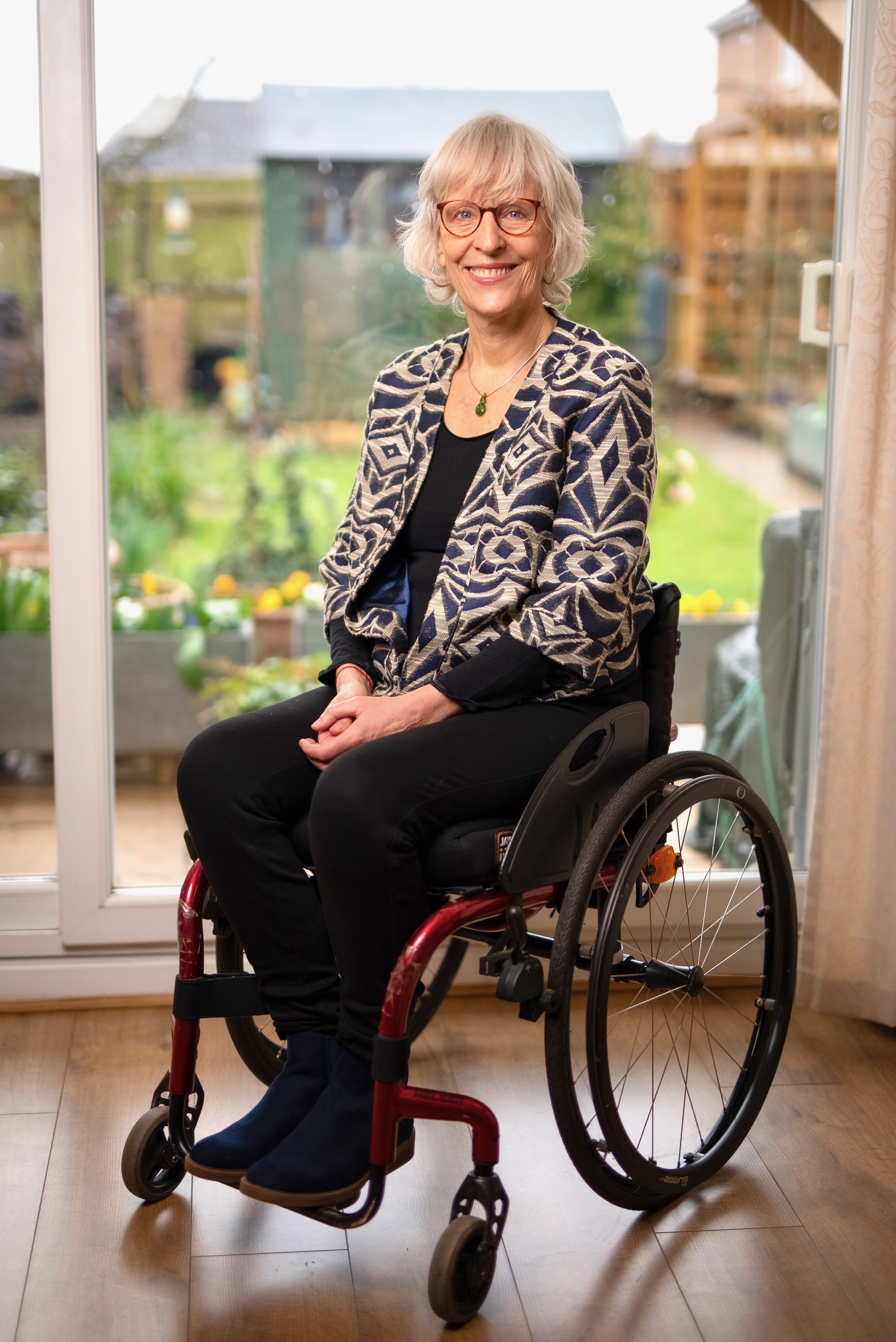
    Sue Hutton

    Social Worker, Mindfulness Teacher, Disability Rights Advocate

    Sue Hutton has been working with neurodevelopmentally disabled adults, as well as their families and caregivers, since her 20s—and practicing mindfulness for even longer. These communities offer a beautiful place to practice, she says. “I love celebrating our differences and getting to know people’s individual ways of being and helping celebrate who they are.”

    Compassion has always motivated her. As a child, her mother’s suicide attempts awakened her desire to help ease suffering. “My experiences of being an outsider or alienated rested within me and really strengthened my interest in validating other people and never wanting anyone to feel like an outsider.” At the Azrieli Adult Neurodevelopmental Centre in Toronto, Hutton works alongside paid autistic advisers to develop and adapt mindfulness curriculums for neurodivergent communities and caregivers. 

    Earlier in her career, Hutton specialized in providing disability rights education to disabled adults and their families. And because there is also neurodiversity in her own family, she says, “Weaving access to justice and accessibility rights into my mindfulness practice was a natural fit.” 

    “I love celebrating our differences and getting to know people’s individual ways of being and helping celebrate who they are.”

    Although conversations around disability and neurodiversity have become more common, including in the mindfulness sphere, meaningful change lags behind. She says she often witnesses tokenistic actions that result in even more exclusion, instead of a genuine commitment to the work of inclusion and accessibility rights. 

    Alongside systemic change, Hutton also believes in the power of self-compassion. She notes that with standardized meditation instruction, it is assumed that we all experience the practice in more or less the same way, so self-compassion is particularly important for neurodivergent meditators. 

    “Every single person who sits down to meditate is doing so through the fabric of their wiring and their brain structure,” she says. “For me, it is so important to know that each person is going to have their very unique and individualized way of experiencing mindfulness, and to honor and accept that, hey, we all do this differently.” – AT

    Find Your Strength

    Melli O’Brien

    Mindfulness Educator, Entrepreneur, Mental Health Coach

    As a teenager, Melli O’Brien went to her public school library and pulled every book she could find on mental health and happiness. 

    At the time, her days were defined by deep depression and an eating disorder fueled by a belief that she wasn’t enough. Meanwhile, the Iraq war raged on and she struggled to make sense of world leaders taking actions that harmed so many. She saw only two paths ahead: One would lead to taking her own life and the other would mean trying to heal, build inner strength, and maybe be part of the change she wanted to see in the world. 

    “If I believed all those voices and if I didn’t transform them, I don’t think I would have been able to help so many people,” she says today. “That’s a really good reason to unlock your own gifts, so that you can share them with the world and do your own little thing, no matter what it is, to make other people’s lives a bit better too.” 

    Her study of happiness led to two lessons that changed her life: that inner strength is a skill you can build, and that mindfulness is one way to cultivate it. 

    “That’s a really good reason to unlock your own gifts, so that you can share them with the world.”

    “Within a couple sessions of mindfulness training I had the experience of understanding I’m not my mind, I’m not my thoughts, I can get space… I got a taste of freedom,” she says. “I fell in love with the practice.” 

    O’Brien spent years nurturing her practice, which helped her heal and led her to become a mindfulness teacher. In 2015, she cofounded The Mindfulness Summit, which raised $500,000 for mental health charities around the world and led to her cofounding the popular app Mindfulness.com in 2020. 

    And then she burned out

    “The amount of adversity coming my way in one go really had me on my metaphorical knees,” she says. Around this time, the World Health Organization named a world mental health crisis, which she saw reflected not only in herself, but her clients. 

    “I had to get really still inside and really think about who I want to be now, how I want to serve now, how I want to live now,” she says. And the result was The Deep Resilience Method, and her forthcoming book by the same name. 

    “I think this book and this method are like a love letter to myself. It’s the answer to my own question of What do I need? And what I need is hopefully going to be what really serves other people when they want to show up in these crazy times we’re living in and be able to make positive change,” she says. 

    “One of the biggest obstacles that I’ve observed is people feeling like there’s no point, and it’s practices like recognizing your own strength that would help you get there.” – AWC

    Come Home to the Body

    S. Helen Ma

    Clinical Psychologist, Mindfulness Researcher, Teacher Trainer

    In 1998, S. Helen Ma traveled from Hong Kong to the US for mindfulness training with Jon Kabat-Zinn, founder of Mindfulness-Based Stress Reduction. She told him, “I know mindfulness helps, but I want to know how it helps.” 

    At that time, Ma had spent much of her career working in Hong Kong and Australia hospitals with people experiencing clinical depression. While she saw healing, she also saw relapse. Empathy and compassion fatigue threatened to take over—until a colleague introduced her to mindfulness. 

    “For psychology we would be very interested in people’s stories—what’s happened before now,” she says. But in mindfulness, “You don’t need to be concerned about the stories at all… Everything comes and everything goes. It’s so liberating.” 

    She learned she could say to herself, It’s just a thought that I’m not helping people, it’s just a thought that the suffering will go on forever. Instead, in this moment, what is happening?

    “Everything comes and everything goes. It’s so liberating.”

    Kabat-Zinn connected Ma with John Teasdale, a leading Oxford researcher, and together they conducted one of the first studies on mindfulness for clinical depression relapse. The study showed mindfulness is a viable intervention in clinical settings, revolutionizing the field. 

    Lately, though, she’s taken a step back from her career in researching and educating about mindfulness to be a full-time caregiver to her husband, who has dementia. 

    “I’m forever grateful for the practice,” she says. “There’s still attachment, there’s still aversion, there’s still joy, there’s still sorrow, and sometimes the narrative is so thick… But I can recognize, right now my heart is hurting. So can I allow my heart to open up, to fill with sorrow, to feel the grief? Let me see how long it will last and when it will fade. 

    “It’s very difficult now in this very fast-paced and electronic age, but if we can just allow for a moment of stillness and coming back to the body and sensing how the body is tensing up… There’s so much wisdom that starts with being mindful of the body,” she says. “It’s coming home, you know. If everyone in the world could come home, it would be a different world.” – AWC

    Create New Paths

    Nanea Reeves

    Founder and CEO of TRIPP

    Nanea Reeves learned to meditate, she says, before mindfulness “was even a thing.” Her mother struggled with mental illness and addiction, and 15-year-old Nanea (whose name is Hawaiian for peacefulness and serenity) found herself in hospital, experiencing a crisis. A hospital therapist taught her a breathing technique to connect to the present moment. 

    “I believe it was one of the greatest gifts I’ve ever been given,” she says. After her younger sister, Vicki, died from a drug overdose, Reeves deepened her commitment to helping others access the healing tools meditation can offer. 

    “It’s been a real practice for me to learn how to open up my heart more. And now, to be able to put it into work is an honor.”

    A vision began to take shape while she was working in the video game industry. Today her award-winning company, TRIPP, offers virtual reality- and AI-powered guided meditations. “There are many paths up the mountain,” Reeves says. “If we can give people the experience of having present-moment awareness through this method, can it help them translate that into the physical world as well?” 

    The TRIPP app’s AI guide, Kōkua—a Hawaiian word for support and selfless giving—generates guided meditations tailored to a meditator’s mood, and adjusts with their feedback. While not meant to replace human support, Reeves describes it as “that compassionate voice that you can connect to at two in the morning.” 

    “As a kid who had to deal with a lot of violence in the home, I tended to really close off my heart, because it had been hurt so much,” she says. “It’s been a real practice for me to learn how to open up my heart more. And now, to be able to put it into work is an honor.” – AT

    Hold It Lightly

    Vidyamala Burch

    Mindfulness Teacher, Writer, Founder of Breathworks

    After 50 years of living with chronic pain and 40 years of meditation, Vidyamala Burch says, “I laugh much, much more than I used to.” She smiles. “I love telling people that because it’s so surprising.” 

    “I think one of the fruits of long-term practice is an ability to hold life lightly. Take it seriously, because it is a very serious business, but hold it lightly.” 

    Burch is the founder of Breathworks, a charity based in the UK that teaches people living with chronic pain, illness, and stress how to live a fuller life with the help of mindfulness. Her approach comes from her own lived experience of pain. 

    As a child, she lived an active, outdoorsy life in New Zealand and dreamed of becoming a wildlife officer. But that all changed when her spine was fractured, once at the age of 16 and again at 23. 

    “You can’t really be mindful without being loving, and can’t really be loving without being mindful.”

    Lying alone in an intensive care unit after the second accident, faced with intolerable pain, she didn’t know how she would make it to morning. Then she realized that all she had to do was make it through one moment, then one more, and in this way she made it to dawn. 

    “As human beings, we’ve always got two options. One is to turn away from suffering, and the other is to acknowledge it and see if we can keep our hearts open,” she says. “I always say to people at Breathworks, ‘You’re heroes because you’re willing to look at your mind and you’re willing to be in your body.’” 

    At Breathworks, they teach people how to embody a middle way between denial and overwhelm, first with their own pain but also with global issues. “If we had billions of humans who were able to be with whatever’s happening with an open heart and not tipping into either denial or overwhelm, we might have a species that was quite well-equipped to deal with the challenges of our age.” 

    “Just keep practicing. This is what the world needs. This is what we need as individuals,” she says. “You can’t really be mindful without being loving, and can’t really be loving without being mindful.” – AWC

    Keep Your Heart Open

    Shalini Bahl

    Mindfulness Teacher, Researcher, Consultant, Author

    Shalini Bahl feels that trees were her first mindfulness teachers. Years ago, after getting divorced and then moving with her son from India to Amherst, Massachusetts—leaving behind family, friends, and culture—she would sit among the trees, “contemplating my life,” she says. “I’d have all these questions: Why me? What happened? Then I would get this sense or thought in my mind: Just breathe first, and you will get the answers.” 

    This reflective experience sparked her mindfulness journey, and she pursued training with luminaries including Jon Kabat-Zinn and Mirabai Bush. In her academic career, she began sharing the practice with her marketing students. Eventually she redirected her full-time work toward mindfulness, not only teaching, but offering organizational consulting as well as leading research on beneficial ways to be mindful in marketing and business. “What I’m really interested in is using these mindfulness skills for real-world change, to create a better world.” 

    If that sounds simple, it’s not. While serving as an Amherst town councilor, Bahl realized that the qualities she’d been honing in meditation—compassion, equanimity, curiosity—weren’t always translating to the way she was showing up. So she developed a framework for acting and living mindfully in everyday life, using eight habits rooted in foundational contemplative teachings. 

    “The important thing is that we keep our hearts open, and we continue to keep our eyes open and see each other along the way.”

    This framework forms the basis of her book Return to Mindfulness, published in January 2024. Its reminders, she says, “allow us to take a breath, to step back: Am I acting from a place of reaction, default bias, unconscious bias? Or is it from a place of spaciousness, ease, and clarity?” 

    She’s also noticed how cultivating openness and clarity can lead us to deeper compassion. One day, she was talking with an unhoused man on the sidewalk, and a passerby gave the man a bag with two croissants. Immediately, he offered one to Bahl. This act of selfless generosity moved her deeply. “I had judged him as someone who was there on the street, who needs my help.” They became friends, enriching her understanding of shared humanity. 

    At the time, she set an intention: “For now, I’m going to show up for him and stay open. Don’t close my heart. And when I can do more, my heart and my eyes will be open to seeing that opportunity.” Later, when she was elected to town council, that intention gave her the courage to speak up in support of shelters for unhoused people and others who needed help. 

    “I think that’s part of living compassionately, when we don’t know what we can do right away,” she says. “But the important thing is that we keep our hearts open, and we continue to keep our eyes open and see each other along the way.” – AT

    Tell a New Story

    Yuria Celidwen

    Scholar, Researcher, Teacher, Indigenous Nahua and Maya

    When Yuria Celidwen talks about contemplative practice, she’s describing something much more expansive than solely what’s going on in the mind. 

    “From the Mesoamerican tradition specifically, but generally in many Indigenous practices, it’s also about the emotional state, the heart that is involved with the body that informs the mind processes that end up revealing…that animating principle of life.” 

    As a child, she already possessed this rich awareness of complexity. From her parents, grandparents, and great-grandparents, she says, “I learned a lot about how to really be with the landscape, be part of the landscape of a larger community.” Then, starting in elementary school, she faced racist discrimination. Inhabiting these conflicting worlds led her to the study of identity, consciousness, and cultural narratives. 

    Today, a growing range of Indigenous perspectives is found within contemplative studies; when Celidwen entered the field 15 or 20 years ago, there was no such representation. “I was the one to push for Indigenous wisdoms to be part of this field, and to also look at them as sophisticated systems of transforming our sense of identity and cultural identity, examining those identities, and then creating social and environmental transformation for well-being,” she says. 

    “How do we learn to listen to the world? To the whole living, beautiful mother planet that we inhabit?”

    Mindfulness is often interpreted in the West as a set of tools to benefit primarily the individual self. In the Indigenous epistemologies that she researches and teaches about at the University of California, Berkeley, there’s a vision of “a responsible community, an ethical community,” where there is room for every being to be heard and valued as kin. “How do we learn to listen to the world? To the whole living, beautiful mother planet that we inhabit?” she asks. 

    These are glimpses into what Celidwen calls the Ethics of Belonging. It’s elucidated in her academic work, as well as explored in her new book, Flourishing Kin: Indigenous Wisdom for Collective Well-Being (published November 2024). 

    “We know that humans learn through stories,” she says. And old narratives that haven’t served us—“about uniqueness, personal achievement, material possessions, using nature as a resource”—can be composted, she says, “for the nourishment of a new story, but a new story that brings us together. 

    “To relate better, to listen better, to express better, to create better, to nourish our landscapes better—so we realize that yes, we are part of this system, and we can be part of the change.” – AT


    Source link

  • A 12-Minute Meditation for Awareness and Release of Self-Sabotage

    A 12-Minute Meditation for Awareness and Release of Self-Sabotage

    This week, Angela Stubbs gently guides us inward, helping us explore self-sabotaging patterns with compassion and kindness.

    Most of us know what it feels like to be our own toughest critic—caught in patterns of self-doubt or self-sabotage that keep us from fully embracing who we are. When these moments arise, we may feel tension or even resistance within ourselves.

    In this meditation, Angela Stubbs gently guides us inward, helping us explore these patterns with compassion and kindness. Through six stages, she invites us to bring awareness to these feelings, accepting ourselves without judgment and affirming our worth.

    Notice that the patterns and the thoughts and behaviors around self-sabotage are just ways that we’ve learned to cope with things in our lives, ways that we’ve learned to respond to stimuli in our lives.

    With each stage, we cultivate a sense of warmth and resilience, creating space to move beyond self-doubt and reconnect with our inner strength. This practice offers us a chance to release the hold of self-criticism, embracing a more gentle, patient approach toward ourselves.

    A Guided Meditation for Awareness and Release of Self-Sabotage

    1. Today, we’re going to see if we might meet ourselves with some tenderness around the ways in which self-sabotaging patterns and moments show up in our lives. We’re going to see how we might work with them. That’s going to look different for everybody. 
    2. First, find a comfortable posture or position, either seated or lying down. Gently close your eyes. Or if it feels better for you, lower your gaze and take a nice deep breath in. Feel your chest expand and the belly expand with the breath. Pause for a moment at the top of that breath and slowly release it, allowing your body to settle. Continue to breathe in through the nose, out through the mouth, and allow yourself to notice the sensations of the breath. Give yourself this moment to relax and be here without thinking you should be anywhere else or be doing anything else. 
    3. Now, bring your attention inward, noticing any sensations in your body. Feel the weight of your body, supported by the ground or chair, releasing any tension you may notice. That tension lives in different places for all of us, so notice where that is for you. See if you can find that center of gravity by rocking side to side gently, just to remind yourself that you’re sitting. And as you notice the sensations in the body and where you might be feeling tightness or tension, allow yourself to be here and fully connected to the experience of sitting and being. 
    4. Next, bring some gentle awareness to any patterns you might be aware of that you would consider to be self sabotage in your life. You don’t need to deeply dive into what that is for you. We’re not looking at ways to judge ourselves for the ways that we notice self-sabotage or patterns of behavior that don’t serve us to be a part of an ongoing narrative that we’re helping to make bigger and worse for ourselves. Rather, we’re taking inventory and just noticing: How might that show up for you? 
    5. Remember, it’s going to look different for everyone. We’re just trying to recognize. Does that look like people pleasing for you? Maybe it looks like putting people’s needs ahead of your own, or it might show up as not speaking up when you have something to say. Maybe you have a habit of holding back. Or just maybe it’s that harsh inner critic that never shuts up. We all have one. We’re just noticing those spaces in your life where those narratives might be more prevalent. 
    6. Now, let’s shift the way that we think about those stories. Notice that the patterns and the thoughts and behaviors around self-sabotage are just ways that we’ve learned to cope with things in our lives, ways that we’ve learned to respond to stimuli in our lives. All we’re doing is seeing if we can observe those patterns and those behaviors with some kindness. The goal here is not to beat ourselves up about the fact that these things exist, but rather embrace them with some kindness and a little tenderness.  
    7. Pay attention to how difficult it may or may not be for you to offer some compassion to those parts of yourself. One way that this gets a little easier is when we envision extending the warmth and the tenderness and the care that we would give to a friend or to someone that we care about.  
    8. Envision drawing in that compassion for yourself, placing a hand on your heart. Place your right hand on your heart and then put your left hand on top of it, and hold that space there in the heart for yourself. As you breathe in and out, let go of any self-criticism you might have around these patterns. 
    9. As you do this, just observe your thoughts: What are your thoughts around this topic? We like to attach a lot of meanings to the thoughts as they arise. The goal here today is just allowing them to be here, noticing that they’re here and not needing to do anything about it. You’re not justifying to yourself or to anyone else why it’s here or how you feel about it. So whether you’re thinking of something and you feel self-doubt, or frustration, or that fun inner critic decides to pay a visit—see if you can observe it without engaging it or pushing it away. 
    10. If it helps, give yourself an inner mantra, something that reminds you that you are worthy of kindness. You’re good enough as you are. Think of something that feels right for you to repeat in your own mind for the next minute. If self-sabotaging thoughts arise, greet them with compassion and remind yourselves of your wholeness, your capacity for change.  
    11. Take a final deep breath and fill yourself with compassion. Exhale slowly, releasing any remaining tension. When you feel ready, gently open your eyes and bring the sense of mindful self-compassion with you as you reenter your day.


    Source link

  • Compassion Is Key to Our Survival

    Compassion Is Key to Our Survival

    A fun fact about hummingbirds is that they are wary of loud noises. Barking dogs and loud music can scare the tiny creatures away because they don’t feel safe in noisy environments. People respond to unsafe environments like hummingbirds. We avoid situations that don’t feel safe, and when we find ourselves in one, we don’t stay long. But here’s where people differ from hummingbirds: safety issues can confuse us. Sometimes, we don’t recognize that the reason we’re uncomfortable is because we don’t feel safe, and other times we think we feel uncomfortable because we’re not safe, even though that’s not the reason.

    What do you need to be safe and take care of yourself ? The answer may not be as straightforward as it seems. Safety depends, at least in part, on whom you’re with, where you are, and how you feel. When I was in my twenties and thirties, living in New York City on my own, I regularly assessed whether riding the subway at a particular hour or in a certain neighborhood was safe. Later, living in Los Angeles with young children, I made a judgment call on whether their climbing on the high bars of a rickety jungle gym was safe. When they got older, I balanced their wish to be with friends against whether their driving a long distance at night was safe. As an empty nester, my focus shifted back to my husband Seth and me, and whether choices like getting a walk-up apartment rather than one in an elevator building made sense since our ability to climb stairs carrying luggage or groceries would change as we grew older. The answers to these questions hinged on physical safety and the odds of someone getting hurt.

    I don’t think about safety in such literal terms anymore. I now see safety as more nuanced and recognize the ways that my reactions spring from an evolutionary survival mechanism designed to keep me alive to pass my genes on to future generations, rather than critical thinking. We’re hardwired for survival. None of the ideas or takeaways I describe are scary. Still, some might carry you outside your comfort zone and trigger the survival mechanisms that run automatically when you’re in physical danger.

    When we feel safe, we’re in our comfort zones, where we perform well, set appropriate boundaries, rest, recharge, and reflect. It feels good when we’re in our comfort zones, but it’s not where we take risks or where much growth takes place. Development takes place when we’re on the far edge of our comfort zones, stretching existing skills and abilities. When a stretch is in reach, but we feel unsafe anyway, one of our innate survival mechanisms can switch into gear and shut us down. Then, a mechanism designed to protect us short-circuits our growth and gets in the way of reaching our goals. This tendency can be mitigated in several ways, but for now, I’ll mention one: kindness.

    As far back as Charles Darwin, scientists, philosophers, artists, and poets have drawn a straight line between our warmhearted urge to respond to suffering with kindness and the likelihood that we’ll survive, even thrive.

    As far back as Charles Darwin, scientists, philosophers, artists, and poets have drawn a straight line between our warmhearted urge to respond to suffering with kindness and the likelihood that we’ll survive, even thrive. To borrow from the preface of Dacher Keltner’s excellent book, Born to Be Good:[S]urvival of the kindest may be just as fitting a description of our origins as survival of the fittest.”

    Navigating Sorrow With Kindness

    I was introduced to the poem “Kindness” from Naomi Shihab Nye’s first poetry collection when I heard it recited by Jon Kabat-Zinn, the founder of Mindfulness-Based Stress Reduction (MBSR). Kabat-Zinn and his teaching partner Saki Santorelli (at the time, executive director of the Center for Mindfulness at the University of Massachusetts medical school) were international rock stars in the secular mindfulness world, and I was primed to listen. It was early morning, midway through a weeklong MBSR retreat/training in the late 1990s at the Mount Madonna retreat center in Northern California. Light streamed through the floor-to-ceiling windows in the meditation hall to backlight Kabat-Zinn, who was sitting cross-legged on a meditation cushion, up on a dais. The golden early morning light gave him and the entire session an otherworldly quality. He recited the poem from memory to a room full of meditators sitting around him in a semicircle, most of whom were also sitting cross-legged on cushions. One of the images in the poem stood out then and has remained with me since:

    You must wake up with sorrow.
    You must speak to it till your voice
    catches the thread of all sorrows
    and you see the size of the cloth.

    I’m struck by how often I’ve remembered this image of the enormity of sorrow in the world since I first heard it. The phrase has come back to me when someone I love has fallen ill or has died and when the loved ones of people close to me have struggled with illness or death. The size of the cloth hit me at an even greater level of magnitude as I watched news coverage of the Twin Towers coming down on 9/11 in New York City. The size of the cloth was almost unimaginable when I saw footage of the refrigerated trailers parked in front of hospitals in New York City functioning as temporary morgues during the early days of the pandemic. Maybe the theme of Shihab Nye’s poem that “it’s only kindness that makes sense anymore” resonated with me because it echoed rabbinic sage Hillel the Elder’s call to action: “If not now, when? If not me, who?”

    Discomfort is one way our bodies ask us to listen.

    Scientists have long suspected that kindness in response to other people’s pain is a survival mechanism that’s wired into our nervous systems. What’s often harder for people to remember is that kindness in response to our own sorrow is also a survival mechanism. For many of us, being kind to ourselves is more of a leap than being kind to others. It was for me. I thought kindness was the Golden Rule we teach young children—do unto others as you would have them do unto you. It didn’t occur to me to apply the Golden Rule to myself. I wanted to be a good mother, a good partner with Seth in providing for our family, and to make a difference in the world. I was one of the lucky ones and wanted to pay it forward. There was no room for me to take it easy. The harder I tried to do good and be good, the more of a toll it took on me. Still, it didn’t register that the pace at which I was working was unkind to my family and me. I had to burn myself out emotionally and physically a few times before I could internalize the commonsense truth that discomfort is one way our bodies ask us to listen. Just as it took me a while to develop a more nuanced stance toward safety, it took me time to adopt a more expansive idea of kindness that included being kind to myself.

    Exploring What Safety and Kindness Feel Like

    The following practices and activity-based takeaways are designed for you to integrate into daily life easily. Doing them shouldn’t be a heavy lift and tax you, but sometimes, mindfulness and meditation bring up big feelings that are painful to confront. Please be kind to yourself. Take a break if you feel overwhelmed or if discomfort becomes too much to manage easily. Time is your friend when it comes to inner discovery, and you have plenty of room to allow the process to unfold at its own pace.

    Practice: Reflect on What You Need to Feel Safe

    Identifying your safety needs and factoring them into your choices are a meaningful and effective way to be kind to yourself. Ask yourself, “What do I need to feel safe?” “Are my safety needs being met?” “How?” If they aren’t being met, “Why not?” Remember that whether you feel safe depends on various factors, including if you’re tired, hungry, or stressed. When safety and inclusion needs are unacknowledged and unmet, our nervous systems are ripe to become hijacked by one of our innate survival mechanisms.

    Reflecting on safety needs can seem like a waste of time. When you’re in your comfort zone, it’s easy to miss the point of looking at what it takes to feel safe. Here’s why you should do it anyway: If you identify your safety needs up front, while you’re in your comfort zone, you can better take care of yourself later when you are outside of it.

    1. Find a comfortable place where you won’t be interrupted. Close your eyes or softly gaze ahead or downward. 
    2. A few breaths later, listen for the loudest sound. When you are ready, listen for the quietest sound. Don’t chase a sound that’s hard to hear; relax and let it come to you. Let your mind be open and rest in the whole soundscape. 
    3. Ask yourself, “What does it take to feel safe and welcome in a new situation?” Hold the question in mind and listen to the answers that emerge. 
    4. When you’re ready, open your eyes if they are closed and jot down your insights. 
    5. Then, draw three concentric circles on a blank piece of paper. Prioritize your insights by writing the most important ones in the inner circle. Write those that are the least important in the outer circle. Write what’s left on your list in the circle in between. All your insights matter, but doublecheck to ensure the essential items are in the inner circle. 
    6. Review the diagram and consider ways to increase the odds that, in a new situation, you will feel safe and included.

    Takeaway: How might connecting with playfulness, attention, balance, and compassion help you feel safer and more welcome?

    Practice: Let Yourself Be Immersed in Self-Compassion

    Throughout our evolutionary history, humans have relied on kindness to survive. Strong social bonds, effective communication, and meaningful collaboration create a supportive external environment that allows us to thrive in diverse situations and overcome challenges. Similarly, we create a supportive internal environment when we are kind to ourselves, one where we become more emotionally resilient. Kindness is a self-reinforcing behavior. By being kind to ourselves, we can better support and care for those around us. By being kind to others, we build trust, strengthen relationships, and create a sense of social support and belonging that helps us cope with stress and navigate adversity.

    I first learned about the following self-compassion practice reading Zen priest Edward Espe Brown’s book No Recipe: Cooking as a Spiritual Practice where he writes: “[I]n the early ’80s, when Thich Nhat Hanh was giving a talk prior to departing from the San Francisco Zen Center where I was living, he said he had a goodbye present for us. We could, he said, open and use it anytime, and if we did not find it useful, we could simply set it aside. Then he proceeded to explain that, ‘As you inhale, let your heart fill with compassion, and as you exhale, pour the compassion over your head.’”

    1. Imagine you are in a sweltering but beautiful jungle, holding a coconut shell in one hand. Can you feel the rough shell against the palm of your hand? Picture a wooden barrel filled with cool rainwater on the ground next to you. Can you see your reflection in the sparkling water? 
    2. Imagine the rainwater is a nectar of compassion that soothes busy minds and big feelings. As you breathe in, imagine filling the coconut shell with compassionate rainwater. As you breathe out, imagine pouring the nectar of compassion over the crown of your head. 
    3. Let go of the images of the bucket and coconut shell to focus on sensation. Imagine what it would feel like for a nectar of compassion to wash over you and soothe your body from head to toe. 
    4. Starting at the crown of your head, feel the compassion rinse slowly over your face and head, then over your neck, shoulders, chest, upper arms, lower arms, and hands. 
    5. Move your attention to your torso and imagine feeling a nectar of compassion wash slowly over your torso, pelvis, upper legs, knees, lower legs, and feet. 
    6. When you’re ready, lightly rest your attention on your outbreath. If thoughts and emotions arise, don’t fight them. With no goal or purpose, allow your mind to be open and rest.

    Takeaway: Find at least one way to be kind to yourself today, then see if there’s a ripple effect.

    From Real-World Enlightenment: Discovering Ordinary Magic in Everyday Life by Susan Kaiser Greenland © 2024 by S. Greenland, Inc. Reprinted in arrangement with Shambhala Publications, Inc. Boulder, CO. www.shambhala.com


    Source link

  • Hooray for You! Nanalan’ Embraces the Power of Encouragement

    Hooray for You! Nanalan’ Embraces the Power of Encouragement

    Want to get inspired with simple acts of kindness? Rooted in the power of encouragement, things like celebrating small wins or recognizing others’ talents can help us uplift one another.

    In the Nanalan’ YouTube video “Hooray for You!” Mona and her Nana beautifully illustrate the power of encouragement both for ourselves and those around us. This episode, filled with joyful interactions and uplifting messages, serves as a perfect example of how mindful kindness can be seamlessly integrated into daily life to foster a supportive and nurturing environment.

    Actions like celebrating small victories, recognizing unique talents, or simply being present with a kind word play a vital role in building self-esteem and community. Let’s delve into these themes and explore how they resonate through the experiences of Mona, her Nana, and Russell.

    3 Ways to Encourage One Another with Kindness

    1. Celebrate Achievements

    In the video, Nana enthusiastically celebrates when Mona completes her artwork. This act of recognizing and celebrating achievements, no matter how small, is a powerful way to practice kindness. By focusing on the positive and acknowledging effort, we create an environment where individuals feel valued and motivated to continue pursuing their goals. Nana’s genuine excitement, and her decision to display Mona’s artwork on the fridge, underscore the importance of honoring accomplishments and reinforcing self-worth.

    Do you take the time to celebrate your achievements, no matter how minor they may seem? They could be as simple as finishing a task at work, or trying out a new recipe. Share your successes with loved ones and allow yourself to feel proud—and encourage others to share their achievements and celebrate together, fostering a supportive atmosphere.

    2. Practice Patience and Positive Feedback

    When Russell, the playful puppy, attempts his trick with the pork chop, Nana encourages him by affirming that practice makes perfect. This moment highlights that  patience and positive reinforcement are ways of being kind to others. By offering gentle encouragement, and acknowledging the effort rather than just the outcome, we help others build resilience and confidence. Russell’s perseverance, supported by Nana’s kind words, demonstrates the power of encouragement, nurturing patience, and providing positive feedback.

    When you offer kind words to those around you, it reinforces the idea that growth and improvement are valuable in their own right.

    Practice patience with yourself and others when learning new skills or facing challenges. Instead of focusing solely on the end result, recognize and celebrate the effort and progress made along the way. When you offer kind words to those around you, it reinforces the idea that growth and improvement are valuable in their own right.

    3. Create Joyful Shared Experiences

    Mr. Wooka’s puppet show provides a memorable shared experience for Mona, Nana, and Russell. Engaging in joyful activities together strengthens relationships and builds a sense of community where kindness can flourish. Shared laughter and enjoyment create happy memories and deepen connections. The puppet show’s fun and laughter highlight the importance of spending quality time together, fostering emotional bonds, and encouraging a supportive environment.

    Make time for joyful shared experiences with friends and family, whether it’s watching a funny movie, playing a game, or simply spending time together. These moments of shared happiness can deepen your connections and create lasting positive memories.

    3 Ways to Nurture a Culture of Encouragement

    In “Hooray for You!,” Mona and her Nana demonstrate the power of encouragement through various kind practices. By celebrating achievements, practicing patience, embracing individuality, creating joyful shared experiences, and welcoming self-expression, they create a nurturing environment where everyone feels valued and supported.

    Embrace these methods to foster a culture of encouragement in your own life:

    1. First, shift your mindset with affirmations. In today’s hectic world, finding moments of inner peace and self-worth can be challenging. Mindful affirmations, such as “I am capable,” “I am worthy,” or “I am enough,” offer a simple yet profound way to cultivate resilience, awareness, and compassion in your daily life. Whether you’re looking to reduce stress, enhance self-compassion, or achieve personal goals, incorporating affirmations into your routine can make a significant difference.
    2. Then, embrace the power of meditating in community. While meditation is often viewed as a solitary pursuit, meditating in community offers a transformative alternative. Beyond its traditional role as a personal practice, meditation has long been celebrated in communal settings across cultures and traditions. Today, exploring meditation with others not only enhances personal well-being but also fosters deeper connections and shared growth.
    3. Finally, discover the qualities of true friendship. Join philosopher Alain de Botton as he unveils six profound features that distinguish true friendships. Hint: Great friends don’t require you to be perfect in order to believe in you and cheer you on! Explore how these timeless qualities enrich our lives and support us through both joy and hardship.


    Source link