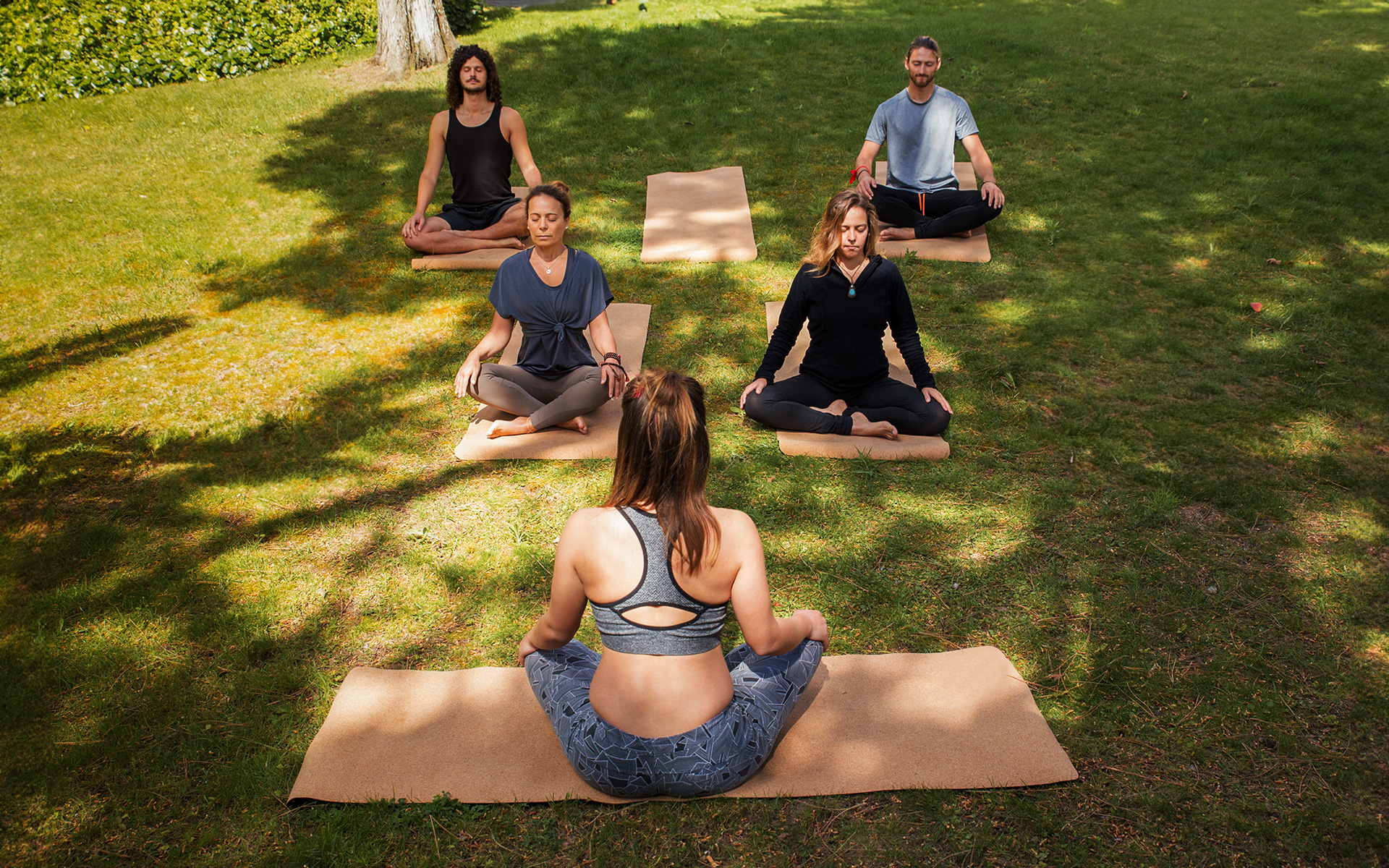
Tag: interconnectedness

  • An Interbeing Meditation for Connection and Understanding

    An Interbeing Meditation for Connection and Understanding

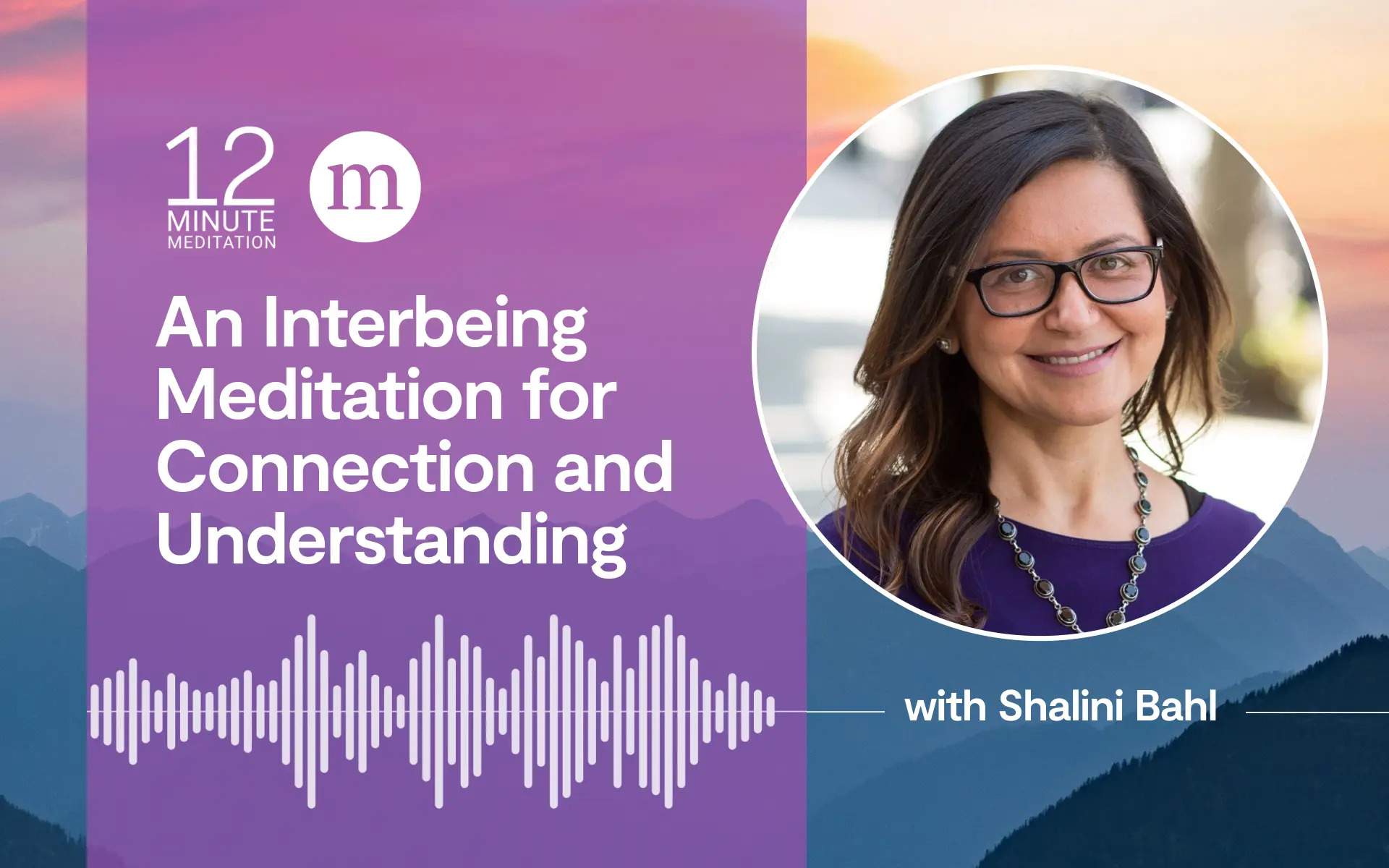
    In this guided interbeing meditation, Shalini Bahl explores our interdependence as a pathway to better understanding, compassion, and cooperation, especially when conflict feels overwhelming.

    Summary

    • Through the practice of interbeing meditation, we explore our inherent connection to the whole world.
    • Interbeing is one word for our basic interconnectedness and interdependence as living beings.
    • When we consider both our own needs and the needs of other people, we can be more understanding and kind, even during difficult interactions.

    If you’ve faced challenging or polarizing conversations lately, you likely know how difficult it can be to connect and cooperate with the person on the other side of that interaction.

    In today’s guided interbeing meditation, Dr. Shalini Bahl invites us to explore our innate interconnectedness by recognizing our needs and those of others, so that we can be empowered to work together in new and creative ways that benefit all involved.

    An Interbeing Meditation for Connection and Understanding

    Read and practice the guided meditation script below, pausing after each paragraph. Or listen to the audio practice.

    1. Welcome to Interbeing, a guided practice for connection and understanding. Zen master and peace activist Thich Nhat Hanh coined the word interbeing to describe a basic interconnectedness and interdependence as living beings. This practice invites us to explore this interconnectedness, especially when facing challenging conversations or polarizing situations. By recognizing our needs and those of others, we can foster greater understanding. This compassionate awareness can empower us to work together in new and creative ways that benefit all involved. 
    2. Let’s begin by coming to a comfortable sitting posture that allows you to be alert and relaxed. Gently close your eyes, or simply soften your gaze. Rest your awareness on the breath moving in and out of your body, naturally and effortlessly. Invite your mind to be here with your breath and body. Feel the spaciousness in your chest with each inhale and exhale. 
    3. Now picture a vast open sky filled with white fluffy clouds. See these clouds gathering to become larger and darker, heavy with life-giving rain. Feel the cool drops falling, sinking deep into the earth below. Sense the trees drinking deeply, their roots reaching deep down into the earth and the branches lifting towards the sky. 
    4. Think of these trees, well nourished by the rain water, by this earth, offering their fibers to be transformed into the very paper we use in our everyday lives. Just as this rain nourishes the earth and the earth nourishes the trees, so too are we nourished by this web of life around us. Each breath we take connects us to the trees, the rain, the earth, and all living beings. 
    5. Take a few moments to connect with this sense of awe and wonder in whatever way feels most authentic to you. Sense this interconnectedness with this web of life and all beings. 
    6. In this spirit of interbeing, bring to mind someone you are or will be interacting with—at home, work, or in your community—for whom you want to feel compassion. This could be someone you want to connect with more deeply as someone you’re having a conflict with. 
    7. Once you have the person and this interaction in mind, return to your present moment. Experience the breath moving in and out of your body. If your mind feels especially active today, place one hand on your chest and one hand on your belly as you feel the rising and falling of your body under the gentle touch of your hands. 
    8. Every time your mind wanders away, which it will, bring it back with kindness to your breath moving in and out of your body. Once your mind is stabilized, listen within to your needs in this interaction. Quietly ask yourself, What are my needs in this interaction? Stay here with kindness without forcing an answer. Listen then with patience. What would you like to get from this interaction? What are your needs? What are your intentions? What would you like to see happen? 
    9. Don’t go with the first response. Wait. Listen. Notice any kind of rushing judgments or fears. About what you may discover, making space for it all. Allow yourself to see, to feel whatever is your experience.  
    10. Feel free to pause this recording and journal or if you need a little more time. Once you feel ready, quietly ask yourself the following: What are the other person’s needs? Again, no need to search for answers. Just make room in your mind and your heart to listen within. 
    11. What is coming up for you as you make room for the other person’s perspectives? Their lived experiences? What might be going on for the other person, and what are their needs? If possible, see that person, the whole person beyond the situation. The ways in which they, too, care about the things that you care about. The ways that they, too, have suffered, just like you have in your life. 
    12. You’re not assuming you know everything. You’re just trusting yourself to know what you need to know. All we’re doing is making room, with the intention to see this other person. 
    13. When you find yourself overly distracted, or getting into a thinking mode, return to your breath. Your breath is an anchor to your natural place of connection with your body, yourself, and others. From this place of connection, open your mind to listen to the other person’s needs. 
    14. Again, if you like, you can pause this recording to do some journaling. Even the subtlest of shifts in your perspective can have a big impact on how you show up. 
    15. Based on your reflection today, how might you show up for yourself and the other person? Take some time to create an intention for showing up with understanding and kindness. And before you begin your interaction with that person, remember to return to your contemplation of interbeing, your intentions, and trusting your natural goodness. May this interbeing meditation help us navigate challenging interactions with grace, compassion, and wisdom. May our practice together benefit us and all beings. 


    Source link

  • Help Curb the Habit of Gossiping With A 10-Minute Practice

    Help Curb the Habit of Gossiping With A 10-Minute Practice

    Summary:

    • “Fake news” is now a common phrase, but we can understand gossip as frequently-fake news on a personal level.
    • If you want to challenge your habit of gossiping, it is helpful to cultivate awareness both of how you speak and of how you listen.
    • In this 10-minute audio meditation, you’ll practice shifting from an in-the-moment urge to gossip toward a state of appreciation and gratitude.

    We live in a political moment where we don’t just disagree about matters of policy—we disagree about reality. To some degree, this has always been the case.

    Writing in 1922, the American philosopher Walter Lippmann, described the modern human condition as one of living in “pseudo-environments”—mental worlds that define our values, beliefs, and opinions. As a result, he observed that citizens “live in the same world, but they think and feel in different ones.”

    More than 100 years later, we are experiencing this kind of polarization like never before. 24-hour cable news, Facebook, blogs, Twitter, and the fracturing of media have made it so that we can each filter our news, entertainment, and social interactions to reinforce our existing beliefs and shield ourselves from oppositional views—not to mention the fake news out there deliberately trying to separate us.

    This catchphrase has come to define the modern moment—“fake news.” Anything that doesn’t fit with our reality is now seen as unreal, make-believe, and at the same time, some of the news in our feeds is actually made up. These are crazy days.

    There is a serious conversation to be had around how to restructure the media and political institutions to mitigate this problem.

    Gossip is rarely based on fact, it’s more of an expression of the stories we make up in our heads about other people.

    In the meantime, we wanted to explore a different landscape of “fake news.” Sure, there are many people out there consciously spreading “fake news.” But it’s also interesting to look at how we might be doing it every day without really recognizing it.

    That’s right, we’re talking about gossip—our ordinary habit of talking about others behind their back. Gossip is rarely based on fact, it’s more of an expression of the stories we make up in our heads about other people.

    What is Gossip?

    The habit of gossiping can be defined in any number of ways. Webster’s defines it as “rumor or report of an intimate nature.” In the book The 15 Commitments of Conscious Leadership, the authors define gossip as: “any statement about another that the speaker would be unwilling to share in exactly the same way if that person were in the same room.”

    This definition points to the contextual nature of gossip. If I tell my co-worker Gena that “Dave’s feedback on my presentation today was incredibly disrespectful,” it may or may not be gossip. If I don’t share this feedback with Dave, then it’s a clear case of gossip. But if I do share it with Dave, with the same emotional tone, then it is not gossip.

    Why bring greater awareness to your gossip habit? After all, it’s often entertaining, even pleasurable, to talk about the faults of celebrities, political leaders, or that person in your social circle who drives you crazy.

    The first reason is that a habit of gossiping almost always arises from stories in our mind, which may or may not be true. So one reason to refrain from gossip is to do your part to curb the spread of “fake news.”

    Another reason is that gossip often involves a subtle breach of integrity. In the language of the philosopher Immanuel Kant, when we gossip about someone, we’re treating them as a “mere means” to our own sense of pleasure or superiority. If I tell a humiliating story about someone, I’m using their misfortune as a way to generate laughter, titillate my audience, or make myself feel like I’m better than them.

    And while it may be pleasurable in the moment, it almost always leaves a moral stain. For the speaker of gossip, there’s a subtle feeling of guilt that arises. For the people listening, there’s a sense of distrust that follows in the wake of gossip. “If he talks that way about others when they’re not in the room,” they are left thinking, “how does he talk about me when I’m not in the room?”

    Need proof? Conduct a quick experiment. In your next interaction with a friend or colleague, dish out some juicy negative tidbit about a mutual colleague or acquaintance. Then check in to see how you feel. If they respond in kind, notice how you feel about their trustworthiness and the strength of your relationship.

    2 Key Ways to Shift the Habit of Gossiping

    So how can we become more aware of our gossip habit? The key is mindfulness–training the skill of Notice-Shift-Rewire each time we’re tempted to gossip or each time others begin gossiping. This awareness takes two forms: awareness of speech and awareness of listening.

    1) Awareness of Speech

    The practice here is simple. Notice when you feel the urge to say something negative about another person – a friend, a co-worker, or even a political figure. And when you notice, pay attention to the physical sensations of gossip. We have found that the urge to gossip often corresponds to an energetic state–a subtle pattern of sensations in the body.

    In fact, the urge to gossip is, in many ways, similar to the urge to read about gossip in the form of celebrity tabloids or political chatter. In both cases, we’re drawn to the momentary burst of pleasure that arises from speaking or hearing gossip. And yet it’s a behavior that is always unsatisfying, leaving us with the desire for more.

    Noticing the urge to gossip opens the space to Shift your speech. This could be as simple as not saying anything at all or reframing your statement to something you would be willing to share with the other person, were they in the room.

    The Shift might also be to follow through on the urge to gossip but to do it with awareness – to gossip consciously. This sounds strange but you may find that it’s impossible and, at times, undesirable to get rid of all gossip. In conversations with your spouse or partner, for instance, saying things about others that you wouldn’t share with them in the room might play an essential role in building trust and intimacy with your partner. Talking through a difficult situation with another family member or a problem at work, for example, may require talking candidly about others in ways that you would not were this other person in the room. In these cases, the goal might not be to end gossip but to simply be more aware and mindful of it.

    The final move is to Rewire. Savor the experience of bringing greater awareness to this ordinary habit of gossip.

    2) Awareness of Listening

    Even if we refrain from gossip, we will undoubtedly encounter it in the speech of others. Whether it’s neighbors, co-workers, or family members, the habit of gossip is so common that it’s impossible to avoid. Awareness of listening is the practice of noticing gossip whenever it arises in conversations with others.

    Of course, this leads to an important question: when we notice the person we’re talking to gossiping, what are we to do? How are we to respond?

    The authors of The 15 Commitments of Conscious Leadership liken this situation to a game of ping-pong: “the speaker and the listener each hold a paddle. If a listener says he doesn’t want to listen and symbolically puts down his paddle, the game is over.”

    This is sound advice. And yet it requires discernment and skillful means to figure out how to put down your paddle without shaming the other person. It might involve injecting a positive comment into the conversation, changing the subject, or, at times, making the outright request to not gossip.

    A 10-Minute Practice on Gossip Awareness

    1. To begin, find a comfortable seat. Sitting, if possible, with a straight spine. Close your eyes and begin by relaxing. Feel how the chair supports the weight of your body. Feel your feet as they rest against the support of the floor. Notice how you’re supported by each inhale and exhale. Allow yourself to breathe. Allow yourself to be. Let your breath move in and out effortlessly and without any attempt to control it. The goal of this practice is to create more awareness around the effect of gossip.
    2. With that in mind, as you relax deeply, see if you can bring to mind a moment in the past. A moment when you heard something about a friend or a coworker, another parent at school, a neighbor. Or when you dished it out to someone else. I know it’s not the most glamorous thing, but we’ve all had those moments when we had that juicy piece of gossip. So, see if you can just travel back in time to a moment like that, you can go back to childhood if nothing is coming up from adulthood.
    3. Observe any feelings or sensations that arise as you go back to that moment in time when you offered that juicy tidbit of gossip. You might notice a mixture of emotions. Excitement. Shame. Fear. Curiosity.
    4. Now, let’s imagine we had the opportunity to go back in time and experience this very same moment. With a slight twist. This time, I want you to think of a statement of gratitude for this person. Rather than a juicy piece of gossip about them, think of what you would say. If you were forced to tell someone why you appreciate this person or why you’re grateful for them.
    5. Now, imagine saying a word of appreciation instead of a piece of gossip. I appreciate Hank for always being there on time and for the intensity he brings to each conversation. I appreciate my mother-in-law, for how passionate she is about bringing us all together.
    6. Notice again, with this statement of gratitude, what are the emotions that arise in your body? See if you can pay close attention to any differences between the impact of gossip and gratitude for you in your experience. See if you can keep this experience and remain aware of the difference in your emotional state between gossip and gratitude and mind? And see if you can bring this midst of everyday life.
    7. Notice moments when you hold that juicy piece of gossip and there’s a part of you that wants to tell someone and dish it out. In those moments, see what happens when you shift to appreciation or gratitude instead
    8. To close this practice on the habit of gossiping, take a few more breaths. Bring your attention back to each inhale and exhale sensation of breath. And then when you feel ready, slowly open up your eyes. Coming back into the room. And see what happens when you bring this spirit of gratitude with you. Throughout the rest of your day.

    The 24-Hour Gossip Challenge:

    To experience this first hand, see what happens when you bring greater awareness to gossip over the next 24 hours. Pay special attention to your speech and the speech of those around you. See if you can go an entire day without the habit of gossiping.

    You may find that it’s an almost impossible task to eliminate the habit of gossiping entirely. But that’s not really the goal of this experiment. The goal is to bring awareness to the urge to gossip – to notice where you are contributing to the spread of “fake news.” This simple sense of awareness may not lead you to stop gossiping altogether. But it will help you bring greater compassion, care, and awareness into even the most ordinary conversations.

    Share your experiences in the comments below.

    This article was originally published on Mindful.org in March 2018.


    Source link

  • 10 Powerful Women of the Mindfulness Movement: 2025

    10 Powerful Women of the Mindfulness Movement: 2025

    The women platformed here show us what’s possible when we honor ourselves and honor each other. In this fifth installment of our feature shining a light on powerful women—nominated by their peers—who are leading the mindfulness movement, a common thread ties each of their stories: the strength to live with open eyes and an open heart, even when it would be easier to shut down and tune out. They exemplify the courage to listen deeply, to be fully present with themselves and the world around them, to welcome the moment and work with it. They’ve each shaped unique practices that nourish their growth and calling. And in sharing their stories, they bolster us with inspiration so that each of us may, in our own way, do the same.

    Embrace What’s Broken

    Brenda K. Mitchell

    Pastor, Activist, Teacher

    All her adult life, Brenda K. Mitchell has rightly been known as a strong tower in her community: driven, politically active, rising up in her career. As a pastor, she cares deeply for others and gets things done. 

    When her 31-year-old son Kenneth was killed by gun violence in 2005, leaving behind two young sons with another on the way, Brenda tried to keep being that strong tower. She had grandsons to care for and people who needed her. 

    She didn’t understand then how trauma affects both mind and body. Grief took an immense toll, and her doctor told her she needed to stop everything. “As strong as I’ve always been,” she says, “I had to stop and embrace my brokenness so that I could finally start to heal.” 

    “As strong as I’ve always been, I had to stop and embrace my brokenness so that I could finally start to heal.”

    Pastor Mitchell took her doctor’s advice and rested. At a grief group, she was asked to try a mindfulness retreat with other survivors of gun violence. 

    At the retreat, she discovered the “power of the pause” and how to be fully with herself and others in the present moment. She saw there were still pieces of herself left unattended, even in the midst of good healing work. 

    The compassion of mindfulness allowed her to make herself the priority in her healing process, to fully own all grief’s scattered pieces. 

    She committed herself to practice and leadership in mindfulness spaces, especially to help other survivors of trauma and violence. 

    Today, she incorporates mindfulness into all she does—as a leader, pastor, activist, and facilitator. “I realized how important this is to me, to work in communities of color and in the faith community,” she says. “Yes, you have God. Yes, you have therapy. But there still might be a need for deeper healing. We have to utilize all our resources, because trauma is real.” – SM

    Center Love and Liberation

    Shelly Harrell

    Psychologist, Mindfulness Teacher, Founder of the Soulfulness Center

    Motown was the soundtrack of Shelly Harrell’s childhood in the ’60s in Detroit. Earth, Wind & Fire’s That’s the Way of the World and Stevie Wonder’s Songs in the Key of Life played on repeat. “In those songs, compassion is so central, care for humanity is so central,” she says.

    She credits music as her first ever mindfulness teacher, dance as her first form of meditation, “a place I could come home to.” When she was a teenager, her father passed away and “all I could think to do was dance,” she says. “I started to trust coming back to my body and coming into presence with my inner life.” 

    Today, Harrell’s personal and professional growth are guided in part by seeking wisdom about mental health and healing beyond Eurocentric frameworks. “Stillness and silence are beautiful, but those aren’t the only paths to mindful presence,” she says.

    “Stillness and silence are beautiful, but those aren’t the only paths to mindful presence.”

    In the early 2000s she recognized a gap between Black Americans and the mindfulness community, caused not only by mostly white representation in mindfulness spaces, but also by the undercurrent of detachment that lies beneath attempts to attain individual calm and happiness. “For collectivist, communal, interconnected-worldview cultures, a message of detachment just doesn’t call,” she says. So she founded The Soulfulness Center where the focus is “love and liberation…centering connection and reconnection to what has been lost, stolen, forgotten,” she says. 

    “Mindfulness is about return, return to breath, return to that anchor again and again.” Harrell often refers to an African proverb, associated with the West African Adinkra symbol called Sankofa, meaning “to return and get it.” 

    “There’s this temporal interconnectedness that we’re invited into with past, present, and future ancestors and living descendants, to connect with that continuity of where we come from, where we are, and where we’re going,” she says. “For me it’s this bigger worldview, the wisdom of a collective, that centers interconnectedness as an ethic. And when we start there, what does that mean for how we live?” – AWC

    Meet It With Love

    Caverly Morgan

    Founder of Peace in Schools, Teacher, Author

    Before Caverly Morgan found mindfulness, she had no idea that she had any negative self-talk at all. On her first retreat, she thought the people who were talking about this were a little loopy. “To me, it wasn’t negative self-talk. These were just facts about myself. So there was this voice that was always driving the car, and I didn’t even know it.” 

    Her mindfulness practice started as a way to learn how to be in a different kind of relationship to this voice. 

    Once we realize the presence of that Inner Critic, she says, we’re conditioned to make the logical leap that there’s something we have to fix. We have to overcome the voice, learn more practices, and build more skills so we can get better at being compassionate. Then our lives will feel happier and more complete. 

    When we approach compassion with that energy of self-improvement, though, we just turn it into something else that we can get good at or fail at. We stay stuck in the mental ruts of good enough/not good enough. 

    “When we approach compassion with that energy of self-improvement, we stay stuck in the mental ruts of good enough/not good enough.”

    Morgan offers gentle guidance for how to rewire these mental patterns. When the Inner Critic shows up, we don’t have to defeat it. We can greet it and meet it with a practice that’s steeped in unconditional reassurance. 

    Unconditional reassurances aren’t just saying the opposite of the Inner Critic by offering false positivity. They’re anchored in the truth, regardless of what’s happening or how we feel about it. So when we’re struggling with a sense of failure, the practice isn’t to say, You’re amazing and super-successful! It’s Whether you succeed or you don’t, I love you no matter what. 

    Our mindfulness practice, then, isn’t a tool we wield to change what we don’t like about ourselves. Rather, it’s like a life preserver we hold onto when we’re flailing, until we feel safe enough to simply float again in the vast ocean of love. Our practice helps us return to presence, and the more we return to presence, the more we sense the reality that compassion is already in and around us—that compassion is actually a natural byproduct of who we authentically are. We don’t have to make more of it for ourselves or other people; we just need to sit still long enough to allow it to naturally emerge. – SM

    Celebrate Who You Are

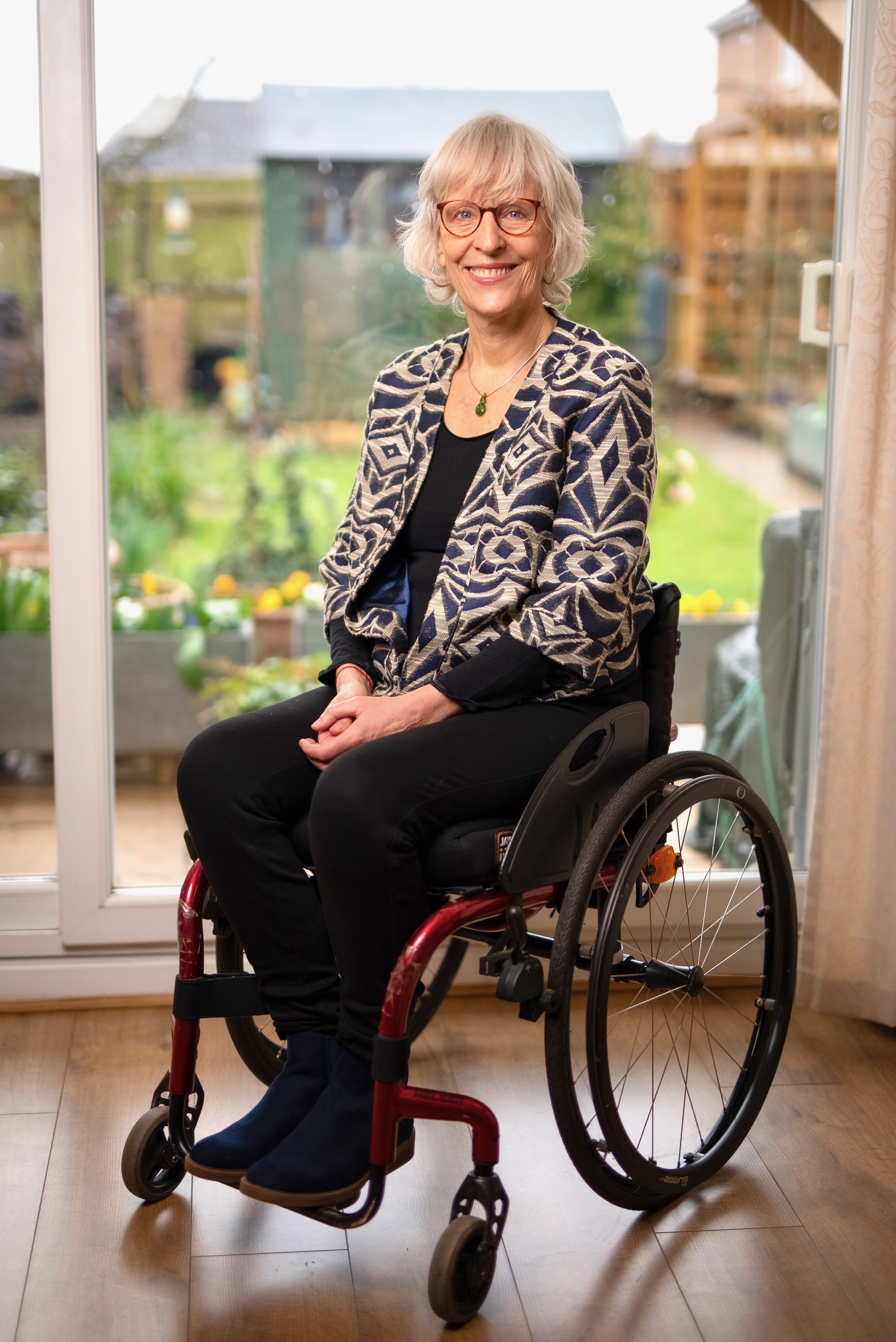
    Sue Hutton

    Social Worker, Mindfulness Teacher, Disability Rights Advocate

    Sue Hutton has been working with neurodevelopmentally disabled adults, as well as their families and caregivers, since her 20s—and practicing mindfulness for even longer. These communities offer a beautiful place to practice, she says. “I love celebrating our differences and getting to know people’s individual ways of being and helping celebrate who they are.”

    Compassion has always motivated her. As a child, her mother’s suicide attempts awakened her desire to help ease suffering. “My experiences of being an outsider or alienated rested within me and really strengthened my interest in validating other people and never wanting anyone to feel like an outsider.” At the Azrieli Adult Neurodevelopmental Centre in Toronto, Hutton works alongside paid autistic advisers to develop and adapt mindfulness curriculums for neurodivergent communities and caregivers. 

    Earlier in her career, Hutton specialized in providing disability rights education to disabled adults and their families. And because there is also neurodiversity in her own family, she says, “Weaving access to justice and accessibility rights into my mindfulness practice was a natural fit.” 

    “I love celebrating our differences and getting to know people’s individual ways of being and helping celebrate who they are.”

    Although conversations around disability and neurodiversity have become more common, including in the mindfulness sphere, meaningful change lags behind. She says she often witnesses tokenistic actions that result in even more exclusion, instead of a genuine commitment to the work of inclusion and accessibility rights. 

    Alongside systemic change, Hutton also believes in the power of self-compassion. She notes that with standardized meditation instruction, it is assumed that we all experience the practice in more or less the same way, so self-compassion is particularly important for neurodivergent meditators. 

    “Every single person who sits down to meditate is doing so through the fabric of their wiring and their brain structure,” she says. “For me, it is so important to know that each person is going to have their very unique and individualized way of experiencing mindfulness, and to honor and accept that, hey, we all do this differently.” – AT

    Find Your Strength

    Melli O’Brien

    Mindfulness Educator, Entrepreneur, Mental Health Coach

    As a teenager, Melli O’Brien went to her public school library and pulled every book she could find on mental health and happiness. 

    At the time, her days were defined by deep depression and an eating disorder fueled by a belief that she wasn’t enough. Meanwhile, the Iraq war raged on and she struggled to make sense of world leaders taking actions that harmed so many. She saw only two paths ahead: One would lead to taking her own life and the other would mean trying to heal, build inner strength, and maybe be part of the change she wanted to see in the world. 

    “If I believed all those voices and if I didn’t transform them, I don’t think I would have been able to help so many people,” she says today. “That’s a really good reason to unlock your own gifts, so that you can share them with the world and do your own little thing, no matter what it is, to make other people’s lives a bit better too.” 

    Her study of happiness led to two lessons that changed her life: that inner strength is a skill you can build, and that mindfulness is one way to cultivate it. 

    “That’s a really good reason to unlock your own gifts, so that you can share them with the world.”

    “Within a couple sessions of mindfulness training I had the experience of understanding I’m not my mind, I’m not my thoughts, I can get space… I got a taste of freedom,” she says. “I fell in love with the practice.” 

    O’Brien spent years nurturing her practice, which helped her heal and led her to become a mindfulness teacher. In 2015, she cofounded The Mindfulness Summit, which raised $500,000 for mental health charities around the world and led to her cofounding the popular app Mindfulness.com in 2020. 

    And then she burned out

    “The amount of adversity coming my way in one go really had me on my metaphorical knees,” she says. Around this time, the World Health Organization named a world mental health crisis, which she saw reflected not only in herself, but her clients. 

    “I had to get really still inside and really think about who I want to be now, how I want to serve now, how I want to live now,” she says. And the result was The Deep Resilience Method, and her forthcoming book by the same name. 

    “I think this book and this method are like a love letter to myself. It’s the answer to my own question of What do I need? And what I need is hopefully going to be what really serves other people when they want to show up in these crazy times we’re living in and be able to make positive change,” she says. 

    “One of the biggest obstacles that I’ve observed is people feeling like there’s no point, and it’s practices like recognizing your own strength that would help you get there.” – AWC

    Come Home to the Body

    S. Helen Ma

    Clinical Psychologist, Mindfulness Researcher, Teacher Trainer

    In 1998, S. Helen Ma traveled from Hong Kong to the US for mindfulness training with Jon Kabat-Zinn, founder of Mindfulness-Based Stress Reduction. She told him, “I know mindfulness helps, but I want to know how it helps.” 

    At that time, Ma had spent much of her career working in Hong Kong and Australia hospitals with people experiencing clinical depression. While she saw healing, she also saw relapse. Empathy and compassion fatigue threatened to take over—until a colleague introduced her to mindfulness. 

    “For psychology we would be very interested in people’s stories—what’s happened before now,” she says. But in mindfulness, “You don’t need to be concerned about the stories at all… Everything comes and everything goes. It’s so liberating.” 

    She learned she could say to herself, It’s just a thought that I’m not helping people, it’s just a thought that the suffering will go on forever. Instead, in this moment, what is happening?

    “Everything comes and everything goes. It’s so liberating.”

    Kabat-Zinn connected Ma with John Teasdale, a leading Oxford researcher, and together they conducted one of the first studies on mindfulness for clinical depression relapse. The study showed mindfulness is a viable intervention in clinical settings, revolutionizing the field. 

    Lately, though, she’s taken a step back from her career in researching and educating about mindfulness to be a full-time caregiver to her husband, who has dementia. 

    “I’m forever grateful for the practice,” she says. “There’s still attachment, there’s still aversion, there’s still joy, there’s still sorrow, and sometimes the narrative is so thick… But I can recognize, right now my heart is hurting. So can I allow my heart to open up, to fill with sorrow, to feel the grief? Let me see how long it will last and when it will fade. 

    “It’s very difficult now in this very fast-paced and electronic age, but if we can just allow for a moment of stillness and coming back to the body and sensing how the body is tensing up… There’s so much wisdom that starts with being mindful of the body,” she says. “It’s coming home, you know. If everyone in the world could come home, it would be a different world.” – AWC

    Create New Paths

    Nanea Reeves

    Founder and CEO of TRIPP

    Nanea Reeves learned to meditate, she says, before mindfulness “was even a thing.” Her mother struggled with mental illness and addiction, and 15-year-old Nanea (whose name is Hawaiian for peacefulness and serenity) found herself in hospital, experiencing a crisis. A hospital therapist taught her a breathing technique to connect to the present moment. 

    “I believe it was one of the greatest gifts I’ve ever been given,” she says. After her younger sister, Vicki, died from a drug overdose, Reeves deepened her commitment to helping others access the healing tools meditation can offer. 

    “It’s been a real practice for me to learn how to open up my heart more. And now, to be able to put it into work is an honor.”

    A vision began to take shape while she was working in the video game industry. Today her award-winning company, TRIPP, offers virtual reality- and AI-powered guided meditations. “There are many paths up the mountain,” Reeves says. “If we can give people the experience of having present-moment awareness through this method, can it help them translate that into the physical world as well?” 

    The TRIPP app’s AI guide, Kōkua—a Hawaiian word for support and selfless giving—generates guided meditations tailored to a meditator’s mood, and adjusts with their feedback. While not meant to replace human support, Reeves describes it as “that compassionate voice that you can connect to at two in the morning.” 

    “As a kid who had to deal with a lot of violence in the home, I tended to really close off my heart, because it had been hurt so much,” she says. “It’s been a real practice for me to learn how to open up my heart more. And now, to be able to put it into work is an honor.” – AT

    Hold It Lightly

    Vidyamala Burch

    Mindfulness Teacher, Writer, Founder of Breathworks

    After 50 years of living with chronic pain and 40 years of meditation, Vidyamala Burch says, “I laugh much, much more than I used to.” She smiles. “I love telling people that because it’s so surprising.” 

    “I think one of the fruits of long-term practice is an ability to hold life lightly. Take it seriously, because it is a very serious business, but hold it lightly.” 

    Burch is the founder of Breathworks, a charity based in the UK that teaches people living with chronic pain, illness, and stress how to live a fuller life with the help of mindfulness. Her approach comes from her own lived experience of pain. 

    As a child, she lived an active, outdoorsy life in New Zealand and dreamed of becoming a wildlife officer. But that all changed when her spine was fractured, once at the age of 16 and again at 23. 

    “You can’t really be mindful without being loving, and can’t really be loving without being mindful.”

    Lying alone in an intensive care unit after the second accident, faced with intolerable pain, she didn’t know how she would make it to morning. Then she realized that all she had to do was make it through one moment, then one more, and in this way she made it to dawn. 

    “As human beings, we’ve always got two options. One is to turn away from suffering, and the other is to acknowledge it and see if we can keep our hearts open,” she says. “I always say to people at Breathworks, ‘You’re heroes because you’re willing to look at your mind and you’re willing to be in your body.’” 

    At Breathworks, they teach people how to embody a middle way between denial and overwhelm, first with their own pain but also with global issues. “If we had billions of humans who were able to be with whatever’s happening with an open heart and not tipping into either denial or overwhelm, we might have a species that was quite well-equipped to deal with the challenges of our age.” 

    “Just keep practicing. This is what the world needs. This is what we need as individuals,” she says. “You can’t really be mindful without being loving, and can’t really be loving without being mindful.” – AWC

    Keep Your Heart Open

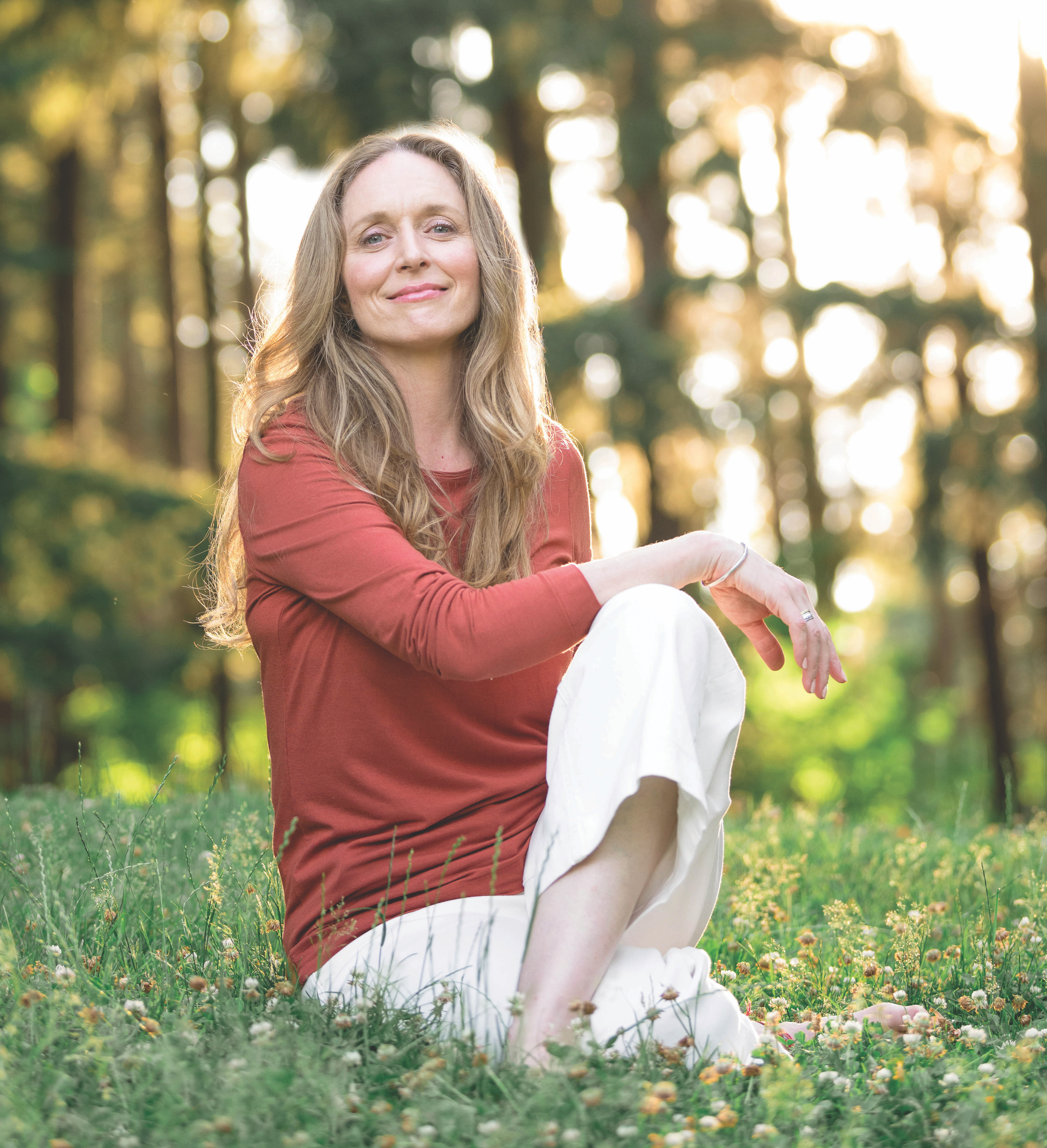
    Shalini Bahl

    Mindfulness Teacher, Researcher, Consultant, Author

    Shalini Bahl feels that trees were her first mindfulness teachers. Years ago, after getting divorced and then moving with her son from India to Amherst, Massachusetts—leaving behind family, friends, and culture—she would sit among the trees, “contemplating my life,” she says. “I’d have all these questions: Why me? What happened? Then I would get this sense or thought in my mind: Just breathe first, and you will get the answers.” 

    This reflective experience sparked her mindfulness journey, and she pursued training with luminaries including Jon Kabat-Zinn and Mirabai Bush. In her academic career, she began sharing the practice with her marketing students. Eventually she redirected her full-time work toward mindfulness, not only teaching, but offering organizational consulting as well as leading research on beneficial ways to be mindful in marketing and business. “What I’m really interested in is using these mindfulness skills for real-world change, to create a better world.” 

    If that sounds simple, it’s not. While serving as an Amherst town councilor, Bahl realized that the qualities she’d been honing in meditation—compassion, equanimity, curiosity—weren’t always translating to the way she was showing up. So she developed a framework for acting and living mindfully in everyday life, using eight habits rooted in foundational contemplative teachings. 

    “The important thing is that we keep our hearts open, and we continue to keep our eyes open and see each other along the way.”

    This framework forms the basis of her book Return to Mindfulness, published in January 2024. Its reminders, she says, “allow us to take a breath, to step back: Am I acting from a place of reaction, default bias, unconscious bias? Or is it from a place of spaciousness, ease, and clarity?” 

    She’s also noticed how cultivating openness and clarity can lead us to deeper compassion. One day, she was talking with an unhoused man on the sidewalk, and a passerby gave the man a bag with two croissants. Immediately, he offered one to Bahl. This act of selfless generosity moved her deeply. “I had judged him as someone who was there on the street, who needs my help.” They became friends, enriching her understanding of shared humanity. 

    At the time, she set an intention: “For now, I’m going to show up for him and stay open. Don’t close my heart. And when I can do more, my heart and my eyes will be open to seeing that opportunity.” Later, when she was elected to town council, that intention gave her the courage to speak up in support of shelters for unhoused people and others who needed help. 

    “I think that’s part of living compassionately, when we don’t know what we can do right away,” she says. “But the important thing is that we keep our hearts open, and we continue to keep our eyes open and see each other along the way.” – AT

    Tell a New Story

    Yuria Celidwen

    Scholar, Researcher, Teacher, Indigenous Nahua and Maya

    When Yuria Celidwen talks about contemplative practice, she’s describing something much more expansive than solely what’s going on in the mind. 

    “From the Mesoamerican tradition specifically, but generally in many Indigenous practices, it’s also about the emotional state, the heart that is involved with the body that informs the mind processes that end up revealing…that animating principle of life.” 

    As a child, she already possessed this rich awareness of complexity. From her parents, grandparents, and great-grandparents, she says, “I learned a lot about how to really be with the landscape, be part of the landscape of a larger community.” Then, starting in elementary school, she faced racist discrimination. Inhabiting these conflicting worlds led her to the study of identity, consciousness, and cultural narratives. 

    Today, a growing range of Indigenous perspectives is found within contemplative studies; when Celidwen entered the field 15 or 20 years ago, there was no such representation. “I was the one to push for Indigenous wisdoms to be part of this field, and to also look at them as sophisticated systems of transforming our sense of identity and cultural identity, examining those identities, and then creating social and environmental transformation for well-being,” she says. 

    “How do we learn to listen to the world? To the whole living, beautiful mother planet that we inhabit?”

    Mindfulness is often interpreted in the West as a set of tools to benefit primarily the individual self. In the Indigenous epistemologies that she researches and teaches about at the University of California, Berkeley, there’s a vision of “a responsible community, an ethical community,” where there is room for every being to be heard and valued as kin. “How do we learn to listen to the world? To the whole living, beautiful mother planet that we inhabit?” she asks. 

    These are glimpses into what Celidwen calls the Ethics of Belonging. It’s elucidated in her academic work, as well as explored in her new book, Flourishing Kin: Indigenous Wisdom for Collective Well-Being (published November 2024). 

    “We know that humans learn through stories,” she says. And old narratives that haven’t served us—“about uniqueness, personal achievement, material possessions, using nature as a resource”—can be composted, she says, “for the nourishment of a new story, but a new story that brings us together. 

    “To relate better, to listen better, to express better, to create better, to nourish our landscapes better—so we realize that yes, we are part of this system, and we can be part of the change.” – AT


    Source link

  • A 12-Minute Meditation for Honoring Our Connection to Ourselves and Others

    A 12-Minute Meditation for Honoring Our Connection to Ourselves and Others

    A guided meditation to begin making space for healing political polarization, racial strife, and social disconnect.

    This racial healing meditation emphasizes interconnection, honoring our connection to self in order to honor our connection to others. Acknowledging our interconnection, we can create space for healing political polarization, racial strife, and really any kind of disconnection in our lives.

    Dr. Martin Luther King Jr. said, “I can never be what I ought to be until you are what you ought to be.” This is the interrelated structure of reality. Let us just be with that for a moment. This is such an interconnected reliance.

    “I can never be what I ought to be until you are what you ought to be.”

    Dr. Martin Luther King Jr.

    Many people feel like the answer to a more equitable and inclusive society is to be kind and treat everyone the same. As you consider your own journey of racial healing and interconnection, hopefully you come to realize kindness and awareness are important, but not enough. There is inner work that is essential. 

    The journey of racial healing gently opens your eyes to the initial work, the work of self-transformation as key to becoming a culturally inclusive and connected person. In our time together today, we begin to take the first steps to embracing interconnection.

    A Guided Meditation for Interconnection

    1. I invite you to sit comfortably yet with reverent alertness, lengthening the spine if you choose. The body is not trying too hard. We’re just sitting like a majestic mountain. A formed presence, but not working hard at it. I invite you to gaze down or close your eyes.

    2. And now I like to give this signal to my body and mind. Now that I’ve settled in, I’m about to do this. What we’re about to open up to is more of ourselves in this moment, with full curiosity, non-judgment, and deep self-compassion. I do this by taking three deep breaths. Please take three deep breaths at a pace that feels good for you. And then just settle into breathing at a pace that feels good and supportive. Finding your own rhythm of your in-breaths and your out-breaths. Let us just be here for about one minute of silence, staying anchored and aware of our breath.

    3. Now, I invite you to imagine a world where every being is connected to love. And because of this connection, not a single being would ever hurt another. And let us recognize that this world begins with us. With our willingness to connect and see, recognize value, and honor our interconnection. Continue to imagine for a moment what it would be like to live in a world where everyone freely and equally shared a deep connection to one another. Let us begin to create this, starting with ourselves. Let us just take a moment to continue to anchor to our own breath and the imagining of a world where we are connected to everyone.

    4. And now I invite you to picture someone who is racially different than you. And we know that race is a socialized construct, yet it is also one that we are working to heal from. So imagine someone who was racially different than you. Whether you feel connected to this person or not, whether you know them personally or not. Just picture someone who is racially different than you. 

    5. And as you picture them, I invite you to repeat these words to yourself, silently or out loud, whichever feels comfortable to you. These phrases are inspired by fellow meditator Melanie Cerdan. We will have some moments of silence in between the phrases, to allow the feelings to settle into our consciousness and our bodies. And let’s just take a moment. Connecting with this person who we’re visualizing. We offer the phrases: “I am open to connect with you. And I am grateful for your openness to connect with me. May the love in me connect with the love in you. I am present and I honor your presence. I am light and I honor your light. I am a unique human being and I honor that you are a unique human being. I am grateful and I honor that you are grateful.”

    6. Thank this person for exchanging this connection with you. Notice how you’re feeling in this moment. What emotions are present? What does it feel like in your body to have connected in this way? Just noticing. Not marking any feelings, emotions, thoughts as right or wrong, just simply being in the open awareness of what is present for you in this moment. 

    7. As we close, let us anchor to a powerful quote by Dr. Harriet Lerner. “Only through our connectedness to others can we really know and enhance the self. And only through working on the self can we begin to enhance our connectedness to others.” May we see all others as being happy and connected. As we send this wish out into the world, may we appreciate it coming back to us. 

    8. I invite you to bring your attention back into your body. Back into your current location. Bringing our full awareness to being interconnected. May we move about being connected to others and every living being. Thank you for practicing with me today.


    Source link

  • 12 Quotes About Compassion By Mindfulness Teachers

    12 Quotes About Compassion By Mindfulness Teachers

    Earlier this year, the Mindful editorial team had the joy of interviewing 10 women leading the charge to make the world a more kind, connected place for our 2025 edition of the Powerful Women of the Mindfulness Movement feature article. With each conversation, we were inspired by these women’s stories, heartened by their dedication to true compassion, and puzzled over how we were going to fit so much wisdom into such short profiles. Spoiler alert: Despite our best efforts, a lot of great stuff ended up having to be cut. Here, we’re sharing some of their wise words that didn’t make it into the feature, but deserve to be shared. 

    To learn more about The Powerful Women of the Mindfulness Movement: 2025, check out the feature article here, and guided meditations by the women here

    12 Inspirational Quotes About Compassion

    1. “If the backbone of compassion stands that we want all beings to benefit from these practices, then that includes the vast array of wiring and diversity of people that we have in this world.” – Sue Hutton

    2. “As research shows, we feel empathy naturally for people who are in the in-group and for not the outgroup, so that’s where the practice of compassion comes in. We cannot just rely on our human instincts to feel compassion, because we live in a world where people have different identities, different worldviews, different cultures and habits. Especially right now with social media creating more divisiveness, actively cultivating compassion becomes really important.” – Shalini Bahl

    “Compassion is very clear-eyed. It’s not sentimental, it’s very clear-eyed and wise and objective.”

    Vidyamala Burch

    3. “Compassion is very clear-eyed. It’s not sentimental, it’s very clear-eyed and wise and objective.” – Vidyamala Burch

    4. “The goal of meditation is not focus. It’s not calm. Those are avenues. The goal is ultimately to get to present awareness, and then we become aware of how we treat others, the impact we’re having. We can make adjustments in real time where we can expand who we are, expand our compassion, expand our impact on the world.” – Nanea Reeves

    5. “The ethics of belonging pushes us to question those narratives that we have created, those cultural narratives, and then also our own idea of self, into then breaking that pattern of not seeing life in everything that is, or every being that is—and then approaching all of our experiential life and all phenomena as our kin.” – Yuria Celidwen

    “I think when we are really mindful, we can’t help but be compassionate.”

    S. Helen Mall

    6.“I think when we are really mindful, we can’t help but be compassionate.” – S. Helen Ma

    7. “The work of self-compassion is incredibly transformative work. But some people approach it from the perspective of, I’m going to get these practices and tools that will help me become a better person. There’s a tinge of self-improvement. In my experience, compassion is not something that we have to strive to get, that we either succeed or fail at. It is a byproduct of resting as ourselves.” – Caverly Morgan

    8. “Disconnection is reflected in dehumanization, in disengagement, and in domination—all these ways oppression and traumas pull us out of our connection to ourselves, to humanity…The idea of reconnection is the path.” – Shelly Harrell

    9. “If you’re going on a journey with someone, what kind of person do you want to go on a journey with? It’s really hard to enjoy the journey when there’s somebody in the seat beside you heckling you, putting you down, and telling you you’re not enough all the time. You’ll be a much nicer companion for your journey through life if you’re supportive and kind and respectful and encouraging.” – Melli O’Brien

    “How do we learn to listen to the world, to the whole living, beautiful mother planet that we inhabit?”

    Yuria Celidwen

    10. “Even when we may feel emotionally aroused or disinterested, we can still sit there to listen to others. And by others, I don’t only mean other human experiences, but rather the whole natural thing. How do we learn to listen to the world, to the whole living, beautiful mother planet that we inhabit?” – Yuria Celidwen

    11. “We can use all kinds of words and feel warm and fuzzy in ourselves—which is a start, to warm our own hearts through practice—but compassion and love have to have a connected quality where we also care about how it’s expressed, how it lands, and how it’s experienced. It’s that distinction between intention and impact. We can have the greatest intentions and the impact can still be harmful.” – Shelly Harrell

    12. “For me personally, not just mindfulness, but self-compassion equally has been an absolute super power in my life because I can’t do anything that I’m doing in this world, I can’t share my gifts with the world, if I’m hooked by a voice in my head that that’s just like Everything I do sucks.” – Melli O’Brien


    Source link

  • Relationship SOS: Mindful Practices to Rekindle Connection

    Relationship SOS: Mindful Practices to Rekindle Connection

    Relationships of all kinds are dynamic. There are ups and downs, seasons of flourishing, and seasons that feel frustrating and dry. Whether romantic, familial, or platonic, they all require care, attention, and intention to thrive.

    Our days are so filled with obligations, pressures, and distractions. It’s easy to slip into autopilot, where communication becomes transactional, and moments of connection feel few and far between.

    Before we know it, we’re just not connecting in the ways we need the most. Communication might feel tense or rushed. Resentment can build up. Where we long to feel trust and easy intimacy, we might feel distance.

    When connection feels thin, there’s usually a main culprit: We’ve forgotten how to be fully present with this person we care about so much. If we’re wrapped up in the past, holding on to frustrations or grievances, we’re more likely to miss moments of potential gratitude, closeness, and support. If we’re caught up in worry about the future, we’re more likely to miss the goodness that abounds in the here and now. 

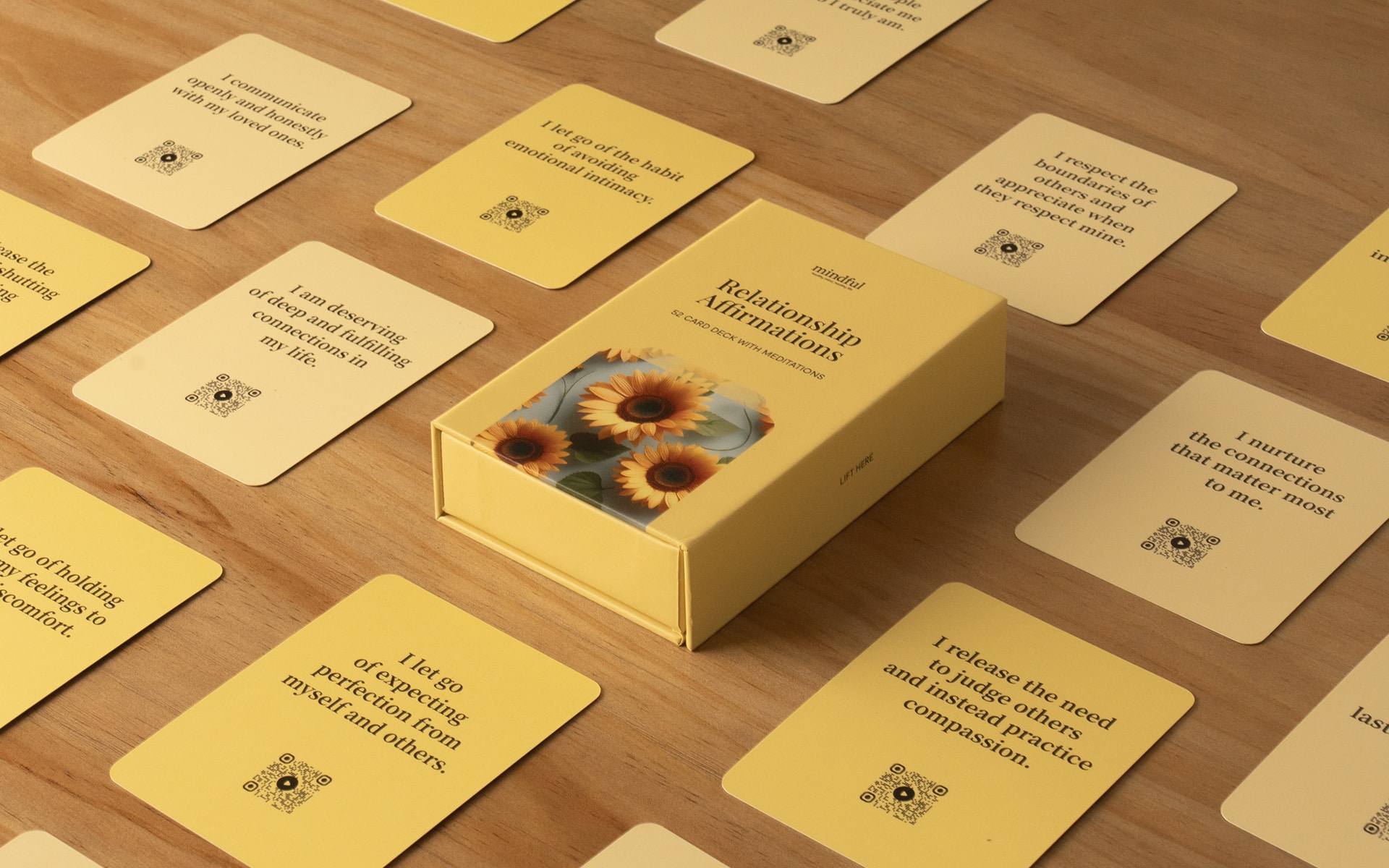
    The newly launched Relationship Affirmations Deck explores the many ways in which mindfulness offers a powerful antidote to this disconnect. By incorporating mindfulness into our relationships, we can cultivate deeper understanding, empathy, playfulness, and appreciation for those we hold dear.

    4 Simple, Mindful Practices to Nourish Relationships

    Whether you’re looking to reconnect after a period of distance, or you just want to build on what you already have, mindful relationship practices can help. Let’s look at four mindful ways to nourish connection in your relationships, helping them grow stronger and more fulfilling over time.

    1. Practice Active Listening

    Here’s a question to gently ask yourself: How often do I truly listen to others without planning a response, letting my thoughts wander, or interrupting? It’s more challenging than you might think.

    Active listening is a cornerstone of mindfulness in relationships, requiring full presence and an open heart. 

    What is active listening?

    Active listening involves giving your undivided attention to the speaker, genuinely seeking to understand their perspective. This means suspending judgment, refraining from offering solutions unless asked, and showing that you value their words.

    How to incorporate active listening into your relationship

    Here are three ways you can boost your active listening skills.

    • Don’t let distraction get the upper hand. Put away devices like phones or laptops. Face the person you’re speaking with, maintain eye contact, and let them know they have your attention.  
    • Use verbal and nonverbal cues. Nod, lean in, smile, or say things like, “I hear you,” or “Tell me more.” These small gestures show engagement and encouragement.  
    • Reflect and validate. When your conversation partner is done talking, it can help to summarize what they’ve said to confirm you understand. For example: “It sounds like you felt hurt when that happened. Is that right?” Remember, validation doesn’t mean agreeing; it simply acknowledges their feelings as real and understandable.

    By practicing active listening, you create a reliable space for your partner or loved one to share openly, which strengthens trust and intimacy. 

    2. Be Intentional About Gratitude and Appreciation

    In long-term relationships, it’s easy to take the other person for granted. Over time, we may focus more on what’s lacking or on minor annoyances than on the things we admire about our partner, family members, or close friends.

    Why gratitude matters in relationships

    Gratitude shifts attention to the positive aspects of your relationship, reminding you of the qualities and experiences you cherish. When expressed regularly, appreciation fosters feelings of being seen, valued, and loved. 

    At first it can feel awkward to be intentional about gratitude. Calling out specific examples might even feel a little silly. But this practice has been shown again and again to shift our perspective, to sharpen our awareness of all the goodness around us and all the ways we’re held up and supported. All of this makes us better friends, partners, parents, and co-workers, deepening the bonds we share.

    How to practice gratitude together

    If you want to boost your experience of gratitude and aren’t sure where to begin, here are three simple strategies that can get you started.

    • Start a daily gratitude practice. This does not have to be complicated or drawn out! Each day, share one thing you’re grateful for about your partner or your relationship. It could be something small, like how they made you coffee, or something significant, like their support during a tough time.  
    • Write thank-you or love notes. Leave a heartfelt note expressing appreciation for something specific they’ve done. Over time, these little gestures build a reservoir of positive feelings.  
    • Celebrate the small wins. Acknowledge and celebrate each other’s achievements, no matter how minor. Recognizing effort strengthens your bond and boosts mutual respect. 

    When gratitude becomes a habit, it acts as a glue that holds your relationship together through ups and downs. Over time, noticing what’s working becomes the default. When frustrations or disappointments occur—which they inevitably will in our imperfect human relationships—you’ll have this large bank of truthful, positive reminders to draw from. 

    3. Be Present for Shared Experiences

    Relationships thrive on shared experiences, but the depth of connection depends on how present you are in those moments. Whether it’s a dinner date, a weekend hike, or simply watching a movie together, mindfulness can transform routine activities into meaningful bonding opportunities. 

    What is shared presence and why does it matter?

    It’s easy to assume that spending time together automatically equals connection. But proximity isn’t the same as presence. You can sit next to someone for hours and still feel a million miles apart. What transforms time into connection is being fully there.

    “Being present” is a phrase you’ll see a lot in mindful spaces. While it can sound a little vague and New Agey, in reality, it’s a very practical approach to investing in our ordinary, everyday lives. 

    When we talk about being fully present, what we mean is that we’re marshaling our attention on purpose. That looks like putting our focus on the person we’re with, opening our ears and our hearts to them. It also involves being in our bodies—noticing sights, sounds, smells, and sensations—instead of always stuck in our heads and the stories we get hooked on.  We’re not getting caught up in something that happened earlier or something that’s going to happen later. When our attention drifts, which it will, we just gently bring it back. 

    When you’re fully present, even mundane moments become an opportunity for connection. Presence fosters intimacy, as it shows the person you’re with that they are worth your undivided attention. 

    Ideas for mindful shared experiences

    There are so many fun and creative ways to build shared experiences. Here are just a few ideas you can try:

    • Mindful meals. Shared meals used to be a cornerstone of cultural connection, and in some places, people are trying to bring them back to combat the epidemic of loneliness that has seeped into Western culture. A mindful meal is simply a meal without distractions. It doesn’t have to be fancy at all. The focus is on savoring the flavors, enjoying the ambiance, and engaging in conversation.  
    • Digital detox dates. Set aside time to disconnect from screens and connect with each other. Use this time to talk, play a game, or try something new together.  
    • Explore something new. Novelty and spontaneity strengthen bonds by creating new, positive associations. Take a dance class, cook a new recipe, or visit a place neither of you has been before.  
    • Practice mindfulness together. Meditate, do yoga, or simply sit quietly and breathe together. Shared mindfulness practices can deepen your emotional connection and align your energies.

    One additional benefit of intentional presence? We remember things more vividly. By being fully present during shared experiences, you create memories that are rich in connection and joy. 

    4. Practice Compassion and Forgiveness

    No relationship is immune to conflict or mistakes. In these moments, the way we respond determines whether we drift apart or grow closer. Practicing compassion and forgiveness is a mindful approach to navigating challenges while strengthening the bond between you. 

    Why compassion and forgiveness are so crucial to connection

    Compassion involves understanding and caring for your partner’s feelings, even when you disagree or feel hurt. It’s about recognizing their humanity and approaching difficulties with kindness rather than judgment.  

    Forgiveness is an emotionally-complicated and often-misunderstood concept. People sometimes fear that forgiveness is the same as saying what happened was okay, or that it means we “forget” or pretend it never happened. That isn’t the case with healthy forgiveness.

    Holding onto resentment creates barriers to intimacy. Forgiveness doesn’t mean condoning hurtful behavior, but rather letting go of the emotional weight it carries, so you can move forward together. 

    How to practice compassion and forgiveness

    Studies have shown that a regular mindfulness practice makes forgiveness easier, in part because it expands our compassion and makes seeing another perspective less difficult. Here are five habits that foster real, healthy compassion and forgiveness. 

    • Pause before reacting. When emotions flare, take a breath. That pause can be the difference between a response that builds connection and one that tears it down.
    • Include yourself. Often the person we are hardest on is ourselves. The more we practice taming our ferocious inner critic, the more likely we are to be able to extend that same grace to others. 
    • Seek understanding. Ask yourself: What might they be feeling or fearing? What’s beneath their words or actions?
    • Apologize and accept apologies. A sincere “I’m sorry” can be healing. So can saying, “I forgive you.” Neither one erases the hurt, but both open the door to repair.
    • Let go of what no longer serves you. Resentment is heavy. Releasing it—through mindfulness, journaling, or therapy—creates space for something lighter.

    Compassion and forgiveness aren’t always easy. Some might say that these can be the most challenging part of a mindfulness journey, but they are what allows relationships to grow through challenges rather than crumble beneath them.

    Building a Relationship That Feels Alive

    Mindfulness in relationships isn’t about perfection. It’s about presence—about showing up, over and over, in small but meaningful ways. When we listen deeply, express gratitude, share moments with presence, and choose compassion, we create a relationship that feels alive, tender, and worth tending to.

    And here’s the beautiful thing: every moment is a chance to begin again. So, whether you’re navigating a tough season or just looking to strengthen what’s already good, start small. Start today. The relationships that matter most are worth it.

    Put the Focus Back On Connection with Relationship Affirmations

    If you’re looking for a wonderful companion product that can support your journey to mindful, meaningful connection, you’ll love our new Relationship Affirmations card deck.

    • 52 beautifully designed, high-quality cards, each featuring a unique mindful phrase. 
    • A simple wooden holder to display each day’s card. A QR code on the back of each card that links to 25 bonus premium digital practices, like coaching and guided meditations.

    This deck provides a simple reminder that brings your attention back to gratitude, compassion, honest communication, and healthy interactions. Whether used alone or with a loved one, these cards can provide the gentle structure and support to help you grow your relationships with care and intention.


    Source link

  • The Benefits of Meditating With Others

    The Benefits of Meditating With Others

    This article is independently researched and written by the Mindful editors. However, we may earn revenue if you purchase via links included.


    In the midst of the global pandemic that disrupted our routines and heightened stress levels, many people turned to meditation as a source of comfort, healing, and much-needed self-care in scary and uncertain times.

    Millions of people discovered the benefits of mindfulness, like deeper relaxation, heightened self-awareness, better sleep, and a more grounded sense of well-being. Plus, meditation apps and online platforms made it easy to practice in the comfort of our own homes.

    Research confirms the value of a regular meditation practice, and much of that research is focused on solo practicing. However, there’s now also an emerging recognition of the benefits that come with meditating in community.

    If you’ve been curious about expanding your own practice to include intentionally being with others, here’s what you need to know about the history and benefits of meditation in community.

    Meditation, in various forms, has a rich and diverse history that spans cultures, centuries, and traditions. Historically, rather than just being a solitary activity, meditation was often practiced in communal settings, rooted in the belief that collective intention enhanced the experience and benefits of the practice.

    Rather than just being a solitary activity, meditation was often practiced in communal settings, rooted in the belief that collective intention enhanced the experience and benefits of the practice.

    Monasteries, ashrams, and other spiritual communities have been pivotal in fostering a shared meditative environment for millenia, but group meditation certainly hasn’t only been connected to religious settings.

    In the West, meditation has been a part of secular communities for decades, focusing on the mind-body benefits of a regular practice: stillness, self-observation, calming reactivity, and extending compassion to all beings. Programs like Jon Kabat-Zinn’s Mindfulness-Based Stress Reduction offer meditation instruction for clinicians, schools, offices, therapists, and other science-based healing modalities.

    In all of these diverse group settings, meditating in community has offered a space for people to share wisdom and support each other on their mindfulness journeys. And that tradition is still going strong.

    So why do people like group practice? Let’s look at what more and more people are seeking on their journeys, and how meditating in community can meet these needs.

    1. Enhanced Meaning

    If you’ve ever felt the amplified joy and connection of being in a like-hearted group—say, at an outdoor concert or a convention of dedicated enthusiasts—you’ve probably experienced that moment where it all seems like you’re tuned into the same beautiful channel. Meditating in a group can do exactly the same thing, creating a powerful and motivating atmosphere.

    2. Camaraderie and Connection

    Humans are inherently social beings, and meditation in community provides an opportunity for shared experiences. It fosters a sense of camaraderie, reducing feelings of isolation and promoting a supportive network. Especially after the years of the pandemic, people are hungry for a sense of meaningful social reconnection.

    3. Deeper Mindfulness

    Group meditation can deepen one’s mindfulness practice. The shared commitment to practice fosters a sense of accountability, encouraging regular meditation and creating a more profound and transformative experience.

    4. Diverse Perspectives

    In an era of unprecedented division and siloing, there is healthy, challenging work that can really only happen when we are intentionally present with people who are different from us. Meditating in community exposes individuals to diverse perspectives and approaches to meditation. This variety can enrich one’s practice by offering different insights, techniques, and philosophies.

    While there’s not much research available on meditation in group environments versus solitary practice, here are some of the benefits that people who have chosen to meditate in community report.

    1. Enhanced Focus

    The collective intention of a group can help participants achieve a deeper state of focus during meditation, reducing distractions and enhancing the overall quality of the practice.

    2. Stress Reduction

    Shared meditation experiences can contribute to a sense of calm and relaxation, especially in groups where there is a genuine sense of trust and care. Being around people we feel safe with alleviates stress and anxiety, promoting emotional well-being.

    3. Increased Motivation

    Sometimes going it alone is just plain harder. Group meditation provides a shared commitment, a space where everyone can feel cheered on, and a positive cycle of encouragement.

    4. Supportive Environment

    Meditating in community fosters a supportive environment where individuals can share their challenges, successes, and insights. This sense of community can be a valuable resource on one’s meditation journey.

    In the contemporary context, the choices for meditating in community have expanded, catering to a diverse range of preferences and beliefs. Importantly, these options are often designed to be inclusive and secular, making meditation accessible to people from various walks of life.

    Here are some to consider:

    1. Banyan

    Co-founded by globally-renowned teachers Tara Brach and Jack Kornfield, Banyan is an online platform that focuses on creating a digital meditation community where users can participate in live sessions, courses, discussions, and challenges. It strives to build a real sense of connection in the online space. Banyan honors both old and new, using proven practices from ancient wisdom traditions and adapting them to the modern world.

    2. Meetup Meditation Groups

    People can access the Meetup platform to connect individuals interested in local in-person or virtual meditation groups. This allows for a diverse range of community experiences. Many groups are secular and welcome participants with different backgrounds.

    3. Plumline

    For those who want to connect with people all across the globe and meditate in the Plum Village tradition, Plumline offers online group meditation options. Plumline also offers affinity groups, so meditators can connect with others sharing similar challenges or life experiences.

    4. Your Local Gym or Yoga Studio

    As demand grows, more fitness centers and yoga studios are featuring group meditation classes as part of their offerings. Call around and find out!

    5. Start Your Own Group

    As teacher Tara Brach notes, there’s nothing fancy or formal that is required to be in a meditation group. It’s possible to simply gather some friends together and create your own experience of meditating in community.

    As the world navigates the challenges of the pandemic and beyond, the practice of meditating in community offers a profound and accessible path to well-being. Whether online or in-person, the diverse options available cater to individuals seeking a sense of connection, shared focus, and personal growth.

    You can discover the transformative power of communal mindfulness with our 5-day online community event series, designed to fit seamlessly into your busy life. 

    Each day, you’ll experience a 20-minute guided meditation followed by a 10-minute Q&A session, led by our expert mindfulness teachers.

    We believe in making mindfulness accessible to everyone, so we’re offering this event on a ‘Pay What You Can’ basis. While we suggest a value of $75 or more to support the creation of these valuable resources, we welcome any contribution that feels right or possible for you.

    Event Details:

    • Dates: August 26th-30th, 2024
    • Time: 8am PDT / 11am EDT daily
    • Format: Live virtual event, 30 minutes each
    • Price: Pay what you can
    DATE TEACHER THEME
    26 Aug Chris Willard Belonging in Nature
    27 Aug Shamash Alidina Finding Peace Within
    28 Aug Caverly Morgan  Clear Inner Clutter
    29 Aug Sue Hutton Honoring Ourselves As We Are
    30 Aug Tovi Scruggs-Hussein Deepen Into BE-ing
    community connection meditation series


    Source link