Tag: Dietitian

  • Beyond Elimination Diets | Dietitian Connection

    Beyond Elimination Diets | Dietitian Connection


    Welcome to a special Gut Health Month episode of The Dietitian Connection Podcast. This March, we’re celebrating Gut Health Month 2026 by bringing dietitians together to deepen our knowledge, strengthen our confidence, and amplify our voice to create meaningful impact in practice and beyond.

    In this episode, we’re joined by leading gut health dietitian Nicole Dynan to explore how dietitians can build confidence in this rapidly growing space. Tune in for practical insights and inspiration to help you feel empowered in your gut health practice.

    Hosted by Kate Agnew

    Biography

    Nicole Dynan is the founder of The Gut Health Dietitian (established in 2014) and one of Australia’s leading gut health experts. After a decade in corporate chronic disease management, Nicole saw first-hand how gut health impacts energy, stress, mood, and overall well-being. Since then, and together with her team, she’s helped over 40,000 people improve their gut health, feel more comfortable, and regain control of their overall health through science-backed nutrition. 


    In this episode, we discuss:

    • How dietitians can build confidence and credibility in gut health through targeted upskilling and staying across emerging research and trends
    • The shift in gut health care from restriction to focusing on foundations
    • Why it’s important for dietitians to raise their voice, strengthen their influence and work together to lead evidence-based gut health conversations
    • The importance of recognising what stage of behaviour change a client is in and adapting your approach to meet them where they are


    The content, products and/or services referred to in this podcast are intended for Health Care Professionals only and are not, and are not intended to be, medical advice, which should be tailored to your individual circumstances. The content is for your information only, and we advise that you exercise your own judgement before deciding to use the information provided. Professional medical advice should be obtained before taking action. The reference to particular products and/or services in this episode does not constitute any form of endorsement. Please see  here  for terms and conditions.


    Source link
  • Elevating pancreatic cancer care | Dietitian Connection

    Elevating pancreatic cancer care | Dietitian Connection


    Exocrine pancreatic insufficiency (EPI) affects many patients with pancreatic cancer, yet it is often overlooked in this patient populations, which leads to malnutrition. In this episode, we are joined by Dr. Shelby Yaceczko, DCN, RDN, CNSC. Yacescko is a supporting author on a recently published White Paper on the topic, and she explains what EPI is, how to screen for and treat the condition, and the essential role of dietitians in an interdisciplinary care team managing these patients. 

    Hosted by Kristin Houts

    Biography

    Dr. Shelby Yaceczko, DCN, RDN-AP, CNSC is an expert registered dietitian nutritionist, a Doctor of Clinical Nutrition and has research interests in dietitian provider autonomy in advanced-level practice, gastrointestinal cancer, and complex gastrointestinal surgery conditions. She has developed numerous hospital-based nutrition programs and protocols aimed to improve nutrition care in the ICU and ambulatory care settings. Her expertise focuses on managing disorders of the pancreas, stomach, liver, gallbladder, bile ducts, esophagus, and small and large bowel. Yacescko holds leadership roles in national nutrition organizations involved in nutrition support and gastrointestinal diseases and is the founder of a digital health cancer wellness company.


    In this episode, we discuss:

    • How overlapping GI symptoms, lack of standardized screening tools, and limited guidelines contribute to missed EPI diagnoses and delayed treatment
    • What inspired the development of the White Paper
    • How to bring EPI management into everyday practice
    • The ready-to-use checklists, screening forms, and EHR templates within the White Paper designed to standardize treatment


    Additional resources:

    • A link to the white paper can be found here.
    • Canopy Cancer Collective’s resource page can be found here.
    • Learn more about diagnosis and management of EPI at EssentialsofEPI.com.


    Supported by 


    The content, products and/or services referred to in this podcast are intended for Health Care Professionals only and are not, and are not intended to be, medical advice, which should be tailored to your individual circumstances. The content is for your information only, and we advise that you exercise your own judgement before deciding to use the information provided. Professional medical advice should be obtained before taking action. The reference to particular products and/or services in this episode does not constitute any form of endorsement. Please see  here  for terms and conditions.


    Source link
  • Diverticular disease done differently | Dietitian Connection

    Diverticular disease done differently | Dietitian Connection


    Diverticular disease is common yet remains one of the most misunderstood areas of gastrointestinal nutrition.

    In this episode, Advanced APD Katherine Healy joins us to unpack the latest evidence and bring clarity to the management of diverticular disease. From acute flare-ups to prevention, Katherine shares how to move beyond outdated advice and deliver patient-centred, evidence-based care.

    Hosted by Bec Sparrowhawk

    Biography

    Katherine Healy is an Advanced Accredited Practising Dietitian with over 14 years’ experience across the full spectrum of gastrointestinal disorders. Beginning her career as a microbiological scientist, she blends her love of science and food to deliver evidence-based, patient-centred care. Her research with Monash University explored enzyme therapy in low FODMAP diets, and she now leads pioneering dietitian-led gastroenterology clinics at Northern Health, transforming how dietitians contribute to GI care.


    In this episode, we discuss:

    • The evolving understanding of diverticular disease and its causes
    • Evidence-based nutrition strategies from flare-up to recovery
    • How to debunk myths around historical nutrition advice
    • Practical communication tools to empower patients


    Additional resources

    Can connect with Katherine via email on [email protected]

    For further reading


    The content, products and/or services referred to in this podcast are intended for Health Care Professionals only and are not, and are not intended to be, medical advice, which should be tailored to your individual circumstances. The content is for your information only, and we advise that you exercise your own judgement before deciding to use the information provided. Professional medical advice should be obtained before taking action. The reference to particular products and/or services in this episode does not constitute any form of endorsement. Please see  here  for terms and conditions.


    Source link
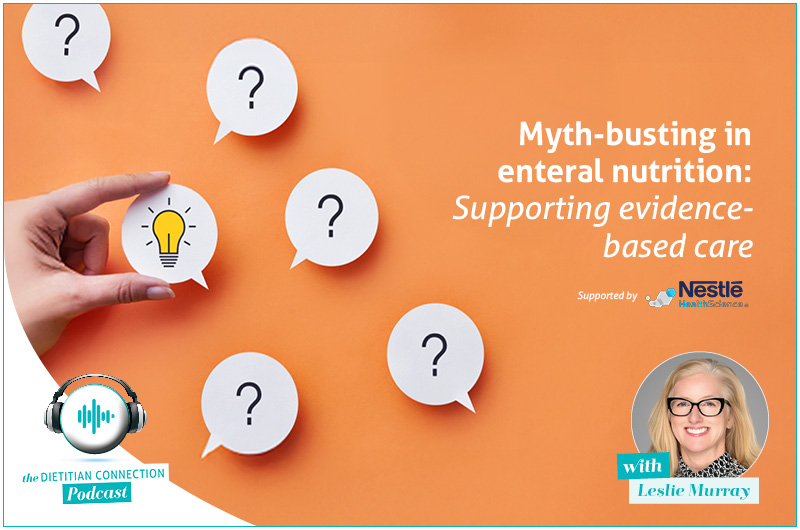
  • Myth-busting in enteral nutrition | Dietitian Connection

    Myth-busting in enteral nutrition | Dietitian Connection

    In this episode, we’re joined by registered dietitian and Certified Nutrition Support Clinician, Leslie Murray, to clear up some of the biggest misconceptions around tube feeding. Leslie shares evidence-based insights on early enteral nutrition, gastric residuals, and gastrointestinal (GI) intolerance in the tube-fed patient. We also dive into the role of peptide-based formulas and why improved tolerance means patients can benefit from staying on them long term.

    Hosted by Kristin Houts

    Biography

    Leslie Murray, RD, CNSC has 25 years of experience in acute and critical care nutrition. She currently practices in the Surgical Trauma ICU and serves on the Nutrition Support Team at Duke University Hospital in Durham, NC. Throughout her career at Duke, Leslie has been instrumental in advancing nutrition care practices, including the development of perioperative TPN protocols and, more recently, perioperative and periprocedure enteral nutrition protocols. She is passionate about improving medical nutrition therapy across the continuum of care. Leslie is also an experienced speaker, having presented on the topic of Critical Care Nutrition Support at both national and local conferences. She is dedicated to advancing the field by sharing evidence-based strategies and innovations with other clinicians and healthcare leaders.


    In this episode, we discuss:

    • The benefits of early enteral nutrition
    • Non-formula factors that may contribute to GI intolerance
    • When to consider a formula switch for your patient
    • What peptide-based formulas are and when to use them
    • Misconceptions around the costs and insurance coverage for specialized formulas


    Supported by 


    The content, products and/or services referred to in this podcast are intended for Health Care Professionals only and are not, and are not intended to be, medical advice, which should be tailored to your individual circumstances. The content is for your information only, and we advise that you exercise your own judgement before deciding to use the information provided. Professional medical advice should be obtained before taking action. The reference to particular products and/or services in this episode does not constitute any form of endorsement. Please see  here  for terms and conditions.

    Source link
  • PCOS | Dietitian Connection

    PCOS | Dietitian Connection


    PCOS is one of the most common hormonal conditions affecting women, yet it often goes undiagnosed or misunderstood. So, what does the evidence really say, and how can dietitians best support clients living with PCOS?

    In this episode of the Dietitian Connection Podcast, Dr Stephanie Pirotta – dietitian, researcher and founder of Womanly Nutrition and Dietetics – unpacks the latest research and shares practical strategies you can apply in clinic.

    Hosted by Brooke Delfino

    Biography

    Dr Stephanie Pirotta is an APD and adjunct research fellow at Monash University, Melbourne, Australia. Her work focuses on women’s health lifestyle management, with particular interest in PCOS, infertility and chronic pelvic pain. Alongside her research, Steph works clinically as the founder and lead dietitian at Womanly Nutrition and Dietetics where she translates the latest nutrition research into clinical practice for people with PCOS, chronic pelvic pain, infertility, pregnancy and postpartum, perimenopause and eating disorders. 


    In this episode, we discuss:

    • The challenges of diagnosing PCOS
    • Myths and misconceptions to address with clients
    • PCOS, fertility and reproductive outcomes
    • Dietary and lifestyle strategies that make a difference
    • The role of weight-inclusive care


    Additional resources

    • Connect with Stephanie at Womanly Nutrition and Dietetics or on Instagram @womanly_nd

    • Click here to catch up on our 2025 Women’s Health Symposium ‘From PCOS to peri – Women’s health across the life stages’

    • Click here to learn more about how to support Jean Hailes Women’s Health Week (1-5 Sept, 2025)

    • Click here to learn about Nutrition Therapy for Pregnancy by the Early Life Nutrition Alliance.


    The content, products and/or services referred to in this podcast are intended for Health Care Professionals only and are not, and are not intended to be, medical advice, which should be tailored to your individual circumstances. The content is for your information only, and we advise that you exercise your own judgement before deciding to use the information provided. Professional medical advice should be obtained before taking action. The reference to particular products and/or services in this episode does not constitute any form of endorsement. Please see  here  for terms and conditions.


    Source link
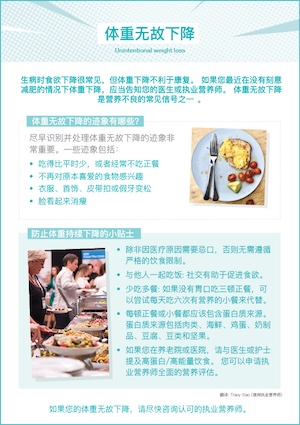
  • 体重无故下降 (Unintentional weight loss) | Dietitian Connection

    体重无故下降 (Unintentional weight loss) | Dietitian Connection

    What’s included:
    Simplified Chinese version of the patient resource ‘Unintentional weight loss’

    Translated by: Tracy Xiao (Australian APD)


    View the English version here

    The patient resources are not, and are not intended to be, medical advice, which should be tailored to your individual circumstances.  The patient resources are for your information only, and we advise that you exercise your own judgment before deciding to use the information provided. Professional medical advice should be obtained before taking action.  Please see here for terms and conditions.

    Please note that all of our resources must be used in full and are unable to be personalised or customised.


    Download resource

    Source link

  • Malnutrition Week 2025 | Dietitian Connection

    Malnutrition Week 2025 | Dietitian Connection

    Whether you’re in a hospital, aged care home or community setting, this guide has everything you need to get involved including ideas, inspiration, and practical tools to help raise awareness and drive change.

    Use it to bring Malnutrition Week to life in your organisation, no matter how big or small your plans.

    Source link

  • Emerging gut health research | Dietitian Connection

    Emerging gut health research | Dietitian Connection


    Gut health is a hot topic in nutrition, and new research is reshaping how we think about the role of everyday foods in supporting the microbiome. In this episode, Associate Professor Jessica Biesiekierski unpacks the latest preliminary science on eggs and gut health. You’ll hear about surprising research findings on everyday foods, like eggs, and walk away with practical ways to apply this knowledge in patient care.

    Hosted by Brooke Delfino

    Biography

    Associate Professor Jessica Biesiekierski is Head of Human Nutrition at the University of Melbourne and an NHMRC Emerging Leadership Fellow. Her research explores how diet shapes gastrointestinal function and gut-brain interactions, spanning nutrient-specific investigations through whole-diet interventions and, most recently, egg-consumption trials. A recipient of the 2024 Rome Foundation Research Award and the Nutrition Society of Australia Mid-Career Research Award, Jess leads a multidisciplinary team advancing clinical and mechanistic nutrition studies.

    In this episode, we discuss:

    • How food influences gut health and the microbiome
    • Key nutrients for digestive health
    • The emerging science behind eggs and gut health
    • Short-chain fatty acids and the gut barrier
    • Evidence-based tips for communicating effectively with patients


    Additional resources

    • Sign up here for research updates and resources from Australian Eggs, shared straight to your inbox every two months.

    • Click here to connect with Jess on LinkedIn


    Supported by


    The content, products and/or services referred to in this podcast are intended for Health Care Professionals only and are not, and are not intended to be, medical advice, which should be tailored to your individual circumstances. The content is for your information only, and we advise that you exercise your own judgement before deciding to use the information provided. Professional medical advice should be obtained before taking action. The reference to particular products and/or services in this episode does not constitute any form of endorsement. Please see  here  for terms and conditions.


    Source link
  • Ultra-processed foods | Dietitian Connection

    Ultra-processed foods | Dietitian Connection


    We’re continuing our deep dive into ultra-processed foods – this time through the lens of patient and client perspectives. What are people saying in consults? What questions are coming up? And how can dietitians guide informed, balanced conversations? In today’s episode, Clara Nosek, registered dietitian and creator of Your Dietitian BFF, shares some of the very real conversations she and fellow dietitians are having about ultra-processed foods and how to support informed decision making in today’s food landscape. 

    Hosted by Kristin Houts

    Biography

    Clara  Nosek is a Registered Dietitian Nutritionist and the creator behind Your Dietitian BFF. Clara works through the lens of non-diet, providing fun and educational messages that remain in alignment with her commitment to accessible wellness and nutrition. Meet Clara on socials @yourdietitianbff, where she excels in making sustainable nutrition relatable, engaging, and honest, serving up evidence-based advice with a pinch of cheekiness.

    In this episode, we discuss:

    • The concerns patients raise about ultra-processed foods and other trending nutrition topics
    • Where patients get nutrition information
    • How to address misinformation without judgement
    • The “stickiness” of making food choices
    • A team approach to educating the public on social media


    Additional resources

    • Click here to watch our Dietitian to Dietitian discussion on ultra-processed foods
    • Click here to visit Clara’s webpage
    • Connect with Clara on Instagram, tiktok, and substack at @yourdietitianbff


    The content, products and/or services referred to in this podcast are intended for Health Care Professionals only and are not, and are not intended to be, medical advice, which should be tailored to your individual circumstances. The content is for your information only, and we advise that you exercise your own judgement before deciding to use the information provided. Professional medical advice should be obtained before taking action. The reference to particular products and/or services in this episode does not constitute any form of endorsement. Please see  here  for terms and conditions.


    Source link
  • Let’s talk IBS | Dietitian Connection

    Let’s talk IBS | Dietitian Connection


    April is IBS Awareness Month – the perfect time to spotlight a condition that affects millions worldwide yet is often misunderstood. In this episode, gut health dietitian Chelsea McCallum joins us to unpack the complexities of IBS and share her empowering, food-positive approach to care.

    Hosted by Brooke Delfino

    Biography

    Chelsea McCallum is a digital dietitian with a special interest in gut health and the founder of the IBS Relief Program, a private coaching program to support people with IBS. Chelsea helps people with IBS take control of their symptoms without endless food restrictions. With a background in recipe development and a deep understanding of the science, Chelsea takes an empowering, practical approach to IBS care that’s all about what we can add to the diet, not just take away.

    In this episode, we discuss:

    • Why IBS is often missed or misunderstood
    • When (and when not) to use the low-FODMAP diet
    • How to guide clients through reintroduction with confidence
    • Strategies to reduce food fear and overwhelm
    • Tips to simplify IBS education in clinical consults


    Additional resources


    The content, products and/or services referred to in this podcast are intended for Health Care Professionals only and are not, and are not intended to be, medical advice, which should be tailored to your individual circumstances. The content is for your information only, and we advise that you exercise your own judgement before deciding to use the information provided. Professional medical advice should be obtained before taking action. The reference to particular products and/or services in this episode does not constitute any form of endorsement. Please see  here  for terms and conditions.


    Source link