Tag: Dietary

  • Dietary Supplement Sold at Sam’s Club Recalled as Salmonella Sickens 11 People

    Dietary Supplement Sold at Sam’s Club Recalled as Salmonella Sickens 11 People

    Sam’s Club is recalling all Member’s Mark “Super Greens” dietary supplement powders after a multistate salmonella outbreak sickened 11 people, federal health officials announced Friday.

    Three of those affected have been hospitalized, and the illnesses span seven states, including Florida, Kansas, Michigan, North Carolina, New York, South Carolina, and Virginia.

    The US Food and Drug Administration (FDA) and the Centers for Disease Control and Prevention (CDC) traced the outbreak to a single lot of organic moringa leaf powder imported from Vallon Farm Direct PVT LTD in Jodhpur, India.

    The moringa powder had been distributed to multiple suppliers across the country, ultimately reaching Sam’s Club stores nationwide and online.

    “The health and safety of our members is our top priority,” Sam’s Club said in a statement on November 3.

    “We moved quickly to remove this product from our impacted clubs as soon as we were notified by the supplier.”

    All Member’s Mark “Super Greens” powders are included in the recall, regardless of lot code or “best by” date, USA Today reported.

    Consumers in possession of the product are urged not to eat it and are advised to discard it or return it to the place of purchase for a full refund.


    FDA Probes Broader Moringa Recall

    Salmonella infections usually appear within 12 to 72 hours after consumption and can last four to seven days.

    Symptoms include diarrhea, fever, stomach cramps, and severe vomiting.

    According to the FDA, young children, older adults, and people with weakened immune systems are at the highest risk of severe illness.

    State health officials in Virginia and Michigan confirmed the presence of salmonella by testing samples collected from the homes of those who fell ill.

    The outbreak has been reported in cases dating from May to September. While most people recover without treatment, severe infections can require hospitalization, which happened in three of the 11 confirmed cases.

    According to AP News, Moringa, a plant native to India, is commonly used for its nutritional benefits, including protein, vitamins, minerals, and amino acids. Its dried leaves are often sold in powder form as a dietary supplement.

    The FDA cautioned that more products could be recalled as the investigation continues to determine if additional batches of moringa powder were contaminated.

    “Consumers should not eat the supplements and should throw them away or return them to the store for a refund,” the agency advised.

    Originally published on vcpost.com


    Source link

  • Dietary Diversity and Overeating 

    Dietary Diversity and Overeating 

    Big Food uses our hard-wired drive for dietary diversity against us.

    How did we evolve to solve the daunting task of selecting a diet that supplies all the essential nutrients? Dietary diversity. By eating a variety of foods, we increase our chances of hitting all the bases. If we only ate for pleasure, we might just stick with our favorite food to the exclusion of all others, but we have an innate tendency to switch things up.

    Researchers found that study participants ended up eating more calories when provided with three different yogurt flavors than just one, even if that one is the chosen favorite. So, variation can trump sensation. They don’t call it the spice of life for nothing.

    It appears to be something we’re born with. Studies on newly weaned infants dating back nearly a century show that babies naturally choose a variety of foods even over their preferred food. This tendency seems to be driven by a phenomenon known as sensory-specific satiety.

    Researchers found that, “within 2 minutes after eating the test meal, the pleasantness of the taste, smell, texture, and appearance of the eaten food decreased significantly more than for the uneaten foods.” Think about how the first bite of chocolate tastes better than the last bite. Our body tires of the same sensations and seeks out novelty by rekindling our appetite every time we’re presented with new foods. This helps explain the “dessert effect,” where we can be stuffed to the gills but gain a second wind when dessert arrives. What was adaptive for our ancient ancestors to maintain nutritional adequacy may be maladaptive in the age of obesity.

    When study participants ate a “varied four-course meal,” they consumed 60 percent more calories than those given the same food for each course. It’s not only that we get bored; our body has a different physiological reaction.

    As you can see below and at 2:13 in my video How Variation Can Trump Sensation and Lead to Overeating, researchers gave people a squirt of lemon juice, and their salivary glands responded with a squirt of saliva. But when they were given lemon juice ten times in a row, they salivated less and less each time. When they got the same amount of lime juice, though, their salivation jumped right back up. We’re hard-wired to respond differently to new foods. 
    Whether foods are on the same plate, are at the same meal, or are even eaten on subsequent days, the greater the variety, the more we tend to eat. When kids had the same mac and cheese dinner five days in a row, they ended up eating hundreds fewer calories by the fifth day, compared to kids who got a variety of different meals, as you can see below and at 2:35 in my video.

    Even just switching the shape of food can lead to overeating. When kids had a second bowl of mac and cheese, they ate significantly more when the noodles were changed from elbow macaroni to spirals. People allegedly eat up to 77 percent more M&Ms if they’re presented with ten different colors instead of seven, even though all the colors taste the same. “Thus, it is clear that the greater the differences between foods, the greater the enhancement of intake,” the greater the effect. Alternating between sweet and savory foods can have a particularly appetite-stimulating effect. Do you see how, in this way, adding a diet soda, for instance, to a fast-food meal can lead to overconsumption?

    The staggering array of modern food choices may be one of the factors conspiring to undermine our appetite control. There are now tens of thousands of different foods being sold.

    The so-called supermarket diet is one of the most successful ways to make rats fat. Researchers tried high-calorie food pellets, but the rats just ate less to compensate. So, they “therefore used a more extreme diet…[and] fed rats an assortment of palatable foods purchased at a nearby supermarket,” including such fare as cookies, candy, bacon, and cheese, and the animals ballooned. The human equivalent to maximize experimental weight gain has been dubbed the cafeteria diet.

    It’s kind of the opposite of the original food dispensing device I’ve talked about before. Instead of all-you-can-eat bland liquid, researchers offered free all-you-can-eat access to elaborate vending machines stocked with 40 trays with a dizzying array of foods, like pastries and French fries. Participants found it impossible to maintain energy balance, consistently consuming more than 120 percent of their calorie requirements.

    Our understanding of sensory-specific satiety can be used to help people gain weight, but how can we use it to our advantage? For example, would limiting the variety of unhealthy snacks help people lose weight? Two randomized controlled trials made the attempt and failed to show significantly more weight loss in the reduced variety diet, but they also failed to get people to make much of a dent in their diets. Just cutting down on one or two snack types seems insufficient to make much of a difference, as seen below and at 4:44 in my video. A more drastic change may be needed, which we’ll cover next.


    Source link

  • Dietary Components That May Cause Cancer to Metastasize 

    Dietary Components That May Cause Cancer to Metastasize 

    Palmitic acid, a saturated fat concentrated in meat and dairy, can boost the metastatic potential of cancer cells through the fat receptor CD36.

    The leading cause of death in cancer patients is metastasis formation. That’s how most people die of cancer—not from the primary tumor, but the cancer spreading through the body. “It is estimated that metastasis is responsible for ~90% of cancer deaths,” and little progress has been made in stopping the spread, despite our modern medical armamentarium. In fact, we can sometimes make matters worse. In an editorial entitled “Therapy-Induced Metastasis,” its authors “provide evidence that all the common therapies, including radiotherapy, chemotherapy, fine needle biopsies, surgical procedures and anaesthesia, have the potential to contribute to tumour progression.” You can imagine how cutting around a tumor and severing blood vessels might lead to the “migration of residual tumour cells,” but why chemotherapy? How might chemo exacerbate metastases? “Despite reducing the size of primary tumors, chemotherapy changes the tumor microenvironment”—its surrounding tissues—“resulting in an increased escape of cancer cells into the blood stream.” Sometimes, chemo, surgery, and radiation are entirely justified, but, again, other times, these treatments can make matters worse. If only we had a way to treat the cause of the cancer’s spreading.

    The development of antimetastatic therapies has been hampered by the fact that the cells that initiate metastasis remain unidentified. Then, a landmark study was published: “Targeting Metastasis-Initiating Cells Through the Fatty Acid Receptor CD36.” Researchers found a subpopulation of human cancer cells “unique in their ability to initiate metastasis”; they all express high levels of a fat receptor known as CD36, dubbed “the fat controller.” It turns out that palmitic acid or a high-fat diet specifically boosts the metastatic potential of these cancer cells. Where is palmitic acid found? Although it was originally discovered in palm oil, palmitic acid is most concentrated in meat and dairy. “Emerging evidence shows that palmitic acid (PA), a common fatty acid in the human diet, serves as a signaling molecule regulating the progression and development of many diseases at the molecular level.” It is the saturated fat that is recognized by CD36 receptors on cancer cells, and we know it is to blame, because if the CD36 receptor is blocked, so are metastases.

    The study was of a human cancer, but it was a human cancer implanted into mice. However, clinically (meaning in cancer patients themselves), the presence of these CD36-studded metastasis-initiating cells does indeed correlate with a poor prognosis. CD36 appears to drive the progression of brain tumors, for example. As seen in the survival curves shown below and at 3:21 in my video What Causes Cancer to Metastasize?, those with tumors with less CD36 expression lived significantly longer. It is the same with breast cancer mortality: “In this study, we correlated the mortality of breast cancer patients to tumor CD36 expression levels.” That isn’t a surprise, since “CD36 plays a critical role in proliferation, migration and…growth of…breast cancer cells.” If we inhibit CD36, we can inhibit “the migration and invasion of the breast cancer cells.” 

    Below and at 3:46 in my video, you can see breast cancer cell migration and invasion, before and after CD36 inhibition. (The top lines with circles are before CD36 inhibition, and the bottom lines with squares are after.)

    This isn’t only in “human melanoma- and breast cancer–derived tumours” either. Now we suspect that “CD36 expression drives ovarian cancer progression and metastasis,” too, since we can inhibit ovarian cancer cell invasion and migration, as well as block both lymph node and blood-borne metastasis, by blocking CD36. We also see the same kind of effect with prostate cancer; suppress the uptake of fat by prostate cancer cells and suppress the tumor. This was all studied with receptor-blocking drugs and antibodies in a laboratory setting, though. If these “metastasis-initiating cancer cells particularly rely on dietary lipids [fat] to promote metastasis,” the spread of cancer, why not just block the dietary fat in the first place?

    “Lipid metabolism fuels cancer’s spread.” Cancer cells love fat and cholesterol. The reason is that so much energy is stored in fat. “Hence, CD36+ metastatic cells might take advantage of this feature to obtain the high amount of energy that is likely to be required for them to anchor and survive at sites distant from the primary tumour”—to set up shop throughout the body.

    “The time when glucose [sugar] was considered as the major, if not only, fuel to support cancer cell proliferation is over.” There appears to be “a fatter way to metastasize.” No wonder high-fat diets (HFD) may “play a crucial role in increasing the risk of different cancer types, and a number of clinical studies have linked HFD with several advanced cancers.”

    If dietary fat may be “greasing the wheels of the cancer machine,” might there be “specific dietary regimens” we could use to starve cancers of dietary fat? You don’t know until you put it to the test, which we’ll look at next.


    Source link

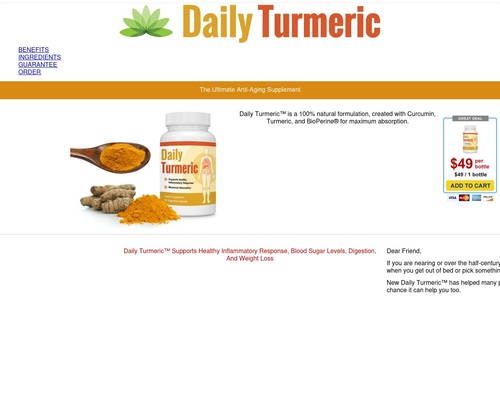
  • Daily Turmeric – Dietary Supplement | Supports Healthly Inflammatory Response

    Daily Turmeric – Dietary Supplement | Supports Healthly Inflammatory Response

    Product Name: Daily Turmeric – Dietary Supplement | Supports Healthly Inflammatory Response

    Click here to get Daily Turmeric – Dietary Supplement | Supports Healthly Inflammatory Response at discounted price while it’s still available…

    All orders are protected by SSL encryption – the highest industry standard for online security from trusted vendors.

    Daily Turmeric – Dietary Supplement | Supports Healthly Inflammatory Response is backed with a 60 Day No Questions Asked Money Back Guarantee. If within the first 60 days of receipt you are not satisfied with Wake Up Lean™, you can request a refund by sending an email to the address given inside the product and we will immediately refund your entire purchase price, with no questions asked.

    (more…)

  • Dietary Guidelines for Americans 2020 released – The Nutrition Source

    The 9th edition of the Dietary Guidelines for Americans 2020-2025 is out, with the tagline to Make Every Bite Count. Intended for policy makers, healthcare providers, nutrition educators, and Federal nutrition program operators, the new edition has expanded to almost 150 pages, providing nutrition guidelines for even more age groups throughout the life cycle. As in the previous edition, the Dietary Guidelines emphasize dietary patterns rather than promoting specific nutrients or foods. This allows for greater flexibility in food choices, as health benefits are achieved by consuming a wide variety of nutrient-dense foods across different food categories, rather than a few “superfoods.” In addition, the Dietary Guidelines again emphasize how nutrition educators need to be aware that food choices are strongly impacted by age, race, cultural traditions, environment, food access, budget, and personal beliefs and preferences. [1]

    Highlights from the Guidelines

    What’s new:

    • Recommended dietary patterns for infants and toddlers (birth to 23 months).
    • Food allergy prevention in infants; for example, the guidelines recommend introducing peanut-containing foods as early as 4-6 months in infants at high risk for peanut allergy, to lower the risk of developing a peanut allergy.
    • An expanded comprehensive section on healthy dietary patterns and food safety during pregnancy and lactation, and recommendations for breast feeding.
    • New sections on overweight and obesity in children and pregnant women.
    • Addressing health problems stemming from obesity-related stigma and discrimination.
    • More user-friendly graphics, such as how to modify meals to be higher in nutrients while controlling calories, sugar, and sodium; sample menus; and interpreting the Nutrition Facts label.

    The key players in the “Healthy U.S.-Style Dietary Pattern” remain unchanged from the previous edition of the Guidelines:

    • Vegetables of all types—dark green; red and orange; beans, peas, and lentils; starchy; and other vegetables
    • Fruits, especially whole fruit
    • Grains, at least half of which are whole grain
    • Dairy, including fat-free or low-fat milk, yogurt, and cheese, and/or lactose-free versions and fortified soy beverages and yogurt as alternatives
    • Protein foods, including lean meats, poultry, and eggs; seafood; beans, peas, and lentils; and nuts, seeds, and soy products
    • Oils, including vegetable oils and oils in food, such as seafood and nuts

    Dietary components to limit:

    The guidelines carry over the same limits for saturated fat, added sugars, and sodium, but this time include a specific age range:

    • For added sugars, the limit is 10% or less of total calories starting at age 2. For context, drinking even one 20-ounce bottle of soda would exceed this recommended 10% limit. A new advisory suggests that infants and toddlers younger than 2 years avoid all foods and beverages containing added sugars.
    • For saturated fat, the limit is less than 10% of total calories starting at age 2.
    • For sodium, the limit is less than 2,300 milligrams daily for older teenagers and adults, and less for children younger than age 14 (1,200 mg/day for ages 1-3; 1,500 mg/day for ages 4-8; and 1,800 mg/day for ages 9-13).
    • Although the recommended amounts for alcohol have not changed, the messaging is subtly different, placing an emphasis on limiting drinks rather than drinking in moderation. The prior edition suggested up to two drinks daily for men and one drink for women. The new guidelines emphasize a limit of two drinks or less for men and 1 drink or less for women, followed by a statement that drinking less is better for health than drinking more.

    Where the Guidelines fall short

    While the Guidelines include dietary patterns that remain examples of healthy diets (“Healthy Mediterranean-Style Pattern,” and “Healthy Vegetarian Pattern”), the dietary targets for the “Healthy U.S.-Style Pattern” emphasize a diet relatively high in meat, eggs, and dairy foods. Dr. Walter Willett, Professor of Epidemiology and Nutrition in the Department of Nutrition at Harvard T.H. Chan School of Public Health said this about the new Guidelines:

    In general, there was minimal change from the last edition of the Guidelines, which did include many positive suggestions. However, guidance that considers scientific evidence on specific protein sources and health, and also the environmental consequences of dietary patterns, is needed to provide Americans with advice and policies for healthy and sustainable diets. The current Dietary Guidelines fail to do this.

    Like the previous edition, the Guidelines are silent on the environmental impacts of their dietary targets, which other analyses show would have serious impacts on climate change and other environmental footprints because of the relatively large amounts of meat and dairy foods recommended. [2] Along with varying impacts on human health, different foods also have differing impacts on the environment. The production of animal-based foods tends to have higher greenhouse gas emissions than plant-based foods—and red meat (especially beef) and dairy stand out for their disproportionate impact.

    Willett points out that the Guidelines’ continued dairy recommendation of 3 servings per day has never been justified by evidence for health outcomes, and the guidance for low-fat and fat-free dairy products doesn’t detail a plan for disposal of the fat naturally present in milk:

    Because the disposal of dairy fat would be hugely wasteful, it would almost certainly remain in the food supply, which makes this recommendation somewhat of a fantasy. The report does appropriately mention that soy milk is an alternative to cow milk, but to avoid the large greenhouse gas emissions associated with dairy food consumption at three servings per day, the majority of milk and dairy foods would need to be plant-based.

    Similarly, the Guidelines also recommend lean meats, but don’t discuss the fate of cuts of meat that are not lean. Willett says that realistically, they would almost certainly be consumed, “probably as cheap cuts and processed meats, especially by low-income groups who already experience excess rates of obesity and diabetes.”

    It’s notable that the overall protein recommendation leads with “lean meats,” which could be interpreted by consumers as including “lean” or “low-fat” cuts of bacon or other processed meats. Although further guidance clarifies that “most intake of meats and poultry should be from fresh, frozen, or canned, and in lean forms (e.g., chicken breast or ground turkey) versus processed meats (e.g., hot dogs, sausages, ham, luncheon meats),” [1] this statement is buried within the chapters of the guidelines, rather than emphasized within the summarized protein recommendation. This is a particularly important distinction, since consuming healthy protein sources like beans, nuts, fish, or poultry in place of red meat and processed meat can lower the risk of several diseases and premature death.

    Source link