Tag: Craving

  • A 12-Minute A Meditation to Get Curious About Your Cravings 

    A 12-Minute A Meditation to Get Curious About Your Cravings 

    This guided meditation helps your get curious about your cravings so you can break free from unhealthy habits.

    It’s normal to want to overcome those habits that aren’t serving you. But what happens when you get curious about your cravings instead of just trying to willpower your way out of them?

    We often imagine that our actions are the result of choice and awareness, which means that we can be extra critical of ourselves when we’re struggling with habits that aren’t serving us. But researchers in the science of habit and craving have found that much of our decision-making process is the result of unconscious neuro-chemical loops that reinforce themselves over time. 

    In this meditation, author and researcher Judson Brewer introduces a thoughtful way to bring genuine awareness and choice back into the equation when cravings arise. 

    This guided meditation was recorded live at the Center for Mindfulness at the University of Massachusetts Medical School

    • First, find a comfortable position. We can begin just by settling into a comfortable posture, whatever that posture is for us right now.
    • Now, tune into body sensations. Check in with your body. What does your body feel in this moment — are you holding tension in any places? Perhaps checking in with the feet and other touch points: the knees, the hips, our hands, our shoulders. Even this breath, breathing itself. Just being really curious: What’s alive for us right now in our bodies.
    • Name the cravings in your mind. For the next few minutes we’ll play with working with cravings. Once we’re settled and anchored in this body, just bring to mind something that really gets our juices flowing, whether it’s a food or something else we really like. We’re also bringing to mind those itches that we feel like we have to scratch. Many of us that are in “Inbox Zero,” which is this constant race to keep our inboxes and our e-mail accounts as small as possible. We can bring this to mind: What does it feel like? When I opened up my computer and I have 58 new e-mails in the last hour. So whether it’s something pleasant, or whether it’s something unpleasant that we feel like we have to deal with, just bringing that situation to mind. Really checking in to see what this urge to do something feels like in our body; this urge to hold onto the pleasant or the urge to make the unpleasant go away.
    • Now, notice how the craving shows up in your body. As we identify where it is in the body, we can dial up the curiosity. What does it feel like? Perhaps even naming to ourselves the physical sensations that are most predominant. We can even explore how this feeling shifts and changes as we bring this curious awareness to it. We can even dial up the curiosity a little bit more. If we had to pick is it more on the right side or the left side of our body? Is it more in the front or the back of our body? And what happens simply by curiously exploring where it is? How long does this sensation last? Is one sensation replaced by another that becomes more predominant? And if we notice that the sensation is fading away that was brought up by imagining that food or the e-mail inbox.
    • Notice what it feels like now just to rest in awareness in the body. Notice what it feels like to know that we can become aware of these sensations — That we don’t have to be slaves to our cravings, we can explore them with curiosity, moment to moment.
    • Finally, explore any other urges or cravings that surface. For the next few minutes. Simply resting in awareness of our bodies. Being on the lookout for these urges: Urges to get lost in fantasies or those urges to beat ourselves up over something that might have happened earlier in the day or in the week. Just diving right in. Exploring. Holding each sensation with this kind, curious awareness.

    This guided meditation provides additional information to a feature article titled “Constant Craving” which appeared in the April 2018 issue of Mindful magazine.


    Source link

  • Constant Craving – Mindful

    Constant Craving – Mindful

    If there’s a patch of open lawn at a corner, children will cut through, and grass soon becomes hardened ground. Ancient people created paths walking from one place to another; horses and oxen widened them; and today they’re paved roads. When we want to go someplace, we choicelessly take these well-trodden paths.

    It’s the same with our brain and the muscles and organs that respond to its commands. As neurons keep firing in a particular configuration, a path is created and it’s just easier to go there. Neurons that “fire together, wire together.” It’s how we learn to talk, to play guitar, to paint, and to smoke and overeat.

    As Judson Brewer points out in The Craving Mind, laying down memories (pathways to return to) is as ancient and ingrained as life itself. Eric Kandel won the Nobel Prize in Physiology in 2000 for demonstrating that even the lowly sea slug—hardly a big-brained cousin to humans—employs a “two-option approach” to raise its chances of survival: “move toward nutrient, move away from toxin.” Likewise, we adapted by laying down memories of what is and isn’t food and where to find it, so we could return for more. And, critically, the food offered us a reward: a shot of brain chemicals that signal satisfied hunger. Yum. Yum.

    This reward-based learning system, Brewer notes, is easily hijacked to develop other habits: See cool kids smoke. Smoke to be cool. Be seen as cool. Feel good. Lay down a feel-good memory. Want to do it again.

    Once laid down, this path takes us round trip; we’re on a loop. Seeing people smoke triggers us, and the immediate effect is the brain saying “that will make me feel better or lessen the pain.” An urge, a craving, emerges in the body. We take action to feed the craving and light up. We get the good feeling (our reward), but we also start to see the world differently. In what psychologists call increased “salience,” we now wear smoke-colored glasses that offer a landscape filled with perceived opportunities to smoke. The habit is reinforced, and the increased salience points us to more cues and triggers that keep the wheel spinning. Round and round we go.

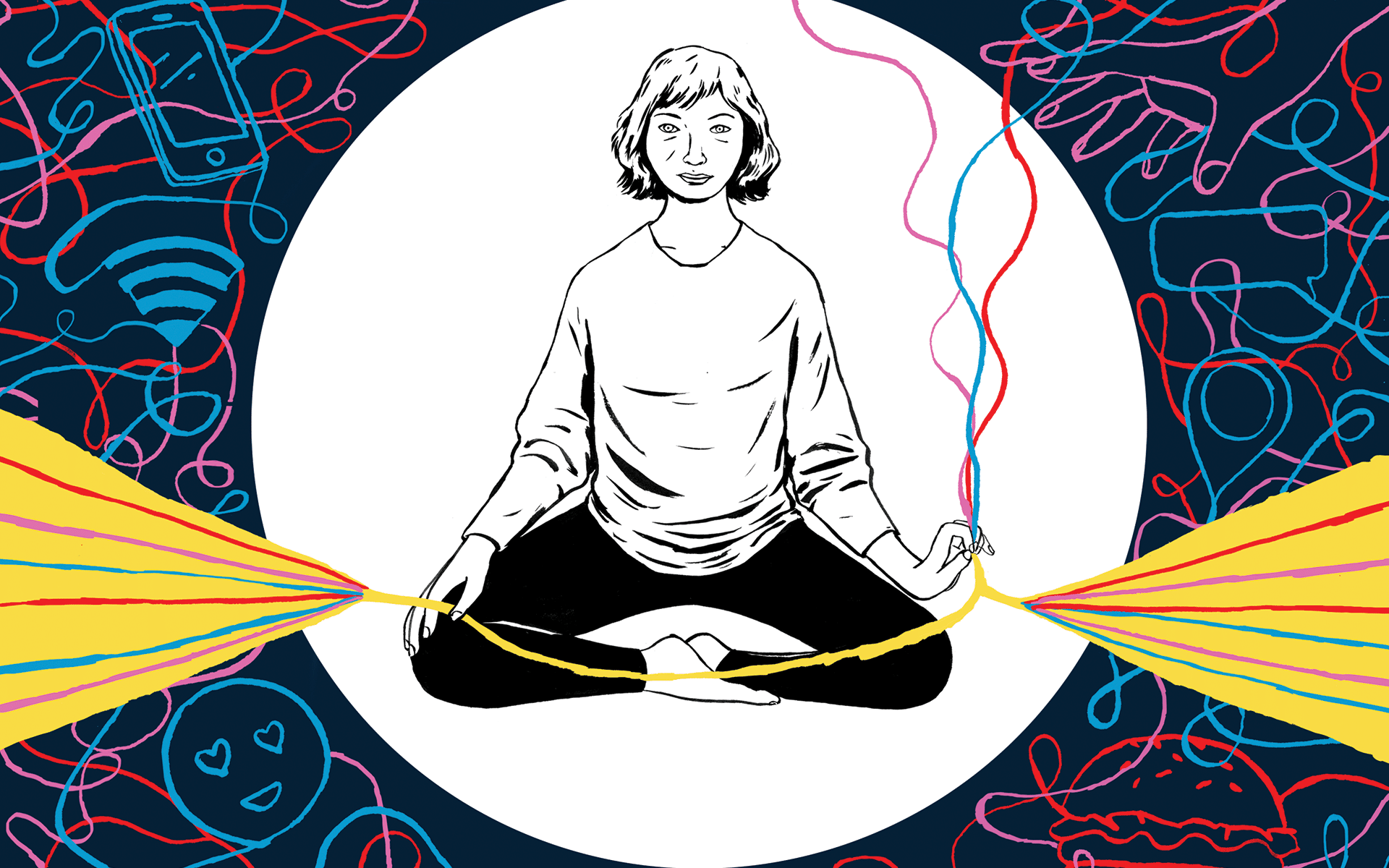
    Mindfulness can break this well-worn cycle, as we see illustrated in the diagram conceived of by Brewer below.

    Graphic by Heather Jones


    Source link

  • Craving Sweets? It Could Signal Dangerous Health Condition, Doctor Warns

    Craving Sweets? It Could Signal Dangerous Health Condition, Doctor Warns

    Craving for a sweet treat after a meal, or a candy when you feel low may seem a totally harmless routine. But a doctor now warns that frequent sugar cravings could be more than just a habit; they might signal an underlying health condition that could have serious consequences if left unchecked.

    According to Dr. Crystal Wyllie, a GP and online practitioner from the U.K., uncontrollable cravings are not just a desire for certain foods; they could be the body’s way of signaling an underlying health issue.

    “Cravings are often your body’s way of telling you something. While most are psychological or habit-driven, unusual cravings, like a strong desire to eat ice, chalk or even ash, can signal deeper health issues, from iron deficiency to hormonal imbalances,” she said, as reported by Birmingham Live.

    Dr. Wyllie specifically highlighted sugar cravings as a potential warning sign. “If you often crave sugary foods like cakes, biscuits, or white bread, it could indicate unbalanced blood sugar levels,” she explained. “This might be a sign of insulin resistance or even early type 2 diabetes.”

    Sugar cravings in individuals with diabetes or insulin resistance often stem from rapid fluctuations in blood sugar levels. When blood sugar drops too quickly, either due to the body’s inability to regulate glucose properly or as a result of an insulin spike, it signals the brain to seek a quick energy boost and this triggers cravings for sugary foods. However. Dr. Wyllie warns that this can ultimately lead to a cycle of sugar spikes and crashes.

    “Giving in to these cravings too often can make it harder for your body to regulate blood sugar over time. This can lead to insulin resistance, where the body’s cells no longer respond properly to the hormone that controls blood sugar. If this continues, it can increase your risk of developing type 2 diabetes,” warned Dr Wyllie.

    When a person has diabetes, their body struggles to regulate blood sugar levels effectively, which can lead to long-term health complications if left unmanaged. Over time, high blood sugar can damage blood vessels and nerves, increasing the risk of serious conditions such as heart disease, stroke, and kidney failure. Uncontrolled diabetes can also cause vision problems, including diabetic retinopathy, which may lead to blindness.

    Source link

  • Craving Sugary Treat After Meals? Here’s Why You Always Have Room For Dessert

    Craving Sugary Treat After Meals? Here’s Why You Always Have Room For Dessert

    Do you ever find yourself craving something sweet even after a big meal? Or wonder how you still have room for dessert despite feeling full? Researchers now suggest that the phenomenon known as “dessert stomach” is linked to the brain.

    In a recent study, researchers investigated the phenomenon in mice and found that they ate sugar even when they were full. While analyzing the brains, they discovered that a group of nerve cells called POMC neurons triggered the craving for sugar.

    When the mice ate sugar, these neurons released ß-endorphin, a natural opiate that made them feel rewarded and caused them to eat more, even if they were full. This effect was specific to sugar, not other foods. When the researchers blocked this pathway, the mice stopped eating extra sugar, but only when they were full. The inhibition of the ß-endorphin did not affect the hungry mice.

    The researchers also found that the activation of endorphins began even before the mice started eating sugar, as soon as they sensed it. Interestingly, the opiate was also released in the brains of mice that had never eaten sugar before.

    “As soon as the first sugar solution entered the mice’s mouths, ß-endorphin was released in the “dessert stomach region”, which was further strengthened by additional sugar consumption,” the researchers explained.

    When a similar trial was conducted in humans, researchers used brain scans on volunteers after they received a sugar solution through a tube. They found that the same region of the brain responded to sugar in humans where there are many opiate receptors close to satiety neurons.

    “From an evolutionary perspective, this makes sense: sugar is rare in nature but provides quick energy. The brain is programmed to control the intake of sugar whenever it is available,” explained Henning Fenselau, research group leader at the Max Planck Institute for Metabolism Research and head of the study.

    The researchers hope their findings could be valuable for treating obesity. “There are already drugs that block opiate receptors in the brain, but the weight loss is less than with appetite-suppressant injections. We believe that a combination with them or with other therapies could be very useful. However, we need to investigate this further,” Fenselau added.

    Source link