Virginia’s measles outbreak is no longer confined to one county.
On June 25, 2026, the Virginia Department of Health announced that the Buckingham County measles outbreak had expanded geographically to include Cumberland County, a directly adjacent rural county in central Virginia’s Piedmont region. Health officials confirmed that new cases in Cumberland County reflect community transmission — meaning the virus is circulating locally, not merely being imported from Buckingham.
As of the June 25 announcement, the Piedmont Health District, which includes both counties, reported 106 outbreak-associated measles cases. Virginia’s total statewide case count for 2026 stands at 129 — compared to just five confirmed cases in all of 2025.
Why This Matters
A measles outbreak that expands from one county to a second in the same Piedmont Health District signals that containment has not held. The expansion to Cumberland County means anyone who lives in, works in, or visits either county is at elevated risk of exposure if they are not fully vaccinated — and the virus can survive in the air for two hours after an infected person leaves a room.
Piedmont Health District Director Maria Almond said: “As this outbreak expands to Cumberland County, I ask for the community’s help to stop measles from gaining further ground by ensuring you are vaccinated.”
Measles is one of the most contagious infectious diseases known. One infected person can spread measles to nine out of ten unprotected people in the same room or space.
What We Know So Far
The Buckingham County outbreak was first confirmed by VDH on May 13, 2026. Since then, it has grown to become one of Virginia’s largest measles clusters in modern state history. The outbreak began among individuals in Buckingham County with below-threshold vaccination coverage and has since spread through close-contact networks.
The VDH measles disease page shows that Virginia is now in the midst of one of the worst measles years in recent memory: 129 confirmed cases in less than six months, compared to five for all of 2025.
The outbreak has generated exposure sites across the two-county area, including schools, medical facilities, and community gathering places. Every case confirmed in the outbreak involves a person who was either unvaccinated or could not confirm their vaccination status — consistent with the national pattern.
Cumberland County borders Buckingham to the east and shares the same rural character: dispersed population, limited access to health services, and historically lower vaccination uptake in some communities.
What VDH Recommends: Specific Vaccination Guidance for the Affected Area
The Virginia Department of Health has issued outbreak-specific vaccination recommendations that go beyond standard routine guidance for people in or visiting Buckingham and Cumberland Counties:
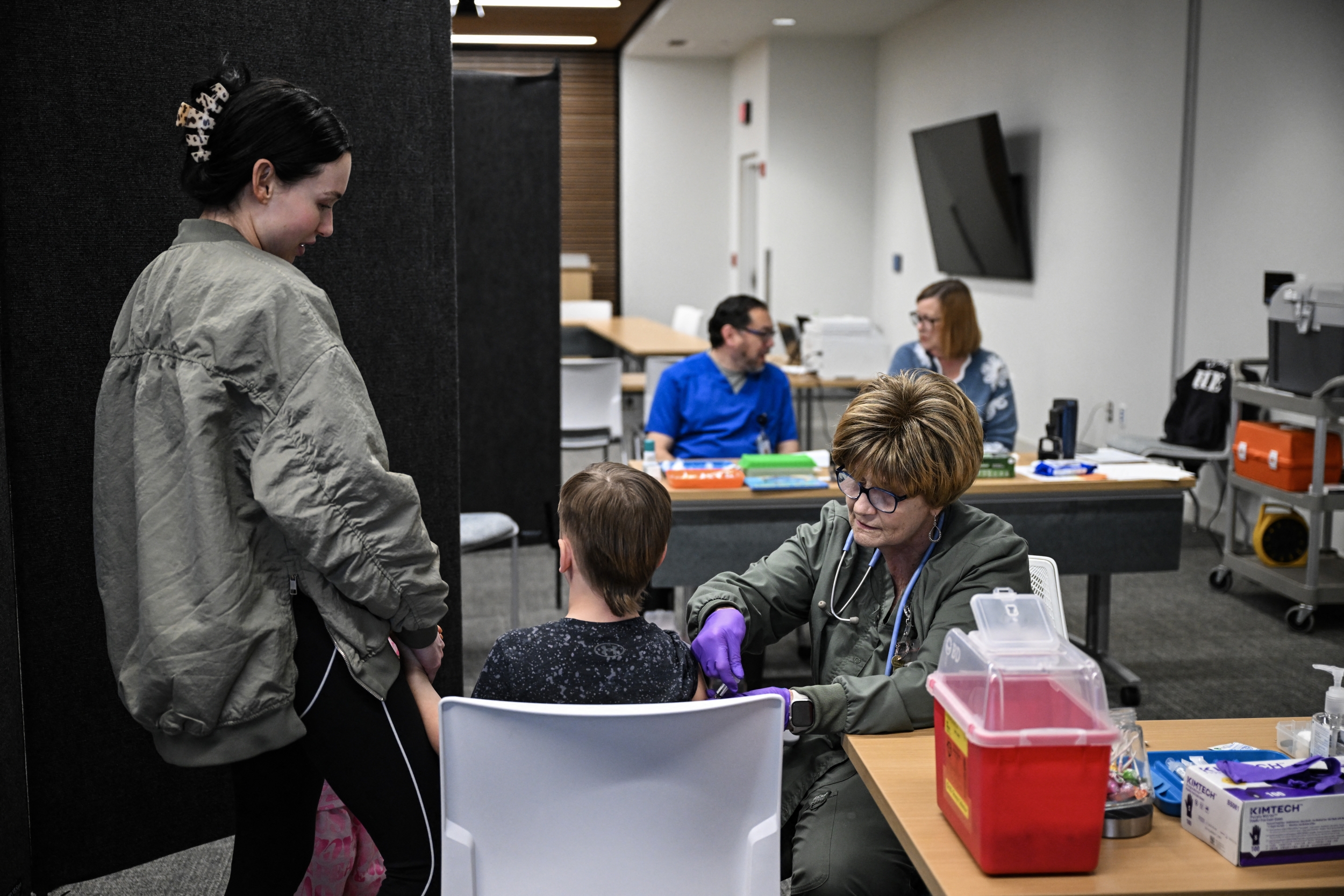
- Infants aged 6 to 11 months are advised to receive an early dose of MMR vaccine. This is an outbreak-specific recommendation — routine MMR vaccination does not begin until 12 months. Infants who receive this early dose should still receive two more doses at the recommended ages (12 months and 4–6 years) at least 28 days apart.
- Children aged 12 months to 18 years who have not yet been vaccinated or have never had measles infection should receive their first MMR dose immediately, with a second dose at least 28 days after the first.
- Adults who are not up to date on MMR vaccination should contact a health care provider or local health department for vaccination guidance.
- Residents and visitors of both counties should avoid large gatherings if they are unvaccinated and should consult a health care provider immediately if they develop measles symptoms.
Where the Risk Is Highest
Buckingham and Cumberland Counties are in the heart of the Piedmont Health District in central Virginia, approximately 60 miles west of Richmond. Communities in both counties with documented below-threshold vaccination rates face the most immediate risk of continued spread.
Travel through the area — particularly to or from the Charlottesville metro, Richmond metro, or the Appomattox and Farmville areas — should be considered by people assessing their vaccination status. The VDH maintains a list of specific exposure sites at vdh.virginia.gov/measles.
Statewide, Virginia’s 129 total cases in 2026 make this the state’s largest measles year in decades. All confirmed cases have been in unvaccinated or unverified individuals.
What Doctors and Experts Say
Dr. Brannon Traxler, Virginia’s deputy state health director, described measles containment as a race between vaccination and transmission. The expansion to Cumberland County indicates that race is still ongoing.
Pediatricians in the affected area have been on heightened alert for potential measles cases since May. The VDH issued guidance to area clinicians to maintain high suspicion for measles in unvaccinated patients presenting with fever and rash, and to contact the health department and isolate potential cases immediately before laboratory confirmation.
The early MMR dose recommendation for infants aged 6 to 11 months is a significant step — the CDC typically reserves early dosing recommendations for situations where the outbreak risk is high enough to warrant protecting babies before the standard schedule begins.
Who Faces the Greatest Risk?
- Unvaccinated residents of Buckingham and Cumberland Counties
- Children under 12 months who cannot yet receive standard MMR vaccination
- People traveling through the area who are unvaccinated or have only one documented MMR dose
- Anyone whose vaccination history is uncertain — particularly adults born between 1957 and 1989, who may have received only one dose before two-dose schedules became standard
Symptoms and Warning Signs to Watch For
Measles symptoms appear 7 to 14 days after exposure and progress in a predictable pattern:
- High fever (often above 104°F)
- Cough, runny nose, and red, watery eyes
- Small white spots inside the cheeks (Koplik spots — an early, distinctive sign)
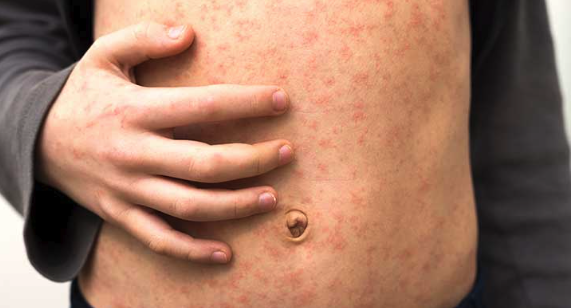
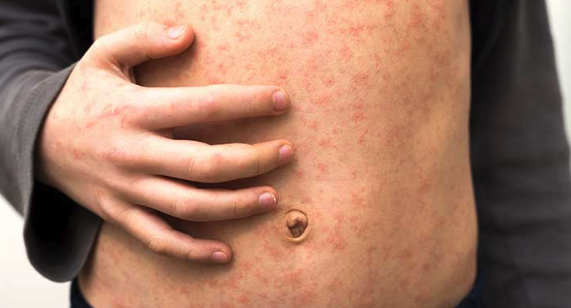
- A red blotchy rash beginning on the face and spreading downward, appearing 3 to 5 days after initial symptoms
Infected people are contagious from four days before the rash appears through four days after. If you develop these symptoms, do not go to a medical facility without calling ahead — notify them of your possible measles exposure so they can prepare isolation protocols.
What You Can Do Now
- If you live in or plan to visit Buckingham or Cumberland Counties, confirm your MMR vaccination status and your children’s vaccination records.
- Infants 6 to 11 months old in or visiting the outbreak area should receive an early MMR dose — discuss this with your pediatrician now.
- If you are unsure whether you have had two MMR doses, contact your physician, local health department, or the VDH Record Request Portal.
- Report symptoms consistent with measles — fever, cough, runny nose, red eyes, and rash — to your health care provider before seeking in-person care.
- Residents can email questions to the Virginia Department of Health at epi_response@vdh.virginia.gov or contact their local health department.
Cost and Access: What Patients Should Know
MMR vaccine is covered at no cost under the ACA preventive services mandate for insured patients. The Vaccines for Children (VFC) program covers MMR for eligible uninsured children. Virginia health departments are providing MMR vaccination at no cost to area residents during the outbreak. Contact the Piedmont Health District for information on local vaccination clinics.
What Happens Next
The VDH is continuing contact tracing, case investigation, and targeted vaccination outreach in both counties. The outbreak will be declared resolved after 42 consecutive days with no new outbreak-related cases. MedicalDaily will report on any further geographic expansion and on case count updates as they are released.
The Bottom Line
Virginia’s measles outbreak has crossed into a second county, with 106 confirmed outbreak-associated cases and 129 statewide in 2026. Vaccination is the only tool that stops this spread. The VDH has issued specific outbreak guidance for infants as young as 6 months in the affected area — an unusually early recommendation that reflects the seriousness of the current risk. Confirm your vaccination status and your children’s MMR records now, before a potential exposure occurs.