Individual Advocacy Group (IAG), a CARF‑accredited nonprofit supporting adults with disabilities and complex behavioral health needs, has observed how social experiences influence emotional well‑being among individuals with autism. As conversations surrounding autism and mental health continue to expand, the organization highlights that many challenges associated with autism are deeply connected to isolation, misunderstanding, and the pressure to adapt to environments that leave little room for difference.
“We should not be surprised when people develop anxiety, depression, or emotional exhaustion after years of navigating exclusion and misunderstanding,” says co‑founder and CEO Dr. Charlene A. Bennett. “Many people with autism move through schools, workplaces, healthcare systems, and communities where acceptance is conditional upon conformity. Emotional distress grows from those experiences. The conversation becomes more meaningful when we examine the environments people are expected to survive within every day.”
According to Dr. Bennett, growing attention within autism research has focused on the relationship between social pressure and mental health outcomes. A study found that individuals with elevated autism‑related traits experienced significantly higher rates of anxiety and depression symptoms, particularly during young adulthood, when social and institutional expectations intensify. The researchers emphasized the importance of individualized support strategies that recognize the complexity of neurodivergence and mental health together.
For IAG, these findings reflect realities the organization has witnessed for years. “Emotional distress often grows slowly, shaped by the moments when someone is left out of community life, school, work, or meaningful relationships. The stress can settle in deeply and begin to influence nearly every part of a person’s life when those experiences repeat over the years,” Dr. Bennett explains.
She stresses that the emotional toll becomes even more complex when individuals begin masking behaviors in order to gain acceptance. Research found that adults with autism who reported greater camouflaging of autism‑related traits also experienced higher levels of anxiety, depression, stress, and emotional regulation difficulties. The study linked these outcomes to the daily pressure of functioning within environments built around neurotypical expectations.
A broader systematic review identified similar patterns, noting that self‑protection and the desire for social connection are major motivations behind social camouflaging. While masking may help individuals assimilate socially, it can also contribute to emotional strain, identity‑related stress, and deteriorating mental health over time.
Dr. Bennett believes these patterns signal an important shift in how society interprets mental health within disability communities. “When someone spends years suppressing who they are to gain acceptance, emotional exhaustion becomes understandable,” she says. “Human beings require belonging, meaningful relationships, and opportunities to participate in community life without fear of rejection. Conversations about mental health become more productive when we examine those social conditions alongside clinical diagnoses.”
This understanding informs how IAG responds to trauma among individuals with intellectual and developmental disabilities. Through years of direct service, the organization observed that behaviors frequently categorized as psychiatric symptoms were often connected to profound emotional wounds. Dr. Bennett recalls working with individuals who entered institutional systems after experiencing severe neglect, family separation, or violence, only to receive interventions focused primarily on behavioral control.
“One of them arrived showing behaviors associated with severe psychiatric disorders, like shifts in voice, emotional volatility, and intense fear responses,” Dr. Bennett shares. When clinicians looked more closely at his life story, they learned he had lived through the traumatic loss of his brother. According to Dr. Bennett, IAG introduced therapeutic mental health support alongside behavioral care. “As he received support and space to heal, many of the behaviors that once seemed central to his diagnosis gradually began to fade,” she says.
Experiences like these prompted IAG to establish its own behavioral health clinic designed specifically for individuals with intellectual disabilities and complex physical disabilities. Dr. Bennett notes that many mental health systems remain fragmented, with disability services and behavioral health operating separately despite their deep connection. As a result, individuals seeking support may encounter professionals who lack training in neurodiversity, trauma, or disability‑informed care.
“People are frequently placed into categories before anyone takes time to understand their lived experience,” Dr. Bennett says. “A diagnosis may describe symptoms, but it rarely explains the emotional reality of isolation, rejection, grief, or fear. Real progress begins when professionals listen to each other, question assumptions, and remain open to perspectives outside their own discipline.”
This philosophy has led IAG toward a transdisciplinary model that brings together behavioral specialists, therapists, vocational teams, advocates, community partners, families, guardians, and direct support professionals. The goal extends beyond crisis intervention. The organization works to help reduce the conditions that contribute to emotional distress in the first place by expanding access to housing, employment, education, relationships, and community participation.
Its supported living and community living support/programs aim to support individuals living within communities of their choice through partnerships with landlords and local stakeholders. Customized employment initiatives are intended to connect participants with employment opportunities tailored to their interests and capabilities. Through the IAG Speaker’s Bureau, individuals share their experiences publicly, contributing to conversations surrounding disability rights and inclusion.
For Dr. Bennett, these opportunities carry emotional significance far beyond program outcomes. “Every person deserves the experience of being welcomed into community life as a full human being,” she says. “Acceptance changes how people view themselves, how they relate to others, and how they imagine their future.”
That belief continues to guide IAG’s work as conversations surrounding autism and mental health evolve. Prevention remains an important part of the discussion, particularly when inclusion, accessibility, and meaningful participation can reduce prolonged isolation.
Welcome to a special Gut Health Month episode of The Dietitian Connection Podcast. This March, we’re celebrating Gut Health Month 2026 by bringing dietitians together to deepen our knowledge, strengthen our confidence, and amplify our voice to create meaningful impact in practice and beyond.
In this episode, we’re joined by leading gut health dietitian Nicole Dynan to explore how dietitians can build confidence in this rapidly growing space. Tune in for practical insights and inspiration to help you feel empowered in your gut health practice.
Hosted by Kate Agnew
Biography
Nicole Dynan is the founder of The Gut Health Dietitian (established in 2014) and one of Australia’s leading gut health experts. After a decade in corporate chronic disease management, Nicole saw first-hand how gut health impacts energy, stress, mood, and overall well-being. Since then, and together with her team, she’s helped over 40,000 people improve their gut health, feel more comfortable, and regain control of their overall health through science-backed nutrition.
In this episode, we discuss:
How dietitians can build confidence and credibility in gut health through targeted upskilling and staying across emerging research and trends
The shift in gut health care from restriction to focusing on foundations
Why it’s important for dietitians to raise their voice, strengthen their influence and work together to lead evidence-based gut health conversations
The importance of recognising what stage of behaviour change a client is in and adapting your approach to meet them where they are
The content, products and/or services referred to in this podcast are intended for Health Care Professionals only and are not, and are not intended to be, medical advice, which should be tailored to your individual circumstances. The content is for your information only, and we advise that you exercise your own judgement before deciding to use the information provided. Professional medical advice should be obtained before taking action. The reference to particular products and/or services in this episode does not constitute any form of endorsement. Please see here for terms and conditions.
Three weeks ago, I ended up in the emergency room convinced I was having a heart attack.
The chest pain had started days earlier—a tightness that wouldn’t release, difficulty taking a full breath, pain radiating down my left shoulder. I told myself it was nothing. Maybe I’d overdone it at the gym. Maybe I’d slept wrong.
I kept meditating. I kept teaching. I kept holding space for others.
I tried to breathe my way through it, the way I’ve taught thousands of people to do. But on Sunday, when my doctor’s office was closed and the pain refused to let up, my husband said gently but firmly, We’re going to the ER.
After five hours of tests and long stretches of waiting, the cardiologist came back with relief in his voice: my heart was fine.
I should have felt grateful—and I did. But I was also confused.
If my heart was healthy, what was my body trying to tell me?
Recognition: The Role of Vicarious Trauma In Bearing Witness Without Choice
If you have been paying attention to the world around you over the past months, you may be carrying more than you realize.
Images of devastation in Gaza. Israeli families living with constant fear of attack. Political violence and ICE shootings at home. Rising Islamophobia and antisemitism fracturing communities, relationships, and public life. The countless Black, Indigenous, and other people of color whose deaths rarely make headlines, whose names we never learn. And the ongoing humanitarian crises in places like Sudan, Yemen, and Iran—where suffering continues largely outside the frame of sustained media attention.
If you find yourself feeling unusually tense, exhausted, reactive, numb, or unable to turn away—even when you want to—it may not be a personal failing. It may be a natural response to prolonged exposure to suffering.
For many of us, this witnessing is relentless. Each morning brings new stories, new images, new reasons to feel alarmed or heartbroken. Even when we are not directly affected, our nervous systems are taking it in.
If you find yourself feeling unusually tense, exhausted, reactive, numb, or unable to turn away—even when you want to—it may not be a personal failing. It may be a natural response to prolonged exposure to suffering.
There is a name for this: vicarious trauma.
Vicarious trauma refers to the psychological and physiological impact of sustained empathic engagement with others’ pain. Our bodies and minds do not clearly distinguish between what we experience directly and what we absorb through continuous media exposure, graphic imagery, and ongoing moral urgency.
For others, the constant stream of suffering can feel overwhelming or futile, leading to disengagement instead. We scroll past headlines, turn off the news, or tell ourselves we need to focus on our own lives. At times, this discernment is necessary. Rest, boundaries, and self-care matter. But when disconnection becomes our primary response to vicarious trauma, something else quietly erodes.
Many people turn away not because they don’t care, but because they feel powerless. What difference could I possibly make? In the face of global crises, individual action can seem insignificant, even naïve. Shutting down can feel like the only way to survive.
Yet we live in an interconnected world where complete disconnection is an illusion. And when we disengage for too long, we don’t just lose information—we lose contact. Contact with what is happening. Contact with our own values. Contact with the small but meaningful ways care can move through us. What begins as self-protection can quietly become a loss of agency and connection.
Vicarious trauma doesn’t just make us sad or tired. It reshapes how we see the world.
Research shows that it disrupts core beliefs about safety, trust, control, intimacy, and meaning. It shows up cognitively, emotionally, physically, and behaviorally.
People experiencing vicarious trauma often report:
Brain fog and difficulty concentrating
Heightened anger, anxiety, or emotional numbness
Sleep disturbances and chronic exhaustion
Hypervigilance—always bracing for the next blow
Physical symptoms like headaches, gastrointestinal issues, and chest pain
And yes—ER visits.
But there is something more essential that is lost when we burn out or shut down.
Vicarious trauma explains the cost to our nervous systems. But underneath that is something more subtle—and more consequential: a loss of contact with our capacity to respond.
What gets lost when we engage on default—whether by over-consuming information about suffering or withdrawing from it—is not just nervous system regulation.
We lose contact.
Contact with the body as a source of intelligence. Contact with our felt sense of what is actually needed now. Contact with our agency, beyond outrage or withdrawal. Contact with our capacity to sense where our care is most skillful. Contact with our ability to stay human without hardening.
This isn’t just trauma.
It’s a disconnect from our humanness.
Oppressive systems don’t need to silence us when exhaustion and reactivity will do the job for them.
We find ourselves caught in cycles of constant witnessing or reactive outrage, or else turning away and numbing out.
And when contact is lost, connection suffers.
Connection with others. Connection with purpose. Connection with the part of ourselves that knows how to respond wisely.
Vicarious trauma explains the cost to our nervous systems. But underneath that is something more subtle—and more consequential: a loss of contact with our capacity to respond.
When we’re dysregulated:
We confuse intensity with impact
We lose the ability to imagine creative responses
We default to attack, despair, or withdrawal
What’s at stake isn’t just our well-being. It’s our capacity to imagine—and enact—responses that actually reduce suffering.
Oppressive systems don’t need to silence us when exhaustion and reactivity will do the job for them.
Collective Capacity: How Not to Lose Each Other
When this loss of contact happens at scale, movements fracture. Allies turn on one another. Nuance feels like betrayal. Strategic thinking gives way to moral reflex. The very capacities required for sustained change—discernment, patience, relational trust—begin to erode.
When we are no longer in touch with our discernment, everyone can start to look like a threat. The act of listening itself can feel like moral failure. We confuse intensity with impact, and urgency with wisdom.
This loss of contact doesn’t just exhaust us personally. It diminishes our ability to work together.
When we are no longer in touch with our discernment, everyone can start to look like a threat. The act of listening itself can feel like moral failure. We confuse intensity with impact, and urgency with wisdom.
I’ve seen this up close.
At one point, someone was publicly attacking me online—not because we disagreed about the need to end suffering, but because I was trying to hold complexity rather than take a single side. I was called complicit. My integrity was questioned. Moral failure was assumed.
Instead of reacting, I practiced inner calm, compassion, and equanimity—not to bypass harm, but to stay in contact with my own values of deep listening and seeking to understand. The next day, that same person reached out to say: “I’m sorry to have misjudged you so harshly. I’ve been exhausted, and I lashed out.”
This person wasn’t malicious. They were overwhelmed. I recognized that feeling immediately—that same overwhelm is what had landed me in the ER. The suffering they had been witnessing was real. The vicarious trauma is real. Without tools to return to contact, that pain had nowhere to go but outward.
I’ve witnessed this pattern repeatedly.
When I had tried to draft a Town Council resolution that called for ending violence while also acknowledging security concerns on all sides, it was rejected—not because people disagreed with the facts, but because in the midst of collective disconnection, holding both-and felt impossible.
This is how movements lose their strength—not through genuine disagreement about goals, but through operating from disconnection rather than from our deepest wisdom that comes from listening with care and seeking solutions that include all.
Sustained change requires more than passion. It requires capacity: the ability to engage and retreat, to stay open without collapsing, to remain connected to one another even when the work is hard.
When we lose that capacity, we don’t just lose effectiveness. We lose each other.
Recently, I was invited to a friend’s house for dinner. Simple food. Easy conversation. Board games. And yet, as I sat there, I felt a wave of guilt. How could I be laughing when so many are suffering? I noticed a flash of irritation toward the others at the table—why didn’t they seem as affected as I was? Didn’t they care?
Then I caught myself.
This guilt, this judgment—it wasn’t skillful. It wasn’t making me more effective or more compassionate. It was simply isolating me, pulling me away from the people right in front of me.
Rest is not what we do when the work is finished. It is what makes sustained engagement possible. When we gather, we are restoring contact with the aliveness that oppressive systems rely on extinguishing.
So I made a choice. I allowed myself to be there. To taste the food. To play the game badly and laugh at myself. To let the warmth of friendship soften something that had gone rigid inside me.
It was quietly liberating.
The next day, I returned to my work with more energy, clarity, and steadiness—not because anything had been solved, but because I had remembered what it feels like to be human alongside other humans.
This is not escape. This is restoration.
Rest is not what we do when the work is finished. It is what makes sustained engagement possible. When we gather with like-minded people—not to organize or persuade, but simply to cook together, laugh, play, or enjoy one another’s company—we are not avoiding the work. We are restoring contact with the aliveness that oppressive systems rely on extinguishing.
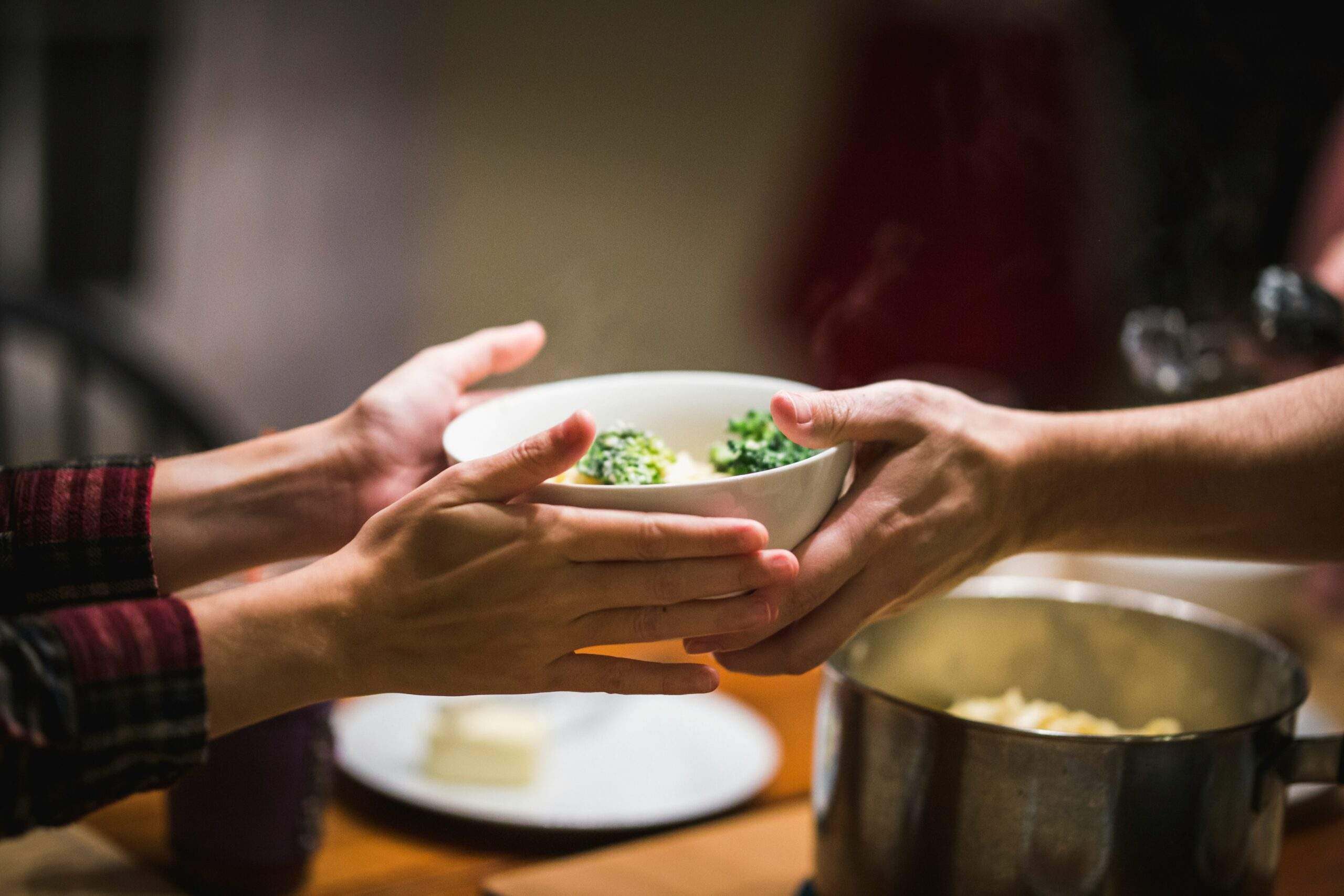
Sometimes, what returns us to contact isn’t a formal practice at all. It’s a shared meal. Music, art, or movement that reminds us we are alive. A walk where we remember that trees still grow and birds still sing—even now.
These moments are not indulgent. They are essential.
From this restored place, certain skills can help us stay in contact when we re-engage with difficulty.
Skills: Returning to Contact in Real Life
Over years of teaching and research, I came to see that mindfulness as it’s often taught—focusing primarily on meditation and non-judging awareness—is necessary but insufficient for times like these.
Calming the nervous system with meditation is only the first step. Once we re-engage, our default habits return. Without skill, we slide back into reactivity. Even if we can return to a calm, non-judging awareness, it is not enough to navigate nuanced, complex situations, often involving competing needs and worldviews.
Through my study of early Buddhist teachings and contemporary psychology, I began to understand mindfulness as a set of trainable skills—skills that help us stay in contact with what’s alive, even in the midst of suffering. They disrupt our default reactions and help us discern what is needed to respond skillfully.
Three skills become especially essential when we are bearing witness to ongoing crisis:
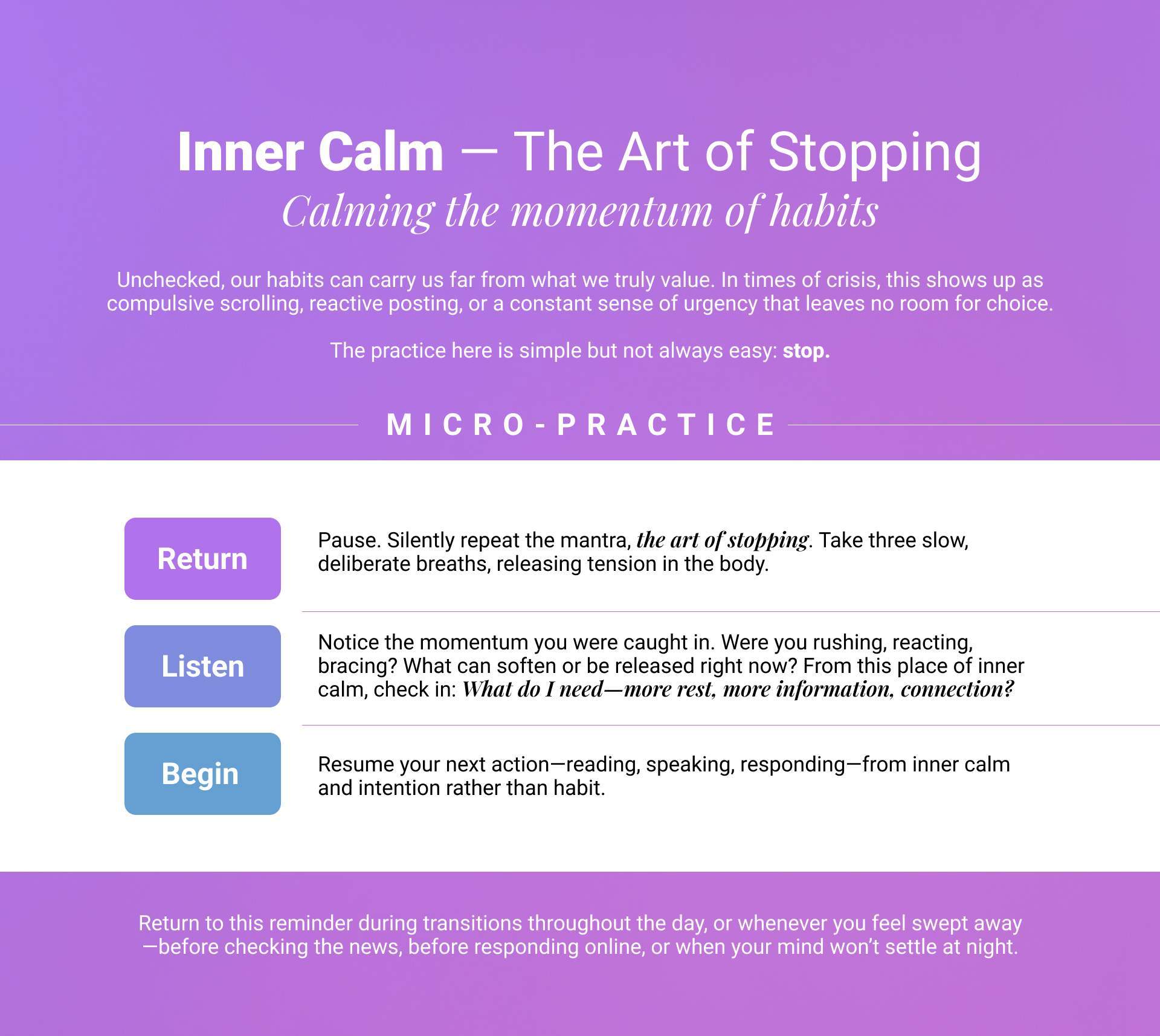
Inner Calm — Creating Space Without Disengaging
Inner calm is the art of stopping, looking, and letting go for purposes of healing and clarity. It softens the grip of our attachments to habitual hurrying, beliefs, and expectations that hinder our inner equilibrium.
Inner calm involves physical composure and mental tranquility, bringing ease to body and mind alike. In the body, composure is experienced in the muscles and as an overall feeling of ease. In the mind, inner calm creates the space to hold everything without attachment and resistance.
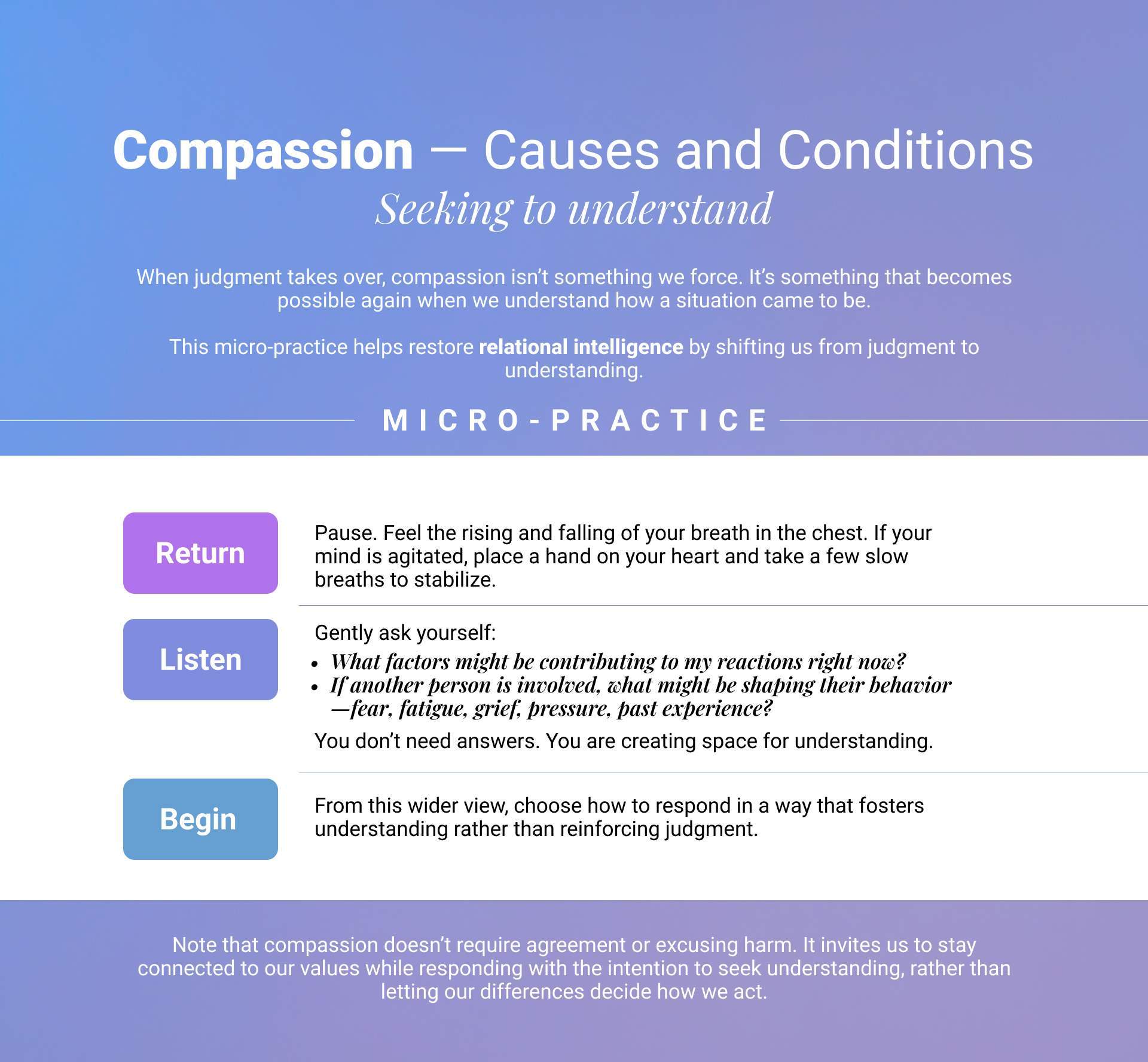
Compassion — Seeking to Understand
Compassion is our innate ability to feel, understand, and be motivated to alleviate suffering in ourselves and others. It disrupts our tendency to act on our automatic judgments about ourselves and others by seeking to understand.
When we lose compassion, we see enemies instead of fellow humans struggling. We attack allies for not being pure enough. We forget that we, too, are worthy of care. We lose our relational intelligence—the capacity to sense how we are affecting others and how to stay connected across differences.
Curiosity — Returning to Creative Capacity
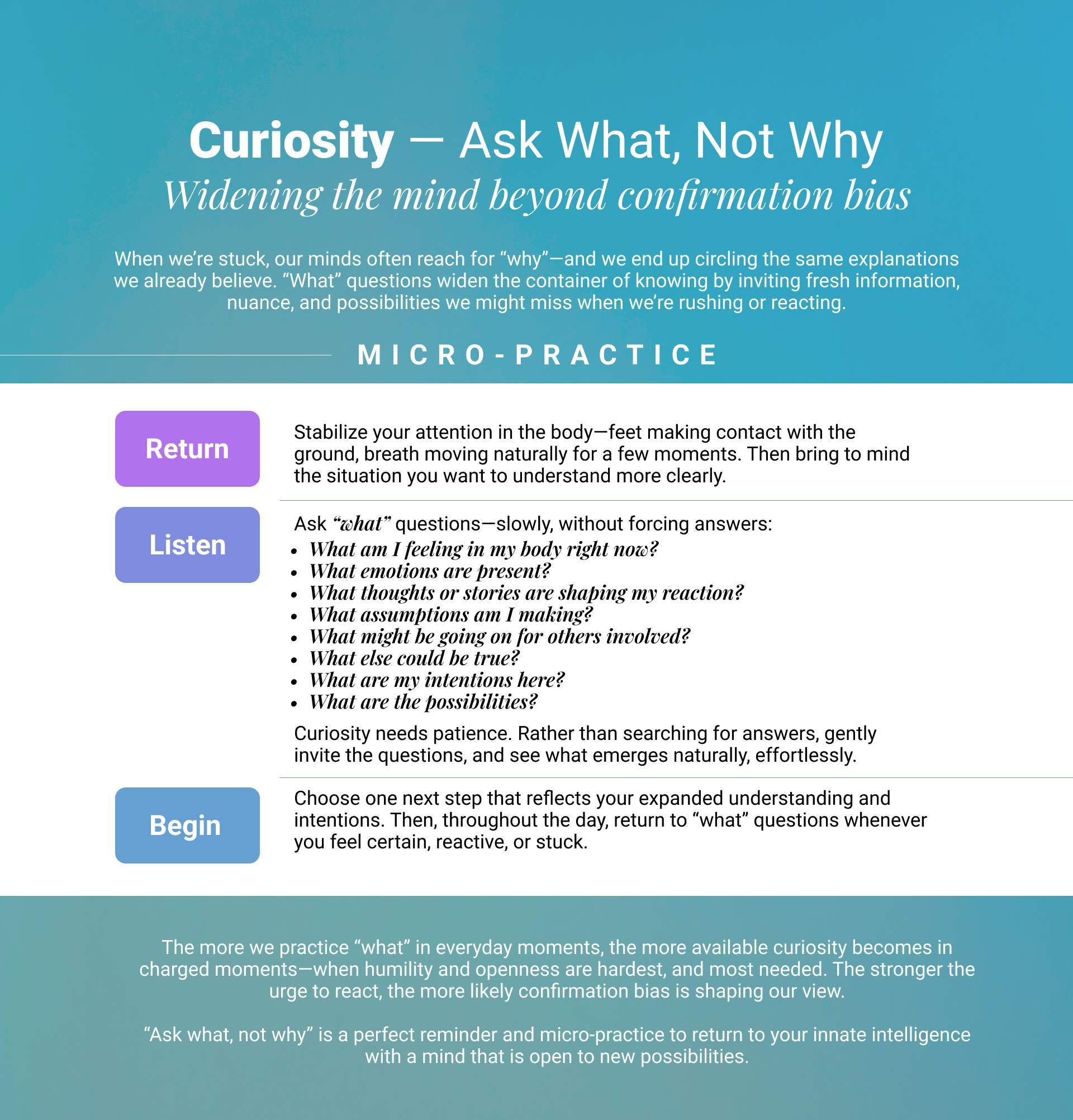
Curiosity is our ability to be genuinely interested and care with the purpose of understanding the situation, even when it’s challenging. It disrupts our confirmation bias by staying open and patient in the face of uncertainty and new information.
Curiosity widens the lens trauma narrows. It restores contact with complexity and helps us sense what might actually help. It’s not about being right. It is about being effective.
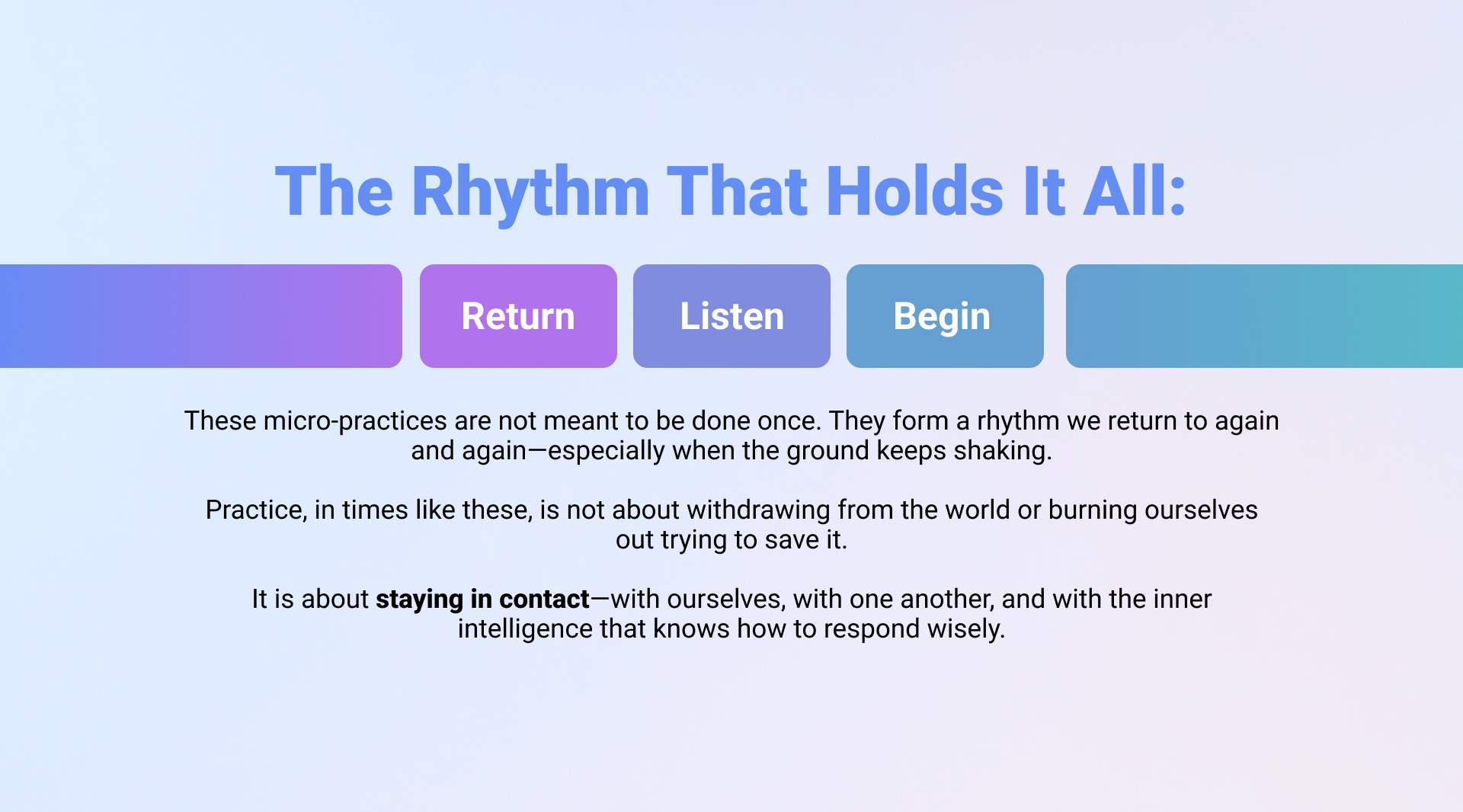
Together, these skills interrupt default patterns and reopen the channel between knowing what matters and being able to act on it.
Based on our resources, capacity, and unique gifts, what’s ours to do will be different. There isn’t one right way to meet the darkness. Only many necessary ones.
But here’s what practice has taught me: Skillful response doesn’t look the same for everyone.
Based on our resources, capacity, and unique gifts, what’s ours to do will be different. The parent raising children who can hold complexity. The artist creating work that helps others process grief. The organizer building coalitions. The healer tending to those on the front lines.
There isn’t one right way to meet the darkness. Only many necessary ones.
Reaching to Poetry As Another Anchor
I too have been learning to live with this question—how to stay engaged without collapsing. Sometimes the sifted language of poetry can speak to our deeper needs and longings. This poem by Michael Dubois captures this truth beautifully and resonates deeply.
When Things Feel Dark by Michael Dubois
When things feel dark, remember what the world needs: More healers, more helpers, more hate exorcisers. More artists and poets, more parents ruled by love. More cycle breakers, more radical resters, more warriors of peace. More gardeners who fall deeply in love with the earth beneath their feet. More meditators, more educators, more people willing to use failure as a tool to learn. More thinkers, more thankers, forgivers and apologizers. More builders of bridges and homes with open doors and minds.
The world needs you— because only the ones who see the darkness know the importance of turning on the light.
An Invitation to Practice: 3 Ways to Reconnect
In times like these, practice is an invitation to return to what is already alive in us, and to offer that wisely.
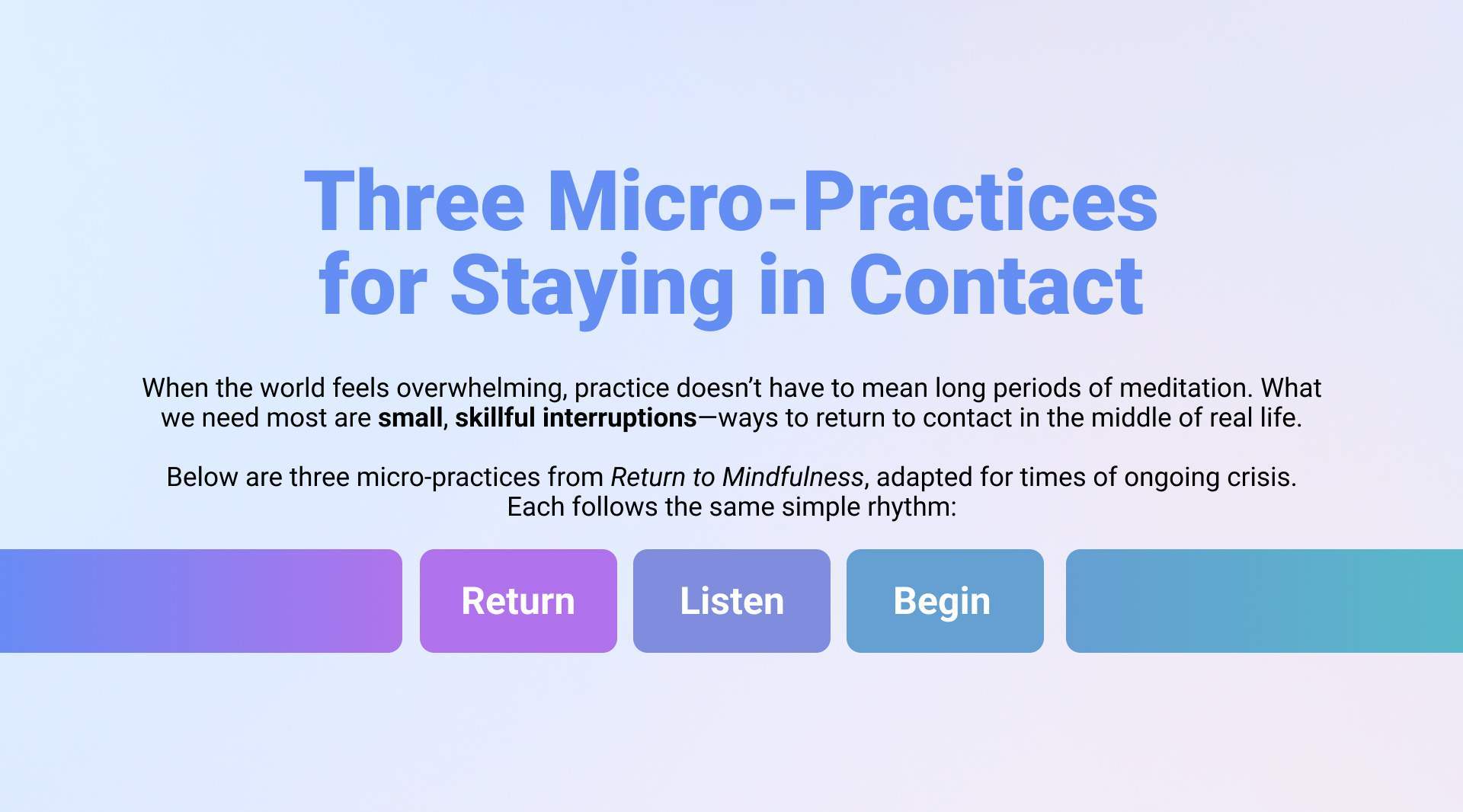
Below are three micro-practices from my book, Return to Mindfulness, to foster inner calm, compassion, and curiosity.
May we have the courage to notice when we’ve lost ourselves—and the skill to return. May we offer what is uniquely ours to give, trusting that the world needs exactly that. May our practice benefit us and all beings.
If we want to understand how to fall in love, then we have to know what builds connection.
We often think of love as primarily a feeling, rather than a skill that we can build. So when we look for advice for how to fall in love, we miss out on one of the primary pathways to an enduring happiness: facilitating a sense of connection.
When we feel connected, we feel balanced. And when we feel balanced, we often feel happy. The problem is, as we grow up, we have to learn how to shield ourselves from vulnerability, so we build up walls or put on armor that make connection more difficult.
One of the most powerful (and challenging) practices to do is look into another person’s eyes for a prolonged period of time. It immediately makes us feel vulnerable! It may not matter whether it’s a stranger or someone you’ve been in a partnership with for over 50 years (sometimes this makes it more difficult). But when we do it, it’s fascinating what arises.
Check out this short video from Soul Pancake to see some of the surprising results of people making connection:
One of the defining characteristics of compassion is recognizing our common humanity.
Behind my eyes and your eyes are the same fundamental needs, to feel cared about and understood—to feel a sense of belonging.
When we look into another’s eyes and see this, it can melt the barrier and uncover the connection that’s always been there. This is an essential element for uncovering happiness.
Try this out as an experiment for yourself:
Today, look into the people’s eyes that you meet and see the person behind the eyes. What happens when you bring the mindset that this person is “Just like me?” This mindset understands that underneath it all, this person wants the same things I do, to feel cared about, to feel understood, to feel accepted, a sense of belonging, and to be happy. And all of those experiences are foundational to our understanding of what sits at the heart of real, lasting love of any kind. Being intentional about fostering genuine connection—with yourself, with others—is how to fall in love.
Put your biases aside, test it out and see what you notice.
Walnuts, almonds, and hazelnuts are put to the test for erectile and sexual function, sperm count, and semen quality.
In 2013, I posted a video based on a study that found that men with erectile dysfunction who ate 100 grams of pistachios (a little more than three handsful) a day for three weeks had “a significant improvement in erectile function.” It’s always nice to see a whole-food intervention have clinical effects, and I was curious to revisit the topic and see what’s been published since.
Even if you ignore all the lab animal studies on hazelnuts improving the function of rat testicles—really, there’s a study titled “Hazelnut Consumption Improves Testicular Antioxidant Function and Semen Quality in Young and Old Male Rats”—you still never know what you’ll find searching the medical literature for nuts and sexual function. I found “a case of penile strangulation with a metal hex nut” in which someone put one on his penis “for sexual pleasure” but couldn’t remove it. (I guess some kinds of nuts can sometimes make things worse.) They tried the Dundee technique, which involves creating 20 puncture holes to relieve the pressure, but that didn’t work, so then they tried a diamond disk cutter. It slipped a few times, but the hex nut was successfully removed. All’s well that ends well.
That got me curious. Evidently, penile entrapment is so common that there is an entire grading system that emergency room doctors can use, as you can see here and at 1:21 in my video Mixed Nuts Put to the Test for Erectile Dysfunction. If a drill isn’t available, the surgeons advised, “a hammer and chisel may be used to remove nuts.”
A drill? Oh, they mean a dental drill. Doctors describing one case bragged about the “precisely cut edges,” but it looks pretty jagged to me. You can see for yourself below and at 1:38 in my video.
To “preserve the penis from fatal outcomes” (that’s a strange way to put it), urologists should be aware of all the available tools and approaches, and if you don’t know how to operate the saw, you can always call in the local blacksmith—but only if “special consent [is] taken from the patient”!
But how are you going to remove an iron barbell or steel sledgehammer head? “With a heavy-duty air grinder provided by the fire department,” requiring six hours of cutting and fire coats to protect the patient from the sparks. Use whatever it takes—hack saw, “cement eater.” You can even use the silk winding method pioneered by Dong et al.
Back to the task at hand! Consuming “at least one serving of vegetables a day and more than two servings of nuts a week was associated with a more than 50% decrease in the probability of ED” [erectile dysfunction] in a snapshot-in-time cross-sectional study. But such observational studies can’t prove cause and effect. It’s like finding that men who eat healthier have better sperm motility. Maybe men who eat nuts are just health nuts, and the improvement is due to some other factor, like exercise. What we need is an interventional trial.
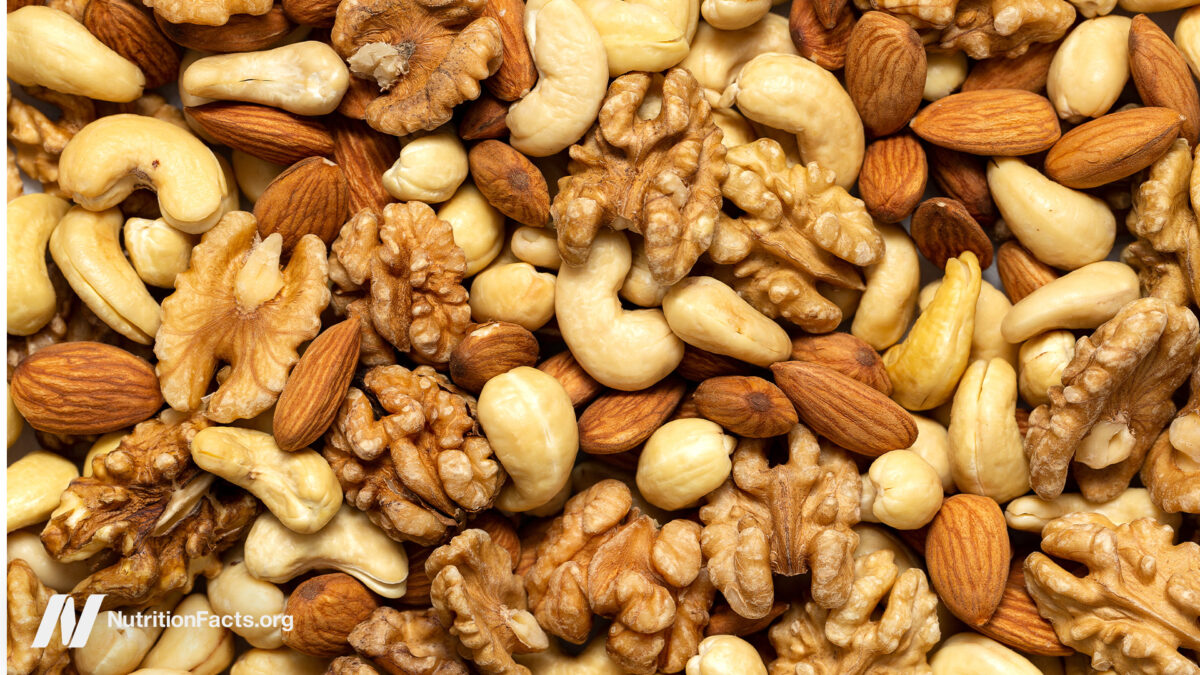
And there is one: a randomized controlled trial studied the “effect of nut consumption on semen quality and functionality.” Healthy men were fed the standard American diet with or without a mixture of nuts—a handful (30 grams) of walnuts and half a handful (15 grams) each of almonds and hazelnuts. Individuals in the nut group experienced significant improvements in their total sperm count, vitality, motility, and shape, perhaps because those “in the nut group showed a significant reduction in SDF”—sperm DNA fragmentation. The nuts appeared to protect their sperm DNA. It’s too bad that the researchers didn’t measure the men’s erectile and sexual dysfunction while they were at it. Oh, but they did!
What is the effect of nut consumption on erectile and sexual function from that same study? The researchers report that those in the nut group saw a significant increase in orgasmic function and sexual desire, but what about erectile function? Any time you see this kind of selective glass-half-full reporting, you suspect some kind of industry funding, and, indeed, that was the case here; the study was partially funded by the International Nut and Dried Fruit Council. Yes, there was a marginal increase in orgasmic function and sexual desire of questionable clinical significance, but there was no improvement in erectile function, intercourse satisfaction, or overall satisfaction. As with so many comparisons, even the so-called significant findings may not even be statistically significant.
But why did the pistachios I talked about back in 2013 work, while these other nuts didn’t? Well, the original study was done on men mostly in their 40s and 50s who already had chronic erectile dysfunction for at least one year, whereas the average age of participants in the newer study was 24. So, the individuals in the later study may have started out with near-maximum circulation, not leaving much room for the nuts to work any magic.
Doctor’s Note
Sorry for that crazy tangent! I just wanted to give people a taste of what it can be like when you dive deep into the medical literature.
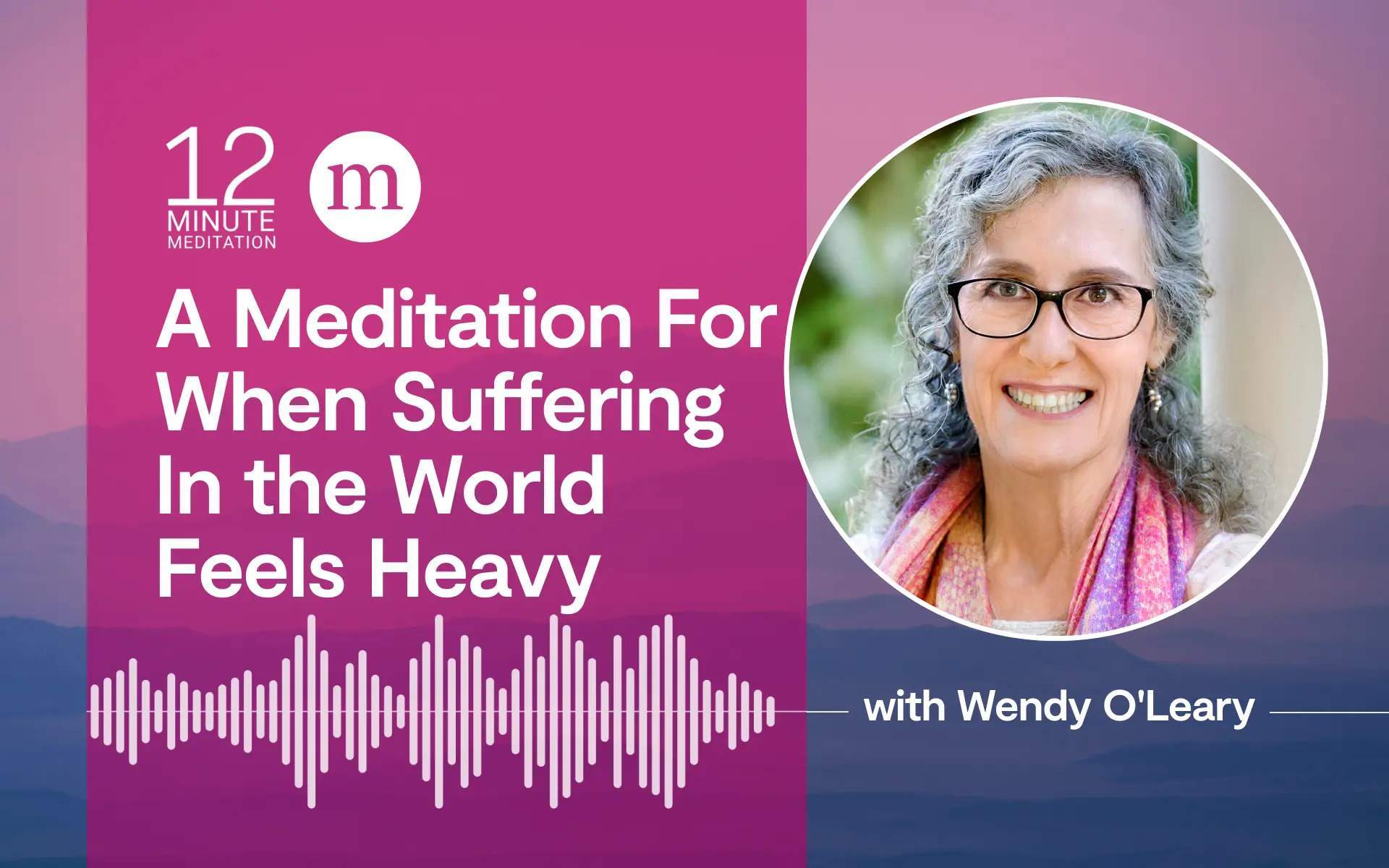
If you’re feeling overwhelmed by the pain, uncertainty, and suffering in the world right now, here is a practice to find courage, peace, acceptance, and connection.
Many of us are carrying the weight of the world’s suffering right now. How can we acknowledge the immense suffering in the world, including our own—and still tend to our hearts, minds, and bodies in a way that keeps us grounded and able to take compassionate action?
This week, mindfulness teacher and author Wendy O’Leary shares a guided practice that offers refuge and reminds us of our real and loving connection to one another.
There are three main parts of the practice. First, stabilizing or grounding. Second, settling back, softening, and soothing. And third, the one for me, one for you practice, which is based on the giving and receiving compassion practice from the Mindful Self-Compassion Program.
A Meditation For When the Suffering In the World Feels Heavy
Read and practice the guided meditation script below, pausing after each paragraph. Or listen to the audio practice.
I invite you to get into a comfortable seated position. You can close your eyes or gently look down and soften your gaze. Whatever works best for you.
Begin by directing your attention into your body, allowing it to gently move in and drift down as it drops all the way down to your feeling the connection of your feet on the floor. If your feet aren’t on the floor, simply notice wherever the feet are connected. That experience of contact and pressure. Or you might feel the contact and pressure of the backs of your legs on the chair or cushion. Connecting with this felt experience of being grounded and rooted, supported and held here on earth. As you feel the somatic experience of those contact points, the feet or the seat. Rooted, grounded, steady and stable. Connected and supported by the earth.
From this place of steadiness and stability, bring to mind someone you know who’s having a hard time. It could be someone you know personally or more generally someone or a group of people you are aware of who are struggling at this time. On a scale of one to 10, choose an example of someone who is somewhere in the middle. So not the most difficult situation.
As you allow them to more fully enter your awareness, check in with your body. Often, when we’re focused on difficulty, ours or others’, there can be a habitual tendency to contract, to tighten, and to even lean forward. Check it out to see if this is true for you. Counteract this tendency. I invite you to gently lean back, physically or even energetically, just a little. Settle back.
Now, invite the body to soften and even widen, creating space to hold whatever is there. So we aren’t forcing anything here. It’s a very gentle invitation to settle back and soften. If it feels supportive for you, you can place your hand on your heart center as a way to care for and soothe the body, heart, and mind. Settle back, soften, soothe.
Now begin to gently direct your attention to rest with the breath, feeling the flow of the breath moving in and out of the body. Just this in-breath. And just this out breath. Connecting with this experience of the breath, moving through the body like a wave moves through the ocean. And bringing back to mind this person or group of people whom you know are suffering.
Check in with yourself to see what would best support you in being with their struggles. So that could be, for example, patience or calm, strength, acceptance. Whatever you feel would best support you. On the in-breath, offering that to yourself, and then gently releasing on the out-breath. If no word comes to mind, that’s totally fine. You can simply think to yourself, one for me on the inhale, and gently release on the exhale. One for me, and gently release.
If it feels right for you, you can now consider what it is that they most need. It may be the same thing you need, or it could be something different. And again, if a word doesn’t come to you, you could think, one for you.
Continue to take in for yourself what you need on the inhale, and offer them what they need on the exhale. Taking in one for me on the in-breath and one for you on the out-breath. One for me. And one for you.
As you feel ready, open your eyes or look up as we close this practice. As we practice this more formally, it becomes accessible to us in our daily life, more available for us to use these practices when we come in contact with suffering in our lives.
Thank you for practicing with me and may our practice benefit all beings.
1) Begin with Gratitude for Your Body—Elaine Smookler
Some days I wake up and notice that my spring has already sprung and each movement has a kind of creaking quality. After years of practicing mindfulness, it makes me smile. Whatever experience I’m having—good, bad, pleasant, unpleasant—I will never pass this way again.
This is an invitation to explore the experience of the present moment in all its gory glory. You can do this practice sitting, standing, upside down or whatever way you find the present moment.
Let’s start by taking three nice big breaths. Breathe in for a count of three and out for a count of five. Do you notice? You’re alive. It’s actually kind of amazing. Can you bring your attention to the jaw-dropping wonder that is the human body?
Let’s start with the toes, bringing attention to your feet touching the ground. You may be amazed by how many sensations there are to experience, whether it’s tingling, pulsing, restlessness, hot, cool, moist, dry, ticklish, itchy, numb, neutral. What do you notice about paying attention to these small experiences? Is it possible that they could help you cultivate gratitude for this body that’s going to accompany you through your life?
As you move up the legs, what do you feel? Whenever I feel anything uncomfortable, I notice how much I want to make meaning out of it. Instead, I invite us all to just feel what’s here without making any meaning of it at all. It’s all so interesting. So this is what’s happening now.
Moving up the land of pelvis, I notice clenching the moment I go to explore sensations in my bladder. Do I dare? Again, reminding myself that it’s not about trying to relax or make anything easier or better. I use these moments of awareness to widen the palette of colors available to experience what it is to be a human. When you do this, what do you notice?
Continuing the journey up the body, eventually we encounter the beautiful belly filled with so many stories. Loss, longing, yearning, wanting. Can you be grateful for all that it’s experienced and send it love and appreciation?
Moving up through the torso, this luscious landscape which houses heart and lungs, you may picture an inner river pumping and flowing, bringing juicy life through the body.
When you reach your shoulders, you can lay gentle hands on yourself, massaging some of the day’s stress away. Taking a moment to be grateful for all that our shoulders shoulder. Swooping down through arms to fingers, I thank them for allowing me to be independent in so many ways. Can you offer appreciation to your hands and arms that work so hard?
We visit the neck and face. Are lips dry or moist? Are your teeth clenched? What about the jaw? Can you feel the air moving in and out of your nostrils? Can you notice your eyeballs, top of head, back of head, side of head, and ears?
On an out-breath, let go of focused awareness. On an in-breath, expand your attention around the entire body, noticing all the sensations reminding you that you are alive right now. What do you notice when you bring the spirit of gratitude into every precious moment that you and your body share together?
2) Allow Gratitude to Connect You to All Living Things—Shauna Shapiro
Mindfulness, self-compassion, gratitude, and the practices that emerge from them help free us from the prison of isolation and the delusion of separation. These practices open our minds, awaken our hearts, and deepen our sense of connection with ourselves, each other, and our world. We begin to realize that we are never just practicing for ourselves. Transforming ourselves creates echoes in the universe, because as we heal ourselves, we heal each other, and our world. As renowned author Arianna Huffington beautifully puts it, “Living in a state of gratitude is the gateway to grace.”
Begin by settling the mind and body, taking a seat on a chair, on the floor, or wherever you can sit comfortably upright. Allow a soft smile to rest on your lips, not as a way to paper over how you are feeling, but simply to invite in rest and ease.
Bring your awareness to the simple sensations of breathing. Feel how the breath is supporting you, oxygenating the body with each inhale, releasing stress and toxins with each exhale. Begin to sense the beating of your heart. Become aware of how the heart is supporting you, sending blood carrying oxygen and nutrients to all the trillions of cells in your body. Invite in a feeling of gratitude and kindness toward your breath, your heart, your body.
Begin to feel your body in your seat, and let your awareness expand to include the earth below you, supporting you. Allow yourself to rest into the Earth, to feel held by the Earth. Feel how there is nothing more you need to do in this moment.
Reflect on how the Earth is supporting all beings equally, and that gravity is keeping all beings tethered to the Earth. Reflect on how this planet is connected to a solar system and a vast universe. And that all things—all humans, all animals, the Earth, the sun, and the stars—are composed of the same matter, the same basic particles. We are literally all made of stardust.
Feel the web of life into which we are born, from which we can never fall. Feel how you are part of this web. Nothing is separate.
Feel yourself resting with gratitude in the heart of the universe. Begin to send your good wishes to all beings, gently and silently repeating, “May all beings be peaceful. May all beings be safe and protected. May all beings be happy. May all beings be filled with love and kindness.”
And then recognize that you are contained within the good wishes for all beings. Rest your attention once again on this one being sitting here, and silently direct the good wishes to yourself: “May I be peaceful. May I be safe and protected. May I be happy. May I be filled with love and kindness.”
As you breathe in, you are breathing in this loving-kindness, and as you breathe out, you are sending this loving-kindness out. May all beings here and everywhere dwell with peace. May the Earth dwell in peace. And close by offering: May this practice be of benefit for all beings.
3) Awaken the Flow of Gratitude in Nature—Georgina Miranda
Regardless of where I am experiencing nature—at a local city park, perched up high on mountain tops, or swimming in the sea—I’ve found it is always a good time to pause and be present with the gratitude I feel for our inherent connectedness to nature. Our breath is an anchor that can always bring us home. A few deep breaths, connecting with the space we are in, bring home a knowing that there is no separation between us. We need our Grand Mother, the Earth—her air to fill our lungs, her living things to feed us, her awe to keep our souls warm. She needs us too—to look after her, to shift our day-to-day ways of living, to treat her as one of our dearest friends.
Next time you are in nature, see if you can shift from a state of doing into a state of being. The key difference between exercise and movement is that when you move with the intention of exercise, you quickly enter a state of doing. Movement is free-flowing and allows you to enter a state of being. The benefits are vast when you allow yourself to be one with the nature you choose, connecting and moving with gratitude.
Give yourself permission to be. Go into nature without an agenda or expectations and just to be with it and move with it. If you are struggling with stress, anxiety, depression, or sluggishness, let movement outside help ignite an internal shift.
Breathe and pay attention. Bring all the attention to your breath, its rhythm, its ability to inspire a reset with each inhale and exhale. Notice the air you are breathing in, the smells, the temperature, the freshness. Let each inhale be an opportunity to connect you deeper with the nature you are in. Let each exhale be an opportunity to let go of anything that is not needed at this moment.
Breathe and feel deeper. When you’re connected to your breath, what else do you feel? As you take each step, what flows through your body? How does the sun, wind, snow, or rain feel on your skin? What can you hear? While you notice each breath you take, can you start to unite with the space you are in, versus be separate from it? Can you notice you are one with the earth, the air, the water, around you?
Breathe and open up to gratitude. Look around, and while staying connected to your breath, let your heart open to any gratitude that’s arising in this moment. Gratitude for the pause in the busyness of life and existence…to your body for its willingness to move freely…to this natural setting and the natural gifts from Mother Earth to you…for this moment of well-being…for knowing that this type of movement, state of awareness, and pause all in one is always available to you.
Surrender. Surrender completely with the help of the beautiful nature around you. Become one with it, one with your breath. Just be and soak in the feeling of liberation that can come from the present moment.
4) Counteract Resentment—Barry Boyce
To begin this gratitude practice, I’d like to start by considering one of the biggest obstacles to gratitude: resentment. We can dress up our resentment with a sophisticated storyline about how others—one, or many, or multitudes—are doing us wrong, but what it simply boils down to is being upset because we’re not getting what we want.
The world is too complex and multifaceted for us to continually get our way. It’s good to aspire for the best for ourselves and others, while nonetheless remaining committed to the journey more than the satisfaction of achieving a fixed outcome. If everyone gets their way, we can’t have a cooperative world. From time to time, we need to undercut our own perspective and see things from the other side—maybe even from all sides. Gratitude is a practice that can work with the tendency to cling to fixed outcomes and to feel resentful when we don’t get our way.
Bring to mind something that seems unlikely to change and that you do not accept. Perhaps it’s something that’s happened to you or it’s something that’s going on with a loved one or in the world at large. It can be big or small.
Counter-intuitively say thank you for that. You’re not being thankful for the thing itself, you’re being thankful for the opportunity to let go. To accept how things unfold doesn’t mean we condone bad behavior or indulge in pessimism or martyrdom. Rather, the point is to use gratitude to undercut our resistance to working creatively with difficult situations.
For about 3 minutes, keep imagining things you resent, that you’re irritated about, things that you have trouble accepting or allowing.Try having an attitude that says, “Thank you for the opportunity to work with this.” When we open to deep gratitude for the opportunity to let go of our grasping to outcomes, we can foster a kind of embryonic openness that can lead to other more outward kinds of gratitude.
In this next step, let’s be grateful in concentric circles, moving out from our immediate situation, with prompts like the following: I’m grateful to have the necessities of life. I’m grateful to have people to love and to share love with. I’m grateful for friends and the companionship they offer. I’m grateful for the people who serve my needs, who pick up the garbage, take care of the roads, or fix my bicycle. I’m grateful for the people who provide energy and take care of the vast infrastructure that supports society and life. Thank you to the people who sell me food. I’m grateful to health care workers. I’m grateful to the people who are dedicated to keeping me safe. Finally, I’m grateful for the need to encounter those who mean harm, who are tormented by mental and physical pain that causes them to act badly or even violently. While I do not condone purposefully harmful actions, I am grateful that there is a spark of compassion available for those who do harm, and for all of us when we do harm, and the possibility of beneficial change emerging in time. Thank you very much. I’m grateful to share this with you.
5) Nurture a Felt Sense of Gratitude—Gina Rollo White
In this practice, we will be connecting ideas and thoughts with bodily sensations. I’ll walk you through all of it. Follow along and do what works for you.
Choose a posture that’s comfortable for you: standing, sitting, or lying down. If you want to close your eyes, you can. Know that at any point, if you feel uncomfortable, you can always open them. If you are standing, sometimes closing your eyes can make you a little wobbly, so you can open them, adjust, and close them again.
Before we begin, take a nice big inhale. So inhale…and exhale. In this practice, we will be connecting ideas and thoughts with bodily sensations. I’ll walk you through all of it. Follow along and do what works for you.
Begin by noticing the length of your body. Just noticing the entire length of your body, from your feet all the way up to the top of your head. And bring to mind this idea of length, but also this idea of strength and pride. Feel yourself, standing tall or lengthening long, and connect with the sensation of your feet all the way up to the top of your head, so the entire length of your body is connected with the idea of strength and pride and length.
Now we’ll move to the back of our body. See if you can imagine what the back of your body looks like—the back of your head, your back, your seat, the back of your feet—and connect that with the idea of the past. Everything that’s behind you, your entire past, is connected with the backs of your shoulder blades, your seat. Maybe you can notice the space in between your shirt and your body, or the space in between your shoulder blades. Just bring to mind the back of your body, and connect it with the past.
Next, we move to the sides of our body. See if you can imagine the sides of your body from shoulder to shoulder, hip to hip, outside edges of your feet, maybe ear to ear. Think of that as connecting with the outside world, connecting with community. Even raise your arms up and see if you can create a little circle around yourself. Connect the sides of your body with this idea of protecting yourself, so you can create boundaries. But also, if you can, open up and reach your arms really wide, reaching out to your community, to those around you. Notice how you can reach really far and feel connected with those around you, but also create the safety of boundaries, connecting with the sides of your body, your shoulders, your hips, the outside of your feet.
Take a moment to continue connecting with community by sending thoughts of love and kindness and gratitude toward others. Bring to mind someone or something, maybe a pet, that you have an uncomplicated relationship with, who you feel safe with. As you bring to mind someone who creates safety or something that creates safety, imagine sending these words to them: May you feel love and kindness. May you feel safe and secure. May you feel healthy and strong.
And now, broaden those kind thoughts to your inner circle or your local community or neighborhood. Bringing to mind your community, send thoughts of love and gratitude: May you feel love and kindness. Imagining. All those people. May you feel safe and secure.
Continue opening your arms and your circle of love and gratitude. Broadening your arms even more, maybe continuing it out to your nation, to your continent. Imagine all the people and beings on your continent, and then even further out, to the entire world: May you all feel love and kindness. May everyone, every being, every animal feel safe and secure. May you all feel healthy and strong.
And now, bring your arms in closer to your body. Making that circle smaller and smaller, you can come back to our neighborhood, your community, all the way back to that first person or animal that makes you feel safe and secure. Connect with the outside of your body, the outside of your feet, your hips and shoulders.
Bring your focus now to your internal world. What’s occurring inside of your body? Notice your heartbeat, your stomach digesting, your lungs as you inhale and exhale. Connect that with the idea of present-moment awareness. What’s occurring right now, in this moment? Your breath. Your heartbeat. And also yourself, connecting your awareness with all that you are. Take a moment to send yourself gratitude and love and kindness. If it’s available to you, put your hands over your heart.
Think to yourself as you’re standing here in this present moment: May I feel love and kindness. May I feel safe and secure. May I be healthy and strong. May I be happy. Place your hands by your side, and move from the internal once again to the external. From the front of your body, the tips of your toes to your belly, to the outside of your chest, the outside of your shoulders, your face. Connect the front of your body with the idea of forward movement, and with the idea of all that is before you.
Picture your entire body, connecting all the parts. The front of your body, the sides of your body, the back of your body, internal head to toe. Bringing it all into one thought, one image, and take a moment to send yourself some gratitude. You might say to yourself, Great job. Great job for practicing today. Maybe even put your hands over your heart again and saying, Thank you.
Place your arms by your side, and then if you can, as you inhale, reach your arms up really high, all the way up. As you exhale, lower your arms. If your eyes were closed, you can open them. Just take a moment to look around and take in the colors, the sights, maybe even the sounds.
Get curious about what you feel right now. What is the quality you feel right now? And then as you close this practice, give yourself one final moment of gratitude, saying to yourself, Thank you. Great job.
Practicing gratitude has incredible effects, from improving our mental health to boosting our relationships with others. Explore ways you can be more appreciative in our mindful guide to gratitude. Read More
Research shows gratitude isn’t just a pleasant feeling—being grateful can also support greater health, happiness, and wisdom in ourselves and our communities. Read More
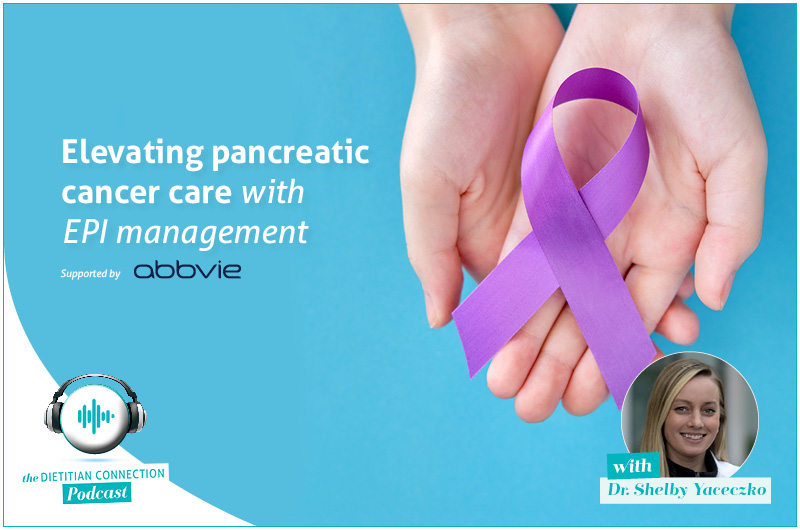
Exocrine pancreatic insufficiency (EPI) affects many patients with pancreatic cancer, yet it is often overlooked in this patient populations, which leads to malnutrition. In this episode, we are joined by Dr. Shelby Yaceczko, DCN, RDN, CNSC. Yacescko is a supporting author on a recently published White Paper on the topic, and she explains what EPI is, how to screen for and treat the condition, and the essential role of dietitians in an interdisciplinary care team managing these patients.
Hosted by Kristin Houts
Biography
Dr. Shelby Yaceczko, DCN, RDN-AP, CNSC is an expert registered dietitian nutritionist, a Doctor of Clinical Nutrition and has research interests in dietitian provider autonomy in advanced-level practice, gastrointestinal cancer, and complex gastrointestinal surgery conditions. She has developed numerous hospital-based nutrition programs and protocols aimed to improve nutrition care in the ICU and ambulatory care settings. Her expertise focuses on managing disorders of the pancreas, stomach, liver, gallbladder, bile ducts, esophagus, and small and large bowel. Yacescko holds leadership roles in national nutrition organizations involved in nutrition support and gastrointestinal diseases and is the founder of a digital health cancer wellness company.
In this episode, we discuss:
How overlapping GI symptoms, lack of standardized screening tools, and limited guidelines contribute to missed EPI diagnoses and delayed treatment
What inspired the development of the White Paper
How to bring EPI management into everyday practice
The ready-to-use checklists, screening forms, and EHR templates within the White Paper designed to standardize treatment
The content, products and/or services referred to in this podcast are intended for Health Care Professionals only and are not, and are not intended to be, medical advice, which should be tailored to your individual circumstances. The content is for your information only, and we advise that you exercise your own judgement before deciding to use the information provided. Professional medical advice should be obtained before taking action. The reference to particular products and/or services in this episode does not constitute any form of endorsement. Please see here for terms and conditions.
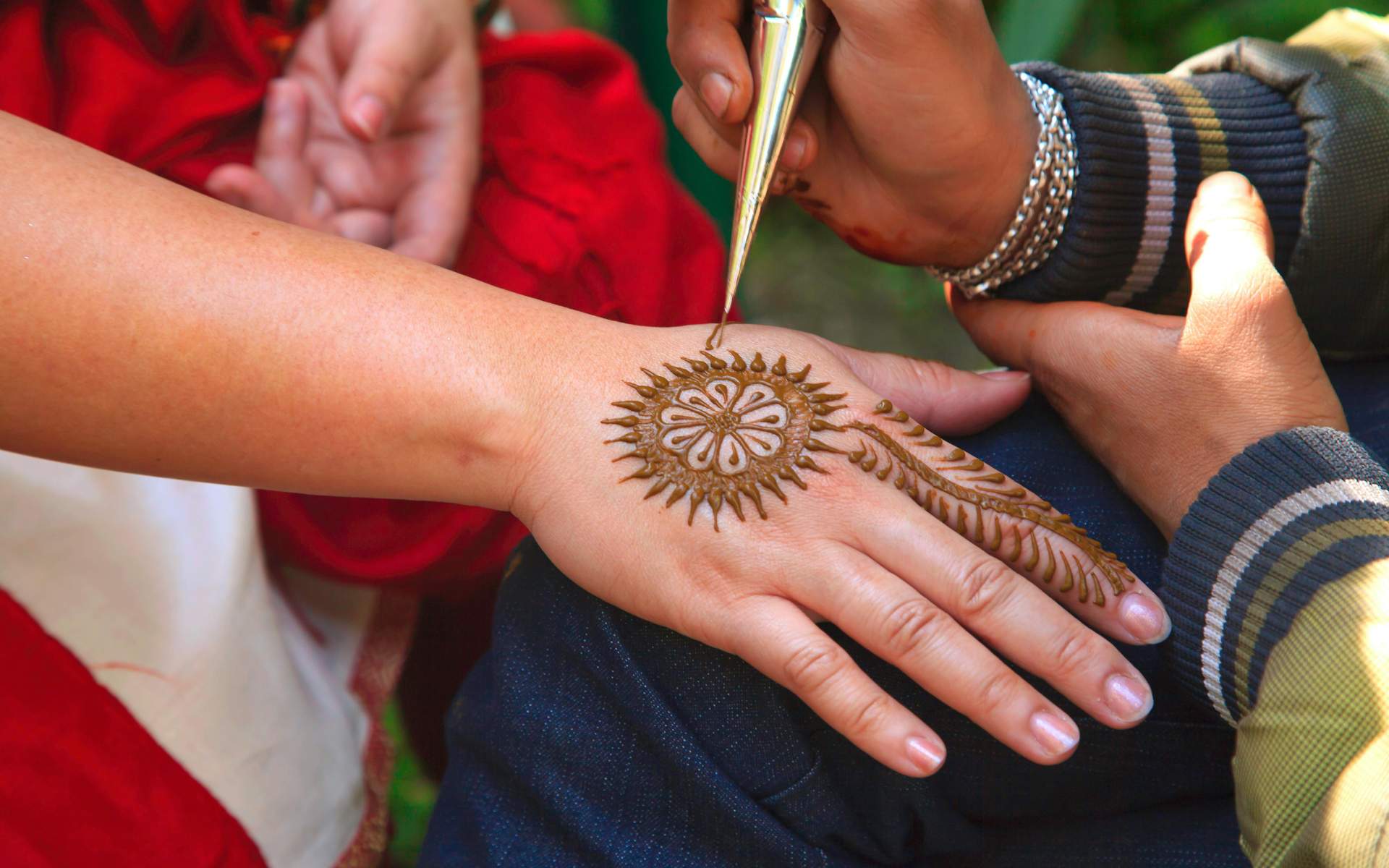
In this practice, mindful teacher Rose Felix Cratsley invites kids and caregivers to explore henna as an art form and as a gentle mindfulness activity that nurtures stillness, creativity, and cultural appreciation.
A Mindful Ritual at Your Fingertips
Children are naturally drawn to creative expression. The process of making and applying henna slows us down, encouraging presence, sensory awareness, and loving connection through touch and design.
Rooted in South Asian, Middle Eastern, and African cultures, henna (or mehndi) is a sacred ritual of celebration, storytelling, and connection. This practice invites us into mindful moments: as we mix the paste, trace the lines, feel the coolness on our skin, and observe our thoughts. Whether it’s a quiet moment shared between caregiver and child, or at a community gathering rich with color and conversation, henna becomes a living reminder: we are here, together, in this moment.
Henna Mindfulness Practice
1. Begin with Breath
Invite your child or group to take three slow, deep breaths. Feel the belly rise and fall. Notice how your body begins to soften. You might say: “We are here, we are calm, we are ready to create together.”
2. Mix with Intention
Mix 2 tablespoons of natural henna powder with lemon juice until a smooth paste forms. Optionally add a drop of essential oil and a pinch of sugar. Stir slowly and notice the texture and scent. As you mix, set a quiet intention: peace, joy, strength—whatever quality you want to hold in your design.
3. Trace the Moment
Before applying henna on the skin, practice simple shapes on paper. Spirals, dots, leaves, hearts—anything your child imagines. Encourage slowing down:
How does it feel to trace that line?
What happens to your breath as you move your hand?
4. Apply with Care
Using a cone or small brush, apply a simple design to the hand or wrist. Notice the sensation of the cool paste, the stillness of the body, and the breath anchoring the experience.
*Caregivers can gently apply henna to children’s hands, offering this as a moment of love, bonding, and grounding.
5. Rest and Reflect
Once the design is complete, let it dry naturally. Use this time for quiet reflection or journaling. Invite conversation:
What story does your henna design tell?
How did it feel to go slowly and focus?
What do you want to remember and cherish from this moment?
6. Close with Gratitude and intention
As the henna sets and your breath softens, invite a final moment of stillness. You might say together:
“We are present. We are creative. We are calm. We welcome peace.”
Let these words settle into your heart, mind, and body, like the design resting on your skin. This simple affirmation becomes a living mantra, carrying the essence of the practice forward: grounded in mindfulness, rich with cultural meaning, and full of possibility.
While henna fades in time, the peace we create through these practices becomes cherished memories.
Its Significance
Henna, as a mindfulness practice, invites children into their senses, their heritage, their bodies, and their relationships with care. For caregivers, it’s an opportunity to share calm and culture in one breath.
Rooted in tradition and adaptable for all ages, this ritual offers connection across generations—where stories, symbols, and emotions can live on the skin and in the heart.
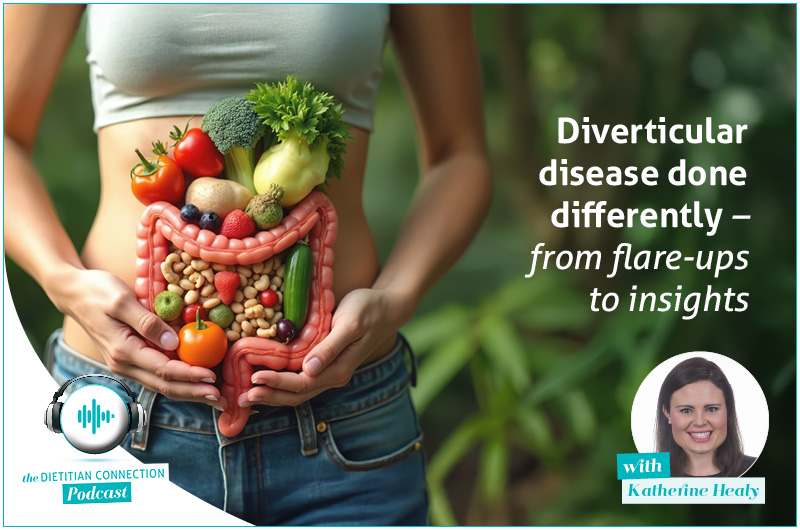
Diverticular disease is common yet remains one of the most misunderstood areas of gastrointestinal nutrition.
In this episode, Advanced APD Katherine Healy joins us to unpack the latest evidence and bring clarity to the management of diverticular disease. From acute flare-ups to prevention, Katherine shares how to move beyond outdated advice and deliver patient-centred, evidence-based care.
Hosted by Bec Sparrowhawk
Biography
Katherine Healy is an Advanced Accredited Practising Dietitian with over 14 years’ experience across the full spectrum of gastrointestinal disorders. Beginning her career as a microbiological scientist, she blends her love of science and food to deliver evidence-based, patient-centred care. Her research with Monash University explored enzyme therapy in low FODMAP diets, and she now leads pioneering dietitian-led gastroenterology clinics at Northern Health, transforming how dietitians contribute to GI care.
In this episode, we discuss:
The evolving understanding of diverticular disease and its causes
Evidence-based nutrition strategies from flare-up to recovery
How to debunk myths around historical nutrition advice
The content, products and/or services referred to in this podcast are intended for Health Care Professionals only and are not, and are not intended to be, medical advice, which should be tailored to your individual circumstances. The content is for your information only, and we advise that you exercise your own judgement before deciding to use the information provided. Professional medical advice should be obtained before taking action. The reference to particular products and/or services in this episode does not constitute any form of endorsement. Please see here for terms and conditions.

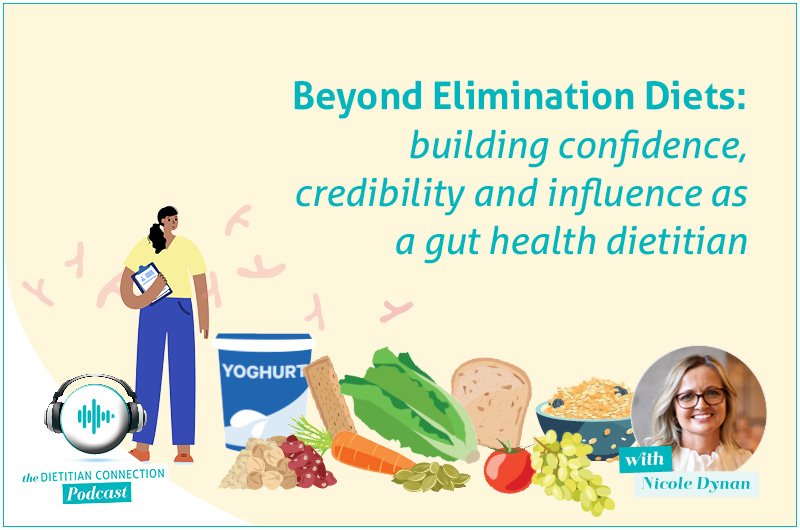
 Nicole Dynan is the founder of The Gut Health Dietitian (established in 2014) and one of Australia’s leading gut health experts. After a decade in corporate chronic disease management, Nicole saw first-hand how gut health impacts energy, stress, mood, and overall well-being. Since then, and together with her team, she’s helped over 40,000 people improve their gut health, feel more comfortable, and regain control of their overall health through science-backed nutrition.