Tag: Coming

  • A Lack of Vision: How the Wildfires Coming from Canada Are Making It Difficult to See

    A Lack of Vision: How the Wildfires Coming from Canada Are Making It Difficult to See

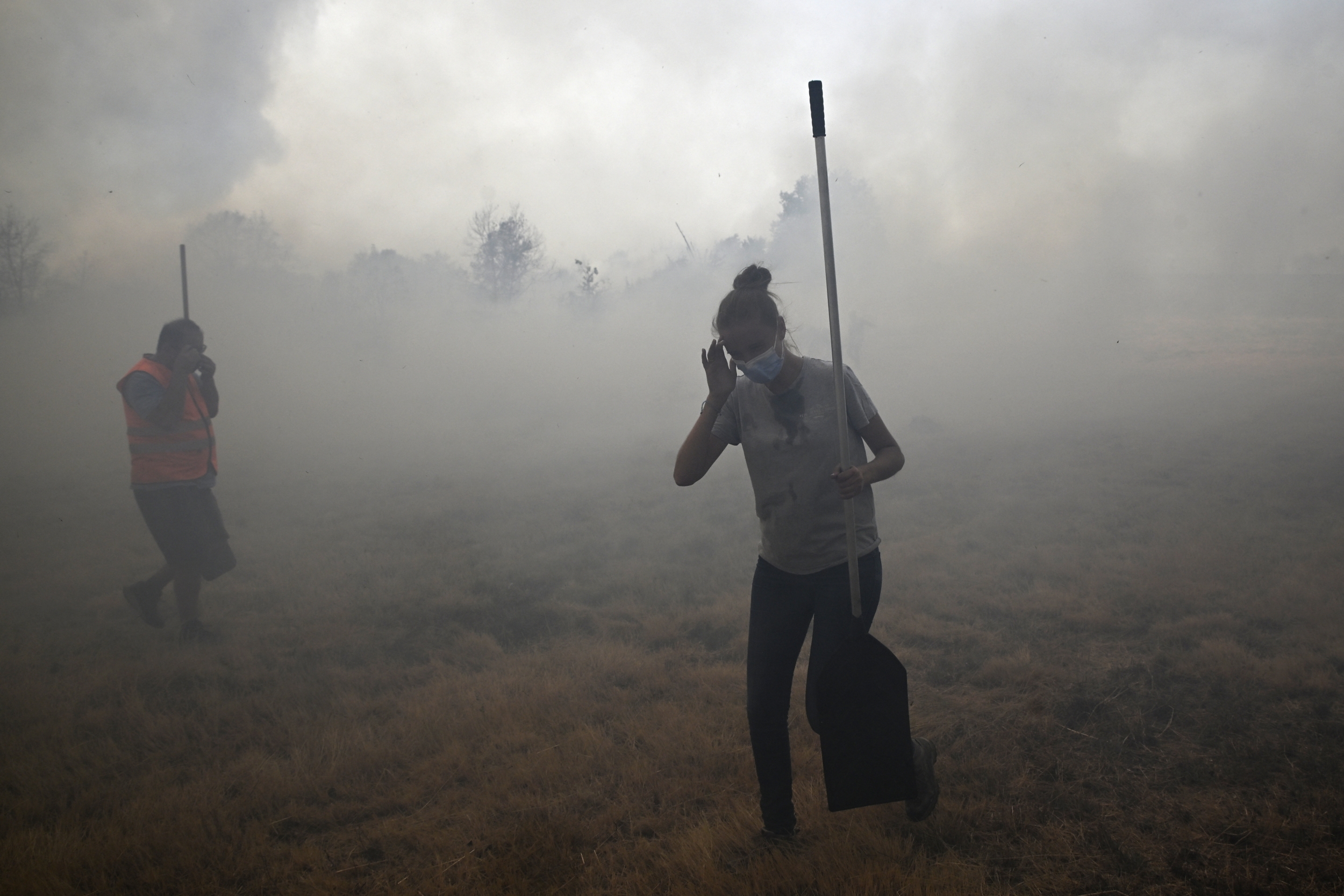
    Canada’s wildfires continue to blanket parts of its provinces and the United States with a large amount of smoke, prompting Code Purple air quality alerts and warnings for millions of residents to limit outdoor activities. While much of the concern has focused on the effects of poor air quality on the lungs, health experts say the smoke can also significantly affect the eyes, causing irritation, blurred vision, and making it harder to see as the thick haze reduces overall visibility.

    The Canadian nation remains in the midst of an active wildfire season, with dozens of fires burning across several provinces. Strong winds have carried dense smoke hundreds of miles from the fires themselves, drifting east, creating hazy skies and unhealthy air conditions in communities far from the source. The air isn’t just difficult to breathe; the smoke has reduced visibility for motorists and outdoor workers while exposing people’s eyes to microscopic particles that can trigger irritation and temporary vision problems.

    Smoke Travels East, While Also Blanketing Canada’s Neighbors

    Satellite imagery from NASA has shown massive smoke plumes stretching across eastern Canada and into parts of the United States, illustrating how wildfire smoke can travel long distances depending on wind patterns and weather conditions. Even communities located hundreds of miles away from active fires may experience hazardous air quality as airborne particles remain suspended in the atmosphere.

    To reduce health risks, local governments and public health agencies have issued the aforementioned Code Purple and other high-level air quality advisories in affected regions. Officials have encouraged residents to stay indoors whenever possible, postpone strenuous outdoor activities, monitor local air quality reports, and use clean-air shelters if available. Some jurisdictions have also distributed protective masks and expanded public messaging to help people reduce smoke exposure during periods of particularly poor air quality.

    Burning Vision? A Better Look at Smoke’s Effect on the Eyes

    Wildfire smoke contains microscopic particles and irritating gases that can come into direct contact with the surface of the eye. According to the American Academy of Ophthalmology (AAO), smoke exposure can disrupt the tear film that protects the eyes, leading to dryness and inflammation. The result is often burning, redness, watering, and irritation that can make it uncomfortable to keep the eyes open.

    The Cleveland Clinic notes that burning eyes are a symptom rather than a disease and may develop when smoke, dust, or other airborne irritants inflame the eye’s delicate tissues. Common symptoms include:

    • Burning or stinging eyes
    • Redness
    • Excessive tearing
    • Dryness
    • Itching
    • Blurred vision
    • Increased sensitivity to light
    • A gritty sensation, as though something is in the eye

    People who wear contact lenses, have allergies, or live with chronic eye conditions such as dry eye syndrome may experience more severe symptoms because wildfire smoke further irritates already sensitive eyes. Spending extra time outdoors during heavy smoke events can worsen discomfort and prolong inflammation.

    Beyond its effects on the eyes themselves, wildfire smoke also reduces overall visibility by scattering sunlight and filling the atmosphere with fine particles. This haze can make it more difficult for drivers to see other vehicles, pedestrians and road hazards, while also affecting outdoor workers, pilots and emergency responders who rely on clear sightlines to perform their jobs safely. Although the haze typically does not cause permanent vision loss, it can temporarily impair how clearly people see their surroundings until air quality improves.

    Most eye irritation resolves after smoke exposure ends, but prolonged exposure without protection may increase inflammation and worsen pre-existing eye conditions. Health experts recommend limiting outdoor activities during heavy smoke events, staying indoors with windows closed, avoiding rubbing the eyes, using preservative-free artificial tears to flush away irritants, and wearing glasses instead of contact lenses when smoke levels are high.

    If symptoms become severe, vision changes persist, or significant eye pain develops, medical evaluation is recommended.

    Keep Your Eyes Hydrated, Not Peeled

    The ongoing Canada wildfires highlight the effects poor air quality affects on not just the lungs, but also the eyes. Smoke can also interfere with eye health and vision, making routine activities such as driving, exercising or working outdoors more difficult and, in some cases, less safe because of reduced visibility.

    The widespread Code Purple alerts also highlight the importance of paying attention to local air quality advisories. While many people think of smoke primarily as a respiratory hazard, protecting the eyes by reducing exposure can help prevent irritation and temporary vision problems during prolonged wildfire events.

    For people living in affected areas, the situation serves as a reminder that monitoring air quality should become part of daily decision-making during wildfire season. By being prudent and taking simple preventive measures, such as staying indoors when smoke levels are high, using indoor air filtration, wearing eye protection outdoors when appropriate, and seeking medical attention if symptoms worsen, you can help protect both respiratory health and vision until conditions improve.

    Source link

  • A New Mindful App is Coming!

    A New Mindful App is Coming!

    Get all of Mindful’s resources right at your fingertips—and enjoy a full year of Mindful Digital completely free when you sign up for early access.

    Mindful.org is hard at work getting the Mindful App out into the world (available for iPhone and Android users). Our goal is to create and deliver a mobile experience that effortlessly puts the best of Mindful in your hands.

    We believe that top-quality mindfulness tools should be available to everyone, and that having multiple ways to engage with mindfulness increases the likelihood that practices like meditation, breathwork, movement, and journaling can become lifelong, life-enriching habits.

    What’s Inside the App

    With the touch of a button, you’ll find on-the-go access to everything you need:

    • Guided Meditations for All of Life’s Moments
      Our extensive archive offers a wide array of meditations for beginners and seasoned meditators alike. Search for practices tailored for everything from dealing with difficult emotions and facing loss to increasing compassion, experiencing more joy, and getting better sleep.  
    • Expert-Led Courses, Workshops & In-Depth Digital Guides
      Access comprehensive digital guides and online courses on topics like mindfulness for grief, gratitude, anxiety management, and more – all led by experienced educators and researchers. 
    • Engaging Podcasts & 12-Minute Meditation Sessions
      Listen to a variety of audio resources – including our 12-Minute Meditation weekly podcast series – for quick, digestible mindfulness breaks. 
    • Curated Collections, Mindful Challenges & Thematic Practices
      We bundle content and bring it to you so you can focus on a specific theme in your daily practice. Start building intentional self-care habits, and watch the positive effects on your perspective, thought patterns, interactions, and relationships. 
    • Evidence-Based Articles & Practical Everyday Mindfulness Tips
      Whether you’re brand new to mindfulness or you’ve been practicing for years, we’ve got approachable, research-backed guidance from the world’s leading teachers and experts to help you integrate mindfulness into your daily life.

    The Perks of Joining Early

    Right now, when you sign up for early access, you’ll receive an entire year of Mindful Digital as our thank-you for joining our growing community.

    Be the first to know when the Mindful App launches!


    Source link

  • A Meditation for Kids: Coming Back to the Positive

    A Meditation for Kids: Coming Back to the Positive

    What went well today? Kids and teens can explore this eight-minute guided meditation for noticing the positive.

    Summary

    • Children often focus on scary or unpleasant thoughts, which can effect their mental health.
    • This short kids’ meditation uses conscious breathing and happy thoughts to help them notice the good and feel more positive.

    Our brains are hardwired to notice the negative. It’s part of how our ancient ancestors were able to survive in constantly threatening environments.  

    But this negativity bias can also make it difficult for us and our kids, even in our comparatively less threatening environments, to navigate other daily stressors, like big tests, arguments, or disappointments. 

    In this practice specifically designed for younger meditators, Dr. Mark Bertin shows kids how to gently guide their attention back to the positive things they might have missed, in order to help soothe the nervous system. 

    A Meditation for Kids: Coming Back to the Positive

    1. Lie down somewhere comfortable. Let your arms and legs fall to the ground. Close your eyes gently.
    2. Start to notice how your body changes with each breath you take. Each time you breathe, your belly moves up, and your belly moves down. If it is easier, put a hand on your belly. Or if you want, put a stuffed animal there.
    3. Each time you breathe, your belly moves. Your hand, or your toy, rises, and then falls. See if you can count ten breaths that way. Breathing in, one, breathing out, one. (Repeat for nine more inhales, and nine more exhales.)
    4. When you lose count, don’t worry about it. That’s normal, and happens to everyone. Come back to whatever number you last remember.
    5. Now, shift your attention to your day. Breathing in, focus on your breath as your belly goes up. Breathing out, focus on something that went well today.
    6. With each breath: breathing in, noticing your belly move, and with each breath out, noticing something that went well today.
    7. Now, picture something about yourself that makes you proud. Breathing in, focus on your belly moving. Breathing out, picture something that makes you proud about yourself. If nothing comes to mind, that sometimes happens. If that’s how you feel, picture what you’d wish for yourself instead.
    8. Finally, bring someone to mind who makes you happy. Before we end, try one more practice. Breathing in, notice your belly move. And now, breathing out picture someone who makes you happy.
    9. As you come to the end of this practice, take a few deep breaths, and start to wiggle your arms and legs. Pause and decide what you’d like to do next.
    10. It’s normal to have thoughts that make us feel scared or bad. We should never ignore anything important, but it’s useful to focus on the rest of our lives too. Take a few minutes every day to notice what has gone well, and see what happens next.


    Source link

  • A Guided Meditation for Coming Home to Yourself

    A Guided Meditation for Coming Home to Yourself

    In this guided practice, Georgina Miranda invites you to pause, reflect, and reconnect with your inner strength.

    This article is independently researched and written by the Mindful editors. However, we may earn revenue or commission if you purchase via links included.


    In a world that constantly pulls us in different directions—from productivity and external validation to endless distractions—coming home to ourselves is one of the most powerful things we can do. True resilience isn’t about pushing through; it’s about creating an inner refuge, a place of strength and safety that stays steady no matter what’s happening around us.

    That’s what we’re exploring in Coming Home to Yourself, a meditation guided by Georgina Miranda. This meditation invites you to pause, reflect, and reconnect with your inner strength. Georgina reminds us that while mindfulness can be a refuge in difficult times, its real power comes from regular practice. This meditation is an opportunity to reset, find stability, and ground yourself in the present moment.

    A Meditation for Coming Home to Yourself with Georgina Miranda

    1. Find a quiet space where you will not be distracted. Take a seat on the floor or on a chair. Keep your spine straight. Place your palms on your lap facing up. Close your eyes or simply lower your gaze. Ease into your seat.
    2. Start connecting with your breath. If your mind is busy, you can count your breaths as above to refocus and slow down. 
    3. Connect with the rhythm of your breath. With each inhale ground yourself a little more into your seat. With each exhale let go of any tension, worries, doubts, or fears that arise. 
    4. As you inhale next, feel the beauty of the breath moving through your body. Connect with a sense of renewal and ease.
    5. As you exhale, release any remaining tension a little bit more, embracing a feeling of lightness come over you. 
    6. As you inhale, softly mentally affirm, “I am safe, I am home.” 
    7. As you exhale, softly mentally affirm, “I am well, and at ease.”
    8. Continue with these affirmations and cycles of breath until you feel a shift within you. Feel your sense of safety, joy, ease, and peace and with each breath come home more to yourself.

    More From Georgina Miranda

    Take back your power, ease your suffering, and create space for growth, renewal, and intentional living with Reset and Let Go: The Freedom to Live Fully, a transformative course by Georgina Miranda. Rooted in mindfulness, self-awareness, and practical tools for transformation, this journey will help you release what no longer serves you, reset your mindset, and embrace the life you truly want to live.


    Source link