Our nervous systems are made to keep us safe from danger—but what happens when they’re responding to threats that no longer exist? Writer Catherine Swett explores how we can meet these disruptive moments with sovereignty over avoidance, and over time teach our nervous system how to respond to discomfort and anxious moments.
The Trap of Avoidance
People often say, “I have anxiety. I cannot do crowds.” For a long time, I believed that was my whole story. But looking back, it was not just anxiety. It was avoidance. Every time I avoided, I quietly reinforced the fear.
Anxiety is not a monster outside of me. It is my body and brain sounding alarms. The problem is the software is outdated. It is coded from times when my body truly could not escape real threats.
Anxiety is not a monster outside of me. It is my body and brain sounding alarms. Heart racing, tunnel vision, fight or flight, doing exactly what it was designed to do: protect me from danger. The problem is the software is outdated. It is coded from times when my body truly could not escape real threats.
Reprogramming in Real Time
Of course, this does not mean every internal alarm is false. Sometimes our bodies are alerting us to genuine danger, and those protective instincts deserve our attention. The real work is learning to discern when to trust the alarm and when to question it.
When I walk into a crowd—a situation that might feel overwhelming, but that is actually not dangerous for me—and I feel panic rise, I have two choices. I can avoid it and confirm the fear, or I can walk through it and teach my body something new. I choose the latter. Each time I navigate what my nervous system warns is unsafe, I show it that I am safe.
This is not “just anxiety.” It is real-time nervous system reprogramming. I had to walk through crowds until I proved to my system that I was no longer its prisoner.
There is a line most people are never taught to notice. Avoidance often comes from fear, the kind where you spend your life running and the thing you fear keeps chasing you.
Recognizing the Line Between Fear and Choice
There is a line most people are never taught to notice. Avoidance often comes from fear, the kind where you spend your life running and the thing you fear keeps chasing you. That eventually catches up.
But there is another place. A place where you understand yourself. You recognize the environments, dynamics, and stimuli that activate your nervous system in unsafe ways. And you also know this: if you need to walk through it, you can. You are capable. You are conscious. You are not trapped.
You do not need to constantly expose yourself to triggers to prove resilience.
The difference is that you do not need to constantly expose yourself to triggers to prove resilience. Once you face the root of what makes something destabilizing, you gain the ability to choose if and when that exposure belongs in your life. That is not avoidance. That is conscious choice.
Lessons from Monks: Discipline, Not Detachment
I have thought about this in the context of monks. I used to assume they were peaceful because they were detached, above it all. That was ignorance. Monks feel, think, and experience frustration, desire, and disturbance, just like anyone else.
Healing is not about becoming untriggerable. It is not about enduring everything life throws at you. It is about understanding yourself deeply enough to respond consciously.
The difference is what they choose to subject themselves to. They do not abstain out of fear. They abstain with discipline, because they understand their minds. Peace is not passive. It is actively protected. That protection requires internal work, not constant exposure.
Healing is Sovereignty
Healing is not about becoming untriggerable. It is not about enduring everything life throws at you. It is about understanding yourself deeply enough to respond consciously. Thoughts rise. Reactions flare. Old patterns knock, and that is okay.
A life of avoidance with no self-work is fear in disguise.
A life of avoidance with no self-work is fear in disguise. A life of conscious choice, rooted in understanding, is sovereignty. By locating your perception, observing your nervous system, and noticing patterns in real time, you gain the ability to respond instead of react.
Growth Looks Like This
We know that healing is not linear. There will be ups and downs, and that’s normal. But in general, here are grounding statements that reflect the growth process:
I do not rush to correct my feelings
I delay decisions until my nervous system settles
I let context and awareness arrive before action
By treating perception and reactivity as interfaces, not flaws, urgency becomes information instead of command.
By treating perception and reactivity as interfaces, not flaws, urgency becomes information instead of command. Intensity becomes data instead of danger. Insight alone does not stop the spiral, but noticing the system in motion gives me room to respond instead of react.
By seeing perception this way, I can engage with reality as it is. I can separate the present from the echoes of the past and act with awareness instead of just reacting.
Recovery today goes beyond protein shakes and ice baths. The real limiter for many athletes isn’t muscle soreness—it’s nervous system fatigue. As training intensity climbs, so does the stress on your autonomic system. That’s where key recovery markers like heart rate variability (HRV), sleep quality, inflammation, and overall fatigue start to break down.
A new wave of recovery tools is focused on directly activating the body’s “rest and recover” response through the vagus nerve. Among them, Nuropod is built on auricular vagus nerve stimulation research developed by Parasym, a neurotechnology company that has invested over $10 million in studying non-invasive vagal stimulation and collaborated with more than 100 academic and medical institutions.
What truly sets it apart is the strength and consistency of the outcomes. Across randomized studies using Parasym-developed AVNT technology, researchers have reported a broad range of improvements, including a 61% increase in vagus nerve activity and HRV, a 48% reduction in fatigue, a 31% improvement in sleep quality, and up to a 78% reduction in inflammation markers. These findings highlight the importance of shifting the body out of high-output mode and into true recovery as a key factor in supporting long-term performance.
Why Recovery Isn’t Just About Muscles Anymore
For years, recovery meant protein intake, ice baths, massage guns, and rest days. But athletes are starting to realize something important: your nervous system recovers slower than your muscles.
You can feel physically fine and still be neurologically cooked.
Hard training drives the sympathetic nervous system—your fight-or-flight response. That’s great for lifting heavy, sprinting hard, or pushing conditioning work. But if you stay in that state too long, recovery stalls. Sleep quality drops. Resting heart rate climbs. HRV tanks. You wake up tired even after eight hours in bed.
This is where the vagus nerve becomes relevant
The vagus nerve is the main highway of your parasympathetic nervous system—the “rest and recover” side of the equation. It helps slow heart rate, improve heart rate variability, regulate inflammation, and shift your body out of high-stress mode.
For athletes, that shift matters.
Better parasympathetic activation can mean:
Faster recovery between sessions
Improved HRV scores
Deeper sleep
Better heart rate recovery after intense effort
Reduced nervous system burnout
This is why vagus nerve stimulation devices are gaining traction in the performance world. They aren’t muscle tools. They’re nervous system tools.
And that distinction changes how you evaluate them.
What Makes the Best Vagus Nerve Stimulation Device for Athletes?
Not all vagus nerve stimulation devices are built with performance in mind. The market includes medical tools, relaxation-focused gadgets, and high-intensity stimulators designed for very specific uses. But athletes operate under a different standard.
Some are designed for medical use.
Some are relaxation gadgets.
Some are intense neck stimulators meant for short bursts.
When training volume is high and recovery windows are tight, every tool must justify its place. A vagus nerve stimulation device for athletes is not about novelty or sensation. It is about measurable recovery support, improved HRV trends, better sleep quality, and the ability to consistently shift the body out of high-output mode.
But if you’re an athlete, lifter, or high-output professional, the criteria are different.
The best vagus nerve stimulation device for recovery should check a few key boxes:
1. It Supports HRV and Autonomic Balance
If you track HRV, you already know it’s one of the most useful metrics for gauging recovery, resilience, and training readiness. A device worth using should be built around protocols that align with improvements in vagal tone and heart rate variability—not just “feeling relaxed.”
2. It’s Built for Daily Use
Recovery isn’t a once-a-week event. Nervous system regulation works best when applied consistently. The right device should be comfortable enough to use multiple times per week—ideally daily.
If it’s too intense, too inconvenient, or too complicated, you won’t stick with it.
3. It Doesn’t Add More Stress
Some neck-based stimulators create strong pulses or muscle contractions. For certain use cases, that makes sense. But for recovery, you don’t want another stress spike—you want controlled parasympathetic engagement.
4. It Fits into a Real Training Schedule
Athletes don’t have time for 30-step setups. The best device should:
Be wearable or easy to apply
Require minimal prep
Not depend on consumables Integrate into post-workout or pre-sleep routines
5. It’s Backed by More Than Hype
Performance tools should have some grounding in actual neuromodulation research—particularly around HRV, fatigue, sleep, and recovery markers.
When you evaluate devices through that lens, the category narrows quickly.
And that’s where Nuropod enters the conversation.
It’s worth noting that vagus nerve stimulation isn’t a magic switch. It works best alongside fundamentals like sleep, nutrition, and training load management. But for athletes already dialing those in, it can act as a multiplier—helping the body shift into recovery mode more efficiently.
Nuropod Review: Best for Daily Nervous System Recovery
If your goal is consistent nervous system recovery, not a quick jolt or a novelty gadget, Nuropod stands out. Recovery tools should not spike the system. They should help shift it.
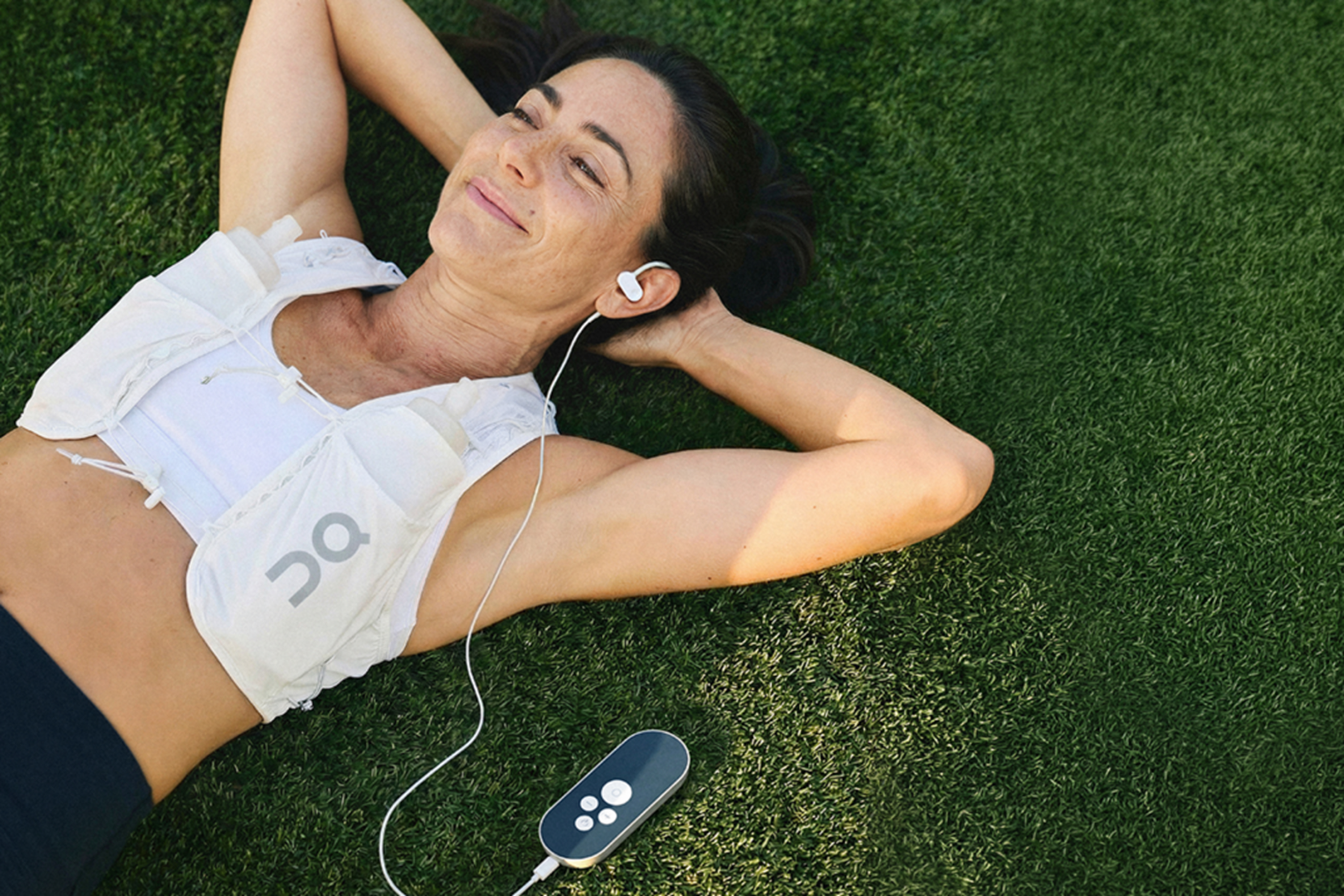
Nuropod in the US and its CE-marked version, Nurosym, available across the UK and EU, are built on auricular vagus nerve stimulation research developed by Parasym, a neurotechnology company that has invested over $10 million into studying non-invasive vagal stimulation and collaborated with more than 100 academic and medical institutions.
But Nuropod is not a lab instrument. It is the wearable translation of that research.
Unlike neck-based stimulators, Nuropod targets the ear. The outer ear contains sensory fibers connected to the vagus nerve, allowing low-level electrical stimulation to engage parasympathetic pathways without the intense pulses often associated with cervical devices.
For athletes and high-output individuals, that distinction matters. Recovery tools should not spike the system. They should help shift it.
Parasym
Built Around the Most Researched Auricular Protocols
Nuropod’s stimulation model is derived from over a decade of auricular VNS research. Across more than 50 published and ongoing studies examining ear-based vagus nerve stimulation, researchers have explored effects on:
Heart rate variability (HRV)
Autonomic balance
Fatigue scores
Sleep quality metrics
Inflammatory markers
Cognitive performance under load
In randomized, placebo-controlled trials using Parasym-developed auricular stimulation protocols, researchers have reported:
Up to 67% acute increases in vagal activity markers
61% improvement in vagus nerve activity and HRV
Up to 48% reductions in fatigue scores
Improvements of approximately 31% in sleep quality metrics*
For athletes tracking HRV and readiness, those numbers aren’t abstract—they translate directly into measurable recovery indicators.
What It Feels Like
Nuropod doesn’t hit you with aggressive pulses.
The sensation is mild—a controlled tingling at the ear. No muscle contraction, no sharp jolt, no need to brace. You can wear it while answering emails, working, or winding down after a workout or at night.
That subtlety is intentional. Recovery tools shouldn’t spike your nervous system. They should gently help shift it.
Designed for Real-World Use
One of Nuropod’s biggest strengths is usability.
It is:
Fully wearable and hands-free
Gel-free (no disposable pads to replace)
Adjustable across multiple intensity levels
Designed specifically for daily sessions
There are no subscription models or activation fees. You don’t need to hold it in place. You don’t need perfect positioning on the neck.
It fits into your routine instead of interrupting it.
Why It Works for Athletes
Athletes don’t need another stressor.
They need tools that:
Have measurable improvements in heart rate variability (HRV)
Support deeper sleep cycles
Improve heart rate recovery
Reduce that “wired but exhausted” feeling
Prevent nervous system burnout during heavy blocks
Nuropod isn’t a medical rescue device. It’s a structured tool for training the nervous system to improve recovery cycles. In performance, consistency beats intensity. Built for daily use, it supports autonomic balance and HRV-driven recovery.
Nuropod vs Neck-Based Vagus Nerve Stimulators for Recovery
When people first look into vagus nerve stimulation, they often see two types of devices: ear-based (auricular) and neck-based (cervical).
On the surface, they seem similar. Both deliver electrical stimulation. Both target the vagus nerve. But for recovery and performance, the difference in design changes the experience completely.
Intensity vs Consistency
Neck-based stimulators typically deliver stronger pulses to the side of the neck. Because the cervical region contains mixed nerve fibers and deeper structures, stimulation can feel more aggressive. Sessions are usually short and require manual placement.
That approach may make sense for certain clinical or symptom-specific uses.
But for athletes focused on recovery, intensity isn’t the goal—consistency is.
Nuropod’s ear-based stimulation is lower intensity and wearable. It’s designed for repeatable sessions that fit naturally into daily routines without adding stress or discomfort.
Stress Spike vs Nervous System Reset
High-output training already pushes the sympathetic nervous system hard. Adding another intense stimulus isn’t always what the body needs.
Nuropod’s auricular stimulation feels controlled and subtle. Instead of producing a jolt, it encourages a gradual shift toward parasympathetic activation—the state responsible for recovery, digestion, and sleep.
For lifters, fighters, endurance athletes, and hybrid trainers, that shift matters more than sensation.
Practicality Wins
Neck-based devices often require:
Precise placement
Holding the device in position
Replacement pads and gel (in some models)
Short, focused sessions
Nuropod, by contrast, is:
Hands-free
Gel-free
Adjustable
Built for daily use
That practicality makes consistency far more likely—and recovery tools only deliver if you actually use them. Build it into your post-workout wind-down: protein shake in hand, riding the post-training dopamine lift while your muscles rebuild and your nervous system recalibrates.
Final Verdict: The Best Vagus Nerve Stimulation Device for Recovery in 2026
If you’re an athlete looking for a vagus nerve stimulation device specifically to support recovery, HRV, sleep quality, and nervous system balance, the criteria are clear.
You want something that:
Supports parasympathetic activation
Aligns with HRV-focused protocols
Is comfortable enough for daily use
Integrates easily into your routine
Doesn’t add unnecessary complexity
Nuropod checks those boxes—with one of the strongest validation profiles and real-world track records in the auricular VNS category to date.
It isn’t built for dramatic, high-intensity bursts. It’s built for consistent nervous system training—the kind that supports recovery week after week.
In 2026, for performance-driven individuals prioritizing sustainable output and better recovery metrics, Nuropod stands out as the most practical and research-aligned auricular vagus nerve stimulation device in its category.
*Referenced scientific findings reflect published human studies in specific populations and should be interpreted within that context.
Disclaimer: These statements have not been evaluated by the U.S. Food and Drug Administration. Nuropod is not intended to diagnose, treat, cure, or prevent any disease. This content is for informational purposes only and does not constitute medical advice. Always consult a qualified healthcare professional before making decisions about your health.
She knows that getting started with a fitness routine can be overwhelming, especially when it comes to navigating the world of supplements. With so many options available, it’s easy to feel lost and unsure of where to begin. But when it comes to protein powder, she’s in luck. This comprehensive guide will walk her through everything she needs to know to choose the best protein powder supplement for her fitness goals.
Understanding the Importance of Protein
Protein is an essential nutrient that plays a critical role in building and repairing muscles. When she’s working out regularly, her muscles are constantly being broken down and rebuilt, and protein is necessary to support this process. Without enough protein, she may find that she’s not seeing the results she wants from her workouts, or that she’s feeling fatigued and sore. By incorporating a high-quality protein powder into her routine, she can ensure that she’s giving her muscles the nutrients they need to grow and recover.
Types of Protein Powder
There are several types of protein powder available, each with its own unique benefits and drawbacks. Some of the most popular types of protein powder include whey protein, casein protein, pea protein, and plant-based protein blends. Whey protein is one of the most popular and fast-digesting proteins, making it ideal for post-workout recovery. Casein protein, on the other hand, is slower-digesting and can help to promote muscle growth and recovery during sleep. Pea protein is a great option for those with dietary restrictions, as it’s hypoallergenic and easily digestible. Plant-based protein blends often combine multiple sources of protein, such as pea, rice, and hemp, to provide a complete amino acid profile.
Choosing the Best Protein Powder for Her Fitness Goals
When it comes to choosing the best protein powder, she needs to consider her specific fitness goals. Is she looking to build muscle, lose weight, or simply support overall health and wellness? Different types of protein powder are better suited to different goals, so it’s essential to do her research and choose a protein that aligns with her objectives. For example, if she’s trying to build muscle, she may want to opt for a whey protein or casein protein supplement. If she’s looking to lose weight, a plant-based protein blend or pea protein may be a better option.
Factors to Consider When Selecting a Protein Powder
In addition to considering her fitness goals, there are several other factors she should take into account when selecting a protein powder. These include the protein source, protein concentration, additives and fillers, flavor and texture, and brand reputation. She wants to choose a protein powder that is made from a high-quality source, such as grass-fed cows or non-GMO plants. She should also look for a protein powder that has a high protein concentration, typically around 20-25 grams per serving. Additionally, she should be wary of additives and fillers, such as artificial sweeteners and flavors, and opt for a protein powder that has a simple and natural ingredient list.
How to Use Protein Powder
Once she’s chosen a protein powder, she needs to know how to use it effectively. The timing and dosage of protein powder can vary depending on her fitness goals and schedule. Generally, it’s recommended to consume protein powder within 30-60 minutes after a workout, when her muscles are most receptive to nutrient uptake. She can also consume protein powder as a snack or meal replacement, or before bedtime to support muscle recovery during sleep. The recommended dosage of protein powder can vary, but a typical serving size is around 20-30 grams.
Benefits of Protein Powder
Incorporating a high-quality protein powder into her fitness routine can have numerous benefits. Some of the most significant advantages of protein powder include increased muscle growth and recovery, improved weight management, enhanced athletic performance, and support for overall health and wellness. By providing her muscles with the necessary nutrients, protein powder can help her to build lean muscle mass, recover faster from workouts, and support her overall fitness goals.
Common Mistakes to Avoid
While protein powder can be a valuable addition to her fitness routine, there are several common mistakes to avoid. These include over-relying on protein powder, using low-quality protein powder, not considering her dietary needs, and not staying hydrated. She should remember that protein powder is a supplement, not a replacement for whole foods. She should also choose a high-quality protein powder that meets her dietary needs and preferences, and stay hydrated by drinking plenty of water throughout the day.
Conclusion
Choosing the best protein powder can seem overwhelming, but by considering her fitness goals, researching different types of protein powder, and taking into account factors such as protein source and concentration, she can make an informed decision. With the right protein powder, she can support her muscle growth and recovery, manage her weight, and enhance her athletic performance. By avoiding common mistakes and using protein powder effectively, she can unlock the full potential of her fitness routine and achieve her goals.
Frequently Asked Questions
What is the best type of protein powder for building muscle?
The best type of protein powder for building muscle is typically whey protein or casein protein, as they provide a complete amino acid profile and are quickly absorbed by the body.
Can I use protein powder if I’m lactose intolerant?
Yes, there are many lactose-free protein powder options available, such as pea protein, rice protein, and plant-based protein blends.
How much protein powder should I take per day?
The recommended dosage of protein powder can vary, but a typical serving size is around 20-30 grams. She should consult with a healthcare professional or registered dietitian to determine the best dosage for her specific needs.
Can I use protein powder as a meal replacement?
While protein powder can be used as a snack or meal replacement, it’s generally recommended to consume whole foods as much as possible. Protein powder should be used to supplement her diet, not replace whole foods.
Is protein powder safe for everyone?
While protein powder is generally considered safe, she should consult with a healthcare professional before starting any new supplement, especially if she has any underlying health conditions or is taking medication.
For anyone looking to take their workouts to the next level, a fitness tracker is an essential tool. These sleek devices can monitor everything from heart rate and step count to sleep patterns and calories burned. But with so many options on the market, choosing the best fitness tracker can be overwhelming. In this article, we’ll break down the top features to look for and provide reviews of some of the most popular models.
Understanding the Basics
Before diving into the world of fitness tracking, it’s essential to understand the basics. A fitness tracker is a wearable device that uses sensors to monitor various aspects of a person’s physical activity. These devices can be worn on the wrist, clipped to clothing, or even integrated into smart clothing. When choosing a fitness tracker, it’s crucial to consider what features are most important to you. Do you want to track your daily step count, or are you more interested in monitoring your heart rate during intense workouts?
Key Features to Consider
When selecting a fitness tracker, there are several key features to consider. First and foremost, look for a device with a reliable and accurate sensor system. This will ensure that your tracker is providing you with accurate data. Other essential features include a user-friendly interface, water resistance, and a long-lasting battery. Some trackers also offer additional features such as GPS, music control, and mobile payment capabilities.
Heart Rate Monitoring: A built-in heart rate monitor is a must-have for anyone serious about fitness. This feature allows you to track your heart rate in real-time, providing valuable insights into your physical condition.
Water Resistance: If you plan on wearing your tracker during water-based activities or exposure to heavy sweat, look for a device with a high level of water resistance.
GPS Tracking: GPS tracking is essential for runners, cyclists, and other athletes who need to monitor their distance, pace, and route.
Sleep Tracking: A good night’s sleep is crucial for physical recovery, and a fitness tracker with sleep tracking capabilities can provide valuable insights into your sleep patterns.
Top Fitness Trackers on the Market
With so many options available, it can be challenging to choose the best fitness tracker for your needs. Here are some of the top models on the market, each with their unique features and benefits:
Fitbit Charge 3: The Fitbit Charge 3 is a popular choice for fitness enthusiasts. It offers advanced features such as heart rate monitoring, GPS tracking, and water resistance up to 50 meters.
Garmin Forerunner 945: The Garmin Forerunner 945 is a high-end fitness tracker designed specifically for athletes. It offers advanced features such as GPS tracking, heart rate monitoring, and music storage.
Apple Watch Series 5: The Apple Watch Series 5 is a sleek and stylish fitness tracker that integrates seamlessly with Apple devices. It offers features such as heart rate monitoring, GPS tracking, and mobile payment capabilities.
Reviews and Comparisons
When choosing a fitness tracker, it’s essential to read reviews and compare different models. Here’s a comparison of some of the top fitness trackers on the market:
Fitness Tracker
Heart Rate Monitoring
GPS Tracking
Water Resistance
Fitbit Charge 3
Yes
Yes
Up to 50 meters
Garmin Forerunner 945
Yes
Yes
Up to 50 meters
Apple Watch Series 5
Yes
Yes
Up to 50 meters
Additional Tips and Considerations
When choosing a fitness tracker, there are several additional tips and considerations to keep in mind. First and foremost, consider your budget. Fitness trackers can range in price from under $50 to over $500, so it’s essential to set a budget before making a purchase. Additionally, consider the compatibility of your tracker with your smartphone or other devices. Some trackers may only be compatible with specific operating systems or devices, so be sure to check before making a purchase.
Conclusion
Choosing the best fitness tracker for your workouts can be a daunting task, but with the right information, you can make an informed decision. By considering key features such as heart rate monitoring, GPS tracking, and water resistance, you can find a device that meets your unique needs. Whether you’re a casual fitness enthusiast or a serious athlete, a fitness tracker can be a valuable tool in your fitness journey. So why wait? Start tracking your fitness today and take the first step towards a healthier, happier you.
Frequently Asked Questions
Q: What is the best fitness tracker for beginners?
A: The best fitness tracker for beginners is the Fitbit Charge 3. It offers a user-friendly interface and a range of features such as heart rate monitoring and GPS tracking.
Q: Can I wear my fitness tracker in the shower?
A: It depends on the device. Some fitness trackers are water-resistant up to 50 meters, while others may not be suitable for exposure to water. Be sure to check the specifications of your device before wearing it in the shower.
Q: How long does a fitness tracker battery last?
A: The battery life of a fitness tracker can vary depending on the device and usage. Some trackers can last up to 7 days on a single charge, while others may need to be charged daily.
Q: Can I use my fitness tracker with my smartphone?
A: Yes, most fitness trackers are compatible with smartphones. However, be sure to check the compatibility of your device with your smartphone before making a purchase.
When selecting healthcare services in Vietnam, foreign residents prioritize the expertise of medical professionals, according to findings from a newly released survey.
The survey by Indochina Research Vietnam Ltd. highlights key insights into the healthcare preferences of foreigners living in major cities like Hanoi, Ho Chi Minh City, Da Nang, and Can Tho. Vinmec, a leading private hospital chain in Vietnam, leads in brand awareness, with most respondents identifying it as their preferred healthcare provider.
“This first survey serves as a valuable resource for healthcare institutions in Vietnam, offering them critical data on the needs, expectations, and feedback on past experiences of foreign residents in healthcare facilities in four key cities.” said Xavier Depouilly, General Director of Indochina Research Vietnam.
The survey was conducted over two months in early 2025 across key urban districts in Hanoi, Ho Chi Minh City, Da Nang, and Can Tho. Using a mix of face-to-face and online surveys, the research gathered insights from foreign nationals aged 18 and above who had used or been aware of medical facilities in Vietnam.
In Hanoi and Ho Chi Minh City, participants needed three months’ residency in Vietnam and intent to stay six more. In Da Nang and Can Tho, respondents were required to have lived in Vietnam for at least one month, with plans to stay for a further six months.
According to the study, 80% of respondents in Hanoi, 71% in Ho Chi Minh City, and 78% in Da Nang are familiar with Vinmec’s services, placing the hospital at the top of awareness charts across all surveyed cities. Family Medical Practice, Hanoi French Hospital, and FV Hospital are other top healthcare facilities identified in the survey.
Vinmec, a leading private hospital chain in Vietnam, leads in brand awareness amongst foreigners living in Vietnam as their preferred healthcare provider. PHOTO BY VINMEC
Among factors influencing healthcare choices, foreigners in Vietnam prioritize doctors’ expertise (53%), followed by the availability of advanced medical equipment (48%) and the quality of patient care or empathy (40%). These preferences remain consistent across cities, although location-specific preferences are evident.
Within the last two years, 88% of expatriates have engaged with healthcare facilities in Vietnam, predominantly for individual health concerns. Services most often sought include routine health assessments (48%), dental treatments (39%), and standard medical advice (38%). On the other hand, cosmetic enhancements and mental health support are rarely utilized or relied upon, with a mere 3% participation rate.
Looking ahead, 87% of respondents plan to use medical services in Vietnam within the next 6-12 months. Dental care (59%) and health check-ups (58%) are the most anticipated services.
For adult treatments, Vinmec is consistently ranked as the top choice across all regions. Meanwhile, when it comes to pediatric care, Family Medical Practice takes the lead.
For emergency care, preferences vary by city. Vinmec and the FV Hospital are top picks in Hanoi and Ho Chi Minh City respectively. Vinmec is the first choice in Danang, while foreigners in Can Tho prefer the Can Tho University of Medicine as their top option.
As Vietnam continues to grow as a hub for international business and medical tourism, understanding the healthcare preferences of foreign residents is crucial. Xavier emphasized: “We hope these findings will contribute to improving the quality and breadth of healthcare services for expatriates and their families and, in turn, foster the development of medical services in Vietnam.”
When it comes to reaching your fitness goals, having the right gear is essential. One of the most important components of a successful workout is the right pair of shoes. As the old adage goes, "the right shoes can make all the difference." But with so many options on the market, how do you know which pair is right for you? In this article, we’ll explore the top factors to consider when choosing the perfect workout shoes for your fitness goals.
Understanding Your Fitness Goals
The first step in selecting the perfect workout shoes is to define your fitness goals. What do you want to achieve with your workouts? Are you a casual jogger, a serious athlete, or a yoga enthusiast? Different fitness goals require different levels of support, stability, and cushioning. For example, if you’re a runner, you’ll want shoes that provide excellent arch support and shock absorption to protect your joints from the impact of each step. If you’re a yoga practitioner, you’ll want shoes that offer flexibility and grip to help you maintain balance and stability in challenging poses.
Fit and Sizing
A proper fit is crucial for a comfortable and effective workout. The shoes should feel snug but not too tight, with enough room in the toe box to wiggle your toes. Measure your feet at the end of the day, as feet tend to swell throughout the day. Consider getting your feet measured at a specialty shoe store or online retailer that offers free returns and exchanges. Remember, it’s better to err on the side of caution and go up a size if you’re unsure.
Cushioning and Support
Cushioning and support are essential for working out, particularly for high-impact activities like running or jumping. Look for shoes with adequate midsole cushioning and a drop (heel-to-toe offset) that fits your stride length and running style. Higher-quality shoes often feature advanced materials like gel, foam, or carbon fiber to provide extra support and shock absorption. Pay attention to the shoe’s arch support, as well, as this can make a big difference in reducing fatigue and preventing injuries.
Breathability and Ventilation
A breathable shoe is essential for keeping your feet cool and dry. Look for shoes with mesh panels or perforations to allow for airflow and moisture-wicking materials to keep your feet dry. Avoid shoes with thick, heavy designs that can trap heat and moisture. Instead, opt for shoes with a lightweight, airy feel that will keep your feet comfortable during even the most intense workouts.
Style and Comfort
Let’s face it: fit and function are important, but style matters too. Choose shoes that make you feel confident and inspired to tackle your workouts. Consider the color, design, and overall aesthetics that appeal to you. While functionality is crucial, the right shoes can also boost your mood and motivation.
Traction and Stability
If you’re a fan of high-intensity interval training (HIIT) or weightlifting, you’ll want shoes with excellent traction and stability. Look for shoes with a stable heel and a low profile to prevent excessive movement during intense exercises. Consider shoes with a rocker sole or a pivot point to help you maintain stability and control.
Budget and Quality
Finally, consider your budget and the quality of the shoes. High-quality shoes made with premium materials may be pricier, but they often provide better support, durability, and overall performance. Set a budget and stick to it, balancing the cost with the level of quality you’re willing to invest in.
Conclusion
Choosing the perfect workout shoes can be daunting, but by considering these top factors, you’ll be well on your way to selecting the right pair for your fitness goals. Remember to identify your fitness goals, ensure a proper fit, prioritize cushioning and support, consider breathability and ventilation, and prioritize style and comfort. With the right shoes, you’ll be ready to tackle even the most challenging workouts with confidence and motivation.
FAQs
Q: What is the best workout shoe for beginners?
A: For beginners, look for shoes with a comfortable, supportive design that can accommodate various foot shapes and sizes. Good options include cross-training shoes or tennis shoes.
Q: Can running shoes be used for other types of workouts?
A: While running shoes are designed for running, they can be used for other high-impact activities like HIIT or other cardio exercises. However, for low-impact activities like yoga or Pilates, consider a shoe with a more flexible sole and less cushioning.
Q: How often should I replace my workout shoes?
A: Aim to replace your shoes every 300-500 miles or every 3-6 months, depending on the frequency and intensity of your workouts. Worn-out shoes can lead to injuries and decreased performance.
Q: Can I wear workout shoes for everyday activities?
A: While workout shoes can be stylish, they’re designed for high-intensity activities. For everyday activities like walking or casual outings, consider a more relaxed, comfortable shoe that provides better arch support and stability.
When it comes to achieving your fitness goals, finding the right gym is a crucial step. With so many options available, it can be overwhelming to choose the perfect fit for your needs. In this comprehensive guide, we’ll break down the essential factors to consider when selecting a gym that aligns with your fitness goals, helping you to "sweat smarter" and get the most out of your workout experience.
Understanding Your Fitness Goals
Before starting your search, take some time to reflect on what you want to achieve. Are you looking to lose weight, increase strength, improve flexibility, or boost your overall health? Having a clear understanding of your goals will help you focus on the gym features that matter most to you.
Gym Types: Knowing the Difference
From traditional brick-and-mortar gyms to online platforms and functional training facilities, each type of gym has its unique strengths and weaknesses. Here’s a breakdown of the most common gym types:
Traditional Gyms: These are the most common type of gym, offering a variety of equipment, group classes, and personal training. They’re ideal for those who prefer a social workout environment and have access to a wide range of facilities.
Online Gyms: Online gyms, also known as digital fitness platforms, offer virtual classes, personalized coaching, and customizable workout programs. They’re perfect for those with busy schedules, limited mobility, or a preference for solo workouts.
Functional Training Facilities: These gyms focus on functional training, often incorporating cardio and strength exercises into one workout. They’re ideal for those who want to focus on overall fitness and athleticism.
Specialized Gyms: These gyms cater to specific interests, such as yoga, Pilates, or specific sports like rock climbing or CrossFit. They’re perfect for those with a strong affinity for a particular activity.
Gym Features to Consider
When evaluating gyms, don’t overlook the following features that can make a significant difference in your workout experience:
Equipment and Amenities: Ensure the gym has the right equipment for your goals, from free weights to cardiovascular machines. Look for amenities like towel service, locker rooms, and showers.
Group Fitness Classes: Group classes can be an excellent way to stay motivated and socialize. Consider the type and frequency of classes, as well as the expertise of the instructors.
Personal Training: If you prefer one-on-one guidance, look for gyms offering personal training services. Be sure to check the trainer’s certification and experience.
Support and Community: A supportive environment can be a significant motivator. Look for gyms with a strong sense of community, group challenges, or social events.
Cost and Contracts: Be mindful of the gym’s pricing structure, including initiation fees, membership costs, and any contract requirements.
Tips for Comparing Gyms
When evaluating different gyms, ask yourself:
What are my non-negotiables? Identify the must-haves for your fitness goals and lifestyle.
Can I try before I buy? Many gyms offer trial periods or guest passes. Take advantage of these to get a feel for the facility.
What are the hours of operation? Ensure the gym is open at times that suit your schedule.
What is the cancellation policy? Understand the terms of terminating your membership.
Are there any additional fees? Be aware of any extra costs for services like personal training or group classes.
Conclusion
Choosing the right gym is a crucial step in achieving your fitness goals. By understanding your goals, knowing the different types of gyms, considering the key features, and following our tips for comparison, you’ll be well on your way to finding a gym that suits your needs and helps you "sweat smarter," not harder.
Frequently Asked Questions
Q: Can I try out a gym before committing to a membership?
A: Many gyms offer trial periods, guest passes, or introductory offers. Be sure to ask about these when researching or visiting a gym.
Q: What are some common gym etiquette rules?
A: Be respectful of others by wiping down equipment, using clean gym clothes, and minimizing noise levels during group classes.
Q: How often should I expect to work out at the gym?
A: Aim for 2-3 times per week, with 30-60 minutes per session, for optimal progress and consistency.
Q: Can I bring a guest to the gym?
A: Check the gym’s guest policy, some gyms may have restrictions or require advance notice.
Q: What if I’m not satisfied with my gym membership?
A: Understand the gym’s cancellation policy and termination procedures. If you’re truly unhappy, it may be best to explore other options.
By following this guide, you’ll be better equipped to find a gym that suits your goals and lifestyle, enabling you to "sweat smarter" and achieve the best possible results for your fitness journey. Remember to stay focused, motivated, and patient, and you’ll be on your way to reaching your fitness dreams!
In today’s digital age, keeping your online accounts secure is more important than ever. Yet, with numerous passwords to remember, it’s easy to fall into the trap of using weak or reused passwords. This is where a reliable password manager comes in handy. But with so many options on the market, how do you choose the right one? This ultimate guide breaks down key features and considerations to help you find the perfect password manager.
Why You Need a Password Manager
Passwords are the gatekeepers to your online life. Using strong, unique passwords for each account is crucial. However, memorizing multiple complex passwords can be daunting. A password manager stores and encrypts your passwords, making it easier to manage them securely.
Security Features to Look For
When choosing a password manager, security should be your top priority:
Encryption: Ensure that the password manager uses strong encryption methods like AES-256.
Two-Factor Authentication (2FA): Adds an additional layer of security.
Zero-Knowledge Policy: The provider has no access to your passwords.
Compatibility Across Devices
A good password manager should work seamlessly across all your devices. Whether you’re using a laptop, smartphone, or tablet, you should be able to access your passwords effortlessly. Look for compatibility with Windows, macOS, iOS, and Android platforms.
User-Friendly Interface
Ease of use can significantly impact your experience with a password manager. Options like Dashlane enterprise password manager are known for their intuitive interface, making it accessible even for those who aren’t tech-savvy. It’s essential to choose a tool that simplifies password management rather than complicates it.
Features for Families and Teams
If you’re looking to manage passwords for multiple users, consider a password manager that offers family or team plans. These features allow you to share passwords securely with family members or colleagues while maintaining individual privacy and security controls.
Integration with Browsers
A password manager that integrates well with popular web browsers, such as Chrome, Firefox, and Safari, can save you time and hassle. This feature allows for automatic form filling and easy saving of new passwords as you browse the internet.
Backup and Recovery Options
In case you forget your master password or lose access to your account, having robust backup and recovery options is vital. Look for a password manager that offers secure account recovery methods, such as emergency contacts or backup codes.
Price and Value
While some password managers offer free versions, premium subscriptions often provide additional features like advanced security measures, priority customer support, and more storage space. Evaluate whether the extra features justify the cost based on your needs.
Customer Support and Reliability
Reliable customer support can make a significant difference, especially if you encounter issues with your password manager. Check for available support options, such as live chat, email, or phone support, and read customer reviews to gauge the company’s reputation.
Additional Features to Consider
Some password managers come with added benefits beyond basic password storage:
Secure Storage: Stores sensitive information like credit card details and secure notes.
Dark Web Monitoring: Alerts you if your credentials appear in data breaches.
Password managers are essential tools in today’s digital world, offering a secure and convenient way to manage your passwords. By considering the factors outlined in this guide, you can find a password manager that meets your needs and helps keep your online accounts secure. Ready to take the next step? Explore your options and choose the password manager that’s right for you.