Tag: Cell

  • Knee Stem Cell Injection Gains Attention as an Innovative Treatment

    Knee Stem Cell Injection Gains Attention as an Innovative Treatment

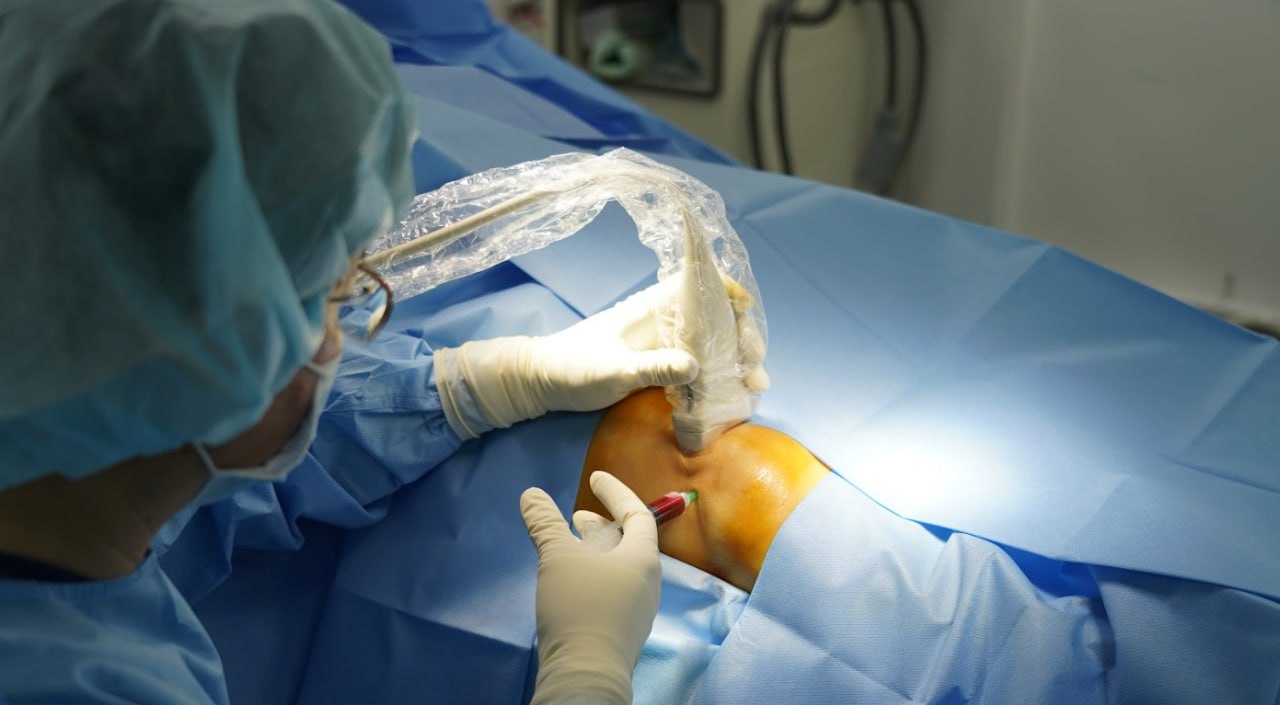
    Autologous Bone Marrow Stem Cell Therapy (BMAC무릎줄기세포주사) for the knee has recently gained recognition as an innovative medical treatment, showing significant effectiveness in treating knee osteoarthritis.

    Eight studies on the BMAC (무릎줄기세포주사) injection, which was officially approved as a new medical technology in South Korea last year, have demonstrated its effectiveness in alleviating knee osteoarthritis pain. In cases ranging from early to mid-stage arthritis, 94.4% of patients experienced considerable pain relief.

    The typical treatment process for knee osteoarthritis begins with non-surgical pain management methods. As the condition progresses, total knee replacement surgery is often required. Because effective pain control can significantly delay the need for surgery, continuous research has been conducted to develop new therapies—among which BMAC injections stand out.

    Previously, corticosteroid injections were commonly prescribed to manage knee arthritis pain. However, recent studies have revealed that steroid injections may actually accelerate joint degeneration.

    MRI scans of arthritis patients showed that those who received steroid injections experienced faster deterioration of cartilage and surrounding tissues.

    Researchers warn that while steroid injections may provide short-term pain relief, they can promote long-term damage to knee tissue. In particular, increased cartilage degeneration and inflammation were observed.

    As a result, medical experts are now urging patients who have been prescribed steroid injections for knee arthritis pain to consider alternative, safer, and more effective treatment options such as BMAC (무릎줄기세포주사) therapy.

    Dr. Yeong-Seok Lee, Director of Saint Luke Hospital, stated, “If knee pain is severe enough to interfere with daily life, it may indicate that the condition has already progressed significantly. It is crucial to seek a specialist’s diagnosis as early as possible.”

    Source link

  • Stem Cell Solution C

    Stem Cell Solution C

    Product Name: Stem Cell Solution C

    Click here to get Stem Cell Solution C at discounted price while it’s still available…

    All orders are protected by SSL encryption – the highest industry standard for online security from trusted vendors.

    Stem Cell Solution C is backed with a 60 Day No Questions Asked Money Back Guarantee. If within the first 60 days of receipt you are not satisfied with Wake Up Lean™, you can request a refund by sending an email to the address given inside the product and we will immediately refund your entire purchase price, with no questions asked.

    (more…)

  • How Is Natural Killer Cell Function Boosted by Forest Bathing? 

    How Is Natural Killer Cell Function Boosted by Forest Bathing? 

    Can the aroma of wood essential oils replicate the immune-boosting effects of walking in a forest?

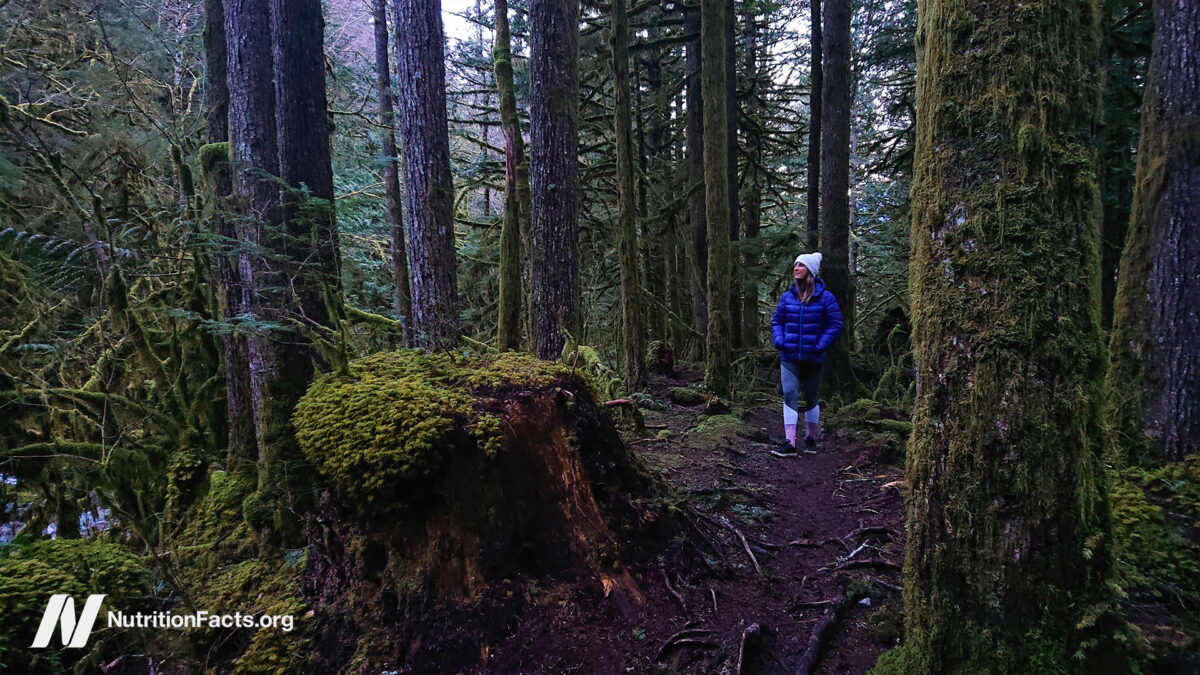
    Studies on the effects of “forest bathing,” or shinrin-yoku in Japanese, “a traditional practice characterized by visiting a forest and breathing its air,” have found it “can induce a significant increase in the number and activity of natural killer (NK) cells” that can last as long as a month. And because natural killer cells are one of the ways our body fights cancer by killing off tumor cells, the “findings suggest that visiting forest parks may have a preventive effect on cancer generation and progression.” How? “Why did the forest environment increase human NK activity? What kind of factors in the forest environment activated human NK cells?” What is it about the forest environment?

    One thought is that the boost may be related to a reduction in stress. If you measure the amount of adrenaline flowing through people’s systems, did spending time in a forest—but not in a city—lower adrenaline levels? Yes, as you can see at 0:58 in my video Why Does Forest Bathing Boost Natural Killer Cell Function?

    However, if you drip some adrenaline on human blood cells in a petri dish, there does not appear to be any effect on NK cells. The stress hormone cortisol, on the other hand, dramatically suppresses natural killer cell activity, as shown below and at 1:09 in my video. So, might being in the forest lead to less stress and less cortisol, which releases the natural killer cells under its thumb, giving us a boost?

    We know being surrounded by nature can decrease levels of cortisol in our saliva, but what about our bloodstream? Researchers found a significant drop in the stress hormone after a single-day trip to the forest. A week later, cortisol was normalizing, as you can see here and at 1:30 in my video, but the forest’s effects sometimes appeared to last an entire month. Anything else that could cause a longer-term immune system change?

    Maybe we’ve been missing some of our “Old Friends.” If you sample outdoor air, you can pick up an abundance of microorganisms from the soil and water that float around—but are absent from indoor air. (Indoor air is dominated by organisms that either live on us or try to attack us.) So, on a day-to-day basis, in terms of keeping our immune system on ready alert, it “might not be sufficient to encounter only the biased microbiota of the modern synthetic indoor environment that lacks some of the Old Friends and probably bears little resemblance to the microbiota we encountered throughout our evolutionary history,” the microbes we evolved to live with over millions of years.

    Or perhaps it’s the plants themselves. Maybe it’s the aroma of the forest. Trees produce aromatic volatile compounds called phytoncides, like pinene, which we can breathe into our lungs when we’re in the forest. Do these compounds actually get into our bloodstream? Indeed, after spending one hour in the woods, we get about a sixfold increase in pinene levels circulating throughout our system. To fully connect all the dots, phytoncides like pinene—those essential oils from wood—would then have to induce human natural killer cell activity. And guess what? The study title gives it away: “Phytoncides (Wood Essential Oils) Induce Human Natural Killer Cell Activity.” If you put natural killer cells in a petri dish with leukemia cells, our NK cells can wipe out some of the cancer cells. But, if you add a whiff of cypress, white cedar, eucalyptus, or pine, the cancer cells don’t stand a chance, as shown below and at 3:14 in my video

    A combination of wood aromas improved the recovery of mice put through the wringer, but this is the study I was looking for: “Effect of Phytoncide from Trees on Human Natural Killer Cell Function.” If we want to know if the magic ingredient is the fragrance of the forest, then let’s see if we can get that same boost in natural killer cell activity by just vaporizing some essential oil from one of the trees into a hotel room overnight. It worked! There was a significant boost in natural killer cell activity, as seen here, and a 3:40 in my video.

    Only NK activity was boosted, though, rather than the number of the natural killer cells, and being in an actual forest can elevate both. So, perhaps it’s a combination of the tree fragrance and the lower cortisol levels working together.

    Ironically, these phytoncide compounds are part of the tree’s own immune system, which we may be able to commandeer. As you can see at 4:05 in my video, researchers speculate that these compounds may be playing a role in the fact that more heavily forested regions in Japan appear to have lower death rates from breast cancer and prostate cancer. Indeed, being in nature has been found to be an “important coping strategy among cancer patients,” but it may help us cope better, thanks to the fragrance of trees. 

    Spending time in a forest significantly increases NK cell activity. In my previous blog, I discussed Boosting Anticancer Immunity with Forest Bathing.

    You may recall that I’ve touched on this topic before. See Are There Health Benefits of Spending Time in Nature?.

    For more on aromatherapy, check out the related posts below.


    Source link

  • No evidence that cell phone radiation causes cancer, says expert

    No evidence that cell phone radiation causes cancer, says expert

    Under the Donald Trump administration, the Department of Health and Human Services (HHS) may re-evaluate policies related to the potential health risks of cell phone radiation and wireless signals, such as cancer—but research has not demonstrated such risks, according to Harvard T.H. Chan School of Public Health’s Timothy Rebbeck.

    Robert F. Kennedy Jr.—the nominee for HHS secretary—has previously expressed concerns about cell phone safety, and it’s possible that, if confirmed, he would push for tighter regulations. But in a Dec. 10 Undark article, Rebbeck, Vincent L. Gregory, Jr. Professor of Cancer Prevention, said that studies have not found a connection between cell phone radiation and health issues. He explained that the types of radiation known to cause cancer—such as gamma rays and x-rays—have shorter wavelengths than those produced by cell phones.

    “The best evidence is all pretty clear around cell phones right now, and I would make sure that the policy recommendations are not only based in science, but also don’t cause issues that are unnecessary,” he said.

    Read the Undark article: In the Trump Administration Crosshairs: Cell Phone Radiation

    Learn more

    Cell phones don’t cause brain cancer: study (Harvard Chan School news)

    No link found between brain cancer and cell phone use, experts say (Harvard Chan School news)


    Last Updated

    Get the latest public health news

    Stay connected with Harvard Chan School

    Source link

  • Tumor suppressor protein Par-4 triggers unique cell death pathway in cancerous cells

    Tumor suppressor protein Par-4 triggers unique cell death pathway in cancerous cells

    A team of researchers at NYU Abu Dhabi, led by Professor Sehamuddin Galadari, has discovered that the tumor suppressor protein Prostate apoptosis response-4 (Par-4) can cause a unique type of cell death called ferroptosis in human glioblastoma — the most common and aggressive type of brain tumor — while sparing healthy cells. This new understanding has the potential to inform the development of novel treatments for various hard-to-treat cancers and neurodegenerative diseases.

    Ferroptosis is triggered by the iron-mediated production of reactive oxygen species (ROS) and subsequent lipid peroxidation, which plays a crucial role in shrinking cancerous tumors. This is the first time that Par-4, already known for killing cancer cells through apoptosis — a form of programmed cell death — has been shown to promote ferroptosis in glioblastoma cells.

    The tumor suppressor protein Par-4 is widely expressed across species, but is often reduced, mutated, or inactivated in the presence of various cancers. In the study “Tumor suppressor Par-4 activates autophagy-dependent ferroptosis,” recently published in the journal Communications Biology, the researchers identified that Par-4 plays an unanticipated role in promoting ferroptosis-mediated cancer regression. They demonstrated that Par-4 triggers the activation of ferritinophagy (autophagic degradation of ferritin) through the nuclear receptor co-activator 4 (NCOA4). This activation is necessary for the accumulation of the labile iron pool, the production of ROS, and the subsequent lipid peroxidation, all of which lead to ferroptosis.

    Ferroptosis plays a key role in various health issues, such as cancer, heart disease, brain damage, kidney failure, lung injury, and diseases like Parkinson’s, Huntington’s, and Alzheimer’s. The identification of Par-4 as a key player in ferroptosis is essential, as it is involved in the main processes and signals that make this alternative cell death pathway, ferroptosis, occur. Many types of cancer cells don’t respond to today’s treatments or have developed resistance to existing drugs therapies.

    This research was a collaborative effort between Associate Professor Mazin Magzoub’s lab at NYU Abu Dhabi and Professor Vivek M. Rangnekar from the University of Kentucky, who discovered Par-4 in 1993.

    “Our team’s discovery that Par-4 triggers ferroptosis is a breakthrough in the field of cancer treatment development,” said Galadari, who is the Senior Vice Provost for Research and Managing Director of the Research Institute at NYU Abu Dhabi. “Developing methods to activate alternative cell death pathways presents new opportunities for the creation of more potent and effective therapies for glioblastoma and other deadly and debilitating diseases.”

    “Investing in research at institutions such as NYUAD is instrumental in transforming the UAE into a knowledge-based economy that attracts local, regional, and global talent — a symbiotic relationship that creates opportunities, knowledge, and wealth,” Galadari added.

    Source link