Tag: Breath

  • A Meditation on Endings – Mindful

    A Meditation on Endings – Mindful

    By drawing our attention to endings and our developed habits about the way we meet endings, we can learn how to step fully into our lives with appreciation and gratitude, says Frank Ostaseski.

    How Do You Meet Endings?

    I want to draw our attention to endings: the end of a day, the end of a meal, the end of something precious and rare, the end of this sentence. 

    How do you meet endings? I mean, most of us have some developed habits about the way in which we meet endings. Are you aware of your habits? Without any judgment or criticality, let’s just take a look to see what our relationship to endings are. Like, when you go to a party, or you go to a conference: Do you have a tendency to leave emotionally or mentally before the conference is over or before the party’s over? Or maybe you’re the one in the parking lot waving goodbye to everybody as they depart. Or maybe you find some way of cocooning yourself, isolating in some way, pulling back into a kind of protective stance. Or perhaps you become ambivalent or indifferent about endings—maybe endings are very emotional for you. Maybe you get sad or scared. Let’s just take a look.

    When you end a relationship, how do you do it? Do you try to shift it into some other form of relationship so that it will continue? Do you end it with a text? How do you say goodbye in the afternoon when you leave your work—do you say goodbye to your colleagues? When a friend is sick and dying, do you go visit them? How do you meet endings? What are your patterns? Are you happy with the way you meet endings? You don’t have to be wedded to your old way of doing it. You have the freedom to change it, right here, right now. 

    When an ending comes, what happens in your body? Do you get tight, contracted? What’s the emotional experience? Does it bring about anxiety, fear, sadness? And what happens in your mind when endings come? Do you have remembering thoughts or planning thoughts? How do you meet this experience? 

    Exploring Endings and Beginnings

    The way that we end something shapes the way the next thing begins. When we hang on to the past, it limits our capacity to welcome the new. A lot of times we hang on because we’re still demanding something of the past, wanting it to give us more of what we’d hoped to get from that situation—more success, more love. The more comfortable we are with endings, the more we can welcome the new and release the old.

    The way that we end something shapes the way the next thing begins. When we hang on to the past, it limits our capacity to welcome the new.

    I used to run a preschool with a friend of mine, and we had these three- to five-year-olds that we would take into the outdoors. There, we would give them the task of collecting dead things, and the kids loved this. They’d go out into the woods and collect an old stick or fallen leaf or a rusty old car part, or sometimes the bones of a bird or a small animal. And then we’d bring them together and we’d lay out all of their discoveries on a blue tarp and in a grove of fir trees. And then we had a kind of show and tell. And the kids had no fear—they were full of curiosity. And sometimes when they presented the item they found, they would weave a great story about it, like how this rusty old car part had fallen from a spaceship. Or this leaf was being used by a mouse—to keep him warm until summer came. They had no fear. I remember one little girl said to me, I think the trees are very kind that they allow the leaves to fall from them so that new ones can grow. It would be really sad if the tree couldn’t grow new leaves.

    We know that birth will end in death. And reflecting on this might imbue our lives with more appreciation and gratitude. We know that the coming together of things inevitably means their dispersion, and reflecting on this may cause us to live a life of simplicity, to really cherish and care for what we have. 

    We know that everyone we love will one day die. Reflecting on this may cause us to think about how we want to care for them now. The way we meet in ending shapes the way the next moment arises. The study of endings is a beautiful way to step fully into our lives. 

    Learning From the Breath

    And the breath can help us restore; it can revitalize our life. The breath helps us to unhook from the daily frenzy. It brings balance to the instinctive drive to fight, take flight or freeze. Breath offers us an extraordinary opportunity to look at our relationship to endings. 

    1. Let the belly be soft; let the shoulders relax. Bring your attention to the breath, to the direct experience of breathing in and breathing out. 
    2. Be aware of the sensations in the body: the large, gross sensations and the subtler sensations of tingling or pulsing. Just let yourself settle into the rhythm of the breath however it is. There’s no need to control it or shape it in any way. 
    3. See if you can become aware of the very beginning of the inhale, the middle, and the end of the inhale. Do the same with the exhale: note the very beginning, the middle, and end of each exhale.
    4. See if you can become aware of that moment of transformation when the inhale becomes the exhale, when the exhale becomes the inhale. Relax. Let the breath breathe itself. Then you might notice that little gap, that pause, at the end of the exhale—maybe it’s just a nanosecond. Bring your attention fully and completely there. What happens in the gap? Were there physical sensations? Is there an emotional response? Do you find yourself anxious or feeling a sigh of relief? What happens in the mind? Is there a tendency to want to control the breath, to micromanage it in some way?
    5. Just let yourself rest in the gap. Rest in the pause. This pause: it’s a moment of faith or fear. Do you trust that the next breath will emerge? Can you relax with things just as they are? Breath is a microcosm of our whole life: coming and going, appearing and disappearing. 
    6. As we settle, we begin to feel like the breath is breathing us. Relinquish your control of the breath and let it breathe you. Settle back into the constant change—the coming and going, the beginning and ending of all experience. 

    Thank you for your practice.


    Source link

  • Breath Health Secrets for a Longer, More Vital Life

    Breath Health Secrets for a Longer, More Vital Life

    Breathing is one of the body’s most automatic and essential functions, yet proper breathing benefits are often taken for granted. Every breath fuels the body with oxygen, sustains energy production, and removes carbon dioxide, all essential processes for maintaining vitality and promoting long-term health.

    Recent studies and wellness practices now highlight how proper breathing benefits both the body and mind, influencing everything from stress response to cellular repair. Understanding and optimizing breath health isn’t just a wellness trend; it’s a scientifically supported approach to improving lifespan and overall quality of life.

    What Is Proper Breathing and Why Does It Matter?

    Proper breathing refers to the natural and efficient use of the diaphragm, allowing the lungs to expand fully and ensuring balanced oxygen and carbon dioxide exchange. This deep, slow, rhythmic breathing pattern contrasts with the shallow chest breathing common among individuals under chronic stress or poor posture.

    When practiced correctly, it optimizes oxygenation, reduces muscle tension, and calms the nervous system, according to the American Lung Association. It allows the diaphragm to move freely, improving circulation and supporting core stability.

    Conversely, improper or shallow breathing limits oxygen intake, placing additional strain on the heart and brain. Over time, it can contribute to fatigue, anxiety, and even cardiovascular issues. Therefore, proper breathing forms the basis of physical resilience and mental balance.

    The Science Behind Breath and Longevity

    The link between breathing and longevity lies within the body’s autonomic nervous system, which regulates heart rate, digestion, and stress response. Slow, rhythmic breathing activates the parasympathetic nervous system, often called the “rest and digest” mode, helping to lower blood pressure and promote recovery.

    As research advances, scientists are exploring how breathing affects cellular activity and aging. Controlled breathing enhances oxygen utilization efficiency, minimizing oxidative stress, one of the key contributors to aging and chronic disease.

    Major Proper Breathing Benefits

    The proper breathing benefits extend across multiple systems in the body:

    • Improved cardiovascular and lung performance: Regular deep breathing enhances oxygen absorption and strengthens the respiratory muscles.
    • Reduced stress and anxiety: Slower breathing patterns help regulate cortisol levels and emotional responses.
    • Enhanced focus and mental clarity: Improved oxygen flow to the brain supports cognitive performance.
    • Better immune and metabolic function: Balanced oxygen-carbon dioxide exchange supports optimal cell metabolism.
    • Improved sleep quality and energy recovery: More efficient breathing supports restorative sleep cycles.

    Many wellness experts agree that proper breathing acts as a “reset button” for the body’s internal balance, improving both immediate health and long-term vitality.

    Longevity Breathing Techniques for Everyday Life

    Various longevity breathing techniques have been developed across cultures to improve vitality, mental clarity, and resilience. Here are several evidence-backed methods that promote breath health and overall longevity:

    Diaphragmatic Breathing

    This involves breathing deeply into the abdomen rather than the chest. By engaging the diaphragm, it maximizes oxygen intake and reduces tension in the upper body. Practicing for 5–10 minutes daily can significantly improve relaxation and lung efficiency.

    Box Breathing

    Also known as “square breathing,” this technique involves four equal parts: inhale for four counts, hold for four, exhale for four, and hold again. It’s often used by athletes and professionals to maintain calm focus under pressure.

    Alternate Nostril Breathing (Nadi Shodhana)

    Rooted in yogic tradition, this technique balances both hemispheres of the brain by alternating the breath between nostrils. It enhances concentration, clears sinus pathways, and stabilizes heart rate variability, all markers of good breath health.

    4-7-8 Breathing

    This technique involves inhaling for four counts, holding for seven, and exhaling for eight. It activates the body’s relaxation response and is particularly useful for reducing sleep onset time.

    Each of these practices promotes mindful control of breathing, helping individuals develop awareness of their own respiration patterns while cultivating long-term physical and mental resilience.

    How Breath Health Supports Cellular and Mental Vitality

    At a cellular level, breath health directly influences the body’s ability to regenerate and maintain balance. Oxygen is pivotal in cellular metabolism, supporting energy production through the mitochondria, the powerhouses of each cell. Efficient breathing ensures cells receive adequate oxygen to function, grow, and repair themselves, as per Cleveland Clinic.

    Furthermore, the balance between oxygen intake and carbon dioxide retention (known as the Bohr effect) determines how effectively cells absorb oxygen. Shallow or erratic breathing disrupts this equilibrium, leading to fatigue and diminished performance.

    From a mental perspective, steady breathing patterns synchronize neural activity between different regions of the brain, enhancing focus, memory retention, and emotional regulation. In this way, improved breath health nurtures clarity and vitality on both the physical and psychological levels.

    Simple Daily Habits to Improve Breath Health

    Developing healthy breathing habits requires both awareness and consistency. Even small adjustments throughout the day can strengthen respiratory function.

    Here are simple, actionable steps to integrate into daily routines:

    • Maintain good posture by keeping the spine aligned and shoulders relaxed, giving the diaphragm space to move freely.
    • Take mindful breathing breaks, pausing every hour to breathe deeply for 60 seconds can stabilize oxygen levels and reduce stress.
    • Minimize environmental toxins, using air purifiers and avoiding pollutants protects lung tissue and supports long-term respiratory efficiency.
    • Stay physically active, as moderate exercise like walking or yoga reinforces proper breathing rhythms.

    Consistency is key. By staying mindful of one’s breath and integrating these small practices into daily living, individuals can gradually enhance their breath health and vitality without specialized equipment or training.

    Breathing, Sleep, and Recovery

    Breathing patterns significantly influence sleep quality and recovery. During sleep, proper nasal breathing ensures efficient airflow and oxygen delivery to tissues. In contrast, mouth breathing or obstructed airflow can lead to snoring, sleep apnea, and morning fatigue.

    Addressing these patterns through positional adjustments, nasal breathing retraining, and relaxation breathing before bed can dramatically improve both the depth and quality of sleep.

    In response to how proper breathing improves sleep quality, researchers note that consistent breath control promotes parasympathetic activity, slows the heart rate, and induces a state of calm, crucial components for restorative rest.

    Integrating Breathing Into a Longevity Lifestyle

    Optimal breathing should be seen as part of an integrated lifestyle approach to longevity. Combining longevity breathing techniques with balanced nutrition, regular exercise, and mindfulness practices enhances overall well-being.

    Unlike quick fixes, respiratory training influences both immediate relaxation and long-term health outcomes. Regular breathwork complements cardiovascular fitness, supports emotional balance, and can even improve athletic performance by increasing oxygen utilization efficiency.

    To the question, how often should one practice breathing exercises for maximum benefit? experts recommend daily practice sessions of 5–15 minutes. Over time, these techniques become automatic habits that continually support the body’s natural rhythms and vitality.

    Proper breathing sits at the intersection of mind and body, a natural, accessible pathway to improved longevity and vitality. By understanding and applying proper breathing benefits, individuals enhance oxygen delivery, reduce stress, and strengthen cellular performance.

    Integrating longevity breathing techniques into daily routines represents a sustainable, science-backed strategy for maintaining breath health and extending both lifespan and quality of life. With consistent practice, each breath becomes not just a reflex, but a conscious act of renewal.

    Frequently Asked Questions

    1. Can improper breathing shorten lifespan?

    While improper breathing doesn’t directly shorten lifespan, it can contribute to health issues that affect longevity over time. Shallow or rapid breathing elevates stress hormones, increases heart rate, and may reduce oxygen efficiency. These conditions can lead to chronic stress, fatigue, and cardiovascular strain, factors indirectly linked to premature aging.

    2. How does hydration affect breath health?

    Hydration plays an important role in maintaining breath health because water keeps the mucous membranes in the nose, throat, and lungs moist. When the body is dehydrated, airways can become irritated, increasing the likelihood of shallow breathing and respiratory discomfort. Proper hydration supports smooth airflow and helps the lungs function efficiently.

    3. Are there specific foods that support better breathing?

    Yes, certain foods can enhance respiratory health and oxygen utilization. Diets rich in antioxidants (like berries, leafy greens, and citrus fruits) reduce inflammation in the airways. Omega-3 fatty acids, found in fish and flaxseeds, also support lung elasticity. Reducing processed foods and sugar helps regulate inflammation that can hinder proper breathing.

    4. Can technology or breathing apps help track breath patterns?

    Modern breathing and mindfulness apps can be valuable tools for improving breath health. Many offer guided longevity breathing techniques, timing cues, and real-time feedback on breath duration and frequency. Consistent use trains users to develop awareness of their breathing rhythm and gradually integrate healthier patterns into daily life.


    Source link

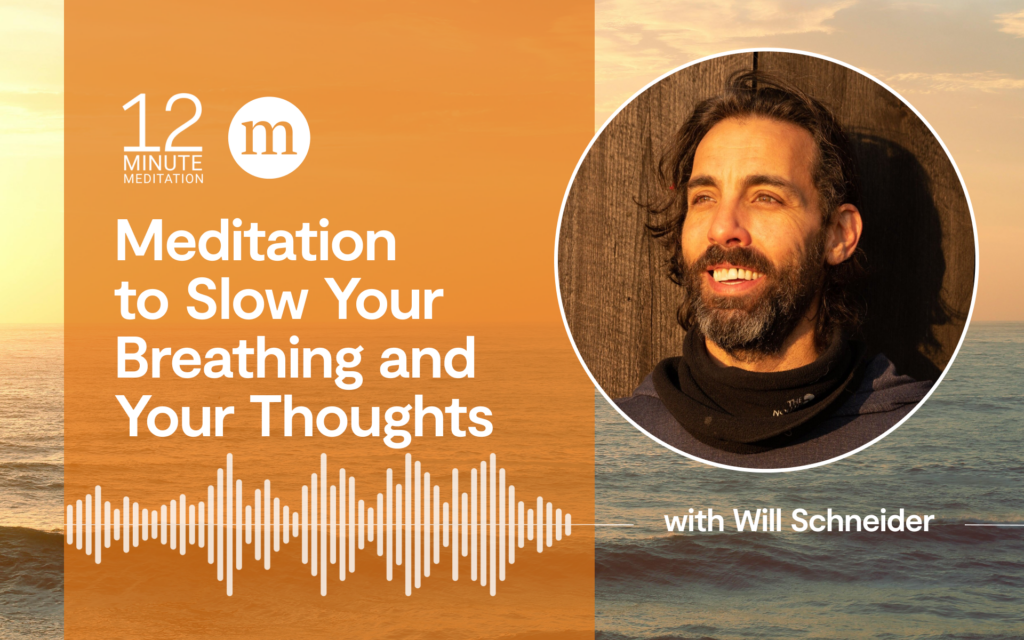
  • Slow Your Breath and Your Thoughts: 12-Minute Meditation

    Slow Your Breath and Your Thoughts: 12-Minute Meditation

    Paying attention to the gentle, natural flow of our breath can help us witness the chatter of the mind without judgment.

    By becoming more aware of our inhales and exhales, we gradually bring calm to our mind and our nervous system. We’re giving ourselves permission to slow down for a few minutes. And as we breathe, we can also witness the active chatter of our mind without being swept away, and the thoughts about the past or worries about the future.

    Mindfulness practice reveals how our thoughts and emotions are constantly changing, and this simple, relaxing meditation gives us a chance to release expectations and judgments. A state of mind awareness is strengthened each time we notice the mind wandering and choose to come back to the sensations of the breath moving in and out of our body.

    A Guided Meditation to Slow Your Breathing and Your Mind

    1. First, get yourself ready. You can sit in a comfortable position, in a chair, on a traditional meditation cushion, or on the floor. If you’re sitting, try to sit up tall, working for that dignified spine. Or, maybe you want to take this lying down.  
    2. Let’s start by finding our breath. Empty the breath all the way out, and let it go. Then take a big breath into your belly, then let it go out the mouth nice and easy. Keep breathing like this: really big inhales, slow the breath out. See if you can deepen the breath on each round. 
    3. Become aware of the flow of the breath. Instead of thinking about your breathing, just be curious about it. Curiosity is so nice, because you can step back and just observe the sensations of the breath, allowing it to help slow things down. 
    4. Bring a hand onto your belly, or maybe both hands onto your belly, or right hand in your belly, left hand on your chest. Use the hands to feel more of that breath flowing in and out and focusing just on the simple flow of the breath. By deepening this breath and becoming more aware of the breath, we naturally begin to slow our neurological processes down. We begin to naturally slow the biology down, the heart rate, the blood pressure. We begin to naturally, cognitively slow down the mind. 
    5. Now, let the breath rest in its natural state. It doesn’t have to be as big as the first few minutes. Using the breath as the focusing tool, stay with the flow of the breath as it inflates and then expands the belly and also deflates and contracts the belly. If you’re only breathing into your chest at this point, try to invite the breath down deep into the belly. It’s okay if you’re not breathing this way right now, but just be with the breath as it is, where it is, and be aware without judgment.  
    6. By focusing in this way, you’re going to be able to see the cleverness of the mind, trying to pull you somewhere into the future or drag you into the past. Notice that you’re thinking. You can even label it: That’s thinking. Then come back to the awareness, the simple awareness of your breath as it fills and spills. Be with the mind and the body as they are. The mind is made to be distracted. It always has a sense of alertness to it, but we don’t have to attach to the mind.  
    7. Be curious with the subtleties of each passing breath. Be aware emotionally, as well. Are you beating yourself up when you get attached to a thought? Or swept up in an emotion? Just let that go, too, and come back to the breath. 
    8. Notice, too, where you are holding expectations, and gently let them go. Maybe you came to your practice with the sense of, Oh, I should feel more peaceful right now. I should be experiencing this. I was hoping today that my meditation would yield this. Let it all go. No expectations, no attachment. Being with things as they are inside and outside: inside, just following the breath as it is; outside, letting the world around you be as it is.
    9. Remember, it doesn’t matter if you need to come back 1,000 times to one breath. That’s the practice. It’s not about getting it right or being perfect. It’s about showing up, doing the best you can with where you are physically, mentally, and emotionally in this moment. 
    10. Take a moment and thank yourself for taking the time today to honor your practice and honor your commitment to this course. Thank you for practicing. We’ll see you back here again tomorrow. Have a fantastic day. Way to show up.

    Never Miss a Meditation

    Enter your email below to get new podcast episodes delivered straight to your inbox! You’ll also get insights from expert mindfulness teachers and exclusive deals on Mindful Shop products, events, and more.


    Source link