Tag: Allergy

  • Food Allergy Week:​ FPIES in focus​

    Food Allergy Week:​ FPIES in focus​


    Navigating Food Protein-Induced Enterocolitis Syndrome (FPIES) can be complex, but dietitians have a crucial role in supporting families with clarity and care. In this episode, we’re joined by Ingrid Roche, APD and co-director of Advanced Dietitians Group, to explore the foundations of FPIES — from diagnosis to multidisciplinary care. Ingrid shares practical strategies for maintaining nutritional adequacy, managing feeding challenges, guiding safe food reintroductions, and supporting parents through the emotional journey. Whether you’re new to paediatric allergy or looking to deepen your expertise, this conversation is filled with evidence-based insights and practical takeaways to strengthen your practice.

    Hosted by Rebecca Sparrowhawk

    Biography

    Ingrid Roche is an Accredited Practising Dietitian with many years’ experience in paediatric food allergy including a long stint at the Perth Children’s Hospital. She is co-director of Advanced Dietitians Group, a private dietetic practice in Perth, Western Australia, specialising in paediatrics and allergy. Ingrid also works for the National Allergy Council, leading the food service project, continuing her passion for training and education others in food allergy.

    In this episode, we discuss:

    • What FPIES is and how it differs from other food allergies
    • Recognise the dietitian’s role in diagnosis, nutrition support and care planning
    • Explore approaches to feeding challenges and supporting parent confidence
    • Gain practical guidance for safe and structured food reintroduction


    Additional resources

    • Click here to find out more about Farmers Union Gut Good
    • Click here to learn more about ASCIA Food Allergy and Adverse Food Reactions Course for Dietitians
    • Click here to listen to our episode ‘Living with FPIES: From dietitian to allergy parent’ with Kristin Houts
    • Connect with Ingrid Roche on LinkedIn


    The content, products and/or services referred to in this podcast are intended for Health Care Professionals only and are not, and are not intended to be, medical advice, which should be tailored to your individual circumstances. The content is for your information only, and we advise that you exercise your own judgement before deciding to use the information provided. Professional medical advice should be obtained before taking action. The reference to particular products and/or services in this episode does not constitute any form of endorsement. Please see  here  for terms and conditions.


    Source link
  • Rare Water Allergy Causes Excruciating Pain For Woman—From Drinking To Showering, She Shares Her Daily Struggle

    Rare Water Allergy Causes Excruciating Pain For Woman—From Drinking To Showering, She Shares Her Daily Struggle

    You may never realize how often water touches our lives until you have a disorder like the 25-year-old young mother from the U.K. who describes simple daily activities such as washing hands, drinking water, or taking a bath as “excruciatingly painful”.

    An extremely rare condition called aquagenic urticaria makes the life of Kendall Bryce, from Durham, UK, a real struggle. As a young mother of one, pregnant with her second child, she finds it difficult to take care of herself and or her child while battling the condition.

    “I’ve never been able to give my one-year-old son a bath. My mom has to do it for me. And I even feel my throat burning when I drink water,” she said.

    “It really is a daily struggle. I can only have a bath or take a shower twice a week because of how excruciating the pain is, so I constantly worry I stink,” said Bryce.

    Bryce’s condition began when she was just 15 when she started noticing hives after she took a bath. But little did she realize that was the beginning of her battle with water allergy until she was diagnosed with the condition four years back.

    “The GP didn’t have a clue what to do. It’s just such a rare condition, so not many people have it and not many people know about it,” Bryce recalled, still living with the constant pain. The pain is so severe that her body sometimes goes into shock.

    “My life is dictated by the weather as I have to avoid rain — and even hot humid days. I check the forecast every day and stay home if it’s raining or going to rain, but if I get caught out by surprise, my body reacts and it’s really painful,” she added.

    There is currently no cure for water allergy, but treatment options are available to manage the symptoms. Treatments include the use of oral antihistamines, topical medications like creams or emulsions, phototherapy using artificial UV light, and sometimes other medications like asthma drugs, anabolic steroids, or SSRIs.

    While pregnant, Bryce’s treatment options are however limited. “They’ve tried lots of different medications but I kept reacting. I still haven’t found something that helps,” Bryce said. However, she hopes that by sharing her story, she might connect with someone who knows how to treat her condition.

    Source link

  • Curex Is Making Food Allergy Care Easier Than Ever, Backed by Science

    Curex Is Making Food Allergy Care Easier Than Ever, Backed by Science

    For many people, food allergies are a year-round problem. The fear of accidentally exposing themselves to foods they are allergic to, stomach pains, and even more severe reactions can make every meal feel like a gamble. Even small amounts of allergens in everyday meals can cause a lot of distress, turning something as simple as enjoying food into a stressful and cautious experience. Avoiding the food their entire life may be impossible, which causes significant distress for people with food allergies. Going to restaurants is like playing a game of Russian roulette, as very few kitchens are pure from cross-contamination.

    The first treatment that has emerged to combat food allergies has been oral immunotherapy, or OIT. It is administered in the office by an allergist, who, after conducting testing, creates a cocktail of allergens and asks the patient to drink it. Most doctors mix their own cocktails from ingredients they buy in a store, which is not a precise process and frequently causes significant side effects and even anaphylaxis. While OIT is effective for those who persevere and complete the treatment, few do because of painful side effects.

    Fortunately, a new treatment for food allergies, sublingual immunotherapy (SLIT), has become a popular and practical solution for many. Through drops applied under the tongue, the treatment exposes the immune system to small, regulated amounts of common food allergens like peanuts, dairy, or shellfish. Unlike OIT, SLIT is created by specialized pharmacies like Allergychoices. They mix clinical-grade allergenic extracts to create a highly precise dosage of immunotherapy mix. The medication is taken under the tongue—where a smaller dose is effective—instead of being drunk like OIT. The immune system becomes desensitized over time, which reduces the extremity of allergic reactions. Allergy drops like these treat the root cause of food allergies, offering a long-term solution compared to short-term fixes like avoiding trigger foods and constantly carrying an EpiPen for emergencies.

    SLIT allergy drops have been used widely for environmental allergies. Studies have shown that allergy drops work just as well as traditional allergy shots for treating conditions like pet allergies, dust allergies, and hay fever. With SLIT, patients can handle their treatment from their own homes without having to deal with needles or numerous clinic appointments, making it easier to stay consistent and add it to their busy schedules.

    Recent studies have also shown that sublingual allergy drops are effective for food allergies. They rarely produce side effects—owing to much lower controlled dosage—which in turn results in a high completion rate. Patients who complete treatment can tolerate accidental exposure to a few peanuts or similar quantities of other foods in question, leading some to introduce the food into their diet or getting a peace of mind.

    Fewer severe reactions and the ability to enjoy meals without fear are two key benefits of using SLIT drops for food allergies. Many patients report getting confidence in dining out, better energy levels, and improved peace of mind when managing their allergies. Allergy drops don’t just reduce symptoms—they address the root cause, giving patients the freedom to live their lives without constantly having to worry about accidental exposure. For many, it represents a transformation in how they approach food allergies—from a constant source of stress to a manageable part of their daily lives.

    Making Allergy Care More Accessible

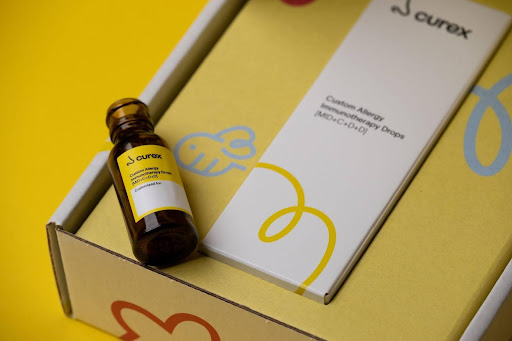
    Curex has been leading in the effort to increase the number of people who can benefit from SLIT drops. Curex’s patient-focused approach and scientific innovation have made at-home allergy therapy easier than ever. A telemedicine consultation is the first step in the process, in which certified allergists evaluate the individual needs of each patient. Curex customizes each treatment plan to target specific allergy triggers—whether food-based, seasonal, or pet-related—and changes in the seasons using AI-driven data analysis, guaranteeing optimal effectiveness.

    Curex sends tailored allergy drops directly to 50,000 patients’ homes when the treatment plan is finalized by its clinical team. Regular usage of allergy drops under the tongue is meant to raise tolerance to allergens like specific foods, dust, pollen, or pet dander. “We want to make allergy care less complicated and give patients a solution that works for them,” says Curex’s founder, Gene Kakaulin. Curex gives patients the ability to manage their allergies without the inconvenience and time commitment associated with traditional treatments thanks to this simpler process.

    Curex patients often describe their experience as life-changing. Besides the ease of at-home care, many people report noticeable changes in as little as a few months, such as increased energy, fewer symptoms, and the ability to completely and continuously enjoy life’s moments, including dining and eating out without fear. Curex provides a customized, scientifically supported method of managing allergies for those who are prepared to go beyond band-aid solutions.
    Source link

  • Your food allergy questions answered​ ​

    Your food allergy questions answered​ ​


    Join us for a fascinating Q&A with food allergy expert Sherry Coleman Collins, MS, RDN, LD a follow-up to our popular webinar, Advancing food allergy care: The latest innovations and insights.” Find out more about the unique way food allergies impact adults, the transient nature of food allergies, and why we even bother with skin and blood testing when the false positive rate is so high.

    Hosted by Kristin Houts

    Biography

    Sherry Coleman Collins, MS, RDN, LD, is a Marietta, GA-based Registered Dietitian Nutritionist with more than 15 years of experience in food allergies, pediatric nutrition, school food service and nutrition communications. She is a nutrition educator, speaker and writer, and serves as an expert to the media. Sherry spearheaded the development of the Academy of Nutrition and Dietetics’ Certificate of Training in Food Allergies, authored the Academy’s Practice Paper on the Role of the RDN in Food Allergy Diagnosis and Management, and has completed the FARE Pediatric Food Allergy Certificate of Training. She’s a fellow with the Academy of Nutrition and Dietetics Foundation. 


    In this episode, we discuss:

    • Sherry’s framework for thinking about food allergy prevention, diagnosis, and management
    • The ins and outs of the oral challenge
    • How the gut microbiome may play a role in food allergies
    • The dietitian’s opportunity to provide positive education and support for patients


    Additional resources

    In case you missed it, you can watch Sherry’s webinar Advancing food allergy care: The latest innovations and insights” here.


    The content, products and/or services referred to in this podcast are intended for Health Care Professionals only and are not, and are not intended to be, medical advice, which should be tailored to your individual circumstances. The content is for your information only, and we advise that you exercise your own judgement before deciding to use the information provided. Professional medical advice should be obtained before taking action. The reference to particular products and/or services in this episode does not constitute any form of endorsement. Please see  here  for terms and conditions.


    Source link