Tag: Action

  • Jane Fonda at Spirit Rock: Mindfulness, Climate Action, and Community

    Jane Fonda at Spirit Rock: Mindfulness, Climate Action, and Community

    Jane Fonda did not come to Spirit Rock to offer comfort.

    She came to invite attention toward what we’re inheriting, what we’re losing, and what we still have to protect.

    For different generations, Jane Fonda has arrived in various forms. Some of us know her as an Oscar-winning actress whose early roles challenged cultural norms in films like Klute and Coming Home; others might remember her from her iconic fitness workouts in the early 80s (if you know, you know.)

    But Jane Fonda doesn’t just redefine herself decade after decade, she reframes and rebuilds the very structures and movements she’s a part of. Whether that’s turning fitness into accessible self-care for women, relaunching the Committee for the First Amendment (free speech, anyone?), taking on the climate crisis by starting the Jane Fonda Climate PAC, or redefining vitality for anyone later in life through her role on the beloved show Grace and Frankie. These chapters, however, only hint at a deeper through-line.

    Jane Fonda models a form of mindful leadership rooted not in legacy, but in invitation, showing how presence, curiosity, and connection can awaken action in every generation.

    For decades, Fonda has leveraged her visibility as a platform, founding media outlets, funding grassroots organizing, lending her body to protests, and repeatedly engaging in uncomfortable conversations in service of collective change. Today, she directs that same attention toward the climate crisis, whether by forging relationships with younger artists like Maggie Rogers, who went on to more openly use her platform for climate and social advocacy after connecting with Fonda, or by studying with Roshi Joan Halifax to deepen her meditation practice and the way she shows up in the world.

    One thing is for sure: Jane Fonda models a form of mindful leadership rooted not in legacy, but in invitation, showing how presence, curiosity, and connection can awaken action in every generation.

    Mindfulness As Training, Not Escape

    Fonda recently spoke as part of Spirit Rock’s EcoDharma & Transformational Culture Program (ETCP), a three-year initiative launched in January 2025 that explores how mindfulness and contemplative practices can support more intentional responses to climate change. While this program draws on Buddhist teachings, it is intentionally inclusive, inviting participants from diverse faiths and backgrounds.

    In ETCP’s context, “spiritual” refers to practices that help cultivate awareness, compassion, and resilience—tools for understanding and responding to climate-related stress. The program addresses the intersection of mindfulness, ecological issues, and the urgent need for thoughtful, effective action.

    For many readers of Mindful, meditation may feel like refuge, a place to step away from the unrelenting churn of news cycles, politics, and ecological grief. What this gathering at Spirit Rock made clear is that mindfulness was never meant to be an escape hatch. It was meant to be training. 

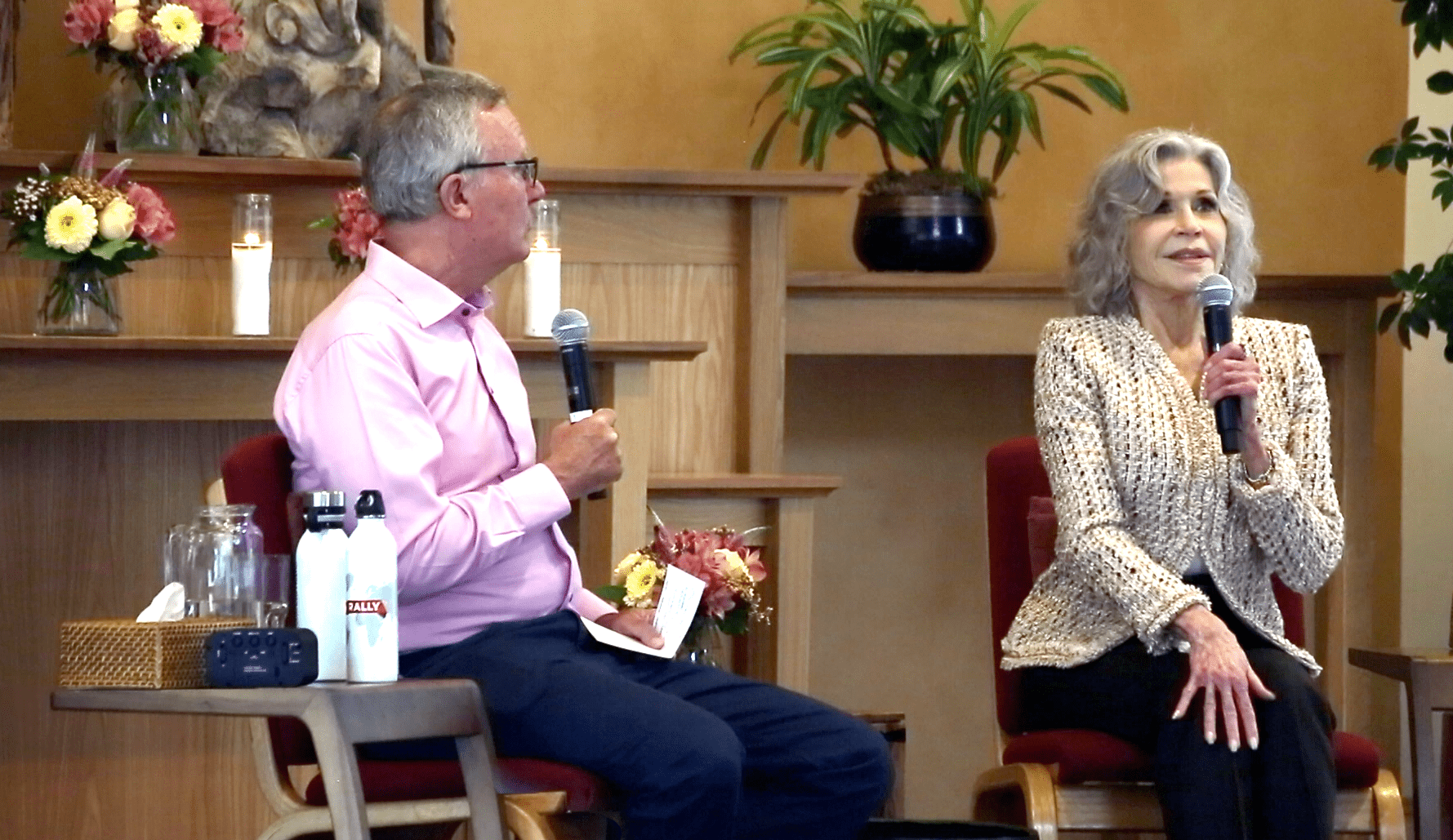
    At a moment when the climate crisis feels simultaneously overwhelming and dangerously normalized, Fonda’s presence at Spirit Rock Meditation Center landed with the weight of lived experience—decades of activism, moral reckoning, and an unshakeable belief that we cannot separate inner work from outer action. Her conversation with climate journalist Greg Dalton functioned as a deeply reflective inquiry into what it means to stay awake, empathetic, and engaged as time runs out.

    For many readers of Mindful, meditation may feel like refuge, a place to step away from the unrelenting churn of news cycles, politics, and ecological grief. What this gathering at Spirit Rock made clear is that mindfulness was never meant to be an escape hatch. It was meant to be training.

    Freepik.com | DC Studio

    Urgent & Hopeful

    Fonda spoke with respect to urgency, but not from a place of hopelessness. Instead, she framed this moment as one that demands both honesty and courage. “This is a moment when we have to bring our empathy to the fore,” she said, speaking to the deep divisions defining public life. Empathy, for her, is not a passive feeling—it is an active discipline, one she traces directly to her life in the arts.

    “Acting is a profession of empathy,” Fonda explained. “We have to enter the skin of another human being and understand them … You can’t do that without empathy. And you have to have empathy even for somebody that you don’t like.”

    That capacity, to stay open rather than armored, has helped to shape her activism as much as her performances. Fonda spoke candidly about how long it took her to soften what she called an “armored heart,” and how belonging to movements, rather than acting alone, made vulnerability possible. “There can come a moment in life when you enter a situation and, you know, this is where I’m supposed to be,” she said. “If you’re not alone, if you’re part of a movement, that sense allows you to become vulnerable and to open your heart.”

    This insistence on collective action, grounded in relationship rather than righteousness, ran through the entire conversation.

    ETCP’s mission is twofold: to support interfaith leaders and activists in meeting climate trauma with resilience and joy, and to empower a new generation of global citizens.

    Over the next three years, ETCP will offer online lectures, class series, in-person retreats, and training programs designed to support communities engaging with climate change not only as a scientific or political issue, but also as a profoundly emotional and spiritual one. The program is guided by a core planning team of respected teachers and leaders, including Ayya Santacitta, Bonnie Duran, Carol Cano, James Baraz, Kirsten Rudestam, Kristin Barker, Mark Coleman, and Yong Oh, in collaboration with partners such as One Earth Sangha, Braided Wisdom, Aloka Earth Room, and Awake in the Wild.

    Its mission is twofold: to support interfaith leaders and activists in meeting climate trauma with resilience and joy, and to empower a new generation of global citizens. At its heart is a radical proposition—that joy, mindfulness, and love for the Earth are not distractions from climate action, though essential to sustaining it.

    When Mindfulness Meets the Climate Crisis

    For many meditators, the connection between mindfulness and climate change is not apparent. Sitting quietly with the breath can feel worlds away from melting ice caps, polluted water systems, or data centers sprawling across the landscape.

    Fonda expressed concern about AI and the rapid speed of technological advancement. “I’m horrified by it,” she admitted, acknowledging her own complicated relationship with technology. “I have ChatGPT on my phone. I feel guilty… I don’t understand it well enough to know how to combat it.”

    Rather than offering easy answers, Fonda modeled something rarer: the willingness to stay with not-knowing without disengaging. Climate action, she suggested, does not begin with mastery; it starts with attention.

    Her reflections on Indigenous knowledge underscored what has been lost through disconnection. Recalling time spent learning about the Ecuadorian rainforest, she talked about communities that live in conjunction with the land. “They showed us which plants heal which diseases,” she said. “We once knew how to listen to plants. We’ve forgotten how.”

    Mindful engagement does not mean doing everything. It means doing something with intention, alongside others.

    EcoDharma, as Spirit Rock frames it, is precisely this remembering—not as nostalgia, but as practice. And the key part of practice, when we hold both the Dharma and the environment front and center in our minds, is to understand that we all have something to do, no matter how small the task or step may be. As ETCP leaders emphasize, mindful engagement does not mean doing everything. It means doing something with intention, alongside others.

    Identifying Our Unique Role to Play

    A recurring question throughout the retreat was one many people quietly carry: What can I do?

    Fonda’s answer was pragmatic and unsentimental. After years of protest through Fire Drill Fridays, she and a small group of collaborators recognized a gap between public pressure and policy change. “We haven’t got the legislation that’s commensurate with what science is saying we have to have,” she said. “The reason is that so many elected officials take money from the fossil fuel and petrochemical industries.”

    That realization led to the creation of Jane Fonda Climate Pac, a political action committee focused on down-ballot races and state and local positions that often receive little attention but wield enormous influence over climate outcomes. “Public utilities, school boards, city councils, state legislatures, attorneys general,” Fonda noted. “All these people have huge power.”

    The results have been striking: hundreds of climate champions elected, many of them women and women of color, willing to stand up publicly for environmental rights. “It’s working,” she said.

    Alternate Entry Points to Climate Action

    For those wary of politics, Spirit Rock’s EcoDharma program offers additional entry points and ways to engage, with an emphasis on joy-based action, interconnection, and resilience. This programming is designed precisely for people who feel overwhelmed, polarized, or exhausted by climate discourse.

    Perhaps the most resonant moment of listening to Fonda speak was when she was asked about courage—how she continues to speak so openly, without becoming defensive, after decades in the public eye.

    “It has been a process,” she said. “It took me a long, long time to open my heart.” What changed was not confidence, but belonging. “Being part of a movement… allows you to become vulnerable.”

    She spoke about care—sleep, community, working with people she admires—as essential, not indulgent. “I’m a late bloomer,” she said with a smile. “But being a late bloomer is okay as long as you don’t miss the flower show. And I’m in the midst of a flower show.”

    EcoDharma does not ask practitioners to abandon stillness. It asks them to let stillness inform their response. To allow mindfulness to widen into care, and care into action.

    In that image, flowers blooming against the odds was a quiet invitation. EcoDharma does not ask practitioners to abandon stillness. It asks them to let stillness inform their response. To allow mindfulness to widen into care, and care into action.

    As Fonda reminded the room, hope is not something we wait for.
    It is something we practice—together.

    For more ways to connect, here’s a mindful action guide to use & share. Links are also provided below.
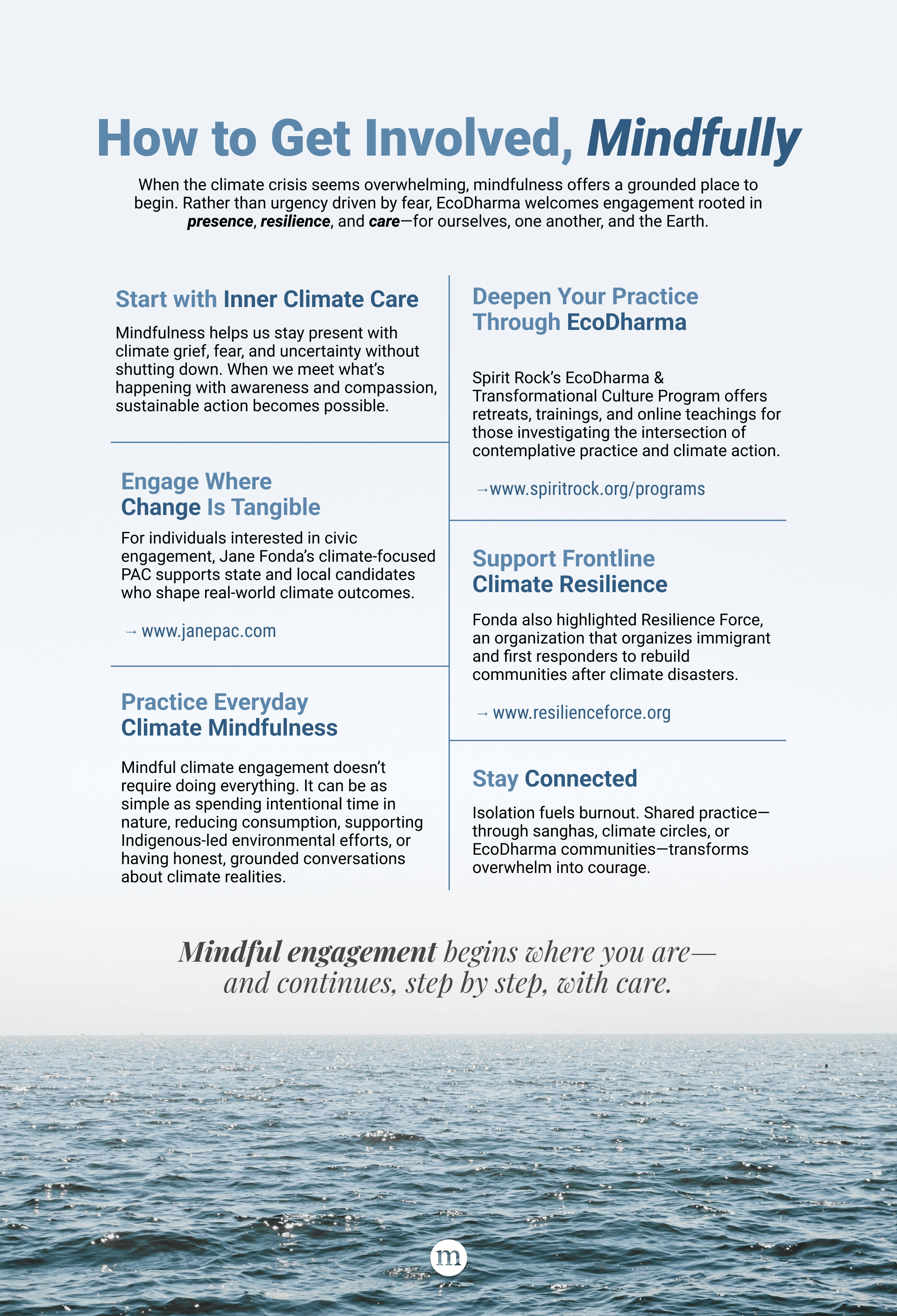
    A mindfulness infographic over ocean water, inspired by Jane Fonda, lists ways to get involved in climate action with care and presence.


    Source link

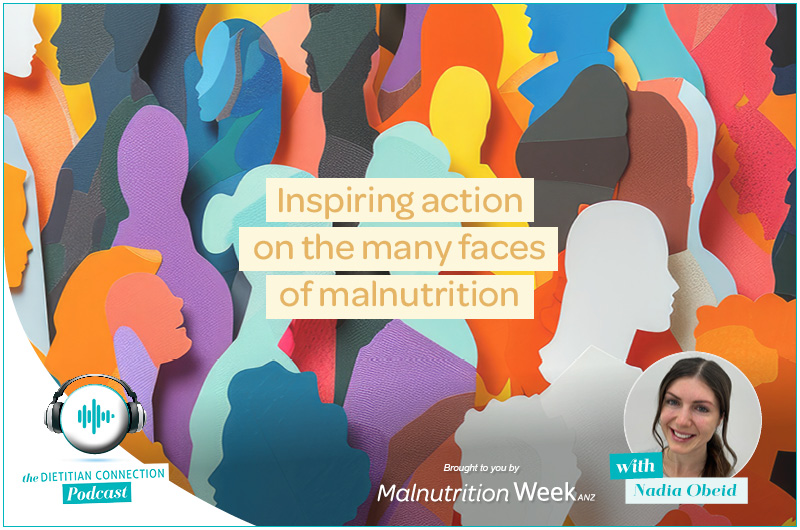
  • Inspiring action on the many faces of malnutrition

    Inspiring action on the many faces of malnutrition


    Malnutrition Week ANZ is almost here, with the theme “The many faces of malnutrition”. This campaign reminds us that malnutrition can affect anyone, at any age, in any setting. In this episode, Nadia Obeid, Senior Dietitian at Northern Health, shares how her team turned Malnutrition Week into an organisation-wide movement. From embedding screening into practice to engaging families, nurses, pharmacy and even the CEO, Northern Health’s approach shows what’s possible when collaboration and leadership come together.

    Hosted by Bec Sparrowhawk

    Biography

    Nadia Obeid is a clinical dietitian at Northern Health in Victoria. She has over 15 years’ experience specialising in malnutrition and renal nutrition care. She has led numerous quality and research activities focusing on improving malnutrition screening and management practices across her organisation, including annual malnutrition prevalence studies and malnutrition coding analysis studies. She is passionate about collaborating with other disciplines in quality improvement work and developing staff learning and training resources to improve malnutrition screening, diagnosis and management in her organisation.


    In this episode, we discuss:

    • The most impactful awareness activities across Northern Health throughout the years

    • Practical ways to improve consistency of malnutrition screening

    • How audits and research have influenced real change in the organisation

    • Top tips for organisations wanting to take part in Malnutrition Week ANZ this year


    Additional resources

    • Click here to learn about Malnutrition Week ANZ and to access a variety of free resources

    • Can connect with Nadia on any of the Northern Health Malnutrition Week initiatives at [email protected]


    The content, products and/or services referred to in this podcast are intended for Health Care Professionals only and are not, and are not intended to be, medical advice, which should be tailored to your individual circumstances. The content is for your information only, and we advise that you exercise your own judgement before deciding to use the information provided. Professional medical advice should be obtained before taking action. The reference to particular products and/or services in this episode does not constitute any form of endorsement. Please see  here  for terms and conditions.


    Source link
  • A Call to Action This Suicide Prevention Month

    A Call to Action This Suicide Prevention Month

    Each September, Suicide Prevention Month brings much-needed attention to mental health and the people most at risk. The focus often falls on veterans, first responders, and law enforcement, professions marked by immense stress and little margin for error. Yet, one equally vulnerable group remains: physicians.

    Doctors carry extraordinary responsibilities, from life-or-death decisions to relentless schedules, and the toll is showing. Research reveals that physicians die by suicide at rates 1.4 to 2.3 times higher than the general population. Each year, the U.S. loses the equivalent of an entire medical school class, 300 to 400 physicians, to suicide. Nearly half of doctors report symptoms of burnout, one in five meet criteria for depression, and as many as 15% will experience substance use disorder during their careers.

    “These numbers are not abstractions,” says Dr. Nishant Patel, founder of SafeHavenMD, a support and guidance center made for physicians, by physicians. “They represent colleagues, mentors, and caregivers we depend on every day. If we don’t protect our physicians, we risk losing both them and the care for patients who depend on them.”

    The crisis is only worsened by the looming physician shortage. The Association of American Medical Colleges projects the U.S. will face a shortfall of 37,800 to 124,000 physicians by 2034. This creates a dangerous cycle: fewer doctors means heavier workloads, which leads to more burnout, and in turn, more attrition.

    “This shortage goes beyond numbers and statistics. It becomes a public safety concern,” Dr. Patel explains. “Every doctor who leaves early means thousands of patients lose access to care.”

    Dr. Nishant Patel

    Traditional support systems aren’t often equipped to meet the needs. Nearly 40% of burned-out physicians avoid seeking help because of stigma or fear of licensing repercussions. Many distrust employer-based wellness programs, worried that what they share could be used against them. “Support has often been punitive, not protective of physicians,” Dr. Patel explains. “That fear alone costs lives.”

    SafeHavenMD offers a new approach. Its model is built on anonymity, confidentiality, and peer-to-peer support embedded in care, empathy, and compassion. Doctors can connect with colleagues who have walked the same path, without worrying about professional consequences. The program also connects physicians to culturally competent care, individualized treatment, legal protections, and early intervention tools that catch burnout before it becomes a crisis.

    “At SafeHavenMD, we’re offering personalized support before problems escalate,” Dr. Patel emphasizes. “Doctors can talk to someone who understands their experience without fear that it will end up in a report.”

    This approach not only saves lives but also strengthens the workforce. Through prevention of early exits and supporting doctors in high-burnout specialties, SafeHavenMD helps preserve critical clinical capacity. “Institutions must focus on keeping their physicians mentally healthy and happy if they want the productivity that is being demanded of them,” Dr. Patel notes. “That’s what leads to lowered institutional costs, lower turnover rates, and more stability.”

    Residents and new attendings, who face enormous workloads, imposter syndrome, and little mentorship, can find an important lifeline in SafeHavenMD’s peer network. “Every doctor we keep healthy and practicing means patients continue receiving the care they need,” Dr. Patel says.

    The program’s impact is already evident. Many physicians who once considered leaving medicine often return, healthier and more grounded. Others who stepped away for treatment or family matters are rejoining the workforce with new resilience. Some even become volunteers with SafeHavenMD, sharing their journeys to help the next physician in crisis. “That’s how we change this culture, one story at a time,” Dr. Patel reflects.

    This Suicide Prevention Month is a reminder that saving doctors is inseparable from saving lives. It is not only a moral obligation but also a public health necessity, as healthy doctors mean healthier patients, safer hospitals, and stronger communities.

    Dr. Patel believes the call to action is embedded in enabling physicians to seek support without fear, in ensuring healthcare institutions adopt physician-led wellness programs that prioritize confidentiality, and policymakers reforming licensing and credentialing to make mental health care less punitive.

    And most of all, the public must recognize that protecting doctors protects everyone. “Physician well-being is not a luxury,” Dr. Patel says. “It is the foundation of a functioning healthcare system. Saving doctors is saving lives.”

    Dr. Patel insists that for those in crisis, confidential help does exist. Physicians and healthcare workers can access support through organizations like SafeHavenMD, which provide stigma-free, career-safe mental health resources. This September, the message is urgent and simple: no one should face this battle alone, especially not those who dedicate their lives to saving others.

    “That’s the main crux, I believe,” Dr. Patel says, “understanding that everyone is human. Not superhuman. Not even physicians. And when their well-being metrics improve, improved public health will follow.”

    Source link

  • Awareness in Action: Rethinking ADHD Through Mindfulness

    Awareness in Action: Rethinking ADHD Through Mindfulness

    Practicing mindfulness and compassion helps us see our lives more clearly. Instead of staying caught up in unskillful habits and reactivity, it encourages us to live with more awareness and intention. While mindfulness and compassion serve a uniquely supportive role in ADHD care, anyone can benefit from a similar approach.

    ADHD is not what most people think. Correctly diagnosed, it is a confirmed medical condition; the genetics of ADHD are nearly as strong as the genetics that predict height.  ADHD undermines a wide-ranging skill set called executive function, which represents self-management abilities including attention, behavior, time, tasks, effort, and emotion.  

    While everyone has their emotional ups and downs in life, it is our executive function abilities that allow us to navigate them effectively.   Therefore ADHD often leads to escalating challenges with emotional dysregulation, self-criticism, and stress.  It even undermines the planning skills one would use to manage ADHD itself.  Because of that cycle, ADHD impacts everything from work and school to relationships and physical health.  Kind and comprehensive care of ADHD must acknowledge this wide-ranging impact. 

    Mindfulness is increasingly a part of ADHD care, though often misunderstood in ways that turn people with ADHD away. For starters, mindfulness does not replace any part of ADHD intervention. Concentration and impulse control may improve, but no single treatment works in isolation for ADHD. Instead, focusing on self-regulation and self-awareness with mindfulness, including practices such as self-compassion or loving-kindness, is a foundational shift for living with ADHD. Integrating mindfulness makes it easier to follow through with the rest of evidence-based ADHD care.

    A broad approach to mindfulness in ADHD care means far more than meditation. We aim to develop traits like patience, responsiveness, and kindness that make managing the inevitable ups and downs of life easier. One useful framework for this practice invokes three foundational supports: training the mind, building community, and a desire for ongoing learning.

    A broad approach to mindfulness in ADHD care means far more than meditation.

    Understanding the Mind’s Mechanics

    Learning is a vital aspect of mindfulness practice, often related to the principle of cause and effect. Even though so much is out of our control, how we think about things and choose to engage with the world intrinsically affects our experience. By examining our ways of thinking and communicating through this lens, we stay in closer touch with our own best intentions and core values.  

    Executive function can affect anything requiring “management” in life. Because of that, ADHD can impact not only work or school, but also relationships, communication, decision making, and health routines. Having ADHD is no one’s fault nor is it a moral failing.  It does however often lead to a sense of self-blame. As with any challenge, the more clearly one understands the skills affected by ADHD, the easier it becomes to make skillful choices that minimize its impact. 

    Our actions and beliefs always have consequences, sometimes in subtle ways. For instance, deny having ADHD, and you cannot address it; recognize ADHD fully, and you can take constructive steps forward. If we rely on fleeting sources of transient happiness, like our phones or buying stuff, that undermines our well-being. In contrast, we boost our chances of flourishing with activities such as a healthy lifestyle or acts of kindness. In this way, education guides our journey through life. 

    This continuing education may include:

    • Learning about ADHD and exploring evidence-based management. Core interventions typically include a mix of educational supports, parent training (for families), cognitive behavioral therapy, coaching, and/or ADHD medication.
    • Prioritizing foundations like sleep, exercise, and nutrition for mental clarity, as maintaining these routines can be especially tough with ADHD.
    • Understanding the impact of emotional dysregulation and stress tied to ADHD and practicing tools and strategies for navigating these obstacles.
    • Exploring the reality of cause and effect as it relates to well-being, such as exploring how perfectionism and self-criticism compound suffering, or how meditation or gratitude practices increase the likelihood of happiness.

    Training the Mind

    Reframing the intention of mindfulness practice increases the likelihood of sticking with it. The goal of meditation is not a mind empty of thoughts, although it can help calm or steady the mind. As noted above, with or without ADHD, the initial motivation is often to build awareness and patience—a far more realistic goal than complete stillness. 

    The goal of meditation is not a mind empty of thoughts, although the practice helps calm or steady the mind. With or without ADHD, the initial intention is often to build awareness and patience—a far more realistic goal than complete stillness.

    Inside this framework, we enhance our ability to notice what’s happening right now. We see both joyful moments and our challenges with more clarity. Practice doesn’t have to require sitting still; mindful eating, yoga, and other movement practices work too. This all relates to one key definition of mindfulness that is quite valuable with ADHD: aiming to see our lives with clear and compassionate awareness. 

    Meditation develops patterns that influence us in the long term. Short-term benefits like relaxation happen, but the broader hope is for building traits that spill into everyday life. For example, simply observing emotion during meditation, rather than falling into habits like reacting with anger or shutting down, slowly recalibrates our responses when we are outside of formal meditation. This improved emotional regulation has direct value not only for those with ADHD, but of course for anyone. Other meditation practices focus on traits like compassion, kindness, or forgiveness.

    Meditation develops patterns that influence us in the long term. Short-term benefits like relaxation happen, but the broader hope is for new traits that spill into everyday life.

    To get started, consider:

    • Setting aside a few minutes regularly to meditate, with the aim of building self-awareness and patience.
    • Trying compassion or loving-kindness practices to address ADHD-related challenges such as excessive shame, self-criticism, or rejection sensitivity.
    • Including movement practices in your day, like walking meditation or yoga.
    • Staying patient and kind with yourself when starting, as beginning and sticking to new routines are both especially difficult for individuals with ADHD.

    Nurturing Connection and Support

    Community is another pillar of mindful living. It’s crucial to seek and nurture environments that foster emotional resilience and deepen those connections. For those with ADHD, spending time with others who share similar experiences often leads to greater self-acceptance and a sense of belonging. Surrounding ourselves with caring and supportive people helps with learning and staying strong and hopefully finding friends, joy, and laughter.

    With so many demands on our attention, we have to  be intentional in seeking those relationships that reinforce our well-being. Difficult people may place demands on our time and deplete our energy.  True friends encourage us to be our authentic self and help us feel empowered. Without judgment they accommodate to our experience of ADHD by adapting to symptoms like forgetfulness, time blindness, or sensory overload.  Valuable friends support mutual growth and respect, sustain us, and can foster our mindfulness-based practices.

    Ways to connect with community include:

    • Joining a spiritual or meditation group, or ADHD-focused organizations like, CHADD, ADDA, or ACO.
    • Scheduling regular time with family, if those ties feel close and supportive.
    • Creating or seeking shared school or workspaces that emphasize mindfulness, compassion, and growth, including executive function accommodations for ADHD.
    • Prioritizing time with authentic friends while reducing time spent with people who leave you feeling depleted.  This typically includes limiting exposure to social media, which frequently leads to experiences like anxiety, negativity and jealousy. 

    Building a Practice That Works With ADHD

    Let go of thoughts of perfection, a totally quiet mind, or the idea that you’re unable to meditate. With ADHD, a foundation of self-regulation and self-compassion transforms how we see and respond to our experience.  That foundation increases the effectiveness of all that must be accomplished to manage this complex medical condition. Aspire to a sustainable mindfulness practice, whatever that looks for you.  Even when living through difficult times, you will more easily stay in touch with your own wisdom, joy, and compassion.

    Let go of thoughts of perfection, a totally quiet mind, or feeling like you’re unable to meditate.

    Dr. Mark Bertin and Dana Crews are leading a retreat October 10-12, 2025, to support adults navigating life with ADHD, whether you have it yourself, are living with someone, or are a professional in the field. Hosted at the Menla Retreat Center nestled in the serene Catskill Mountains, Held and Whole is a restorative and educational three-day ADHD retreat that will offer practical, mindfulness-based tools to strengthen emotional regulation, deepen self-awareness, and foster authenticity.  We hope to see you there! 

    You can get more information and reserve your spot here. Plus, listeners to this podcast can claim a limited-time 15% early bird discount when they enter code “Mindful” at checkout. Spots are limited!


    Source link

  • Spring into Action: 10 Essential Gardening Tips for a Bountiful Season

    Spring into Action: 10 Essential Gardening Tips for a Bountiful Season

    Spring into Action: 10 Essential Gardening Tips for a Bountiful Season

    As the last remnants of winter begin to fade away, gardeners everywhere are gearing up for the new season of growth and abundance. Spring is a time of renewal, and with the right techniques and strategies, you can make the most of this period to create a bountiful and thriving garden. Here are 10 essential gardening tips to help you Spring into Action and get a head start on the growing season:

    1. Prepare the Soil

    Before you start planting, make sure your soil is ready for the new season. Test your soil type and pH level, and amend it as necessary to create a nutrient-rich growing medium. Add organic matter like compost or manure to improve the structure and fertility of the soil.

    2. Choose the Right Plants

    Select varieties of plants that thrive in your local climate and region. Consider factors like sunlight, soil type, and moisture levels when selecting the perfect plants for your garden. Start with hardy, easy-to-grow species and gradually experiment with more exotic varieties as your skills grow.

    3. Start with Cool-Season Crops

    Take advantage of the cooler temperatures in early spring by planting cool-season crops like broccoli, kale, and spinach. These plants prefer the chill and will reward you with a bounty of fresh produce.

    4. Mulch, Mulch, Mulch

    Mulching is essential for retaining moisture, suppressing weeds, and regulating soil temperature. Organic materials like straw, bark, or leaf mold are excellent options, but be sure to apply at the right thickness and frequency.

    5. Water Wisely

    Watering plants is crucial, but overwatering can be detrimental. Start with a gentle trickle and increase the flow as needed. Use a drip irrigation system or soaker hose to avoid washing away precious nutrients.

    6. Control Pests and Diseases

    Keep an eye out for pests and diseases that can wreak havoc on your garden. Encourage beneficial insects, install physical barriers, and use organic pesticides to minimize harm. Regularly inspect plants and take action at the first sign of trouble.

    7. Prune and Train

    Pruning is essential for promoting healthy growth, increasing yields, and maintaining the structure of plants. Train vines, shrubs, and trees to thrive in their environment, and don’t be afraid to prune back obstinate growth.

    8. Support Spring-perennials

    Many perennials produce weak growth in the spring, but with a little support, they can thrive. Use stakes, trellises, or cages to give them a leg up, and provide a strong foundation for the seasons to come.

    9. Monitor Weather

    Keep an eye on weather forecasts and be prepared for unexpected weather events. Bring in sensitive plants, secure loose objects, and take necessary precautions to safeguard your garden and home.

    10. Experiment and Adapt

    Gardening is all about trial and error. Be willing to adapt to changing conditions, and don’t be discouraged by setbacks. Keep a journal of your progress, note what works and what doesn’t, and make adjustments for the next season.

    As the last of the snow melts away, the warming sun shines a little brighter, and the first tender shoots burst forth, it’s time to Spring into Action. With these 10 essential gardening tips, you’ll be well on your way to growing a bountiful and thriving garden that will keep you busy and fulfilled throughout the season.

    Conclusion

    Spring is a time of rebirth and renewal, and the right approach can make all the difference in the world. By following these 10 essential gardening tips, you’ll be well-equipped to tackle the challenges and opportunities that lie ahead, and you’ll be rewarded with a garden that’s full of life, color, and possibility. So don your gloves, grab your tools, and get ready to Spring into Action!

    Frequently Asked Questions

    Q: What are the best spring plants to start with?
    A: Cool-season crops like broccoli, kale, and spinach are excellent choices, as well as warm-season starts like tomatoes, peppers, and cucumbers.

    Q: What’s the best way to water my garden?
    A: Water plants gently but thoroughly, using a drip irrigation system or soaker hose to avoid wasting water and reducing evaporation.

    Q: How do I control pests and diseases?
    A: Encourage beneficial insects, use physical barriers, and apply organic pesticides as needed. Regularly inspect plants and take action at the first sign of trouble.

    Q: What’s the most important thing to remember in the spring garden?
    A: Start with cool-season crops, and be prepared to adapt to changing weather conditions and unexpected setbacks.

    By following these simple yet effective gardening tips, you’ll be well on your way to a bountiful and thriving garden that will provide you with years of enjoyment and satisfaction. Happy gardening!