Tag: 12 minute meditation

  • Dual Anchor: A Neurodiversity-Informed Meditation for Wandering Attention

    Dual Anchor: A Neurodiversity-Informed Meditation for Wandering Attention

    In this guided practice, Sue Hutton offers an approach to meditation that marshalls sensory awareness as a way to sharpen focus.

    Traditional meditation practices can sometimes be frustrating and alienating for those who are neurodivergent. Bodily discomfort or intense mental restlessness can make even the most mindfulness-curious person feel like classic meditation techniques might not be for them.

    Sue Hutton believes that mindfulness can be for anyone, and she’s dedicated her work to making mindfulness practices like meditation accessible for neurodiverse communities. In this practice, she guides us through what she calls “Dual Anchor,” a kind of meditation that engages the senses to help gently steer attention. 

    Dual Anchor: A Neurodiversity-Informed Meditation for Wandering Attention

    1. This is a neurodiversity informed, guided meditation called Dual Anchor. It can be really useful to help bring a mind that wanders excessively and struggles to pay attention, to concentrate on two anchors at the same time with our senses. This practice utilizes our vision and our breath together at the same time. 
    2. Many of us carry a lot of overwhelm inside the body, so we don’t want to exacerbate that when we do our meditation practice. We come to this path seeking to cultivate calm stillness inside. I encourage you to bring a spirit of compassion to everything that you do in your meditation path, along with a sense of gentle curiosity. Try the practice best you can, but don’t push herself if anything is overwhelming or bringing up any kind of sensory overwhelm. 
    3. Let’s start off with concentrating using your vision on an object in front of you. A candle can be a very useful object to focus on the tip of the flame. But any object will do, allowing your posture to be upright and observing something in front of you with all of your attention visually. 
    4. Feel yourself concentrating on the center of that object. Notice the body softening as you concentrate on vision. The same way a film director zooms in, focus very clearly on an object. Allow your mind to sharpen, letting everything else fall to the background, holding full command of your gaze on this object. 
    5. Soften the brow, soften the jaw. Allow the body to be soft as you engage in observing this object very, very closely. Can you get a sense of the color, the texture, the shape? Just observe. Your vision is very focused. 
    6. Now let’s include awareness of the breath. Begin with closing your eyes just for a moment while you tune into the breath. As you close the eyes, just allow them to soften as though the eyelids just rest on the eyeballs, like gentle blankets, giving you a calm, quiet space inside. 
    7. Now, feel the breath in the way that works for you. You can observe the breath through sound, breathing in so loud that you can hear the sound of your breath like an ocean tide flowing in and out, observing the sound of the breathing, with full awareness of the sound on the inhale and exhale. You can also try experiencing the breath by just observing the gentle flow in and out of the body in a way that works for you. You can have your hand resting on the belly and the chest and just feel the sensations wherever it’s comfortable, either on this surface, feeling the hand’s rising and falling with the breath, or from inside the body. If it’s comfortable for you, you can try to feel where inside the body you notice that mechanism of breathing in and breathing out. 
    8. All the while, we’re bringing a sense of deep compassion and love for ourselves as we do this. You may even feel some warmth of compassion flowing into your body through your hands. So there’s a loving touch, compassion for ourselves as we breathe in and out. Remember, every outbreath is an opportunity to give yourself permission to relax and soften. This is a space for you to cultivate and calm within. 
    9. Now open your eyes once again and focus on that object, and let’s combine vision and breath. Focus deeply, all your concentration visually on this object: sharp concentration, unwavering, steady focus. Soften the brow and jaw. 
    10. Now, combine the rhythm of the breath in the way that works for you. Allow yourself to feel yourself right at the center of this deep concentration, sharp, focused vision and unwavering connection with the experience of the breath, vision and breath. Allow there to be a soft calm inside the body. 
    11. As you experience this compassionate rhythm of the breath, using this focused alertness with your vision. And allow the next exhalation to be one that lets go even more. What else can you relax and release on the next breath? 
    12. There is a clarity as we concentrate on these two objects at the same time. See for the next few moments if you can go even a little bit more committed to being in the center, staying focused on the breath and your vision, full concentration, and allow there to be even more softening and letting go of the whole body from the top of the head all the way down to the toes, releasing and relaxing, sharpening that concentration, vision, and breath. 
    13. You can now allow the eyes to close as you stay connected with the breath. Again, just resting like soft blankets over the eyes. Feel that letting go and softening of the whole face. You may observe it’s not pitch black under the closed eyelids, but there may be some shape, some light, amorphous, moving, perhaps softening you even more and observing what you can witness underneath these closed eyelids in this calm, relaxed space, feeling that compassionate rhythm of the breath. 
    14. If it’s comfortable, allow your eyes to gently open. Let the eyes just look around the room at different objects, observing how you can engage in vision as a grounding tool. Look at another random object and focus on that, observing the texture, the quality, the color. You can name the object, too—just one word, not description. 
    15. This is our dual anchor meditation practice for today using vision and breath. You can use that practice any time of the day. There are more practices like this on my website at SueHuttonMindfulness.com. Please come and visit. Explore other ways of engaging in neurodiversity and mindfulness. May you continue to find incredible ways of bringing mindfulness to your life in the unique ways that you can benefit from the most. Thank you for meditating with me.
    Source link

  • A “Just Like Me” Practice to Expand Your Circle of Compassion: 12 Minute Meditation

    A “Just Like Me” Practice to Expand Your Circle of Compassion: 12 Minute Meditation

    The invitation with this practice is to put aside ideas and concepts about differences, shame, fear, survival, and the rest, and to simply see if you can begin to develop a felt sense of common humanity. What you are tapping into here is the awareness that all of us wish for happiness and freedom from suffering, that this too is a part of our common humanity.

    A “Just Like Me” Practice to Expand Your Circle of Compassion

    This meditation is inspired by the writing and teaching of Thupten Jinpa in his book A Fearless Heart: How the courage to be compassionate can transform our lives.

    1. Take some time to settle into your body for a few minutes, allowing your attention to drop inside. Take note of whatever is present in the way of sensation inside your body. You may notice the touch of clothing, the pressure of the supporting surface on certain parts of your body, or just sensations of coolness or warmth, relaxation or tension, ease or discomfort. Take note of where and how you are in this moment. You may notice the movement of breath into and out of the body as well, recognizing that the breath has continued to move on its own since you last attended to it.
    2. Imagine someone whom you hold dear, someone who brings a smile to your face when you think of them, someone with whom you have a relatively easy and uncomplicated relationship. This may be a family member like a child, a grandparent, or even a pet. Try to go beyond the idea of this being and see if you can actually feel what it feels like to be in their presence.
    3. Notice any pleasant feelings that may arise as you hold this beloved being in your awareness and see how easy it is to acknowledge that they, too, have the same aspiration for genuine happiness that you have.
    4. Now call to mind someone else, someone that you recognize but don’t have much meaningful interaction with and don’t feel any particular closeness to. This may be a person whom you see quite often, on the street, behind the counter at your favorite coffee shop, or driving the bus you take regularly. Notice what feelings arise for you as you picture this person and how these feelings may be different from what you felt in regard to the loved one you imagined first.
    5. See if you can imagine what it might be like to be this person. Usually, we don’t give much thought to the happiness of people in neutral roles in our lives like this. Imagine their life, their hopes and fears, which are every bit as real, complex, and challenging as yours. You may even recognize a certain similarity between yourself and this other person at the level of your common humanity. “Just like me, she wishes to be happy and to avoid even the slightest suffering.”
    6. Next, take some time to see if you can call to mind someone you don’t know at all, and who seems very much unlike you at first glance. Perhaps an image comes to mind from the news or in your imagination or from your previous travels. Maybe consider someone facing hardships far different from your own right now. Perhaps you might call to mind someone who doesn’t look like you . . . or someone who has an entirely different cultural background or life circumstances. You may find yourself thinking just now of people suffering through war or resisting tyranny anywhere on the globe.
    7. Take the time to see if you can look past the differences to what you have in common with this person or these people. Imagine looking into their eyes, sitting with them in meditation, feeling just a little of the joy and pain and sorrow and fear that they may experience . . . simply because they are human, just like you. 
    8. See if you can put yourself in this person’s shoes for a moment, recognizing that they are an object of deep concern to someone, a parent or a spouse, a child or a dear friend of someone. Begin to acknowledge that even this person who seems so different has the same fundamental aspiration for happiness that you have. Allow your attention to stay with this awareness for some period of time (say 20 to 30 seconds). Allow thoughts and feelings to come and go as they will, as you remain present to whatever arises, with no other agenda but to observe and be kind to yourself in that presence.
    9. Finally, see if you can bring together these three people in one mental picture in front of you. Take some time to reflect on the fact that they all share a basic yearning to be happy and free from suffering. At this dimension, there is no difference between these three people. In this fundamental aspect, they are exactly the same. Just take the time to relate to these three beings from that perspective, from the point of view that they share the aspiration for happiness and a kind of perfect imperfection.
    10.  Now include yourself in this circle of awareness, reminding yourself that:
      These people have feelings, thoughts, and emotions, just like me.
      These people, during their lives, have experienced physical and emotional pain and suffering, just like me. These people have been sad, disappointed, angry or worried, just like me.
      These people have felt unworthy or inadequate at times, just like me. These people have longed for connection, purpose, and belonging, just like me.
      These people want to be happy and free from pain and suffering, just like me. These people want to be loved, just like me.
    11. With this deep recognition that the desires to be happy and to overcome suffering are common to all, silently repeat this phrase: “Just like me, all others aspire to happiness and want to overcome suffering.”
    12. Take some time to sit with whatever wishes or feelings arise from this practice, allowing them to arise and fall away. Your only agenda is to notice and take note of their arising.

    Adapted from Self-Compassion for Dummies by Steven Hickman. 


    Source link

  • A 12-Minute Meditation for Sending Compassion to a Difficult Person

    A 12-Minute Meditation for Sending Compassion to a Difficult Person

    When we dislike someone, it’s much harder to recognize their humanity. This guided meditation supports us in releasing tension in the body and cultivating compassion, even for a difficult person.

    No matter whether we seek to get along with everyone, or have been known to cherish a grudge or two, we all know of a person whom we disagree with or who challenges us in some way. When you bring this person to mind, what do you notice? You may feel physical tension, anxiety, or other unpleasant sensations in the body.

    In this meditation, Anu Gupta guides us in simple phrases of compassion and loving-kindness that allow us to remember: Just like me, this person is also human. Just like me, they have their own joys, desires, and struggles. Offering kind wishes to someone difficult is a powerful way to expand our circle of compassion. We don’t have to like them, but we can cultivate compassion for them by softening our resistance and acknowledging their humanity.

    A Guided Meditation for Sending Compassion to a Difficult Person

    1. Begin by settling into a comfortable seated posture, either on a cushion or a chair. Rest your feet on the ground below you. Place your hands on your knees or in your lap. Let your shoulders relax, your spine straight and relaxed, keep your chin parallel to the ground below you, and bring your eyes to a gentle close. 
    2. Bring your attention to your breath. Notice your inhales and your exhales. The breath is oftentimes a reflection of the mind. It’s just bringing awareness to the breath to settle the mind. 
    3. Notice if you’re holding any tension in any part of the body. Bring that to awareness and gently ask that body part to relax. Whether it’s your tongue, your shoulders, or your feet. Relax. Relax. Relax.
    4. As you breathe in and you breathe out, bring to mind a person you’ve had some difficulty with. It doesn’t have to be the worst person you know, or someone who’s caused you a lot of harm, but someone you dislike. Someone who’s challenging. Someone that brings up some sort of resistance in your body. It could be a public figure. It could be someone you know. 
    5. Let yourself feel what it’s like to be in that person’s presence. Bring to attention any tension, dislike, or disgust that may arise because you’ve brought this person’s image in your mind. Just notice it, noticing these unpleasant sensations. But also remember that just like you, this person is also a human. Just like you, this person was also a baby at some point. Just like you, this person is also subject to sickness, to old age and to death. 
    6. Now, imagine this person as a baby. And now offer this difficult person some words of kindness. Just like me, you’re human. May you be safe. May you be peaceful. May you be healthy. May you live with ease. May you be safe. May you be peaceful. May you be healthy. May you live with ease. May you be safe. May you be peaceful. May you be healthy. May you live with ease.
    7. Repeat these phrases of compassion for this difficult person over and over again. Notice the discomfort if it arises. Notice the resistance. And then say to the resistance, Just like me, you’re human. Just like me, you’re human. May you be safe. May you be peaceful. May you be healthy. May you live with ease. Keep repeating these phrases for as long as you like. 
    8. After your next exhale, bring your chin to your chest, stretching the back of your neck. Thank you for your practice today.


    Source link

  • Slow Your Breath and Your Thoughts: 12-Minute Meditation

    Slow Your Breath and Your Thoughts: 12-Minute Meditation

    Paying attention to the gentle, natural flow of our breath can help us witness the chatter of the mind without judgment.

    By becoming more aware of our inhales and exhales, we gradually bring calm to our mind and our nervous system. We’re giving ourselves permission to slow down for a few minutes. And as we breathe, we can also witness the active chatter of our mind without being swept away, and the thoughts about the past or worries about the future.

    Mindfulness practice reveals how our thoughts and emotions are constantly changing, and this simple, relaxing meditation gives us a chance to release expectations and judgments. A state of mind awareness is strengthened each time we notice the mind wandering and choose to come back to the sensations of the breath moving in and out of our body.

    A Guided Meditation to Slow Your Breathing and Your Mind

    1. First, get yourself ready. You can sit in a comfortable position, in a chair, on a traditional meditation cushion, or on the floor. If you’re sitting, try to sit up tall, working for that dignified spine. Or, maybe you want to take this lying down.  
    2. Let’s start by finding our breath. Empty the breath all the way out, and let it go. Then take a big breath into your belly, then let it go out the mouth nice and easy. Keep breathing like this: really big inhales, slow the breath out. See if you can deepen the breath on each round. 
    3. Become aware of the flow of the breath. Instead of thinking about your breathing, just be curious about it. Curiosity is so nice, because you can step back and just observe the sensations of the breath, allowing it to help slow things down. 
    4. Bring a hand onto your belly, or maybe both hands onto your belly, or right hand in your belly, left hand on your chest. Use the hands to feel more of that breath flowing in and out and focusing just on the simple flow of the breath. By deepening this breath and becoming more aware of the breath, we naturally begin to slow our neurological processes down. We begin to naturally slow the biology down, the heart rate, the blood pressure. We begin to naturally, cognitively slow down the mind. 
    5. Now, let the breath rest in its natural state. It doesn’t have to be as big as the first few minutes. Using the breath as the focusing tool, stay with the flow of the breath as it inflates and then expands the belly and also deflates and contracts the belly. If you’re only breathing into your chest at this point, try to invite the breath down deep into the belly. It’s okay if you’re not breathing this way right now, but just be with the breath as it is, where it is, and be aware without judgment.  
    6. By focusing in this way, you’re going to be able to see the cleverness of the mind, trying to pull you somewhere into the future or drag you into the past. Notice that you’re thinking. You can even label it: That’s thinking. Then come back to the awareness, the simple awareness of your breath as it fills and spills. Be with the mind and the body as they are. The mind is made to be distracted. It always has a sense of alertness to it, but we don’t have to attach to the mind.  
    7. Be curious with the subtleties of each passing breath. Be aware emotionally, as well. Are you beating yourself up when you get attached to a thought? Or swept up in an emotion? Just let that go, too, and come back to the breath. 
    8. Notice, too, where you are holding expectations, and gently let them go. Maybe you came to your practice with the sense of, Oh, I should feel more peaceful right now. I should be experiencing this. I was hoping today that my meditation would yield this. Let it all go. No expectations, no attachment. Being with things as they are inside and outside: inside, just following the breath as it is; outside, letting the world around you be as it is.
    9. Remember, it doesn’t matter if you need to come back 1,000 times to one breath. That’s the practice. It’s not about getting it right or being perfect. It’s about showing up, doing the best you can with where you are physically, mentally, and emotionally in this moment. 
    10. Take a moment and thank yourself for taking the time today to honor your practice and honor your commitment to this course. Thank you for practicing. We’ll see you back here again tomorrow. Have a fantastic day. Way to show up.

    Never Miss a Meditation

    Enter your email below to get new podcast episodes delivered straight to your inbox! You’ll also get insights from expert mindfulness teachers and exclusive deals on Mindful Shop products, events, and more.


    Source link

  • Visualize Thoughts as Clouds in the Sky: 12 Minute Meditation

    Visualize Thoughts as Clouds in the Sky: 12 Minute Meditation

    Gently let go of attachment to your thoughts with a technique called “cognitive defusion” from Acceptance and Commitment Therapy.

    In this practice, you’ll explore how to allow your thoughts to come and go without feeling the need to hold onto them or push them away. This technique, called “cognitive defusion,” is part of Acceptance and Commitment Therapy, and it uses the visualization of thoughts as clouds to guide you through this process in a soothing and mindful way.

    A Guided Meditation to Visualize Your Thoughts As Clouds In the Sky

    1. You can do this exercise with your eyes open or your eyes closed, either in a seated position or lying down. Just choose a posture that’s most comfortable for you.
    2. Take a couple of gentle, long breaths. Let your breath ground you in your body and in the present moment
    3. Notice yourself sitting or lying here. Notice the sensations that are on your skin. Notice what it’s like inside your body—any places of tension are holding, any emotions that might be present for you right now. 
    4. Now, imagine that you are lying in a vast, spacious field, looking up at the sky. Imagine what it would feel like to lie here, letting yourself sink into the ground below. Bring your attention and your awareness to looking up at the sky, being present in the field, watching the clouds. 
    5. As you lie here, you may begin to notice that thoughts come into your awareness. Each time you notice the thought, imagine placing it on one of the clouds, and letting it float on by in the sky. You can place your thoughts on these clouds, whether they’re positive thoughts or negative thoughts, pleasant thoughts or unpleasant thoughts. Your job is just to be aware of the sky, noticing the clouds. 
    6. If there is space between your thoughts, notice that space as you would notice the space between the clouds, like the blue sky that lies behind it all.
    7. You might have thoughts about doing this exercise. You might think something like This is boring or It’s not working or I don’t like this or When is it going to end? That’s normal, and you can place those thoughts on clouds as well, allowing them to pass on through. 
    8. If a thought gets stuck, you don’t have to force it to go away. You can allow it to be stuck there. Make space for it. Let it settle on its cloud. Let it hang around, for a little while. All you’re doing is just observing your experience. There’s no need to force the thought to go away. 
    9. If you notice some feelings like boredom or impatience, that’s okay. You can say to yourself, Here is a feeling of boredom. Here is a feeling of impatience. And you can pick it up and put it on a cloud as well.
    10. It’s normal and natural to lose track during this exercise. When that happens, just catch yourself and bring yourself back to lying in this field, looking up at the sky and placing thoughts. You are becoming an observer of your own mind. You are not your thought. Thoughts are coming and going like the clouds in the sky. Some are slow. Some are fast. And you are observing it all. 
    11. Now, allow the image to begin to dissolve. Bring your awareness back into your body, feeling your breath inside your body. Notice sensations on your skin, the temperature of the air, your body touching the ground. Feel yourself fully present back in your body.
    12. When you’re ready, open your eyes and you can bring yourself fully back into the room. Thank you for practicing with me. I hope that you can bring this practice into your day to day and that it’s helpful for you. 


    Source link

  • Filling the Body With Light: 12 Minute Meditation

    Filling the Body With Light: 12 Minute Meditation

    Vidyamala Burch guides us through a calming body scan meditation that focuses on bringing light and ease into the body.

    This guided body scan for filling the body with light invites you to imagine a soft, soothing sensation radiating throughout your body, helping to ease any tension and cultivate a sense of relaxation. As you move through this meditation, you’ll have the opportunity to release stress and connect deeply with a feeling of inner peace, bringing lightness into your body and mind.

    A Guided Meditation for Filling the Body with Light

    1. Begin by lying down. If this is uncomfortable for any reason, then of course, adopt another posture. 
    2. Allow your awareness to settle down into the body. Take a deep breath in and then on the outbreath, give the weight up to gravity. Drop awareness into the points of contact between the body and the surface it’s resting upon. 
    3. Allow the breathing to settle and to find its own natural rhythm. Sense the swelling on the in breath and subsiding on the out breath in the whole body. 
    4. Let your awareness flow down through the body, down through the legs all the way into the toes, feeling any sensations in the toes. If you can’t feel anything for any reason, that’s fine. Just see if you can be aware of the toes of inhabiting the toes with awareness
    5. Imagine that the toes are filled with light, with spaciousness, with ease. Let the sense flow down into the feet, the tops, the ankles. Imagine the feet drenched in light, drenched in radiance, drenched and open in their softness.
    6. Next, allow the sense to pour up through the ankles into the lower legs. Let this quality of light of radiance overflow and pour into the knees, filling into the shape of the knees, whatever position they’re in. Visualize it pulling up and saturating the thighs, the big muscles of the thighs, the bones, the thighs full of this radiant awareness. 
    7. If you’ve got any discomfort anywhere in the legs of the feet, see if it can be soothed and softened by this quality of light and radiance. Next, envision it pouring up through the hips and the buttocks. Let the buttocks be soft, whether you’re lying down or sitting. Full of life, full of radiance. 
    8. Next, allow this quality to pour up and to fill the abdomen, the belly. Feel it deep inside the body, noticing the way the abdomen swells a little bit on the end breath and subsides on the outbreath, being careful not to force or strain, letting this be the natural breath with receptive awareness. Now allow this quality of light to pour up into the whole chest area, the ribs and the lungs filled with the rhythm of breathing. 
    9. Feel the breath expanding the face on the in breath and subsiding the face on the outbreath. Be aware of the whole front of the torso, the abdomen and the chest full of light. Allow awareness to rest in the rhythm of breathing. Expanding. Subsiding. Expanding. Subsiding. 
    10. Now allow your awareness to flow all the way down to the buttocks and the back of the body. Let this quality of light pour up into the lower back. Can you feel breathing expressing itself in the lower back in any way? Perhaps an expanding and a subsiding. Maybe the angle or the shape is changing a little bit with each in and out breath. If there’s any discomfort, see if you can let it be soothed and softened by this quality of light, radiance, and the rhythm of breathing. 
    11. Now imagine this quality pouring up through the whole back of the body, the middle back and the upper back, the length of the spine, the breadth of the back. Notice the rhythm of breathing, expressing itself in the whole back of the body. Opening, subsiding, opening, subsiding, filling the whole torso, the front, the back, the sides, the inside, the surface. Feel the soothing, gentle lights and the rhythm of breathing and the whole torso soothing any hard edges, softening any contraction. 
    12. Let this quality pour through the shoulders, all the way down to the very tips of the fingers. Envision the shoulders, the arms, the hands, the fingers all becoming drenched and saturated and light. Feel the gentle, soothing quality, letting the hands rest in gravity. Let the shoulders fall away from the midline of the body as the arms rest in gravity. 
    13. Now allow your awareness to flow up into the neck and the head. If you’re lying down, make sure you’re giving the weight of the head up to the pillow with the cushion fully. If you’re sitting, have the head poised on the top of the neck as best you can. Allow this quality of light and radiance to completely saturate the whole head, even the brain. Even the brain can rest in this quality of brightness! Feel it moving through your whole face: forehead, eyes, cheeks, nose, lips, jaw, tongue, mouth. Imagine them all full of softness, full of light. 
    14. Finally, let’s expand awareness to the whole body: the legs, the torso, the arms, neck, head, face. Rest your awareness very deeply inside this quality of the whole body being filled with light, filled with ease, or the possibility of ease, and breathing. Any hard edges, any contraction soothed and eased by breath by light, by this quality of resting here moment by moment. 
    15. As we begin to prepare to bring this meditation to a close, see how it feels to form an intention to take this quality with you into your day, if you’re doing this during the day, or into your sleep, if you’re doing it in the evening. This quality of rest is light, brightness, and softness. When it comes time to move, do it gently and carefully as you prepare to engage with whatever you’re going to do next. Thank you so much for practicing with me today. 


    Source link

  • 12 Minute Meditation for Noticing What’s Present and What Isn’t

    12 Minute Meditation for Noticing What’s Present and What Isn’t

    Explore this mediation inspired by the Japanese concept of ma, which refers to “the spaces between everything.”

    Today’s practice offers a unique approach to training our attention and invites us to explore the empty spaces that exist all around us and inside us. 

    For instance, we might think of the space between the plants in the garden, or between the notes in a song. It can also be emotional space, like the silences in a conversation. Or the little gaps between our thoughts and emotions. 

    Often, we don’t even notice these empty spaces—but bringing our awareness to them can reveal new meaning and beauty. By exploring the space in-between through this mindfulness practice, we also enhance our creativity, noticing skills, and awareness. 

    A Guided Meditation for Noticing What’s Present and What Isn’t

    1. This practice is inspired by the Japanese notion of Ma, the idea of examining that space that exists between everything that’s not actually empty, but is full of potential. 
    2. Start by finding a comfortable posture. When you’re ready, you can simply begin to lower or close your eyes, whichever is most comfortable for you.
    3. Now, bring awareness to your breath. Watch and feel the rise and fall of the inhale and exhale. Then, tune also to the spaces between. What is the moment when the exhale finishes before it turns into the inhale? Or the inhale turns into the exhale? Allow your awareness to rest in the stillness between your breaths. 
    4. Next, turn your attention to your heartbeat, your pulse. See if you can find that in your body, the sensations or sounds of your heartbeat, and the spaces between each heartbeat.
    5. Whether you’re sitting or laying down, notice now spaces where your body makes contact with the world. What’s behind or underneath you? Feel where your skin makes contact with your clothing, and tune your awareness to these sensations and the spaces between. 
    6. Scanning through your body, notice sensations as you might in a body scan, deeper in your body. See if you can pick up on the spaces between, where you notice almost no sensation, or between sensations in space or in time. 
    7. Shifting to your other senses now, just listen and notice the sounds around you. Near or far, left or right. Notice all the sounds, and the sounds even within sounds, as well as the spaces and the silences between the sounds. Tune into smells and tastes as you breathe, noticing where these land and the spaces between. 
    8. Allow your eyes to open and be aware of when they go from closed to open. Holding your eyes steady, just notice what you see around you and within your field of vision. Furniture or other objects in the space around you. The shapes of all the objects in your field of vision, as well as shapes and sizes of the spaces in between. Beyond the objects, see the walls, the corners where walls come together. Rooms and the spaces between them. Is there perhaps something new you’ve never noticed before? When does light become shadow? Colors and hues—when does one color become the next? Continue to notice these and other spaces between in the physical space around you.
    9. You can also explore your own mind, your own experience of the space between thoughts, emotions, memories in your mind. Rest there when you find it. Explore what’s happening, what could be happening, the potential in all of these spaces between. Continue here for the next few moments.
    10. As you continue with the rest of your day, keep staying attuned to spaces between. Between inside and outside. The shapes between the clouds or the stars in the night sky. The lull between the waves of the ocean. Stillness between the raindrops. Space between you and other people, physical and emotional. Between a joke and a laugh, a question and an answer. Between waking and opening your eyes. Continue to seek out, explore, and rest in all of these spaces between and see if your perspective doesn’t slowly begin to shift on the world around you, and the world inside of you. 

    Never Miss a Meditation

    Enter your email below to get new podcast episodes delivered straight to your inbox! You’ll also get insights from expert mindfulness teachers and exclusive deals on Mindful Shop products, events, and more.


    Source link

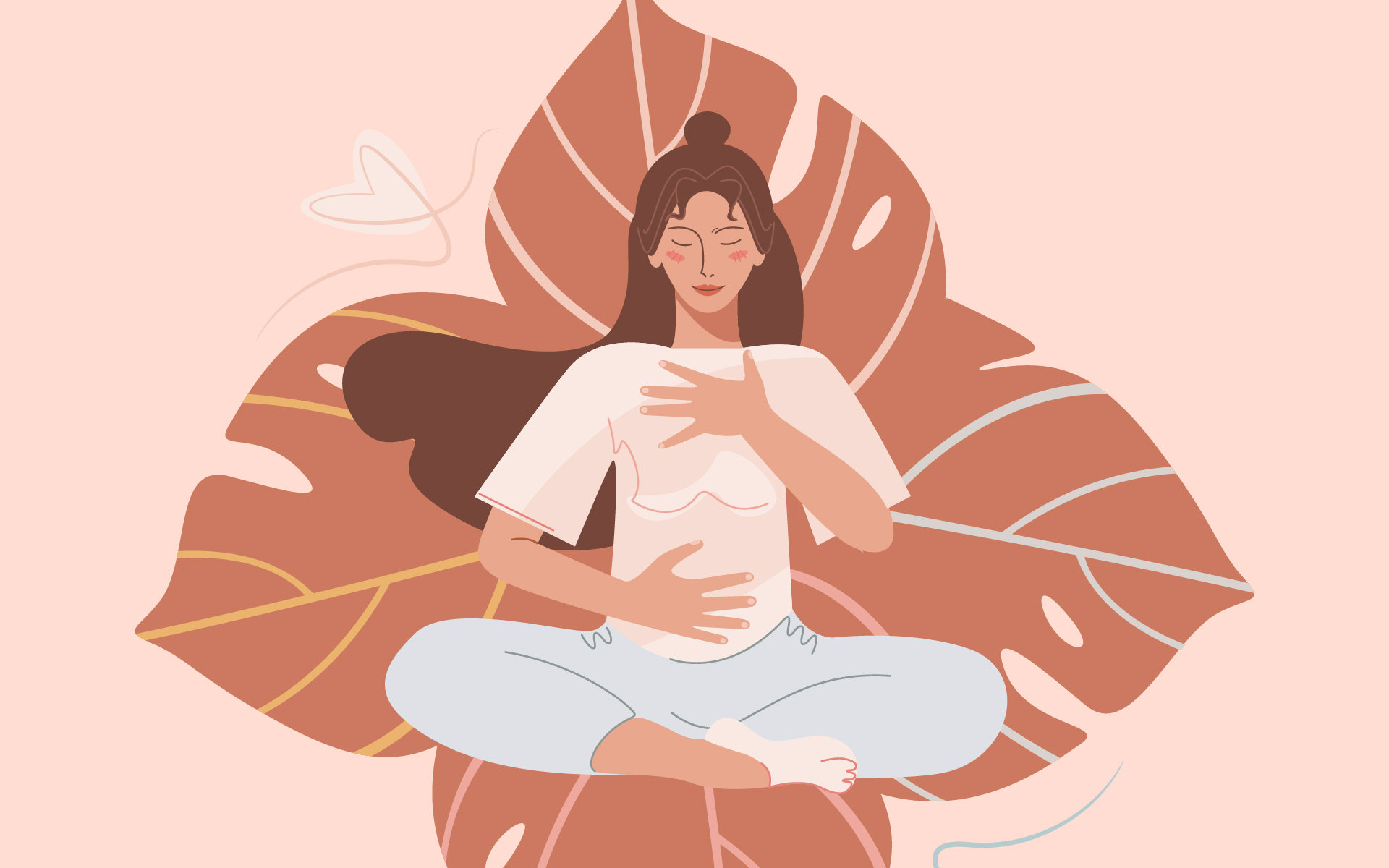
  • Encourage Deep Breathing With A Guided Meditation

    Encourage Deep Breathing With A Guided Meditation

    Explore this introduction to belly breathing to help you relax and reduce stress.

    What is Belly Breathing?

    Encourage deep breathing with belly breathing, you simply take long, conscious breaths. Ideally you breathe in for a count of three and breathe out for a count of five. Repeating this cycle will trigger the relaxation response—it’s the opposite of the fight-or-flight stress response in that you engage the nervous system to tell your body to relax and your mind to be at ease.

    Two Basic Belly Breathing Tips

    1. Breathe deeply. When you breathe deeply, your diaphragm at the base of your lungs pushes your belly out. This is belly breathing and is a natural way to breathe—you can see babies doing it.

    2. As you exhale, gently press on your belly. As you breathe in, encourage your belly to expand, and as you breathe out, allow your belly to contract. You could even gently push your belly in with your hand when you breathe out to help you to do this, if it doesn’t come naturally to you.

    Check Your Stress Levels with This Belly Breathing Practice

    If the hand on your chest is moving but not your belly, you’re breathing in a shallow way.

    1. Begin by finding a quiet place to sit or lie down. If practicing for the first time, lying down may make it easier for you to understand what barely breathing actually feels like. Remember that belly breathing is a natural way of breathing. If you look at a baby or young child, you’ll see that their belly seems to naturally expand and contract slowly and smoothly as they breathe in and out.
    2. Once you’re settled and comfortable, place one palm gently around the area of your navel and the other palm on your chest. Continue to breathe normally, and just watch the movements of your hands. Does the hand on your belly move as you breathe in and out? And what about the hand on your chest? Which one moves the most, the hand on your belly or the hand on your chest?
    3. If the hand on your chest is moving but not your belly, you’re breathing in a shallow way. By learning belly breathing, you’re likely to feel more relaxed and have more energy, and your body will be fed with more fresh oxygen
    4. Keeping your hands on your belly and chest, begin by imagining there’s a balloon in your belly. When you breathe in, you’re inflating that balloon and when you breathe out, that balloon deflates. Now breathe in so that you fill the imaginary balloon in your belly as much as possible.
    5. Hold your breath for about two seconds. And then breathe out slowly and smoothly as you can, using your mouth as if you’re blowing through a straw. Now let your breath be normal and natural again.
    6. Notice how you feel. That was one belly breath. It was more exaggerated than an actual belly breath, but this technique helps to engage your relaxation response, making you counteract your feelings of stress. Just one breath in this way can help me to find some relaxation when you’re feeling tense, and you can do it at any time, wherever you are.
    7. Now you can experiment with counting as you do belly breath. If you want, on your next breath, breathe deeply and smoothly, expanding your belly as you slowly count to four. One, two, three, four. Hold for a count to one, two.
    8. And now slowly exhale to count six. One, two, three, four, five, six. And now breathe as you normally do. Notice how you feel this time, by extending the amount of time you breathe out compared to breathing in.
    9. Encourage your body to relax and your mind to calm. Your breath has a direct link to the systems in your body that make you feel relaxed. By doing belly breaths you send signals to your body that it is safe for you to feel relaxed and at ease. Your blood pressure goes down, your muscles relax and you can think in a more creative and holistic way. You can enhance the experience by bringing the attitudes of kindfulness into the experience, by really feeling the sensations of your breathing.
    10. Let the warmth of your hand against your belly represent a friendly, caring support. Allow yourself permission to be kind to yourself and not force anything too much.
    11. Now when you’re ready, try counting four belly breaths in a row. One, two, three, four hold one, two.
    12. And breathe out. Two, three, four, five, six, rest one, two. Belly breath in. One, two, three, four, hold one, two and breathe out again. Two, three, four, five, six.
    13. Do the last two belly breaths on your own, using a pace that feels right for you. Notice how you feel now, consider how relaxed you feel. Are you more or less relaxed than when you started? If you’re less relaxed, don’t worry about it too much. You’re just starting to learn this new technique.

    Use a few belly breaths any time you feel excessively stressed, to make you feel more calm and relaxed. You can even practice some belly breaths before you begin the meditation, to give you a nice relaxing start. 

    This article was adapted from Shamash Alidina. View the original article.


    Source link