

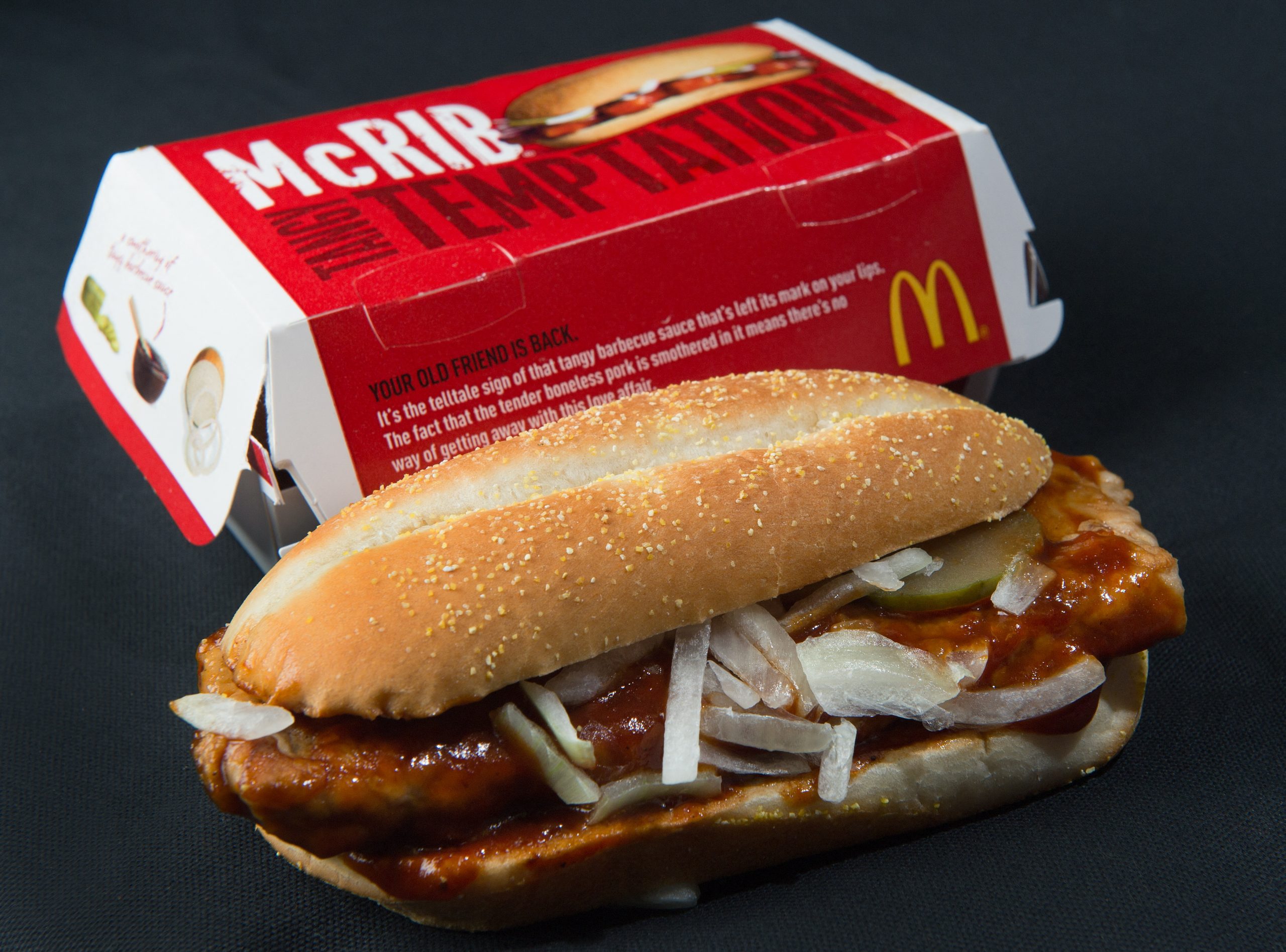
A federal judge in Chicago has refused to throw out a proposed class action accusing McDonald’s of misleading customers about what is in the McRib. U.S. District Judge April Perry ruled on Friday, Oct. 30, 2026, that it was premature to accept McDonald’s argument that no reasonable consumer could expect the sandwich to contain rib meat, Reuters reported.
“Plaintiffs’ proffered understanding of ‘McRib’ is not unreasonable or fanciful,” Perry wrote, according to Reuters. The judge also dismissed some claims.
The ruling does not mean McDonald’s misled anyone. It means the case can move forward to the stage where both sides gather evidence. For diners, the question of what goes into a McRib patty remains a set of competing claims, not a court finding.
What the Lawsuit Claims
The suit, Le et al. v. McDonald’s Corp., No. 1:25-cv-15609, was filed Dec. 23, 2025, in the U.S. District Court for the Northern District of Illinois. Four plaintiffs from Baldwin Park, California; Poughkeepsie, New York; Chicago; and Washington, D.C., seek to represent nationwide McRib buyers and subclasses in their home jurisdictions.
The complaint alleges that the McRib contains no rib meat. It alleges the patty is made from lower-grade pork products, listing pork shoulder, heart, tripe, and scalded stomach as examples. The sources the complaint cites for those ingredients are a blog post, a 2011 magazine article and an online review. It does not cite laboratory testing or a government finding.
The plaintiffs say the cheaper cuts meant they overpaid for one of McDonald’s more expensive menu items, Reuters reported. The complaint brings 16 counts, including fraud, breach of warranty, unjust enrichment and consumer protection claims under California, New York, Illinois and District of Columbia law.
McDonald’s Position
McDonald’s has disputed the allegations since the suit was filed. In January, the company said in a statement reported by QSR: “This lawsuit distorts the facts, and many of the claims are inaccurate.”
“Our fan-favorite McRib sandwich is made with 100% pork sourced from farmers and suppliers across the U.S.,” the company said. It added that it has always been transparent about its ingredients.
In court, McDonald’s argued that the sandwich’s name does not turn truthful marketing into consumer fraud, according to Reuters. Reuters reported that the company’s website describes the McRib only as containing pork. McDonald’s and its lawyers did not immediately respond to requests for comment on the ruling.
The Legal Standard Behind the Ruling
The decision came on a motion to dismiss. At that stage, a judge generally assumes the facts alleged in the complaint are true and asks only whether they could support a legal claim. The judge does not weigh evidence or decide who is right.
Consumer deception claims in many states turn on the “reasonable consumer” test. The test asks whether an ordinary shopper could be misled by a name, label or ad. Companies often win early dismissal when a judge finds that no reasonable consumer would read a product name the way the plaintiffs do.
Perry declined to make that finding here. Reuters reported that she said advertisements highlighting the sandwich’s rib-like shape could support a claim of intent to defraud, though further proof would be needed. According to Law Commentary, several consumer deception, fraud and unjust enrichment claims survived. The publication reported that other claims were dismissed without prejudice, meaning the plaintiffs may try to refile them.
Law Commentary also reported that the plaintiffs cited survey results in which 72% of respondents said they expected rib meat in the McRib. Those survey figures come from the plaintiffs and have not been tested by the court.
Food World News was unable to review the full written opinion. The specific count-by-count outcome described here is attributed to published reports.
Questions the Ruling Leaves Open
The ruling does not decide whether the McRib’s name or marketing actually misled consumers. It does not decide what the patty contains. It does not certify a class, so the case is not yet a class action covering all McRib buyers.
The next phase typically involves discovery, when each side can request documents and testimony. That could include evidence about the patty’s ingredients and McDonald’s marketing. The plaintiffs would later need to ask the court to certify a class. No schedule for those steps had been reported as of Nov. 3.
Plaintiffs’ attorney Thiago Coelho of Wilshire Law Firm said his clients will continue seeking accountability for what they call deceptive marketing, Reuters reported. Cases like this often settle before trial, but no settlement has been reported.
Reading Fast-Food Names and Ingredient Lists
For diners, the case highlights a simple point. A product name is marketing, and the ingredient list is where details appear. McDonald’s publishes ingredient information for its menu items on its website and app.
Shoppers who want to know what is in a menu item can check that ingredient statement before ordering. Diners with dietary, religious or allergy concerns about specific animal parts should rely on the company’s posted ingredients and contact the company directly with questions.
McDonald’s has sold the McRib periodically since 1981, Reuters noted. The limited-time sandwich keeps drawing fans — and now a court fight over its name. Food World News will report any rulings, filings or settlement.
The bottom line: the McRib case survives its first test — but that is all it is. A judge found the plaintiffs’ reading of the name plausible enough to proceed, while the truth of their ingredient claims remains unproven.
What People Are Asking
What did the judge decide in the McRib lawsuit? U.S. District Judge April Perry denied McDonald’s request to dismiss the case, finding it premature to rule that no reasonable consumer could expect rib meat. Some claims were dismissed.
Does the ruling mean the McRib has no rib meat? No. The judge assumed the allegations were true for this stage only. Their accuracy has not been decided.
What does the lawsuit claim is in the McRib? It alleges the patty contains lower-grade pork products such as pork shoulder, heart, tripe and scalded stomach, citing a blog, a magazine article and a review.
What does McDonald’s say? McDonald’s says the lawsuit distorts the facts and that the McRib is made with 100% pork.
Is this a class action? It is a proposed class action. No class has been certified.
What happens next? The case moves toward discovery and a possible class-certification motion. No dates have been reported.
Published by Medicaldaily.com


